The 3700 tray measures 14 by 9 by 2.63 inches, which is 35.6 by 22.9 by 6.7 centimetres, and occupies about 5.5 litres of volume. Any bag claiming compatibility needs roughly 365 millimetres of clear internal width, 240 millimetres of internal depth, and 70 millimetres of vertical pitch per tray, and many so-called compatible bags only meet those figures for the thin 2 inch variant. Loaded, each tray weighs between 1.5 and 2.8 kilograms, which limits realistic carriage to three or four before harness comfort becomes the deciding factor rather than volume.
The Standard Figures, and the Variants
As with the smaller 3600 class, the label describes a family rather than one product. The standard version is the 2.63 inch deep tray, and alongside it exists a widely used thin version at around 2 inches plus a genuinely deep variant nearer 3.25 inches. Footprints match closely across the range, which is convenient for bag design and deeply confusing at the point of purchase, since the same listing often serves all three.
| Variant | Inches | Centimetres | External volume | Typical use |
|---|---|---|---|---|
| Standard | 14 x 9 x 2.63 | 35.6 x 22.9 x 6.7 | About 5.5 litres | Big soft plastics, crankbaits |
| Thin | 14 x 9 x 2.0 | 35.6 x 22.9 x 5.1 | About 4.2 litres | Terminal tackle, spinnerbaits |
| Deep | 14 x 9 x 3.25 | 35.6 x 22.9 x 8.3 | About 6.8 litres | Large swimbaits and salt rigs |
| Double-sided folder | 14 x 9 x 2.6 approx | 35.6 x 22.9 x 6.6 | About 5.4 litres | Two-way access to the same footprint |
Internal dimensions run smaller than external by 6 to 10 millimetres in depth, since the lid structure and hinge occupy space above the usable compartment. Anything stored upright inside a tray therefore has to be measured against internal rather than printed depth.
The Deep Versus Thin Trap
Sixteen millimetres separate the standard tray from the thin one, which sounds negligible until multiplied across a stack. Six trays differ by almost a hundred millimetres of stacking height, equivalent to losing two full slots, so a bag advertised as holding six standard trays will often accept six thin ones and only four of the standard format.
| Stack height | Thin trays, 51 mm pitch | Standard trays, 70 mm pitch | Deep trays, 86 mm pitch |
|---|---|---|---|
| 150 millimetres | Two to three | Two | One to two |
| 300 millimetres | Five to six | Four | Three |
| 450 millimetres | Eight to nine | Six | Five |
| 600 millimetres | Eleven to twelve | Eight | Six to seven |
Ask any seller which variant their stated count refers to, and ask for the internal stack height in millimetres rather than the tray number. That one question resolves most disputes, and reputable technical descriptions already contain it.
Clear Opening Requirements
Compatibility is decided by four clear measurements, taken inside the bag rather than outside it. Width against tray length, depth against tray width, pitch against tray height, and an allowance above the stack for fingers. Anything short by even a few millimetres produces the familiar complaint that a tray fits at home and jams on the bank.
- Internal width must reach about 365 millimetres, giving nine millimetres of margin over the tray's 356 millimetre length.
- Internal depth should be at least 240 millimetres, which covers 229 millimetres of tray width plus seams and lining.
- Stacking pitch should be 70 millimetres for the standard tray and 54 for the thin variant, including a little air.
- Leave 30 to 35 millimetres above the stack, since a full tray of this size is awkward without room to grip it.
- Check the narrowest point rather than the widest; internal tapers and seam bulges usually sit mid-height.
That first figure eliminates most of the market. Anything under 360 millimetres internally cannot take the format at all, whatever the label says, and quite a few well-reviewed bags measure closer to 330.
Which Bags Actually Take Them
Realistically this is a format for large backpacks, rolling carriers and crate-mounted storage, and not for anything worn on one shoulder. The reasons are dimensional first and weight second, since even where the width exists, three loaded trays plus gear easily exceeds what a sling or hip pack carries comfortably.
| Bag type | Typical compatibility | Realistic count | Comment |
|---|---|---|---|
| Large backpack, 35 to 45 litres | Yes | Three to six | Look for a dedicated reinforced bay |
| Rolling tackle carrier | Yes | Four to eight | Weight is carried on wheels instead |
| Crate or boat storage bag | Yes | Four to eight | Open-top designs accept any depth |
| Open-top tote | Sometimes | One to three | Depends entirely on base width |
| Sling pack | Very rarely | One at most | Almost all measure under 340 millimetres |
| Waist or hip pack | No | None | Dimensional impossibility for this format |
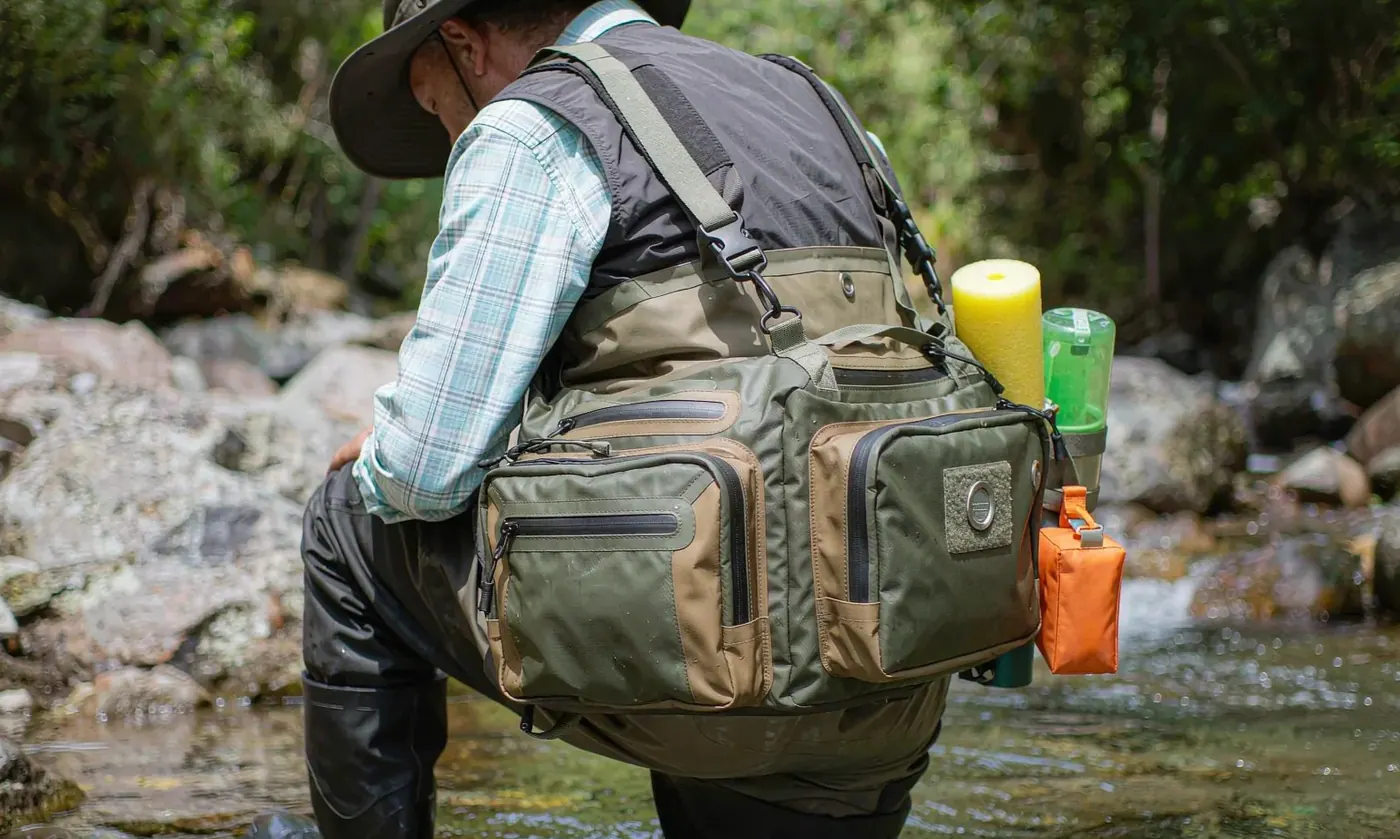
Where a bag genuinely accommodates the format, the description usually states both the internal width and which variant the count refers to. Silence on either point is a reliable warning.
Converting Litres Into Trays
Each standard 3700 tray consumes about 5.5 litres of nominal space and nearly 6.4 litres once handling clearance and divider structure are counted. That ratio explains why the format is largely reserved for big bags, and why six trays is more often a theoretical maximum than a working load.
| Usable litres | Theoretical trays | Realistic with other gear | Typical bag |
|---|---|---|---|
| 15 litres | Two to three | One to two | Very large sling only |
| 22 litres | Three to four | Two to three | Compact backpack |
| 30 litres | Four to five | Three to four | Mid to large backpack |
| 40 litres | Six to seven | Four to six | Large backpack or rolling carrier |
| 55 litres | Eight to nine | Six to eight | Rolling carrier or boat storage |
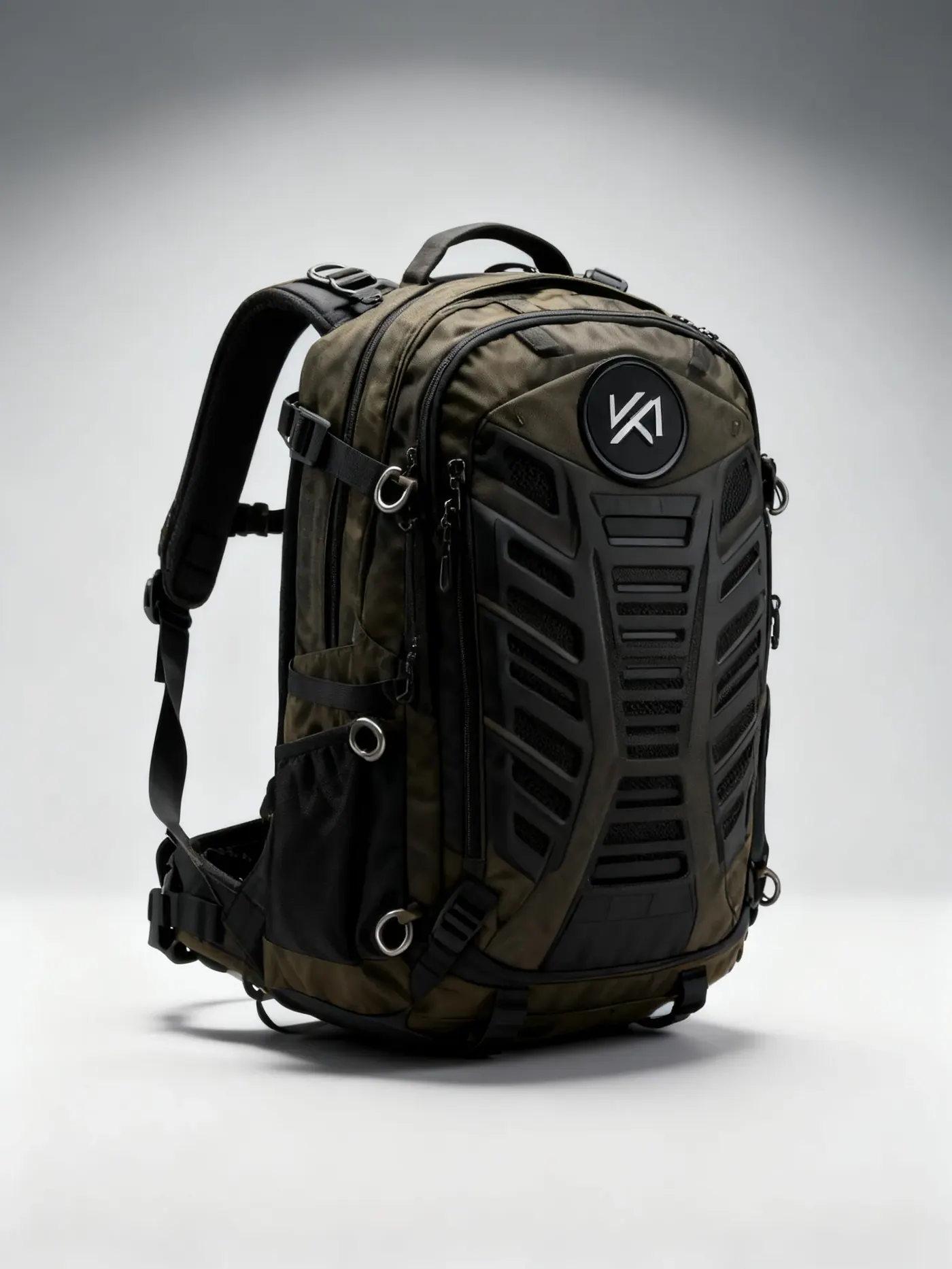
Notice how quickly the theoretical column outruns reality. Two trays of this size already fill a third of a mid-sized pack before water, weather gear or tools are considered, which is why many anglers mix one large tray with several smaller ones.
Weight Is the Real Limit
Volume discussions tend to stop too early. An empty standard tray weighs 400 to 650 grams, but loaded with anything dense it typically reaches 1.5 to 2.8 kilograms, and a tray of heavy metal can exceed three and a half. Carry three of those and the discussion has moved from packing to anatomy.
| Trays carried | Tray mass alone | Bag and gear | Total carried |
|---|---|---|---|
| Two | 3.0 to 5.6 kilograms | 2.0 to 3.0 kilograms | 5 to 8.5 kilograms |
| Three | 4.5 to 8.4 kilograms | 2.5 to 3.5 kilograms | 7 to 11.5 kilograms |
| Four | 6.0 to 11.2 kilograms | 3.0 to 4.0 kilograms | 9 to 15 kilograms |
| Six | 9.0 to 16.8 kilograms | 3.5 to 5.0 kilograms | 12.5 to 21 kilograms |
The six tray row is where rolling carriers earn their keep. Carrying that mass on the back over anything but a short, flat approach is a different proposition entirely, and no amount of padding changes the arithmetic.
Filing Beats Stacking at This Scale
Because the tray is long, standing it on edge suits it better than stacking it flat. Vertical filing lets any of four trays be withdrawn single-handed while the others stay put, whereas flat stacking buries everything beneath whichever tray is wanted. Filing asks for depth rather than height, around 240 millimetres, which is the same number already required for the flat layout anyway.
- Ask whether any internal divider is full height; partial dividers let trays tip over the top of each other.
- Confirm there is restraint at the mouth of the bay, otherwise a filed tray walks out when the bag is set down.
- Group by likelihood of use rather than by category, so the most selected tray sits nearest the opening.
- Leave one slot empty if space allows, since that is what makes rotation and re-sorting possible on the water.
- Remember that a half-empty vertical slot still needs a retainer, or its contents end up at the bottom of the bag.
Checks Before Buying
Four checks take around five minutes and settle whether a listed bag will actually work with the trays already owned. Do them in this order, since the first is an absolute gate and the rest refine the answer.
- Measure the tray in hand, including latch protrusion, and write the length down.
- Find or measure the bag's clear internal width; anything under 360 millimetres ends the enquiry.
- Compare stack height by multiplying pitch by the intended count, including 30 millimetres above the stack.
- Weigh a loaded tray, multiply by the count, and add the bag plus ordinary gear to judge whether it will be carried happily.
- Where possible load it with trays in the shop or on arrival, rather than trusting the description at all.
Nothing here needs special tools. A rigid rule and a set of bathroom scales settle both dimensional and weight questions within a few minutes, and that is far cheaper than the alternative of discovering a shortfall on the first morning of a trip.
Fit Faults and Fixes
Where a bag almost works, one of five faults is usually responsible, and three of them are fixable without returning anything.
| Symptom | Cause | Fix |
|---|---|---|
| Tray will not enter at all | Internal width below 356 millimetres | None; choose another bag |
| Enters but jams halfway | Internal taper or a seam bulge mid-height | Try the opposite orientation, or file vertically |
| Stack taller than the bay | Count quoted for the thin variant | Reduce the count or switch to thin trays |
| Tray tips sideways when filed | Divider not full height | Add a stiffener or use an external sleeve |
| Bag bulges badly when loaded | No compression restraint in the bay | Add a compression strap across the bay |
Compression restraint deserves a mention because it is genuinely overlooked. A bay holding several kilograms of rigid boxes wants something drawing the panels together, and without it the load leans outward from the spine and feels far heavier than it weighs.
Specifying a 3700 Bay
Anyone developing rather than buying should dimension from measured trays and verify with real ones. State clear width and depth with tolerances, decide the pitch against the standard rather than the thin tray, and require a loaded fit test before tooling is approved.
| Item | Recommended figure | Why |
|---|---|---|
| Clear internal width | 365 millimetres minimum | Covers tray length plus taper and handling margin |
| Clear internal depth | 240 millimetres minimum | Accepts the 229 millimetre tray width with lining |
| Pitch, standard tray | 70 millimetres | Lid allowance plus working air |
| Restraint | Full-height dividers plus mouth retainer | Stops tipping when the bag is set down |
| Compression | Strap or panel across the bay | Keeps the load close to the spine |
| Verification | Loaded fit test with actual trays | Drawings cannot reveal taper or deflection |
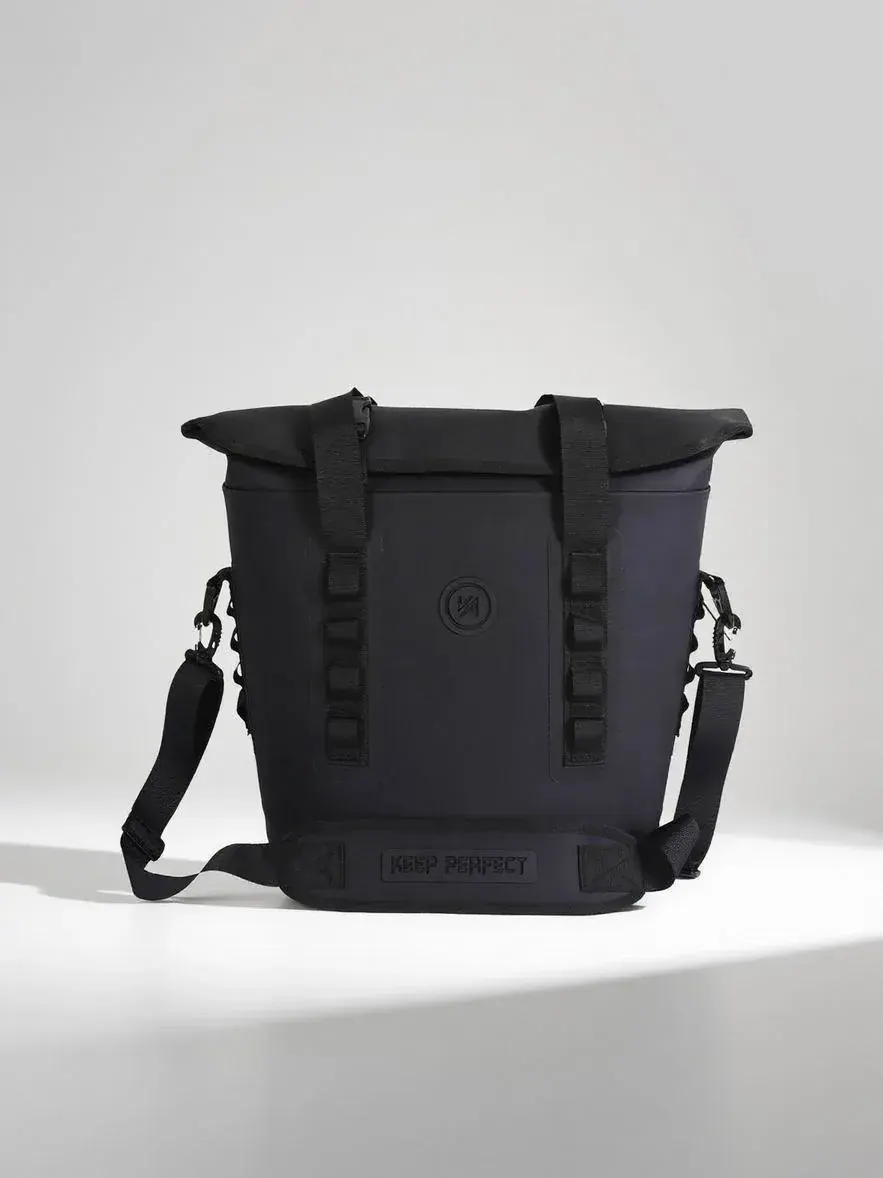
Tray robustness should be specified alongside the bag, since a cracked tray ruins an otherwise sound design. Impact resistance testing for moulded plastics is covered by published methods from ASTM International, and the tolerance classes useful for quoting internal dimensions come from ISO; naming both removes most of the room for optimistic drawing-keeping.
Making Room: What to Sacrifice First
Every bag has a fixed volume, and once a format as large as this is chosen, something else has to leave. Knowing the order in which to sacrifice saves time every season. Volume rarely used, duplicated items, anything bought on impulse and carried from habit, and finally the soft goods that can be carried in pockets or shared between anglers all go before the tray count does.
| Give up | Space released | Cost to the session | Verdict |
|---|---|---|---|
| Duplicate tools | 0.5 to 1.5 litres | Very low if duplicates genuinely exist | Do it first |
| Full weather outfit | 2 to 4 litres | Moderate in settled conditions | Depends on forecast |
| Second water bottle | 1.2 litres | Low on short sessions | Reasonable trade |
| Bulky lunch container | 1.5 to 2.5 litres | Low; repackage into a soft bag | Easy win |
| One tray of rarely used lures | 5.5 litres | Variable; check last season's usage | Last resort |
Repackaging is the most underrated tactic. Food moved from rigid containers to soft pouches, tools clipped to the outside rather than stored within, and water carried in a side pocket all return several litres without changing the day in any meaningful way.
Rotating Trays Through the Season
Very few anglers genuinely need the same tray set in April and October, yet most carry the same load all year. Rotating contents rather than adding capacity is how experienced anglers keep a bag manageable. Build two or three sets, store the inactive ones, and swap before leaving rather than deciding at the waterside.
| Season | Typical set | Trays carried | Stored at home |
|---|---|---|---|
| Early spring | Slow presentations, lighter terminal | Two to three | Bulky summer plastics |
| Summer | Reaction baits and topwater | Three to four | Cold water finesse |
| Autumn | Mixed set, wider coverage | Four | Season-specific extremes |
| Winter | Finesse and small profiles only | One to two | Everything bulky or noisy |
Rotation also protects the trays themselves. A tray carried constantly is a tray exposed to constant rattling, UV and damp storage, and spreading that wear across four sets doubles the life of each for no cost at all.
When This Format Beats Several Smaller Trays
Choosing one large tray or several small ones is a genuine decision rather than a matter of habit, and the answer depends on what is being stored. Large trays suit bulky items that do not subdivide well, such as big soft plastics, swimbaits, salt rigs and long crankbaits. Small trays suit dense ranges of terminal tackle, weights, hooks and swivels where dozens of small compartments prevent tangles and mixing.
| Requirement | Better choice | Reasoning |
|---|---|---|
| Four or five bulky lures with hooks fitted | One large tray | Small compartments crush and tangle them |
| Wide range of small hardware | Several small trays | Compartment count beats raw volume |
| Everything must be lifted out together | One large tray | One movement instead of three |
| Sorting must be adjusted on the water | Several small trays | Rearranging one does not disturb the rest |
| Load must stay under eight kilograms | Several small trays | Easier to carry three light ones selectively |
| Storage at home is limited | Standardised small trays | They stack into their own shelving systems |
Many settled kits end up mixed: one or two large trays for bulky categories, a handful of small ones for hardware, and everything carried in a bag whose widest bay was dimensioned for the larger of the two formats from the outset.
That last point is the practical takeaway. If a bag can take the larger format, it can almost always take smaller trays with room to spare, whereas the reverse is never true. Buying for the larger dimension costs nothing in flexibility and leaves the option open permanently.
Programme and Pricing Notes
QUANZHOU JUNYUAN BAGS has developed waterproof bags since 2014 behind a founding team in this trade since 2004, producing 200,000 pieces monthly under SGS verification, BSCI and ISO 9001 governance. Incoming materials are screened against REACH and California Prop 65, and lots are inspected at AQL 2.5 before release. Bays for larger trays are drawn around measured product rather than nominal class sizes, and the fit test is treated as part of sampling rather than an afterthought.
Send tray measurements or part numbers, required count, whether it must accept the standard or thin variant, layout preference, shell material, colours, and quantity. Development begins at 500 pieces per design and colour; samples need six to ten working days and bulk thirty-five to fifty days from approval and deposit. Shipment runs FOB Xiamen or DDP to more than one hundred destinations. Drawings go to service@junyuanbags.com. The smaller class is dimensioned in the 3600 chart, a head-to-head comparison sits in 3600 versus 3700, and current large-format builds are reviewed in the 3700 backpack roundup.
People Also Ask
What size is a 3700 tackle tray?
Fourteen by nine by two point six three inches standard, equal to 35.6 by 22.9 by 6.7 centimetres. A widely used thin variant keeps the same footprint at about 5.1 centimetres deep.
How much bag width does a 3700 need?
About 365 millimetres of clear internal width. Anything under 360 millimetres cannot take the tray at all, regardless of what the listing claims.
Why does my bag say 3700 compatible but my tray will not fit?
Because the stated count usually refers to the thin two inch variant. Standard trays are sixteen millimetres deeper, which changes both pitch and total stack height.
How many 3700 trays will a 40 litre backpack hold?
Realistically four to six once water, weather gear and tools are aboard, against a theoretical six or seven if the whole volume went to trays.
How heavy is a loaded 3700 tray?
Typically 1.5 to 2.8 kilograms, and above 3.5 kilograms when filled with dense metal. Three trays plus gear already reaches 7 to 11.5 kilograms.
Can sling or hip packs carry 3700 trays?
Essentially no. Most measure well under 340 millimetres internally, and the loaded weight is beyond what one strap carries comfortably anyway.
Frequently Asked Questions
Q1. What are the exact 3700 tray dimensions in centimetres?
Thirty five point six by twenty two point nine by six point seven centimetres for the standard tray, which is fourteen by nine by two point six three inches.
Q2. Is there a thin version of the 3700?
Yes, about two inches deep or 5.1 centimetres, giving roughly 4.2 litres against 5.5 for the standard tray on the same footprint.
Q3. How deep is the inside of the tray compared with outside?
Around six to ten millimetres less, because the lid structure and hinge occupy space above the usable compartment.
Q4. What internal bag measurements do I need?
About 365 millimetres of clear width, 240 millimetres of clear depth, 70 millimetres of pitch per standard tray, and 30 millimetres of clearance above the stack.
Q5. Why does the same bag hold six trays for one person and four for another?
Different tray variants. Counts quoted for thin trays translate to roughly two fewer when standard trays are used in the same space.
Q6. Which bag types genuinely accept this format?
Large backpacks above about 35 litres, rolling carriers, and crate or boat storage bags. Sling packs and hip packs generally do not.
Q7. How many trays can I carry comfortably?
Three or four when carrying on the back. Beyond that the load typically exceeds ten kilograms, which argues for a rolling carrier instead.
Q8. Is stacking flat or filing upright better?
Filing upright. It allows any single tray to be withdrawn one-handed, whereas flat stacking buries everything below whichever tray is wanted.
Q9. Should the divider be full height?
Yes. Partial dividers let filed trays tip over each other, and once one falls the whole column shifts whenever the bag is set down.
Q10. How do I stop the bag bulging when full?
Specify a compression strap across the tray bay. Without it the load leans outward from the spine and feels heavier than it weighs.
Q11. What should I send when specifying a tray bay?
Measured tray dimensions, the count required, which variant it must accept, layout preference, shell material, colours, and the quantity you plan to order.