The numbers on fishing tackle trays are nominal size classes rather than measurements, and the progression from 3500 to 3600 to 3700 is not linear in either dimension or volume. A 3500 tray measures roughly 9 x 5 x 1.25 inches and holds about 0.8 litres, a 3600 measures about 10.88 x 7.5 x 1.75 inches and holds around 1.9 litres, and a 3700 measures about 14 x 9 x 2.63 inches and holds nearer 4.2 litres, which is more than double despite the number being only 100 higher. Filled weights run from 0.6 kg to 2.8 kg across those three, and the internal dimensions above are what any bag sleeve must be designed around.
The Numbering Is a Class, Not a Measurement
Nothing about these three numbers tells you a dimension. The class labels originated as catalogue sizes rather than dimensional codes, and reading them as a scale generates exactly the kind of error that leaves a buyer with a sleeve that does not accept the tray they specified. Treat each number purely as a name and always work from a measured dimension sheet.
| Class | Outer inches | Outer millimetres | Internal volume | Empty weight |
|---|---|---|---|---|
| 3500 | 9 x 5 x 1.25 | 229 x 127 x 32 | About 0.8 L | 180-240 g |
| 3600 | 10.88 x 7.5 x 1.75 | 276 x 191 x 44 | About 1.9 L | 320-420 g |
| 3600 deep | 10.88 x 7.5 x 2.5 | 276 x 191 x 64 | About 2.7 L | 400-500 g |
| 3700 | 14 x 9 x 2.63 | 356 x 229 x 67 | About 4.2 L | 620-780 g |
| 3700 deep | 14 x 9 x 3.5 | 356 x 229 x 89 | About 5.6 L | 750-940 g |
The relationship worth internalising is between the 3600 and the 3700, because they are the two sizes most buyers must choose between. The bigger tray is roughly 29 percent longer, 20 percent wider, and 50 percent deeper, and because those multiply rather than add, it holds about 2.2 times as much. Any brief that assumes a 3700 is merely somewhat larger than a 3600 has made the same error twice. The two classes are compared head to head on bag fit and session length in the 3600 against 3700 decision guide, which takes each dimension separately rather than treating the difference as one number.
Internal Volume Versus Outer Volume
External dimensions measure the tray as a shipping object, while internal capacity determines what an angler can actually carry, and the gap between them is larger than most people expect. Walls, a base, a lid, and divider rails consume space, so a 3700 with nominal outer dimensions suggesting 5.4 litres realistically offers about 4.2 litres of packed space.
| Class | Geometric outer volume | Usable internal volume | Loss to structure | Hooks or lures estimate |
|---|---|---|---|---|
| 3500 | About 0.93 L | About 0.8 L | About 14 percent | 40-70 small items |
| 3600 | About 2.32 L | About 1.9 L | About 18 percent | 90-160 small items |
| 3700 | About 5.43 L | About 4.2 L | About 23 percent | 200-380 small items |
| 3700 deep | About 7.27 L | About 5.6 L | About 23 percent | 280-500 small items |
Item counts are estimates with a wide spread and they should be presented as such, because a tray of large swimbaits holds fewer than twenty pieces and a tray of size 10 hooks holds several hundred. The useful thing about the ratio rather than the absolute count is that a 3700 holds about 2.2 times what a 3600 holds across almost every category, which is the number a buyer needs when positioning two adjacent products.
Compartment Counts and Divider Logic
Adjustable dividers are the interface between a tray and an actual tackle selection, and each class supports a different practical range. Below about six compartments the tray is really a bin, and above roughly thirty the compartments become too narrow for anything except hooks and beads.
| Class | Typical compartments supplied | Practical maximum | Best for | Too small for |
|---|---|---|---|---|
| 3500 | 6-12 supplied | About 14 | Terminal items, hooks, swivels | Large plugs |
| 3600 | 15-21 supplied | About 24 | General hard lures and jigs | Bulk spools |
| 3700 | 18-28 supplied | About 34 | Full lure selection or bulk plastics | Anything nine inches long |
| 3700 deep | 18-28 supplied | About 30 | Soft plastics in packs | Fine terminal items that tangle |
Divider height relative to compartment size is the overlooked variable. A divider that reaches only partway up the wall lets a jig migrate between two slots and mix with neighbouring items, and by mid-session the tray has become a jumble regardless of how carefully it was packed. Require dividers reaching at least 80 percent of internal wall height, and check that the retaining slot maintains that height at the ends where stress concentrates.
Filled Weight: The Number That Decides Carry Style
Empty weight appears on every specification sheet and filled weight appears on none, and yet filled weight is what decides which bag, which carry style, and how long a session can be. Lures are dense and they stack, so the gap between the two figures is substantial and it is remarkably consistent when measured rather than guessed.
| Class | Empty | Filled with mixed lures | Filled with soft plastics | Suits |
|---|---|---|---|---|
| 3500 | 180-240 g | 0.6-0.9 kg | 0.5-0.7 kg | Chest and waist packs |
| 3600 | 320-420 g | 1.1-1.4 kg | 0.9-1.2 kg | Slings, small backpacks |
| 3700 | 620-780 g | 2.2-2.8 kg | 1.8-2.4 kg | Backpacks, crate liners |
| 3700 deep | 750-940 g | 2.6-3.4 kg | 2.2-3.0 kg | Rolling bags, crate liners |
Three filled 3700 trays reach roughly 7-8 kg before the pack itself is counted, and that figure places the whole assembly firmly in backpack territory rather than sling territory. It is also why the tray format chosen determines the bag rather than the other way round: selecting trays first, then sizing the sleeve, prevents a bag that looks right and carries badly.
Which Tray Count Goes Where
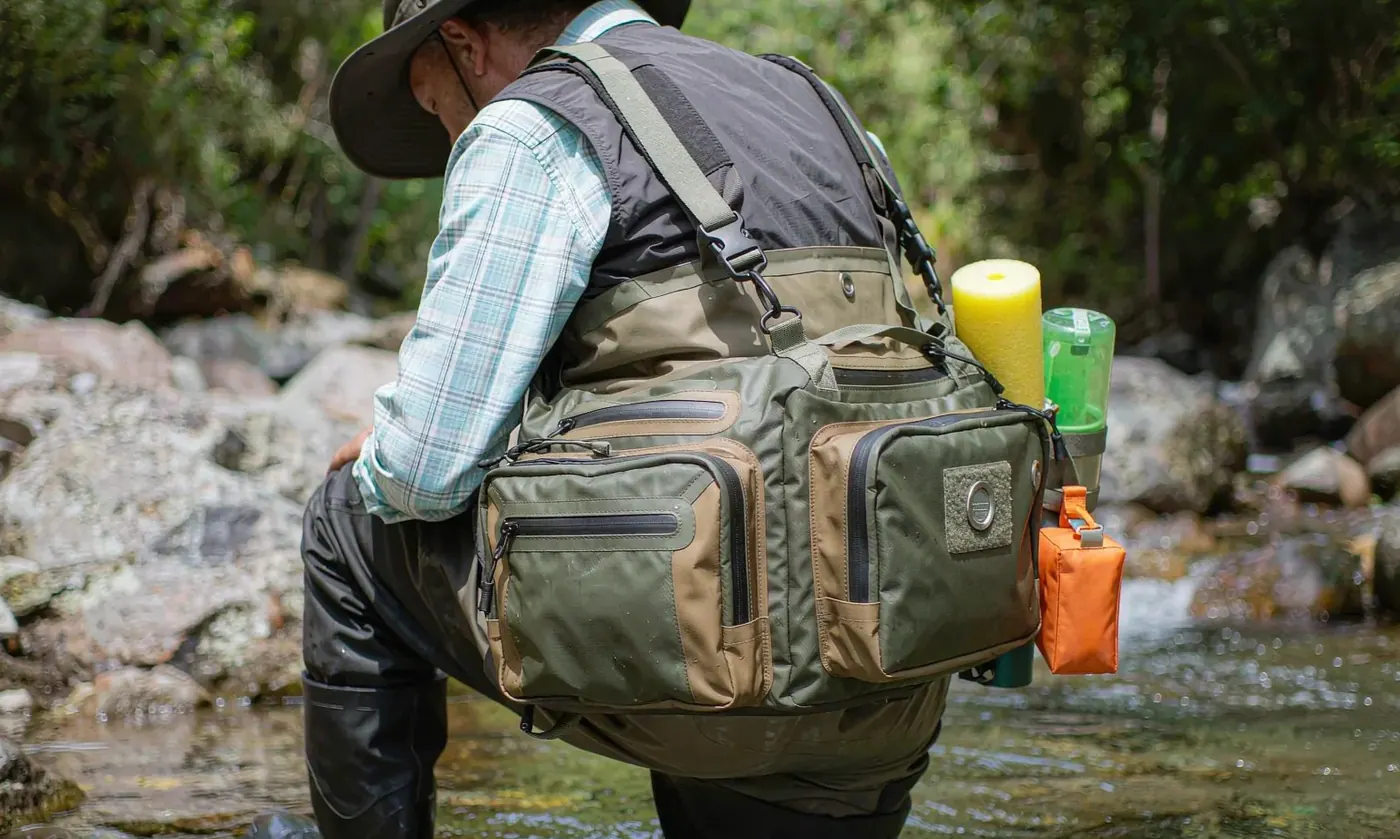
Body-worn formats are physically limited by the smaller classes, and this is not a marketing decision. A waist or chest pack carrying anything larger than a 3500 interferes with the casting arc and exceeds the load the body position handles comfortably for a full day.
| Format | Class that fits | Typical count | Total filled weight | Why not larger |
|---|---|---|---|---|
| Chest pack | 3500, sometimes 3600 | 1 | 0.6-1.4 kg | Blocks the arm line and sits too high |
| Waist pack | 3500 to 3600 shallow | 1-2 | 0.6-2.4 kg | Interferes with the casting stroke |
| Sling pack | 3600 shallow | 1-2 | 1.1-2.8 kg | One-shoulder limit near 5 kg |
| Tackle backpack | 3600 or 3700 | 3-4 | 3.3-11.2 kg | Sleeve width and harness capacity |
| Crate liner | 3700 or 3700 deep | 4-5 | 8.8-17.0 kg | Stays in a crate, never carried far |
| Rolling bag | 3700 or 3700 deep | 6-12 | 13-40 kg | Wheels take the load |
The jump between rows four and five is where most product returns originate. A backpack specified for four deep 3700 trays reaches 11 kg fully loaded, which is genuinely uncomfortable for anyone not carrying it with a proper hip belt, and it is a load most anglers do not actually need to transport. Recommending three trays plus tools is better advice and it is more honest about how the product performs. It also leaves roughly 4-6 litres of usable space in a 35-litre body for a rain shell, a water reservoir, and food, which is what most anglers actually want that space for.
A useful way to sanity-check any build-up is to total the filled tray weight and add 35 percent for the bag, tools, water, and clothing. Three standard 3700 trays reach about 7.5 kg of tackle, which implies a loaded pack near 10 kg, comfortably within a good hip-belt harness. Four deep 3700 trays reach about 12 kg of tackle and imply a load near 16 kg, which is past what most buyers will describe as pleasant on anything other than flat ground. That arithmetic takes ninety seconds and it prevents the most common reason a well-made pack gets a poor review.
Sleeve Tolerance and Fit
The internal sleeve of a bag is cut to the tray class, and the tolerance built into that sleeve determines whether tray insertion is smooth or a fight. Injection-moulded trays carry draft angle, meaning walls taper slightly outward, and the base of a tray can measure 1.5-2 mm wider than the nominal dimension.
| Element | Recommendation | Too tight | Too loose |
|---|---|---|---|
| Per-dimension allowance | 4 mm over nominal | Tray jams on insertion | Trays rattle and rotate in transit |
| Vertical clearance | 6-8 mm over the stack | Lid will not close loaded | Stack shifts and spills |
| Entry radius | 2 mm chamfer at the mouth | Frays the sleeve fabric | No handling penalty |
| Guide rails | Two per slot, 12 mm wide | Trays wedge diagonally | No functional difference |
| Retention lip | 8 mm at the front edge | Trays slide out when tipped | Difficult retrieval by feel |
Four millimetres per dimension sounds generous and it is not. It is roughly half the combined variation from the tray draft angle, fabric thickness differences across a production run, and sleeve seam bulk, and anything tighter produces an intermittent jam that only appears on a subset of trays from a subset of tooling cavities. Intermittent is the expensive version of this problem because it survives inspection.
Deep Versus Shallow Variants
Every mainstream class now has a deep variant, and those variants solve a different problem from the standard depth rather than simply being larger. Standard depth is optimal for retrieval, because an angler sees the whole tray surface in one glance. Deep variants suit dense storage where retrieval speed matters less than quantity.
- Use standard depth when the tray is opened several times an hour, because deeper walls hide the rear half of the tray and increase search time noticeably.
- Use deep variants for backup inventory rather than the working selection, which is how most organised anglers actually run two of the same class in one bag.
- Deep trays stack poorly in a mixed stack with standard trays, because the height difference leaves the shallower tray unsupported at one end of its lid.
- A deep 3700 at 5.6 litres can exceed the comfortable sleeve height for a 35-litre backpack, so verify total stack height against the internal dimension before tooling.
- Deep variants cost roughly 12-18 percent more per unit due to extra material and longer cooling time in the mould.
That last point is worth carrying into costing conversations, because deep trays are quoted as a variant of the same product and are not priced as one. A range built entirely on deep trays will carry a materially higher cost per litre than appears from comparing base prices per class.
Keeping Trays Dry and Free of Corrosion
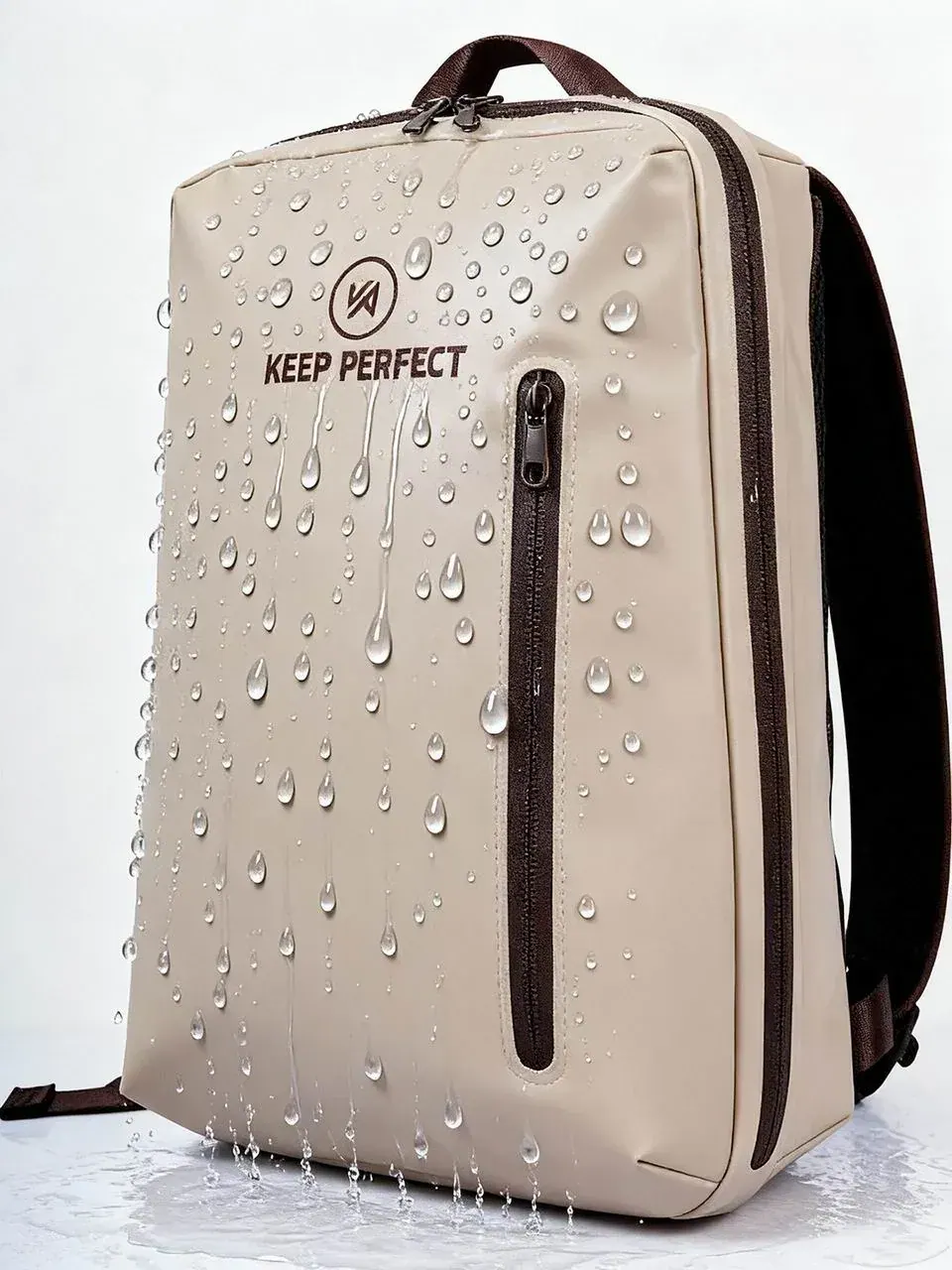
A tray is usually stored wet and closed, which is precisely the condition that rusts hooks and swivels. Corrosion begins within about two days in a closed wet tray, spreads to neighbouring items by roughly day four, and leaves black staining on the plastic that no amount of scrubbing fully removes.
| Habit | Frequency | Effect | Failure if skipped |
|---|---|---|---|
| Open trays and air dry fully | After every session | Completely stops hook rust | Rust within about two days |
| Rinse in fresh water after salt | Every saltwater session | Removes hygroscopic crystals | Damp persists for weeks |
| Wipe dividers and base | Monthly | Stops black staining | Permanent staining by season end |
| Separate lead items from steel hooks | Continuous | Stops galvanic contact staining | Accelerated corrosion on steel |
| Store dry with lids slightly open | Off season | No mildew, no odour | Mildew within a month |
Lead deserves a specific mention because it is heavy, soft, and widely present in jigs and sinkers. Guidance on handling lead tackle safely is published by the US Environmental Protection Agency, and it is worth reading for any programme supplying trays that will be shipped into North America, since some bait categories carry labelling expectations.
Materials, Testing, and Compliance
Trays are almost always injection-moulded polypropylene, chosen because it resists impact at low temperature, tolerates repeated flexing at the lid hinge, and costs little. The hinge is the component that determines service life and the one that should be specified rather than assumed.
| Element | Recommendation | Test reference | Acceptance |
|---|---|---|---|
| Body polymer | Impact-modified polypropylene | Impact methods from ASTM | No crack at 1 m drop and -10 C |
| Hinge | Live hinge, 0.4-0.6 mm | Flex cycle count | 5,000 cycles without whitening |
| Latch | Snap fit with positive stop | Open and close cycles | 3,000 cycles retaining closure |
| Divider retention | Slot and tab, 80 percent wall height | Insertion and removal | 500 cycles without looseness |
| Chemical screening | Restricted substances check | REACH and California Prop 65 | Screened polymer, colourant, and print |
Impact and hinge-cycle expectations should be cited to methods published by ASTM International, because unqualified durability language means nothing at the point of a claim. Chemical restrictions on colourants and any printed marking fall under REACH, administered by the European Chemicals Agency, and a screening record for the moulded body should be requested alongside the fabric record for the bag that carries it.
How Many Fit in Which Bag

Bag capacity is quoted in litres and tray capacity is quoted in classes, so buyers need a conversion before they can size anything. The table below converts both ways using usable internal volume and a realistic packing efficiency of about 85 percent in a sleeved body.
| Nominal bag volume | Usable internal | 3500 count | 3600 count | 3700 count |
|---|---|---|---|---|
| 15 L | About 12 L | 6-8 | 5-6 | 2-3 |
| 25 L | About 20 L | 10-14 | 8-10 | 4-5 |
| 35 L | About 28 L | 14-20 | 12-14 | 6-7 |
| 45 L | About 36 L | 18-26 | 15-18 | 8-9 |
| 70 L rolling | About 58 L | 30-42 | 24-30 | 13-15 |
These counts describe what physically fits, which is not what any sensible person would carry. A 35-litre backpack taking seven 3700 trays would weigh about 19 kg fully loaded, so real-world recommendations settle at three or four trays of that class regardless of what the geometry allows. Design to the carry weight rather than to the volume, and the product will be reviewed better than the specification suggests. Buyers wanting the same conversion worked through for a single class rather than all three should use the 3600 tray fit calculator, which steps through sleeve dimensions, stack height, and bag volume for one standard size.
Programme, Pricing, and Note on Sourcing
Tray programmes run alongside the bags rather than inside them, and the two should be specified in the same brief so that sleeve dimensions and tray dimensions are frozen together. Bags skewed to one class are cheaper to produce because a single sleeve tool covers several products, while a range spanning all three classes needs a separate sleeve per class.
| Programme item | Baseline | Note |
|---|---|---|
| Tray unit cost | 1-14 USD by class | 3500 near 1 USD, 3700 deep near 14 USD |
| Deep variant premium | 12-18 percent | Material and cooling time in the mould |
| Sleeve tooling | One tool per tray class | Ranges covering several classes need several tools |
| Sampling | 6-10 working days for the bag | Add 3-5 days when freezing tray dimensions together |
| Bulk | 35-50 days | From approved sample and deposit |
| Inspection | AQL 2.5 | Include tray insertion cycles and lid closure loaded |
QUANZHOU JUNYUAN BAGS has developed waterproof bag programmes since 2014, with the founding team working in the trade since 2004. Monthly output of 200,000 units is verified by SGS, and BSCI and ISO 9001 systems structure the workflow. Materials are screened for REACH and California Prop 65, and every bulk order is inspected at AQL 2.5 before shipment.
A tray and sleeve brief can be emailed to service@junyuanbags.com with tray class, build-up count, bag model, and quantity. FOB Xiamen or DDP service to more than 100 countries follows an approved sample and a complete test record. Buyers still fixing the internal dimensions should start from the 3600 tray dimension sheet and the 3700 tray dimension sheet.
People Also Ask
What does 3600 mean on a tackle tray?
A nominal size class rather than a measurement. A standard 3600 tray measures about 10.88 x 7.5 x 1.75 inches and holds roughly 1.9 litres usable.
What does 3700 mean on a tackle tray?
The next class up, measuring about 14 x 9 x 2.63 inches with roughly 4.2 litres usable, which is about 2.2 times the volume of a 3600.
Is a 3700 twice the size of a 3600?
More than twice by volume, yes. It is about 29 percent longer, 20 percent wider and 50 percent deeper, and those multiply out to roughly 2.2 times the capacity.
How much does a full tackle tray weigh?
About 0.6-0.9 kg filled for a 3500, 1.1-1.4 kg for a 3600, and 2.2-2.8 kg for a 3700 of mixed lures.
How many trays fit in a tackle backpack?
Three to four deep 3700 trays comfortably in a 35-litre backpack. Geometry allows up to seven, but seven loaded trays weigh about 19 kg.
Are deep tackle trays worth it?
For backup inventory rather than the working selection. Deep walls hide the rear half of the tray, which slows retrieval noticeably when opened hourly.
Frequently Asked Questions
Q1. What is the difference between 3600 and 3700 trays?
A 3700 measures about 14 x 9 x 2.63 inches against roughly 10.88 x 7.5 x 1.75 inches for a 3600, giving about 4.2 litres usable against 1.9 litres. The larger tray holds about 2.2 times as much.
Q2. What size is a 3500 tackle tray?
About 9 x 5 x 1.25 inches with roughly 0.8 litres of usable space, usually supplied with 6-12 compartments. It suits chest and waist packs holding terminal items.
Q3. Do the tray numbers mean measurements?
No. They are nominal catalogue classes and the progression is not linear. Always work from a measured dimension sheet rather than inferring any dimension from the class number.
Q4. How many compartments should a tackle tray have?
Six to twelve for a 3500, fifteen to twenty-one for a 3600, and eighteen to twenty-eight for a 3700. Above about thirty the compartments are too narrow for anything except hooks and beads.
Q5. How much does a loaded 3700 tray weigh?
Roughly 2.2-2.8 kg filled with mixed lures and about 1.8-2.4 kg with soft plastics. Three of them reach 7-8 kg before counting the bag itself.
Q6. Should I use deep or standard trays?
Standard for the working selection, because an angler sees the whole surface at a glance. Deep variants suit backup inventory, at a 12-18 percent cost premium.
Q7. How much tolerance does a bag sleeve need?
About 4 mm per dimension over nominal, 6-8 mm of vertical clearance over the stack, and a 2 mm chamfer at the mouth. Anything tighter jams intermittently and survives inspection.
Q8. Which tray class suits a waist pack?
A 3500, occasionally a shallow 3600 at most. Anything larger interferes with the casting stroke and exceeds what the hip position carries comfortably for a day.
Q9. Why do my hooks rust inside the tray?
A closed wet tray starts corroding hooks in about two days and spreads by roughly day four. Open trays and air dry fully after every session, and rinse after salt exposure.
Q10. What are tackle trays made of?
Almost always impact-modified polypropylene, specified for low-temperature impact and lid hinge life. Require the hinge at 0.4-0.6 mm surviving 5,000 flex cycles.
Q11. Can I mix tray classes in one bag?
Only when the sleeve is built with separate slots per class. Mixing standard and deep trays in one stack leaves the shallower tray unsupported at one end of its lid.
Q12. How many 3600 trays fit in a 35 litre backpack?
Twelve to fourteen by geometry, although a realistic wearable load is three or four deep 3700 trays or about eight shallow 3600 trays plus tools.