Most anglers need fewer trays than they expect. A beginner works comfortably from two or three, a regular weekend angler from three or four, a multi-method bass angler from six to ten, and only a working guide or tournament regular genuinely carries fifteen to twenty five, spread across several bags rather than one. Each 3600 tray occupies about 2.4 litres externally and nearer 2.8 once handling clearance is counted, so the arithmetic is simply usable litres divided by 2.8; beyond that the real limit is weight, because four loaded trays already account for 3 to 5 kilograms before the bag itself is included.
Start With the Volume Each Tray Claims
A standard 3600 tray measures roughly 27.6 by 19.1 by 4.4 centimetres, which multiplies out to about 2.3 litres of external volume. Nothing packs into another object at 100 percent efficiency, however, so the working figure per slot is closer to 2.8 litres once clearance above the tray, side tolerance, and the thickness of any divider are included. Deep variants raise that to around 3.6 litres, and thin ones lower it to about 2.1.
| Tray variant | External volume | Working volume per slot | Trays per 10 usable litres |
|---|---|---|---|
| Thin, about 3.2 centimetres | 1.7 litres | 2.1 litres | Four to five |
| Standard, 4.4 centimetres | 2.3 litres | 2.8 litres | Three to four |
| Deep, about 5.7 centimetres | 3.0 litres | 3.6 litres | Two to three |
Applying that to a realistic pack: a mid-sized 25 litre bag gives about 19 usable litres, and once water, food and weather clothing have claimed six or seven of them, five or six standard trays fit. Anything beyond that means leaving something else behind, which is the decision the whole question actually turns on.
Two corrections keep the arithmetic honest. Sloped or tapered panels remove the bottom 40 to 60 millimetres of usable tray width, so a stylised pack loses more than its stated litres suggest. And any divider, rail or sleeve inserted to keep trays aligned consumes between 4 and 10 millimetres per slot, which across five slots is the difference between five trays and four.
Count by Angler Profile
Four broad profiles cover nearly everyone, and each has a natural tray number derived from how many distinct lure categories are fished in one session rather than from how much equipment is owned. People fish approximately three categories per trip far more consistently than they admit.
| Profile | Trays in one bag | Typical bag size | What drives the number |
|---|---|---|---|
| Beginner or occasional | Two to three | 15 to 20 litres | One general tray plus one for terminal tackle |
| Regular weekend angler | Three to four | 20 to 28 litres | A separate tray for each method fished |
| Bank angler covering distance | Four to five | 25 to 30 litres | Weather and water compete with tackle space |
| Multi-method bass angler | Six to ten | 35 to 45 litres | Several lure families carried ready |
| Guide or tournament regular | Fifteen to twenty five | Multiple bags | Full seasonal inventory kept close |
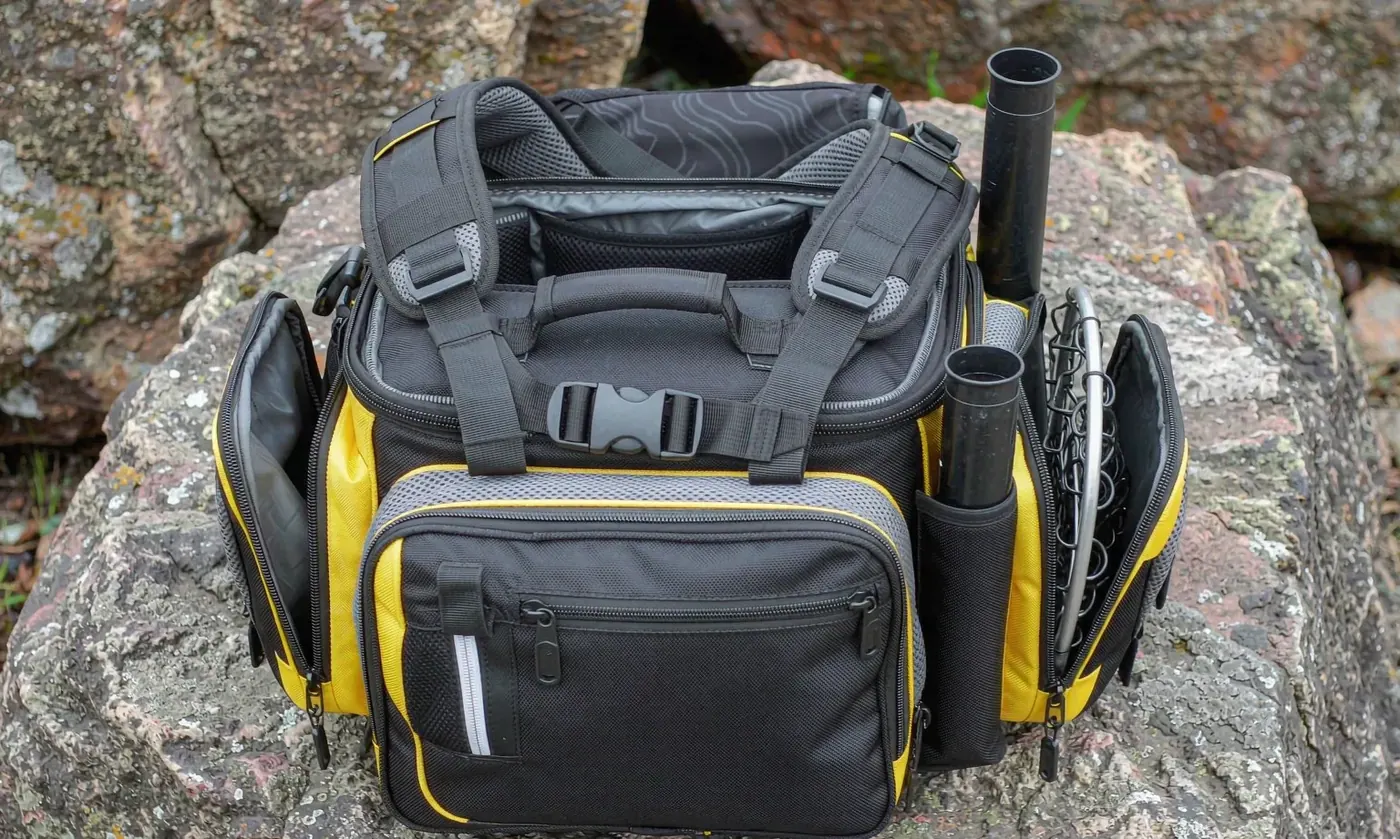
The jump from ten to twenty five is worth explaining. Nobody carries that many on their back; it represents a full seasonal working set held in a rolling carrier, a crate bag, or a boat locker, with three or four selected trays moved into a backpack for the actual session.
The Formula, With a Worked Example
Three steps produce a personal tray number, and the whole process takes about five minutes with a tape measure and a set of scales.
- Estimate usable litres: take the advertised volume and multiply by 0.75 for structured packs or 0.82 for soft unstructured ones.
- Subtract everything that is not tackle: water, food, weather clothing, camera, tools, typically 5 to 8 litres in total.
- Divide the remainder by 2.8 for standard trays, 2.1 for thin ones, or 3.6 for deep ones.
| Step | Example: 28 litre structured pack | Running figure |
|---|---|---|
| Advertised volume | 28 litres | 28 litres |
| Apply the 0.75 rule | 28 x 0.75 | 21 usable litres |
| Subtract non-tackle | Minus 6 litres for water, food, shell | 15 litres remain |
| Divide by working slot volume | 15 divided by 2.8 | Five trays |
| Sanity check loaded weight | Five trays at about 1 kilogram plus bag | Around 8 kilograms |
Any result above eight kilograms total should prompt a second look at the list rather than an acceptance of it. Trimming one tray usually costs less than whatever is gained by carrying it, and most anglers find the smaller number is more pleasant to fish from within a week.
Why Two Trays Often Beat Four
There is a well-known pattern in how lures actually get used: a small proportion of any collection does most of the work, typically around twenty percent of the items across eighty percent of sessions. Everything else is carried for the one day conditions change, and most of those days never arrive. Recognising this is usually worth more than any packing technique.
- Count how many distinct categories were genuinely used across the last five sessions, then round up by one.
- Separate terminal tackle into its own tray, which is almost always justified and often combined with tools.
- Resist adding a tray for any category fished less than once in five trips.
- Note that every extra tray costs around 1 kilogram of load, 30 seconds of digging, and a little more wear on the insert.
- Remember that access time matters most when hands are cold, wet, or holding a rod.
None of that argues against owning many trays. It argues against carrying them, which is why experienced anglers keep a full set in the vehicle and select three before walking anywhere.
Stated Counts Versus Verified Counts
Listed tray capacity and verified tray capacity diverge for three predictable reasons. Counts are often measured against thin variants, exclude non-tackle space entirely, and occasionally describe the total across including external pockets rather than the main bay. The table below shows the common pattern for a mid-sized pack.
| Claim | What it usually assumes | Verified result |
|---|---|---|
| Holds six trays | Thin trays, empty bag nothing else aboard | Four standard with ordinary gear |
| Four tray insert included | Insert slots only | Correct for those slots, little else |
| Space for eight trays | Two external pockets counted | Six in the main bay, one outside |
| Dedicated tray compartment | One bay exists | Usually two to four depending on width |
| Fits standard trays | Width adequate at the widest point | Check the narrowest point instead |
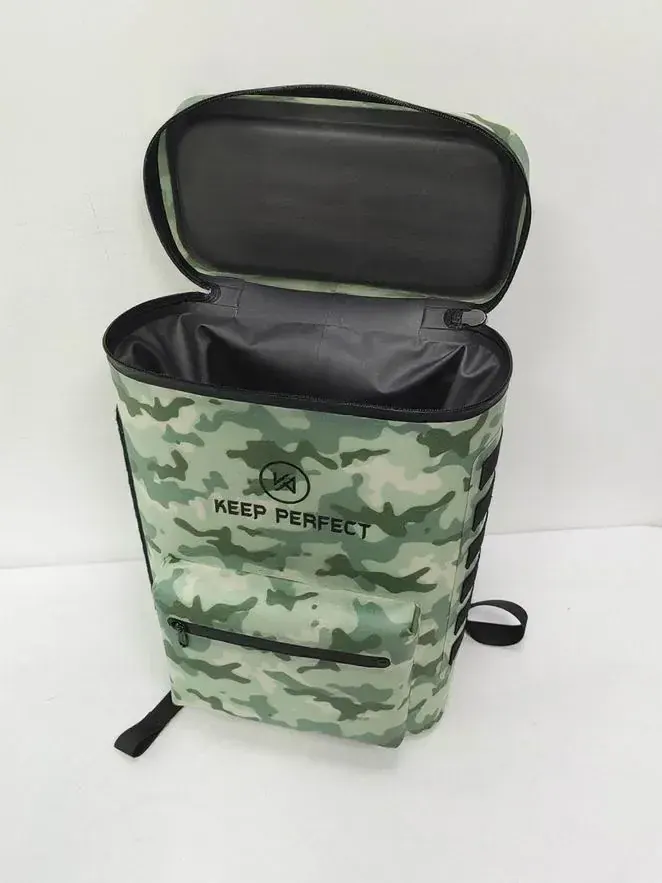
Where a description states the count without naming the variant, assume thin trays and deduct two. It costs nothing to be conservative, whereas an optimistic assumption tends to be discovered at the waterside with no option to correct it.
Where Extra Trays Actually Live
Beyond the main bay, four locations commonly add capacity, each with its own trade-off. They are worth counting because they genuinely raise the working number without altering the bag's core size, though none of them is as convenient as an internal slot.
| Location | Trays added | Trade-off | Best for |
|---|---|---|---|
| External sleeve behind the main bay | One to two | Exposed to rain and spray | The most-used tray of the day |
| Side pocket with a stiffened wall | One thin tray | Unbalanced load if one side only | Terminal tackle |
| Top lid or flap compartment | One thin tray | Occupies quick-access space | Leaders and small items |
| Strap-mounted pouch | None realistically | Interferes with casting | Tools rather than trays |
External sleeves are the genuinely useful addition. Keeping the one tray being worked from outside the main stack saves dozens of openings per session, and the weather exposure is acceptable for anything with a decent lid seal.
Weight and Access Trade-Offs
Every additional tray buys more choice and costs more of two things that matter: carried mass, and time spent reaching what is underneath. Both increase faster than people expect, because each tray is roughly 1 kilogram loaded and each layer adds meaningful handling time to everything below it.
| Trays carried | Loaded tray mass | Typical access time to the bottom tray | Comfortable carry distance |
|---|---|---|---|
| Two | 1.4 to 2.6 kilograms | Under five seconds | Several kilometres |
| Three | 2.1 to 3.9 kilograms | Around ten seconds | Up to about five kilometres |
| Five | 3.5 to 6.5 kilograms | Twenty to thirty seconds | Two kilometres comfortably |
| Eight | 5.6 to 10.4 kilograms | Approaching a minute | Short walks only |
| Twelve | 8.4 to 15.6 kilograms | Several minutes with unpacking | Vehicle to water's edge |
The distance column is the honest limit for most people. A well-matched two shoulder harness handles ten kilograms for maybe two kilometres comfortably, and beyond that the conversation moves to wheels rather than to better padding.
Systems That Reduce What Is Carried
Rather than owning one bag that must do everything, four habits consistently reduce the carried load without reducing capability. None requires buying anything, and all four together typically cut three or four trays from a regular load.
- Keep a full set of trays stored properly at home or in the vehicle, selected for the session rather than carried all at once.
- Maintain one permanently packed 'always' tray that never gets re-sorted, covering the basics.
- Build a single seasonal tray that changes contents four times a year rather than carrying all four versions.
- Use one external sleeve for the tray currently in use, so the main stack stays closed for most of the session.
- Review the contents after every fifth trip, removing anything unused across three consecutive sessions.
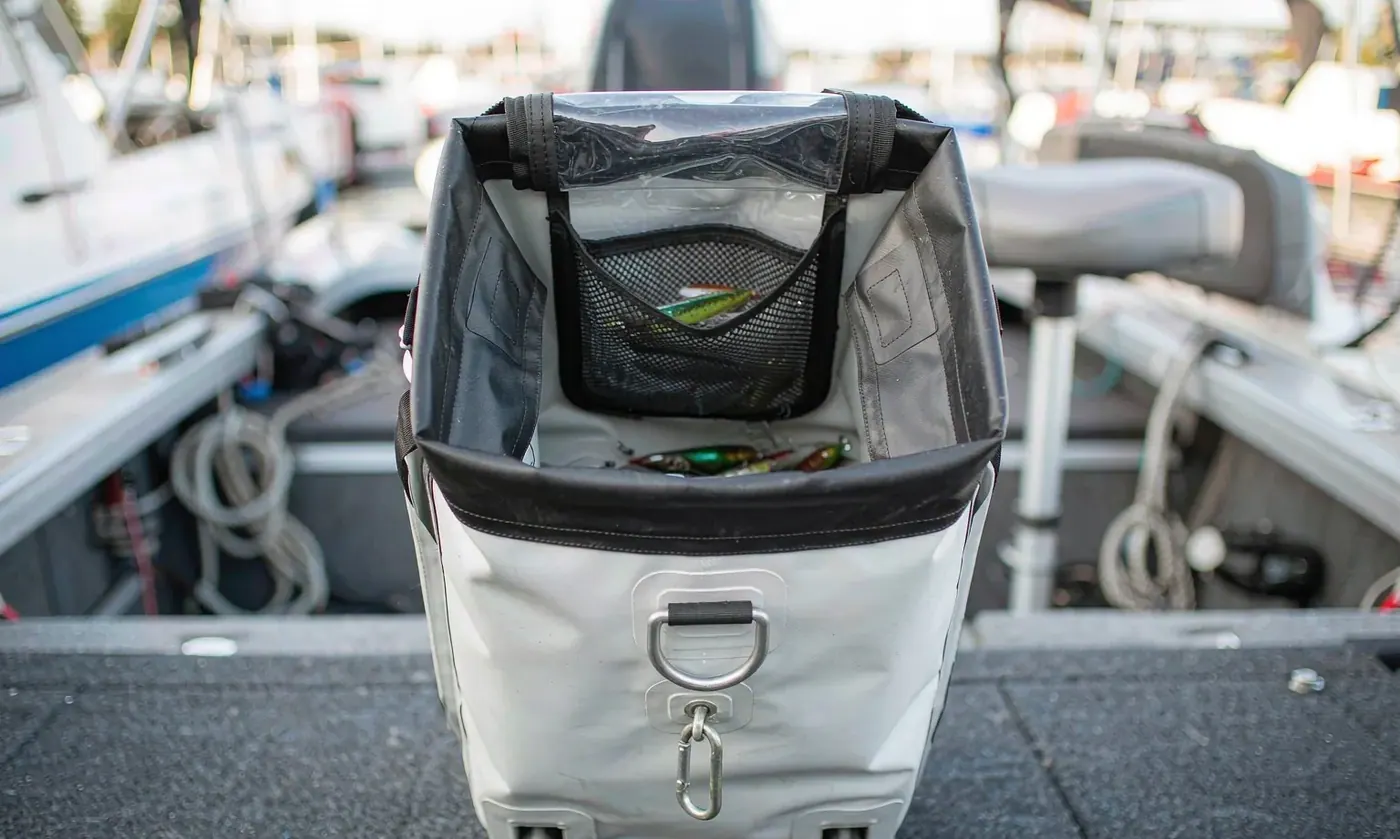
The review step is the one people skip, and it is the one that pays best. Most bags lose two kilograms of dead weight the first time their contents are honestly assessed.
Six Questions That Settle the Number
When two tray counts seem equally defensible, these questions resolve the matter quickly and without reference to any specification sheet.
- How many distinct lure categories were used in the last five sessions, not how many are owned?
- How far does the gear have to be carried, and over what ground?
- Does the session involve changing method frequently, or settling into one approach?
- Is there anywhere to set a bag down without it becoming wet, muddy or sand-filled?
- Does anything else compete for space: water, food, clothing, camera, electronics?
- If one more tray were added, what would it contain, and when would that be used?
Answering honestly tends to produce a number two or three below whatever the current bag holds. Acting on it usually improves the day immediately, since the lighter bag also happens to be the one whose contents are known.
One further test settles the remainder. Pack the reduced load for three sessions and note what was missed. Anything genuinely absent gets added back permanently, and everything that never got reached stays out for good. Three sessions is enough because it covers one good day, one poor one, and one in which conditions changed.
Session Length Changes the Answer
Tray count should follow time on the water more closely than it follows ambition. A shorter session rarely justifies more than two trays because the whole point of a quick trip is leaving promptly, while a long full-day session rewards one more tray simply because conditions drift and fish move. The two effects are not symmetric, and matching count to duration is what keeps carried weight honest.
| Session length | Recommended trays | Reasoning | Notes |
|---|---|---|---|
| Thirty to sixty minutes | One to two | Leave immediately, fish one method | Everything beyond this slows departure |
| Two to three hours | Two to three | One change of method likely | The common after-work pattern |
| Half day | Three to four | Weather and water changes possible | Add one tray if no vehicle access |
| Full day | Four to six | Several methods, changing conditions | Weight starts to matter here |
| Guided or tournament day | Four ashore, full set nearby | Client expectations and contingencies | Store the rest in the vehicle |
Departure friction is the overlooked variable. Anything requiring more than five minutes of packing before leaving tends to happen less often, and the bag that is always ready is worth more than the one that is theoretically better equipped.
Counting Errors and Their Fixes
Five mistakes account for most tray count problems, and all five are straightforward to correct once identified. They tend to compound, so a bag carrying three too many trays usually shows several of these at once.
| Error | What it leads to | Correction |
|---|---|---|
| Counting trays owned rather than trays used | A bag two categories too heavy | Review the last five sessions only |
| Ignoring the variant being counted | Buying thin trays then finding they are too small | State the depth in the plan |
| Forgetting non-tackle volume | Fitting three trays into a five tray bag | Subtract six litres before dividing |
| Assuming access is free | Thirty seconds digging in the rain | Put the working tray outside the stack |
| Never reviewing contents | Dead weight accumulating every season | Audit after every fifth trip |
Corrected versions consistently land lower than the number people start with, and the reaction afterwards is nearly always that nothing important was actually left behind.
Family Trips and Shared Loads
Dividing trays between people is the simplest way to raise the working count without raising anybody's load, and it is how families and pairs comfortably carry equipment that would crush one person. Three trays in one bag becomes six across two bags at no cost to anybody, provided the split follows categories rather than convenience.
| Group | Who carries what | Total trays available | Watch for |
|---|---|---|---|
| Two adults | One general tray each, shared terminal tray | Five to six | Duplicated essentials doubling weight |
| Adult plus one child | Adult carries three, child one shallow tray | Four | Child's bag must stay under about 3 kilograms |
| Adult plus two children | Adult four, each child one | Six | Children tiring before the fishing starts |
| Two adults plus one child | Two each for adults, one for the child | Seven to eight | Keeping dangerous items out of reach |
A child's own bag should hold one shallow tray and nothing heavy, since a load above roughly three kilograms begins to shape how far they are willing to walk. Everything else belongs with an adult, along with all hooks and weights, which stay out of a child's pack entirely.
The same logic applies to pairs fishing from one vehicle. Two bags of three trays each beat one bag of six every time, purely because nobody has to decide what to leave behind.
Specifying Tray Capacity in a Brief
Anyone commissioning a bag rather than buying one should specify the tray count in measurable terms, because the class name alone leaves too much room for interpretation. State the variant, require a physical fit test with real trays, and quote both capacity and loaded weight expectations. Shell strength should be requested against published methods from ASTM International, since more trays mean more sustained load on every seam, and dimensional tolerance classes useful for stating bay width come from ISO.
| Brief item | Recommended statement | Why it matters |
|---|---|---|
| Tray variant | Standard 4.4 centimetres unless otherwise agreed | Thin trays inflate stated counts by two |
| Clear internal width | 285 millimetres minimum | The absolute gate on the whole format |
| Expected count with ordinary gear | State rather than maximum | Reflects how the bag will really be used |
| Loaded weight target | Under 10 kilograms on the back | Keeps sessions comfortable |
| Verification | Fit test with trays, not drawings | Catches taper and deflection problems |
QUANZHOU JUNYUAN BAGS has handled waterproof bag programmes since 2014 behind a team in this trade since 2004, producing 200,000 pieces monthly under SGS verification and BSCI and ISO 9001 governance. Materials are screened for REACH and California Prop 65 and lots are inspected at AQL 2.5. Development opens at 500 pieces per design and colour, with six to ten working days for samples and thirty-five to fifty days for bulk after approval and deposit, shipping FOB Xiamen or DDP to more than one hundred countries. Send drawings to service@junyuanbags.com. Volume conversion is set out in the litres guide, tray geometry in the 3600 dimensions chart, and first-kit advice in the beginner guide.
People Also Ask
How many 3600 trays can one backpack realistically hold?
Three to six for most anglers. A 25 to 30 litre pack gives around five once water, food and clothing are aboard, and anything above that becomes a weight problem before it becomes a space one.
Is two trays enough for bank fishing?
Usually yes. A general lure tray plus a terminal tray covers most sessions, and extra trays tend to add kilograms rather than catches.
Do professional anglers really carry twenty five trays?
Not on their backs. That figure describes a full seasonal set stored in a rolling carrier, crate bag or boat locker, with three or four selected trays moved into a backpack for the session.
Why does my bag fit fewer trays than advertised?
Because listed counts usually assume thin trays and an otherwise empty bag. Allow about six litres for non-tackle gear and use 2.8 litres per standard slot instead.
How much does each loaded tray weigh?
Around 700 grams to 1.3 kilograms, so four trays account for roughly 3 to 5 kilograms before the bag itself is counted.
Should I carry more trays or better sorted trays?
Better sorted. Most anglers use a small share of their lures on most days, so a well planned three tray load outperforms a disorganised six.
Frequently Asked Questions
Q1. What is a good tray count for a beginner?
Two or three. One general purpose tray for lures and one for terminal tackle covers most early sessions, leaving room for water and weather clothing.
Q2. How many trays does a weekend angler need?
Three or four, which allows a separate tray per method fished while keeping the bag under about eight kilograms loaded.
Q3. Is there room for five trays in a 25 litre backpack?
Usually yes. Roughly 19 usable litres, minus six for non-tackle gear, divided by 2.8 litres per slot lands around five.
Q4. Why do listed counts seem too generous?
They are typically measured with thin trays in an empty bag and sometimes include external pockets. Deducting two from any stated number is a fair first correction.
Q5. Do deep trays change the count much?
Yes. Each deep tray needs about 3.6 litres against 2.8 for standard, so a five tray bag often holds only four when deep variants are used.
Q6. How heavy is too heavy for carrying trays?
Above about ten kilograms carried on the back, which typically means six to eight loaded trays plus gear. Beyond that, wheels or a tote make more sense.
Q7. Where should the tray I use most sit?
In an external sleeve or the top slot. It avoids opening the main stack dozens of times and usually saves more time than any other packing decision.
Q8. Can I fit an extra tray in a side pocket?
Often one thin tray will go, though it unbalances the load. Where space allows, balancing both sides is noticeably more comfortable over distance.
Q9. How do I reduce the number I carry without losing capability?
Rotate seasonally, keep one always packed general tray, and review contents every few trips. Most bags lose two kilograms of rarely used items immediately.
Q10. Does it matter which variant the bag was designed for?
Greatly. A bag dimensioned for thin trays may not accept standard ones at all, and the wrong assumption usually surfaces on the first wet, cold morning.
Q11. What is the minimum bay width for this tray size?
Around 285 millimetres clear, which covers the 276 millimetre tray length plus taper, seams and room to get fingers past corners.
Q12. What should I include when asking for a bag to hold six trays?
Say six standard trays alongside ordinary gear, require a physical fit test, state the target loaded weight, and give the allowable external dimensions.