A fishing backpack built for women is a fit problem rather than a colour problem: the back panel has to match a torso of roughly 370-440 mm, the shoulder straps have to exit the yoke at a wider angle to clear the chest, and the hip belt needs a cone of about 25 degrees to sit on a tilted pelvis. Seven builds were assessed for 2026 across 16-34 litres, 0.70-1.35 kg, adjustable harness ranges of 90-120 mm, and 20-46 USD FOB Xiamen bands at MOQ 500 pcs per design and colour. Samples take 6-10 working days and bulk 35-50 days. The pick is the 22 L petite-fit build at 0.85 kg.
Four Dimensions Decide Whether a Pack Fits
Most fishing packs are built around one unstated assumption: a torso of 430-480 mm, shoulders 400-450 mm wide, and a pelvis that takes a horizontal belt. Change any of those and the same pack behaves differently. Four dimensions account for nearly all fit complaints, and all four are measurable in a fitting room rather than guessed from a size label.
Torso length is measured from the seventh vertebra to the top of the hip crest and it decides back panel length. Shoulder width decides where the straps exit the yoke, and a strap exiting too wide slides off the shoulder slope. The sternum strap position decides whether the strap crosses the chest comfortably. And hip belt cone angle decides whether the belt sits on the pelvis or rides up onto the waist.
| Dimension | Typical women's fit | Typical unisex fit | Consequence of a mismatch |
|---|---|---|---|
| Torso length | 370-440 mm | 430-480 mm | Load sits too high, neck strain |
| Strap exit spacing | 150-175 mm | 180-210 mm | Straps slide off the shoulder |
| Yoke width | 330-380 mm | 380-430 mm | Yoke wraps past the shoulder edge |
| Hip belt cone | 20-30 degrees | 5-10 degrees | Belt rides up onto the waist |
| Sternum strap height | Lower chest, wider range | Upper chest, fixed | Pressure across the chest |
The commercial point matters as much as the technical one. Fit-driven returns run at two to three times the rate of defect-driven returns in this category, and the four dimensions above are cheap to address: an adjustable harness covering 90-120 mm of torso costs about 3.50 USD and removes most of the exposure. Colour and pattern, by contrast, drive attention rather than satisfaction.
Strap Geometry and the Exit Angle
Shoulder straps that leave the yoke too far apart do not follow the slope of the shoulder, and the result is a strap that rides toward the neck or slips off the outer edge on every cast. The correction is a narrower exit spacing of 150-175 mm and an S-curve cut into the strap rather than a straight taper. An S-curve follows the collarbone and keeps the load line over the shoulder blade.
| Element | Straight-cut strap | S-curve strap | Effect |
|---|---|---|---|
| Exit spacing | 180-210 mm | 150-175 mm | Strap follows the shoulder slope |
| Curve | Straight taper | S-curve at the top third | Sits over the shoulder blade |
| Foam | Flat 8 mm | Zoned, 10 mm at the top | Spreads load at the collar bone |
| Sternum range | Fixed | 120-150 mm adjustable | Clears the chest comfortably |
| Webbing edge | Bound with tape | Soft binding | No edge pressure line |
Zoned foam is the detail that gets overlooked. A strap loaded at 8 kg presses hardest where it crosses the collarbone, and a uniform 8 mm pad compresses there first. Foam of 10 mm through the upper third and 6 mm below costs about 0.90 USD more and removes the pressure point, which is the difference between a pack that is worn all day and one that is taken off every hour.
Hip Belts, Load Ratios, and the Cone Angle
A hip belt does its job when it sits on the iliac crest and transfers load into the pelvis. A belt cut nearly horizontal works on a pelvis with little tilt and rides up onto the soft waist on a pelvis with more tilt, at which point it stops transferring anything and starts squeezing. A cone angle of 20-30 degrees built into the belt shape is the correction, and it costs nothing beyond the pattern.
Load ratio is the second honest conversation. A pack should carry roughly 10-15 percent of body weight comfortably for a full day, which means a 60 kg angler is comfortably loaded at 6-9 kg and a 85 kg angler at 8.5-12.75 kg. That arithmetic argues for smaller volumes and lighter trays rather than for larger packs, and it is the reason the builds below cluster at 16-30 litres rather than at 40.
| Body weight | Comfortable all-day load | Suitable volume | Tray count | Pack weight target |
|---|---|---|---|---|
| 50-60 kg | 5-9 kg | 16-22 L | 2 x 3600 | Under 1.00 kg |
| 60-72 kg | 6-11 kg | 20-28 L | 3 x 3600 | Under 1.20 kg |
| 72-85 kg | 8-13 kg | 26-34 L | 4 x 3600 | Under 1.40 kg |
Load lifters are the adjustment most packs in this class omit, and they matter more as torso length shortens. Set at 30-45 degrees above the shoulder line, they pull the top of the pack toward the body and stop the sway that appears when a panel is shorter than the load is tall. On a 22 L pack with a 380 mm panel carrying 8 kg, the difference is visible within 200 m of walking.
The practical guidance for buyers is to publish a torso range and a load ratio on the label rather than a size word. Small, medium, and large mean nothing across brands, and a customer who knows her torso measurement can buy correctly the first time. Retailers who publish a measurement chart see materially fewer fit returns, and the chart costs nothing to print.
The Seven Builds at a Glance
Torso range is the adjustable range of the harness, and it should bracket the customer measurement rather than simply reach it. Pack weights are empty weights. The compact end of the category is covered in more depth in the small fishing backpack ranking, which shares several of the same fit principles.
| Build | Volume | Weight | Torso range | Trays | FOB band |
|---|---|---|---|---|---|
| Petite Fit 22 | 22 L | 0.85 kg | 370-430 mm | 2 x 3600 | 28-35 USD |
| Sling 18 | 18 L | 0.75 kg | Single strap | 1 x 3600 plus utility | 22-28 USD |
| Adjustable 28 | 28 L | 1.10 kg | 380-470 mm | 4 x 3600 | 32-40 USD |
| Wading 16 | 16 L | 0.70 kg | 370-430 mm | 1 x 3600 | 24-30 USD |
| Tournament 30 | 30 L | 1.35 kg | 400-470 mm | 6 x 3600 | 38-46 USD |
| Travel 20 | 20 L | 0.95 kg | 380-450 mm | 2 x 3600 | 26-33 USD |
| All-Round 24 | 24 L | 1.05 kg | 380-450 mm | 3 x 3600 | 30-38 USD |
1. Petite Fit 22: Best Overall
Twenty-two litres at 0.85 kg with a harness adjustable across 370-430 mm of torso, S-curve straps at 160 mm exit spacing, a hip belt cut at a 25-degree cone, and two 3600 trays. The FOB band is 28-35 USD.
It leads because all four fit dimensions are addressed at once rather than one at a time. The harness covers the shorter torso range, the straps exit narrowly and curve, the belt is coned, and the sternum strap adjusts across 140 mm so it can sit below the collar bone. Any one of those alone would be a partial fix; together they make the pack disappear on the body.
2. Sling 18: Best for Fast Water
Eighteen litres at 0.75 kg worn on one strap with a rotating anchor and a wide stabiliser, carrying one 3600 tray plus a utility tray. The FOB band is 22-28 USD.
A sling sidesteps two of the four fit problems, because a single strap has no exit spacing and no yoke. It introduces a different one: the strap must cross the chest without pressure, so the pad should be 70-80 mm wide with soft binding and the load kept under about 5 kg. Rotation to the chest for tray access takes about three seconds.
3. Adjustable 28: Best Shared Pack
Twenty-eight litres at 1.10 kg with a harness covering 380-470 mm, so one stock unit fits a wide range of customers, holding four 3600 trays. The FOB band is 32-40 USD.
A shared pack is commercially attractive and mechanically demanding: the adjustment has to hold under load rather than slip. This build uses a ladder-lock harness with a locking cam, which holds position at 10 kg where a simple slide adjuster creeps. The cost is about 3.50 USD and it is what makes a one-size claim honest.
4. Wading 16: Best for Wading
Sixteen litres at 0.70 kg mounted high so it clears a wading belt, with drainage at the base and a sternum strap that sits low on the chest. It carries one 3600 tray. The FOB band is 24-30 USD.
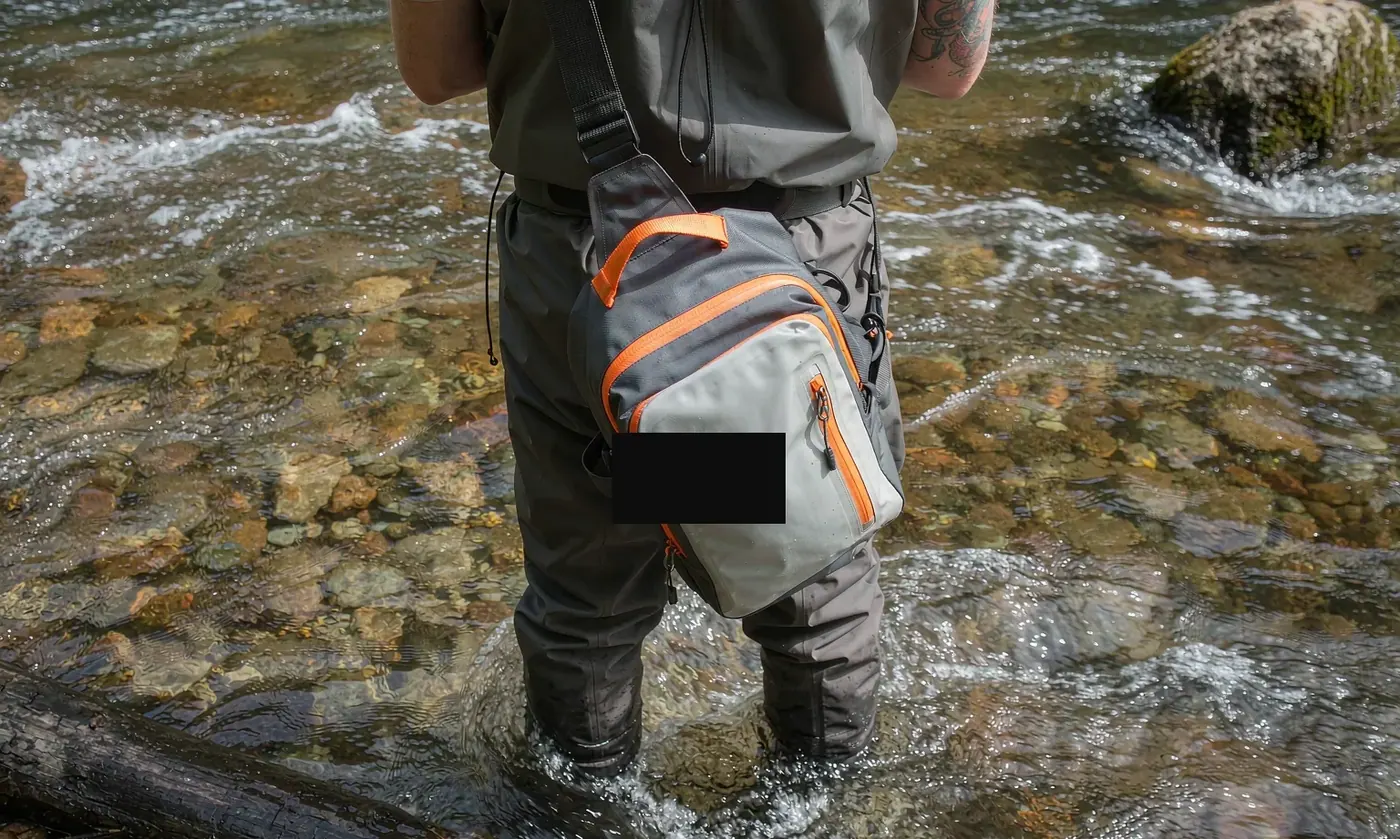
Wading changes the fit problem in one specific way: the pack must sit above a wading belt at roughly 300 mm above the hip, and a pack built for a longer torso naturally sits lower and fouls it. This build has a short 380 mm panel and a high sternum strap, and the base drains so water taken over the top leaves rather than pooling around the tray.
5. Tournament 30: Best for Competition
Thirty litres at 1.35 kg holding six 3600 trays, with a harness covering 400-470 mm, a coned 90 mm hip belt, and a front drop-down door giving a tray in about 12 seconds. The FOB band is 38-46 USD.
At 30 litres and six trays the loaded weight approaches 11 kg, which is at the top of the comfortable band for a lighter angler. The belt therefore does real work: a 90 mm coned belt with a stiffener transfers 70 percent of the load into the pelvis, and that is what makes a competition day survivable. Without it, the same pack is a neck problem by midday.
6. Travel 20: Best for Travel
Twenty litres at 0.95 kg with a harness covering 380-450 mm, a body that packs flat at 55 mm, and two 3600 trays in a protected sleeve. The FOB band is 26-33 USD.
Travel imposes its own fit consideration: a pack carried through an airport for two hours is carried at a lower load for longer, so strap comfort at 4-5 kg matters more than belt transfer. This build uses 60 mm S-curve straps with 10 mm foam and a light webbing belt, which is correct for that duty and lighter than a full padded belt.
7. All-Round 24: Best Everyday Build
Twenty-four litres at 1.05 kg with three 3600 trays, a harness covering 380-450 mm, S-curve straps, and a coned belt, sitting between the petite and tournament builds. The FOB band is 30-38 USD.
Three trays and 24 litres is the configuration most anglers actually need, and this build is the one to stock as a default. It carries about 7 kg loaded, which sits inside the comfortable band for most body weights, and it has the full set of fit corrections without the cost of the adjustable ladder harness.
Keeping Essentials Dry and Close
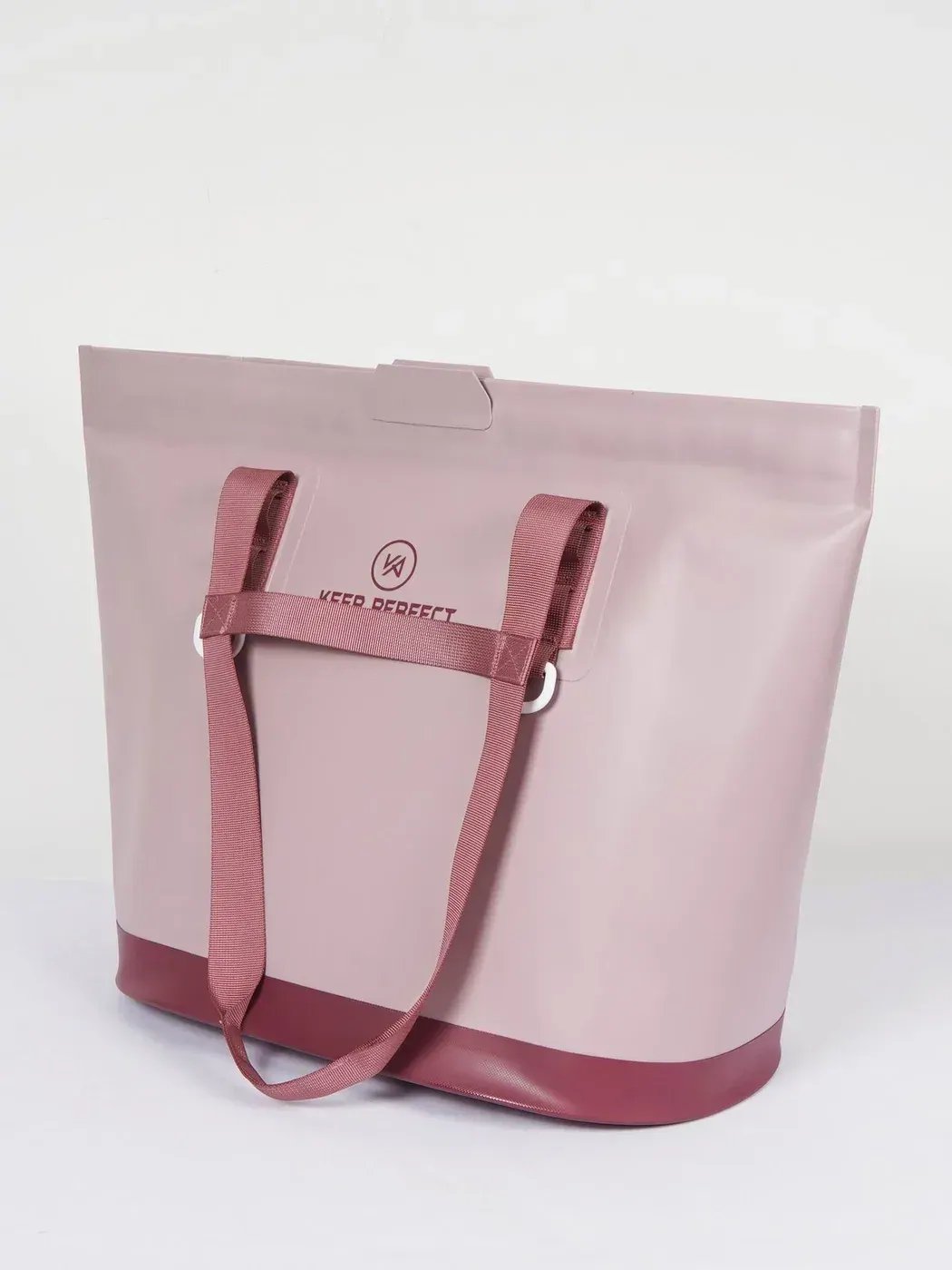
Small packs have fewer pockets, so the items that must stay dry need a deliberate home. A phone, a licence, keys, and medication belong in one sealed pouch that lives in the same pocket every trip, because a pouch moved between pockets is a pouch left behind.
| Item | Home | Why | Cost |
|---|---|---|---|
| Phone | Sealed pouch, lid pocket | One dunk ends the day | 1.00-2.00 USD |
| Licence | Sealed pouch, rigid sleeve | Paper wets through | 1.60-2.40 USD |
| Keys | Sealed pouch on a tether | Lost in water is lost | 0.80-1.20 USD |
| Sunscreen and repellent | External pocket, upright | Leaks ruin soft plastics | Design choice |
| Spare clothing | Separate dry chamber | Wet gear wets everything | 3.00-4.50 USD |
Sunscreen deserves a specific warning because it is the one item that quietly destroys tackle. A bottle leaking inside a tray chamber coats soft plastics in oil within one hot afternoon, and the damage cannot be cleaned off. An external upright pocket with a retained cap is the answer, and it costs nothing to specify.
Day-Long Comfort: Water, Food, and Load
A day session runs six to eight hours and the failure mode is dehydration and low blood sugar rather than equipment. Water at 1.5-2 L and food that survives heat belong in the pack, and both are easier to carry in a pack that is correctly fitted, because a well-fitted load feels roughly 1 kg lighter than the same load badly placed.
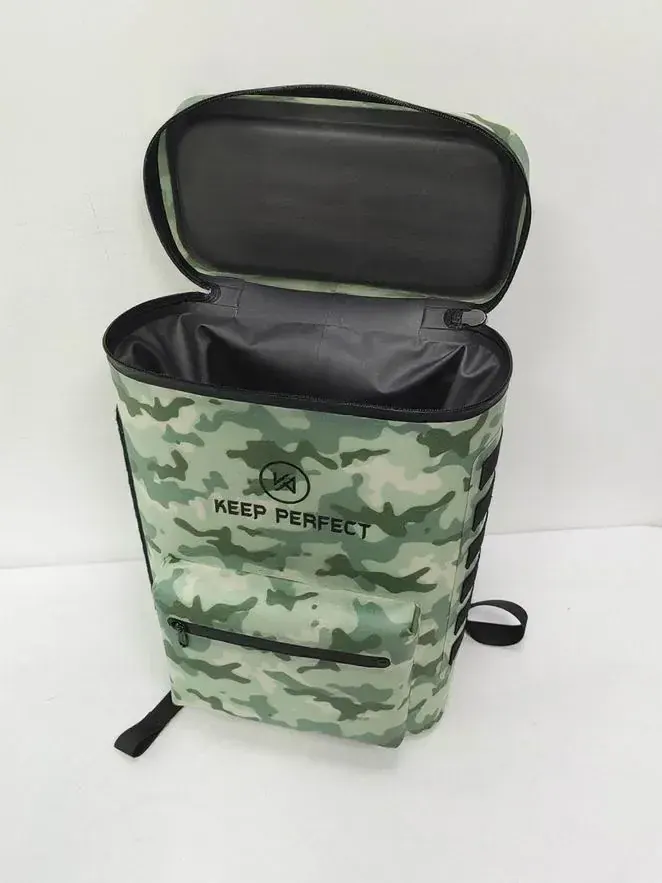
Insulated capacity is worth 3.00-4.50 USD and about 300 g, which is a meaningful share of a small pack. Where it cannot be carried, an insulated bottle in an external sleeve plus food in a sealed pouch is the lighter answer, and it keeps the tray chamber free of condensation.
Checks Before Approving a Fit-Driven Sample
Fit cannot be verified on a bench, and the approval protocol should say so plainly. Five checks need a wear trial with at least three people spanning the intended torso range, and the wear trial is the one that catches the mistakes that generate returns.
| Check | Method | Pass condition | Catches |
|---|---|---|---|
| Torso match | Fit three torsos across the range | Panel within 20 mm for all | Single panel length |
| Strap position | Wear at 7 kg, observe for 30 min | Straps stay on the shoulder | Exit spacing too wide |
| Belt position | Load and walk 1 km | Belt stays on the crest | Belt cone too shallow |
| Sternum comfort | Adjust across the full range | Can sit below the collar bone | Fixed sternum strap |
| Harness slip | Set the harness, load 10 kg, walk | Holds position | Slide adjuster instead of a cam |
Component requirements should reference published methods from ASTM International for strap and seam strength, and any water claim should carry a condition from the IEC ingress protection framework. Fit and rating are independent: a pack that fits beautifully and leaks is still a pack that comes back.
Programme, Pricing, and Compliance
A fit-driven brief should open with the torso range and the intended load ratio, because those decide the harness and the volume. Specify strap geometry and belt cone next, then tray count, and treat colour as the last decision rather than the first. Settling the harness first matters, because it is the component that cannot be changed after sampling without re-cutting the panel.
| Programme item | Baseline | Note |
|---|---|---|
| MOQ | 500 pcs per design and colour | Harness sizes can be split above the baseline |
| Sampling | 6-10 working days | Add 4-6 days for a ladder-lock harness |
| Bulk | 35-50 days | From approved sample and deposit |
| Inspection | AQL 2.5 | Include torso match, strap position, belt position, harness slip |
| Compliance | REACH and California Prop 65 | Screen coatings, films, inks, hardware, foam |
QUANZHOU JUNYUAN BAGS has developed waterproof bag programmes since 2014, with the founding team in the trade since 2004. Monthly output of 200,000 units is verified by SGS, and BSCI and ISO 9001 systems structure the workflow. Materials are screened for REACH and California Prop 65, and every bulk order is inspected at AQL 2.5 before shipment.
A fit-driven brief can be emailed to service@junyuanbags.com with torso range, load ratio, volume, tray count, and quantity. FOB Xiamen or DDP service to more than 100 countries follows an approved sample and a complete test record. The general category sits in the fishing tackle backpack range and the wider waterproof fishing bag range.
People Also Ask
What makes a fishing backpack fit a woman properly?
A back panel matching a torso of 370-440 mm, shoulder straps exiting 150-175 mm apart with an S-curve, and a hip belt cut at a 20-30 degree cone.
How do I measure torso length for a fishing pack?
From the seventh vertebra, the bump at the base of the neck, down to the top of the hip crest. That figure should fall inside the harness range printed on the pack.
Why do shoulder straps slide off?
The straps exit the yoke too far apart for the shoulder slope. A spacing of 150-175 mm with an S-curve cut keeps the strap over the shoulder blade.
How much weight should a fishing pack carry?
About 10-15 percent of body weight for a full day. A 60 kg angler is comfortable at 6-9 kg, which argues for 16-28 L rather than a large pack.
Do women need a different hip belt?
Yes, one cut at a cone of 20-30 degrees. A near-horizontal belt rides up onto the waist on a tilted pelvis and stops transferring load.
Is a sling pack a good option for a smaller frame?
Often yes, because one strap removes the exit spacing and yoke problems. Keep the load under about 5 kg and use a 70-80 mm pad with soft binding.
Frequently Asked Questions
Q1. What is the best fishing backpack for women?
A 22 L build at 0.85 kg with a harness covering 370-430 mm of torso, S-curve straps at 160 mm exit spacing, a hip belt at a 25-degree cone, and two 3600 trays, at a 28-35 USD FOB band.
Q2. How do I know what torso length I need?
Measure from the seventh vertebra at the base of the neck to the top of the hip crest. Most women fall between 370 and 440 mm, and the harness range should bracket that figure.
Q3. Why do fishing backpack straps slip off my shoulders?
The straps exit the yoke 180-210 mm apart, which is too wide for a narrower shoulder slope. A spacing of 150-175 mm with an S-curve cut keeps them in place.
Q4. What hip belt angle suits a woman?
A cone of 20-30 degrees. A near-horizontal belt rides up onto the soft waist on a tilted pelvis and stops transferring load into the pelvis.
Q5. How heavy a pack can I carry comfortably?
Roughly 10-15 percent of body weight for a full day. At 60 kg that is 6-9 kg, which points to 16-28 L rather than a 40 L pack.
Q6. What size fishing backpack suits a smaller frame?
16-24 L for day sessions and up to 30 L for tournament use. Volume should follow the load ratio rather than the ambition of the tray count.
Q7. Are sling packs better for women?
They suit short sessions well, because one strap removes the exit spacing and yoke fit problems. Keep the load under about 5 kg and use a 70-80 mm pad.
Q8. What should a wading pack do differently?
Sit high enough to clear a wading belt at about 300 mm above the hip, with a short 380 mm panel, a low sternum strap, and base drainage so water leaves the chamber.
Q9. Can one pack size fit everyone?
Only with a genuine adjustable harness covering about 90 mm of torso range and a locking cam that holds at 10 kg. A simple slide adjuster creeps under load.
Q10. Where should sunscreen go in a fishing pack?
In an external upright pocket with a retained cap. A leaking bottle coats soft plastics in oil within one hot afternoon, and the damage cannot be cleaned off.
Q11. What is the MOQ and lead time for a fit-driven programme?
MOQ is 500 pcs per design and colour, samples take 6-10 working days plus 4-6 days for a ladder-lock harness, and bulk runs 35-50 days from approved sample and deposit.