A fishing tackle backpack is chosen correctly by working through twelve checks in order, starting with the trays it must accept and ending with its compliance file. The three that decide most purchases are volume at 20-45 litres depending on session length, tray compatibility for 3600 or 3700 boxes, and empty weight staying under 1.9 kg for anything carried more than a kilometre. The rest follow: welded rather than taped seams, fabric rated above 5,000 mm hydrostatic head, shoulder straps wider than 50 mm at loads above 8 kg, a moulded base panel, and hardware matching the water being fished. This checklist gives a target figure for each point so that a specification can be written rather than argued about.
All Twelve Checks in One Table
Buyers rarely have time to read a full specification before shortlisting, so the whole checklist is set out below with a numeric target for each item. Anything failing three or more rows in a routine check is usually worth rejecting outright rather than negotiating over.
| Check | Target | Why | Fail if |
|---|---|---|---|
| 1. Volume for the session | 20-30 L for short trips, 35-45 L for full days | Volume sets carried weight | Below 18 L for regular use |
| 2. Tray compatibility | Two 3600 or one 3700 minimum | Trays organise terminal tackle | No tray rails at all |
| 3. Fabric water rating | Above 5,000 mm hydrostatic head | Spray and immersion resistance | Below 1,500 mm |
| 4. Seam construction | Welded for immersion, taped for spray | Seams fail before fabric does | Plain stitched seams |
| 5. Zip specification | Resin coil, marine slider in salt | Zips fail first and fail loudly | Steel slider in coastal use |
| 6. Base construction | Moulded panel or reinforced film | Wet ground contact wears first | Single layer base fabric |
| 7. Strap width and padding | Above 50 mm at 8 kg and over | Pressure comfort over hours | Below 40 mm webbing |
| 8. Empty weight | Under 1.9 kg for 30-40 L bodies | Weight is carried all day | Above 2.4 kg empty |
| 9. Back panel and ventilation | Spacer mesh above 6 mm | Sweat management matters | Flat fabric panel |
| 10. External attachments | Rod leash, plier loop, bottle sleeve | Hands free on the water | No attachment system |
| 11. Hardware for the water | 316 or polymer in salt water | Corrosion decides service life | Zinc plated near the coast |
| 12. Compliance and terms | REACH, Prop 65, AQL 2.5 | Market access and consistency | No written declaration |
Note that several rows carry mutually dependent targets. A body specified at 45 litres will exceed the 1.9 kg empty target unless the fabric is TPU laminate and the frame is minimal, so rows 1 and 8 have to be resolved together rather than separately. Buyers usually settle this by choosing volume first and then accepting the weight target that follows, which is the wrong order: pick the carry distance first, set the weight ceiling, and accept whatever volume fits inside it.
Checks 1 and 2: Volume, Carry Distance, and Weight
Volume and weight are one decision rather than two, and treating them separately is the single most common purchasing error in this category. A larger bag is bought with good intentions and then left in the vehicle because it became unpleasant to carry.
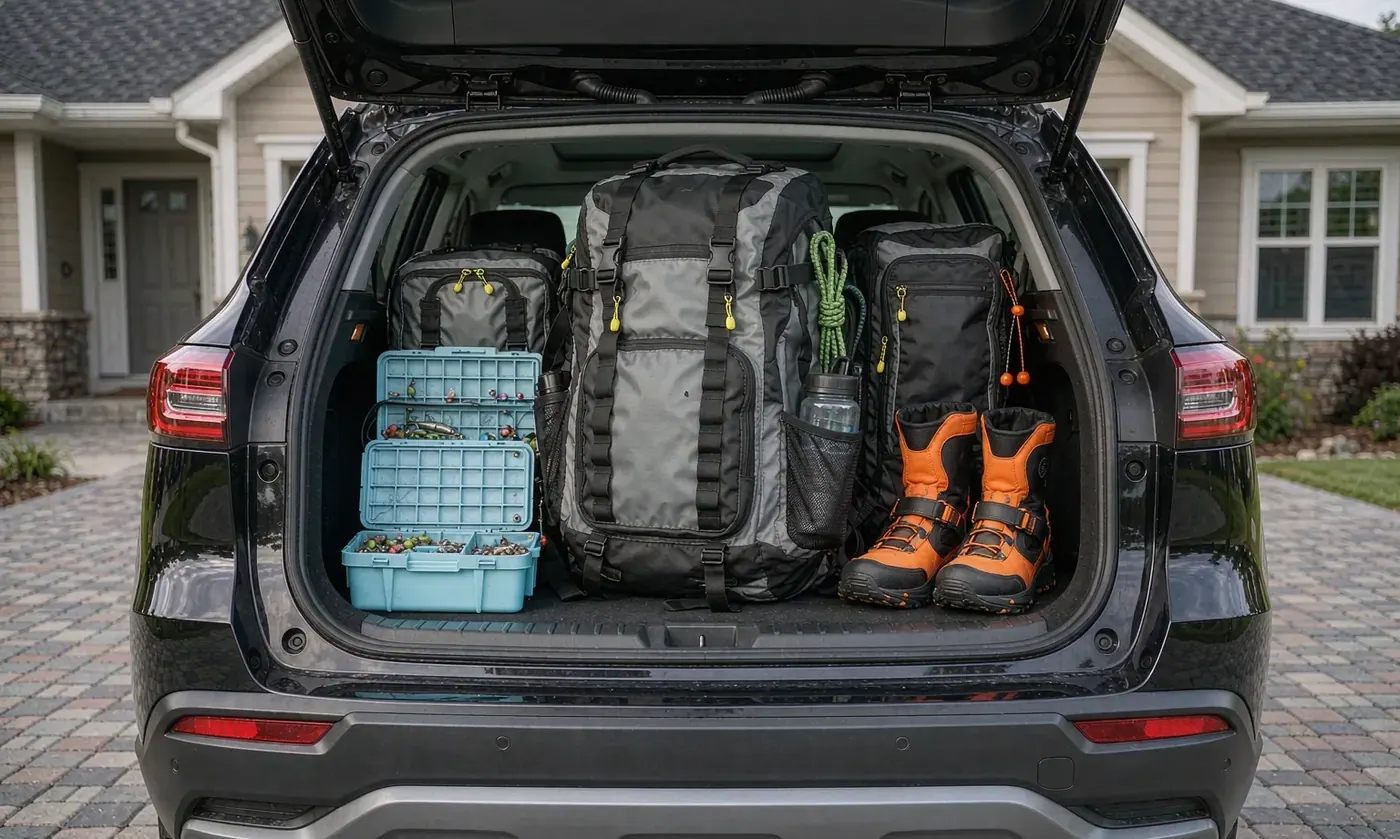
| Session type | Volume | Empty weight ceiling | Expected loaded weight |
|---|---|---|---|
| Two hours from a fixed spot | 18-25 L | 1.2 kg | 5-7 kg |
| Half day with regular moving | 25-35 L | 1.6 kg | 7-10 kg |
| Full day covering 3-8 km | 30-40 L | 1.9 kg | 9-13 kg |
| Two day trip or guide use | 40-55 L | 2.3 kg | 12-16 kg |
| Everything carried in one trip | 35-45 L | 1.8 kg | 10-14 kg |
The loaded weight column is the one to plan against rather than the bag specification. A 13 kg total carried over 8 km is a genuinely demanding load, and above roughly 15 kg the limiting factor stops being comfort and becomes injury risk. Anglers regularly exceeding that should reconsider not the bag but the tray count, since three loaded trays weigh 2.4-2.7 kg before any tackle is added.
Check 3: Tray Format Decides More Than Litres
Litres describe space but trays determine usefulness, and the two commonly disagree. A 40 litre cavity without tray rails holds less usable tackle than a well-organised 30 litre body with three rails and correctly spaced dividers.
- A 3600 size tray measures roughly 280 x 180 x 40 mm and two of them suit most 25-35 litre bodies comfortably.
- A 3700 size tray runs about 355 x 230 x 50 mm, takes about 55 percent more volume, and requires a body of at least 30 litres with a wide base panel.
- Tray rails should be sewn or welded at 40-55 mm spacing so trays slide without binding when loaded and wet.
- Allow 8-12 mm of clearance above each tray, or the one beneath cannot be lifted out with terminal tackle in it.
- Removable dividers beat fixed ones, since most anglers reorganise twice per season as their tackle changes.
The clearance point is the one most often missed and then discovered on the water. Trays loaded with 400-900 g of tackle bow slightly, and with less than 8 mm of headroom they wedge against the divider above. Specifying 10 mm of clearance costs nothing at the design stage and is impossible to add afterwards.
Checks 4 and 5: Fabric, Seams, and Closures
Water performance is decided by the joint rather than by the panel, which is why these two checks belong together. A superb fabric joined badly produces a bag that leaks, while a mid-grade film welded properly stays dry through years of immersion.
| Element | Minimum for spray | Target for immersion | How to verify |
|---|---|---|---|
| Fabric hydrostatic head | 1,500 mm | Above 5,000 mm | Report against the method used |
| Seam construction | Taped, 18-25 mm tape | Radio frequency welded | Immersion at 300 mm for 30 minutes |
| Main zip | Resin coil with a storm flap | Coated waterproof zip | Spray cabinet plus immersion |
| Closure style | Flap with buckles | Roll top with three folds | Roll with three turns minimum |
| Base seam treatment | Reinforced tape | Welded with no stitch line | Visual plus immersion |
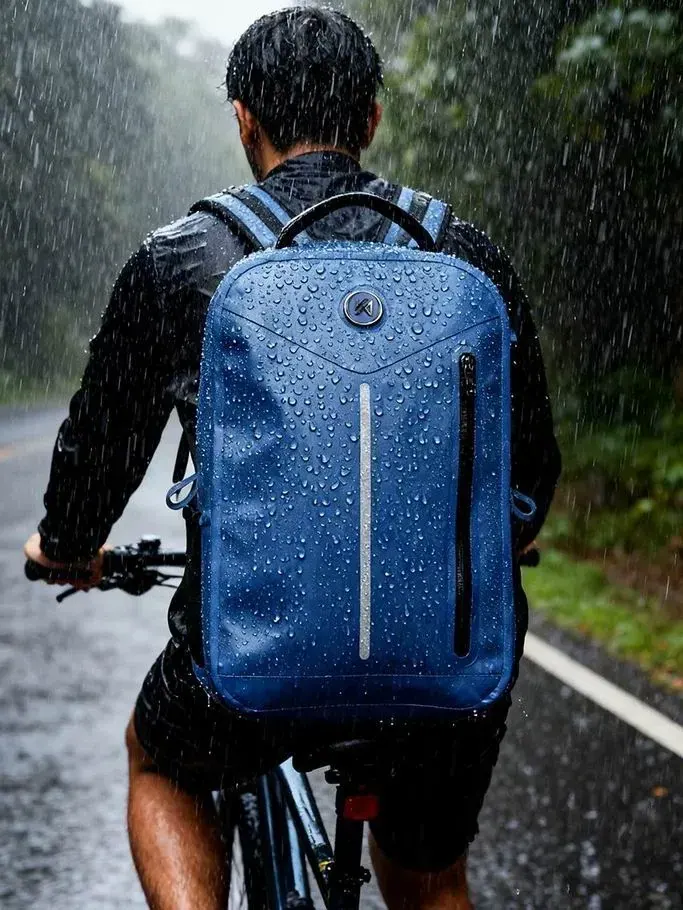
Enclosure ratings, where quoted, should always state the depth and duration tested. The relevant numbering is defined in the standard maintained by IEC, so a claim of IPX7 without a depth figure attached means very little. For most tackle applications, immersion resistance to 300 mm for thirty minutes covers every realistic event short of losing the bag overboard.
Checks 6 and 7: Base, Frame, and Where Wear Starts
Almost every tackle backpack fails first at the base, because that is what contacts wet gravel, boat decks, and tailgates. Specifying this area properly is cheaper than any other durability measure available.
| Feature | Budget approach | Recommended approach | Added cost |
|---|---|---|---|
| Base panel | Single layer of the shell fabric | Moulded EVA panel, 4-6 mm | 1.20-2.60 USD |
| Corner reinforcement | Bound edges | Double layer with binding | 0.50-0.90 USD |
| Drainage | None | Two grommets offset from seams | 0.60-1.30 USD |
| Feet or skids | None | Four moulded feet at 6-8 mm | 0.80-1.40 USD |
| Internal frame | None | Removable composite stay | 2.40-4.20 USD |
Adding a moulded base panel is the best value item on that table and also the one that changes how the bag behaves in daily use. A bag with structure in the floor stands up on wet ground instead of falling over, keeps its opening square while being loaded, and stops sharp hook points working through to the outside. It also costs less than many decorative upgrades that add nothing structural.
Checks 8 and 9: Carrying Comfort
Comfort is surprisingly predictable once the numbers are known, and nearly all complaints trace back to strap width, load position, or ventilation rather than to anything mysterious.
| Load | Minimum strap width | Padding | Back panel |
|---|---|---|---|
| Below 6 kg | 40 mm | Light foam sufficient | Flat fabric acceptable |
| 6-9 kg | 50 mm | 8 mm foam | Ridged spacer mesh |
| 9-13 kg | 65 mm | 10-12 mm foam plus load lifters | Ventilated panel with a channel |
| Above 13 kg | 75 mm plus a hip belt | 12 mm foam with a structured panel | Adjustable torso system |
| Sling formats above 3 kg | 65-90 mm padded band | 10 mm foam | Plus a stabiliser strap |
A hip belt becomes worthwhile above about 10 kg, transferring 30-45 percent of the load onto the pelvis and noticeably reducing shoulder fatigue over a long walk. It adds approximately 180-320 g and about 2.20-4.60 USD, and for anything carried above 10 kg that trade strongly favours including it.
Strap and webbing strength values should be referenced to published methods rather than adjectives, and the relevant test series is maintained by ASTM International. Always specify the strap width alongside any pull figure, because a narrow strap can pass a strength test while remaining uncomfortable enough to be returned.
Checks 10 and 11: Organization and Hardware
The last two functional checks concern what hangs off the bag and what holds it together. Both are cheaply specified and expensively neglected.
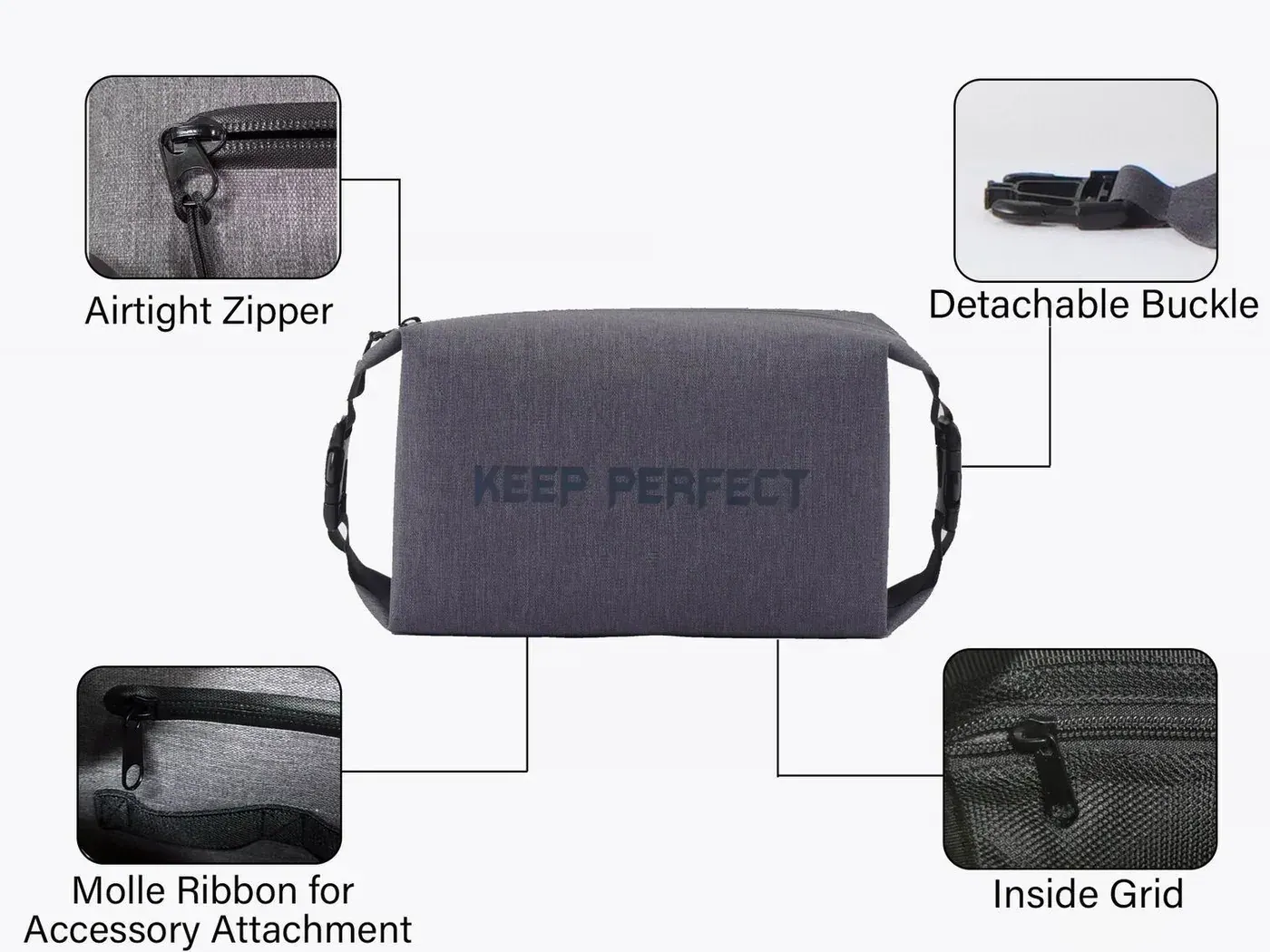
- External attachments should include a rod leash, a plier holster, a bottle sleeve accepting 750 ml, and two daisy chain loops, which together cost about 2.40-4.80 USD.
- Pockets should number four to seven on a 30-40 litre body, since below that everything ends up in one cavity and gets scratched.
- Every buckle and adjuster should be polymer in any coastal programme; a full polymer hardware set costs around 1.30-2.60 USD more than zinc plated steel.
- Where load demands metal, use 316 stainless rather than 304, which pits after 200-500 hours of salt exposure against 500-1,200 for the 316 grade.
- Zips in coastal use need a marine slider and a resin coil, which together add roughly 0.90-2.20 USD and prevent the most common failure in the field.
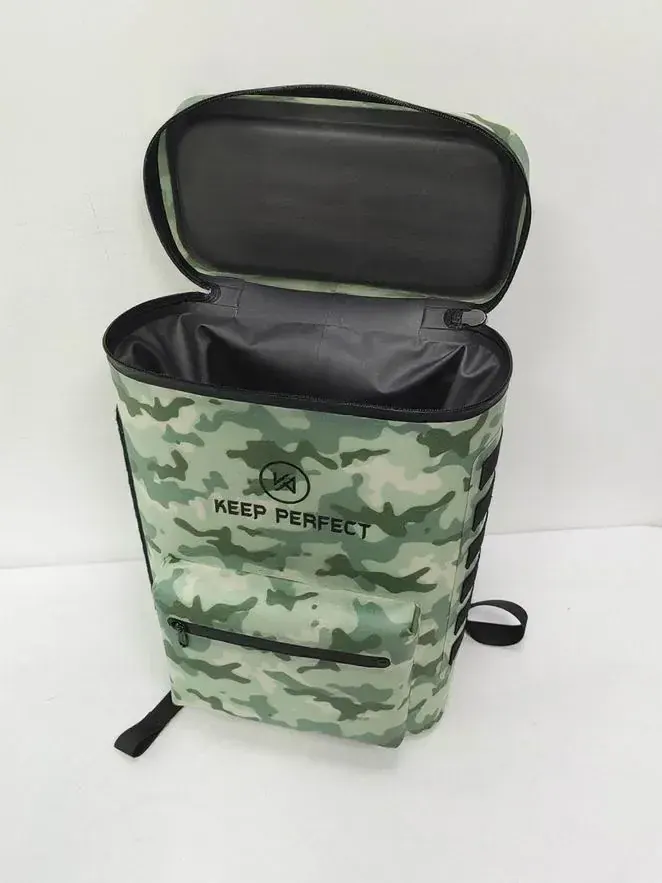
One caution about pockets: volume spent on organisation is volume unavailable for trays, and some models lose 20-25 percent of their published capacity to pockets and linings. Buyers comparing two 40 litre bodies should always ask how many trays each actually accepts, because that single figure reveals more than any headline capacity claim.
Applying the Twelve Checks by Angler Type
The checklist can be shortened to three dominant rows for most buyers, because anglers rarely value all twelve equally. Identifying which three matter for a given user avoids specifying everything and paying for features nobody will use.
| Angler type | Three dominant checks | Everything else |
|---|---|---|
| Mobile bank angler | Empty weight, strap width, volume | Tape taped seams are adequate |
| Kayak and boat angler | Welded seams, drainage, base | Strap comfort matters far less |
| Coastal and offshore angler | Hardware grade, zip type, drainage | Weight is carried short distances |
| Guide or lodge operation | Tray count, serviceability, compliance | Unit cost matters less than uptime |
| Retail entry line | Unit cost, tray compatibility, fabric | Advanced features never get noticed |
The value in that table is mostly in what it permits a buyer to leave out. A mobile bank angler benefits far more from 300 g saved and 65 mm straps than from a premium zip, while the same money spent the other way round produces a bag that gets left in the car. Writing a specification that names three priorities rather than twelve is usually what produces a product that sells consistently rather than one that merely scores well on a comparison sheet.
Check 12: Compliance, Sampling, and Terms
The final check concerns paperwork and schedule, and skipping it is how otherwise good products get held at a border or rejected by a retail compliance team.
| Item | What to require | Why it matters |
|---|---|---|
| Restricted substances | Declaration against REACH and California Prop 65 | Market access in most regions |
| Test records | Immersion, abrasion, strap pull, hardware cycles | Evidence rather than assertion |
| Inspection standard | AQL 2.5 with a stated sampling plan | Consistency across every shipment |
| MOQ | 500 pcs per design and colour | Standard entry point for a new design |
| Sampling time | 6-10 working days | Plan it into the launch calendar |
| Bulk production | 35-50 days from approved sample and deposit | The largest single block of time |
Request restricted-substance documentation at the beginning rather than the end of development, because reformulating a coating or replacing a hardware finish after sample approval typically costs two to four weeks and occasionally the whole launch slot. Quality management systems referenced here sit within the series published by ISO, and a documented quality system is what makes any of these promises auditable afterwards.
Red Flags When Reviewing a Sample
Finally, four signs appear repeatedly in samples that later disappoint, and each takes under a minute to check while the sample is still on the bench.
| Observation | What it usually means | Action |
|---|---|---|
| Straps narrower than 40 mm on a 35 L body | Comfort was not engineered | Reject or specify a change |
| Stitch line visible at the base seam | Will leak under immersion | Request a welded version |
| No declaration available for restricted substances | Cannot be sold into several markets | Request it before ordering |
| Zinc-plated fittings on a coastal model | Corrosion within one season | Specify polymer or 316 |
| Tray rails missing or spaced wrongly | Organisation was an afterthought | Check actual tray fit |
QUANZHOU JUNYUAN BAGS has developed waterproof bag programmes since 2014, with the founding team working in the trade since 2004. Monthly output of 200,000 units is verified by SGS, and BSCI and ISO 9001 systems structure the workflow. Materials are screened for REACH and California Prop 65, every bulk order is inspected at AQL 2.5 before shipment, and a full test record accompanies every sample.
A checklist review can be emailed to service@junyuanbags.com with session length, carry distance, target tray count, water type, and yearly volume. FOB Xiamen or DDP service to more than 100 countries follows an approved sample. The most useful related reading is the fishing tackle backpack range, the size selection guide, and the 3600 versus 3700 tray comparison.
People Also Ask
What size tackle backpack should I buy?
Base it on session length: 18-25 litres and 5-7 kg loaded for short trips, 30-40 litres and 9-13 kg for a full day, and 40-55 litres only for guide or multi-day use.
How many trays should a tackle backpack hold?
Two 3600 size trays for a 25-35 litre body and one or two 3700 size trays from 30 litres upward, with 10 mm of clearance above each tray.
Are taped seams good enough for a tackle backpack?
Yes for spray and rain, no for immersion. Taped seams test at 200-800 mm of hydrostatic head at the seam, so specify welded construction if the bag will sit in water.
What strap width do I need?
Above 50 mm for loads of 6-9 kg, 65 mm from 9-13 kg, and 75 mm plus a hip belt above 13 kg. Below 40 mm, pressure causes discomfort long before anything fails.
How much should a tackle backpack weigh empty?
Under 1.9 kg for a 30-40 litre body and under 1.6 kg for 25-35 litres. Above 2.4 kg empty, most anglers stop carrying the bag on longer walks.
Do I need a moulded base panel?
Nearly always. A 4-6 mm moulded EVA panel costs 1.20-2.60 USD, keeps the opening square while loading, and prevents nearly all of the wear complaints that end a bag's life.
Frequently Asked Questions
Q1. How do I choose a fishing tackle backpack?
Work through twelve checks in order: volume for the session, tray compatibility, fabric rating, seam construction, zip type, base build, strap width, empty weight, ventilation, external attachments, hardware grade, and compliance. Each has a numeric target this guide sets out.
Q2. What volume tackle backpack do I need?
18-25 litres for short sessions, 25-35 litres for half days, 30-40 litres for a full day on foot, and 40-55 litres for guide or multi-day use where weight can be managed.
Q3. What is more important, litres or tray count?
Tray count. A well-organised 30 litre body with three rails holds more usable tackle than a 40 litre cavity without rails, and organisation is what gets used every trip.
Q4. Are stitched seams acceptable on a tackle backpack?
For spray protection yes, for immersion no. Needle holes carry perhaps 400-600 punctures per metre of seam, dragging hydrostatic performance below 200 mm at the joint.
Q5. What hydrostatic head rating should I look for?
Above 5,000 mm for any bag intended to sit in water, and at least 1,500 mm for a bag that will only see rain and spray. Always ask for the test method used.
Q6. Should I choose a roll top or a zip closure?
A roll top with three folds is more reliable and tolerates varying loads, while a quality zip gives faster access. Many good designs combine both, using a zip for the front and a roll top above it.
Q7. How wide should shoulder straps be?
At least 50 mm at loads of 6-9 kg, 65 mm between 9 and 13 kg, and 75 mm with a hip belt above 13 kg. Below 40 mm, expect discomfort complaints regardless of padding.
Q8. When do I need a hip belt?
Above about 10 kg of loaded weight. It transfers 30-45 percent of the load to the pelvis and adds only 180-320 g, making it the best comfort purchase available at that load.
Q9. What hardware should a coastal tackle backpack use?
Marine-grade polymer for buckles and adjusters, or 316 stainless where load requires metal. Zinc-plated steel reaches first corrosion within 48-96 hours of salt spray exposure.
Q10. How much should I expect to pay?
FOB Xiamen bands run roughly 22-44 USD for a soft tackle backpack at MOQ 500 pcs per design and colour, rising with TPU film, welded construction, and marine hardware.
Q11. What is the MOQ and lead time?
MOQ is 500 pcs per design and colour. Samples take 6-10 working days and bulk production runs 35-50 days from approved sample and deposit.
Q12. Which tests should I request on a new design?
Immersion at 300 mm for thirty minutes, abrasion cycles, strap pull strength, zip cycle count, and hardware corrosion hours. Requesting these defines acceptance before the first shipment rather than after it.
Q13. Does a tackle backpack need drainage?
Yes for boat and kayak use. Two grommets in the lowest panel, offset at least 25 mm from any seam, clear standing water that otherwise leaves abrasive residue inside.
Q14. What compliance documents are needed?
A restricted-substance declaration against REACH and California Prop 65 for most markets, plus a test record covering immersion, abrasion, and strength. Ask at the start, not after sample approval.
Q15. What are the most common design faults?
Straps too narrow, stitched base seams on bags expected to resist immersion, missing tray rails, and zinc-plated hardware. All four take under a minute to spot on a sample before committing.