A cooler pocket on a fishing backpack is worth having when it holds 5-9 litres, is lined with a welded rather than a sewn liner, and keeps food below 4 degrees for the length of the session, which typically means 6-8 hours with a one-to-one ice ratio. Seven insulated builds were assessed for 2026 across 22-45 litres, cooler volumes of 4-12 L, foam thickness of 6-10 mm, empty weights of 1.00-2.20 kg, and 22-55 USD FOB Xiamen bands at MOQ 500 pcs per design and colour. Samples take 6-10 working days and bulk 35-50 days. The pick is the 30 L build with a 6 L cooler at 1.35 kg.
What Insulation Actually Delivers
A cooler pocket is a thermal problem with a packaging problem attached. The thermal part is decided by foam thickness and closure, and the packaging part by whether the liner is welded. A sewn liner leaks meltwater through its stitch line within an hour, which is the single most common complaint in this category and the reason a cheap insulated pocket gets a bad reputation.
| Foam | Thickness | Liner | Ice retention at 25 degrees | Meltwater behaviour |
|---|---|---|---|---|
| EPE | 6 mm | Sewn PEVA | 3-4 hours | Seeps through the stitch line |
| EPE | 8 mm | Welded TPU | 6-8 hours | Contained, drains at a plug |
| Closed-cell EVA | 10 mm | Welded TPU | 8-12 hours | Contained, drains at a plug |
| EPE plus reflective film | 8 mm | Welded TPU | 9-12 hours | Contained, slower warm-up in sun |
Ice ratio matters as much as foam. A pocket loaded one-to-one by volume between ice and contents holds below 4 degrees for about 6-8 hours at an ambient of 25 degrees; the same pocket at two-to-one reaches 10-12 hours, and at one-to-three it falls to about 4 hours. Buyers should be told the ratio behind any retention claim, because an hour figure without a ratio and an ambient temperature is not a specification.
Reflective film is the cheap upgrade worth specifying. A layer of metallised film on the inner face of the foam costs about 0.90 USD and cuts radiant heat gain when the bag sits in direct sun, which is the normal condition on a boat. Its effect is worth roughly two hours of retention in a pocket that would otherwise warm quickly after the first hour.
The closure is the third thermal factor and the one most often neglected. An insulated pocket with a wide horizontal zip loses cold air through the top every time it is opened, and on a day with 20 openings that is worth about an hour of retention. A vertical or three-quarter zip that opens a smaller face is better, and a magnetic or cam-closed flap over the zip is better still for about 1.10 USD.
Food Safety Inside a Fishing Bag
A cooler pocket is carrying food for six to ten hours in an environment where the ambient temperature can exceed 30 degrees, which puts it squarely in the range where bacterial growth accelerates. The practical rule is that perishable food should stay at 4 degrees or below, and anything that has been above that for more than two hours should not be eaten.
| Item | Target temperature | Max time above target | Packing note |
|---|---|---|---|
| Perishable food | 4 degrees or below | 2 hours | Pack against the ice, not on top of it |
| Drinks | Under 10 degrees | No limit | Separate from food if ice melts |
| Cut bait | Below 4 degrees | 4 hours | Double-bagged, never with food |
| Ice or frozen bottles | Frozen solid at the start | Not applicable | Frozen bottles last longer than loose ice |
| Medication, if carried | As labelled | Check the label | Keep out of direct contact with ice |
Guidance on keeping food at safe temperatures is published by the Centers for Disease Control and Prevention, and it applies as much to a fishing bag as to a kitchen. The design consequence is simple and worth stating in a care card: bait and food must never share a liner, because bait juice is a contaminant regardless of how cold the pocket is.
The Seven Builds at a Glance
Cooler volume is stated as usable internal capacity of the insulated pocket, which is typically 1-2 litres less than the gross figure quoted on a hangtag. Retention is measured at an ambient of 25 degrees with a one-to-one ice ratio, and it is the comparable number across this group. Capacity guidance for the shells themselves is set out in the fishing backpack litres guide.
| Build | Volume | Cooler | Weight | Retention | FOB band |
|---|---|---|---|---|---|
| Daypack 30 | 30 L | 6 L, welded | 1.35 kg | 7 hours | 30-38 USD |
| Big Cooler 40 | 40 L | 9 L, welded, drained | 1.85 kg | 9 hours | 38-47 USD |
| Compact 22 | 22 L | 4 L, welded | 1.00 kg | 5 hours | 24-31 USD |
| Dual 34 | 34 L | 6 L food plus 4 L bait | 1.55 kg | 7 hours | 36-45 USD |
| Submersible 28 | 28 L | 5 L, welded, IPX7 shell | 1.45 kg | 6 hours | 42-52 USD |
| Tournament 45 | 45 L | 12 L, welded, drained | 2.20 kg | 11 hours | 44-55 USD |
| Value 26 | 26 L | 5 L, welded | 1.15 kg | 6 hours | 22-29 USD |
Weight and Balance With a Loaded Cooler
A cooler pocket adds weight in the worst possible place when it is mounted at the back of the bag: two litres of water plus a kilo of ice is 3 kg sitting away from the spine, and the leverage makes it feel like 4 kg. The correction is to mount the insulated pocket low and close to the back panel, or to split it into two pockets at the sides so the load is symmetrical.
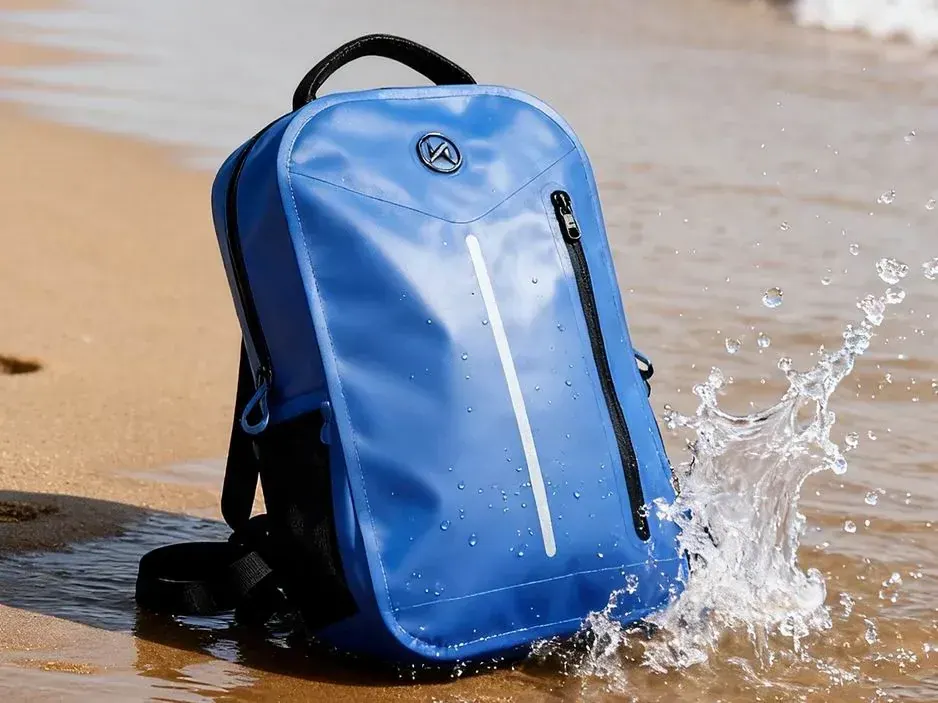
Balance also changes through the day, which is the part buyers do not anticipate. A pocket loaded with ice in the morning and half-melted water by the afternoon shifts its centre of gravity as the ice melts and the water sloshes, and a single large pocket sloshes noticeably. Two smaller pockets at the sides reduce the slosh and keep the load symmetrical as it changes.
| Load case | Total cooler weight | Position | Felt weight | Guidance |
|---|---|---|---|---|
| Ice only, morning | 2.0 kg | Low, near the spine | 2.2 kg | Best case |
| Ice plus drinks | 3.0 kg | Low, near the spine | 3.3 kg | Acceptable |
| Ice plus drinks | 3.0 kg | Rear external pocket | 4.2 kg | Avoid this mounting |
| Half melted, afternoon | 2.5 kg | Two side pockets | 2.6 kg | Least slosh, symmetrical |
1. Daypack 30: Best Overall
Thirty litres at 1.35 kg with a 6 L welded insulated pocket holding about six cans plus ice, 8 mm EPE foam, and a drain plug at the base, giving about 7 hours of retention at 25 degrees. Three 3600 trays fit alongside. The FOB band is 30-38 USD.
Six litres is the right number for a one-person day, and it is worth being precise about why: 6 L holds six cans and a kilogram of ice, which is about 2.5 kg of carried weight, and that is the most a 30 L pack should carry away from the spine. Larger cooler volumes suit larger shells only, and bolting a 9 L pocket onto a 30 L pack is how a comfortable bag becomes an uncomfortable one.
2. Big Cooler 40: Best for Long Days
Forty litres at 1.85 kg with a 9 L insulated pocket, 10 mm closed-cell foam, a welded liner, and a drain plug, giving about 9 hours of retention. Four 3600 trays fit and the FOB band is 38-47 USD.
Nine litres covers two people for a full day or one person for a long one, and the 10 mm foam is what makes the retention figure credible rather than optimistic. The drain plug matters at this volume because 9 L of meltwater weighs 9 kg and nobody wants to carry it; a plug with a 20 mm aperture empties the pocket in about 40 seconds.
3. Compact 22: Best for Short Sessions
Twenty-two litres at 1.00 kg with a 4 L insulated pocket, 6 mm foam, and a welded liner giving about 5 hours, holding two 3600 trays. The FOB band is 24-31 USD.
Four litres is two cans and a small ice pack, which is enough for a four-hour session and not for a full day. The value of the size is weight: at 1.00 kg this pack is comfortable for a long walk, and the cooler adds only about 1.5 kg loaded. Buyers should treat the retention figure as a four-hour claim rather than a day claim.
4. Dual 34: Best for Food and Bait Separation
Thirty-four litres at 1.55 kg with two insulated pockets of 6 L and 4 L, separately welded and separately drained, four 3600 trays, and a 36-45 USD band. It is the build for an angler carrying both lunch and cut bait.
Separation is the entire argument. Bait juice in a food liner is a contamination problem that no amount of ice solves, and a shared pocket is the most common way it happens. Two welded liners cost about 4.80 USD against 3.00 USD for one, and the second liner also lets bait and food be carried at different temperatures.
5. Submersible 28: Best for Wet Boats
Twenty-eight litres at 1.45 kg with a welded shell rated IPX7 for 30 minutes at 1 m, a 5 L insulated pocket inside the liner, and three 3600 trays. The FOB band is 42-52 USD, roughly 12 USD above the equivalent non-submersible build.
The interesting detail is that the insulated pocket sits inside the welded liner rather than outside it, which means the cooler shares the bag water rating and the meltwater cannot escape into the tray chamber. It also means the pocket cannot drain externally, so it needs a sealed drain plug and a disciplined habit of emptying it after each trip. Ratings follow the IEC ingress protection framework.
6. Tournament 45: Best for Tournament Days
Forty-five litres at 2.20 kg with a 12 L insulated pocket, 10 mm foam plus reflective film, a welded drained liner, and about 11 hours of retention, holding six deep 3700 trays. The FOB band is 44-55 USD.
Twelve litres is the largest pocket in this group and it needs the largest shell to carry it: 12 L of ice and drink weighs about 6 kg, and at that weight the pocket must be mounted low with a hip belt doing the work. A 100 mm belt with a stiffener transfers about 70 percent of a 17 kg total load, which is what makes the build usable.
7. Value 26: Best Budget Build
Twenty-six litres at 1.15 kg with a 5 L welded pocket, 6 mm foam, and about 6 hours of retention, holding two 3600 trays, at a 22-29 USD band.
The saving is the foam thickness and the reflective film rather than the liner, which is the right priority: a welded liner is what stops meltwater escaping, and 6 mm of foam only costs about two hours of retention. This is the build to stock where the price point matters and the sessions run four to six hours.
Condensation, Leaks, and Keeping Trays Dry
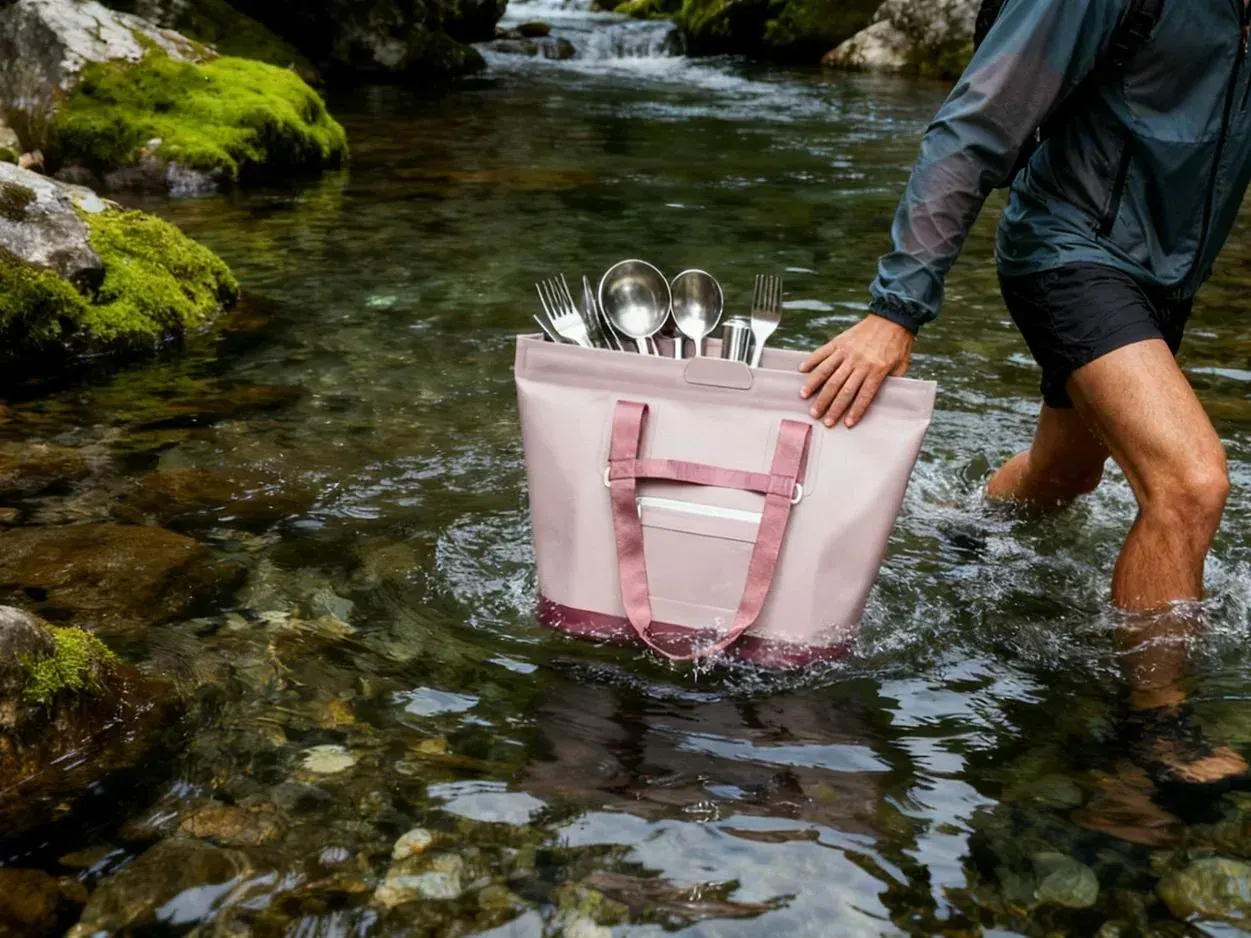
Insulated pockets produce condensation on their outer face whenever the contents are colder than the air, and in a humid climate that moisture has to go somewhere. If the pocket shares a wall with the tray chamber, trays get damp, and damp trays plus soft plastics produce rust on hooks within a fortnight.
| Problem | Cause | Fix | Cost |
|---|---|---|---|
| Damp trays | Condensation through a shared wall | Vapour barrier panel | 1.20-1.80 USD |
| Meltwater in the chamber | Sewn liner or no drain | Welded liner plus a plug | 2.00-2.80 USD |
| Rust on hooks | Damp plus soft plastic residue | Barrier plus drying after trips | Care card |
| Odour in the pocket | Bait juice under a weld | Separate bait liner | 4.80 USD |
| Wet food packaging | Ice melt soaking through | Sealed inner bag for food | 0.60 USD |
A vapour barrier is the cheapest of those fixes and the one most often skipped. A welded film panel between the cooler and the tray chamber costs 1.20-1.80 USD and stops the daily damp that causes most of the rust complaints in insulated fishing bags. Venting the chamber behind the barrier completes the fix, since trapped humid air condenses on the coldest surface available.
When a Cooler Pocket Is the Wrong Idea
Two situations argue against an integrated cooler. The first is a boat with a built-in ice box, where the angler has cold storage ten steps away and is carrying 2-6 kg of water for nothing. The second is a session in cool weather, where a bag of drinks does not need insulation at all and the pocket is dead weight.
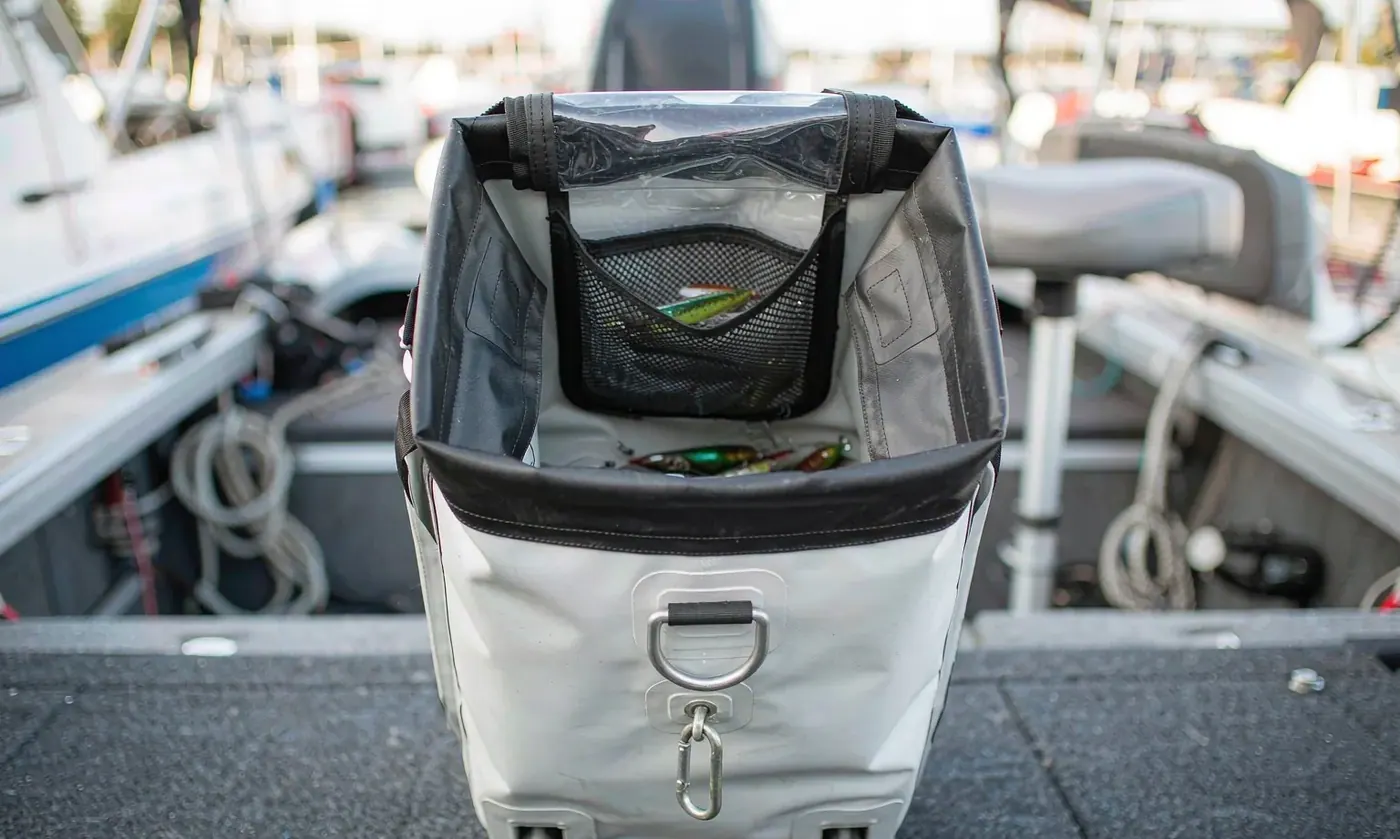
The alternative in both cases is a separate insulated bag carried alongside, which has one advantage beyond weight: a liner welded inside a tackle bag cannot be cleaned properly once bait juice or drink syrup gets under the weld, while a standalone cooler can be scrubbed and turned upside down. Many experienced anglers prefer the separation even where a pocket is available.
Checks Before Approving an Insulated Sample
Insulated pockets fail slowly and invisibly, so the approval protocol needs measurement rather than inspection. Five checks take about a day, and the retention test is the one that cannot be skipped, because it is the only way to know whether a claimed hour figure means anything.
| Check | Method | Pass condition | Catches |
|---|---|---|---|
| Retention | Load 1:1 ice, hold at 25 degrees | Below 4 degrees at the stated hour | A figure with no ratio or ambient |
| Leak | Fill with water, lay flat 30 minutes | No seepage | Sewn liner sold as welded |
| Drain | Time a full drain through the plug | Under 60 seconds | Plug too small or poorly placed |
| Condensation | Hold at 30 degrees and 80 percent humidity | Trays stay dry behind the barrier | No vapour barrier |
| Pocket weld | Pull the liner seam to 8 kg | No failure | Thin film or a cold weld |
Strength and abrasion requirements should reference published methods from ASTM International, and thermal claims should always be reported with the ambient temperature, the ice ratio, and the starting temperature, because those three conditions move the result by more than any design choice does.
Programme, Pricing, and Compliance
An insulated brief should open with the retention target and the session length, because those decide foam thickness and therefore volume and weight. Specify the liner construction next, then capacity, then mounting position. Settling the liner first matters, because a welded liner is a tooling decision rather than a sewing decision and it cannot be changed late.
| Programme item | Baseline | Note |
|---|---|---|
| MOQ | 500 pcs per design and colour | Liner colour can vary above the baseline |
| Sampling | 6-10 working days | Add 4-6 days for a welded liner tool |
| Bulk | 35-50 days | From approved sample and deposit |
| Inspection | AQL 2.5 | Include retention, leak, drain time, condensation |
| Compliance | REACH and California Prop 65 | Screen films, foams, coatings, inks, hardware |
QUANZHOU JUNYUAN BAGS has run waterproof bag programmes since 2014, with the founding team in the trade since 2004. Output of 200,000 units a month is verified by SGS, and BSCI and ISO 9001 systems structure the work. Materials are screened against REACH and California Prop 65, and bulk orders are inspected at AQL 2.5 before shipment.
An insulated brief can be emailed to service@junyuanbags.com with retention target, cooler volume, litres, tray count, and quantity. FOB Xiamen or DDP service to more than 100 countries follows an approved sample and a complete test record. The general category sits in the fishing tackle backpack range, and tournament buyers should also read the bass fishing backpack ranking.
People Also Ask
How long does a cooler pocket keep food cold?
About 6-8 hours at 25 degrees ambient with a one-to-one ice ratio and 8 mm of foam, and 10-12 hours at two-to-one with 10 mm plus reflective film.
How big should a cooler pocket on a fishing backpack be?
5-9 litres for one person on a day session. Six litres holds six cans and a kilogram of ice, which is about 2.5 kg of carried weight.
Why does my insulated pocket leak meltwater?
The liner is sewn rather than welded. A sewn liner seeps through the stitch line within an hour; a welded liner with a drain plug contains it.
Can I carry bait and food in the same cooler pocket?
No. Bait juice is a contaminant regardless of temperature, and the two need separately welded and separately drained liners.
Where should the cooler pocket sit on a backpack?
Low and close to the back panel, or split into two side pockets. Three kilograms mounted at the rear feels like four because of the leverage.
Is an integrated cooler better than a separate cooler bag?
Not on a boat with a built-in ice box, and not in cool weather. A separate cooler can also be scrubbed, while a liner welded into a tackle bag cannot.
Frequently Asked Questions
Q1. What is the best fishing backpack with a cooler pocket?
A 30 L build at 1.35 kg with a 6 L welded insulated pocket, 8 mm foam, a drain plug, about 7 hours of retention, and a 30-38 USD FOB band.
Q2. How long will a cooler pocket keep ice?
About 6-8 hours at 25 degrees with a one-to-one ice ratio and 8 mm of foam. At two-to-one ice the same pocket reaches 10-12 hours.
Q3. What size cooler pocket do I need?
5-9 litres for a one-person day session. Six litres holds six cans plus a kilogram of ice, and 12 litres suits a tournament day with a large shell.
Q4. Why does my cooler pocket leak?
The liner is sewn rather than welded. Meltwater seeps through the stitch line within about an hour, so require a welded liner and a drain plug.
Q5. Can bait and lunch share an insulated pocket?
No. Bait juice contaminates food regardless of how cold the pocket is. Two separately welded and drained liners cost about 4.80 USD and solve it.
Q6. How do I stop condensation ruining my tackle trays?
Add a welded vapour barrier between the cooler pocket and the tray chamber, at 1.20-1.80 USD, and vent the chamber behind it so humid air can escape.
Q7. Does an insulated pocket add much weight?
About 1.5 kg for a 4 L pocket and up to 6 kg for a 12 L one, plus 300-500 g of foam and liner. Mount it low and near the spine to limit the felt weight.
Q8. Are reflective linings worth the cost?
Yes. A metallised film on the inner face costs about 0.90 USD and is worth roughly two extra hours of retention when the bag sits in direct sun.
Q9. How fast should a cooler pocket drain?
Under 60 seconds through a plug of about 20 mm. Nine litres of meltwater weighs nine kilograms, and nobody wants to carry it.
Q10. What temperature should food be kept at in a fishing bag?
At or below 4 degrees, and anything above that for more than two hours should not be eaten. Guidance is published by the CDC.
Q11. What is the MOQ and lead time for an insulated backpack programme?
MOQ is 500 pcs per design and colour, samples take 6-10 working days plus 4-6 days for a welded liner tool, and bulk runs 35-50 days from approved sample and deposit.