Seven fishing chest packs were ranked for 2026 on the two measurements that decide whether a wading rig works: the usable area of the drop-down work surface, from 380 to 720 square centimetres, and the magnet rating at the rear net dock, from 1.5 to 4.5 kg. Volume spans 4-9 usable litres and weight 0.55-1.25 kg, at 16-42 dollar FOB Xiamen bands for MOQ 500 pcs per design and colour. Samples take 6-10 working days and bulk runs 35-50 days. The winner is the 8 L build with a 620 square centimetre surface.
How the Seven Were Ranked
Chest packs are usually compared on litres, which is close to meaningless in this format because the bag is small and the useful space is the front panel rather than the chamber. This ranking measures the work surface in square centimetres, because that is the area the angler actually uses, and it measures the net dock rating in kilograms, because an under-rated magnet is the single most common failure in the category.
Four criteria carry the score. Work surface area and stiffness decide day-to-day usability. Magnet rating decides whether the net stays on. Drain time decides whether a dunk ruins the session. And box capacity decides whether the pack holds what the angler owns. Volume and weight are recorded but they are consequences of those four rather than independent merits.
| Criterion | Weight | Top score | Bottom score |
|---|---|---|---|
| Work surface area and stiffness | 30 percent | 620-720 sq cm, sag under 8 mm | Under 380 sq cm, floppy |
| Net dock rating | 25 percent | 4.5 kg rated, plus a clip | 1.5 kg or none |
| Drain time after a dunk | 25 percent | Under 90 seconds | Over 180 seconds |
| Box capacity | 20 percent | Four boxes in fixed slots | Two boxes, no slots |
The Seven Builds at a Glance
Work surface is quoted as width by depth in millimetres with the area in square centimetres, measured with the panel held level under a representative load of four boxes and tools. Magnet rating is the rated hold in dry conditions, and the working rule is that the rating should be at least three times the wet weight of the net. Drain time is measured after a full submersion to chest depth.
| Build | Volume | Work surface | Magnet | Drain time | FOB band |
|---|---|---|---|---|---|
| Front 8 Workhorse | 8 L | 280 x 220 mm, 620 sq cm | 3.0 kg | 95 s | 30-38 USD |
| Wade 6 Submersible | 6 L | 250 x 200 mm, 500 sq cm | 3.0 kg | 80 s | 26-33 USD |
| Minimal 4 | 4 L | 220 x 175 mm, 385 sq cm | 2.0 kg | 75 s | 18-24 USD |
| Guide 9 | 9 L | 300 x 240 mm, 720 sq cm | 4.5 kg | 110 s | 34-42 USD |
| Salt 7 | 7 L | 260 x 210 mm, 545 sq cm | 3.0 kg | 90 s | 31-39 USD |
| Winter 8 | 8 L | 280 x 220 mm, 620 sq cm | 3.0 kg | 105 s | 32-40 USD |
| Starter 5 | 5 L | 230 x 180 mm, 415 sq cm | 1.5 kg | 120 s | 16-21 USD |
When a Chest Pack Is the Wrong Answer
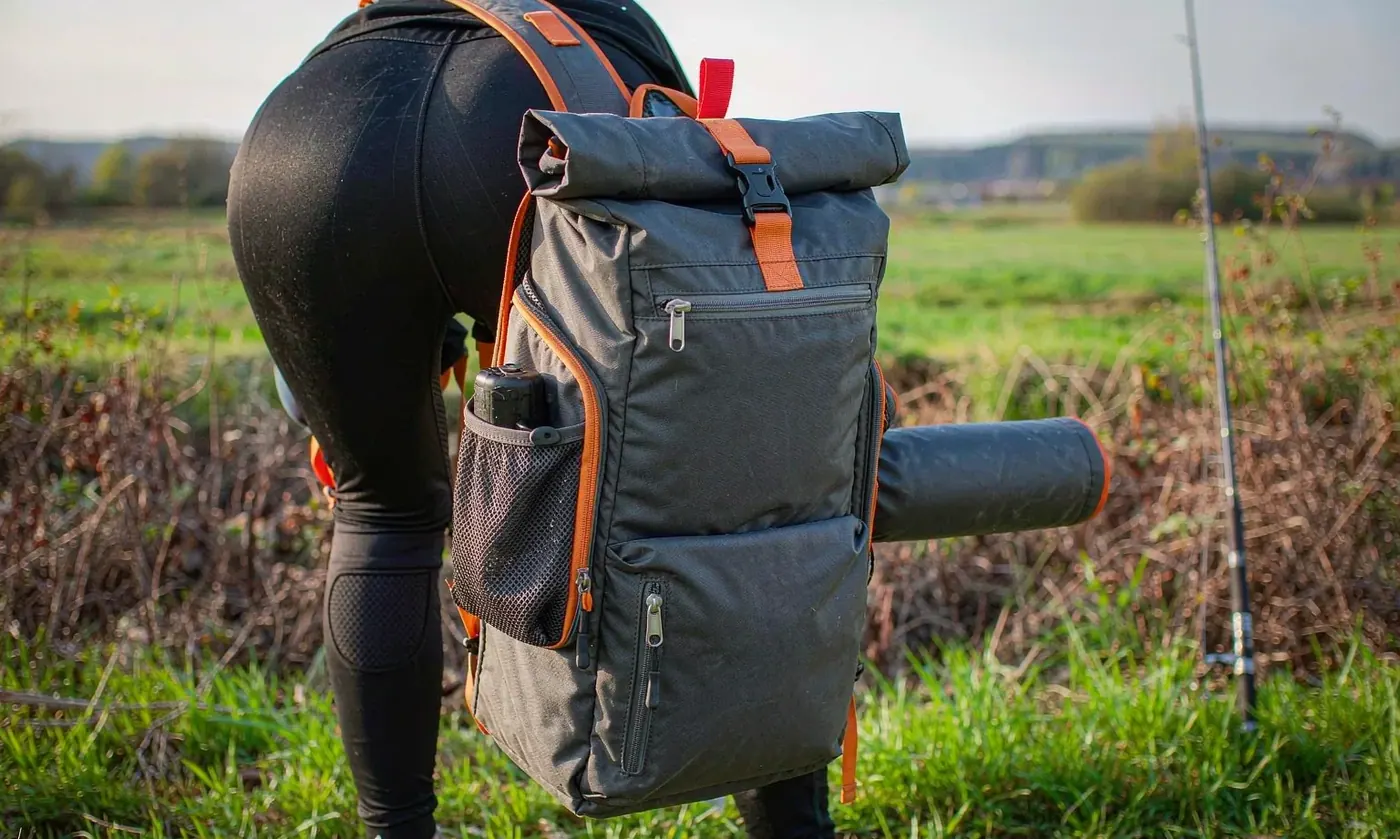
The chest format has a clear domain and it is worth stating where it ends, because a buyer who stocks chest packs for the wrong situations will see slow movement and returns. A chest pack is right when the angler stands in one run for a long time, fishes below the chest in depth, and needs both hands. It is wrong when the angler walks long distances or fishes from a bank.
| Situation | Verdict | Better format | Reason |
|---|---|---|---|
| Standing in one run for hours | Correct | None | Work surface and eye-level access |
| Wading to chest depth | Correct | None | Stays put, drains fast |
| Walking 2-5 km between spots | Wrong | Sling pack | Chest packs are uncomfortable on a walk |
| Bank fishing, moving often | Wrong | Sling or small backpack | No need for a chest work surface |
| Hot weather, minimal kit | Wrong | Waist pack | Chest packs cover too much of the body |
The mechanical comparison is set out in the chest pack versus sling comparison, and the wider format range is covered in the fishing chest pack overview. For a retail range, stocking both formats is the correct answer, because angler preference splits rather than follows a trend, and a buyer who stocks only one loses the other half of the market.
1. Front 8 Workhorse: Best Overall
A 280 x 220 mm work surface gives 620 square centimetres, which is enough for four fly boxes, a tippet station, nippers, and a floatant bottle without anything overlapping. Eight litres holds six boxes in the chamber and drains in 95 seconds after a dunk. The magnet is rated at 3.0 kg, three times the wet weight of a typical trout net, with a mechanical clip as backup. Weight is 1.05 kg.
The stiffener is the reason it wins. A 3 mm insert holds the panel level with a sag under 8 mm under a full load, and a 12 mm lip at the outer edge stops items sliding into the water when the angler leans forward. Those two details cost about 1.50 USD together and they are the difference between a work surface and a flap. Reference band is 30-38 USD.
2. Wade 6 Submersible: Best for Deep Wading
Six litres with a roll-top main closure, welded seams, and an IPX7 result at 1 m for 30 minutes, this is the build for an angler who regularly goes in past the waist. The work surface is 250 x 200 mm, giving 500 square centimetres, and the drain time of 80 seconds is the fastest in the group apart from the minimal build. Weight is 0.85 kg.
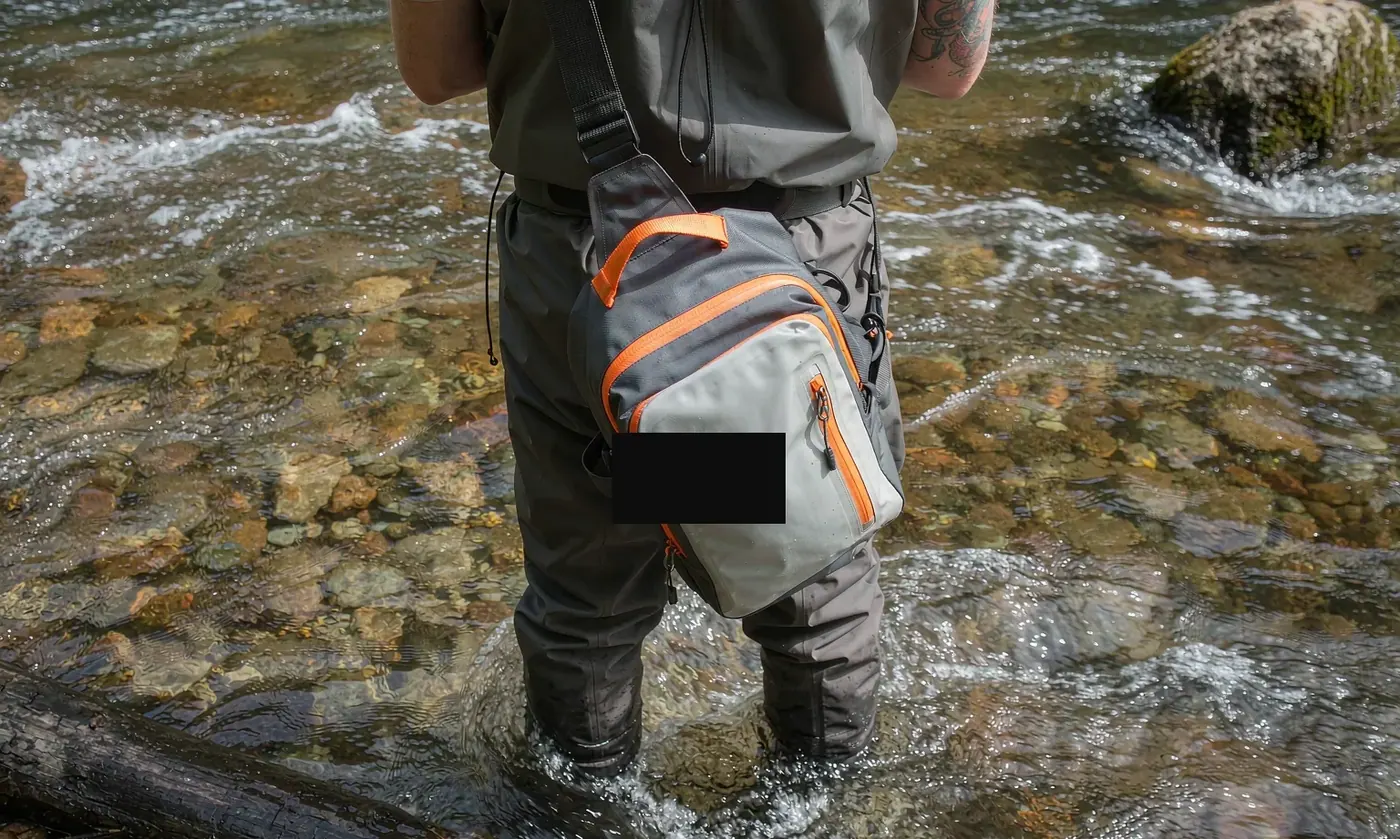
Ingress codes are defined by the IEC ingress protection framework, and the depth and duration are the part that carries meaning. A rating without a condition tells the buyer nothing. This build pairs the rating with a 3 L sealed pouch for a phone and licence, which is the more reliable practical answer and costs 1-2 USD.
3. Minimal 4: Best Small Build
Four litres and 0.55 kg with a 220 x 175 mm surface, giving 385 square centimetres, is the smallest chest pack worth making. It holds two boxes, tippet, and tools, and it suits a short session or an angler who keeps most of the kit in a bag on the bank. Drain time is 75 seconds and the magnet is rated at 2.0 kg.
The honest limitations are the surface and the box count. Two boxes will not cover a full day on varied water, and a 385 square centimetre surface holds a tippet station and tools but not much else. At a 18-24 USD band it is a strong second-bag item and a good entry price point, and it should be sold as a minimal rig rather than as a general-purpose chest pack.
4. Guide 9: Best for Guide Duty
Nine litres with a 300 x 240 mm surface giving 720 square centimetres, the largest in the group, and a magnet rated at 4.5 kg with a mechanical clip. It holds eight boxes, a spare reel, and a first-aid sleeve, and the drain time is 110 seconds. Weight is 1.25 kg, which is at the ceiling for the format and needs the wider 40 mm harness this build uses.
The 4.5 kg magnet is sized for a steelhead or a larger net at 700-1,100 g wet, where a 3.0 kg magnet can release under a swinging load. Service life on guide duty is two to three seasons against four to six for the Front 8 on personal use, and the reference band is 34-42 USD. Above 9 L the format stops working and a sling or small backpack is the answer.
5. Salt 7: Best for Saltwater Wading
Saltwater wading adds corrosion to every other requirement. Seven litres with 316 stainless and acetal hardware rated to 480 salt spray hours, a covered zip with a full fabric garage, IPX7 at 1 m for 30 minutes, and a drain time of 90 seconds. The work surface is 260 x 210 mm, giving 545 square centimetres. Weight is 0.95 kg.
Rinsing is mandatory and should be printed on the hangtag: fresh water over the closure, the magnet housing, and every metal part after each session, then dry open for 8-16 hours. Skipping the rinse typically halves hardware life, and it is the most common cause of a corrosion complaint on a correctly specified pack. Reference band is 31-39 USD.
6. Winter 8: Best for Cold Water
Cold changes two things on a chest pack: the shell stiffens and the angler wears gloves. This build answers with a cold-flex TPU face rated to minus 30 degrees after four hours, acetal hardware rather than dry nylon, and an oversized closure puller that can be operated with a winter glove. Eight litres, a 620 square centimetre surface, and a drain time of 105 seconds.
The detail worth specifying is the tippet station, because cold hands are clumsy and a station that requires fine finger work is useless in February. This build uses larger spool posts and a wider grip, which is a 0.50 USD change and makes the difference between usable and not. Reference band is 32-40 USD, and the pack should never be stored frozen and folded.
7. Starter 5: Best Budget Build
Five litres, 0.70 kg, a 230 x 180 mm surface giving 415 square centimetres, a 1.5 kg magnet, and a drain time of 120 seconds, at a 16-21 USD band. It holds three boxes and the basic tools, and it is the entry item for a buyer testing the category or for a first-time angler.
The limits are honest and worth listing: the 1.5 kg magnet suits a small trout net only and should not be sold with a steelhead net, the surface will not hold four boxes, and the closure is a covered zip rather than a roll-top. Those are reasonable economies at this price. What must not be cut is the harness anchor, which on this build is doubled and pull tested.
What a Chest Pack Cannot Carry
The ceiling is about 9 L and it is a real ceiling. Beyond that the pack becomes deep enough to push the angler chin forward, it obscures the view of the water at the feet, and the load shifts the centre of gravity every time the angler leans. A request for a 15 L chest pack is a request for a sling or a small backpack in disguise, and the correct response is to say so.
| Item | Fits a chest pack | Where it goes instead | Note |
|---|---|---|---|
| Six to eight fly boxes | Yes, in an 8-9 L build | Not applicable | The realistic maximum |
| Assembled rod | No | Hand, or a sling with straps | Fouls the casting arm |
| Landing net | Yes, on the rear dock | Not applicable | Magnet rated 3x wet weight |
| Rain shell | Compressed, small only | Backpack on the bank | Bulky rather than heavy |
| Water bottle | 500 ml maximum | Backpack or sling | Above that the pack tips forward |
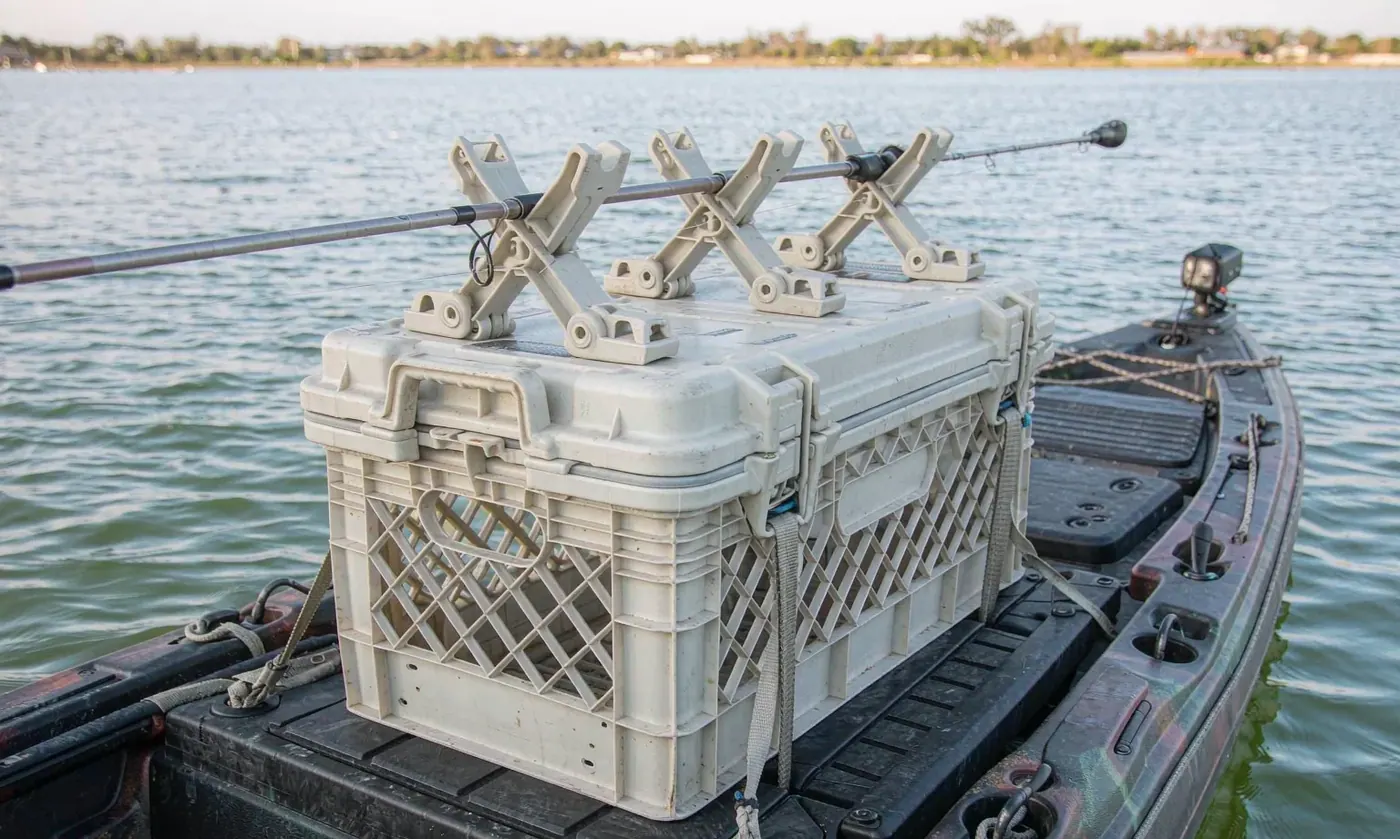
| Bulk tackle and trays | No | Crate or backpack | Wrong format entirely |
Load discipline is the other half. A chest pack should carry what is needed within the hour and nothing else, and the loaded weight should stay under about 3.5 kg. Above that, no harness geometry makes it comfortable, and the angler will blame a design that was never meant to carry that much. The fly-fishing side of the category is summarised in the fly fishing bag overview.
Fit, Adjustment, and the One-Hand Test
A chest pack is fitted rather than simply worn, and three adjustments take about sixty seconds and decide whether the pack is comfortable for a whole session. Set the pack height so the work surface sits at mid-chest, roughly 150-200 mm below the collarbone. Set the strap tension so the pack does not rotate when the angler turns, and set the back yoke so the body does not slide outward on a cast.
The check that matters is the one-hand test. With the pack loaded, the angler should be able to open the front panel, take a box out, and return it without putting anything down and without looking. If any part of that sequence needs two hands or a glance downward, the pack is not doing its job, and the usual cause is a panel that drops too far forward rather than holding level.
| Fit element | Target | Symptom if wrong | Correction |
|---|---|---|---|
| Pack height | Mid-chest, 150-200 mm below the collarbone | Obstructs the view of the water | Raise or lower the strap anchor |
| Strap tension | No rotation when turning | Pack swings on a cast | Tighten and add a back yoke |
| Panel angle | Holds level under load | Items slide toward the angler | Stiffen the panel or add an outer lip |
| One-hand retrieval | Under 4 seconds, no look down | Angler stops fishing to find items | Reposition the box slots |
Two habits extend pack life more than any material choice. Brush grit from the closure before operating it, because a single grain ground into a waterproof tape is a permanent leak. And never store the pack folded and damp, because a coated film creases permanently when it is put away wet, and a crease along the work panel is the one failure that cannot be repaired.
Care and Season Checks
A chest pack gets wet on nearly every outing and needs short but frequent care. Rinse in fresh water after any salt or brackish session, empty every pocket, open every closure, and hang the pack by its straps for 8-16 hours. The mesh back panel dries last and grows odour first, so it deserves a specific check rather than a general one.
| Task | Frequency | Method | Pass condition |
|---|---|---|---|
| Fresh water rinse | After salt or brackish use | Low pressure over hardware | No visible salt residue |
| Empty and dry open | Every session | 8-16 hours, hung by the straps | Mesh panel completely dry |
| Magnet and clip check | Monthly | Hang the wet net for 60 seconds | No release under load |
| Harness stitch check | Twice a season | Visual and pull at the anchors | No loose or cut thread |
| Re-proof the face | Every 30-40 sessions | Spray-on, even coverage | Water beads and rolls off |
Testing expectations belong in the brief rather than in a dispute. Abrasion resistance and strap strength can be required to stated values using published methods from ASTM International, and colour fastness to rubbing and light can be required using methods from AATCC. A grey scale of 4 or better after dry and wet rubbing prevents the collar-staining complaint that follows a poorly dyed dark shell.
Programme, Pricing, and Compliance
A chest pack brief should lead with the work surface dimensions and the magnet rating, because those two decide whether the product works and both are cheap to get right. Specify the stiffener thickness and the outer lip height next, then the closure and drain rate. Volume comes last, and a buyer who leads with litres will get a pack that measures well and fishes badly.
| Programme item | Baseline | Note |
|---|---|---|
| MOQ | 500 pcs per design and colour | Colour split negotiable above the baseline |
| Sampling | 6-10 working days | Add 3-5 days for a moulded work panel |
| Bulk | 35-50 days | From approved sample and deposit |
| Inspection | AQL 2.5 | Include magnet hold, panel sag, drain rate, box fit |
| Compliance | REACH and California Prop 65 | Screen coatings, films, inks, hardware |
QUANZHOU JUNYUAN BAGS has developed waterproof bag programmes since 2014, with the founding team active in the industry since 2004. Monthly output of 200,000 units is verified by SGS, and BSCI and ISO 9001 systems structure the workflow. Materials are screened for REACH and California Prop 65, and every bulk order is inspected at AQL 2.5 before shipment.
A chest pack brief can be emailed to service@junyuanbags.com; include work surface dimensions, box count, magnet rating, wading depth, market, and quantity. FOB Xiamen or DDP service to more than 100 countries follows an approved sample and a complete test record.
People Also Ask
How big should a chest pack work surface be?
At least 500 square centimetres for four boxes and tools, and 620 or more for a full working set. Anything under 380 will not hold a tippet station and tools together.
What magnet rating do I need for a landing net?
At least three times the wet weight. A trout net at 400-500 g needs a 3.0 kg magnet, and a steelhead net needs 4.5 kg, plus a mechanical clip as backup.
What box count suits a chest pack?
Six boxes in an 8 L build and eight in a 9 L guide build. Deeper than that the pack pushes the chin forward and obstructs the view of the water.
Is a chest pack good for bank fishing?
No. Bank anglers move often and a chest pack is uncomfortable on a walk. A sling or a small backpack is the better format for that situation.
How fast should a chest pack drain?
Under 90 seconds for a general build and under 80 for a deep-wading build. Drain rate matters more in the field than one rating step up.
What can a chest pack not carry?
An assembled rod, bulk trays, a full rain shell, and more than 500 ml of water. The ceiling is about 9 L and 3.5 kg loaded.
Frequently Asked Questions
Q1. What is the best fishing chest pack overall?
An 8 L build with a 620 square centimetre work surface, a 3 mm stiffener with sag under 8 mm, a 3.0 kg magnet with a clip backup, and a drain time of about 95 seconds.
Q2. How big should the work surface be?
At least 500 square centimetres for four boxes and tools, and 620 or more for a full working set. Under 380 will not hold a tippet station and tools at once.
Q3. What magnet rating do I need for a net?
At least three times the wet weight of the net. A trout net needs a 3.0 kg magnet and a steelhead net needs 4.5 kg, both with a mechanical clip as backup.
Q4. How many fly boxes fit in a chest pack?
Six in an 8 L build and eight in a 9 L guide build. Beyond that the pack is too deep and obstructs the view of the water at the feet.
Q5. Is a chest pack suitable for bank fishing?
No. A chest pack is uncomfortable on a walk and suits an angler standing in one spot. A sling or a small backpack is better for bank fishing.
Q6. What waterproof rating suits a wading chest pack?
IPX6 covers a dunk to chest depth, and IPX7 at a stated depth and duration suits an angler who regularly goes in past the waist.
Q7. Why does drain speed matter on a chest pack?
The pack goes in the water in normal use. Under 90 seconds for a general build and under 80 for a deep-wading build keeps the load manageable for the rest of the session.
Q8. What is the best chest pack for saltwater wading?
A 7 L build with 316 stainless and acetal hardware rated to 480 salt spray hours, a covered zip with a garage, IPX7, rinsed after every session.
Q9. Does a chest pack work in cold weather?
Yes with the right specification: a cold-flex TPU face rated to minus 30 degrees, acetal hardware, an oversized glove-friendly puller, and larger tippet posts.
Q10. What is the maximum useful chest pack size?
About 9 L and 3.5 kg loaded. Beyond that the pack pushes the chin forward, obscures the feet, and shifts the centre of gravity on every lean.
Q11. How do I care for a fishing chest pack?
Rinse in fresh water after salt use, empty every pocket, hang by the straps for 8-16 hours, check the magnet monthly, and re-proof the face every 30-40 sessions.
Q12. What is the MOQ and lead time for a chest pack programme?
MOQ is 500 pcs per design and colour, samples take 6-10 working days, and bulk runs 35-50 days from approved sample and deposit.