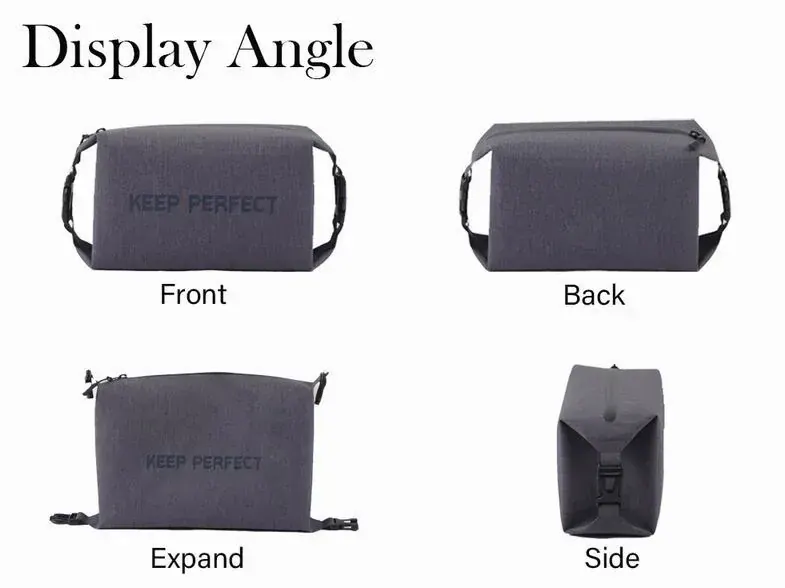
A chest pack puts everything in front of you permanently at the cost of sitting high on the body, while a sling carries more and rotates to the front in 2-4 seconds but loads one shoulder for the whole day. Chest formats run 4-9 litres and weigh 2.0-3.5 kg loaded, sit within 100-150 mm of the spine, and interfere with nothing except very deep wading. Slings run 6-14 litres and 2.5-4.5 kg, accept a 3700 size tray where a chest pack manages one 3600, and begin causing neck strain above roughly 3 kg carried for more than four hours. Choose by session length and how often you need to see inside, not by which looks better in a catalogue.
Two Different Answers to the Same Question
Both formats exist because anglers wanted hands free and pockets accessible at the same time, and they solve that in opposite directions. A chest pack commits to permanent front carriage and accepts a smaller volume. A sling commits to larger volume and accepts a rotation step every time something is needed. Almost every other difference follows from that single trade.
| Attribute | Chest pack | Sling pack |
|---|---|---|
| Typical volume | 4-9 L | 6-14 L |
| Typical loaded weight | 2.0-3.5 kg | 2.5-4.5 kg |
| Time to bring contents to the front | 0 seconds, it is already there | 2-4 seconds to rotate |
| Largest tray accepted | One 3600 size | One 3700 or two 3600 |
| Load location | Centred, within 100-150 mm of the spine | One shoulder, around 180-250 mm off the spine |
| Typical FOB Xiamen band | 14-28 USD | 18-34 USD |
Read the third row carefully because it is the row that decides purchases in practice and also the row most buyers over-weight. Rotating a sling takes two to four seconds and one hand, which amounts to perhaps 200-400 rotations over a full day of fly changes. That is genuinely tiring on a long session, though it is also not very much time in absolute terms, and many anglers find the larger capacity worth it.
Access Speed, Actually Measured
Rather than guessing, it helps to break access down by task, because different tasks favour different formats and the aggregate result depends entirely on what the angler is doing most.
| Task | Chest pack | Sling pack | Better |
|---|---|---|---|
| Change a fly every 5-15 minutes | No movement needed | Rotate each time | Chest pack |
| Reach tippet spools one-handed | Yes, while holding the rod | Awkward while holding the rod | Chest pack |
| Get a large item from deep inside | Limited space to search | Rotate and open flat | Sling |
| Remove the whole pack to untangle a rig | Awkward, harness involved | Off in about 3 seconds | Sling |
| See everything at once while choosing | Yes, panels face you | Only after rotating | Chest pack |
| Pass through dense streamside brush | Low profile in front | Catches on branches at the back | Chest pack |
The aggregate verdict for fly anglers changing flies constantly is that a chest pack saves effort and a sling saves frustration when something big has to come out. This is why many experienced anglers eventually own both and choose by session rather than declaring a permanent winner, even though that answer annoys retailers who want a single recommendation.
Load Distribution Over a Long Day
Comfort differences between the two are often dismissed as preference, but there is a measurable structural reason underneath and it explains why some anglers abandon one format after back or neck trouble.
| Factor | Chest pack | Sling pack |
|---|---|---|
| Load centre distance from the spine | 100-150 mm | 180-250 mm |
| Shoulder contact area at 3 kg | Both shoulders share the load | One shoulder carries it all |
| Strap width typically used | 25-40 mm webbing | 65-90 mm padded band |
| Reported neck strain onset | Rare below 4 kg | Above 3 kg after about four hours |
| Behaviour when casting repeatedly | Stays centred through the stroke | Swings unless the stabiliser strap is used |
| Effect on walking rough banks | Stable, low centre of mass | Shifts with every step |
The stabiliser strap row deserves a paragraph of its own, because it is the single change that fixes most sling complaints. A secondary strap running from the sling body back to the opposite hip limits rotation to about 20 degrees and moves roughly 30-40 percent of the load off the primary shoulder. Specifying one costs about 1.20-2.40 USD and should be considered standard rather than optional on any sling above 8 litres.
Webbing and strap strength are tested against published methods maintained by ASTM International, so strap pull values and cycle counts can be stated numerically in a specification. Requesting a minimum strap width alongside a pull figure is good practice, since a narrow strap that passes a pull test still concentrates pressure and causes discomfort long before it fails.
Wading Depth and Getting Everything Wet
Water depth is the neglected variable in this comparison, and it is the one that produces the strongest recommendations in either direction. Everything changes when an angler regularly wades above knee depth, and it changes again above waist depth.
| Wading depth | Chest pack behaviour | Sling pack behaviour | Better |
|---|---|---|---|
| Below 400 mm, shin to knee | Completely unaffected | Completely unaffected | Either |
| 400-700 mm, knee to thigh | Unaffected | Lower edge may touch spray | Either, slight edge to chest |
| 700-1,000 mm, thigh to waist | Base of the pack enters the water | Can be rotated high onto the back | Sling |
| Above 1,000 mm, chest deep | Fully submerged with its contents | Can be pushed behind the shoulder | Sling |
| Swimming or accidental immersion | Worst case for contents | Body rotates away from the water | Sling |
The practical rule follows directly: a chest pack suits anglers who stay shallow, and a sling belongs on anyone regularly wading deep. Some chest designs mitigate this with a drop-down strap that lowers the pack to waist level for deep crossings, which works but leaves the pack swinging against the legs with every step. Anglers who cross deep water routinely should buy for the deep case rather than the shallow one.
Cold water immersion is a genuine safety matter rather than merely a wet-kit problem, particularly below about 15 degrees Celsius where cold shock affects breathing and muscle control. Guidance published by CDC covers cold water immersion risk, and no item of fishing equipment substitutes for proper thermal protection or an approved flotation device in moving water.
What Actually Fits Inside
Published litre figures are nearly useless at this scale because two packs of identical volume differ greatly in usable organisation. Counting what an angler really carries is more informative than comparing litres.
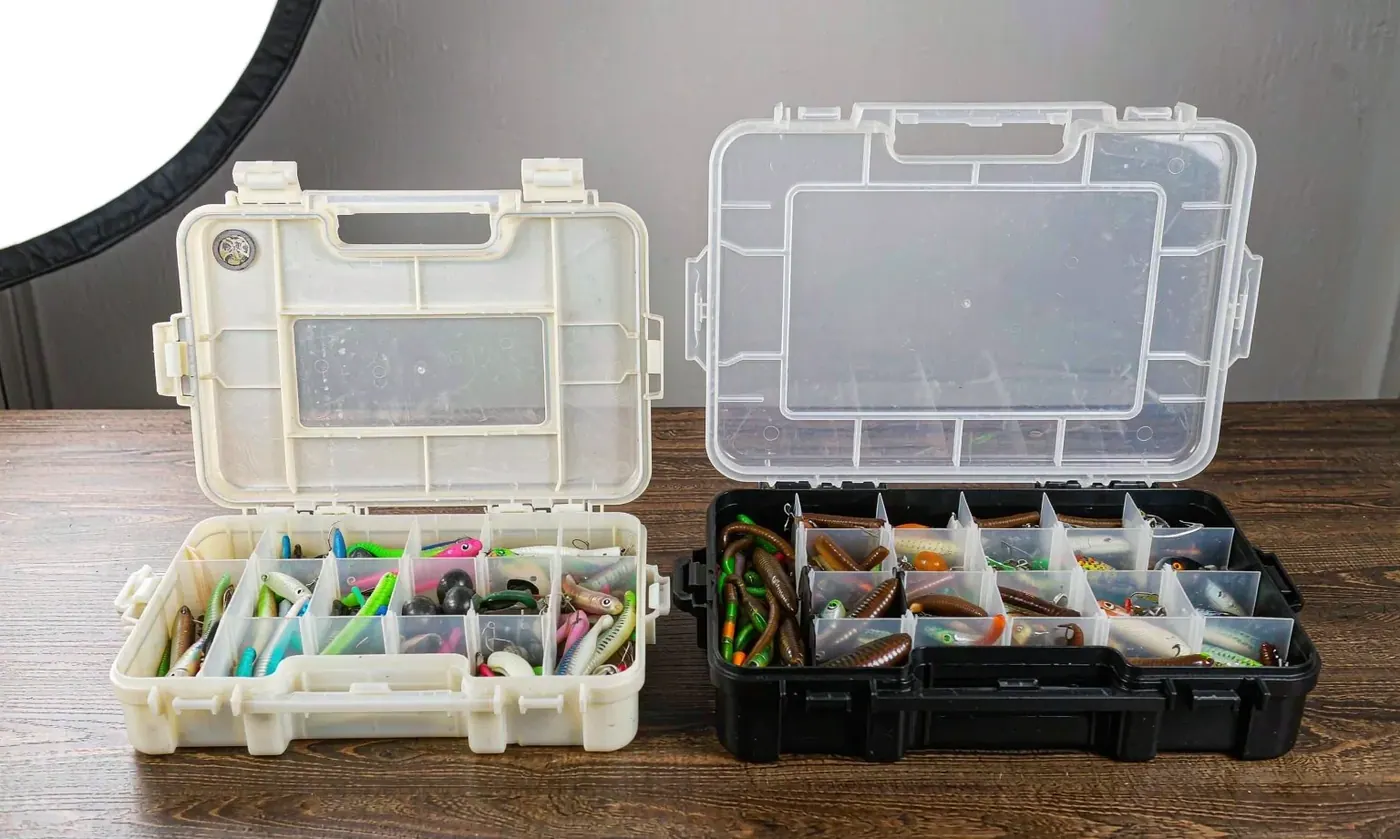
| Item carried | Chest pack | Sling pack |
|---|---|---|
| Fly boxes, large format | One or two | Three or four |
| 3600 size tray | One | One or two |
| 3700 size tray | Very rarely | One, the common configuration |
| Tippet spools, four to six | Yes, dedicated pockets | Yes, in an internal pouch |
| Water bottle up to 750 ml | Usually not | Yes, external sleeve |
| Rain shell or light layer | No | Yes, in a front or side pocket |
| Landing net and floatant bottle | External attachment only | Both fit inside or on loops |
Notice that the biggest gap is not trays but bulky soft items. A pack that cannot swallow a rain layer forces the angler to make a bad decision at four in the afternoon when the weather turns, and that is the recurring story behind most upgrades from a chest pack to a sling or to a small backpack. Buyers should ask what the angler carries in addition to tackle before recommending a volume.
Casting, Landing Fish, and Other Interference
The two formats behave differently during the actual fishing rather than merely while carrying gear, which is where the chest pack earns its reputation and also where its reputation suffers unfairly.
- A well-fitted chest pack sits below the sternum and interferes with almost no casting stroke, while one fitted too high crowds the hands on every short cast.
- A sling worn with the body resting on the back interferes with nothing during casting, but one left rotated forward for convenience catches the line on every back cast.
- Landing a fish is easier with either format than with nothing, since both leave both hands free, though a chest pack keeps net attachment points closer to hand.
- Photographing and releasing is faster with a chest pack because the essential tools are already at the front without any movement.
- Spare spools and leader material stay drier in a chest pack than in most slings, because the pockets open upward rather than toward the water.
- Releasing a fish from a net is smoother with a chest pack, since the forceps and the net handle often share the same reachable zone at the front.
- Getting into and out of waders is marginally easier with a sling, which moves out of the way rather than having to be removed first.
The first of those additions matters more than it sounds. Upward-opening pockets spill less and stay drier in spray, whereas a sling pocket opened while rotated over water tends to drop whatever it is holding straight into the river. Designers can mitigate this with elastic retaining loops on sling pockets, costing about 0.40 USD, and it is a worthwhile inclusion on any model intended for saltwater use.
The line-catching point deserves emphasis because it accounts for a large share of anecdotal criticism of slings. The failure is behavioural rather than structural: anglers rotate the pack forward, leave it there between casts, and then blame the design when line catches. Clear instruction about returning the body to the back after every access removes most of it, and printed guidance costs nothing.
Hybrid Designs and What They Cost
A third category sits between the two and deserves a mention, because it resolves the trade honestly rather than pretending it away. Convertible designs wear as a chest pack, drop to a waist position, or swing round to the back on a single strap system.
| Design | Volume | Advantage | Cost band |
|---|---|---|---|
| Fixed chest pack | 4-9 L | Nothing moves, nothing rotates | 14-24 USD |
| Convertible chest and waist | 6-10 L | Drops low for deep crossings | 20-32 USD |
| Convertible chest and sling | 8-14 L | Both modes on one strap set | 24-38 USD |
| Fixed sling with stabiliser | 6-14 L | Best load control of any single mode | 18-34 USD |
The honest assessment of convertibles is that they perform second-best in every mode. The strap set that allows three positions is necessarily more complex, carries about 120-240 g more hardware, and has more adjustment points that work loose over a season. Buyers selling to committed specialists should usually recommend a fixed format; convertibles suit mixed-discipline anglers and rental fleets serving unknown users. A rental operation stocking one convertible at 24-38 USD frequently recovers the difference within a single season simply by not having to guess which format a given customer would have chosen, since returned hires saying that the wrong pack was supplied are a recognised cost line in lodge accounts.
Seasonal Changes Nobody Warns You About
Fit is not fixed across the year, and this catches out anglers who buy in summer and then discover the pack behaves differently in a winter coat. Both formats lose adjustment range once bulky layers sit underneath, and they fail in different ways.
| Season | Chest pack behaviour | Sling pack behaviour | Specification note |
|---|---|---|---|
| Summer, single layer | Fits exactly as adjusted | Fits exactly as adjusted | Baseline |
| Autumn, fleece layer | Strap shortens by 30-50 mm | Strap shortens by 30-60 mm | Allow extra range |
| Winter, insulated jacket | Rides higher, crowds the stroke | Slides off the shoulder repeatedly | Recommend sizing up |
| Waders plus buoyancy aid | Harness may conflict with straps | Shoulder slip becomes significant | Test with layers on |
| Tropical humidity | Sweat builds behind the pack | Sweat builds under the strap band | Specify spacer mesh |
The practical guidance is to specify strap adjustment range generously and to test any sample while wearing the bulkiest clothing the user will realistically have on. A strap set that cannot lengthen by at least 60 mm from its summer setting is not suitable for a four-season programme, and adding that range costs nothing beyond a little more webbing.
Sweat management deserves a note for warm-water and tropical programmes. Any panel that sits against clothing for hours needs spacer mesh rather than flat webbing, and both formats benefit from a breathable back panel. This adds about 0.80-1.60 USD per unit and is one of the few upgrades users notice immediately without being told about it.
Cost, Order Quantities, and Development
Both formats sit comfortably inside the same order structure, and price differences come almost entirely from size and hardware rather than from the carrying mode.
| Programme item | Chest pack | Sling pack |
|---|---|---|
| MOQ | 500 pcs per design and colour | 500 pcs per design and colour |
| Sample build | 6-10 working days | 6-10 working days |
| Unit cost band | 14-28 USD | 18-34 USD |
| Recommended hardware specification | Polymer buckles, 25-40 mm webbing | 65-90 mm padded band plus stabiliser |
| Bulk production | 35-50 days | 35-50 days from approved sample and deposit |
| Verification worth specifying | Strap pull plus cycle testing | Rotation cycle plus strap pull testing |
QUANZHOU JUNYUAN BAGS has developed waterproof bag programmes since 2014, with the founding team working in the trade since 2004. Monthly output of 200,000 units is verified by SGS, and BSCI and ISO 9001 systems structure the workflow. Materials are screened for REACH and California Prop 65, and every bulk order is inspected at AQL 2.5 before shipment.
Which One Should You Recommend
Everything here reduces to four questions about how the customer actually fishes, and asking them in this order produces the right answer more consistently than any feature comparison.
| If this is true | Recommend | Reason |
|---|---|---|
| Sessions over four hours with frequent fly changes | Chest pack | Nothing rotates, nothing has to be returned |
| Wading regularly above 700 mm | Sling pack | Can be rotated clear of the water |
| Carrying more than 3 kg of kit | Sling pack with stabiliser | Wider strap spreads a load chest packs rarely reach |
| Walking long distances between pools | Sling pack | Body sits behind rather than restricting the stride |
| Angler mainly fishes short local sessions | Chest pack | Smaller volume keeps the load honest |
| Needs to carry a rain layer and water | Sling pack at 10-14 L | Chest formats cannot take bulky soft items |
| Rental fleet with unknown users | Convertible chest and sling | One product covers different habits |
One closing note on fit, which matters more than format. A chest pack worn too high crowds the casting stroke, and a sling whose strap is too narrow causes neck pain within hours, yet both are frequently described as design flaws by users who never adjusted them. Spending five minutes on strap adjustment at the point of sale prevents more returns than any amount of feature development.
A carrying format brief can be emailed to service@junyuanbags.com with target volume, intended tray count, typical wading depth, and session length. FOB Xiamen or DDP service to more than 100 countries follows an approved sample. Useful comparisons include the fishing chest pack range, the fishing sling pack range, and the best fishing chest packs roundup.
People Also Ask
Is a chest pack better than a sling?
For frequent fly changes and sessions over four hours at loads below 3 kg, yes. For deep wading, bulky soft items, and anything above 3 kg, a sling with a stabiliser strap is better.
Do sling packs hurt your neck?
They can above roughly 3 kg carried for more than four hours. A 65-90 mm padded strap plus a stabiliser to the opposite hip moves 30-40 percent of the load off the primary shoulder.
Which works better for deep wading?
A sling. Above 700 mm of water the base of a chest pack enters the stream, and above 1,000 mm its contents submerge, while a sling rotates behind the shoulder.
How much can a sling pack carry?
Typically 6-14 litres holding one 3700 tray or two 3600 trays, three or four fly boxes, a 750 ml bottle, and a light rain layer at 2.5-4.5 kg loaded.
Can you fish while wearing a chest pack?
Yes, and that is the point. Everything faces forward so tippet and flies are reachable while holding the rod, provided the pack sits below the sternum rather than crowding the stroke.
Are convertible chest and sling designs worth it?
For mixed-discipline anglers and rental fleets, yes. For specialists, usually no, because the extra strap set adds 120-240 g and more adjustment points that loosen over time.
Frequently Asked Questions
Q1. What is the difference between a fishing chest pack and a sling pack?
A chest pack is worn permanently at the front and typically carries 4-9 litres, while a sling is carried on one shoulder at the back and rotates forward when needed, carrying 6-14 litres.
Q2. Which is better for fly fishing?
A chest pack for anglers changing flies every few minutes, since nothing has to rotate. A sling for anyone covering long distances or carrying bulky items alongside the tackle.
Q3. How heavy can a sling pack get before it is uncomfortable?
Around 3 kg after about four hours of wear is where neck strain typically begins. A stabiliser strap and a padded 65-90 mm band push that threshold considerably higher.
Q4. Can I cast while wearing a chest pack?
Yes, provided it sits below the sternum. Packs fitted too high crowd the hands on short casts, and most complaints about casting interference trace back to adjustment rather than design.
Q5. Does a chest pack get wet when wading?
Above roughly 700 mm of water the base enters the stream and above 1,000 mm the whole pack submerges with everything in it. Some designs have a drop-down strap for crossings.
Q6. How much does either format cost?
FOB Xiamen runs 14-28 USD for a chest pack and 18-34 USD for a sling at MOQ 500 pcs per design and colour. The difference comes from size and strap hardware rather than from the carrying mode.
Q7. Should a sling have a second stabiliser strap?
Yes on any model above 8 litres. It limits rotation to about 20 degrees, shifts 30-40 percent of the load off the primary shoulder, and costs around 1.20-2.40 USD per unit.
Q8. Can a sling pack hold a water bottle?
Most models above 10 litres accept a 750 ml bottle in an external sleeve. Chest packs rarely do, and this is one of the common reasons anglers move up to a sling.
Q9. What size tray fits each format?
A chest pack manages one 3600 size tray, and only occasionally two small fly boxes. A sling commonly takes one 3700 tray or two 3600 trays side by side.
Q10. Is a convertible design worth the extra cost?
Only for mixed use or rental fleets. Convertibles add 120-240 g of strap hardware and more adjustment points, so each individual mode performs slightly worse than a dedicated design.
Q11. What is the MOQ and lead time?
MOQ is 500 pcs per design and colour. Samples take 6-10 working days and bulk production runs 35-50 days from approved sample and deposit.