The sling and the waist pack sit on the skeleton and the muscles respectively, and that single mechanical difference decides everything else. A waist pack rides the pelvis and transfers load straight to bone, so its 2-4 kg can be worn all day; a sling carries 3-5 kg through one shoulder girdle, which fatigues noticeably after roughly two hours despite holding twice the volume at 8-18 litres against 4-12 litres. Choose the waist pack for long days wading deep where the body rotates at the hips, and the sling for covering distance or carrying more than twelve fly boxes. Both are compared here on rotation mechanics, wading depth limits, casting clearance, and FOB bands of 14-38 USD at MOQ 500 pcs per design and colour.
Where the Load Lands
Start with anatomy rather than features. A waist pack cinched above the iliac crest puts its load on the pelvic girdle, and the skeleton takes that weight indefinitely with barely any muscular effort. A sling puts every gram through one trapezius and one shoulder joint, and while the body tolerates that well enough at rest, it becomes tiring across a long session of casting.
| Property | Waist pack | Sling pack | Consequence |
|---|---|---|---|
| Load path | Pelvis, directly to bone | One shoulder girdle | Waist wins on duration |
| Comfortable load | 2-4 kg | 3-5 kg | Sling wins on absolute capacity |
| Wear duration | Essentially unlimited | About 2 h at 4 kg | Waist wins on long days |
| Typical volume | 4-12 L | 8-18 L | Sling carries more |
| Box capacity | 4-8 fly boxes | 6-12 fly boxes | Sling roughly doubles it |
| Rotation axis | Around the waist | Across the chest and back | Different, not better |
The overlap in those comfortable load figures hides the more interesting truth, which is that the waist figure is set by hip stability rather than by strength. Past about 4 kg a waist pack begins to slide down and rotate of its own accord, and more importantly it starts to interfere with the hip movement that drives a cast. The sling figure is set by a different limit entirely, which is muscular endurance in one shoulder.
Rotation Mechanics Are Not the Same Motion
Both formats bring their contents to the front, and they do it through completely different motions that feel nothing alike in practice. Understanding which motion suits a given angler explains most preferences that otherwise seem arbitrary.
| Stage | Waist pack | Sling pack | Typical time |
|---|---|---|---|
| Release | Loosen or simply slide on the belt | Grasp the strap and rotate the body | Waist 0 s, sling 1 s |
| Present | Rotate around the hip to the front | Swing across the chest | Waist 2-3 s, sling 3-5 s |
| Use | Works as a bench at waist height | Hangs at the chest, both hands free | Comparable |
| Return | Slide back behind the hip | Rotate back across the shoulder | Waist 1-2 s, sling 2-3 s |
| Round trip | About 4 s | About 8 s | Waist is faster |
The waist pack is quicker and it is also more stable while open, because it sits on the hips rather than hanging from the shoulder. A sling, by contrast, keeps both hands free at chest height, which some anglers strongly prefer when tying knots because everything is at eye level rather than at the waist. Neither advantage dominates, and this is one of the few genuine preference calls in the category.
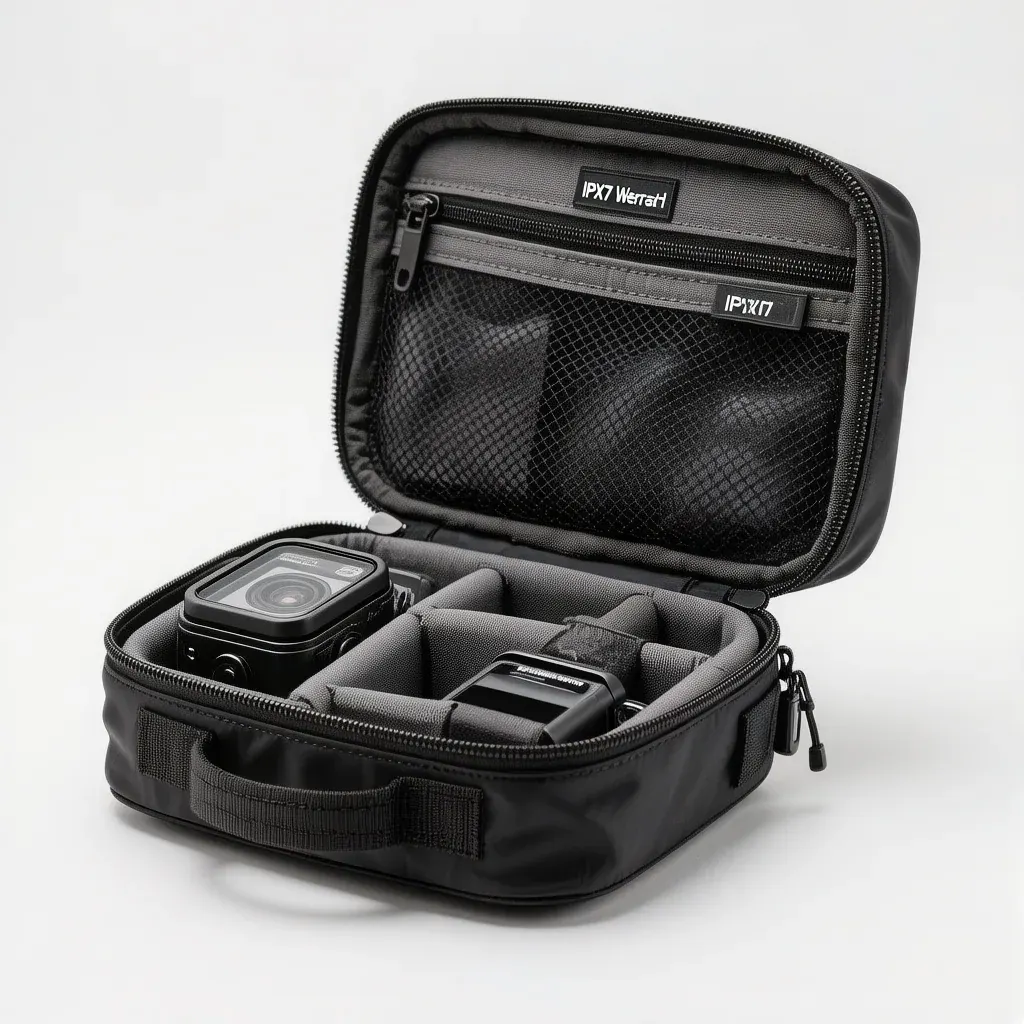
Wading Depth Is the Great Divider
Water depth settling this question is not a marketing point, it is arithmetic. A waist pack sits at hip level, which is precisely the depth an angler wading to mid-thigh approaches, so the pack and the water arrive at the same place at the same time. A sling sits higher on the torso and can be rotated behind the body when crossing deep water.
| Wading depth | Waist pack behaviour | Sling pack behaviour | Better option |
|---|---|---|---|
| Knee deep | Completely clear | Completely clear | Either |
| Mid-thigh | Approaching the base of the pack | Clear unless leaning forward | Sling |
| Waist deep | Base submerged | Clear if rotated to the back | Sling, clearly |
| Chest deep and crossing | Fully submerged | Upper body still dry | Sling, only sensible option |
| Deep plus rain | Submerged and wet inside | Wet from above only | Sling |
A practical detail worth specifying rather than assuming is whether the sling strap allows rotation far enough back. Some designs stop with the body at the hip, which is no better than a waist pack in deep water, whereas a strap with a running bearing lets the body travel fully behind the torso. Requiring roughly 200 mm of strap travel beyond the standard fit costs about 1.30 USD and it is the difference between a sling that works in chest-deep water and one that does not.
Water temperature governs how much any of this matters in safety terms rather than equipment terms. Guidance and forecasts covering river and coastal conditions are published by NOAA, and anyone wading chest deep should be reading those numbers before deciding anything about where their tackle rides.
Casting Clearance and False Casting
Casting is where the waist pack takes its clearest win, because nothing about it occupies the space through which a rod travels. Every stroke a fly angler makes happens above the hip line, and a pack sitting at or below that line cannot foul it.
- False casting repeatedly is unaffected by a waist pack, whereas a sling body on the casting-side shoulder eventually makes contact.
- A sling rotated to the non-casting shoulder is effectively invisible to the stroke, and right-handed anglers should buy a left-shoulder sling.
- Tight loops and streamer casts involve more shoulder rotation, which is exactly what catches a poorly positioned sling body.
- A waist pack never changes the balance of the upper body, so casting rhythm stays identical whether it is loaded or empty.
- Landing a fish one-handed is easier with a sling, since the body stays put rather than sliding round the hip during the struggle.
The second point deserves emphasis because it is the single highest-impact purchase decision in this whole comparison and almost nobody is told about it. A right-handed caster should wear a sling with the strap over the left shoulder so the body hangs on the right where it can be swung clear, and choosing the wrong side produces a pack that fouls every third cast. It costs nothing to get right and it cannot be fixed afterwards.
What Actually Goes in Each
Capacity differences between these two formats are smaller than their shape suggests, because fly kit is flat and low-density. A sensible working selection fits comfortably in either, and the real question is how many seasonal variations the angler wants to carry at once.
| Item | Waist pack, 4-12 L | Sling, 8-18 L | Note |
|---|---|---|---|
| Fly boxes | 4-8 | 6-12 | Sling roughly doubles the selection |
| Tippet spools | 4-6 | 6-8 | Both adequate for a day |
| Leader wallet | 1-2 | 2-3 | Seldom the limiting item |
| Tools on retractors | 2-3 | 3-4 | Both sufficient |
| Water bladder or bottle | 0.5-1 L external | 1-2 L internal or external | Sling better hydration |
| Rain shell | Strapped outside only | Fits inside | Sling better for changing weather |
The rain shell row decides more purchases than the others combined for anglers in unsettled climates. A waist pack simply has nowhere to put a shell, so it gets strapped outside where it catches everything, and in that situation it will eventually soak the outside of the pack anyway. A sling swallows a lightweight shell and keeps it dry, and that is why the sling tends to dominate in genuinely variable conditions.
Where Tools and Nets Attach
Both formats are judged on where the small things live, because a fly angler uses tools dozens of times an hour and anything awkward becomes a constant irritation. The two solve this differently and neither is universally better.
| Attachment | Waist pack | Sling pack | Better |
|---|---|---|---|
| Retractor anchors | Across the front face, easy to read | Along the strap edge, harder to see | Waist pack |
| Net holster | Rear of the belt, quick reach | Rear panel with magnets | Roughly equal |
| Hemostat and nippers | Both within a single glance | Frequently behind the body line | Waist pack |
| Water bottle | Side pocket, no interference | Side pocket sometimes fouls casting | Waist pack |
| Rain shell stowage | External straps only | Internal or external | Sling |
Read that table and a pattern appears that contradicts the headline conclusion: the waist pack is actually the better tool platform. Everything sits in front of the angler in clear view with nothing hidden behind the body line, and reaching for a tool does not disturb the pack's position. This is why so many experienced anglers who own both reach for the waist pack on a short local session and reserve the sling for days when weather or distance demands more kit.
Weather and Shell Performance
Neither format maintains any advantage based purely on its construction, since both can be built from the same materials to the same rating. What differs is exposure geometry: which parts of the body get wetted first, and whether there is anywhere for water to run.
- A waist pack formed directly against the body gets soaked where it presses against waders during heavy rain, regardless of what the outer face does.
- A sling keeps one whole face away from the body, which dries faster and is why it feels less unpleasant after hours of rain.
- Either format should specify a coated zip or a storm flap covering it, since closures rather than fabric are what admit water first.
- Reflective or high-visibility piping matters on both for low-light sessions, and cheapens neither if placed along a natural seam line.
- Insect repellent and sunscreen degrade coatings on both equally, so neither should be stored inside either body.
Fabric expectations should still be written into the brief rather than left to chance. Abrasion and tear behaviour at the contact panels, particularly the hip-side face of a waist pack, are best specified to methods maintained by ASTM International, with a cycle count rather than an adjective, because that face rubs against waders for several hours every session.
The Third Piece Nobody Mentions
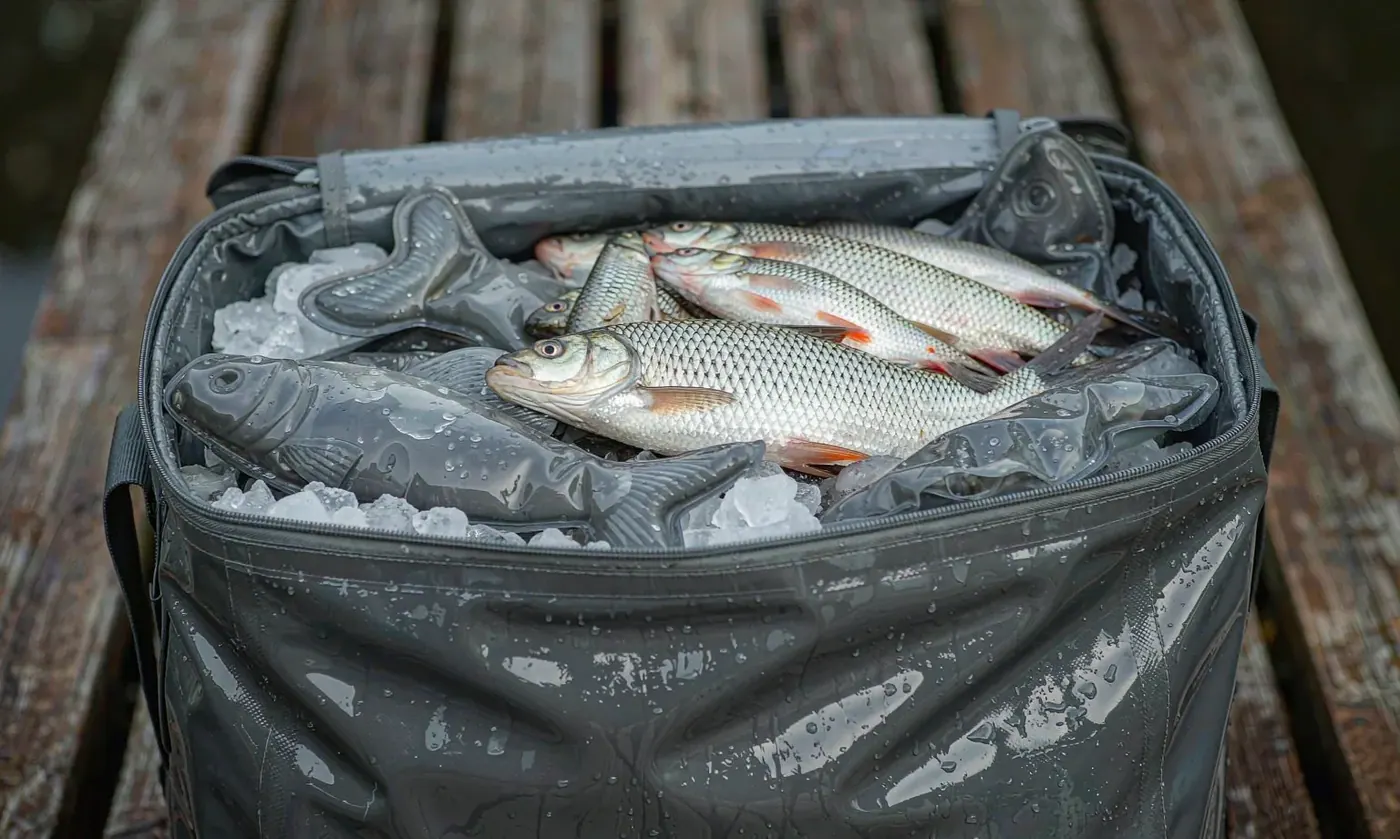
Every choice between these two formats quietly assumes the angler carries nothing else, and in practice almost everyone does. Water across a full day weighs 2 kg, lunch adds perhaps 0.8 kg, and a small insulated body for keeping fish cool adds 400-900 g empty, none of which either format handles well.
| Need | Waist pack deal | Sling deal | Practical answer |
|---|---|---|---|
| Two litres of water | External bottle only | Usually fits internally | Sling is better |
| Lunch for a full day | No internal room | Fits alongside one box | Sling is better |
| Keeping harvested fish cool | No | No | A separate insulated body |
| Waders for the drive home | No | No | A separate duffel or liner |
| A second rod | No | No | Sling with an external tube if specified |
The honest conclusion for a retailer is that this comparison is usually about the first two items in a three-item system. Whichever format wins the day, water and food still need somewhere to go, and an insulated body of 10-35 litres with a welded inner liner and a drain plug completes the picture at 12-42 USD.
When Neither Is Enough
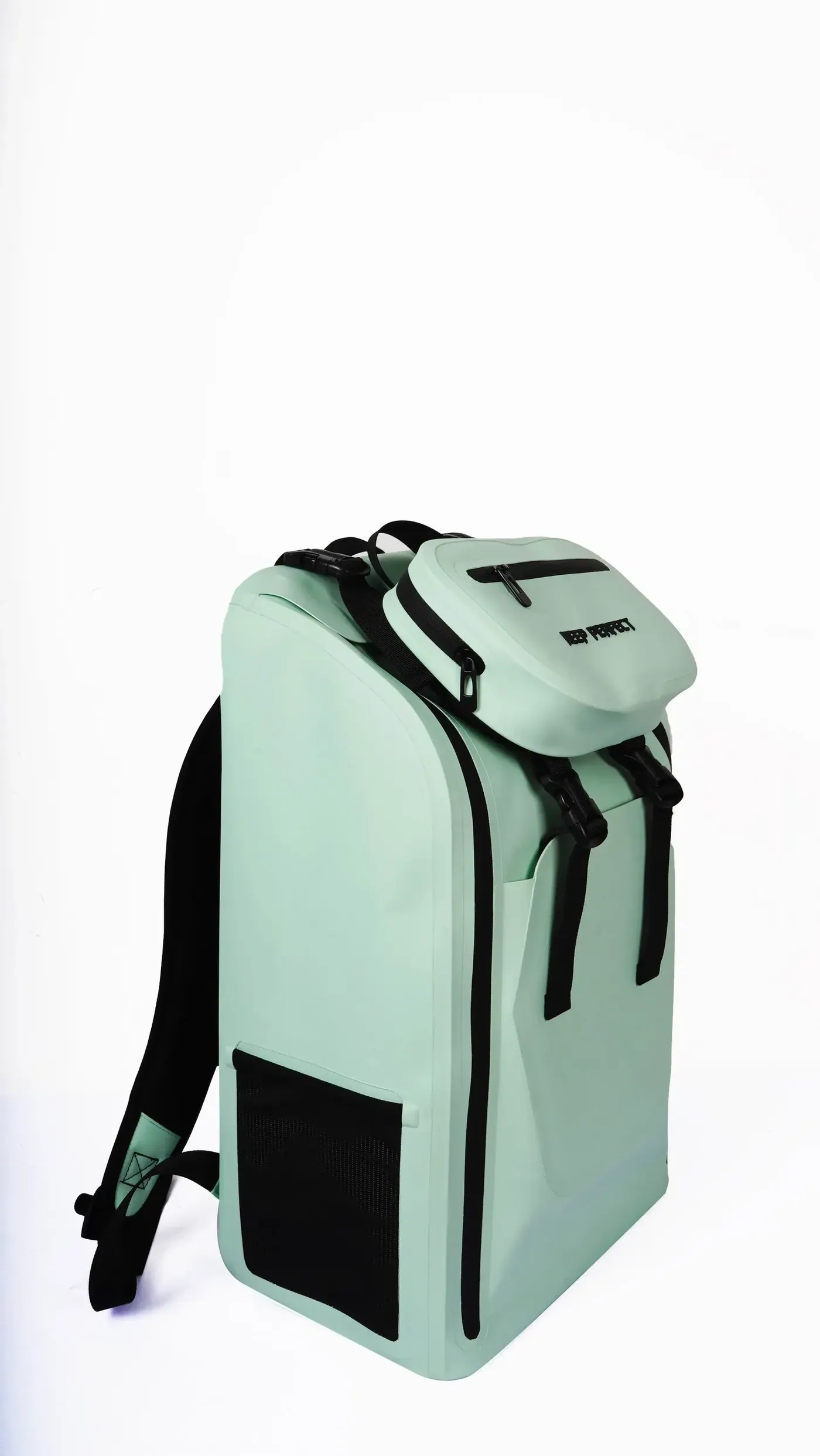
The two formats occupy a narrow band of use, and stepping outside that band means neither applies. Recognising the boundary prevents a customer buying a waist pack for a job it cannot do, which is a more valuable service than recommending the better of two unsuitable options.
| Boundary | What happens | Correct response |
|---|---|---|
| Load above 5 kg | Sling fatigues, waist pack slides | Move to a small backpack |
| Walk beyond about 800 m | Asymmetric loading dominates | Move to a backpack |
| Twelve or more fly boxes | Neither fits a working selection | Move to a vest or backpack |
| Uneven or rocky river bed | Waist pack shifts constantly | Move to a pack with a hip belt |
| Multi-day trip with camping kit | Wholly insufficient | A 40-60 L expedition body |
Note that two of those boundaries are about terrain rather than capacity, which is the part most anglers learn slowly. Wet rock and loose gravel punish any asymmetric or hip-sliding load, because a pack that shifts during a step takes the angler's attention off footing at precisely the wrong moment.
Belt and Strap Details That Decide Comfort
Both formats fail on comfort through the same two oversights, neither of which shows up in a photograph. Getting them right costs under 3 USD combined and removes almost every complaint that owners cannot quite articulate.
| Detail | Waist pack target | Sling pack target | Failure below target |
|---|---|---|---|
| Contact width | 50 mm minimum, 75 mm better | 65 mm minimum, 80 mm better | Rolling and cutting into the body |
| Panel stiffness | Curved to match the hip | Flat but not sharp-edged | Edge pressure at one line |
| Adjustment range | 250-350 mm travel | 250-350 mm travel | Does not fit over waders and layers |
| Stabiliser | Second strap or belt grip | Secondary strap beneath the arm | Body slides on every cast |
| Slider hardware | Acetal, load rated | Acetal, load rated | Slips under load and stays slipped |
The adjustment range row deserves emphasis for anyone selling into cold-water markets, because it is the most common avoidable return. A strap set for a shirt will not fit over chest waders plus two insulating layers, adding roughly 120-160 mm of girth, and the customer discovers this on the coldest morning of the season. Specifying 250-350 mm of usable travel costs about 1.20 USD in webbing and hardware and prevents the entire category of complaint.
Slider hardware is the second silent failure. A cheap cam or ladderlock slips a few millimetres every time the pack shifts, and over a session that adds up to a pack that must be retightened every twenty minutes, which owners report as poor design rather than as a component specification. Requiring acetal rather than unspecified plastic is around 0.60 USD per unit.
Programme, Pricing, and Compliance
Both formats share most of their component set, so they can be developed together and even share one strap platform with modifications. That is the cheapest way into this category and it also makes fit more predictable across a range.
| Programme item | Baseline | Note |
|---|---|---|
| MOQ | 500 pcs per design and colour | Colour split negotiable above 2,000 pcs |
| Sampling | 6-10 working days | Add 3-4 days for a new retractor or hardware set |
| Waist pack cost band | 14-26 USD | Lower hardware count than a sling |
| Sling cost band | 22-38 USD | Strap bearing and wider padding add cost |
| Bulk | 35-50 days | From approved sample and deposit |
| Inspection | AQL 2.5 | Include rotation cycles, strap slip, and immersion per rating |
| Compliance | REACH and California Prop 65 | Screen shell, coating, inks, hardware, webbing |
QUANZHOU JUNYUAN BAGS has developed waterproof bag programmes since 2014, with the founding team working in the trade since 2004. Monthly output of 200,000 units is verified by SGS, and BSCI and ISO 9001 systems structure the workflow. Materials are screened for REACH and California Prop 65, and every bulk order is inspected at AQL 2.5 before shipment.
A body-worn brief can be emailed to service@junyuanbags.com with format, volume, water rating, hardware level, and quantity. FOB Xiamen or DDP service to more than 100 countries follows an approved sample and a complete test record. Buyers comparing existing options should look at the sling pack range and the waist pack range, or start wider with the fly fishing collection.
People Also Ask
Which is better for fly fishing, a sling or a waist pack?
A waist pack for long sessions wading below chest depth, since its load sits on the pelvis. A sling once the water reaches the waist, since it rides higher and can be rotated behind the body.
How much can a waist pack carry comfortably?
About 2-4 kg across 4-12 litres. Beyond that figure it starts sliding down and interferes with the hip movement that drives a cast.
Can I wade deep wearing a sling pack?
Yes, provided the strap allows about 200 mm of travel so the body can be rotated fully behind the torso. Some designs stop at the hip and offer no advantage over a waist pack.
Does a sling pack interfere with casting?
Only if worn on the casting shoulder. A right-handed caster should choose a strap over the left shoulder, which puts the body on the right where it swings clear.
Which carries more fly boxes?
A sling, typically six to twelve against four to eight for a waist pack. Most of the extra space goes to a rain shell or water rather than to more patterns.
When should I move up to a backpack?
Above 5 kg, beyond roughly 800 m of walking, twelve or more boxes, or on uneven and rocky river beds where any asymmetric load becomes unstable.
Frequently Asked Questions
Q1. What is the difference between a sling pack and a waist pack?
A waist pack rides the pelvis and transfers load to the skeleton, carrying 2-4 kg all day. A sling rides one shoulder through the trapezius, carrying 3-5 kg comfortably for about two hours.
Q2. Which is more comfortable for a full day?
A waist pack, because the pelvis is designed to carry load indefinitely while one shoulder girdle is not. Expect noticeable shoulder fatigue after roughly two hours in a sling at 4 kg.
Q3. Can I wade chest deep with a waist pack?
No. The pack sits at the hip line, which is exactly where water arrives first. A sling rotated fully behind the torso is the only sensible option at that depth.
Q4. Should a right-handed caster buy a left-shoulder sling?
Yes, without exception. The body then hangs on the right side and swings clear of the casting stroke, whereas the wrong side fouls roughly every third cast.
Q5. How much adjusted strap travel does a sling need?
About 200 mm beyond the standard fit, which lets the body travel fully behind the torso for deep water. It costs around 1.30 USD and cannot be added later.
Q6. Which holds more fly boxes?
A sling at six to twelve against four to eight for a waist pack. Much of the extra room typically goes to a rain shell and water rather than to more patterns.
Q7. Are waist packs better for tools?
Yes. Retractor anchors and tools sit across the front face in clear view, whereas a sling often puts them behind the body line where they must be found by feel.
Q8. Which is faster to open?
A waist pack, at about four seconds round trip against roughly eight for a sling. It also stays put while open, which makes working from it easier.
Q9. Do either of these carry lunch and water?
A sling usually fits a small shell and 1-2 litres internally. Neither handles harvested fish or wet waders, which need a separate insulated body or duffel.
Q10. Is a sling better in heavy rain?
Marginally, because one face stays away from the body and dries faster. A waist pack pressed against waders wets through at the contact face regardless of the outer fabric.
Q11. When is neither format enough?
Above 5 kg, beyond roughly 800 m of walking, with twelve or more boxes, or on rocky ground. All four boundaries point to a two-shoulder pack with a hip belt.
Q12. What is the MOQ and lead time for either format?
MOQ is 500 pcs per design and colour, samples take 6-10 working days plus 3-4 days for new hardware sets, and bulk runs 35-50 days from approved sample and deposit.