Fly fishing packs come in four configurations and the honest way to choose between them is by what the hands need to be doing, because a fly angler ties knots constantly and every second spent putting the pack down is a second not fishing. A chest pack keeps both hands free and reaches contents in about two seconds, a sling swings round in roughly six, a lumbar pack offers eight to twelve litres without touching the casting arc, and a vest distributes load but runs hot above about 22 C. Each is compared below on fly box count from three to twenty-four, realistic load limits of 1.5-9 kg, and FOB Xiamen bands of 14-52 USD at MOQ 500 pcs per design and colour, samples in 6-10 working days and bulk in 35-50 days.
Why Fly Kit Imposes Different Geometry
A fly kit is flatter, lighter, and far more segmented than conventional lure tackle, and that single fact drives every design decision in this category. Instead of three or four deep molded trays stacked vertically, a fly angler carries several flat boxes holding dozens of small patterns, plus tippet spools, floatant, leader, nippers, and a landing tool, and none of those things store well in a tray sleeve cut for a 3700.
| Kit element | Dimensions or count | Storage requirement | Wrong storage outcome |
|---|---|---|---|
| Fly box, standard | About 5 x 8 x 1 in | Flat slot, upright or lay-flat | Boxes rattle and lids open |
| Fly box, large | About 6 x 9.5 x 1.5 in | Wide slot, separate compartment | Corner damage to the lid seal |
| Tippet spool | 4-8 spools typical | Individual retainers or a bar | Spools unwind into a tangle |
| Leader wallet | 1-2 wallets | Lay-flat pocket | Curled leaders that will not straighten |
| Tools on retractors | 2-4 items | External attachment points | Tools lost in the main body |
| Floatant and treatment | 2-4 small bottles | Sealed wet compartment | Leak contaminates everything |
Compare that against a conventional tackle build and the contrast is stark. Standard trays are around 10.88 x 7.5 x 1.75 inches for a 3600 and roughly 14 x 9 x 2.63 inches for a 3700, so a sleeve for trays is both too deep and too small in plan view for a fly box of about 5 x 8 inches. Sizing the internal layout around the actual boxes rather than adapting a tray sleeve is what separates a fly pack from a general-purpose bag with a fly logo on it.
Chest Pack: Maximum Access, Minimum Load
A chest pack hangs at the sternum on a neck strap with a waist stabiliser, holding three to six fly boxes, reaching contents in about two seconds, and typically carrying 1.5-3 kg at 14-26 USD. Nothing else in this category matches it for sheer handiness, because both hands stay free and everything is visible without turning the head.
| Element | Chest pack value | Why it matters | Failure if wrong |
|---|---|---|---|
| Loaded weight | 1.5-3 kg | Neck strap carries the rest | Neck pain within two hours past 3 kg |
| Access time | About 2 s | Angler never stops fishing | Above 5 s destroys the advantage |
| Box capacity | 3-6 boxes | Covers a day selection | Above 6 blocks the view of the water |
| Drop-down tray | Standard feature | Contents visible when open | Without it, everything is in a dark bag |
| Stabiliser strap | Waist level, adjustable | Stops swing while casting | Pack fouls the cast every stroke |
The honest limitation is wading depth and vision. A chest pack sits above the waterline only while the angler stays reasonably upright, and it obscures the view of feet and streambed at exactly the moment footing matters most. Most experienced fly anglers treat it as a shallow-water or boat configuration and shift to a sling or lumbar pack once they are wading above mid-thigh.
Sling Pack: The Modern Default
A sling rides one strap and swings to the front for access in roughly six seconds, holding six to twelve boxes in 8-18 litres and carrying 3-5 kg at 20-38 USD. It has largely displaced the vest as the standard choice, and not without reason: it offers most of a vest's capacity with far less bulk and none of the heat.
The swing mechanism deserves more scrutiny than it usually gets. A sling that requires pulling the whole strap across the body takes longer than advertised and tends to pull the shoulder back unevenly, whereas one built with a strap bearing at the rear allows the body to rotate cleanly around the torso. Specifying a strap pad of at least 65 mm and a stabiliser strap is what keeps a 5 kg sling tolerable past two hours, and above that weight the configuration simply stops being the right answer.
Lumbar Pack: Nothing Near the Casting Arc
A lumbar, or hip, pack sits behind the waist with the working tray swung round when needed, holding four to eight boxes across 6-12 litres and carrying 2-4 kg at 18-34 USD. Its defining advantage is that it adds no mass anywhere near the shoulder line, so it cannot foul a cast however tight the loop.
That advantage becomes decisive in two situations: heavy streamer work with long casts and repeated false casting, and any situation where the angler is also wearing waders with a high chest line. The pattern works because everything a fly angler does with their arms happens above the hip, and a pack that lives behind the hip simply never enters the picture. The trade-off is rear access, which requires reaching behind rather than merely looking down.
Vest: Distributed Load, Retained Heat
A fishing vest carries ten to twenty-four boxes across numerous pockets, distributing 3-6 kg across the shoulders and torso rather than concentrating it, at 26-52 USD. It remains the highest-capacity option here and it is the only one whose pockets are all reachable without moving anything.
| Configuration | Box capacity | Access time | Load limit | FOB band |
|---|---|---|---|---|
| Chest pack | 3-6 boxes | About 2 s | 1.5-3 kg | 14-26 USD |
| Sling pack | 6-12 boxes | About 6 s | 3-5 kg | 20-38 USD |
| Lumbar pack | 4-8 boxes | About 8 s | 2-4 kg | 18-34 USD |
| Vest | 10-24 boxes | About 3 s | 3-6 kg | 26-52 USD |
| Vest with rear pack | 12-24 plus a body | 3 s front, 20 s rear | 6-9 kg | 38-52 USD |
Heat is the reason vests lost their dominance and it is worth quantifying rather than dismissing. A vest covering most of the torso reduces evaporative cooling over that area, and most anglers find anything substantial uncomfortable above about 22 C of air temperature, which describes a large share of the fishing season in most markets. Buyers stocking vests should position them at shoulder seasons and cold-water anglers rather than as a general-purpose answer.
Water Performance Across Configurations
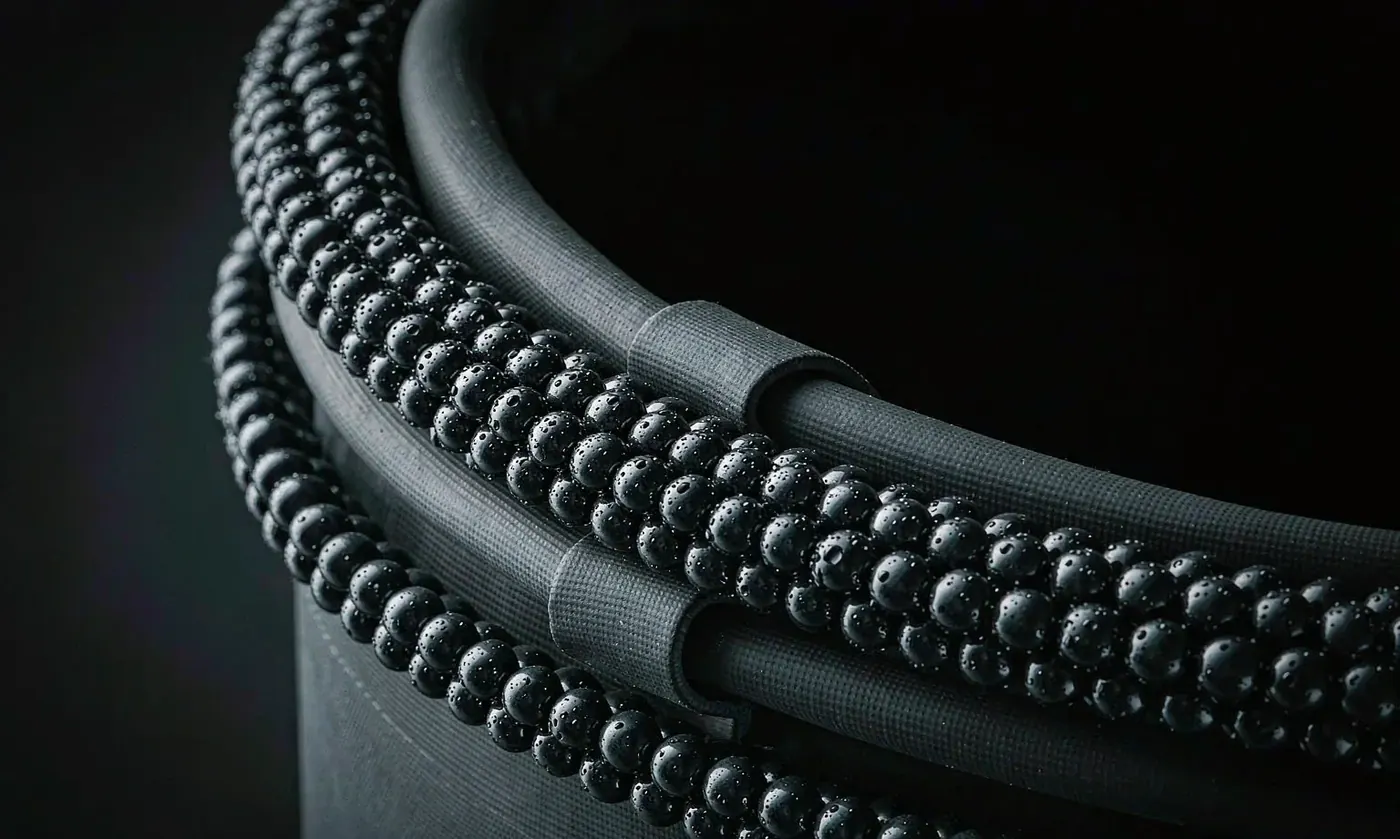
Wading changes what a fly pack must survive, because a slip is not a possibility but an event that most fly anglers experience a few times a season. None of these configurations is ever intentionally submerged, and yet each one occasionally is, which argues for specifying by worst case rather than by average day.
| Configuration | Realistic worst case | Recommended level | Cost to reach it |
|---|---|---|---|
| Chest pack | Slip in shallow water, pack stays above the line | IPX3 with coated zips | 1.70 USD |
| Sling pack | Full immersion on a slip above mid-thigh | IPX4 minimum, IPX6 preferred | 4.20-8.50 USD |
| Lumbar pack | Wave over the hip line in moving water | IPX6 with welded lower shell | 8.50 USD |
| Vest | Rain plus splash only | IPX3 across the body panels | 2.40 USD |
The lumbar row deserves emphasis because it runs counter to intuition. A pack worn behind the hip is the one most likely to go under when the angler slips forward, since rotation carries the rear load down first, and it is also the one buyers most often specify at the lowest water rating. Cold-water immersion carries risks well beyond the loss of kit, and the Centers for Disease Control and Prevention publishes hypothermia guidance that makes the case for treating wading exposure seriously rather than as an equipment question alone.
Internal Layout Standards
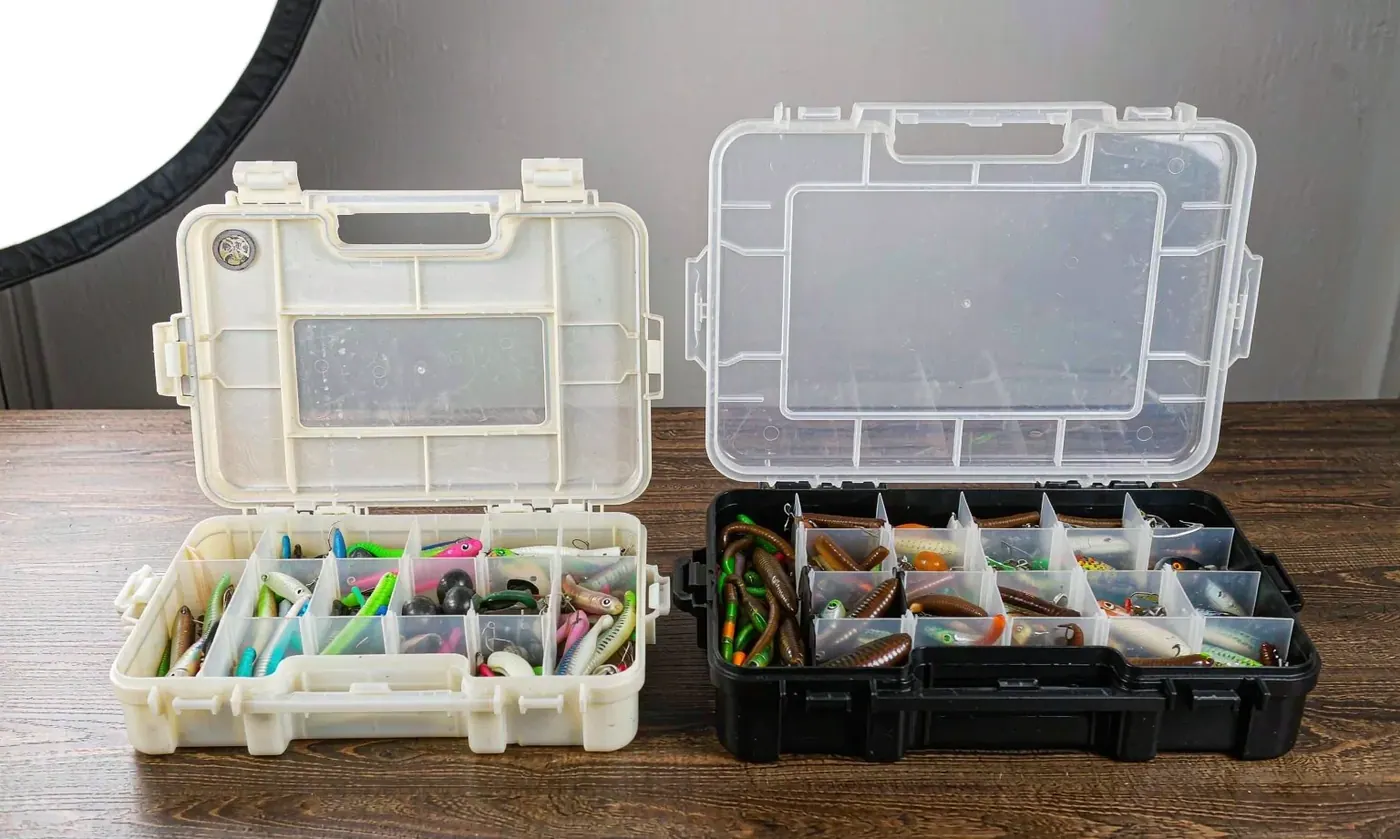
Internal layout is where fly packs succeed or fail, and the requirements are unusually specific. Rather than one big void that accepts anything, a fly pack needs a defined set of slots, retainers, and attachment points, and missing any one of them produces complaints that no amount of fabric quality will offset.
- At least two lay-flat slots sized to the largest box intended, with 3-4 mm of allowance so a loaded box slides out without wedging.
- Tippet retainers for six spools as a working minimum, positioned where they can be read rather than merely stored.
- Two external retractor attachment points rated above 1 kg pull, because tools clipped to fabric eventually tear it.
- A sealed wet pocket for floatant and treatment bottles, since these leak far more often than owners expect.
- A drop-down or roll-forward working surface, without which the pack is a container rather than a workstation.
The last item is the one most worth paying for. A chest or sling pack that presents its contents as a working surface angled toward the angler is doing something genuinely different from a bag with a zip, and it is the feature most strongly associated with whether anglers describe a pack as usable. It costs roughly 3.80 USD to engineer properly and it is why some products in this category command substantial price premiums.
Fit and Sizing
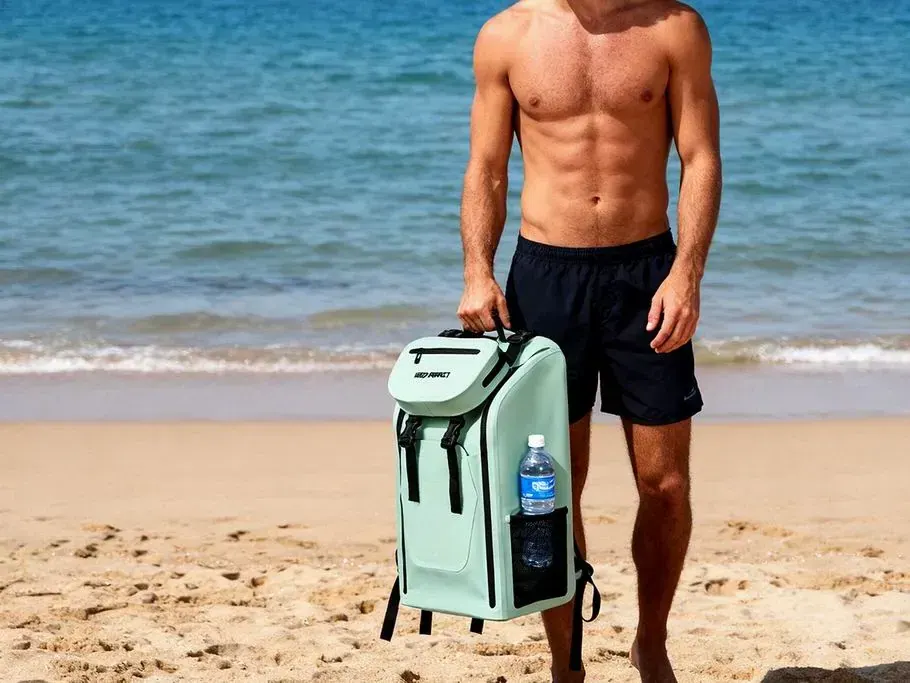
Fly packs are worn over waders and insulating layers rather than over a shirt, which changes fit requirements in a way that general-purpose bags never account for. A strap adjusted for a summer top may not extend enough for a wader plus a fleece, and this is discovered on the coldest day of the year rather than at purchase.
The number to specify is total strap adjustment range rather than nominal length. Allowing 250-350 mm of usable travel covers the difference between a light layer and full winter underlayers on the same angler, and it costs about 1.20 USD in webbing and hardware. Anything less and the product is returned by customers who did nothing wrong.
Matching Configuration to Water
Which configuration suits which water is largely a question of wading depth and whether the angler needs to move. The mapping below covers the four most common situations and deliberately names one option to avoid in each case, because knowing what will not work is usually more valuable than another recommendation.
| Water | Dominant need | Configuration to specify | Avoid |
|---|---|---|---|
| Small stream, brushy banks | Minimal snag profile | Chest pack or compact sling | Vest with external pockets |
| Big river, wading to mid-thigh | Immersion survival and rear access | Lumbar pack at IPX6 | Chest pack at IPX3 |
| Stillwater from a boat | Highest capacity and organisation | Vest or vest with rear body | Small chest pack |
| Saltwater flats, all day | Heat management and access | Sling with ventilation channels | Vest above 22 C |
| Travel destination | One bag doing everything | Sling plus a compact drop-down insert | Any single-purpose build |
That final row deserves a paragraph of its own, because travel fly fishing has grown into a substantial segment and it punishes specialists. An angler flying to a destination needs one configuration that works across moving water and still water, which normally means a sling of 12-18 litres with a removable insert, rather than two purpose-built packs that together exceed baggage tolerance.
Testing Standards and Approval Checks
Fly packs are smaller than most fishing bags and they are approved more casually, which is backwards, because their failure modes are concentrated in small components with tight tolerances. Fabric and hardware expectations should reference published methods maintained by ASTM International, including tear strength and abrasion cycles for the face fabric.
| Check | Method | Pass condition | Catches |
|---|---|---|---|
| Box slot fit | Insert and remove each box 30 times | No wedging, no wear | Allowance under 3 mm per dimension |
| Retractor anchor pull | Pull each anchor to 1.5 kg, 20 times | No stitch movement | Fabric-only attachment |
| Strap travel | Measure end to end adjustment | 250-350 mm usable | Winter fit that does not close |
| Immersion per level | Protocol against the stated code | No ingress at rated depth | Coated zip sold as waterproof |
| Swing cycle | Swing a loaded sling 200 times | Strap bearing holds up | Binding at the rear strap path |
Nets, Tools, and Where They Hang
Every configuration in this article has to solve the same awkward object, which is a landing net. It is long, rigid, wet, and needed within about two seconds of a fish taking, and none of the four carries it well by default. Getting this right is often the difference between a pack an angler describes as considered and one they merely tolerate.
| Solution | Where it mounts | Release force | Best configuration | Added cost |
|---|---|---|---|---|
| Magnetic release with coil | Rear panel or back of waist | About 2-3.5 kg | Lumbar and sling | 3.20 USD |
| Elastic and hook loop | Shoulder or vest back | Single hand pull | Vest | 1.10 USD |
| Net holster pocket | Rear drop pocket | Gravity, no retainers | Vest with rear body | 2.60 USD |
| Webbing loop and carabiner | Any strap or D ring | Manual unclip | Any | 0.90 USD |
Release force needs to be chosen deliberately rather than maximised. A magnet holding too firmly turns a one-handed net grab into a two-handed struggle at precisely the wrong moment, while one holding too loosely drops the net every time the angler climbs a bank. The 2-3.5 kg range lets the net hang securely through scrambling and still come away with a firm single-hand pull, and it is worth specifying the figure rather than asking for a strong magnet.
Tools follow the same logic of placement over containing. Nippers, forceps, and a hook sharpener belong on retractors anchored to load-bearing webbing rather than to face fabric, because a retractor clipped to the shell eventually tears it. Two anchors rated above 1 kg cover everything most anglers carry, and positioning them so tools fall clear of the casting line is a design decision rather than an accident.
Building a Range Across the Four
Retailers rarely need all four configurations, and the useful question is which two or three cover the most water. Starting with a sling covers perhaps the largest single share of demand, adding a chest pack serves shallow-water specialists cheaply, and adding a vest later addresses cold-season capacity without cannibalising either of the first two.
| Order to add | Configuration | Share it addresses | Cannibalises | First order size |
|---|---|---|---|---|
| First | Sling, 12-18 L | Broad general demand | Nothing | 500 pcs |
| Second | Chest pack, 3-6 boxes | Shallow water specialists | Little from the sling | 500 pcs |
| Third | Vest or lumbar pack | Season or deep wading | Some sling demand above 22 C | 500 pcs |
| Fourth | Compact travel insert | Destination anglers | A small sling share | 500 pcs |
Sharing one strap platform and one hardware set across the whole range is the strongest lever available here, saving roughly 2.10 USD per unit and removing an entire class of fit complaints in the process. It also lets a buyer order three configurations totalling 1,500 units rather than committing 1,500 units to a single bet, which matters considerably more when the category is new to them.
Programme, Pricing, and Compliance
Fly configurations typically carry more hardware per unit than equivalent-sized general fishing bags, because retractors, tippet bars, and multiple pockets add components rather than fabric. That shifts the cost structure: hardware may represent a larger share of build cost here than the shell does, which is unusual and worth understanding before negotiating.
| Programme item | Baseline | Note |
|---|---|---|
| MOQ | 500 pcs per design and colour | Hardware items may have their own minimum above the bag |
| Sampling | 6-10 working days | Add 3-4 days when specifying a new retractor or bar set |
| Bulk | 35-50 days | From approved sample and deposit |
| Inspection | AQL 2.5 | Include box slot fit, anchor pull, strap travel, swing cycle |
| Compliance | REACH and California Prop 65 | Screen fabric, coating, foam, inks, hardware, webbing |
QUANZHOU JUNYUAN BAGS has developed waterproof bag programmes since 2014, with the founding team working in the trade since 2004. Monthly output of 200,000 units is verified by SGS, and BSCI and ISO 9001 systems structure the workflow. Materials are screened for REACH and California Prop 65, and every bulk order is inspected at AQL 2.5 before shipment.
A fly configuration brief can be emailed to service@junyuanbags.com with configuration, box count, water rating, fit range, and quantity. FOB Xiamen or DDP service to more than 100 countries follows an approved sample and a complete test record. Buyers comparing individual formats should look at the chest pack range, the sling pack range, and the waist pack range side by side, or start broader with the fly fishing collection.
People Also Ask
What is the best pack configuration for fly fishing?
A sling for most water, balancing six to twelve boxes with 3-5 kg of load and fast access. A lumbar pack suits deep wading and a chest pack suits shallow water where hands need to be free.
Is a vest still worth buying for fly fishing?
Yes for cold weather and stillwater boat fishing where capacity matters most. Above about 22 C most anglers find a vest too warm for all-day wear.
Why do fly packs differ from normal tackle bags?
Fly boxes are flat at roughly 5 x 8 x 1 in rather than deep trays, and the kit includes tippet spools, retractors, and treatment bottles that need dedicated slots rather than one big void.
How many fly boxes should a pack hold?
Three to six for a chest pack, six to twelve for a sling, four to eight for a lumbar pack, and ten to twenty-four for a vest. Above six on a chest pack blocks the view of the water.
Should a fly pack be waterproof?
Minimum IPX3 for rain, and IPX6 for a lumbar pack worn while wading above mid-thigh, because a forward slip carries rear load under first.
Do fly packs fit over waders and winter layers?
Only with enough strap travel. Specify 250-350 mm of usable adjustment range rather than a nominal strap length.
Frequently Asked Questions
Q1. What are the four fly fishing pack configurations?
Chest pack at the sternum, sling pack on one shoulder, lumbar pack behind the hips, and vest across the torso, each with different box capacity and access time.
Q2. Which fly pack is best for beginners?
A sling of 8-18 L. It offers six to twelve boxes and reasonable access without requiring the discipline of a chest pack or the heat penalty of a vest.
Q3. Is a chest pack or sling better for fly fishing?
A chest pack for two-second hands-free access in shallow water. A sling once wading deeper or carrying more than about 3 kg, since the chest configuration becomes uncomfortable past that.
Q4. Why are vests less popular now?
Heat. A vest covering most of the torso restricts evaporative cooling, and most anglers find it uncomfortable above roughly 22 C of air temperature.
Q5. How many fly boxes fit in a sling pack?
Six to twelve in an 8-18 litre body. Above twelve the sling exceeds about 5 kg and the single-shoulder load becomes the limiting factor.
Q6. Should a lumbar pack be more waterproof than a chest pack?
Yes, typically IPX6 rather than IPX3. A forward slip rotates rear load downward first, so a hip-mounted pack goes under before anything on the chest does.
Q7. Can I use a regular tackle tray sleeve for fly boxes?
No. A tray sleeve cut for a 3600 or 3700 is too deep and too narrow in plan view for a flat fly box of about 5 x 8 in and will not hold it square.
Q8. What should a fly pack have internally?
Two lay-flat box slots with 3-4 mm allowance, tippet retainers for six spools, two retractor anchors rated above 1 kg, a sealed wet pocket, and a drop-down working surface.
Q9. How much strap adjustment does a fly pack need?
250-350 mm of usable travel, which covers the difference between a light layer and full winter underlayers on the same angler at about 1.20 USD extra.
Q10. Are fly packs suitable for saltwater flats fishing?
Yes, and heat management dominates. Choose a sling with ventilation channels rather than a vest, which traps heat over most of the torso all day.
Q11. What is the biggest hardware cost in a fly pack?
Retractors, tippet bars, and multiple closures often exceed the shell cost per unit, because these configurations carry more components in less fabric than general fishing bags.
Q12. What is the MOQ and lead time for fly configurations?
MOQ is 500 pcs per design and colour, though hardware items may carry their own minimum. Samples take 6-10 working days plus 3-4 days for new hardware sets, and bulk runs 35-50 days.