A fishing waist pack carries the smallest kit of any fishing format and it is the right choice when the angler wades, sweats, or hates having anything on the back. Specify 2-8 usable litres, a stiffened belt of 38-50 mm that sits on the iliac crest rather than the waist, a loaded weight under 2.5 kg, and IPX6 or better because a waist pack goes underwater whenever the wading does. Eight builds were assessed for 2026 at 12-34 dollar FOB Xiamen bands for MOQ 500 pcs per design and colour. Samples take 6-10 working days and bulk runs 35-50 days.
Why the Waist Pack Still Exists
Three formats compete for minimal kit and the waist pack keeps its place for a simple reason: it covers the least body area, it puts the load on the hips rather than the spine, and it rotates to the front without being taken off. In hot weather that first point alone decides it, because a backpack or a chest pack adds a soaked panel to an already sweating angler.
The second reason is wading. A waist pack rides above the waterline in a shallow crossing and below it in a deep one, and either way it does not interfere with the casting arm or with a rain shell worn over the top. A chest pack has to be worn over or under the shell and both options are awkward. A sling swings and has to be stabilised.
| Situation | Waist pack score | Better alternative | Why |
|---|---|---|---|
| Hot weather, minimal kit | Excellent | None | Least body coverage of any format |
| Shallow to mid-depth wading | Excellent | None | No shoulder or chest interference |
| Deep wading past the belt | Poor | Chest pack or sling | The pack goes under with the angler |
| Long walk to the water | Good | Small backpack | Hip load is efficient but pockets bounce |
| Full day with layers and food | Poor | Backpack 28-35 L | Volume ceiling is about 8 L |
The Eight Builds at a Glance
Capacity in this category is small enough that every litre matters, and the figures below are usable litres with the pockets loaded rather than an external measurement. Weight is empty. Rating is the ingress level of the main chamber, and drain time is how long the pack takes to shed most of a full dunk, which on a wading pack matters more than the rating does.
| Build | Volume | Rating | Drain time | Weight | FOB band |
|---|---|---|---|---|---|
| River 6 All-Round | 6 L | IPX6 | 120 s | 0.62 kg | 22-28 USD |
| Drink 5 Bottle | 5 L | IPX6 | 110 s | 0.70 kg | 24-30 USD |
| Trout 3 Minimal | 3 L | IPX6 | 90 s | 0.42 kg | 16-21 USD |
| Salt 6 Marine | 6 L | IPX7, 1 m / 30 min | 100 s | 0.68 kg | 27-34 USD |
| Sub 4 Submersible | 4 L | IPX7, 1 m / 30 min | 80 s | 0.50 kg | 23-29 USD |
| Euro 7 Competition | 7 L | IPX6 | 130 s | 0.80 kg | 28-34 USD |
| Travel 4 Packable | 4 L | IPX5 | 100 s | 0.40 kg | 18-23 USD |
| Starter 2 Value | 2 L | IPX5 | 90 s | 0.32 kg | 12-16 USD |
Belt Geometry and Load on the Hips
The belt is the whole product and it is where cheap waist packs fail. It must be stiff enough not to roll, wide enough not to cut in, and positioned on the iliac crest rather than on the soft waist. A belt that rolls under a 2 kg load becomes uncomfortable in about twenty minutes, and no amount of padding fixes a belt that is too narrow or too soft.
The numbers to specify are 38-50 mm of width, a stiffener insert or a double-layer webbing, and a buckle rated well above the loaded weight. A load of 2 kg on a properly fitted hip belt is barely noticeable, and it should transfer 70-80 percent of the weight to the pelvis. That is the advantage of the format and it only works with a correctly placed belt.
| Belt element | Recommended | Symptom if wrong | Correction |
|---|---|---|---|
| Width | 38-50 mm | Rolls and cuts in | Widen to 50 mm |
| Stiffener | Insert or double-layer webbing | Belt curls under load | Add a stiffener sleeve |
| Position | On the iliac crest | Sits on the soft waist and slides | Refit higher and tighter |
| Buckle | Rated 5x loaded weight | Creeps open during a session | Upgrade the buckle |
| Load transfer | 70-80 percent to the pelvis | Weight felt in the back | Adjust belt height and tension |
One habit makes a large difference and costs nothing: load the pack before putting it on. A waist pack loaded while being worn pulls the belt out of position, and refitting it in chest-deep water is not practical. Load on the bank, set the belt on the hip bones, and check that the pack does not rotate when the angler turns.
What a Waist Pack Cannot Carry
The volume ceiling is about 8 L and it is a real ceiling rather than a marketing one. Beyond that the pack becomes deep enough to foul the casting arm when the angler bends, and heavy enough that the load stops sitting comfortably on the hips. A buyer asking for a 12 L waist pack is asking for a small backpack with a belt.
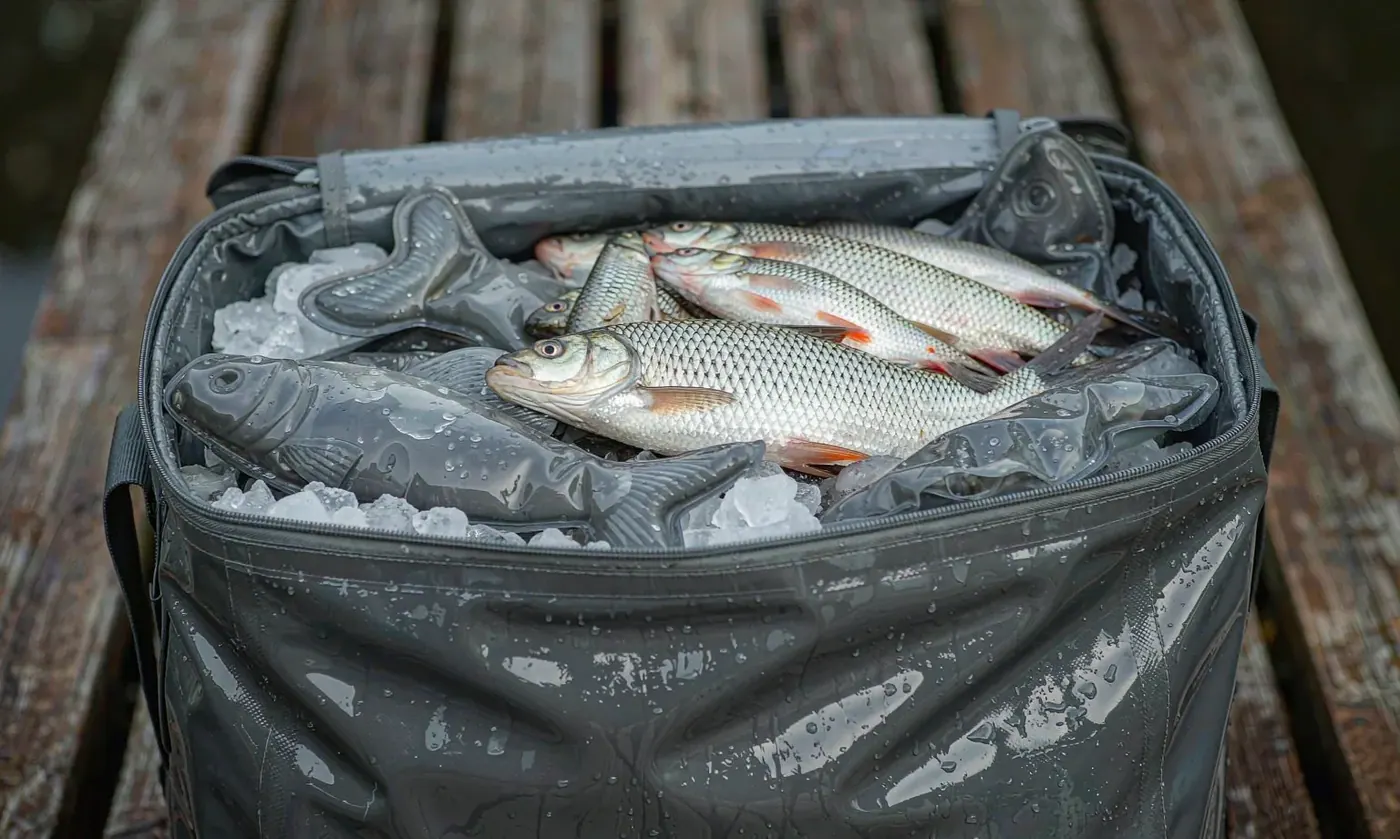
What genuinely does not fit is worth listing: a cooler section, a catch bag, a full rain shell worn rather than packed, more than one large fly box, and any volume of water above about 750 ml. All of those belong in a backpack left on the bank, and the correct waist pack purchase is the one that holds exactly what the angler needs within the hour and nothing else.
| Item | Fits in a waist pack | Where it goes instead | Note |
|---|---|---|---|
| Two fly boxes | Yes, in a 6 L build | Not applicable | The realistic maximum |
| 750 ml water | Yes, external sleeve | Not applicable | Above 1 L needs a backpack |
| Light shell | Compressed, 4 L or more | Strapped to a backpack | Bulky rather than heavy |
| Cooler or catch bag | No | Backpack or bank tote | Wrong format entirely |
| Camera | Only a compact body | Sealed liner in a backpack | Weight fouls the casting arm |
Capacity planning is covered in more detail in the waist pack capacity guide, and the wider category sits in the fishing waist pack overview. Both are worth reading before an order, because the most common buyer mistake here is over-sizing the pack and then wondering why it sells slowly.
1. River 6 All-Round: Best Overall
Six litres, 0.62 kg, IPX6, and a drain time of about 120 seconds is the configuration most wading anglers should buy. Two fly boxes or one tackle tray, tippet or leader, tools on retractors at the belt, and a 750 ml bottle in an external sleeve. The belt is 45 mm with a stiffener insert and a buckle rated at 10 kg against a realistic 2 kg load.
The detail that makes it work is pocket placement. Two side pockets sit forward of the hip bone so the hand finds them without looking, and the main chamber opens away from the body so it can be reached while wading. Reference band is 22-28 USD FOB Xiamen at 500 pieces, and the build should be the default in any wading range.
2. Drink 5 Bottle: Best for Hot Weather
A wading angler in summer needs water more than anything else, and a waist pack is the best place to carry it because the load sits on the hips. This build pairs 5 L of storage with an insulated bottle sleeve holding 750 ml, positioned at the rear so it does not foul the casting arm. Weight is 0.70 kg and the reference band is 24-30 USD.
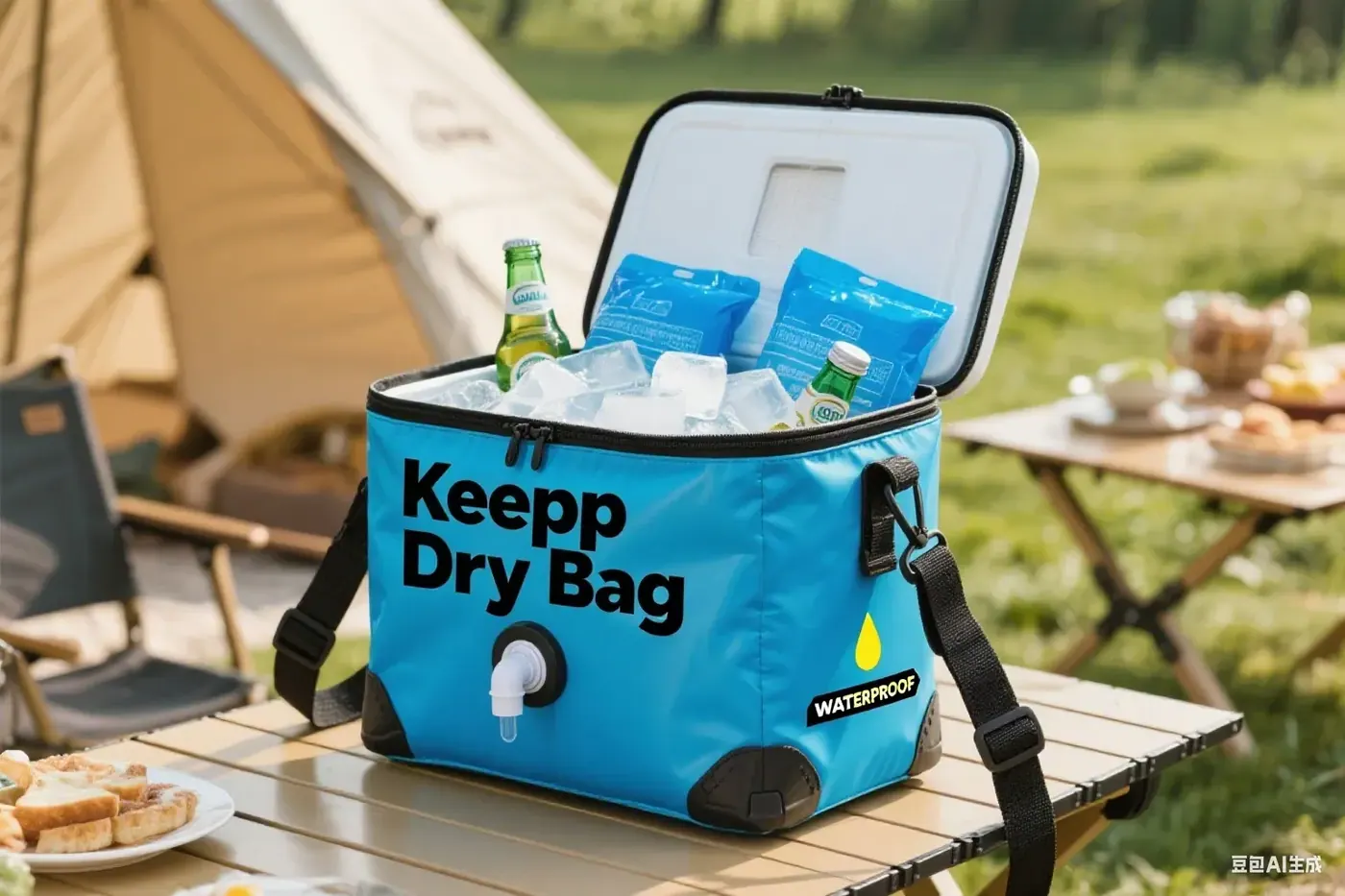
The sleeve has a drained open bottom, which matters because a sealed sleeve collects condensation and then leaks it into the main chamber. Insulation is 4 mm rather than the 6-10 mm used in a cooler bag, because the goal is to slow warming rather than to hold ice. Rating is IPX6 with a drain time of about 110 seconds.
3. Trout 3 Minimal: Best Small Build
Three litres and 0.42 kg is the smallest useful waist pack: one fly box, tippet, nippers, and a small bottle. It suits a summer evening session, a stocked-water outing, or an angler who keeps the rest of the kit in a car or a bank bag. The belt is 38 mm, which is correct at this load and would be too narrow on a 6 L build.
What is removed is the honest part of the description: no bottle sleeve, one tool dock rather than two, and a single compartment with no divider. Rating is IPX6 and the drain time is 90 seconds, which is the fastest in the group purely because there is less to hold water. Reference band is 16-21 USD, and it is the strongest second-bag item in a range.
4. Salt 6 Marine: Best for Saltwater Wading
Saltwater wading means flats, estuary edges, and surf margins, and it raises two requirements: corrosion resistance and a genuine immersion rating. This build is 6 L with 316 stainless and acetal hardware rated to 480 salt spray hours, IPX7 at 1 m for 30 minutes, and a covered zip with a full fabric garage. Weight is 0.68 kg.
Rinsing is mandatory rather than recommended, and the specification should say so on the hangtag. Fresh water over the closure, the buckle, and every metal part after each session, then dry open for 8-16 hours. Reference band is 27-34 USD, and the extra cost over the River 6 is almost entirely hardware and the closure garage.
5. Sub 4 Submersible: Best for Deep Wading
When the angler wades past the belt, the pack goes under, and a build that merely resists spray is not enough. Four litres with a roll-top closure, welded seams, IPX7 at 1 m for 30 minutes, and the fastest drain time in the group at about 80 seconds. Weight is 0.50 kg and the reference band is 23-29 USD.
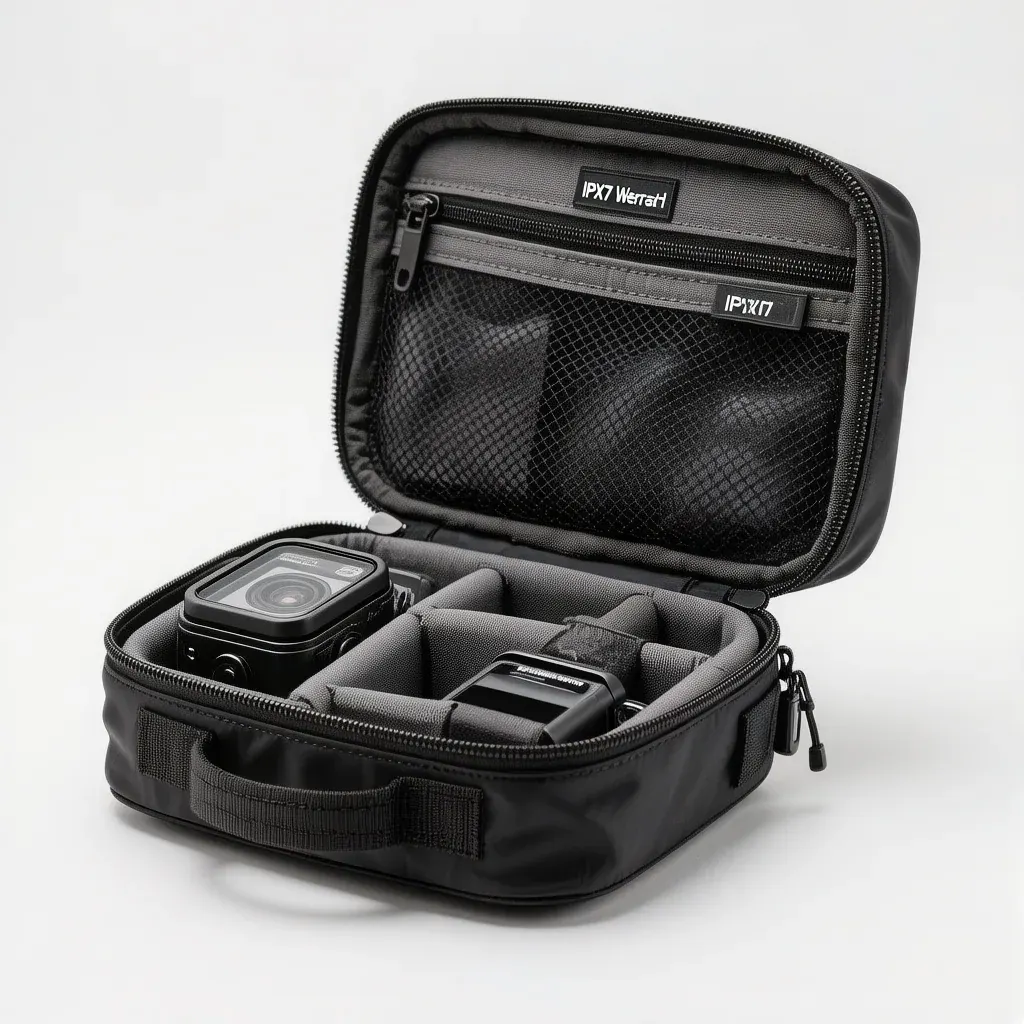
The trade is access. A two-turn roll takes about 6 seconds to open, which is fine for a chamber visited a few times an hour and annoying for one visited every few minutes. This build pairs the roll-top main chamber with a magnetic-flap front pocket, which is the right combination. A 2 L sealed pouch inside holds a phone and a licence.
6. Euro 7 Competition: Best for Competition Anglers
Competition anglers carry an unusual kit: many small boxes, a lot of tippet, a measuring board, and a long-handled net. Seven litres with a divided chamber for four small boxes, a seven-spool tippet station on the belt, and a rear holster for a folded wading staff. Weight is 0.80 kg and the reference band is 28-34 USD.
At 0.80 kg this is at the top of the comfortable range and it needs the 50 mm belt, which is what this build uses. The belt also carries a clip for a net cord, because a competition net is too heavy for any waist-mounted dock and is secured by a cord instead. Drain time is 130 seconds, the slowest in the group, because there is more material to shed.
7. Travel 4 Packable: Best for Travel
Four litres, 0.40 kg, and a body that folds to about 40 mm makes this the waist pack that goes in a suitcase. It holds one fly box, tippet, and tools, the belt detaches for packing, and the hardware is 316 stainless so it copes with a saltwater destination. Rating is IPX5, and the reference band is 18-23 USD.
Two travel details matter. The pack must have no external loop long enough to catch on a conveyor, and the belt buckle should be non-metallic or the pack should be packed so the buckle cannot be crushed. Rating IPX5 is the honest limit here, and a phone goes in a sealed pouch rather than in the pack.
8. Starter 2 Value: Best Budget Build
Two litres and 0.32 kg at a 12-16 USD band is the entry item, and it holds one small box and tools. It is the cheapest useful fishing bag in any range and it sells strongly as an impulse purchase and as a gift item. Rating is IPX5 and the belt is 38 mm with a single-layer webbing and no stiffener.
The missing items are a bottle sleeve, a second tool dock, and any meaningful water protection beyond spray resistance. At this price that is the correct set of economies, and the build should be sold as a minimal item rather than as a general-purpose wading pack. It suits a first-time angler and a child far better than it suits a serious wader.
Immersion, Drainage, and the Wading Reality
A wading pack gets wet in a way a bank pack never does: gradually as the angler goes deeper, and suddenly if there is a slip. That means two separate specifications are needed rather than one. The first is the ingress rating of the main chamber, and the second is the drain rate, because a pack that took in water has to get rid of it before the angler carries it for another hour.
| Exposure | Rating to specify | Drain target | Note |
|---|---|---|---|
| Shallow wading, splash | IPX5 | Under 120 s | Fine for bank and shallow crossings |
| Mid-depth wading | IPX6 | Under 120 s | The sensible floor for a wading pack |
| Deep wading, pack goes under | IPX7, 1 m / 30 min | Under 90 s | Roll-top or sealed liner |
| Saltwater wading | IPX7 plus 316 hardware | Under 100 s | Rinse after every session |
| Electronics | Sealed 2 L pouch | Not applicable | Sink-tested each season |
Ingress codes are defined by the IEC ingress protection framework, so any rating claim should state its depth and duration. Abrasion and strap strength can be required to stated values using published methods from ASTM International, which matters on a waist pack because the belt rubs against a wading belt and a wader buckle all day.
Care and Season Checks
Waist packs need little care and they get it less often than they should, precisely because they are small. Rinse in fresh water after any salt session, empty every pocket, open the closures, and dry for 8-16 hours. Check the belt stiffener and the buckle twice a season, because those two carry the whole load and neither is expensive to replace.
| Task | Frequency | Method | Pass condition |
|---|---|---|---|
| Fresh water rinse | After salt or brackish use | Low pressure over buckle and zip | No visible salt residue |
| Empty and dry open | Every session | 8-16 hours, all closures undone | Interior completely dry |
| Belt and buckle check | Twice a season | Visual plus a 5 kg pull test | No fraying, no creep |
| Tool retractor check | Monthly | Extend and release 20 times | Returns fully every time |
| Water re-screen | Every 3 months | 60-minute spray, loaded | Indicator tissue dry |
Programme, Pricing, and Compliance
Waist packs are the cheapest fishing bags to develop and the quickest to sample, because there is no harness, no back panel, and usually no moulding at all. The two specification decisions that take time are the belt construction and the closure, and both should be settled before sampling begins. Everything else in the brief is standard.
| Programme item | Baseline | Note |
|---|---|---|
| MOQ | 500 pcs per design and colour | Colour split negotiable above the baseline |
| Sampling | 6-10 working days | Add 3-5 days for a stiffened belt |
| Bulk | 35-50 days | From approved sample and deposit |
| Inspection | AQL 2.5 | Include belt pull, buckle check, drain rate, water screen |
| Compliance | REACH and California Prop 65 | Screen coatings, films, inks, hardware |
QUANZHOU JUNYUAN BAGS has developed waterproof bag programmes since 2014, with the founding team active in the industry since 2004. Monthly output of 200,000 units is verified by SGS, and BSCI and ISO 9001 systems structure the workflow. Materials are screened for REACH and California Prop 65, and every bulk order is inspected at AQL 2.5 before shipment.
A waist pack brief can be emailed to service@junyuanbags.com; include litres, belt width, rating target, hardware grade, market, and quantity. FOB Xiamen or DDP service to more than 100 countries follows an approved sample and a complete test record. The fly-fishing side of the category sits in the fly fishing bag overview.
People Also Ask
What capacity suits a wading waist pack?
Two to 8 L, with 6 L the practical all-round size. Beyond about 8 L the pack fouls the casting arm and stops sitting comfortably on the hips.
Why does my waist pack slide down?
The belt is on the soft waist rather than the iliac crest, or it is too narrow and soft to hold a load. Use 38-50 mm with a stiffener and set it on the hip bones.
Do waist packs work for deep wading?
Only with IPX7 at a stated depth and duration and a fast drain time. In deep wading the pack goes under, so a spray rating is not enough.
What belt width suits a fishing waist pack?
38 mm for a 2-3 L pack and 45-50 mm for 5 L or more. Anything narrower rolls under load and becomes uncomfortable within twenty minutes.
Can a waist pack carry water?
Yes, up to about 750 ml in an external drained sleeve. Above 1 L the load stops being comfortable and a backpack is the better answer.
Is a waist pack better than a chest pack?
For hot weather and shallow wading, yes. For deep wading and for long sessions standing in one spot, a chest pack gives better access and a work surface.
Frequently Asked Questions
Q1. What is the best fishing waist pack overall?
A 6 L build at about 0.62 kg with IPX6, a drain time near 120 seconds, a 45 mm stiffened belt, and pockets set forward of the hip bone.
Q2. How much should a fishing waist pack hold?
Two to 8 L, with 6 L the practical all-round figure. Above 8 L the pack fouls the casting arm and the load stops sitting comfortably on the hips.
Q3. Why does my waist pack slide down when wading?
The belt is sitting on the soft waist instead of the iliac crest, or it is too narrow and soft. Use 38-50 mm with a stiffener and set it on the hip bones.
Q4. What belt width should I look for?
38 mm for a 2-3 L pack and 45-50 mm for 5 L or more. Narrow belts roll under load and become uncomfortable within about twenty minutes.
Q5. Are waist packs waterproof enough for wading?
IPX6 is the sensible floor for shallow to mid-depth wading. For deep wading where the pack goes under, specify IPX7 at a stated depth and duration.
Q6. How fast should a waist pack drain?
Under 120 seconds for a general build and under 90 seconds for a deep-wading build. Drain rate matters more in the field than one rating step up.
Q7. Can a waist pack carry a water bottle?
Yes, up to about 750 ml in an external sleeve with a drained open bottom. Above 1 L the load becomes uncomfortable and a backpack is better.
Q8. Is a waist pack or a chest pack better for wading?
A waist pack for shallow wading and hot weather, and a chest pack for deep wading and long sessions in one spot, where access and a work surface matter more.
Q9. What suits saltwater wading?
A 6 L build with 316 stainless and acetal hardware rated to 480 salt spray hours, IPX7, and a covered zip with a garage, rinsed after every session.
Q10. What cannot go in a waist pack?
A cooler section, a catch bag, a worn rain shell, more than one large fly box, and more than about 750 ml of water. All of those belong in a backpack on the bank.
Q11. How do I care for a fishing waist pack?
Rinse in fresh water after salt use, empty every pocket, dry open for 8-16 hours, and check the belt stiffener and buckle twice a season.
Q12. What is the MOQ and lead time for a waist pack programme?
MOQ is 500 pcs per design and colour, samples take 6-10 working days, and bulk runs 35-50 days from approved sample and deposit.