Most fishing waist packs run between three and nine litres, and the majority cannot accept a standard tray even though sellers often imply they can, because a full-width tray needs about 285 millimetres of clear internal width and plenty are built nearer 250. Judge capacity in accessory units instead: one tray's worth of space carries roughly five small fly boxes, or two medium boxes plus leaders, tools and a phone. Loaded weight is the second real limit, with hip packs comfortable to about 2.5 kilograms and distinctly unhappy beyond three and a half.
What Three to Nine Litres Really Means
Volume figures compress a lot of geometry into one number, and with waist packs that compression hides everything important. What matters is the shape of the main compartment and whether it can take anything rigid. Typical main compartments measure between 240 and 380 millimetres wide, 120 to 180 millimetres tall, and 80 to 140 millimetres deep, and the width figure is the one that decides whether trays are even possible.
| Size class | Volume | Main compartment width | Realistic contents |
|---|---|---|---|
| Minimalist | 3 to 4 litres | Under 260 millimetres | Two small boxes, leaders, tools |
| Standard | 5 to 7 litres | 260 to 300 millimetres | One tray plus tools, or four boxes |
| Large or big-water | 8 to 12 litres | 320 to 380 millimetres | One or two trays plus clothing |
| Convertible to sling | 6 to 9 litres | 280 to 320 millimetres | Mixed box and tray layouts |
| Chest-mounted variant | 2 to 4 litres | Under 240 millimetres | Boxes and small tools only |
Notice how even the larger classes sit close to the tray threshold. Anything below 285 millimetres cannot take a standard tray whatever the litre figure suggests, and that single measurement eliminates most of the market before any other consideration comes into it.
The Tray Question
Standard trays measure about 277 by 191 by 44 millimetres, so a pack needs roughly 285 millimetres of clear internal width and preferably 200 millimetres of depth to take one flat. That is genuinely achievable, and several big-water hip packs manage it, but it is far from universal. More often the honest answer is that a tray will not fit and everything needs rethinking in smaller units.
| Internal width | What it accepts | Common example |
|---|---|---|
| Under 240 millimetres | Small boxes only | Minimalist and chest packs |
| 240 to 280 millimetres | Thin trays sometimes, medium boxes always | Many standard packs |
| 285 to 320 millimetres | One standard tray | Purpose-built large packs |
| Above 340 millimetres | One tray plus side storage | Convertible hip or sling designs |
Even where the width exists, two things still bite. The tray's corners need clearance to enter, so measure the narrowest point rather than the widest, and the pack must not deform its own belt when loaded, since a hip belt tightened against a rigid box tends to squeeze everything outward and become uncomfortable within the hour.
Counting in Accessories Instead
Accessory counting is the more useful skill, because most hip packs are organised around small items anyway. One tray's volume, around 2.3 litres externally, translates into a surprising number of smaller things, and understanding those equivalences prevents the usual mistake of trying to force one tray into a pack designed for four boxes.
| Space unit | Equivalent to | Notes |
|---|---|---|
| One standard tray, 2.3 litres | Five small fly boxes | Assuming boxes around 90 x 60 x 20 millimetres |
| One standard tray | Two medium boxes plus leaders | Better organisation for mixed methods |
| One standard tray | One large box plus tools | Common choice for saltwater use |
| 550 millilitre water bottle | About one medium box | Plus a kilogram of carried weight |
| Two leader wallets | About one small box | Usually better on a retractor anyway |
Small format storage usually wins on the water because the items inside get changed several times an hour, whereas a single tray is opened rarely and carries far more than a short session needs.
Weight: Where Hip Packs Stop Working
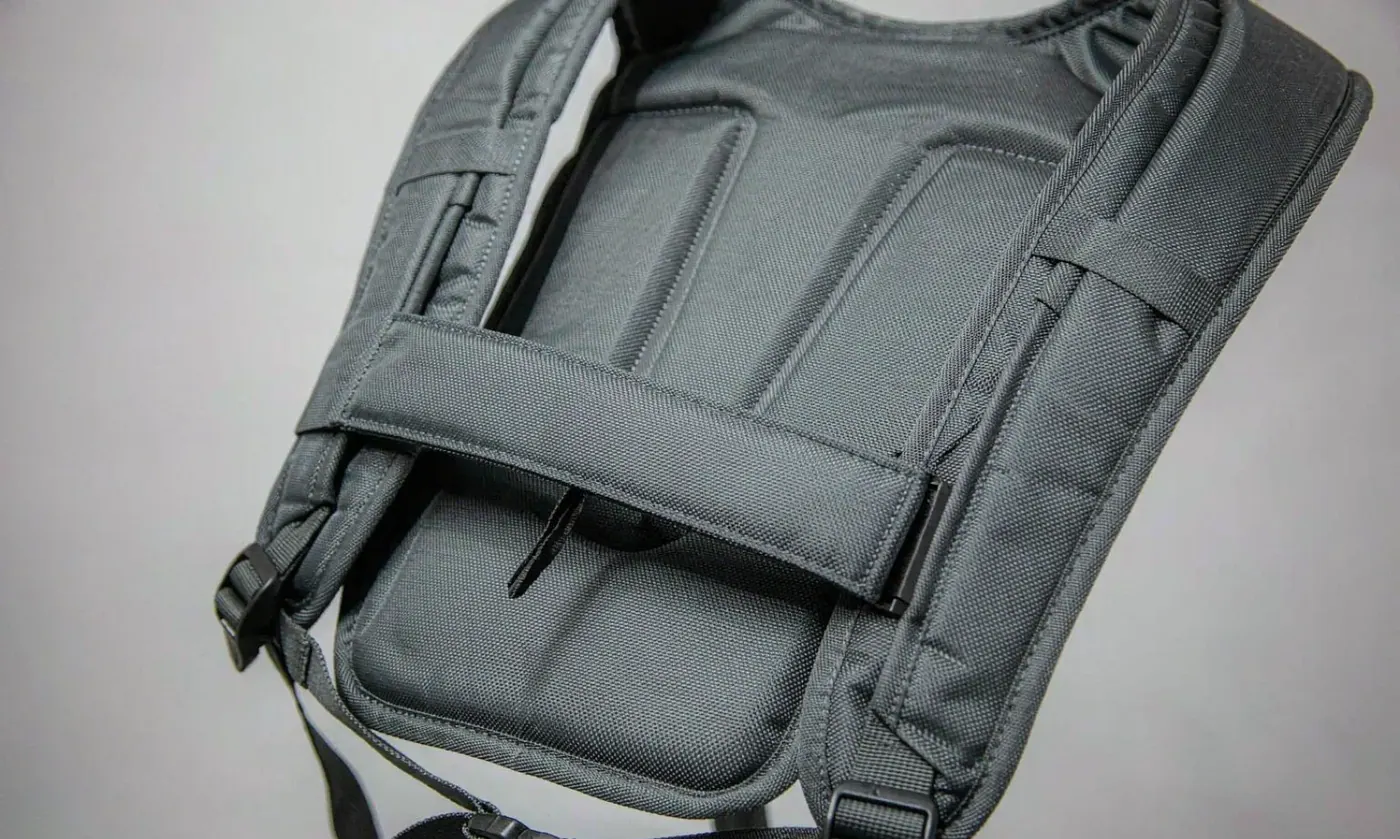
The honest ceiling has less to do with volume than with torque. Anything carried on the belt sits below the body's centre and tries to rotate forward with each step, and once the load passes about 2.5 kilograms most hip belts start working downwards at the front and digging in at the back. Three and a half kilograms is where almost everyone gives up and switches to shoulders.
| Loaded weight | Comfort with a standard belt | Typical fix |
|---|---|---|
| Under 1.5 kilograms | Excellent, barely noticed | None needed |
| 1.5 to 2.5 kilograms | Good for a full day | Ensure the belt sits on the hip bones |
| 2.5 to 3.5 kilograms | Acceptable for a few hours | Add a stabiliser strap or shoulder connection |
| Above 3.5 kilograms | Poor; rotational pull becomes constant | Move to a sling or small backpack |
| Near 5 kilograms | Unworkable regardless of belt width | Use a backpack, no exceptions |
Anyone intending to carry water should subtract a kilogram from those figures before anything else. Bottles are the single heaviest item most people put in a hip pack, and unlike tackle they never get lighter through the day.
Belt Width, Padding and Fit
Belt construction decides how the load feels more than the load itself. Narrow webbing below 30 millimetres concentrates pressure and tends to roll; 38 to 50 millimetres distributes it adequately, and a stiffened belt panel spreads the weight over the pelvic shelf rather than the soft tissue behind it. Webbing strength itself is rarely the constraint, though checkable figures are available through published methods from ASTM International when specifying your own.
- Look for a belt at least 38 millimetres wide with a stiffened section behind the main compartment.
- Check that the buckle sits centrally, since offset hardware rotates the whole pack.
- Confirm the padded length covers the hip bones rather than ending short of them.
- Prefer a belt that can be tightened while walking, which is how most adjustments actually happen.
- Test with the intended load rather than empty, since fit changes completely once full.
Layout: What Goes Where
Organisation matters more at this scale because every item is within reach and everything competes for the same small volume. Four zones do most of the work, and keeping each item in its zone is what makes a small pack feel bigger than it is.
| Zone | Contents | Why there |
|---|---|---|
| Main compartment | Boxes or tray, spare reel | Largest clear space, opened rarely |
| Front pockets | Leaders, tippet, floatant | Reached constantly, often wet-handed |
| External sheaths | Plier and forceps sheaths | One-handed draw while holding a rod |
| Belt attachments | Retractors, holder for additional tools | Keeps the tools clear of pocket volume |
| Drop-down pockets | Any newly purchased accessories | Fastest access without opening the pack |
Retractors are the single best upgrade available. Moving pliers, nippers and forceps from volume-consuming pockets onto the belt itself returns about half a litre of usable space, which is roughly a fifth of the whole pack.
Water Carriage and Rotation
A bottle holder is usually fitted on one side, which introduces asymmetry every time it is used. A full one litre bottle weighs about a kilogram, hanging perhaps 180 millimetres from the spine; that is around 0.18 kilogram metres of rotational pull, constant and always in the same direction, and over several kilometres it becomes genuinely tiring rather than merely noticeable.
- Carry smaller bottles: half a litre halves both weight and rotation for very little inconvenience.
- Balance a bottle with a similar mass on the opposite side where the pack allows it.
- Check whether the holder collapses when empty, since an open holder catches line and rod tips.
- Consider drinking before wading rather than carrying more than half a litre on the belt.
- Refill rather than carry wherever refilling is possible, which is more often than people assume.
Wading, Rain and Cold
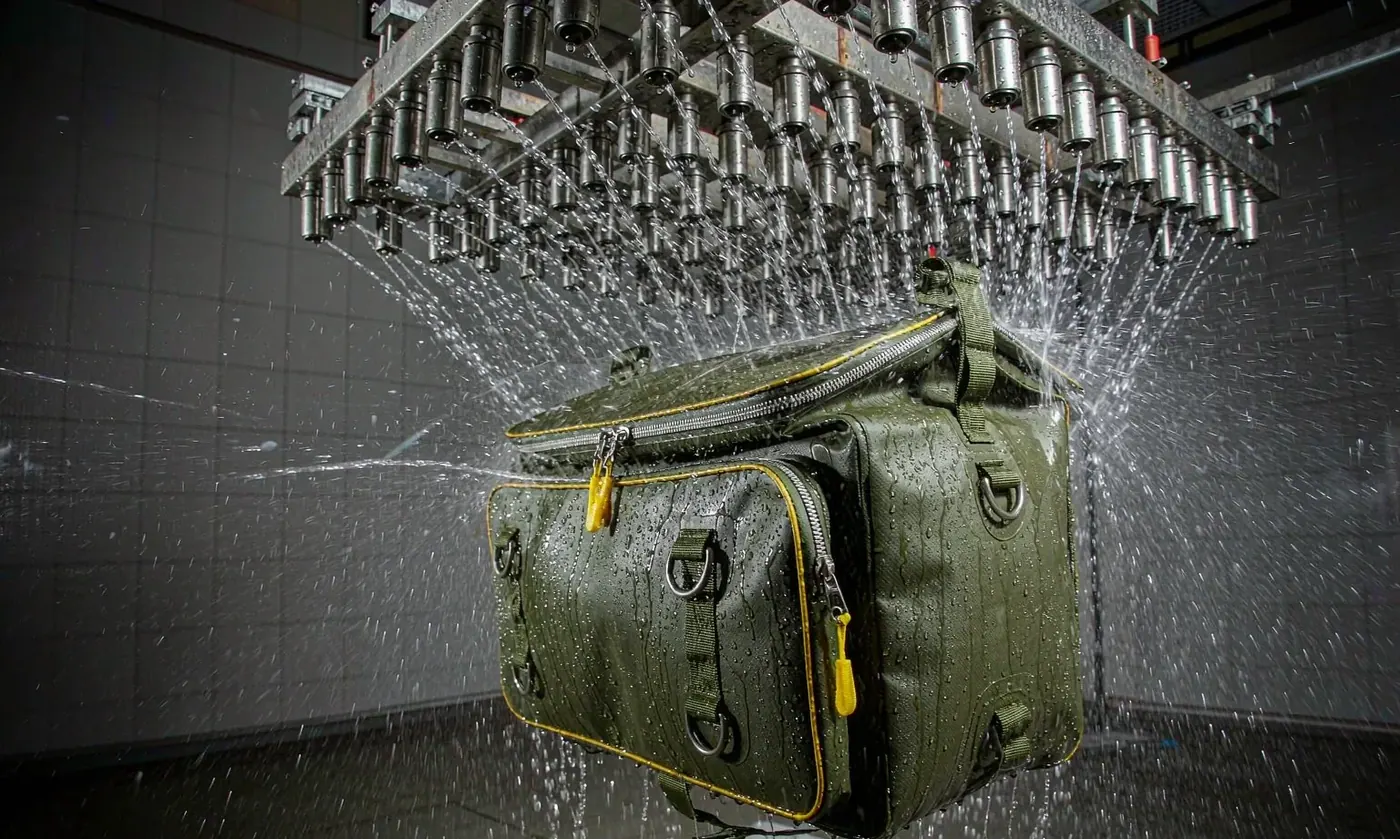
A hip pack sits precisely where water reaches first, which is the honest weakness of the whole format. Wading deeper than about 600 millimetres brings many packs close to the surface, and any serious bow wave puts them in it. Anything that must stay dry belongs higher up or inside a waterproof liner, and anyone wading cold water should remember what exposure actually does: hypothermia guidance from the Centers for Disease Control and Prevention treats wet clothing and cold water as a combination that degrades judgement long before it becomes obvious to the person affected.
| Risk | Mitigation | Comment |
|---|---|---|
| Rain into the top seam | Waterproofed closure plus a flap above it | Check the closure line under running water |
| Immersion while wading | Move the pack higher, or use a chest-mounted unit | Below about 600 millimetres of water |
| Spray from a bow wave | Keep frequently opened pockets small | Everything opened gets wet eventually |
| Cold and fatigue together | Limit time and carry dry layers higher up | Judgement degrades before it feels serious |
Waist Pack Against the Alternatives
Three formats compete for the same small-scale job, and each is genuinely better at something. A hip pack offers the best swing-around access and keeps the shoulders free. A sling carries more weight comfortably and moves out of the way when casting. A small backpack swallows the most volume and handles anything above about three and a half kilograms. Choosing between them is mostly choosing where the weight goes.
| Format | Comfortable load | Access | Best when |
|---|---|---|---|
| Waist pack | Up to 2.5 kilograms | Excellent, swings to the front | Fishing light, moving often |
| Sling pack | Up to 4 kilograms | Good, one motion to the front | Carrying a little more gear |
| Chest pack | Under 1.5 kilograms | Best of all, everything visible | Standing in one place, tools to hand |
| Small backpack | Up to 8 kilograms | Requires removal | Long walks or heavier loads |
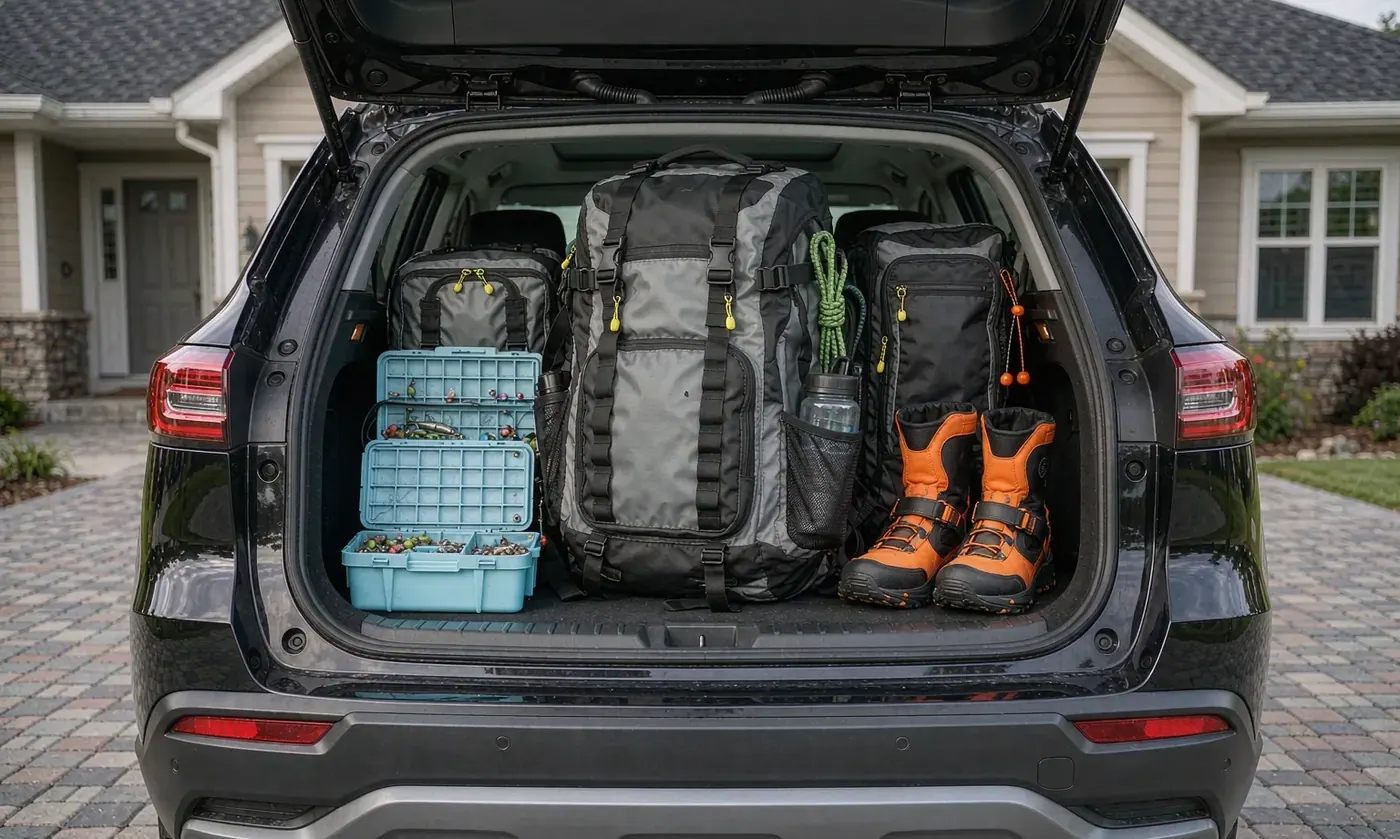
Most settled anglers end up owning two of the four. A hip pack for short moving sessions and a small backpack for anything longer covers essentially everything without compromise.
Three Worked Kits
Concrete examples settle more arguments than any capacity theory. Three kits below represent common ways people actually use a hip pack, with realistic contents and honest weights. Each fits within a standard five to seven litre pack provided nothing in it is oversized.
| Kit | Contents | Total weight | Notes |
|---|---|---|---|
| Dry fly and light hardware | Two medium fly boxes, four spools of tippet, floatant, nippers on a retractor, small tools | Under 1.2 kilograms | Comfortable all day; no bottle |
| Euro nymph or short-line work | Three small boxes, two wallets of leaders, indicators, weights, pliers sheath | 1.3 to 1.8 kilograms | Weight sat close to the back |
| Saltwater shore, lures | One shallow tray or three boxes, leaders, pliers, protective glove | 1.8 to 2.5 kilograms | Add water and it exceeds the comfort line |
Notice the pattern: these are all items that get changed several times an hour. Nobody ever needed a fourth spool of everything, and the packs that work best are the ones whose contents are genuinely known by heart rather than carried hopefully.
Session Length Determines the Format
Time on the water decides whether a hip pack is the right tool far more decisively than personal preference does. Short sessions reward minimal kit because preparation friction dominates the whole enjoyment calculation, while long days punish anything under-packed, since nobody wants to walk back to the car twice.
| Session length | Suggested capacity | Why |
|---|---|---|
| Up to ninety minutes | Three to four litres | Nothing more is needed and departure stays quick |
| Half day | Five to seven litres | Room for food, water and a change of approach |
| Full day with weather changes | Seven to nine litres | Clothing layer versus tackle space becomes real |
| Full day far from the vehicle | Nine litres plus a backpack in support | Capacity is no longer the constraint; weight is |
Anyone regularly fishing beyond six hours should treat the hip pack as the working kit rather than the total kit, with a larger bag staged at the vehicle or in a locker. That staged approach removes nearly every compromise the format otherwise imposes.
Seasonal Swapping in a Small Volume
Because the space is so tight, seasonal swapping matters more here than anywhere else. What changes is rarely the tackle itself but the supporting kit: sunscreen and sunglasses in summer, gloves and a warm hat in winter, an extra layer in spring and autumn, and each of those occupies around half a litre of the third of the pack that does not hold boxes.
| Season | Extra items | Volume share | Practical note |
|---|---|---|---|
| Spring | Light shell, spare gloves | About 1.5 litres | Keep them in external pockets |
| Summer | Sunscreen, sunglasses, spare leader material | About 0.7 litres | Heat degrades some floatants |
| Autumn | Mid layer, hat, more water | About 2 litres | Reassess before adding a tray |
| Winter | Insulated gloves, warm hat | About 1.2 litres | Bulky rather than heavy |
The habit worth adopting is emptying the pack at the end of every season and rebuilding it from nothing. Everything left inside by default rather than by decision is what quietly consumes capacity all year.
Younger and Smaller Builds
Hip packs suit younger anglers unusually well, because the load sits near the body's natural support and nothing pulls on developing shoulders. Two rules apply: keep total weight low, and make sure the belt can actually be tightened enough to sit on the hips rather than around the waist, which is what happens when packs are handed down without adjustment.
| Age group | Recommended volume | Maximum load | Watch for |
|---|---|---|---|
| Eight to eleven years | Two to three litres | Under 1 kilogram | Belt slipping down to the waist |
| Twelve to fifteen years | Three to five litres | Under 1.5 kilograms | Hooks stored out of easy reach |
| Small-framed adults | Four to six litres | About 2 kilograms | Buckle position digging at the hip |
| Anyone wearing waders | As above, plus care | Same limits | Pack riding up as waders slip |
For all of these groups, ensure tools with sharp points sit in sheaths rather than loose pockets, and that the pack can be removed quickly. Everything else about capacity is secondary to those two points.
Reading Small Pack Descriptions
Small packs are described more optimistically than any other category, mostly because buyers rarely ask for internal dimensions on a product costing so little. Four phrases recur, and each deserves translation before money changes hands.
| Phrase used | What it usually means | What to ask instead |
|---|---|---|
| Holds standard trays | Sometimes a shallow tray, sometimes nothing | Give the clear internal width in millimetres |
| Nine litre capacity | Often the sum of every pocket including external | Ask for the main compartment figure alone |
| All-day comfort | Comfortable empty, less so loaded | Ask what load it was assessed with |
| Waterproof construction | Water-resistant fabric, possibly only at the shell | Ask for the closure type and any rating |
| Fits most users | Belt length adequate, stiffness often not | Check belt width and the stiffened length |
Two minutes spent asking those questions converts a purchase from hopeful to informed, and the answers usually arrive immediately because reputable technical listings already contain them. Silence, as ever, is the informative response.
Where a listing genuinely cannot provide internal dimensions, assume the tray does not fit and plan around boxes. That assumption costs nothing and rarely proves wrong.
Programme and Ordering Notes
QUANZHOU JUNYUAN BAGS has run waterproof bag programmes since 2014, behind founding staff whose experience of this trade started in 2004. Monthly output reaches 200,000 units under SGS verification with BSCI and ISO 9001 governance; incoming materials are screened for REACH and California Prop 65 and every lot is inspected at AQL 2.5 before release. Waist packs are dimensioned from the tray question backwards, since that single measurement determines what the rest of the layout can be.
Send internal width and depth requirements, target litre range, whether a standard tray must fit, belt width and padding specification, whether water carriage is required, colours, and quantity. Five hundred pieces per design and colour opens development; sampling needs six to ten working days and bulk thirty-five to fifty days from approved sample and deposit. Shipping runs FOB Xiamen or DDP to upward of one hundred destinations. Drawings go to service@junyuanbags.com. The current models are shown on the fishing waist pack page, a format comparison sits in the sling versus waist pack guide, and reviews appear among the best waist packs.
People Also Ask
How much can a fishing waist pack hold?
Typically three to nine litres, though the useful figure is the main compartment width. Anything under 285 millimetres will not take a standard tray, regardless of the stated volume.
Can a hip pack hold a tackle tray?
Only larger ones built with sufficient clear width. Many measure nearer 250 millimetres, so small boxes are the realistic alternative for most models.
How heavy can I load a waist pack?
About 2.5 kilograms comfortably, 3.5 with a stabiliser strap, and beyond that a sling or small backpack is a better answer because of rotational pull.
What belt width should I look for?
At least 38 millimetres with a stiffened panel behind the compartment. Narrower webbing rolls and concentrates pressure, especially once a litre of water is carried.
Will a waist pack get wet when wading?
Frequently. It sits where water reaches first, so wading deeper than about 600 millimetres usually wets it, and only a waterproofed closure plus a protecting flap helps.
Is a sling better than a waist pack?
It carries more weight comfortably and sits out of the way when casting, while a hip pack gives marginally better access and keeps both shoulders completely free.
Frequently Asked Questions
Q1. What size is a typical fishing waist pack?
Three to nine litres, with the main compartment usually 240 to 380 millimetres wide and 120 to 180 millimetres tall. The width figure decides everything else.
Q2. How do I know if it takes a tray?
Measure clear internal width against 285 millimetres. Below that a standard tray will not enter, whatever the product description suggests.
Q3. What can I carry instead of a tray?
Roughly five small boxes, or two medium boxes with leaders and tools, which generally suits short sessions better because items change throughout the day.
Q4. Why does my hip pack slide round to the front?
Too much weight too far from the body. Reduce the load, especially water, or add a stabiliser strap to stop the rotation.
Q5. How much should I keep in a hip pack for all-day use?
Around 2.5 kilograms in total. Including a one litre bottle already accounts for nearly half that before any tackle is added.
Q6. Are bigger hip packs always better?
No. Beyond about nine litres the format becomes cumbersome and the belt cannot carry enough weight to justify the extra volume, so a sling works better.
Q7. Should I choose a hip pack or a sling for wading?
A sling sits higher on the back and stays drier in deeper water, though hip packs swing forward more conveniently for tool access.
Q8. What should go on the belt rather than in pockets?
Plier and forceps sheaths on retractors. Doing so returns roughly half a litre of internal volume, which is substantial at this scale.
Q9. Is there a minimum belt width I should accept?
About 38 millimetres, preferably with internal stiffening. Anything narrower tends to roll and dig after a few hours with a realistic load.
Q10. What details matter most when specifying one?
Clear internal width and depth, whether a tray must fit, belt width and stiffness, water carriage, target loaded weight, colours, and the order quantity.