Bank and shore anglers walk further, set their bags down more often, and expose them to more grit than anyone else, so the right choice usually sits between 18 and 30 litres with a tray insert, a drainage path at the base, and fittings that survive sand. Nothing on the list below compromises carried comfort, and the best all-round configuration is a 25 to 30 litre two-shoulder pack weighing 1.2 to 1.6 kilograms empty with roughly five litres of usable pocket space outside the tray bay.
What Makes Bank and Shore Work Different
Three conditions define this kind of fishing and separate it from boat, kayak or pier work. Distances are long and usually off-path, so carried weight and strap comfort dominate every other consideration. Contents are needed while a rod stays in one hand, which punishes any bag requiring both hands to open. And everything gets set down on ground that is wet, sandy, muddy or all three, so the base of the bag takes abrasion that no other format has to survive.
| Condition | Typical figure | What it demands |
|---|---|---|
| Walk from vehicle to swim | One to eight kilometres | Comfortable harness rather than raw capacity |
| Times the bag is set down per session | Twenty to fifty | A base that resists abrasion and standing water |
| Items needed while holding a rod | Around a dozen | One-handed access to tools and leaders |
| Change of method per session | Two to four | Trays reachable without unpacking everything |
| Splash and spray exposure | Substantial on coastal marks | IPX5 or better at every closure |
Anyone who has fished from a boat and then tried a long bank session recognises the difference immediately. Boat bags optimise for volume because nobody carries them; bank bags have to be carried every metre of the way and back.
How These Setups Were Ranked
Rankings reward what actually happens on a bank rather than what photographs well. Carried comfort carries the heaviest weighting for exactly that reason, and capacity sits near the bottom, since capacity is the one thing everyone buys too much of.
| Criterion | Weighting | What earns a high score |
|---|---|---|
| Carried comfort | 30 percent | Load under 8 kilograms, wide padded straps, hip belt |
| Access speed | 25 percent | One-handed opening while holding a rod |
| Water and grit protection | 20 percent | Sealed closures and a base that shrugs off standing water |
| Organisation | 15 percent | Trays reachable without unpacking others |
| Durability of base and fittings | 10 percent | Abrasion resistance where the bag rests |
Setup 1: Mid-Size Backpack With Tray Insert
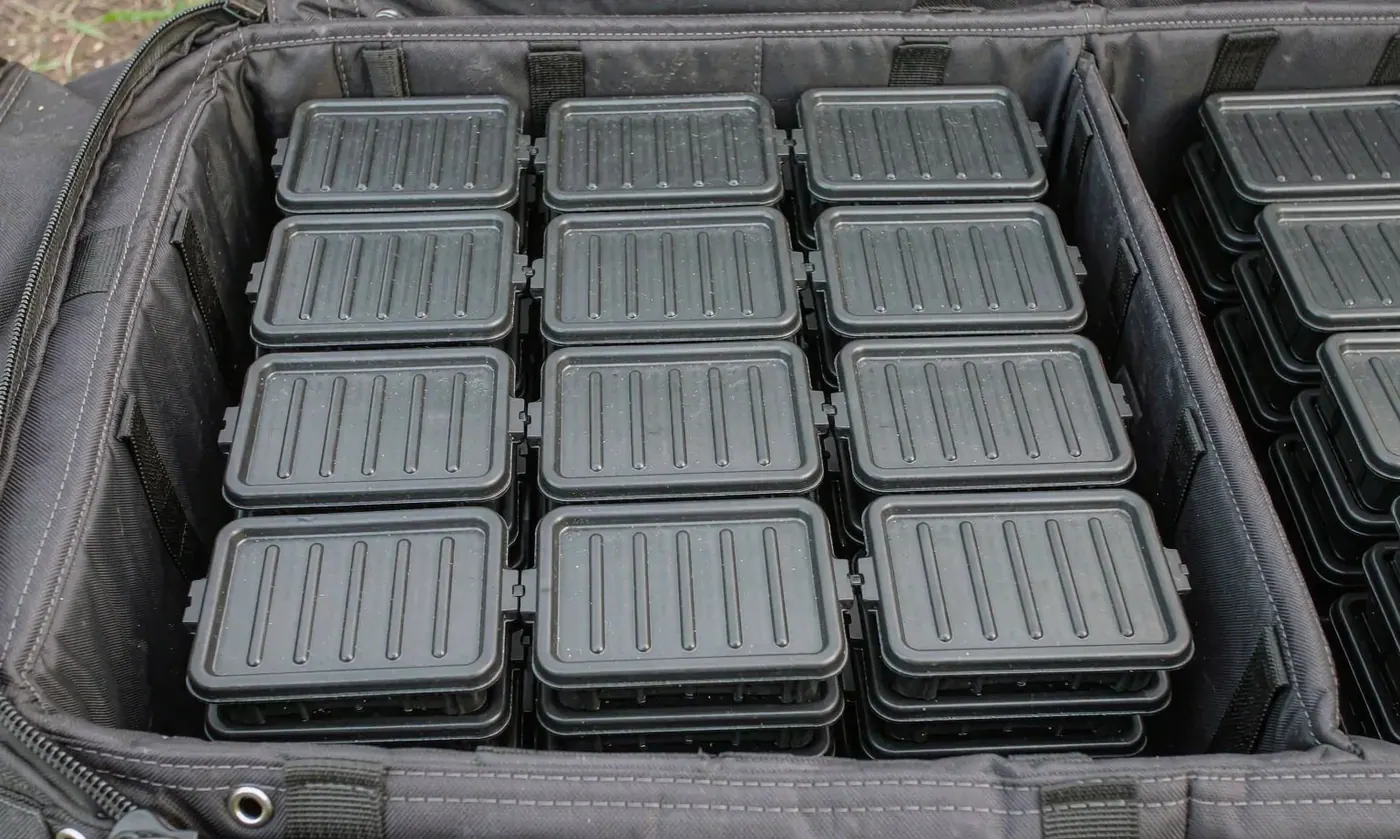
The default answer and the one most anglers should buy first, provided the walk is real rather than a few steps. Around 25 to 30 litres, weighing 1.2 to 1.6 kilograms empty, with a full-width tray bay taking four to six trays and a separate pocket volume of about five litres for water, food and clothing. Straps should be at least 50 millimetres wide with a stitched load lifter, and the tray bay ought to be reachable without removing the pack fully, which is what separates good designs from ordinary ones.
Setup 2: Light Sling for Short Hops
Where the walk is under a kilometre and the session under three hours, a sling in the 12 to 16 litre range is faster and more pleasant than any backpack. It swings to the front in one motion, which means changing lures while holding a rod without ever putting the bag down, and typical loaded weight stays near four kilograms. The single-strap limit is real though: anything above roughly four kilograms becomes uncomfortable within thirty minutes.
Setup 3: Waist Pack Plus Shoulder Pouch
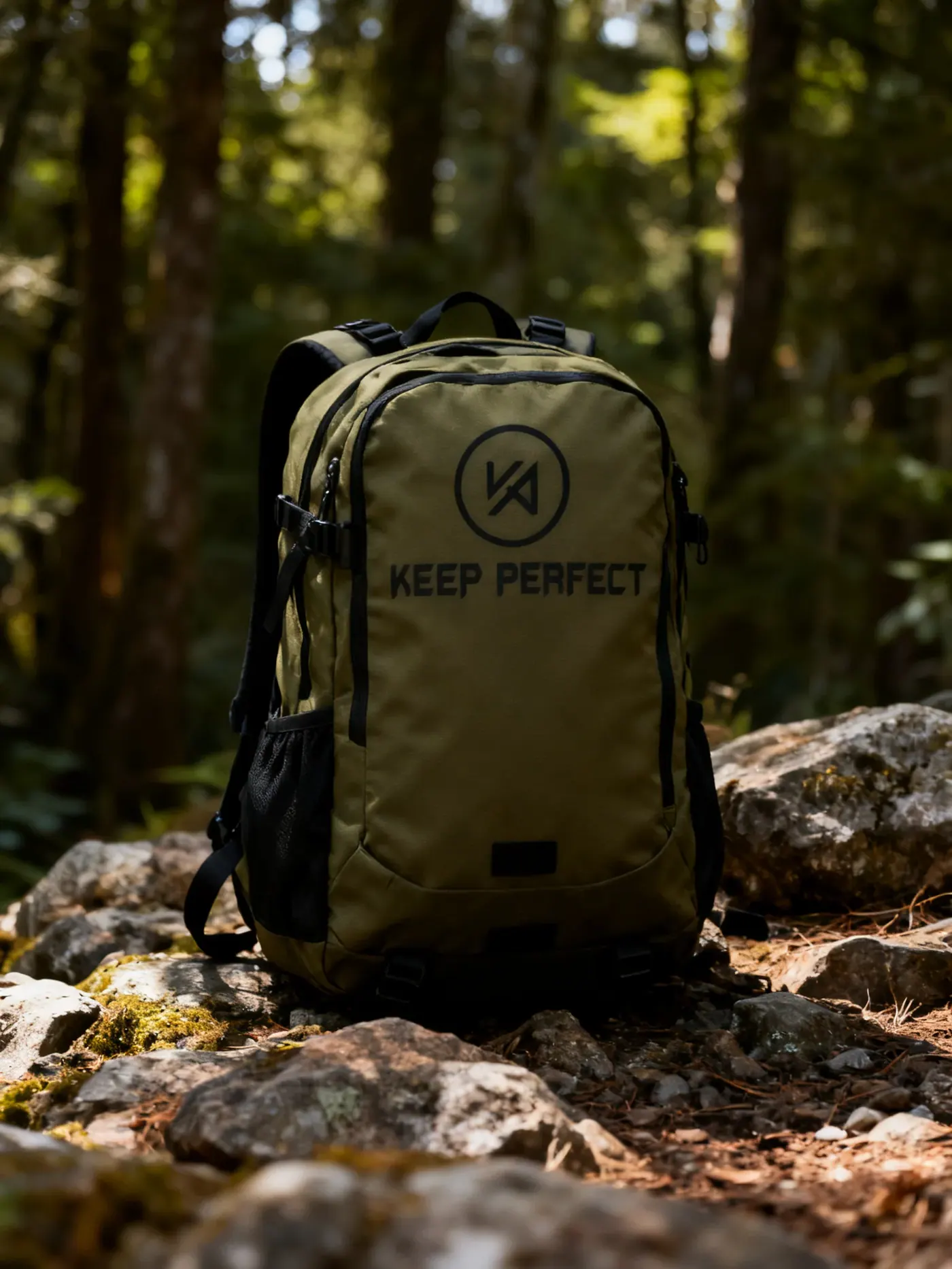
The lightest serious kit available, and genuinely excellent for anglers covering several swims in one session. A hip pack of five to seven litres carries three or four boxes plus tools while remaining completely unobtrusive, and a small shoulder pouch adds perhaps two litres for water and food. Loaded weight around two and a half kilograms means no fatigue at all, though weather protection is limited and there is nowhere for a spare layer apart from an external strap.
Setup 4: Coastal and Surf Backpack
Rock marks and surf beaches combine salt spray, blown sand and constant set-down onto wet ground, which together destroy ordinary bags within two seasons. The correct setup pairs a drainage path at the base with stainless fittings, closes with a roll-top rather than a coated zip, and uses a shell of at least 500 denier so the lower panel survives being dragged across non-skid and rock.
- Look for drainage grommets at the base rather than a sealed floor, since wet sand ingress is constant.
- Specify stainless rather than plated fittings; plated hardware pits visibly within one coastal season.
- Choose a roll-top closure, which tolerates gritty contamination far better than any zip track.
- Rinse with fresh water after every session; salt plus sand abrades stitching faster than either alone.
- Accept a slightly heavier shell: coarse surfaces justify the extra grams many times over.
Setup 5: Wading-Friendly High-Ride Bag
Anyone walking into a river needs their kit above the waterline, which argues for a pack that rides high on the back or a chest-mounted unit. Depth matters: anything sitting lower than about 400 millimetres above the hips meets every bow wave, and contents get wet long before anyone notices. Where deeper wading is routine, a chest configuration holding two to four litres is safer than any back-mounted bag regardless of its volume.
Setup 6: Fully Waterproof Submersible Loader
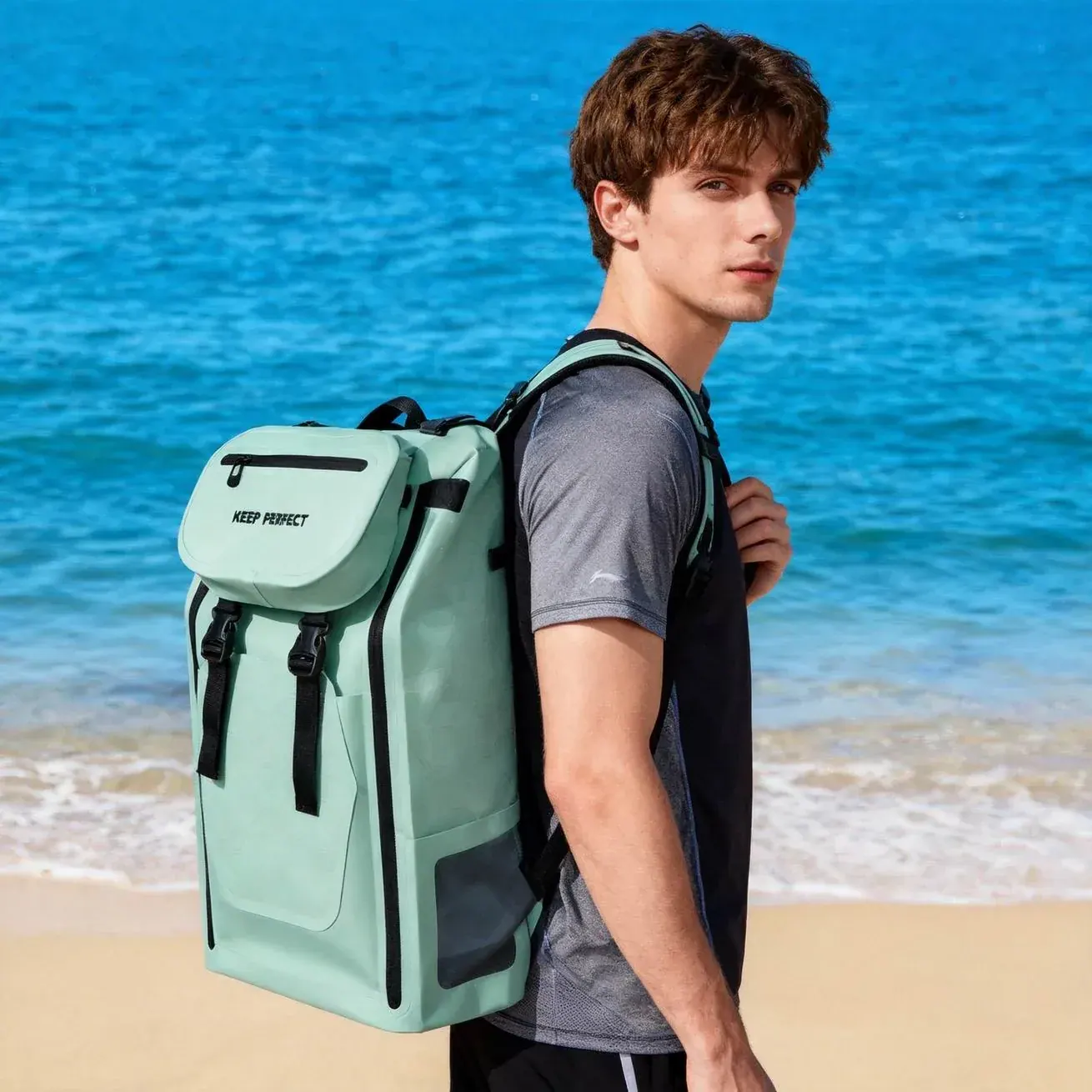
For the minority of situations where everything will genuinely get wet, nothing competes with a welded roll-top build rated to IPX7 or IPX8. The trade is honest and worth stating plainly: such bags are heavier per litre, they lack organisation, and accessing the bottom means unpacking everything above it. They earn their place on rough coasts and during periods of rain rather than as an everyday bank bag.
Setup 7: Rolling Support for Long Flat Approaches
Promenades, canal towpaths, reservoir access roads and long piers reward wheels rather than shoulders. A rolling carrier carrying thirty to fifty litres removes the weight from the body entirely, though it needs wheels above 90 millimetres to cross gravel or cracked concrete, and it should still have backpack straps for those stretches where dragging is impossible. The honest limitation is soft ground, where wheels are worse than useless.
Setup 8: Convertible Sling-to-Backpack
A modern configuration in the 18 to 22 litre range that converts between single strap and two-shoulder carry. It suits anglers whose sessions vary because it behaves like a light sling for the first hour and like a pack when everything becomes heavier after a few captures. The convertible mechanism adds roughly 150 to 250 grams and one more thing to wear out, which is a fair trade for genuine versatility.
Accessories Worth Their Weight
Four additions improve nearly every bank setup, and three of them cost less than a day's fuel. Prioritise accessories that solve an access problem rather than adding capacity, since capacity is rarely what is missing.
| Accessory | Typical cost | What it solves | Verdict |
|---|---|---|---|
| Retractor for pliers and cutters | Low | Removes a tool from pocket volume | Buy first |
| External sleeve pocket | Low | Holds the tray currently in use | Buy second |
| Rod holder or clearing strap | Low to moderate | Frees a hand when changing rigs | Depends on distance |
| Small waterproof insert pouch | Low | Protects phone and documents | Always worth it |
| Detachable hip belt | Moderate | Transfers load from shoulders | Only above 8 kilograms |
Weather and Grit Protection
Abrasion from grit and repeated wetting kills bank bags faster than any single event. Sand carried into a zip track acts as a lapping compound, and stitching sitting against wet ground for hours slowly rots. Requiring both a protected closure and a sacrificial base layer costs little and doubles realistic service life. Fabric abrasion resistance can be requested against published methods from ASTM International, which converts a marketing claim into something checkable.
| Exposure | Effect over a season | Protection |
|---|---|---|
| Fine sand in zips | Worn coating then leak paths | Storm flap plus regular rinsing |
| Set-down onto wet gravel | Abraded base panel | Coated fabric at 500 denier or above |
| Salt spray on coastal marks | Pitted hardware within a season | Stainless fittings and fresh water rinse |
| Driving rain for hours | Wetted contents | Roll-top or coated closure plus a cover |
| Sun on a black shell | Fading and stiffness | Lighter colours where visibility allows |
Where sessions are coastal, plan around published marine conditions rather than optimism. Wave height and wind drive spray farther inland than most people expect, and sea and weather data from NOAA is the better basis for deciding how much protection to carry.
Matching Setup to Situation
The decision tree below settles almost every case in one line. Where two rows apply, choose the one whose walk is longer, since carrying comfort decides far more days than gear does.
| Situation | Setup to choose | Why |
|---|---|---|
| Walk over 2 kilometres with 5 trays | Setup 1 | Harness comfort dominates everything else |
| Short hops, frequent lure changes | Setup 2 | Swing-forward access beats capacity |
| Moving between swims all day | Setup 3 | Lowest weight, no fatigue |
| Coastal rock and surf | Setup 4 | Drainage and fittings decide service life |
| River wading to chest depth | Setup 5 | Keep the load above the waterline |
| Persistent rain and spray | Setup 6 | Only welded closures stay dry |
| Flat promenade or pier approach | Setup 7 | Wheels beat shoulders on smooth ground |
| Varied sessions, one bag only | Setup 8 | Convertible carry covers both cases |
Things to Skip
Four purchases reliably disappoint bank anglers, and all four are easy to avoid.
- Skip maximum capacity; anything above about 30 litres gets carried too heavy and too full.
- Skip bags whose only closure is a covered coil zip, since grit defeats them within a season.
- Skip hard bases unless set-down damage has actually been a problem; they add weight everywhere.
- Skip any harness without strap padding wider than about 40 millimetres, whatever the rest offers.
Packing Sequence for a Bank Walk
Sequence decides how a bank bag carries as much as contents do. Dense items belong low and near the spine, frequently used items belong within one motion of the top or outside entirely, and anything wet on later assignment belongs in a separate compartment from anything that must stay dry.
| Order | Item group | Position | Reason |
|---|---|---|---|
| First | Trays and heavier boxes | Lowest slots against the back panel | Keeps mass close to the spine |
| Second | Food and water | External pockets where possible | Frees internal space for tackle |
| Third | Weather layer | Immediately beneath the lid | Reached first when conditions turn |
| Fourth | Tools on retractors | Belt or external sheath | Removes them from pocket volume |
| Fifth | Wet items later | Separate lined compartment | Nothing dry should share that space |
Anyone walking more than a kilometre should then lift the loaded bag and check where it pulls. A bag that leans backward indicates too much weight at the top, and moving one tray down often fixes it entirely.
Between-Session Maintenance
Bank bags need more care than boat bags because everything they meet is abrasive or damp. Four habits take perhaps fifteen minutes a fortnight and typically double how long a bag lasts before failure becomes visible.
| Task | Frequency | Why it matters |
|---|---|---|
| Empty every pocket and invert the bag | After each session | Grit left inside abrades from within |
| Rinse zips and base in fresh water | After each wet session | Removes salt and sand before they work into seams |
| Dry open in moving air | Every time | Damp storage grows mildew inside linings |
| Inspect straps and anchors | Monthly | Load-bearing stitching gives visible warning |
| Re-proof the outer face if needed | Two or three times a year | Restores shedding before it becomes necessary |
Drying deserves emphasis because it is the step most often skipped. Putting a bag away damp is the single most common cause of the smell and stiffness that later gets mistaken for fabric failure.
What Spending More Actually Buys
Price differences in this category are more meaningful than usual, because the additional money generally goes into the harness and closures rather than features nobody uses. Understanding where the money lands helps decide the right level rather than defaulting to the cheapest option.
| Price band | What improves | What does not |
|---|---|---|
| Entry level | Adequate volume and basic organisation | Harness padding, base durability, closure quality |
| Mid range | Better straps, coated closures, stronger base fabric | Nothing important; this is the sensible tier |
| Upper mid range | Stainless fittings, drainage, roll-top closures | Still not welded or submersible |
| Premium | Welded construction, genuine ratings, tested closures | Access does not improve; it generally worsens |
The mid and upper mid tiers are where nearly all bank anglers should spend, since those purchases buy durability rather than features. The premium tier earns money back only for anyone working rough coasts in persistent spray.
Surf, Rock and Estuary Specifics
Shore work subdivides further, and the three common sub-environments punish bags differently. Estuaries combine fine silt with salt and are the worst of the three for closures. Rock marks damage bases and carry the most consequence for losing grip. Open surf is hardest on hardware and anything set down within reach of a wave.
| Environment | Main threat | Requirement | Extra care |
|---|---|---|---|
| Estuary banks | Fine silt entering every seam | Covered closures, sealed tray bay | Rinse fully, including the inside |
| Rock marks | Abrasion and dropped gear | Tough base, secure fittings, leash points | Never set the bag on a wet edge |
| Open surf beaches | Salt spray and wave immersion | Roll-top closure, drainage, stainless fittings | Rinse hardware twice as long as the shell |
| Grass and rough paths | Snagging and wet ground | Low-profile external pockets | Keep tools on retractors |
Estuaries deserve the closest attention because silt behaves unlike anything else: it is fine enough to pass through woven fabric, stays damp for days, and holds salt against stitching for far longer than spray alone would.
Complaints That Appear After One Season
Certain complaints arrive like clockwork twelve months after purchase, and almost all of them trace back to one decision made on day one. Recognising them early is the point, since every one has a prevention that costs nothing at purchase and something once the damage exists.
| Complaint | Real cause | Prevention |
|---|---|---|
| Shoulders ache after an hour | Harness too narrow for the carried load | Straps wider than 50 millimetres with padding |
| Zip grits and jams | Sand worked into the track | Roll-top, or a covered track rinsed every session |
| Base panel wearing through | Repeated set-down on wet gravel | Coated fabric at 500 denier or above |
| Contents damp after rain | Shell sheds spray, not driving rain | Carry a cover or specify a sealed construction |
| Straps loosening constantly | Webbing creeping under load | Quality hardware plus a load lifter above the shoulder |
Reading those five through before buying removes most of the regret in this category, and none of the preventions costs more than choosing deliberately rather than choosing quickly.
Sourcing Notes for Retailers
QUANZHOU JUNYUAN BAGS has supported waterproof bag work since 2014 behind a founding group in this trade since 2004, producing 200,000 units monthly under SGS verification and BSCI and ISO 9001 governance. Materials are screened for REACH and California Prop 65 and lots are inspected at AQL 2.5 before release. Bank and shore models are developed around the carried load rather than the volume figure, since the two rarely agree.
State target litres, tray format and count, whether the session involves wading or coastal exposure, closure type, base construction, harness width, colours, and quantity. Development begins at 500 pieces per design and colour; samples take six to ten working days and bulk thirty-five to fifty days from approval and deposit, shipped FOB Xiamen or DDP toward one hundred destinations. Send drawings to service@junyuanbags.com. Light carry options are shown on the fishing sling pack page, smaller builds appear among the best small fishing backpacks, and river work is covered by the wading bag guide.
People Also Ask
Which bag suits walking to swims best?
A 25 to 30 litre two-shoulder pack with a tray insert, padded straps at least 50 millimetres wide, and a load under 8 kilograms once everything is aboard.
Is a sling pack enough for bank fishing?
Yes for walks under about a kilometre and loads near four kilograms. Beyond either figure the single strap becomes the limiting factor rather than the contents.
How waterproof does a bank fishing bag need to be?
IPX5 or better at the closure is sufficient for most shore work. Only rough coastal marks or prolonged rain justify a fully welded submersible build.
What kills bags fastest on the bank?
Grit in zip tracks and abrading the base on wet ground. Both are prevented cheaply with a protected closure and a coated lower panel.
Should I carry trays or just boxes from the bank?
Trays for any method needing larger items, boxes for dense small hardware. Either way they must be reachable without unpacking everything above them.
Do I need special hardware near the coast?
Yes. Specify stainless rather than plated fittings and rinse after every session, since plated parts pit visibly within a single coastal season.
Frequently Asked Questions
Q1. What is the best tackle bag for bank fishing overall?
A 25 to 30 litre backpack with a full-width tray bay, external pocket space of about five litres, padded straps wider than 50 millimetres, and a coated lower panel that resists wet ground.
Q2. How far can I comfortably carry a bank fishing bag?
Several kilometres up to about eight kilograms loaded. Beyond that distance or weight, reduce what is carried rather than buying a bigger bag.
Q3. Should I choose a sling or a backpack for shore fishing?
A sling for short walks and light loads, a backpack for anything over a kilometre or above four kilograms, since two shoulders spread the load properly.
Q4. How many trays should a bank angler carry?
Three to five, selected rather than everything owned. Each loaded tray weighs roughly a kilogram, which is why weight dictates the limit before volume does.
Q5. What closure survives sand best?
A roll-top. Coated zips fail quickly once grit enters the track, whereas a roll simply tolerates contamination and can be rinsed clean in seconds.
Q6. Is a drain at the base useful away from boats?
Yes on wet banks and surf beaches. Otherwise everything left inside after a washdown or heavy rain has nowhere to go.
Q7. Do I need stainless hardware for shore fishing?
On coastal marks, yes. Plated fittings pit visibly within a season, and the cost difference across a whole bag is typically a few dollars.
Q8. What size should a beginner choose?
Around 25 litres. It leaves room to grow without encouraging the oversized loads that make bank walking unpleasant.
Q9. How do I keep gear dry when it rains for hours?
Use a welded roll-top unit or carry a rain cover. Most everyday bags shed spray but not prolonged driving rain.
Q10. Does bag colour matter from the bank?
Somewhat. Lighter shells stay cooler in sun and are easier to find when set down in long grass, at the cost of showing dirt sooner.
Q11. Are rolling bags sensible for bank fishing?
Only on smooth approaches such as towpaths, promenades and piers. On soft ground anything wheeled quickly becomes a burden.
Q12. What should I list when specifying a bag for this use?
Target litres, tray format and count, whether wading or coastal exposure applies, closure type, base construction, strap width, colours, and order quantity.