A wading pack has to satisfy conditions no bank bag meets: it sits above a wading belt, it drains when the angler goes deeper than expected, and every item in it has to be reachable with one hand while the other holds a rod. Eight wading builds were assessed for 2026 across 6-18 litres, 0.35-1.10 kg empty, one-handed access times of 3-6 seconds, and 14-42 USD FOB Xiamen bands at MOQ 500 pcs per design and colour. Samples take 6-10 working days and bulk 35-50 days. The pick is the 12 L wading backpack at 0.85 kg.
What Wading Demands That Nothing Else Does
Wading changes four things at once. The angler is standing in moving water, so the pack must sit above the wading belt rather than on it. Both hands are busy, so access has to work with one. The water depth is uncertain, so the pack must drain rather than hold what comes in. And the load is carried for hours rather than lifted once, so empty weight matters more than capacity.
| Requirement | Number | Why | Failure if missed |
|---|---|---|---|
| Mount height | Above a belt at 300 mm | Current pushes a pack resting on the belt | Pack rides up and pulls the angler back |
| One-handed access | Under 5 seconds | The other hand holds the rod | Angler sets everything down in the current |
| Drainage | Empty in under 60 seconds | Water over the top is routine | Chamber becomes a bucket |
| Empty weight | Under 1.10 kg | Carried for hours, not lifted once | Neck and shoulder fatigue |
| Buoyancy or leash | One or the other | A dropped pack in current is gone | Total loss of kit |
Those five requirements pull against each other, and the resolution is almost always to carry less. A wading pack that holds four trays satisfies capacity and fails every other requirement, and one that holds one tray plus tools satisfies the rest. The best builds in this group are deliberately small, and the buying advice should say so rather than apologise for it.
One-Handed Operation Is the Real Specification
Every fitting on a wading pack should be usable with a rod in the other hand. That single requirement drives more of the design than any other: magnetic closures rather than zips where possible, docks that hold tools by friction, and retractors that return a tool to the same place after use. A two-handed closure on a wading pack is a design error regardless of how good the closure is.
| Fitting | One-handed solution | Time saved per use | Cost |
|---|---|---|---|
| Main pocket | Magnetic flap or a cam buckle | 4-6 seconds | 1.10-1.80 USD |
| Tools | Magnetic dock or friction holster | 3-5 seconds | 0.90-1.40 USD |
| Tippet and leader | Shoulder dock with a cutter | 5-8 seconds | 1.20-1.60 USD |
| Net | D-ring plus a magnetic release | 6-10 seconds | 1.40-2.00 USD |
| Floatant and indicators | Retractor at the chest | 4 seconds | 0.70-1.10 USD |
Magnetic closures deserve a caution. A magnet holding a pocket closed against a loaded pack needs to be rated for the pull, and a small neodymium disc that feels strong on the bench lets go when the pack is full and the angler leans forward. The specification to require is a closure that survives a shake test with the pocket loaded to its stated capacity, not one that feels firm when empty.
How Much Tackle Belongs in a Wading Pack
Less than most anglers bring, and the honest figure is one or two trays. A wading session is a moving session: the angler covers water, changes fly or lure every 20-40 minutes, and does not stop to reorganise. Everything carried beyond the working selection is weight carried for nothing, and on a six-hour wade that weight is felt in the neck rather than in the shoulders.
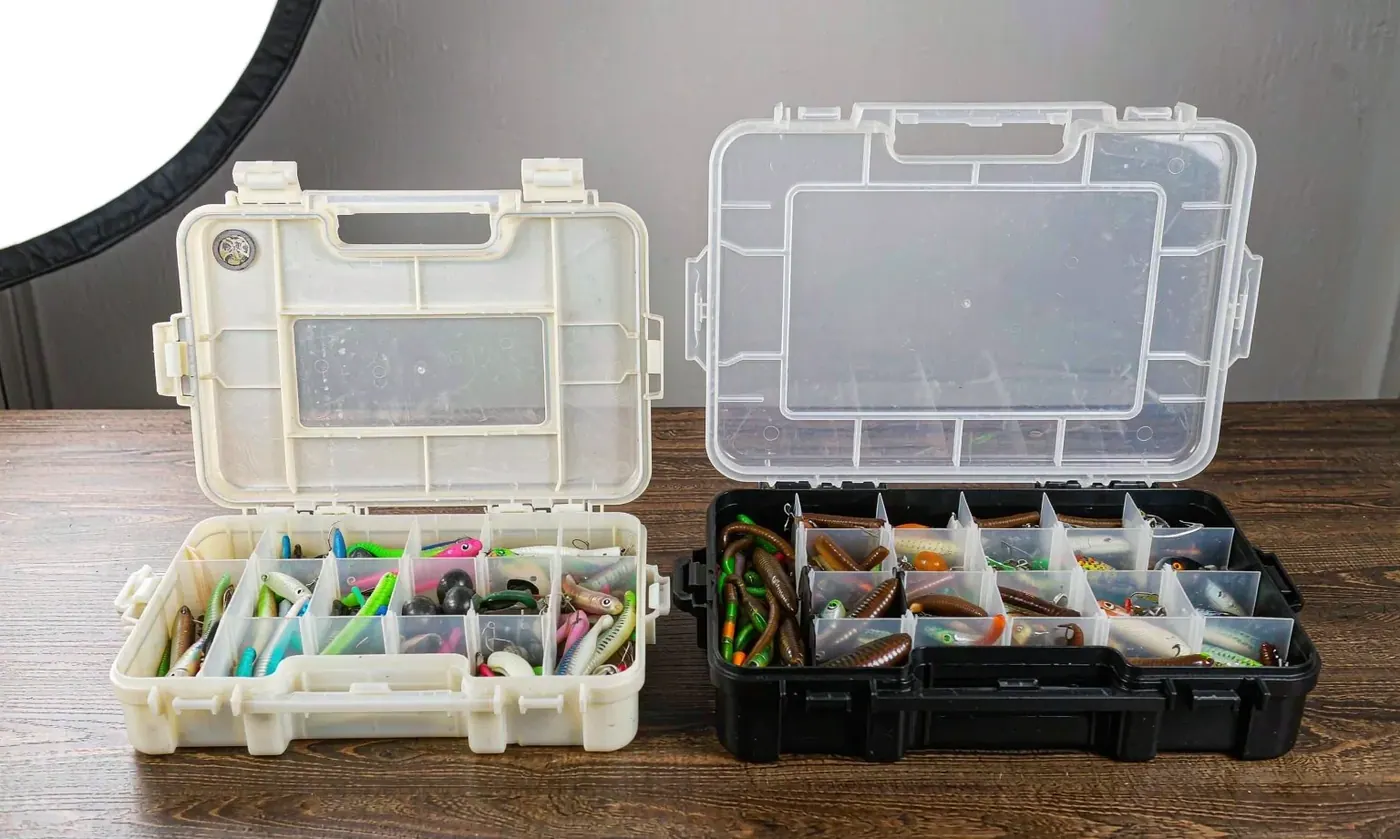
Shallow trays win here for the same reason they lose on a boat: a 40 mm tray holds a working selection of 40-60 flies or lures and takes 40 percent less depth than a deep tray, and depth is the dimension that pushes a pack below the belt line. Where a second tray is needed, a shallow 3500 utility tray is the right second choice rather than another deep one.
The Eight Builds at a Glance
Volume is main-chamber capacity and empty weights include the fittings. Access time is the measured time to retrieve one item with a rod in the other hand, taken as an average of ten attempts. Selection guidance for the wider category is set out in the wading pack buying guide, and the smallest formats are covered in the fishing waist pack range.
| Build | Volume | Weight | Trays | Access | FOB band |
|---|---|---|---|---|---|
| Wade Backpack 12 | 12 L | 0.85 kg | 2 x 3500 | 4 s | 26-33 USD |
| Waist 8 | 8 L | 0.55 kg | 1 x 3500 | 3 s | 20-26 USD |
| Chest 10 | 10 L | 0.60 kg | 1 x 3600 plus bench | 3 s | 20-27 USD |
| Sling 14 | 14 L | 0.75 kg | 2 x 3600 | 5 s | 24-31 USD |
| Minimal 6 | 6 L | 0.35 kg | None | 3 s | 14-19 USD |
| Guide 16 | 16 L | 1.10 kg | 3 x 3600 | 5 s | 32-40 USD |
| Submersible 12 | 12 L | 0.95 kg | 2 x 3500 | 4 s | 34-42 USD |
| Convertible 18 | 18 L | 1.05 kg | 2 x 3600 | 6 s | 30-38 USD |
Staying Dry When the Pack Goes Under
A wading pack goes under more often than any other fishing bag, because the angler misjudges a depth, steps into a hole, or slips on a rock. A pack rated only for spray takes water in those moments, and the items that suffer are the phone, the licence, and the spare clothing rather than the tackle.
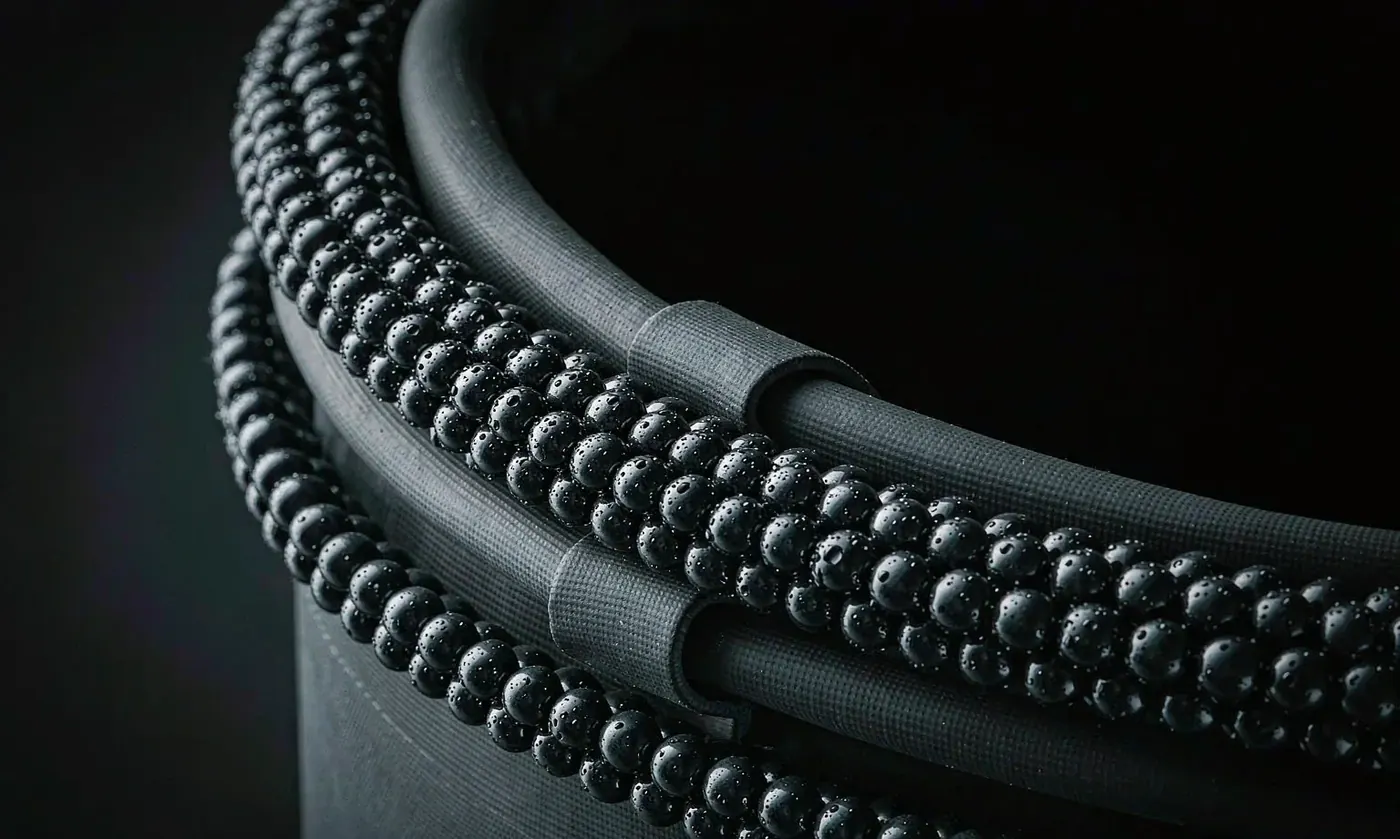
Two levels cover the market. A storm flap over a reverse coil zip handles a ducking to the waist for a few seconds, which is the common event, and costs about 2.20 USD. A submersible zip with a welded liner handles a full immersion and costs 6-9 USD plus the liner. Ratings are defined by the IEC ingress protection framework, and the condition has to be written as a depth and a duration.
| Event | Frequency on a season | Rating that survives it | Cost | Note |
|---|---|---|---|---|
| Splash and rain | Every trip | IPX4 to IPX5 | Baseline | A coated shell handles this |
| Ducking to the waist | Two or three times | Storm flap over a reverse coil | 2.20 USD | A few seconds of partial immersion |
| Full slip, pack under | Once a season | IPX7, 30 min at 1 m | 11-14 USD | Only for cold-water or deep wading |
| Pack dropped in current | Occasionally | Float panel or leash | 1.50 USD | Buoyancy matters more than rating |
1. Wade Backpack 12: Best Overall
Twelve litres at 0.85 kg mounted high on a 380 mm panel so it clears a wading belt, two shallow 3500 trays, a one-handed magnetic main closure, and a measured access time of 4 seconds. It drains through two 10 mm grommets in under 50 seconds. The FOB band is 26-33 USD.
It leads because the mount height and the drainage are both right, and those are the two specifications that decide whether a wading pack works. A panel 380 mm long keeps the body above a belt worn at 300 mm, and grommets at the base let a chamber that has taken water over the top empty while the angler keeps fishing.
2. Waist 8: Best for Shallow Water
Eight litres at 0.55 kg worn at the hip above the wading belt, holding one 3500 tray, with a magnetic tool dock and a retractor at each side. Access takes 3 seconds. The FOB band is 20-26 USD.
A waist pack is the lightest way to carry a working kit, and in shallow water it is the fastest. Its limitation is depth: once the water reaches the top of the waders, a waist pack is in the water, and its contents need to be in a sealed liner. This build includes one, at 1.20 USD, which is the difference between a nuisance and a lost phone.
3. Chest 10: Best for Constant Access
Ten litres at 0.60 kg worn on the sternum with a fold-down bench, one 3600 tray, and a tippet dock at each shoulder. Access takes 3 seconds and the FOB band is 20-27 USD.
The fold-down bench is the feature that makes a chest pack worth carrying: it gives a flat working surface at waist height, so an angler can tie on a fly without balancing anything on a knee in the current. It needs stiffening at 2 mm to be usable, and the hinge should be a welded film hinge rather than stitched webbing, which wears through in a season.
4. Sling 14: Best Mobility
Fourteen litres at 0.75 kg on a single strap with a rotating anchor, two 3600 trays, and a stabiliser strap, with an access time of 5 seconds. The FOB band is 24-31 USD.
Rotation is the point: the pack swings from the back to the chest in about three seconds, which gives backpack capacity with chest-pack access. The stabiliser matters in current more than on land, because moving water pushes a swinging pack and an unstabilised load is genuinely tiring over a day. A removable stabiliser is the right choice, since some anglers find it restrictive when casting.
5. Minimal 6: Best for Fast Water
Six litres at 0.35 kg holding no trays at all, with one internal pocket, two external tool docks, and a tippet holder, at a 14-19 USD band. It is the build for an angler covering several kilometres of water with one method.
At 0.35 kg the pack is effectively unnoticed, which is its entire argument. The trade is that everything has to be in pouches rather than trays, and an angler who wants organised trays needs the 12 L build. Minimal wading packs sell best as a second bag for the days when the water is high and the fishing is close.
6. Guide 16: Best for Guide Duty
Sixteen litres at 1.10 kg with three 3600 trays, a high mount, drainage, bolted strap anchors, and a serviceable closure, at a 32-40 USD band. It is built for a guide wading 120-plus days a season and carrying kit for clients.
Serviceability is what earns the price, and on a wading pack the two failure points are the strap anchor and the closure. Both are bolted and both are standard parts, so a worn strap or a failed slider is a 15-minute repair rather than a replacement. Guides repair kit rather than replace it, and a bag that supports that is worth more than one with extra litres.
7. Submersible 12: Best for Cold and Deep Water
Twelve litres at 0.95 kg with a welded liner and a submersible zip tested to 30 minutes at 1 m, two shallow trays, and a float panel, at a 34-42 USD band.
The combination that justifies the price is the liner plus buoyancy: a pack that goes under and comes back with dry contents is worth 12-14 USD more to anyone wading cold or deep water. The liner also needs a vented inner pouch, because a sealed chamber holding wet gear produces condensation that reads as leakage.
8. Convertible 18: Best for Mixed Wading and Walking
Eighteen litres at 1.05 kg that converts from a waist pack to a small backpack via a stowable harness, two 3600 trays, and an access time of 6 seconds. The FOB band is 30-38 USD.
Conversions usually compromise both modes, and this one avoids it by keeping the harness genuine: 45 mm straps with 8 mm foam, stowing flush behind a panel. It suits an angler who walks a kilometre to the water and then wades, which is the most common reality rather than the exception. The stowed harness must not protrude, or it catches on a wading belt.
Cold Water, Fatigue, and Why Light Matters
Cold water is the reason empty weight matters more here than in any other fishing category. Immersion in water below 10 degrees impairs judgement and dexterity quickly, and an angler carrying 3 kg on the neck for six hours in those conditions tires far faster than the same load on a boat. Guidance on cold-water immersion and hypothermia is published by the Centers for Disease Control and Prevention.
| Water temperature | Practical limit | Pack implication | Note |
|---|---|---|---|
| Above 18 degrees | Several hours | Capacity can be carried | Normal session |
| 12-18 degrees | 2-4 hours | Keep the load under 2 kg | Wading jacket adds weight |
| 6-12 degrees | 1-2 hours | Minimal pack only | Dexterity drops noticeably |
| Below 6 degrees | Under 1 hour | Do not wade deep | Cold-water risk dominates |
The design consequence is that a cold-water wading pack should be specified for weight first and capacity second, and it should carry a sealed pouch for a phone and a means of calling for help. A pack that keeps a phone dry and accessible is a safety item in those conditions rather than a convenience.
Water, Food, and a Long Wade
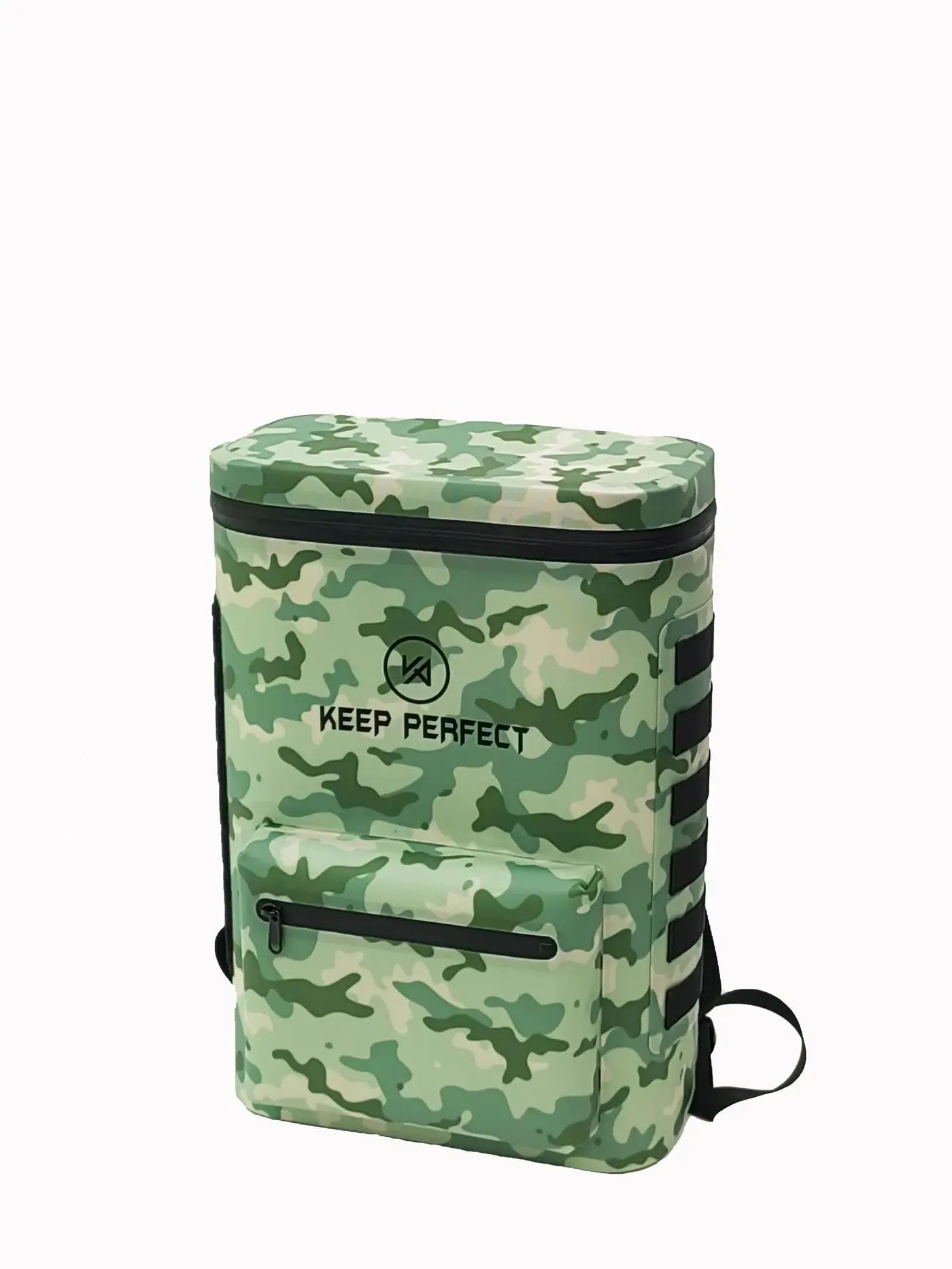
A six-hour wade needs water and food, and both are awkward on a small pack. Two litres of water weighs two kilograms, which is more than the rest of the kit in a minimal build, and food that survives being submerged is a narrower list than most anglers pack.
| Item | How to carry it | Weight | Note |
|---|---|---|---|
| Water, 1-1.5 L | Insulated side sleeve or a bladder | 1.0-1.5 kg | Insulation matters less than security |
| Food | Sealed pouch, high-calorie, dry | 0.3-0.5 kg | Avoid anything that spoils when wet |
| Spare layer | Compressed in a dry chamber | 0.4-0.8 kg | Cold water makes this essential |
| Phone and keys | Sealed liner pouch, tethered | 0.2 kg | Safety item in cold water |
| First aid | Flat pouch at the shoulder | 0.2 kg | Hooks and knives are in use daily |
Security beats insulation on a wading pack. A bottle that falls out of an open sleeve in current is gone, so a sleeve with a retaining cord or a bladder with a hose is the better answer, and the 3.00-4.50 USD cost of an insulated pocket is better spent on a sealed dry chamber for a spare layer.
Checks Before Approving a Wading Sample
Wading failures are access and water, and both need a test in water rather than a test on a bench. Five checks take about an hour in a river or a tank, and the belt clearance test is the one that separates a wading pack from a small backpack.
| Check | Method | Pass condition | Catches |
|---|---|---|---|
| Belt clearance | Wear over a belt, bend and cast | No contact with the belt | Panel too long for the mount height |
| One-hand access | Ten retrievals, rod in hand | Under 5 seconds | Two-handed closures |
| Drain time | Fill the chamber, time the drain | Under 60 seconds | Grommets too small or absent |
| Immersion, if claimed | 30 min at 1 m with tissue inside | Tissue dry | Coated coil sold as submersible |
| Float or leash | Drop in current, observe | Recovered | No buoyancy, no leash point |
Strength and abrasion requirements should reference published methods from ASTM International, with particular attention to the drainage grommets and the strap anchors, which are the two components that take the most abuse in service. A wading pack that loses a grommet in a season becomes a bucket, and one that loses an anchor becomes unusable.
Programme, Pricing, and Compliance
A wading brief should open with mount height and one-handed access time, because those decide the panel length and every fitting. Specify drainage and rating next, then capacity, and treat trays as optional. Settling the mount height first matters, because it is the constraint that stops a wading pack from simply being a small backpack.
| Programme item | Baseline | Note |
|---|---|---|
| MOQ | 500 pcs per design and colour | Fittings can vary above the baseline |
| Sampling | 6-10 working days | Add 4-6 days for a welded liner |
| Bulk | 35-50 days | From approved sample and deposit |
| Inspection | AQL 2.5 | Include belt clearance, one-hand access, drain time, immersion |
| Compliance | REACH and California Prop 65 | Screen coatings, films, inks, hardware, magnets |
QUANZHOU JUNYUAN BAGS has developed waterproof bag programmes since 2014, with the founding team in the trade since 2004. Monthly output of 200,000 units is verified by SGS, and BSCI and ISO 9001 systems structure the workflow. Materials are screened for REACH and California Prop 65, and every bulk order is inspected at AQL 2.5 before shipment.
A wading brief can be emailed to service@junyuanbags.com with mount height, access target, rating, tray count, and quantity. FOB Xiamen or DDP service to more than 100 countries follows an approved sample and a complete test record. Trout and river formats sit in the fly fishing bag range.
People Also Ask
What makes a wading pack different from a small backpack?
Mount height above a wading belt at about 300 mm, drainage that empties in under a minute, one-handed access, and a low empty weight. A small backpack meets none of them by default.
How high should a wading pack sit?
Above the wading belt, which sits roughly 300 mm above the hip. A back panel of about 380 mm keeps the body clear of the belt when bending and casting.
How quickly should I be able to reach something in a wading pack?
Under 5 seconds with a rod in the other hand. Magnetic flaps, friction holsters, and retractors achieve 3-5 seconds where zips take longer.
Should a wading pack be submersible?
For cold or deep water, yes. A storm flap over a reverse coil handles a ducking to the waist, and a welded liner with a submersible zip is needed for a full slip.
How much tackle should I carry when wading?
One or two shallow trays. A moving session needs a working selection of 40-60 flies or lures, and everything beyond that is weight carried for nothing.
Why does my wading pack fill with water?
The grommets are too small or absent, or the pack sat below the water line because the panel is too long. Two 10 mm grommets empty a chamber in under a minute.
Frequently Asked Questions
Q1. What is the best wade fishing bag?
A 12 L build at 0.85 kg on a 380 mm panel that clears a wading belt, with two shallow trays, a magnetic one-handed closure, and drainage in under 50 seconds, at a 26-33 USD FOB band.
Q2. What happens if a wading pack rests on the wading belt?
Current pushes against it and it pulls the angler backward, which is tiring and unsafe on a slick bed. The mount must clear the belt by a comfortable margin.
Q3. How much should a wading pack weigh?
Under 1.10 kg empty, and 0.35-0.85 kg is the practical band. The load is carried for hours rather than lifted once, and empty weight is felt in the neck.
Q4. Do I need a submersible wading pack?
For cold or deep water, yes. A storm flap handles a ducking to the waist for a few seconds at 2.20 USD, and a full immersion needs a welded liner at 11-14 USD.
Q5. How many trays should a wading pack hold?
One or two shallow 3500 trays. Shallow trays keep the pack above the belt line and hold a working selection of 40-60 flies or lures.
Q6. Why does my wading pack pull me backward in current?
The body is resting on the wading belt. Current pushes against a pack sitting on the belt, so the mount needs to clear it by a comfortable margin.
Q7. Are magnetic closures reliable on a wading pack?
Only if rated for a loaded pocket. Require a shake test with the pocket loaded rather than judging the pull on an empty bag.
Q8. What is a chest pack bench for?
It gives a flat working surface at waist height for tying on, so nothing has to be balanced on a knee in the current. It needs a 2 mm stiffener and a welded film hinge.
Q9. Should a waist pack or a backpack be used for wading?
A waist pack for shallow water and speed, and a backpack for longer sessions or more kit. A convertible build covers both where the walk to the water is long.
Q10. How do I keep a phone dry while wading?
A sealed liner pouch that is tethered to the pack, at 1.00-2.00 USD. In cold water a dry phone is a safety item rather than a convenience.
Q11. How much water should I carry on a long wade?
One to 1.5 litres, carried in a retained sleeve or a bladder. Security matters more than insulation, because a bottle lost from an open sleeve in current is gone.
Q12. What is the MOQ and lead time for a wading pack programme?
MOQ is 500 pcs per design and colour, samples take 6-10 working days plus 4-6 days for a welded liner, and bulk runs 35-50 days from approved sample and deposit.