A waterproof fishing bag floating is mostly a photograph, not a property. An empty 30 litre roll-top displaces about 30 kilograms of seawater and weighs perhaps 1.3 kilograms, so it sits on top easily; fill the same bag with six loaded trays, tools and a water bottle and the load rises to 10 or 12 kilograms while the trapped air falls to roughly 6 to 10 litres, which is close to the point where it becomes neutral and then negative as water seeps in and air escapes. The honest expectation is a few minutes of surface time, not indefinite flotation, unless a closed-cell foam panel adding around 0.75 kilograms of net lift per litre has been built in, or the bag is simply leashed.
The Answer Depends on What Is Inside
Buoyancy is arithmetic, and it can be done on the back of a hand. Nothing floats unless it displaces its own weight of the liquid it sits in, so a bag must push aside a volume of water equal to its total mass. Freshwater gives one kilogram per litre displaced, and seawater slightly more at roughly 1.025 kilograms per litre, which is why the same load behaves marginally better in the sea than in a lake.
That immediately explains the pattern anglers report. An empty bag floats high, a half-filled one floats briefly, and a fully loaded one sinks slowly with bubbles. It is the load, not the shell, that decides. Salt figures, temperature effects, and typical seawater densities are published by NOAA, and anyone specifying buoyancy should quote the water they actually fish rather than assuming laboratory freshwater.
| Fill state, 30 litre bag | Approximate total mass | Air remaining | Outcome |
|---|---|---|---|
| Empty, lid rolled | 1.2 to 1.6 kilograms | About 28 litres | Floats high indefinitely |
| Lightly loaded, two trays | 4 to 5 kilograms | 18 to 22 litres | Floats comfortably for hours |
| Half loaded, four trays | 7 to 9 kilograms | 12 to 15 litres | Floats low, slowly waterlogs |
| Fully loaded, six trays | 10 to 13 kilograms | 6 to 10 litres | Sinks within minutes unless sealed |
| Loaded plus added foam panel | Adds 0.3 to 1.0 kilograms | Same, plus permanent lift | Floats provided lift exceeds the deficit |
What the Load Actually Weighs
Most people underestimate tackle mass by a wide margin, which is why sinkings surprise them. A single loaded 3600-size tray typically falls between 700 grams and 1.3 kilograms depending on how much metal it holds, and a pack designed for six trays can therefore carry more than six kilograms in trays alone before tools and clothing are added. The table below is a realistic build-up for a freshwater or inshore session, and it is the sort of arithmetic worth doing before deciding anything about buoyancy.
| Item | Typical mass | Floats on its own? | Note |
|---|---|---|---|
| Empty 30 litre pack | 1.2 to 1.6 kilograms | Yes | The only part that reliably floats |
| One loaded 3600 tray | 0.7 to 1.3 kilograms | Marginal | Depends on how much metal is inside |
| Pliers and line cutters | 0.25 to 0.45 kilograms | No | Dense, and always carried |
| One litre of water | 1.0 kilograms | Neutral | Weight rather than buoyancy either way |
| Spool of leader and consumables | 0.3 to 0.6 kilograms | No | Adds up faster than expected |
| Rain shell | 0.4 to 0.8 kilograms | Briefly | Traps some air, then wets through |
| Four tray realistic total | 7 to 9 kilograms | Briefly | The number to design against |
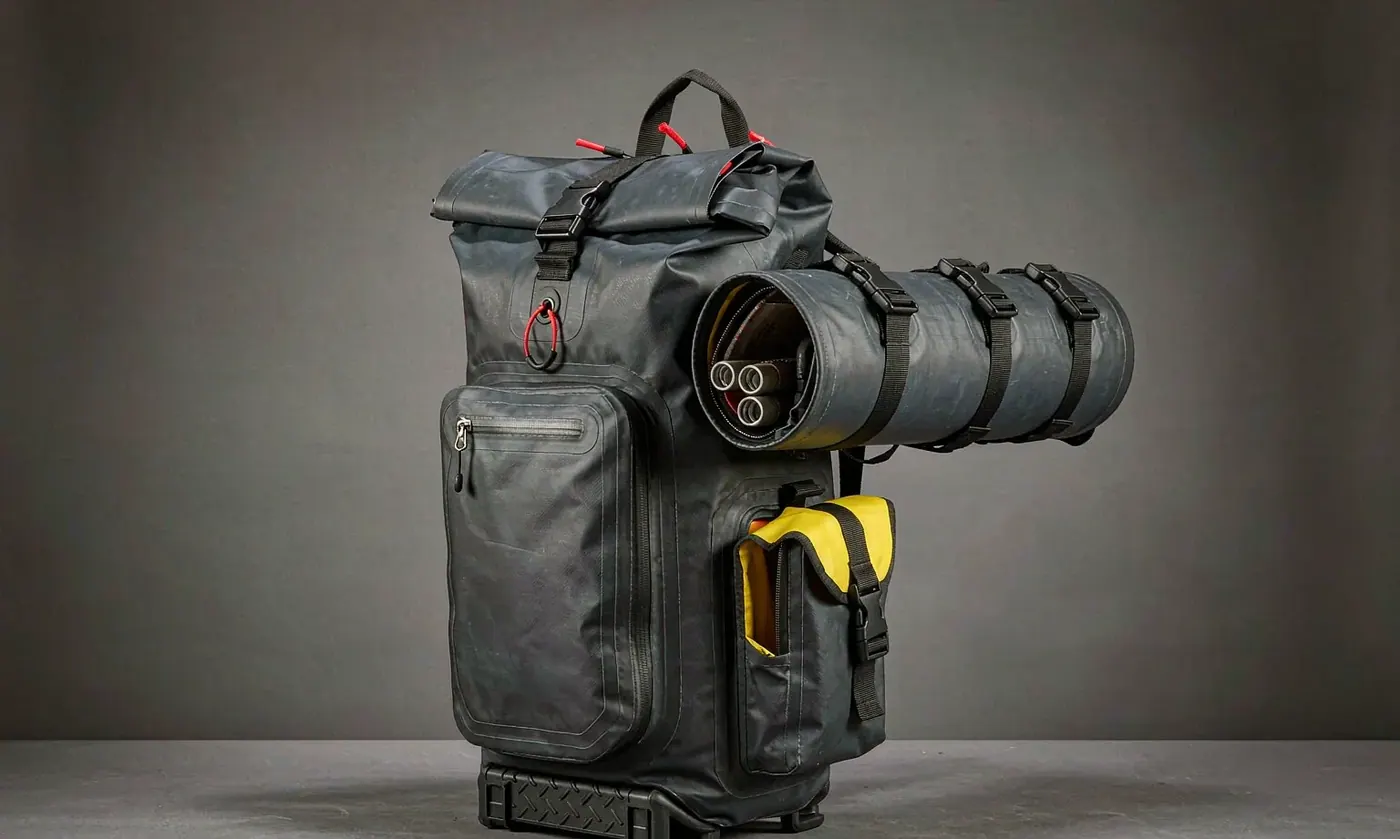
Notice that none of the individual items is heavy. The problem is accumulation, and it is entirely normal for a mid-sized pack to end the day three kilograms heavier than it began, because everything taken out of the water goes back into the bag.
How Trapped Air Behaves
Air is the cheapest buoyancy available, and also the least reliable, because soft goods leak. Air escapes through imperfect closure lines, through fabric permeability under pressure head, and simply by the bag deforming as waves work against it. At the same time, water enters through the same routes. What matters is not whether a closure is waterproof against spray, which is a low-pressure test, but whether it holds shape and volume while partly submerged, which is a very different condition.
- A roll-top with three turns and a clipped top holds air well at shallow depth, often for ten to thirty minutes.
- A clean polymer-coated coil closure holds well initially but loses air progressively once the tape is abraded.
- A standard coil closure with a storm flap leaks air within a few minutes and water not long after.
- Any bag resting partly submerged loses the highest air first, since the escape route is always upward.
- Air buoyancy degrades with depth: at a metre down, trapped volume is already compressed by about ten percent.
The practical reading is that trapped air buys time rather than safety. Several minutes is genuinely useful when it allows a bag to be recovered after an accidental swim, and useless if nobody sees where it went.
Built-In Buoyancy: Foam Versus Chambers
Permanent buoyancy comes from material that cannot leak, which almost always means closed-cell foam, or from a sealed air chamber that has been tested to hold pressure. Foam is reliable and predictable; a chamber is lighter but relies on a seam staying airtight for years. Net lift per litre for closed-cell foam at typical bag densities is simple to work out: subtract foam density from water density, so foam at 0.25 grams per cubic centimetre gives around 0.75 kilograms of lift per litre in fresh water.
| Buoyancy method | Net lift achieved | Weight added | Verdict |
|---|---|---|---|
| Trapped air only | Depends entirely on fill level | None | Free, unpredictable, temporary |
| Closed-cell foam panel, 2 litres | About 1.5 kilograms | 500 grams | Reliable baseline |
| Closed-cell foam panel, 6 litres | About 4.5 kilograms | 1.5 kilograms | Floats a lightly loaded pack |
| Sealed air chamber, welded | Up to the chamber volume | 150 to 400 grams | Light until it leaks |
| Inflatable bladder, manual | Several kilograms when blown | 90 to 200 grams | Effective, but only if inflated |
Foam is also the option that degrades gracefully. Even after compression or cosmetic damage it retains most of its lift, whereas a chamber that loses a seam loses everything at once. For a bag that will spend years being dropped and squeezed, predictable beats efficient.
Testing It Before Trusting It
This takes fifteen minutes in a pool and answers the question better than any datasheet. Fill the bag exactly as it would be fished, seal it as it would normally be sealed, weigh nothing at all, and put it in water. What happens over the following half hour is the entire truth about its buoyancy.
- Pack the bag to its normal session load, including water bottles, since those dominate the weight.
- Close it exactly as you would in the field; do not add extra turns to make the test flattering.
- Place it gently in still water and note whether it floats, hovers, or sinks immediately.
- Time it. Note the moment it sinks below the surface or the point where nothing changes for ten minutes.
- Repeat once with one tray removed, which establishes the load level at which the bag becomes positive.
- Repeat once with the closure opened to the first layer of protection, which shows how much the seal contributes.
| Result after 30 minutes | Interpretation | Practical response |
|---|---|---|
| Still floating high | Genuine buoyancy margin | No changes needed |
| Awash but afloat | Neutral buoyancy | Leash it; it will not stay put |
| Slowly sinking | Slightly negative when loaded | Reduce the load or add a foam panel |
| Sinks within two minutes | No useful buoyancy | Treat as a leash-only product |
| Sinks empty | Fabric absorbed water | Check for saturated padding or trapped water |
Recovery Is a Separate Problem
Floating is only half useful; the other half is being found. A black or olive pack in chop is invisible within a few metres, whereas light grey, orange, or yellow with a reflective patch stays visible considerably longer, and that difference has more effect on whether gear comes home than any buoyancy figure. The US Coast Guard is unambiguous that personal flotation devices are the only approved life-saving equipment and that float bags are recovery aids, which is the right way to think about this category: nothing here substitutes for a properly worn life jacket.
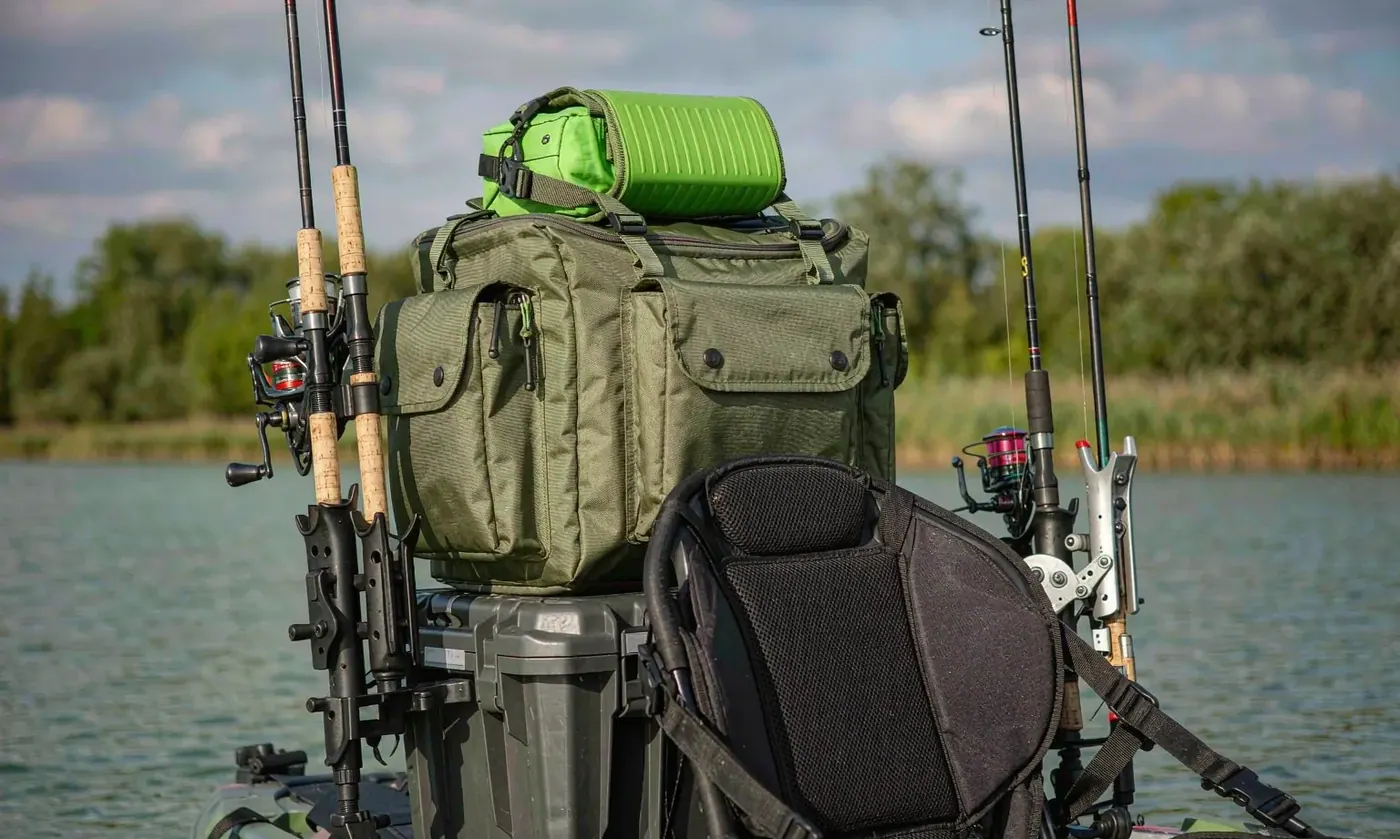
A leash is the cheapest complete answer and it works regardless of buoyancy. A 1.5 metre cord rated around 200 kilograms, clipped at one end to the bag and at the other to the craft, converts any capsize into retrieval. The only care needed is keeping it short enough not to foul around an ankle, which is why most experienced paddlers use the shortest cord that still allows repositioning.
What Designers Can Add
Where a programme genuinely needs buoyancy, five design moves provide it in order of effectiveness. Closed-cell foam panels in the base and back give permanent lift and double as structure. Sealed air chambers welded into the side walls give high lift per gram while the weld holds. High-visibility panels and reflective piping improve the odds of spotting anything that does go overboard. Drainage at the base reduces retained water weight after immersion, though it trades against sealed construction. And leash loops, which cost almost nothing and solve recovery outright.
| Design move | Lift or effect | Added cost | Trade-off |
|---|---|---|---|
| Foam in base andback panel | 3 to 6 kilograms net | 2.50 to 6 dollars | Adds 1.0 to 2.0 kilograms of bulk |
| Welded side air chamber | Up to the chamber volume | 1.50 to 4 dollars | Total failure if the weld leaks |
| High-visibility panels | No lift, much better recovery odds | Under 1 dollar | Colour limits |
| Drainage grommets at the base | Reduces retained water by 1 to 3 kilograms | 0.30 to 0.80 dollars | Cannot be combined with a sealed base |
| Leash loop and cord | Total recovery guarantee | 0.20 to 0.60 dollars | Needs a tether point on the craft |
Combined, panel foam and a leash loop take a design from uncertain to reliable for a few dollars, which is why those two features are worth specifying together rather than choosing between them.
Choosing by Scenario
Requirements differ sharply by where the fishing happens, and one specification cannot sensibly cover all of them. On a kayak or paddle board the bag can go overboard in seconds and a leash is effectively mandatory. Wading means the bag is already partly in the water and drainage matters more than flotation. Boat decks rarely lose gear overboard but do soak everything at the base. Surf work is the harshest combination of all three.
| Scenario | Realistic risk | What to require | What to skip |
|---|---|---|---|
| Kayak or paddle board | Frequent immersion | Leash plus two to three kilograms of foam | Heavy loads with no buoyancy |
| Wading in current | Partial immersion, dragging | Drainage, closed-cell panels, light load | Absorbent padding |
| Open boat and bay | Spray, rare loss overboard | Drainage, high-visibility panels | Large buoyant volumes |
| Surf and rock | Wave immersion, high consequence | Foam panels, leash, minimal metal load | Anything relying on trapped air |
| Bank or pier fishing | Very low | Nothing special required | Paying for buoyancy that is never used |
Care After Immersion
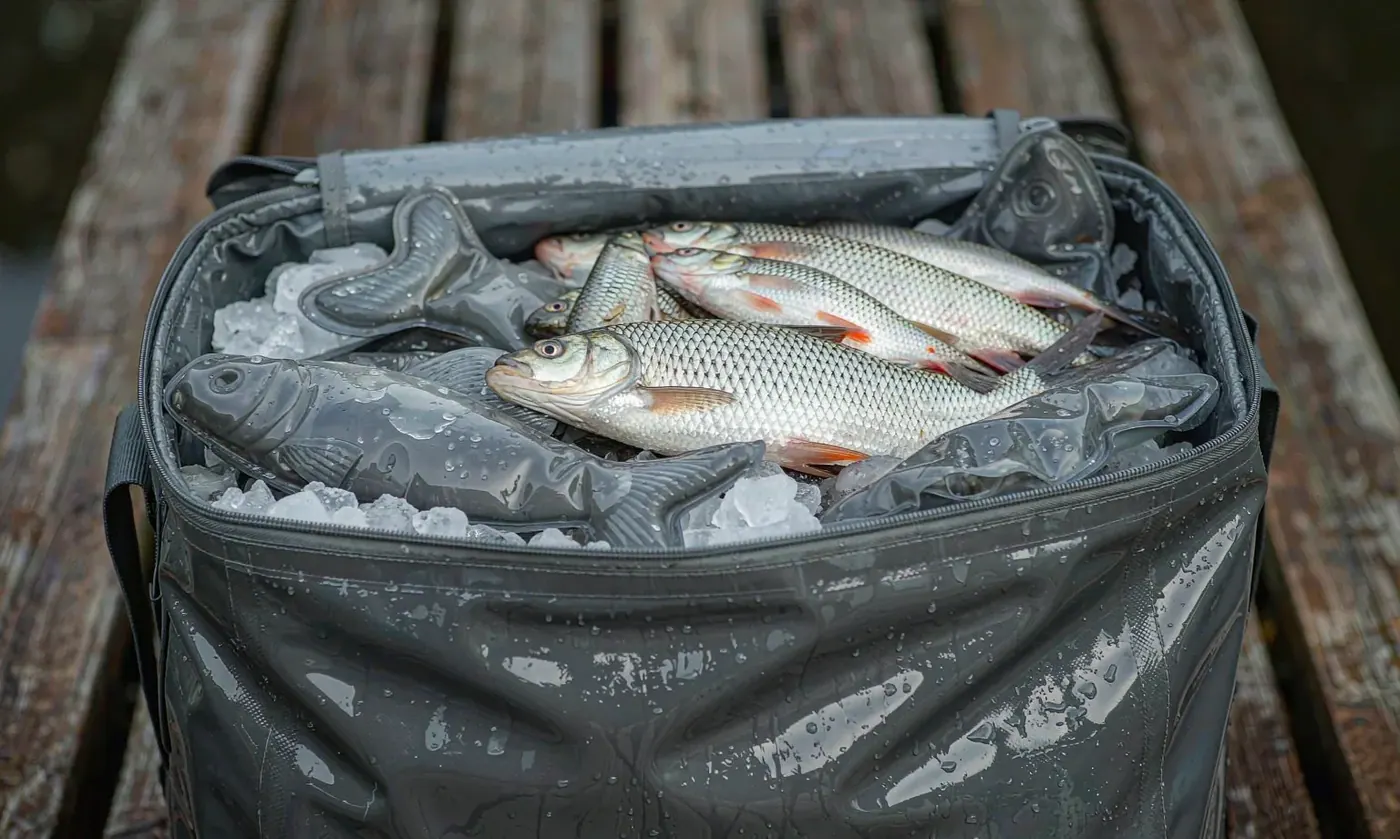
A bag that has been in the water needs different treatment depending on which water it was. Salt immersion requires a full freshwater rinse within hours, since drying salt film attacks hardware and zips. Freshwater immersion mainly requires drying, with attention to any absorbent padding that will hold litres. Either way, open everything, remove every tray, and dry in moving air rather than direct sun, which ages coatings faster than water does.
- Remove all trays and invert the bag so retained water leaves through the top rather than pooling at the base.
- Rinse zips and hardware twice as long as the shell; they hold the most salt per gram.
- Dry with lids open and compartments unrolled, and expect twenty-four to forty-eight hours for foam-backed areas.
- Check whether any absorbed water remains by weighing the bag and comparing with its dry weight.
- Re-test buoyancy before the next trip if closed-cell foam was compressed hard during the swim.
Reading Buoyancy Claims Honestly
Three claims dominate marketing in this area and each needs translating before it can be used. The floating bag claim usually means the empty shell floats, which is true of nearly everything and useful to nobody with tackle inside. The buoyant material claim often refers to foam somewhere in the construction, without stating volume, density, or where the lift acts, so it cannot be converted into kilograms. And the sealed base claim says nothing about buoyancy at all, only about the floor excluding standing water.
| Claim | What it usually means | What to ask for instead |
|---|---|---|
| Floats on water | Empty, dry, closure rolled | Net lift in kilograms at the stated load |
| Buoyant construction | Some foam somewhere in the build | Foam volume in litres and its density |
| Will not sink | Positive when empty or nearly empty | Result of a thirty minute loaded immersion test |
| Rigid floating base | Base pan adds displacement | Displaced volume of the pan in litres |
| Submersible closure | Sealed against water ingress | Does not imply any buoyancy at all |
Once a number exists, everything becomes negotiable and testable. Two bags can then be compared in the same units, a price can be weighed against actual kilograms of lift, and a sample can be checked against what was promised. Without a number, buoyancy remains a matter of adjectives, and adjectives have never floated anything.
One further check pays for itself: ask whether the claimed lift survives uv exposure and compression over several seasons, since foam slowly loses resilience and a tether stretches. Neither effect is dramatic in a single trip, but both compound over years of use, and the bag that floated on day one may not behave the same in year three.
Why Waterproof and Floating Are Not Related
The two properties are frequently conflated and they share almost nothing mechanically. Waterproofing keeps liquid out under pressure from outside, measured in millimetres of water head or an ingress protection grade for sprayed and submerged conditions. Floating is about net density, measured in litres displaced per kilogram carried. A bag can be impermeable to twenty thousand millimetres of water head and still sink immediately, because excluding water says nothing about how much air the shell happens to contain.
| Property | What it measures | Typical test | Typical figure |
|---|---|---|---|
| Water resistance | Pressure before penetration | Hydrostatic head column | 1,000 to 20,000 millimetres |
| Ingress protection | Behaviour under spray and immersion | Graded enclosure test | IPX4 to IPX8 |
| Air retention | How long trapped volume survives | Loaded immersion timing | Minutes rather than hours |
| Net buoyancy | Displacement minus mass | Weigh plus water displacement | Positive or negative in kilograms |
Buyers who understand that split stop asking whether a bag is waterproof and start asking the two questions that matter: how long will it stay dry to a stated depth, and how many kilograms of net lift remain once it is packed. Those are separate line items in a specification, and treating them as separate line items is what produces gear that behaves predictably in the water.
Sourcing Notes
Buoyancy is a design decision, not a finishing touch, because the foam or chamber has to be placed where it does useful work and bonded into the structure. QUANZHOU JUNYUAN BAGS has developed waterproof bags since 2014, with founding staff in this industry since 2004, producing 200,000 pieces monthly under SGS verification and BSCI and ISO 9001 systems. Materials are screened against REACH and California Prop 65 and every order is inspected at AQL 2.5. Foam density claims should be verified against a displacement test method published by ASTM International, rather than accepted as a stated figure.
A buoyancy brief should state total loaded mass, minimum required net lift in kilograms, whether that lift must survive immersion for thirty minutes, and whether the craft provides a tether point. Add litres, closure type, foam grade, colours, and quantity. Development opens at 500 pieces per design and colour; sampling takes six to ten working days and production thirty-five to fifty days from approved sample and deposit, shipped FOB Xiamen or DDP to more than one hundred countries. Send the drawing to service@junyuanbags.com. Closure behaviour is explained in the construction walkthrough, protection grades are compared in the waterproof levels guide, and paddle-side builds are reviewed in the kayak tackle bag roundup.
People Also Ask
Will a waterproof fishing backpack float if it falls in?
Briefly if lightly loaded, and almost never if full. An empty 30 litre pack floats high, but six loaded trays leave only 6 to 10 litres of air and the bag waterlogs within minutes.
How much buoyancy do I need for a loaded tackle bag?
At least the loaded mass in kilograms divided by water density. A 10 kilogram load needs around 10 litres of net displacement, which is far beyond what trapped air provides when the bag is full.
Does closed-cell foam really add useful lift?
Yes, about 0.75 kilograms of net lift per litre of foam at 0.25 density. A six litre panel adds roughly 4.5 kilograms of lift for about 1.5 kilograms of weight.
Is a leash better than trying to make a bag float?
Yes for anything paddled. A short cord rated around 200 kilograms guarantees recovery regardless of buoyancy and costs a fraction of the added foam.
Do paddle boards lose tackle bags overboard often?
More often than boats, because everything on deck moves in chop. Leashing the bag is standard practice among experienced paddlers for exactly that reason.
How can I test whether my bag floats?
Pack it as usual, seal it normally, and time it in still water. Note whether it floats, sits awash, or sinks, and repeat without one tray to find the positive load point.
Frequently Asked Questions
Q1. Do waterproof fishing bags float when fully loaded?
Usually not for long. A 30 litre bag holding six loaded trays carries 10 to 13 kilograms with only 6 to 10 litres of air left, so it becomes neutral and then negative within minutes.
Q2. How long will a tackle backpack stay afloat?
A lightly loaded roll-top can stay up for hours. A fully loaded one generally manages a few minutes, sometimes less if the closure leaks air as quickly as water enters.
Q3. Does a roll-top closure make a bag float?
It helps more than any other closure, retaining trapped air for ten to thirty minutes at shallow depth, but it cannot overcome a heavy load without foam or a sealed chamber.
Q4. How much lift does closed-cell foam add per litre?
About 0.75 kilograms in fresh water for foam at 0.25 grams per cubic centimetre, rising to roughly 0.78 in seawater because the displaced water is denser.
Q5. What is better for kayak fishing, flotation or a tether?
A tether. It guarantees recovery even for a bag with no buoyancy at all, while leaving the pack lighter and less bulky to carry.
Q6. Will my bag float better in the sea than in a lake?
Marginally. Seawater weighs about 1.025 kilograms per litre, so the same volume displaces roughly two and a half percent more mass than fresh water.
Q7. Is my float bag a life jacket?
No. Only an approved personal flotation device is life-saving equipment, and no fishing bag should ever be relied on for personal support in the water.
Q8. Can I add buoyancy to a bag I already own?
Yes, but only crudely. Closed-cell foam cut to fit inside panel sleeves adds a kilogram or two of lift, which is enough to change sink time on a lightly loaded bag.
Q9. Why does a bag sometimes float then sink later?
It is losing air while taking water. As air escapes through the closure and fabric, displaced volume falls until the system becomes heavier than the water it displaces.
Q10. Do bright colours improve recovery that much?
Yes. Visibility, not buoyancy, decides whether gear is recovered in chop, so high-visibility panels and reflective piping are worth specifying alongside any float feature.
Q11. What should I do after a full immersion?
Remove trays, invert the bag to drain, rinse salt twice as long as you think necessary, then dry open in moving air for twenty-four to forty-eight hours.