An EVA tote works as a dog bag at 18 litres for a single dog under 25 kilograms and 32 litres for two dogs or any dog over 35 kilograms, because the load is bulky and wet rather than heavy: two towels, a collapsible bowl, a litre of water, waste bags and a wet lead come to about 12 to 16 litres. The material earns its place with dogs because it does not absorb water or hair, it rinses clean in a minute, and it drains in four to ten seconds after a shake-out. Keep it off hot sand in direct sun, since a dark body passes sixty degrees within an hour.
Why This Shape Suits a Dog Load
A dog load is wet, sandy, hairy and often smelly, which is a combination that ruins fabric bags quickly. Hair works into woven fibres and stays there, wet dog smell develops in any structure that holds moisture, and sand settles into seams and corners. A closed-cell moulded body has none of those structures: there is no weave to hold hair, no fibre to hold water, and no seam for sand to sit in.
The second reason is the rinse. A dog beach session ends with a bag full of wet towels, a sandy lead and often a sandy dog, and the whole load needs hosing down rather than wiping. A moulded body can be hosed inside and out at tap pressure in about sixty seconds, drained in ten, and dry within the hour. That is the entire cleaning routine, and it is the reason this shape has become a default in dog-owning households rather than a niche choice.
| Dog load problem | What it does to a fabric bag | What a moulded body does | Result |
|---|---|---|---|
| Wet dog towel left inside | Damp lining, odour within a day | Water drains through the perforations | Dry within 60 minutes |
| Hair shed into the bag | Works into the weave and stays | Sits loose on a smooth surface | Shakes or rinses out |
| Sand on leads and toys | Settles into seams and corners | Falls through the perforations | Gone after one shake |
| Rinse at the end of a session | Needs a wash cycle and a drying day | Hosed and drained in about 70 seconds | Ready for the next walk |
| Water bowl leak inside | Soaks the lining and the base | Drains out of the base holes | No standing water |
| Claw contact at the walls | Tears fabric and mesh | Scratches, does not tear | Cosmetic only |
The one row that needs qualifying is the last. Claws scratch the surface of a moulded body and the marks are permanent, though they are cosmetic and do not affect structure. Anyone who loads a dog directly into the bag rather than onto a towel should expect visible scratching within a season and should treat it as patina rather than as damage.
Sizing by Dog Weight and by Trip Type
Sizing for dogs follows the same logic as sizing for people, with one difference: the bulkiest item is the towel, and a large dog needs a large towel. A single dog under 25 kilograms needs one large towel, which with a bowl, water, waste bags and treats reaches about 12 litres and fits an 18 litre body comfortably. Two dogs, or any dog over 35 kilograms, need two large towels plus a second water supply, which reaches 20 to 26 litres and wants a 32 litre body.
| Dog and trip | Recommended size | Core kit | Approximate volume | Notes |
|---|---|---|---|---|
| One small dog, local walk | 10 litres | Small towel, collapsible bowl, bags, treats | 6 to 8 litres | Kids body is the right size |
| One medium dog, beach | 18 litres | Large towel, 1 litre water, bowl, bags, toys | 12 to 16 litres | The default choice |
| One large dog, beach | 32 litres | Two towels, 2 litres water, bowl, bags, toys | 20 to 26 litres | Room for a second water supply |
| Two dogs, any trip | 32 litres | Two towels, 2 litres water, two bowls, bags | 22 to 28 litres | Split water between two bowls |
| Grooming and wash day | 18 litres | Two towels, shampoo, brush, nail file | 10 to 14 litres | Rinse the bag after every session |
| Dog park social visit | 10 to 18 litres | Towel, water, bags, ball | 7 to 11 litres | Small body is easier to carry and hang |
Water is the item people underestimate. A dog drinks roughly 50 to 100 millilitres per kilogram of body weight per day at rest and considerably more after swimming or running on a beach, so a 30 kilogram dog on a hot afternoon wants 1.5 to 2 litres carried. That is two 1 litre bottles upright, which needs about 24 centimetres of internal height and is the reason a small body is rarely enough for a beach trip with a large dog.
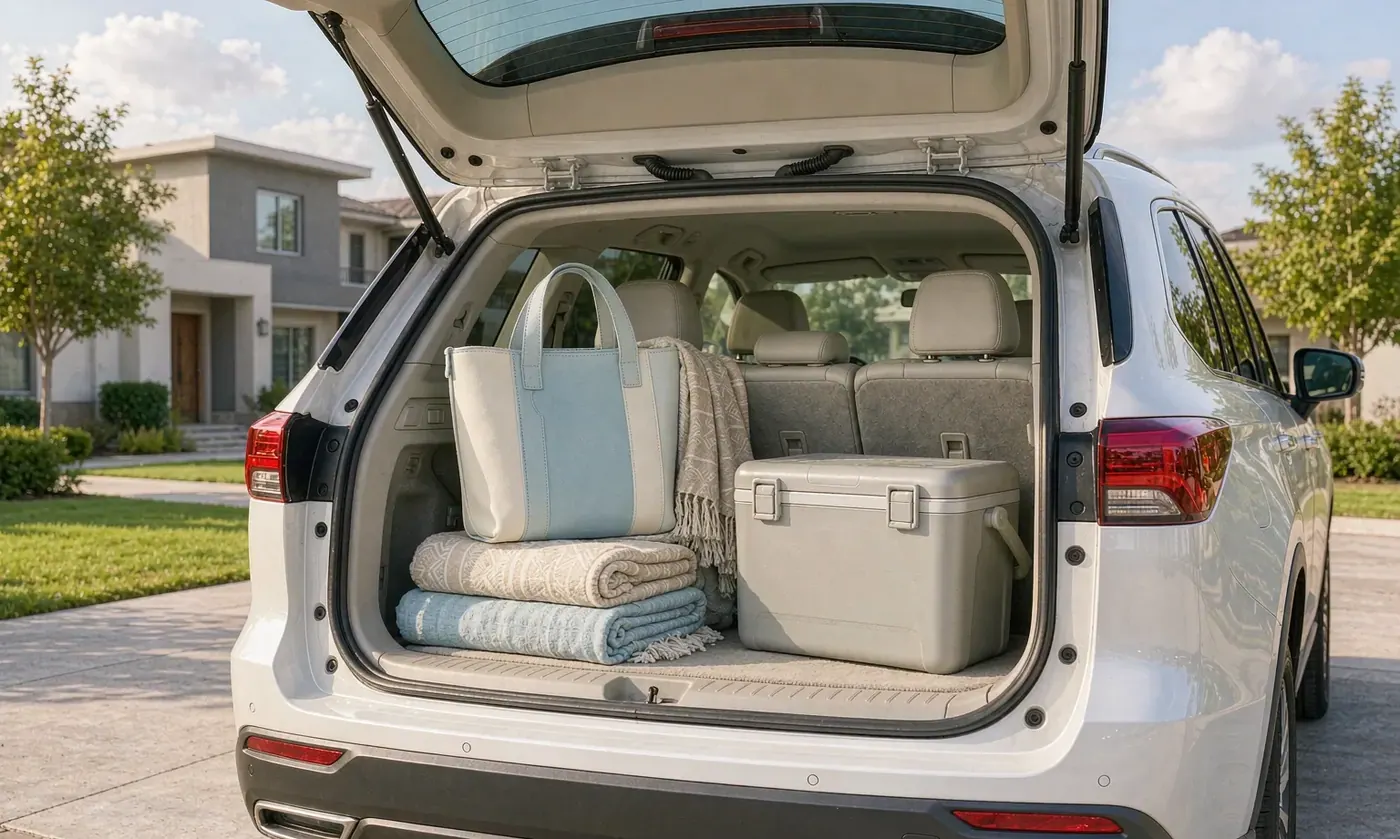
The Beach Kit: What Actually Gets Used
A dog beach kit is short and specific, and the difference between a kit that works and one that gets left in the car is usually whether the rinse step is included. Dogs come off a beach with salt and sand on the coat, and salt left on the skin causes itching within a day. A collapsible bowl plus a litre of fresh water for rinsing paws and coat is the item that turns a good day into a comfortable evening.
- One large quick-dry towel per dog, plus a spare. Cotton towels are bulky and stay damp; microfibre dries within an hour.
- One to two litres of fresh water, split between drinking and rinsing. Plan 50 to 100 millilitres per kilogram per day.
- A collapsible bowl of 1 to 2 litres. Silicone bowls fold flat and take almost no room in the bag.
- Waste bags, doubled up, in a clipped pouch rather than loose. They are the item most often missing at the wrong moment.
- A long line or a spare lead. A wet, sandy lead is exactly the item that needs a bag that can be hosed out.
- A floating toy if the dog swims, and a small first-aid kit with saline and a bandage for a cut paw.
Add one item most people forget: a towel for the car. A wet dog shakes within about four seconds of standing up, and that shake happens in the boot. Drying the dog before it gets in, or laying a towel down first, saves an interior clean that takes considerably longer than the drying would have.
Heat: Hot Sand, Hot Cars and When to Leave the Bag
Heat is the real risk in dog beach trips, and it applies to the bag as well as to the dog. Sand in direct summer sun reaches 50 to 65 degrees at the surface, which is painful and potentially injurious to paw pads within a minute of contact. A bag left on that sand behaves the same way as one left on a pool deck: a dark body passes sixty degrees at the surface within an hour, and lifting it by the handles is unpleasant.
| Surface or situation | Typical temperature | Risk | What to do |
|---|---|---|---|
| Dry sand in direct summer sun | 50 to 65 degrees | Paw pad burns within a minute | Walk the dog on the wet line, carry water |
| Dark bag body in direct sun | Ambient plus 22 to 30 degrees | Hot to lift, shape creep under load | Choose a light colourway, keep in shade |
| Light bag body in direct sun | Ambient plus 4 to 11 degrees | Comfortable to handle | The right choice for dog use |
| Car boot on a 30 degree day | 50 to 70 degrees after an hour | Dangerous for a dog, deforms a bag | Never leave a dog in a car, shade the bag |
| Wet sand at the waterline | 20 to 26 degrees | Safe for paws | Walk and rinse on the wet line |
| Bag stored damp and closed | Not applicable | Odour in towels, never in the body | Store open and dry |
The car row is the one that matters most and it is not really about the bag. A boot or cabin on a 30 degree day reaches 50 to 70 degrees within an hour even with a window cracked, and a dog cannot cool itself effectively in that environment. Plan dog trips around shade and water rather than around duration, and treat the bag as a shade item rather than a heat item: a light-coloured body upturned makes an acceptable water bowl in an emergency.
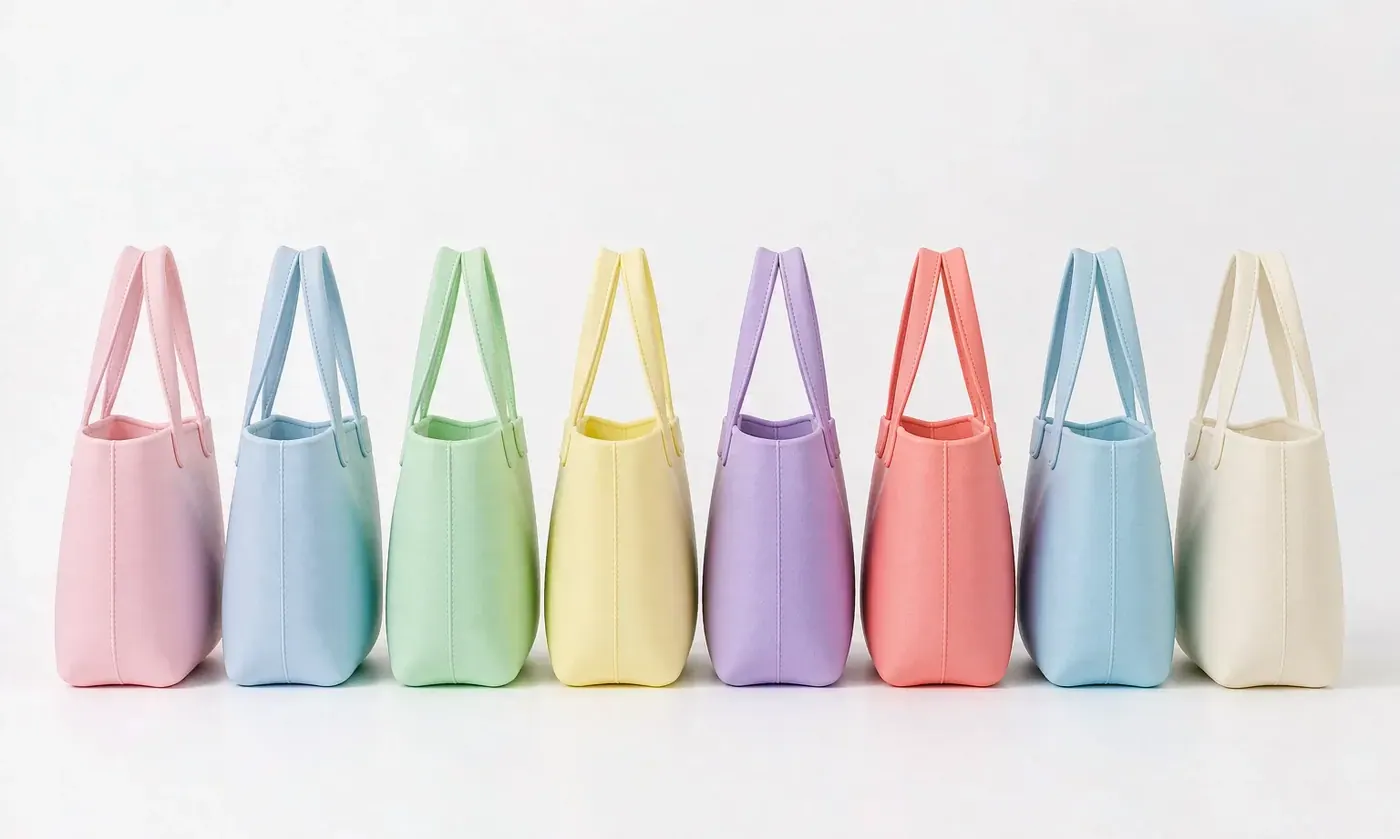
Claws, Chewing and What Dogs Actually Damage
Dogs damage bags in three ways, and only one of them is serious. Claws scratch the surface, which is cosmetic. Chewing deforms the rim and the handles, which is structural and usually happens to a bag left within reach rather than to one in use. And a wet dog shaking inside a bag flexes the walls against the base, which over years can creep the shape at thin wall sections.
- Expect scratching from claws and treat it as cosmetic. It does not affect structure or drainage.
- Keep the bag out of reach when not in use. Chewing is the only failure mode that puts a body out of service.
- Choose a wall at or above 2.0 millimetres if the dog rides in the bag, which it should not, or if heavy loads are routine.
- Hang the bag by both handles rather than one when storing, so the handle roots share load evenly.
- Rinse and dry after every salty session. Salt residue is harmless to the body but not to a towel left inside.
It is worth saying plainly that this is a carry bag for dog kit and not a carrier for dogs. The perforations that drain it also mean it offers no support to an animal, and a dog standing in a moulded body will concentrate load at the base in a way the walls are not designed to take. Carry the kit, walk the dog, and let the dog do the swimming.
Grooming and Wash Day Carry
Wash day at home is the second use case, and it is the one where a draining body is most obviously right. The load is shampoo, a brush, two wet towels and often a wet dog, all of which end up in one place within about ninety seconds. A moulded body holds that load, drains it, and can be hosed out afterwards, which no fabric grooming bag can do without a wash cycle.
| Grooming item | Volume | Wet or dry | Where it sits | Note |
|---|---|---|---|---|
| Two large towels | 3 to 5 litres | Wet after use | Base layer | Quick-dry matters for weekly washes |
| Shampoo and conditioner | 0.5 to 1 litre | Dry outside, wet bottle | Upright if height allows | Keep the cap closed, the bag drains |
| Brush, comb and nail file | 0.5 litres | Dry | Clipped pouch | The items that migrate to corners |
| Wet lead and collar | 0.5 litres | Wet | Mesh pouch or wet compartment | Rinse and dry with the bag |
| Ear cleaner and wipes | 0.3 litres | Dry | Top layer | Keep out of reach of a wet towel |
| Treats in a sealed tub | 0.5 litres | Dry | Top layer | Sealed, because the body does not close |
The weekly rhythm matters more than the kit. A bag used for a wash every seven to ten days and rinsed afterwards will last for years, because the body is never storing anything damp. The failure cases in this use are always the same: a wet towel left in a closed cupboard space overnight, and a bag put away wet because the rinse felt like an extra step.
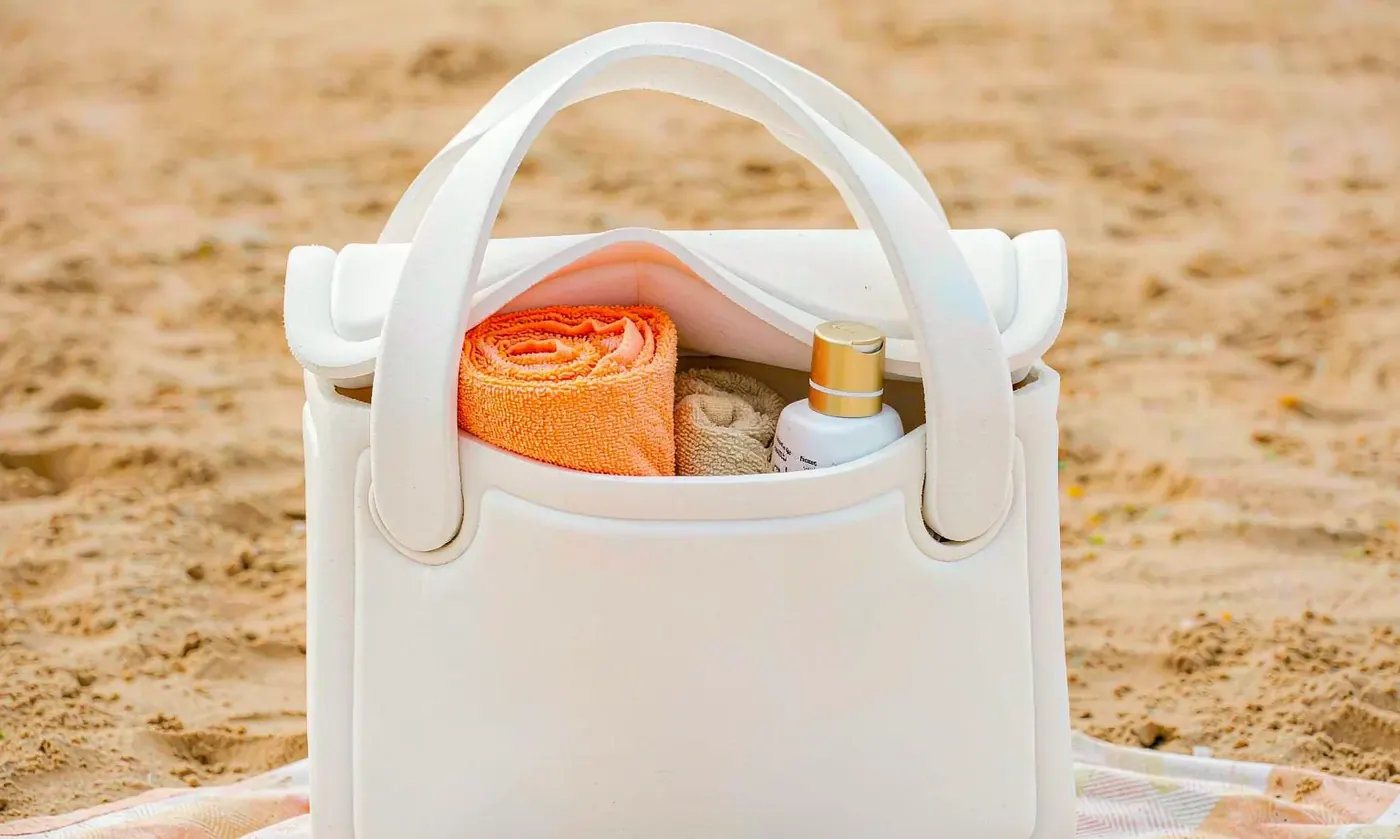
Dog Park, Walks and the Everyday Carry
Outside beach and grooming use, the everyday dog walk is the highest-frequency scenario and the one where a smaller body wins. A local walk needs a towel, water, a bowl, waste bags and treats, which is 6 to 8 litres and fits a 10 litre body that can be carried in one hand while the other holds the lead. The large body is better on a beach and worse on a pavement, purely because of what it weighs when empty and how far it sticks out from the body when carried.
Two accessories make the everyday carry work. A clipped pouch keeps waste bags and keys in one place, because those are the two items that are needed at a specific moment and are never where they should be in an open volume. And a charm or a coloured tag identifies the bag at a busy park entrance, where six similar bodies on a bench is a realistic outcome on a Saturday morning.
Cleaning After a Salty or Muddy Session
The cleaning routine for dog use is the same as for any other use, with one addition: rinse the bag and the dog with the same water, in that order, because the bag is the easier of the two and the dog will not wait. Then deal with the towel, which is the only item in the whole system that can smell.
- Shake the bag out dry first. Sand and hair come off far more easily before anything is wet.
- Hose the body inside and out at tap pressure for about sixty seconds, including the perforations.
- Turn it upside down for ten to thirty seconds. A fully perforated body empties in four to ten seconds.
- Wash the towel separately and dry it the same day. A damp towel left in a bag overnight smells within a day.
- Wipe the bowl and the clipped pouch with a damp cloth, and leave everything open in shade to dry.
- Once a month, check the handle roots and the base rails, which are the two places that fail first.
Hygiene guidance on contact with animals and on handwashing afterwards published by the United States Centers for Disease Control and Prevention is worth reading for any household with a dog that swims in shared water, and safer product choices for cleaning are set out by the United States Environmental Protection Agency. For the bag itself, mild detergent is the only product that is ever needed, and solvent cleaners should never be used on the surface.
Tote or Backpack for Dog Kit
A waterproof backpack is the better shape for a long walk on uneven ground and the worse shape for everything else in dog ownership. Hands free matters when a dog pulls, and a pack distributes 8 to 12 kilograms across two shoulders rather than one hand. Against that, a backpack cannot be rinsed and drained in a minute, it holds sand in the seams, and it has to be taken off and put down before a bowl can be filled, which is exactly when a dog decides to move.
| Situation | Better shape | Why | Load |
|---|---|---|---|
| Long walk on rough ground | Waterproof backpack | Hands free, load on two shoulders | 6 to 10 kg |
| Beach session with swimming | EVA tote | Rinses, drains, sand falls through | 10 to 14 kg |
| Dog park visit | EVA tote | Set it down, open top, easy access | 4 to 7 kg |
| Grooming and wash day | EVA tote | Hosed out afterwards | 6 to 9 kg |
| Travel and hotel stay | Both | Pack for the walk, tote for the kit | Split across two |
| Everyday pavement walk | Either, tote preferred | Distance is short, access matters more | 4 to 8 kg |
Most dog owners end up with both and use them on different days, which is a reasonable outcome rather than a failure to choose. If only one is being bought, the beach and grooming cases decide it: a bag that cannot be hosed out after a salty session will smell within a season regardless of how comfortable it is to carry, and that is the use case the tote was built for.
Travel is the one scenario that genuinely justifies carrying two. A pack holds the walking kit on the way out and a tote holds the wet towels, the bowl and the water in the car or the hotel room, and the tote doubles as a rinse basin for paws at the end of a day. Two bodies also means one can be drying while the other is in use, which matters on a trip where the same bag is needed every day for a fortnight.
Programme Notes
The category background sits in the injection-molded EVA tote guide, the moulded rubber alternative is covered in the rubber beach tote range, and family load planning is set out in EVA tote for moms and kids. QUANZHOU JUNYUAN BAGS has run waterproof bag programmes since 2014 with a founding team in this trade since 2004, and develops pet and family sizes alongside sewn and welded ranges.
Monthly output runs at 200,000 units verified by SGS, operations follow BSCI and ISO 9001, materials are screened for REACH and California Prop 65, and every bulk shipment is inspected at AQL 2.5 before release. Programme minimums begin at 500 pieces per design and colour, with sampling at 6 to 10 working days and bulk at 35 to 50 days from approved sample and deposit, shipped FOB Xiamen or DDP to more than 100 countries. Send your target size, colourway count, quantity and destination market to service@junyuanbags.com.
People Also Ask
What size EVA tote is best for a dog?
Eighteen litres for one dog under 25 kilograms, and 32 litres for two dogs or any dog over 35 kilograms with two towels and two litres of water.
Can an EVA tote be used as a dog carrier?
No. It is a carry bag for dog kit. The perforations drain it, so it gives no support and concentrates load at the base.
Do dog claws damage an EVA tote?
They scratch the surface, which is cosmetic. Chewing is the only failure mode that puts a body out of service.
How much water should I carry for a dog?
Plan 50 to 100 millilitres per kilogram per day at rest, and more after swimming, so a 30 kilogram dog wants 1.5 to 2 litres.
How do I clean a tote after a salty beach trip?
Shake it dry, hose it inside and out for about sixty seconds, drain it, and dry it open in shade within the hour.
Does a light coloured tote stay cooler at the beach?
Yes. A light body runs within 4 to 11 degrees of ambient, while a dark one runs 22 to 30 degrees above and passes sixty degrees within an hour.
Frequently Asked Questions
Q1. What size EVA tote do I need for my dog?
Eighteen litres for a single dog under 25 kilograms, 32 litres for two dogs or any dog over 35 kilograms, and 10 litres for a local walk.
Q2. Why is a moulded body better than a fabric bag for dogs?
It holds no water, hair or sand. Hair sits loose on a smooth surface, sand falls through the perforations, and the bag rinses in about a minute.
Q3. Do claws damage the bag?
They scratch it cosmetically. Claw marks are permanent but do not affect drainage or structure. Chewing is the serious risk.
Q4. Can I put my dog in the bag?
No. It is designed to carry kit, not animals. The perforations mean no support, and load concentrates at the base.
Q5. How much water should I carry?
About 50 to 100 millilitres per kilogram per day at rest, more after swimming. A 30 kilogram dog on a hot afternoon needs 1.5 to 2 litres.
Q6. What should be in a dog beach kit?
A large quick-dry towel per dog, one to two litres of water, a collapsible bowl, doubled waste bags, a spare lead and a floating toy.
Q7. Is hot sand a problem for dogs?
Yes. Dry sand in direct summer sun reaches 50 to 65 degrees, which can burn paw pads within a minute. Walk on the wet line.
Q8. What colour is best for dog use?
A light colourway. It stays within about 11 degrees of ambient, against 22 to 30 degrees above ambient for a dark body.
Q9. How do I stop the bag smelling?
Rinse and dry it open after every session, and never leave a wet towel inside. The body cannot smell; a damp towel can within a day.
Q10. How do I clean it after a muddy walk?
Shake it out dry, hose inside and out for about sixty seconds, drain it for ten to thirty seconds, and dry it open in shade.