A perforated EVA tote earns its place at the gym, on a boat and on a wet sideline when three conditions hold: the body drains in under ten seconds, the base stands on soaked ground without absorbing anything, and the handle anchors are rated for at least twice the carried load. All three settings produce kit that arrives wet, sandy or muddy and all three need that kit to dry between sessions rather than be sealed in, which is precisely what an open one-piece body does. Choose 20 to 32 litres for gym use and 32 to 42 litres for boat and team sideline work. QUANZHOU JUNYUAN BAGS runs these programmes from 500 pieces per design and colour, with sampling at 6 to 10 working days.
What Wet Kit Does Inside a Closed Bag
The reason a draining body beats a sealed one in sport comes down to how much water kit carries. A wrung swim towel still holds 300 to 500 millilitres, a pair of rain-soaked trainers holds 80 to 150 millilitres and muddy boots can shed 150 to 400 millilitres of slurry as they dry. In a closed liner that water has nowhere to go: it pools at the base, raises interior humidity to saturation within an hour, and stays there for the eight to twelve hours between sessions. Odour and microbial growth are the visible result, and they begin on the second day rather than the second week.
A perforated body reverses that. Water leaves through the base holes under gravity, the open top allows continuous air exchange, and a wet load left standing in shade reaches touch-dry in roughly four to six hours instead of staying damp indefinitely. The material itself contributes nothing: moulded EVA absorbs effectively zero water, so the only moisture in the system is what the contents brought in, and all of it can leave.
| Kit item | Water carried into the bag | Outcome in a closed liner | Outcome in a perforated body |
|---|---|---|---|
| Wring-out swim towel | 300 to 500 millilitres | Pools at the base, damp for 12 hours | Drains in 4 to 7 seconds, touch-dry in 5 hours |
| Rain-soaked trainers | 80 to 150 millilitres | Saturates the lining, odour in 48 hours | Drips out, dries overnight in shade |
| Muddy boots | 150 to 400 millilitres of slurry | Slurry cakes and stains permanently | Slurry rinses through, base hoses clean |
| Wet swimsuit | 100 to 200 millilitres | Stays damp, mildew risk | Drains, dries before the next session |
| Melting ice in an insert | 200 to 600 millilitres | Soaks everything above it | Leaves through the base, no standing water |
Gym Use: Shoes, Towels and Ventilation
Gym use is the smallest of the three loads and the most regular, which changes what matters. A gym bag is used four to six times a week, carries a predictable 4 to 7 kilogram load, and its contents are damp rather than soaked: a towel, a bottle, trainers and a change of clothes. Volume of 20 to 32 litres covers it comfortably, with empty weights between 1.2 and 2.2 kilograms. Anything larger simply gets filled, because the bag is carried to a locker and back rather than over a distance.
Two details decide whether the bag is pleasant to own. Ventilation comes first: a body with perforations across the lower wall and base lets a damp towel dry in the boot of a car rather than fermenting there, and that alone removes most gym-bag odour. Shoe separation comes second, and it is worth being specific about it. A drop-in divider that creates one compartment for trainers and one for clean clothes costs a fraction of a sewn shoe tunnel and can be removed on rest days, whereas a fixed tunnel usually forces a larger body than the rest of the load needs.
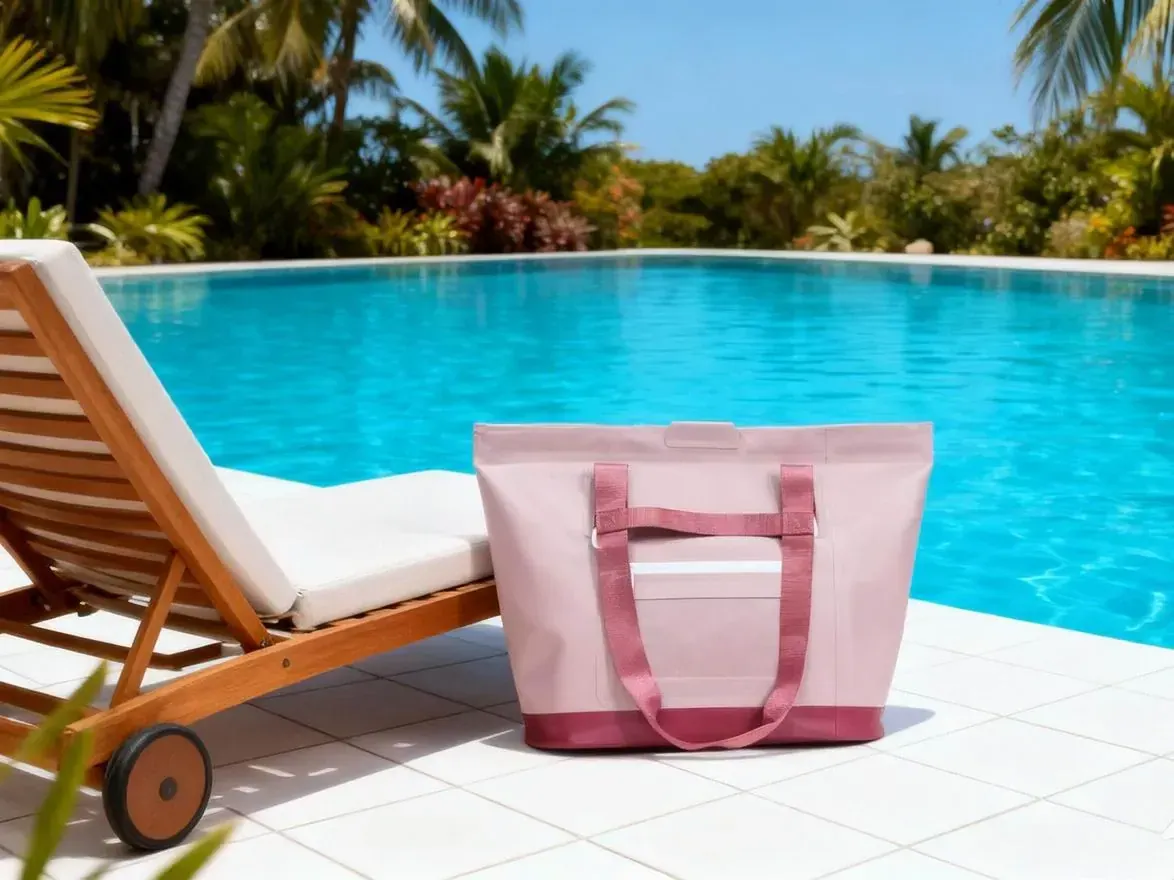
Hygiene is the third consideration and the one buyers ask about most. A moulded body with no fabric lining can be wiped with a standard disinfectant after every session without degrading, which a lined bag cannot survive for a season. That matters in shared environments such as club changing rooms and school sports halls, where bags are set on floors that are cleaned chemically but not dried. A bag that survives a daily wipe-down will outlast one that cannot be cleaned at all, and the difference shows up in the second season rather than the first.
Boat Use: Salt, Spray and Stowage
On a boat the load is bigger, wetter and saltier, and the bag has a second job: it must not move. A tote on a deck or in a cockpit is subject to rolling, spray and sudden shifts of weight, and the reason moulded EVA works here is the combination of a wide flat treaded base and a low centre of gravity. A 32 to 42 litre body standing on a wet deck stays upright far better than a soft bag of the same volume, and when it does ship water through the gunwale the contents are already wet and the water drains straight out.
Salt is the agent that actually shortens service life, and it acts on hardware rather than on the body. Moulded EVA is unaffected by salt water, but a metal slider, a rivet or a plated hook will seize within a season if it is not rinsed. Specify corrosion-resistant hardware with moulded pulls on any strap or closure destined for marine use, and set the rinsing routine with the buyer at the point of sale: thirty seconds of fresh water over the strap anchors after a day afloat is enough, and skipping it is the single most common cause of a warranty claim on a marine bag.
| Boat exposure | What it does | Specification response | Owner routine |
|---|---|---|---|
| Salt spray on deck | Crystallises on hardware, seizes sliders | Corrosion-resistant fittings, moulded pulls | Rinse anchors with fresh water, 30 seconds |
| Green water over the gunwale | Fills an open body, drains in seconds | Full perforation, base holes at 8 to 12 millimetres | Tip to drain, nothing else needed |
| Direct summer sun on deck | Surface past 60 degrees, shape creep | Light colourways for marine programmes | Store below or under a cover |
| Rolling and sudden movement | Soft bags tip and slide | Wide treaded base, low centre of gravity | Stow against a bulkhead |
| Fish slime and bait residue | Odour if held in a liner | Hose at tap pressure, no liner to hold it | Hose and air dry, about 3 minutes |
Stowage is worth planning before the bag is specified. A 42 litre body is roughly 54 centimetres across the mouth and needs a cockpit locker or a deck well of that width; where the boat has only a small hatch, a 32 litre body at 48 centimetres is the practical maximum. Anyone buying for a fleet should take one dimension from the boat rather than from the catalogue, because a bag that does not fit the stowage point will end up on the deck, which is exactly the place it should not be.
Sideline Sports: Mud, Rain and Team Kit
Sideline use is the least forgiving of the three. A Saturday junior football morning in northern Europe or the northern United States means rain, mud and grass on every item that comes off the pitch, and the bag is set directly on that ground for two to three hours at a time. Volume runs 28 to 42 litres for a single player and 42 litres or more for a coach carrying shared kit, with loaded weights commonly reaching 10 to 14 kilograms once boots, a ball, a water bottle and spare layers are inside.
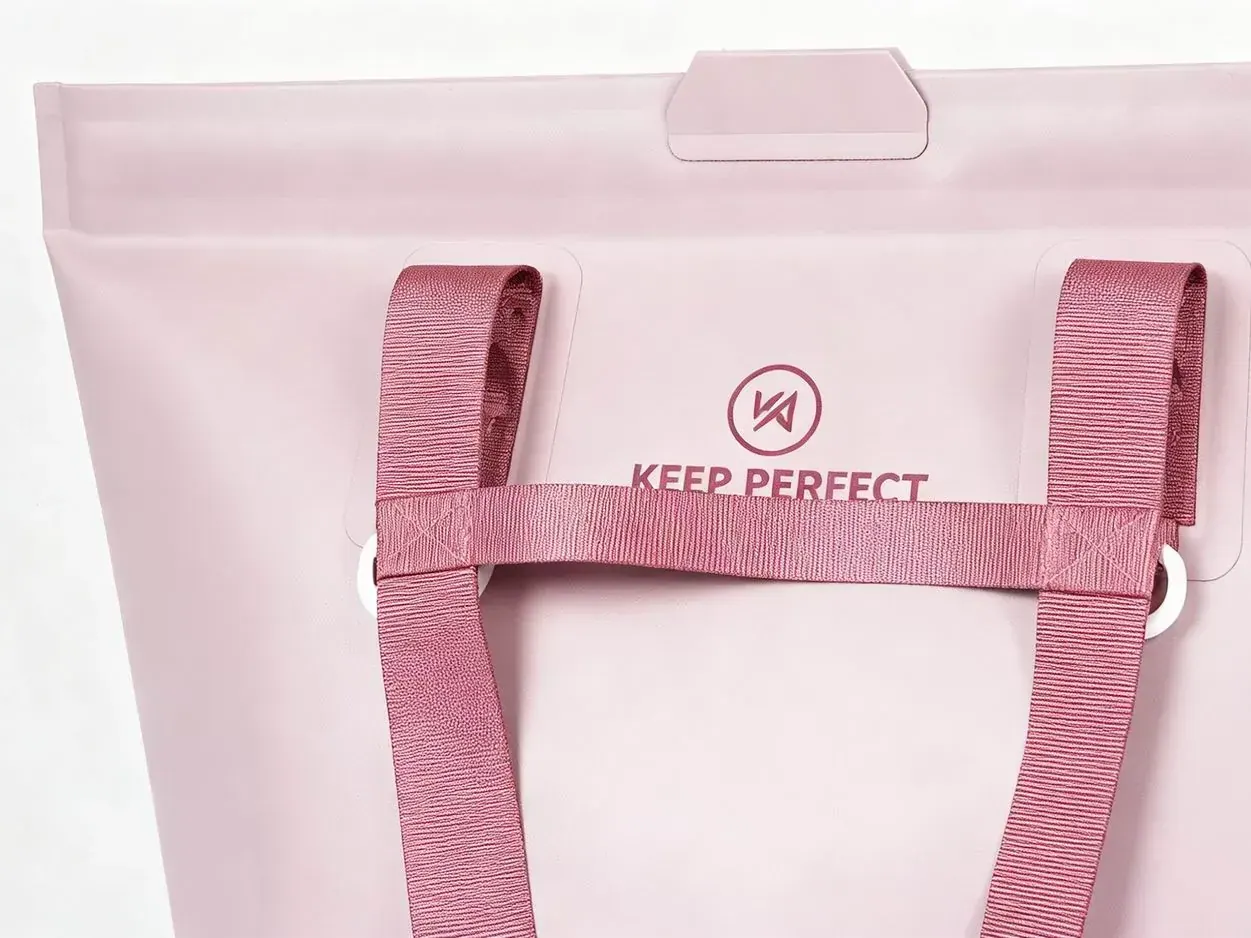
Team and club orders add a requirement that individual buyers never think about: identification. Twenty identical bags in a club colour are impossible to tell apart on a wet sideline, and the two solutions behave differently. A printed number or name on a solid upper panel is permanent and survives a season of hosing, while charms and tags are cheaper, replaceable and let a player move the mark to a new bag. Clubs usually buy both, and the practical split is a printed squad number for the season plus a charm set the player chooses.
The other sideline requirement is cleaning speed. A muddy bag hosed at tap pressure and stood open in shade is ready for the following weekend in under an hour; a fabric bag of the same size needs a wash cycle and a full day to dry, which is why clubs that switched to moulded bodies report fewer lost kit items in the second half of a season. Mud is abrasive rather than corrosive, so the material sees no meaningful wear from the cleaning itself, and the only thing to avoid is a pressure washer above roughly 40 bar, which can deform thin walls.
Volume and Dimensions by Sport
Sizing resolves quickly once the load is named. The table below maps the common sport and fitness uses onto a volume band, an external footprint and an empty weight, and the pattern is simple: gym loads are small and carried a short distance, boat loads are large and bulky, and sideline loads sit between the two but are the heaviest per litre because boots and balls are dense.
| Use | Typical load | Recommended volume | Mouth width | Empty weight |
|---|---|---|---|---|
| Gym, single session | Towel, bottle, trainers, change | 20 to 26 litres | 36 to 41 centimetres | 1.2 to 1.8 kilograms |
| Gym plus swim | Wet kit, goggles, towel | 26 to 32 litres | 41 to 46 centimetres | 1.5 to 2.2 kilograms |
| Junior team sideline | Boots, shin guards, bottle, layers | 28 to 34 litres | 41 to 48 centimetres | 1.4 to 2.0 kilograms |
| Adult team sideline | Boots, ball, kit, spare layers | 34 to 42 litres | 48 to 54 centimetres | 1.8 to 2.6 kilograms |
| Coach or shared kit | Balls, cones, first-aid, spare kit | 42 litres or more | 54 centimetres | 2.4 to 2.8 kilograms |
| Day boat and dinghy | Towels, lunch, spray top, water | 32 to 42 litres | 48 to 54 centimetres | 1.8 to 2.6 kilograms |
| Junior sailing or paddle | Wetsuit, buoyancy aid, towel | 26 to 32 litres | 41 to 46 centimetres | 1.5 to 2.2 kilograms |
Two corrections apply to anyone reading that table. A swimmer carrying a wetsuit needs more volume than the load suggests, because a rolled wetsuit is bulky and does not compress, and 32 litres is the floor rather than the ceiling. And a junior player does not need a junior bag: children between eight and twelve manage a 28 to 34 litre body comfortably as long as the empty weight stays under 1.6 kilograms, and buying the larger size avoids replacing the bag in two seasons.
Handles, Straps and Carry Distance
Carry geometry separates a bag that is pleasant for two hundred metres from one that is not. Top handles on a moulded body usually have a drop of 12 to 18 centimetres, which suits a hand carry at the hip and nothing else; beyond roughly 150 metres a loaded 10 kilogram body carried by short handles becomes uncomfortable because the arm is held in a fixed position. A detachable shoulder strap with a drop of 40 to 60 centimetres moves the load onto the opposite hip and roughly triples the comfortable distance to 500 or 600 metres.
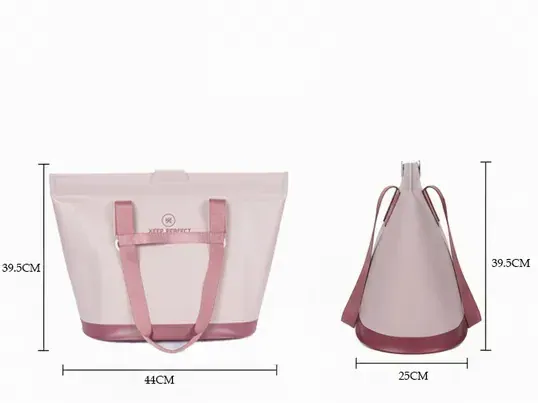
Strap width and anchor strength are the two specifications worth holding firm on. Below 25 millimetres a strap digs into a shoulder once the load passes about 10 kilograms, and 38 to 50 millimetres with a sliding pad stays comfortable to 15 kilograms. The anchor matters more than the webbing: a strap pulls on the rim at an angle the handles never produce, so the moulded anchor needs a generous fillet and the hardware should be rated to at least twice the intended carried weight. Standardised physical test methods for that kind of load and dimensional check are published by ASTM International, and they are the reference worth naming in a specification sheet rather than an undocumented in-house pull test.
For a boat or a long walk from a car park, one more detail pays off: a strap that detaches at both ends. A strap left attached gets in the way when the bag is standing open on a deck or in a boot, and a strap that cannot be removed is the most common reason owners stop using one. Detachable hardware with a moulded pull costs little, and it converts one body between two carry modes rather than forcing the buyer to own two bags.
Cleaning Between Sessions
Cleaning a moulded body is faster than cleaning any alternative and the routine is the same for all three uses. Nothing about it is delicate, and the short version is three minutes of work that prevents every odour and stain problem buyers complain about.
- Tip the bag out and shake it, which removes loose sand, grass and grit in about five seconds.
- Hose at tap pressure through the walls and across the base for 30 to 60 seconds; a pressure washer above roughly 40 bar can deform thin walls.
- Use a soft brush and mild detergent on any residue, then rinse. Solvents and abrasive pads dull the surface permanently.
- Rinse strap hardware and zips with particular attention near salt water, since that is where corrosion starts.
- Stand the bag open and upside down in shade for 30 to 60 minutes; inside a car or on a hot deck it will reach shape-deforming temperature.
- Store out of direct sun. A dark body left in summer sun passes 60 degrees within an hour and can creep permanently.
Two products should never be applied: solvents of any kind, which attack the surface and leave it tacky, and machine washing at water temperatures above 60 degrees, which softens the body enough to distort it under its own weight. Disinfectant wipes and diluted household detergent are both safe. Care and chemical guidance for consumer articles aligns with the safer chemical practice published by the United States Environmental Protection Agency, and owners who want the marine side of the routine documented can start from the recreational boating safety material published by the United States Coast Guard Boating Safety Division.
Specifying for Team, Club and Resort Orders
Team and club orders behave differently from retail orders because they are placed once, in a fixed quantity, against a date. The useful question is not what the bag costs but what has to be confirmed before the clock starts, and the answer is a short list: body size, perforation coverage, strap and hardware specification, colourway count, marking method and packed carton quantity. Confirming those six items takes one email and removes the majority of disputes that arise after delivery.
| Order element | Typical club or team choice | Lead time impact | Note |
|---|---|---|---|
| Body size | One size, 34 litres | None if a stock tool exists | Confirm the tool before promising a date |
| Colourways | 1 to 3 per season | None up to 3, then colour approval adds 3 days | Colour approval is the usual schedule slip |
| Marking | Printed squad number or name | Adds 2 to 4 working days | Artwork approval gates bulk release |
| Strap hardware | Corrosion-resistant, moulded pull | None if standard, 5 days if sourced | Marine programmes should not skip this |
| Charms or tags | Separate accessory line | Packs with the bag, no added time | Sold twice as often as expected |
| Packed carton | 6 to 12 pieces per carton | None | Changes freight cost per unit materially |
The schedule itself is predictable. Sampling runs 6 to 10 working days from confirmed artwork and specification, bulk runs 35 to 50 days from approved sample and deposit, and freight adds 20 to 35 days by sea to Northern Europe or the United States West Coast. A club ordering for an August season start should therefore be specifying in March, not in June, and the single change that most often saves a season is holding the colourway count to three or fewer.
Programme Notes
The category background sits in the injection-molded EVA tote guide, the marine end of the range in the waterproof rubber beach tote guide, and the strap and closure detail in the EVA tote with straps guide. Buyers planning a travel or resort variant should read the EVA tote for travel guide alongside this page, since the strap and closure decisions overlap. QUANZHOU JUNYUAN BAGS has run waterproof bag programmes since 2014 with a founding team in this trade since 2004, at monthly output of 200,000 units verified by SGS, under BSCI and ISO 9001, with materials screened for REACH and California Prop 65 and every bulk shipment inspected at AQL 2.5 before release.
Send the sport, the volume band, the strap and hardware requirement, the colourway count, the marking method and the quantity to service@junyuanbags.com. Ask for the packed carton specification at the same time, because strap hardware and charms both change packing density and therefore the landed cost per unit.
People Also Ask
Is an EVA tote good for the gym?
Yes, at 20 to 32 litres. The perforated body ventilates a damp towel between sessions, and a moulded shell can be wiped daily without degrading.
What size EVA tote suits a day boat?
32 to 42 litres, with a mouth no wider than the cockpit locker it has to stow into, typically 48 to 54 centimetres.
Do EVA totes drain fast enough for wet kit?
Yes. A fully perforated body drains in 4 to 7 seconds after a dunk and a wet load reaches touch-dry in about five hours in shade.
How do you stop a sports bag smelling?
Drain it, hose it at tap pressure and stand it open in shade. Odour comes from water held in a liner, which a perforated body does not have.
Should a sideline bag have a shoulder strap?
Yes, if the walk from parking exceeds about 150 metres. A 38 to 50 millimetre strap extends the comfortable carry to roughly 600 metres.
How many litres does a junior football player need?
28 to 34 litres covers boots, shin guards, a bottle and spare layers, provided the empty weight stays under 1.6 kilograms.
Frequently Asked Questions
Q1. What makes an EVA tote better than a fabric bag for sport?
It absorbs no water, drains through the base and stands on wet ground. A fabric bag holds the 300 to 500 millilitres a towel carries and stays damp for hours.
Q2. Can I put muddy boots straight into an EVA tote?
Yes. Slurry rinses through the perforations and the base hoses clean at tap pressure, which is why clubs use them for junior football kit.
Q3. What volume should I choose for gym and swim combined?
26 to 32 litres. Below 26 the wet kit and the dry clothes end up in the same space and the dry items get damp.
Q4. Is a perforated tote safe to leave on a boat deck?
It drains and has a low centre of gravity, so it handles spray well, but it should be stowed against a bulkhead and kept out of direct sun.
Q5. How often should I clean a bag used six times a week?
Rinse it weekly and hose it fully every two weeks. A 60 second rinse of the strap hardware after any salt water session prevents corrosion.
Q6. Do I need a divider or an insert for gym use?
A drop-in divider is the cheaper answer. It separates trainers from clean clothes and can be removed on days when the full width is wanted.
Q7. Will salt water damage the body of the bag?
No. Moulded EVA is unaffected by salt water; the parts that suffer are plated hooks, rivets and sliders, which is why marine programmes specify corrosion-resistant hardware.
Q8. What strap width is comfortable for a 12 kilogram sideline load?
38 to 50 millimetres with a sliding pad. Anything under 25 millimetres cuts into the shoulder above about 10 kilograms.
Q9. How do clubs identify twenty identical bags?
Two methods: a printed squad number on a solid upper panel for the season, plus charm sets the player picks so the mark can move to a new bag.
Q10. What should a club confirm before placing a season order?
Body size, perforation coverage, strap and hardware specification, colourway count, marking method and the packed carton quantity.