Yes, most damage to a molded EVA tote is repairable, because EVA is a thermoplastic that can be reheated, reshaped and welded. A warped body recovers at 70 to 90 degrees, a crack can be hot-air welded with a filler rod at 180 to 220 degrees, and a strap or a fitting is replaced rather than repaired. Two failures cannot be fixed to last: a crack at a handle root and a base worn through at its contact points. Everything else is worth attempting, and a body with failed hardware usually has years of material life left in it.
What Can and Cannot Be Repaired
The answer to whether a tote can be repaired is yes for most damage and no for two specific failures, and the distinction is worth learning before spending an afternoon on a bag that cannot be saved. The material is a thermoplastic: it softens when heated and solidifies when cooled, repeatedly, which means a body can be reshaped and a crack can be welded with heat and a filler rod of the same material. What cannot be undone is a failure at a point where the load concentrates and the section is thin.
| Damage | Repairable | Method | Expected result |
|---|---|---|---|
| Warped or dented body | Yes | Reheat to 70 to 90 degrees and reshape | Full recovery, usually invisible |
| Crack in a flat wall | Yes | Hot air weld with an EVA filler rod | Strong, visible unless refinished |
| Crack at a perforation bridge | Yes, early | Weld from both faces, add a backing patch | Good if caught before it propagates |
| Detached or torn handle | Sometimes | Weld, then reinforce with a moulded patch | Usable, cosmetic compromise |
| Crack at a handle root | No, not to last | Weld temporarily only | Will reopen under load |
| Failed strap or fitting | Yes | Replace the strap and the hardware | As good as new |
| Base worn through | No | None durable | Replace the bag |
| Severed rim or split corner | Yes | Weld with a backing strip | Good, if the body is otherwise sound |
| Deep gouge or cut | Yes | Fill with a welded rod, sand flush | Good, cosmetic mark remains |
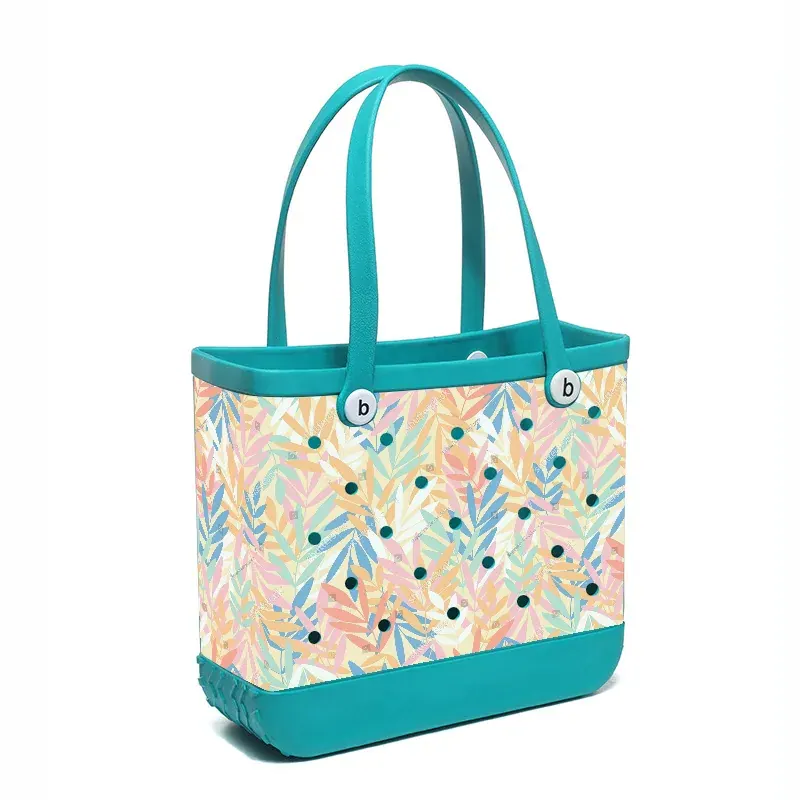
The two no entries deserve a word each. A handle root crack sits exactly where the whole carried load passes through the smallest section of the body, and a weld there has to be stronger than the original moulding to hold, which a hand weld will not be. A base worn through has lost material rather than cracked, and replacing lost material across a load-bearing surface is not achievable outside a tool. Both cases mean a new bag, and both are worth recognising early so the bag is retired rather than failing while loaded.
Why This Material Is Repairable at All
Ethylene-vinyl acetate is a thermoplastic, which is the only property a repair depends on. Heat it and the polymer chains gain enough mobility to flow; cool it and they lock again, and the cycle can be repeated without the material chemically changing in any meaningful way. That is what makes reshaping and welding possible, and it is why the same repair on a thermoset rubber or on a coated fabric would not work at all.
Two consequences follow for anyone attempting it. The repair material has to match: a filler rod of EVA welds to an EVA body, while a polyethylene or polypropylene rod will not fuse properly no matter how hot the air is, and the joint will part under the first load. And the temperatures are a window rather than a target: below about 160 degrees nothing fuses, above about 240 the material degrades and releases acetic acid, with the sharp smell that tells an operator they have gone too far. The working range sits between those two.
That is also why a sewn or welded fabric bag cannot be repaired the same way. A torn fabric panel needs a patch and adhesive, and the adhesive is the weakest part of the assembly; a moulded body needs heat and matching material, and the result is continuous with the body it is fixing. Repairs on this category are structurally better than repairs on any alternative construction, which is a real argument for the material rather than a minor one.
Heat Reshaping a Warped Body
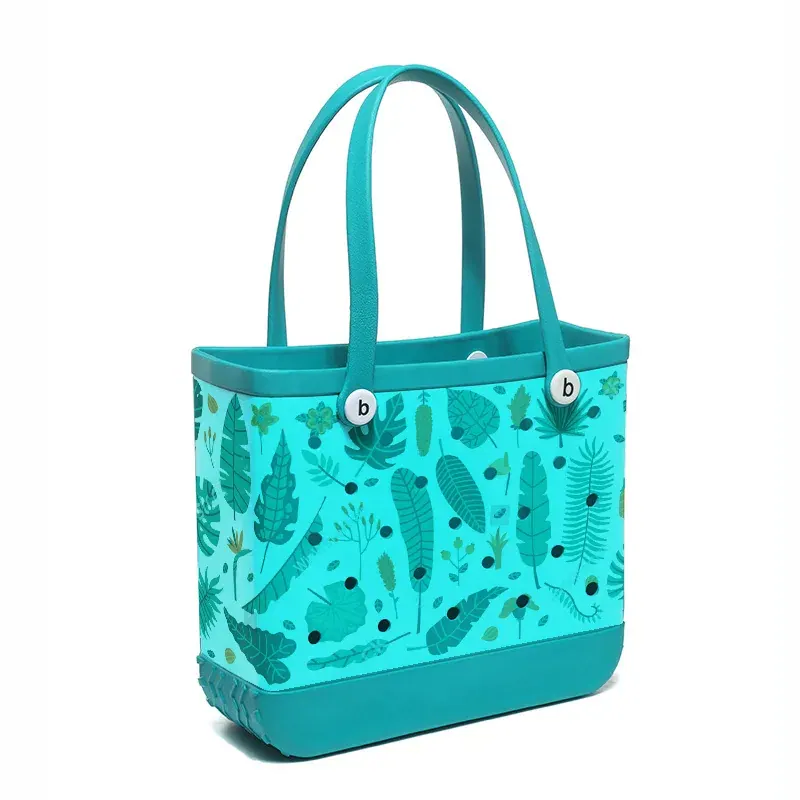
A warped body is the most common damage and the easiest to fix, and it almost always came from one place: a bag left in a hot car or in direct sun with a load in it. Above about 60 degrees the material softens enough to creep, and it sets in whatever shape it was left in. The repair reverses exactly that process, and a body reshaped this way usually recovers completely.
- Empty the body and let it return to room temperature before starting.
- Warm the affected area evenly with a heat gun on a low setting, held 15 to 20 centimetres away and kept moving.
- Stop at 70 to 90 degrees, which is the point where the material becomes pliable but not glossy. Do not let the surface shine.
- Press the area flat against a board or a mould of the correct shape, using a cloth so the surface is not marked.
- Hold it in shape and let it cool to room temperature, which takes 5 to 10 minutes.
- Check the result by setting the empty body on a level surface and looking for rocking.
Two cautions. Keep the gun moving, because a stationary heat source over one spot will scorch or melt through a 3.5 millimetre wall in seconds. And do not attempt this on a printed panel, since the heat that relaxes the body will also lift or distort a printed film. A body that has been reshaped twice in the same place has usually been stored badly twice, and the fix worth making is to the storage rather than to the bag.
Repairing a Crack
Cracks are welded rather than glued, and the technique is closer to welding plastic than to anything most people have done before. The crack is opened slightly into a V, filled with a rod of matching EVA melted into it with a hot air tool, and left to cool. Done well the result is a joint that is continuous with the surrounding material; done badly it is a bead sitting on the surface that parts on the first flex.
| Step | Detail | Why it matters |
|---|---|---|
| Identify the material | Confirm the body is EVA and source an EVA filler rod | Other polyolefins will not fuse to it |
| Open the crack | Cut a shallow V along its length, about 2 millimetres deep | Gives the filler somewhere to sit |
| Clean the area | Wipe with water, dry fully, no solvents | Solvents leave a film that blocks fusion |
| Pre-heat | Warm both faces to about 80 degrees | Prevents thermal shock and a cold joint |
| Weld | Melt the rod into the V at 180 to 220 degrees | The working range for fusion without degradation |
| Work from both faces | Weld the inside face first, then the outside | A single-sided weld carries only half the section |
| Cool under restraint | Hold flat and let it cool slowly | Rapid cooling leaves stress in the joint |
| Test | Flex the panel gently, then load the bag lightly | A good weld flexes with the wall rather than opening |
Where a crack sits decides whether the repair is worth attempting. A crack in a flat wall or at a perforation bridge welds well and lasts, because the section is uniform and the load across it is low. A crack at a handle root or at a corner where two load paths meet will reopen, because the stress concentration that caused it has not been removed by welding it. The honest advice is to weld the first kind and replace the bag for the second.
Handles and the Handle Root
Handles fail in two distinct ways and they have different answers. A handle that has torn away from the rim can often be welded back, provided there is enough sound material on both sides of the tear to key into, and the result is acceptable for light loads. A crack at the handle root, where the handle meets the wall, is a different failure: the section there carries the entire carried load through the smallest cross-section in the body, and no hand repair restores it.
The decision test is simple and worth applying before any work starts. Load the empty body with about 10 kilograms, lift it by the affected handle and look at the repair site. If the crack opens, the repair will not hold and the bag should be retired from carrying. If it does not open, weld it, then repeat the test with the load in place and check again after a week of use. A handle repair that passes both checks will usually last the remaining life of the body.
Straps and Hardware
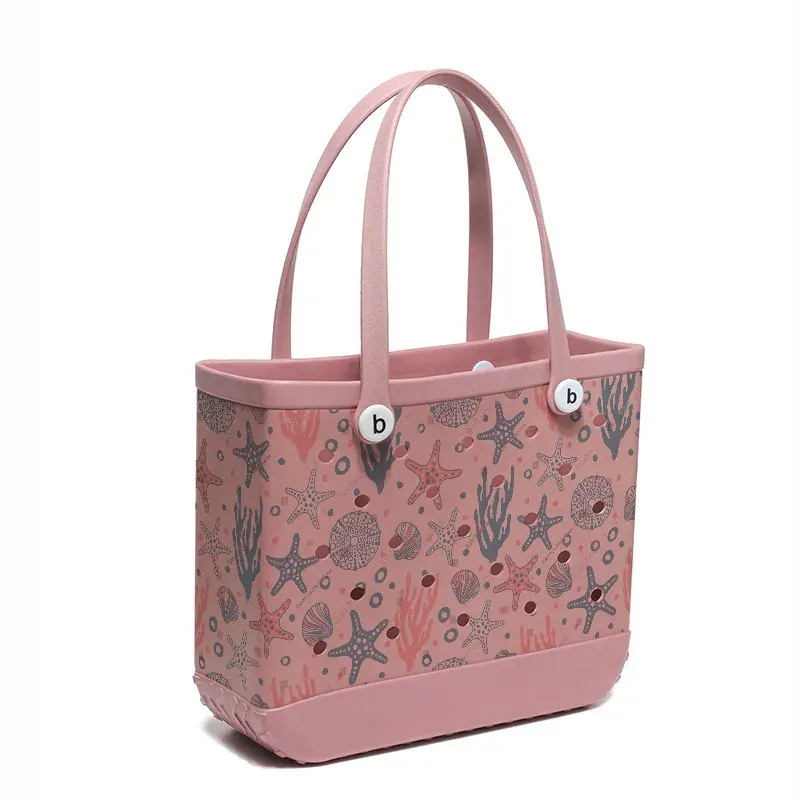
Straps and fittings are the most rewarding repair on this category and the one that saves the most bags, because hardware fails long before material does and a replacement restores the bag completely. A strap that has frayed, a clip that has cracked or a slider that has seized are all replaceable parts, and a body with five years of life left is worth twenty minutes and the cost of a strap.
| Failure | Replace or repair | Part needed | Note |
|---|---|---|---|
| Frayed webbing | Replace | A new strap of the same width | Match the width to the anchor, usually 25 to 50 millimetres |
| Cracked clip or buckle | Replace | A replacement clip | Cheapest repair available |
| Seized slider from salt | Replace | A corrosion-resistant slider | Specify moulded or stainless next time |
| Torn anchor on the body | Repair | A welded backing patch | If the anchor itself has torn out, retire the bag |
| Stretched strap | Replace | A new strap | Webbing that has stretched will not recover |
| Lost strap entirely | Replace | A universal strap with clips | Fits any body with an anchor loop |
Specifying the replacement correctly is what makes the repair last. Match the strap width to the anchor, since a 25 millimetre strap in a 45 millimetre anchor will twist and wear, and choose corrosion-resistant fittings if the bag sees salt water, because a plated fitting will seize again within a season and the repair will have been wasted. Strap width and hardware grade are covered in the EVA tote with straps guide, which is the right reference before ordering a replacement.
Worn Base and Perforation Bridges
Two kinds of wear arrive late in a bag's life and neither is repairable in the way a crack is, because both involve material that is gone rather than material that has separated. Knowing the difference saves time: a crack can be welded, wear cannot.
- Base worn through at the contact points: material is gone, no durable repair, retire the bag.
- Tread flattened from long storage: reshape with heat at 70 to 90 degrees, usually recovers.
- Perforation bridge cracked between two holes: weld from both faces before it propagates.
- A hole enlarged by a charm pulling at it: weld a backing patch across the bridge.
- Rim bead split: weld with a backing strip, and check whether the body has been overloaded.
- Surface gouged deeply: fill with a welded rod, sand flush, accept a cosmetic mark.
The one worth acting on quickly is the perforation bridge. A crack between two holes propagates along the line of holes with each flex, so a crack caught when it spans one bridge is a simple weld and the same crack left for a month spans five and becomes a structural failure. Any crack in a perforated panel should be welded the week it is noticed rather than at the end of the season.
Adhesives: What Works and What Does Not
Adhesives are the first thing most people reach for and the wrong answer for almost every failure on this material. EVA is a low surface energy polymer, which is why printing on it needs flame or corona treatment and why most glues peel off it. Welding is the right answer for a crack, and adhesive is the right answer only for attaching a backing patch to a welded repair.
| Adhesive | Bond to EVA | Use for | Avoid because |
|---|---|---|---|
| Hot air weld with EVA rod | Fuses, continuous joint | Cracks, splits, gouges | Needs a heat tool and matching rod |
| Contact adhesive | Moderate, if abraded | Bonding a backing patch | Flexible but creeps under sustained load |
| Two-part polyurethane | Moderate | A patch on a non-load-bearing area | Yellowing and a slow cure |
| Cyanoacrylate, superglue | Poor, brittle | Almost nothing | Bonds to the surface and snaps on flex |
| Silicone sealant | Poor on EVA | Nothing structural | Peels away within a season |
| Hot glue | Very poor | Nothing | Softens above about 50 degrees |
One safety point belongs here, because the adhesives that do work on this material are solvent based. Contact adhesive and polyurethane products should be used in a ventilated space, away from heat, and the container guidance followed rather than improvised. Safer product choice and chemical handling guidance is published by the United States Environmental Protection Agency, and physical test methods for the dimensional and load checks that confirm a repair has not distorted the body are published by ASTM International.
When to Replace Instead
Repairing is usually right and sometimes wrong, and the judgement is worth making on cost rather than on inclination. A strap costs a few dollars and saves a bag with years of life; a handle root weld costs an afternoon and produces a bag that will fail under load, which is worse than no bag because it fails at the moment it is trusted.
| Situation | Replace the bag | Why |
|---|---|---|
| Crack at a handle root | Yes | The load concentration remains, the weld will reopen |
| Base worn through | Yes | Lost material cannot be restored outside a tool |
| Anchor torn out of the body | Yes | The load path has failed, not the strap |
| Several cracks along one perforation line | Yes | The panel has lost its section |
| Failed strap or fitting | No, repair | A replaced strap restores the bag completely |
| Warped body | No, repair | Reshaping fully recovers it |
| Single crack in a flat wall | No, repair | Welds well and lasts |
| Cosmetic dulling and fading | No | Purely cosmetic |
The pattern is that hardware and cosmetic damage are always worth repairing and structural damage at a load path is not. Most bags that get thrown away are thrown away for the first kind, which is the wrong reason, and the ones that should be thrown away for the second kind are the ones that end up failing while somebody is carrying them. Routines that prevent both are covered in the EVA tote care guide, and preventing the damage is cheaper than any repair described here.
Preventing the Repairs Above
Every repair in this guide traces back to one of three causes, and all three are cheap to avoid at the point where they happen rather than after. Heat causes warping, and it comes from a bag left in a car boot or in direct summer sun with a load in it. Salt causes hardware failure, and it comes from a season of sea use without a fresh water rinse over the fittings. Overload causes handle root cracks, and it comes from carrying more than the body was specified for, usually once it has been fitted with a strap that makes a heavy load feel easier than it is.
The specification side is just as short. A wall thickness of 3.5 to 4.5 millimetres prevents most of the flex cracking that leads to a perforation bridge failure. A handle root of 5 to 8 millimetres with a generous radius prevents the one failure that cannot be repaired. And corrosion-resistant hardware costs 0.40 to 0.90 dollars per unit more and prevents the failure that retires most bags in this category. All three are decided before sampling, none of them costs much, and each removes a repair that is either expensive or impossible.
Programme Notes
Care routines sit in the EVA tote care guide, strap and hardware specification in the EVA tote with straps guide, and the body range in the injection-molded EVA tote guide. Buyers comparing constructions should read the EVA versus PVC comparison, since a welded PVC body repairs differently from a moulded one. QUANZHOU JUNYUAN BAGS has run waterproof bag programmes since 2014 with a founding team in this trade since 2004, at monthly output of 200,000 units verified by SGS, under BSCI and ISO 9001, with materials screened for REACH and California Prop 65 and every bulk shipment inspected at AQL 2.5 before release.
For a programme rather than a single bag, send the body size, strap and hardware specification and quantity to service@junyuanbags.com, and ask for corrosion-resistant fittings and a wall thickness of 3.5 to 4.5 millimetres on any body destined for daily beach use. Both are cheap at specification and both prevent the two failures that cannot be repaired.
People Also Ask
Can a cracked EVA tote be repaired?
Yes, if the crack is in a flat wall or at a perforation bridge. It is hot-air welded with an EVA filler rod at 180 to 220 degrees.
Can you reshape a warped EVA tote?
Yes. Warm the area evenly to 70 to 90 degrees, press it flat against a board and let it cool. Most warped bodies recover fully.
Is a cracked handle root repairable?
Not to last. The whole load passes through the smallest section there and a weld will reopen under load. Replace the bag.
What is the best adhesive for EVA?
None really. Welding with a matching EVA rod fuses the material; contact adhesive is only suitable for bonding a backing patch.
Can a shoulder strap be replaced?
Yes, and it is the most worthwhile repair. Match the width to the anchor and choose corrosion-resistant fittings near salt water.
When should an EVA tote be replaced?
When the base is worn through, an anchor has torn out, or a handle root has cracked. All three are load-path failures.
Frequently Asked Questions
Q1. Can an EVA tote be repaired at all?
Yes. EVA is a thermoplastic, so it can be reheated, reshaped and welded, and most damage short of a load-path failure is worth fixing.
Q2. How do you fix a crack in an EVA tote?
Open it into a shallow V, pre-heat both faces to about 80 degrees, and melt a matching EVA filler rod into it at 180 to 220 degrees.
Q3. What temperature reshapes a warped body?
70 to 90 degrees, applied evenly with a heat gun held 15 to 20 centimetres away and kept moving so the surface does not scorch.
Q4. Why will superglue not work?
It bonds to the surface of a low-energy polymer and the bond is brittle, so it snaps the first time the wall flexes.
Q5. Can a torn handle be welded back?
Sometimes, if there is sound material on both sides. Test it under a 10 kilogram load: if the crack opens, retire the bag.
Q6. Is a replacement strap worth buying?
Almost always. Hardware fails long before the material does, and a bag with five years of body life is worth the cost of a strap.
Q7. What width should a replacement strap be?
The same as the anchor, usually 25 to 50 millimetres. A narrower strap in a wide anchor will twist and wear.
Q8. Can a worn-through base be repaired?
No. Material has been lost rather than separated, and restoring it across a load-bearing surface is not achievable outside a tool.
Q9. Should I weld a crack between two holes?
Yes, and quickly. A crack spanning one perforation bridge is a simple weld; left a month it spans five and becomes structural.
Q10. What damage is purely cosmetic?
Surface dulling, even fading and light abrasion. None of them affect the performance of the body.