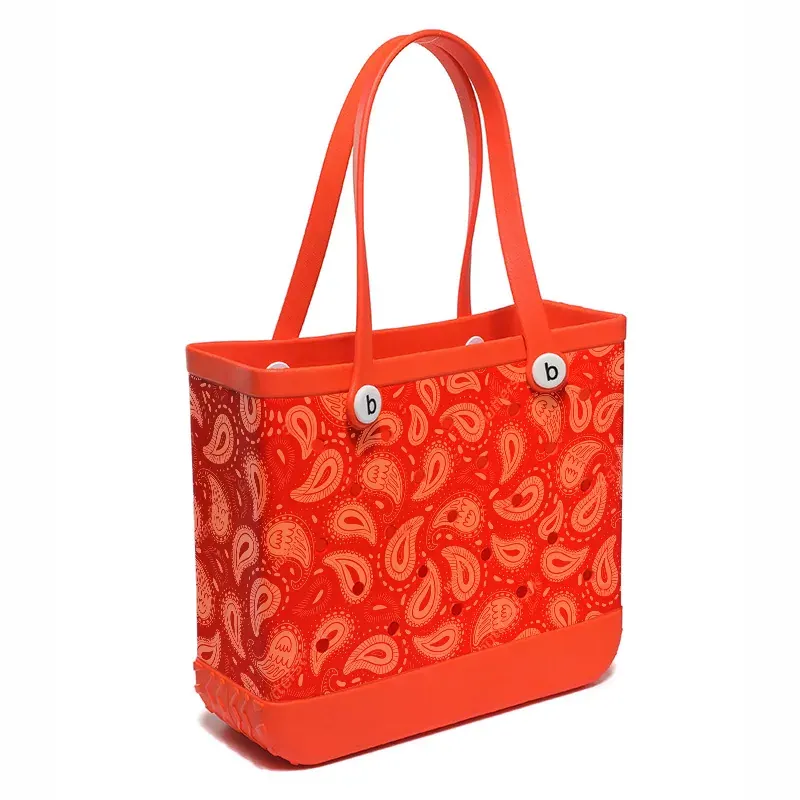
A perforated EVA tote earns its place outside summer because three of its properties are season-independent: it drains, it stands up on a wet floor, and it rinses clean in about a minute. Gym and swim kit, market shopping, garden carry, kids sports and gift packaging all use those three properties, and a medium 18 litre body covers most of them at 1.15 kilograms. Cold weather is the one real constraint, and it is favourable: the compound stays flexible to minus 30 degrees, so a bag left in a cold car boot overnight is usable the next morning.
Why Off-Season Use Decides Whether the Purchase Was Worth It
A beach bag used eight weekends a year is an expensive per-use purchase no matter how cheap it was. The same body used for a gym bag, a market bag and a school-run bag on top of summer is used 200 to 300 times a year, and the cost per use drops by roughly a factor of ten. That arithmetic is the strongest argument for the format and it has nothing to do with beaches.
The properties that make it work off-season are the same ones that make it work on sand, which is the point worth understanding. A draining body handles a wet swimsuit in February exactly as it handles one in July. A rigid body stands up on a wet supermarket car park as well as on sand. And a closed-cell body cannot hold water, so it cannot develop the damp smell that ends the life of a fabric gym bag within a year.
| Season | Typical uses | Trips per month | Why the format suits it |
|---|---|---|---|
| Summer | Beach, pool, boat | 8 to 16 | Drains sand, stands on sand |
| Autumn | Market, garden, school run | 12 to 20 | Stands on wet ground, rinses clean |
| Winter | Gym, swim, ski boot carry | 12 to 24 | Stays flexible, holds wet kit |
| Spring | Garden, sports, gifting | 12 to 20 | Carries muddy kit, hoses clean |
| Year round | Car boot utility bag | Every week | Nothing leaks, nothing smells |
Gym, Swim and the Wet Kit Problem
The gym case is the strongest off-season use and it is almost entirely about wet kit. A fabric gym bag holding a damp towel and a swimsuit from 7am to 6pm will smell within a fortnight, because the lining holds moisture against organic fibre at room temperature for eleven hours. A perforated body cannot do that: there is no lining to hold moisture and no organic material to support growth, so the same damp towel sits in a ventilated box and dries instead of fermenting.
| Gym item | Volume | Wet or dry | Where it goes | Note |
|---|---|---|---|---|
| Towel | 0.75 to 1.5 litres | Wet after use | Base layer | Quick-dry halves the volume |
| Swimsuit and goggles | 0.5 litres | Wet | Mesh pouch | Rinse them with the bag |
| Trainers | 3 to 4 litres | Dry, often muddy | Base, sole down | The bulkiest gym item by far |
| Wash bag | 0.5 litres | Dry | Top layer | Decant to 100 ml bottles |
| Water bottle, 1 litre | 1 litre | Dry | Upright against a wall | Needs 24 centimetres height |
| Kit and spare top | 1 litre | Dry | Middle layer | Roll rather than fold |
Trainers are the item that decides gym sizing and it is not close. A pair of trainers occupies 3 to 4 litres and is the reason a 10 litre body is marginal for gym use and an 18 litre body is comfortable. Anyone carrying trainers, a towel and a wash bag needs the medium size, and the small one is only right for a swim-only trip.
Shared gym equipment and damp kit is a hygiene topic rather than a style one, and guidance on hand hygiene and on shared items is published by the United States Centers for Disease Control and Prevention. The practical translation is the same as for any wet kit: dry it between uses rather than storing it damp, and a ventilated body does that without anyone having to remember to do it.
Market, Grocery and the Upright Bottle Problem
A large perforated body is a better market bag than a fabric tote for one specific reason: bottles stay upright. A soft bag lets a two litre bottle roll and lie down, which is how milk ends up across the boot of a car. A rigid body with a flat base keeps bottles vertical, stops them rolling, and drains if one leaks rather than holding a puddle.
- Load bottles first, upright against opposite walls, so weight is balanced across the base.
- Put heavy tins and jars at the base and soft produce on top, which is the opposite of how a soft bag is packed.
- Use a liner or a tray for anything that can leak, because the base drains and will not hold a spill.
- Hang the bag from a trolley hook by one handle if the load is heavy, which it is designed to tolerate.
- Wipe the base after any leak and hose it at home, which takes under a minute.
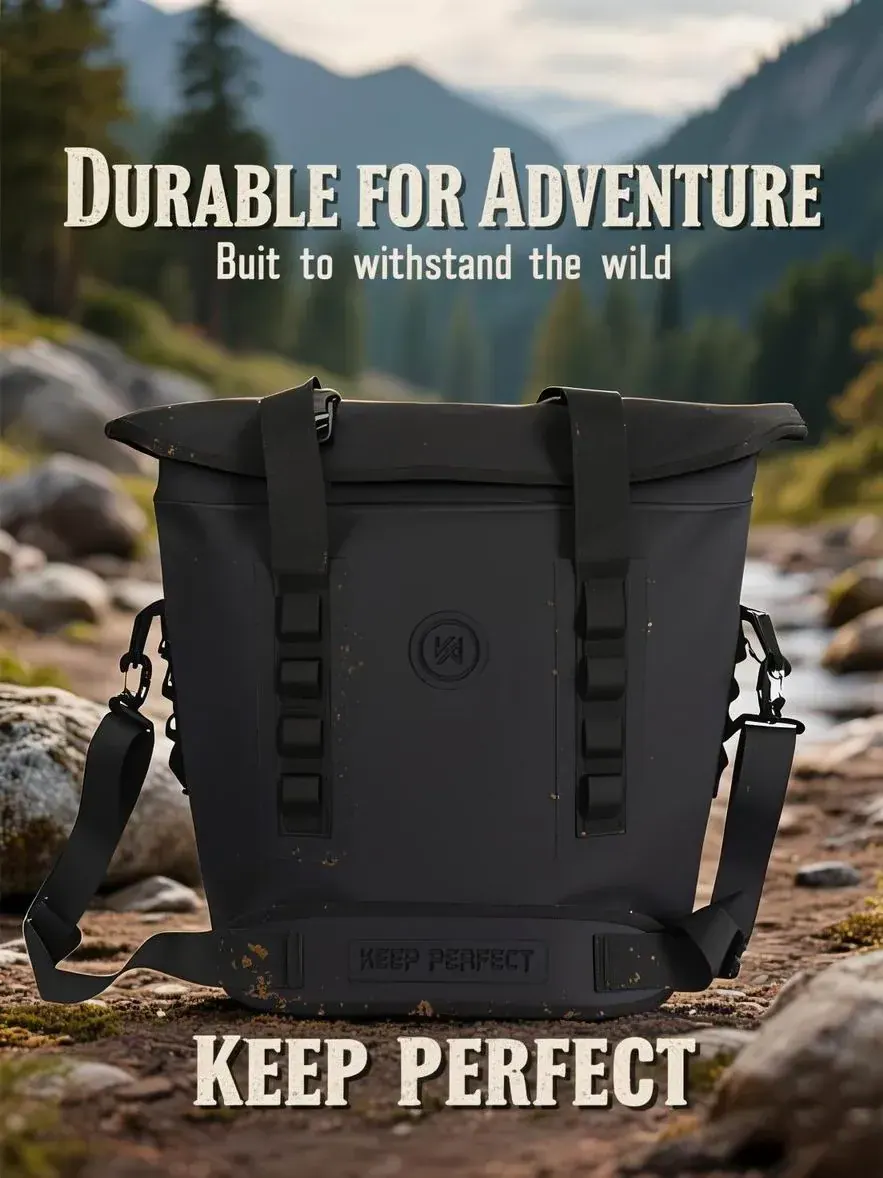
The one honest limitation is that a perforated body offers no insulation. A load with frozen or chilled items needs an insulated bag for the cold items, and the perforated body is the right companion for the dry goods rather than a replacement for a cooler. Carrying both is the pattern that works for a big shop.
Garden, Hardware and the Messy Loads
Garden carry is the use that surprises people, because it is the one where the ability to hose a bag out is worth most. A body used for wet compost, muddy tools, prunings and a trowel can be rinsed at an outdoor tap in ninety seconds and be clean enough to take into a house. A fabric bag used for the same job takes a wash cycle and never fully recovers.
| Garden load | Why a rigid body helps | Volume | Rinse time |
|---|---|---|---|
| Compost and pots | Stands upright while filling | 8 to 20 litres | 90 seconds |
| Muddy hand tools | Nothing to trap soil | 2 to 4 litres | 60 seconds |
| Prunings and weeds | Drains as green waste settles | 10 to 18 litres | 60 seconds |
| Watering can and feed | Leaks drain away | 5 to 10 litres | 30 seconds |
| Harvest from the plot | Produce is not crushed | 6 to 14 litres | 60 seconds |
The standing-up property is the one that matters here and it is worth stating explicitly. Filling a soft bag with compost is a two-person job; filling a rigid body is a one-person job because it stays open and upright while it is loaded. That is a small thing that saves real time every weekend from March to October.
Gifting, Hampers and the Presentation Load
A rigid perforated body is a better gift container than a gift bag or a hamper basket, because it is itself a useful object and it holds its shape under an awkward load. A bottle, a jar, a soft item and a card in a gift bag slump; the same contents in a moulded body stand up and look deliberate.
| Gift occasion | Contents | Body size | Why it works |
|---|---|---|---|
| Housewarming | Bottle, tea towel, plant, candle | 18 litres | Stands upright, nothing rolls |
| Baby shower | Blanket, toys, wipes | 32 litres | Bulky soft load stays contained |
| Hostess gift | Bottle, chocolates, napkins | 10 litres | Proportional to the gift |
| Wedding or hen party | Robe, slippers, toiletries | 18 litres | Doubles as a spa bag afterwards |
| Teacher or end of term | Mug, treats, gift card | 10 litres | Reusable from the first day |
The reusable point is the one that makes the gift land. A hamper basket is decorative and then becomes storage clutter; a perforated body becomes the recipient's beach bag, market bag or gym bag, and it is used for years. At 22 to 34 dollars for a medium body plus the contents, it is also cheaper than a filled hamper of equivalent quality.
Kids Sports, School Runs and the Wet Wednesday
Parents of school-age children will recognise the problem: a Wednesday afternoon produces a soaking kit, muddy boots and a drink bottle, all of which have to be carried home and none of which should touch anything else. A draining body handles it because the wet items drain and dry on the walk home rather than soaking into a bag lining.
- Keep muddy boots sole down at the base, which is the only position that keeps soil off everything else.
- Give each child a mesh pouch for socks and a drink, which halves the number of lost items per term.
- Rinse the bag at home on the same day, not on Sunday, because wet grass silage smells within 48 hours.
- Use a kids body for a child who can carry their own kit, which starts working from about age five.
- Hang the bag upside down overnight after a wet session and it is dry by morning.
The same routine covers swimming lessons, which are the most demanding version of this problem: everything is wet, everything is needed at a specific moment, and the packing is done in a hurry. A kids body per child plus one parent body in the medium size is the setup that works, and it is the same pattern that works on a beach in August.
Cold Weather: What Actually Changes
Cold is the one seasonal variable worth checking, and the answer is favourable. The compound stays flexible to about minus 30 degrees, so a bag left in a car boot overnight in a hard frost is as usable the next morning as one kept indoors. The perforations do not ice up in any meaningful way, because there is nothing in the body to freeze, and snow or sleet simply drains through.
| Winter condition | Effect on the body | Effect on contents | What to do |
|---|---|---|---|
| Overnight frost at minus 10 | Stiffens slightly, no damage | Anything wet freezes | Empty the bag before leaving it |
| Snow and sleet | Drains through the holes | Contents get wet | Use a dry pouch for electronics |
| Wet boots and kit | Drains and ventilates | Nothing soaks into a lining | Rinse at home the same day |
| Cold car boot storage | No change | Not applicable | Safe to store in a vehicle |
| Grit and road salt | Rinses off cleanly | Not applicable | Hose the base after a car park |
The row that needs action is the first one. The body is unaffected by frost, but anything wet inside it will freeze, and a frozen towel inside a bag in a car boot is an unpleasant surprise the next morning. Emptying the bag before it is left anywhere cold is the whole of the winter routine.
Safer cleaning product choices for a bag that sees grit, salt and mud are published by the United States Environmental Protection Agency, and for this material the answer is the same as in summer: mild detergent, warm water and a hose. Solvent cleaners are the one thing to avoid in any season, because the damage they cause is permanent.
Off-Season Value and How to Store Between Uses
The arithmetic is worth doing once, because it is the argument for buying the bag at all. A medium body at 26 dollars used eight weekends a summer costs about 1.60 dollars per use over three years. The same bag used for gym, market, garden and school runs 200 times a year costs about 0.04 dollars per use over the same period.
| Use pattern | Uses per year | Cost per use over three years | Verdict |
|---|---|---|---|
| Summer beach only | 16 to 32 | 0.80 to 1.60 dollars | Poor value |
| Summer plus pool | 50 to 90 | 0.29 to 0.52 dollars | Acceptable |
| Year round, gym and market | 200 to 300 | 0.03 to 0.04 dollars | Excellent value |
| Year round, family of four | 250 to 400 | 0.02 to 0.03 dollars | Best value |
| Commercial or resort duty | 500 to 900 | 0.01 to 0.03 dollars | Operational asset |
Storage between uses is short and it is the same in every season. Store the body dry, open and out of direct sun, hung by both handles if there is a suitable hook or stood upside down if there is not. Remove any liner and pouches, empty them completely, and do not stack anything heavy inside, because sustained load on a moulded base over several months can creep the shape.
One further point closes the off-season case. A bag that is used weekly rather than seasonally gets inspected weekly, which means the two failures that matter, a cracking handle root and a worn base rail, are noticed early. A bag that appears from a cupboard in June is inspected once a year, and by then a crack that started in March has usually finished.
A Year-Round Rotation, Month by Month
The practical way to get a bag used 200 times a year is to give it a fixed place and a fixed job rather than leaving it to be chosen. The rotation below is what a household with one medium and one large body actually does, and it requires no decisions once it is set up.
| Period | Primary job | Body | Trips per month |
|---|---|---|---|
| January to February | Gym, swim and school run | Medium, 18 litres | 16 to 24 |
| March to April | Garden, market, sports sidelines | Large, 32 litres | 12 to 20 |
| May to June | Sports, beach at weekends | Both | 16 to 24 |
| July to August | Beach, pool, boat | Both, plus kids bodies | 20 to 30 |
| September to October | Market, garden, school run | Large, 32 litres | 12 to 20 |
| November to December | Gifting, gym, wet weather kit | Medium, 18 litres | 12 to 20 |
The pattern that makes it work is that the medium body lives in the house and the large one lives in the car boot. The medium handles anything wet that comes indoors, and the large one is always available for an unplanned shop, a garden load or a sports kit. Neither is ever put away, which is the whole point: a bag in a cupboard is used eight times a year and a bag in a boot is used two hundred times.
One caution follows from keeping a body in a vehicle permanently: check what is inside it. A bag that lives in a car accumulates items, and a forgotten water bottle in a hot boot is the most common source of a bag that needs cleaning. Empty it once a week, at the same time as the car is tidied, and the habit costs nothing.
Sports Sidelines and the Wet Saturday
A Saturday on a winter sports sideline is the hardest test an off-season bag faces and the clearest demonstration of why the format works. The load is a pair of muddy boots, a wet kit, a drink, a foldable chair and sometimes a blanket, and it is carried across a wet field to a car park that is itself a puddle. A fabric bag in that duty cycle is damp by 10am, muddy by noon and smelling by the following weekend.
| Sideline item | State | Where it goes | Note |
|---|---|---|---|
| Muddy boots | Wet and dirty | Base, sole down | The only position that keeps soil off everything |
| Wet kit | Wet | Mesh pouch or liner | Rinse it the same day, not on Sunday |
| Foldable chair | Dry, often wet underneath | Against a wall | Needs internal height, check before buying |
| Blanket | Dry or damp | Top layer | Roll it rather than folding |
| Drink and snacks | Dry | Top layer | The only items that must stay dry |
The same-day rinse is the habit that makes it sustainable, and it takes ninety seconds at an outdoor tap or under a hose. Mud left to dry inside a bag comes off as dust that spreads to everything else; mud rinsed while still wet is gone in one pass. Doing it on Saturday evening rather than Sunday morning is the entire difference between a bag that is ready for next weekend and one that needs recovering.
One further point applies to any bag used weekly through winter: it will be inspected weekly, which is a benefit rather than a chore. A handle root that is starting to crack shows up in a bag that is handled four times a week, and catching it early means the bag goes out of service before it fails at an inconvenient moment rather than during one.
Programme Notes
The category background sits in the injection-molded EVA tote guide, sports and gym loads are covered in EVA tote for gym and sports, and family carry is set out in EVA tote for moms and kids. QUANZHOU JUNYUAN BAGS has run waterproof bag programmes since 2014 with a founding team in this trade since 2004, and develops year-round sizes alongside beach and resort ranges.
Monthly output runs at 200,000 units verified by SGS, operations follow BSCI and ISO 9001, materials are screened for REACH and California Prop 65, and every bulk shipment is inspected at AQL 2.5 before release. Programme minimums begin at 500 pieces per design and colour, with sampling at 6 to 10 working days and bulk at 35 to 50 days from approved sample and deposit, shipped FOB Xiamen or DDP to more than 100 countries. Send your target size, use case and quantity to service@junyuanbags.com.
People Also Ask
Can an EVA tote be used in winter?
Yes. The compound stays flexible to about minus 30 degrees, so it is usable straight from a cold car boot.
Is a perforated tote good as a gym bag?
It is excellent for wet kit, because it cannot hold moisture and dries a damp towel instead of letting it ferment.
What size is best for gym use?
Eighteen litres. A pair of trainers takes 3 to 4 litres, which makes a 10 litre body marginal.
Can it be used as a market or grocery bag?
Yes. Bottles stay upright, heavy items sit at the base and a leak drains out rather than pooling.
Does it work as a gift container?
Well. It holds its shape under an awkward load and becomes a bag the recipient uses for years.
Does a tote need any special winter care?
Barely. Empty anything wet before leaving it in the cold, and hose off road salt and grit. The body itself is unaffected by frost.
Frequently Asked Questions
Q1. Can a perforated EVA tote be used in winter?
Yes. The compound stays flexible to about minus 30 degrees, so a bag left in a cold car boot is usable the next morning.
Q2. Is it a good gym bag?
It is an excellent one for wet kit, because it cannot hold moisture against organic material and a damp towel dries rather than smelling.
Q3. What size is best for the gym?
Eighteen litres. Trainers alone take 3 to 4 litres, so a 10 litre body is marginal unless the trip is swim-only.
Q4. Does it work for market shopping?
Yes. Bottles stay upright, heavy items sit at the base, and any leak drains out instead of pooling at the bottom.
Q5. Does it offer insulation for chilled items?
No. Use an insulated bag for cold items and the perforated body for dry goods, and carry both on a big shop.
Q6. Can it carry garden and messy loads?
Yes, and it is the best use for it. Wet compost and muddy tools rinse out at an outdoor tap in ninety seconds.
Q7. Is it suitable as a gift container?
Yes. It holds its shape under an awkward load and is itself a useful object, so the recipient keeps using it.
Q8. What happens in hard frost?
The body stiffens slightly and is undamaged. Anything wet inside will freeze, so empty it before leaving it anywhere cold.
Q9. How do I clean off grit and road salt?
Hose the base with fresh water and use mild detergent. Road salt rinses off cleanly and does not attack the material.
Q10. How should it be stored between uses?
Dry, open and out of direct sun, hung by both handles or stood upside down, with no heavy item stacked inside for months.