Rigidity buys three things and costs three others. A hard shell resists crush loads of 1.2-2.5 kN where a soft 30 litre body deforms above about 0.3 kN, keeps full usable volume because it never slumps, and stacks three or four deep in a shop or a truck. It costs roughly 2.4-3.8 kg of empty weight against 1.1-1.9 kg for the soft equivalent, it cannot be compressed when empty so it ships at full volume from the outset, and it transmits impact rather than absorbing it. Choose hard for boat decks, stacking, and reel protection under load; choose soft for carrying distance, mixed transport, and anything dropped.
What Rigidity Actually Buys
The case for a hard shell is straightforward and genuine, provided it is stated in measurable terms rather than as general toughness. Three benefits follow from holding a shape under load, and all three matter in specific fishing situations rather than universally.
| Benefit | Hard shell | Soft body | When it matters |
|---|---|---|---|
| Crush resistance before deformation | 1.2-2.5 kN | 0.1-0.3 kN | Under seats, stacked gear, kneeling |
| Usable share of published volume | 92-98 percent | 75-85 percent | Every trip, always |
| Stacking height when full | Three to four units | One or two, unstably | Retail shelves and truck beds |
| Protection for rigid contents | Excellent for reels and cases | Depends on packing | Cameras, reels, electronics |
| Standing on open level ground | Stable, always | Slumps when half full | Bank and pier use |
The second row is the one most buyers underestimate and it is worth expanding. A soft body quoted at 30 litres genuinely holds 30 litres when new and empty, but once half full it slumps, closes around the contents, and loses access efficiency as well as volume. A hard shell keeps its opening square, so an angler can actually reach to the bottom of it, and this usability difference persists for the life of the product rather than diminishing with wear.
What Rigidity Costs
The costs are equally real and they are mostly felt before the angler reaches the water, which is why they get less attention than the benefits. Weight, shipping volume, and impact transmission are the three that matter.
| Cost | Hard shell | Soft body | Effect |
|---|---|---|---|
| Empty weight, 30 L body | 2.4-3.8 kg | 1.1-1.9 kg | Felt on every metre walked |
| Compressible when empty | No | 25-40 percent reduction | Affects storage and air freight |
| Sea freight volume per 500 units | 18-24 cubic metres | 11-16 cubic metres | Landed cost difference of real note |
| Impact transmission to contents | High | Low, it absorbs locally | Relevant for fragile items |
| Behaviour when dropped empty | Can crack at below freezing | Unaffected | Cold-weather deck drops |
The freight row deserves expansion because it is invisible on a quotation and appears only on the logistics invoice. A rigid body cannot be nested, packed flat, or compressed, so a 40 foot container carries roughly 500-680 hard units against 950-1,300 soft ones. At typical container rates that adds several dollars to the landed cost of every unit, which for a mid-priced bag can exceed the entire unit price difference. Another consequence follows from the same line of thinking: programmes aiming at a landed cost target rather than a unit price target should model the freight first, because the two can point in opposite directions and the rigid option rarely wins that comparison once volumetric cost is included.
Structural and impact behaviour should be verified against published methods rather than asserted, and the drop and impact series maintained by ASTM International allows a drop height, a temperature, and an acceptance criterion to be written into a specification. Conditioning samples cold before impact testing is particularly important, since several rigid polymers lose most of their impact strength below about minus 10 degrees Celsius.
Choosing Between Hard Shell Materials
Hard shell is not one material but four, and they behave very differently despite looking similar on a shelf. Specifying by family rather than by the word hard avoids most disappointment.
| Material | Wall and weight | Temperature behaviour | Typical use |
|---|---|---|---|
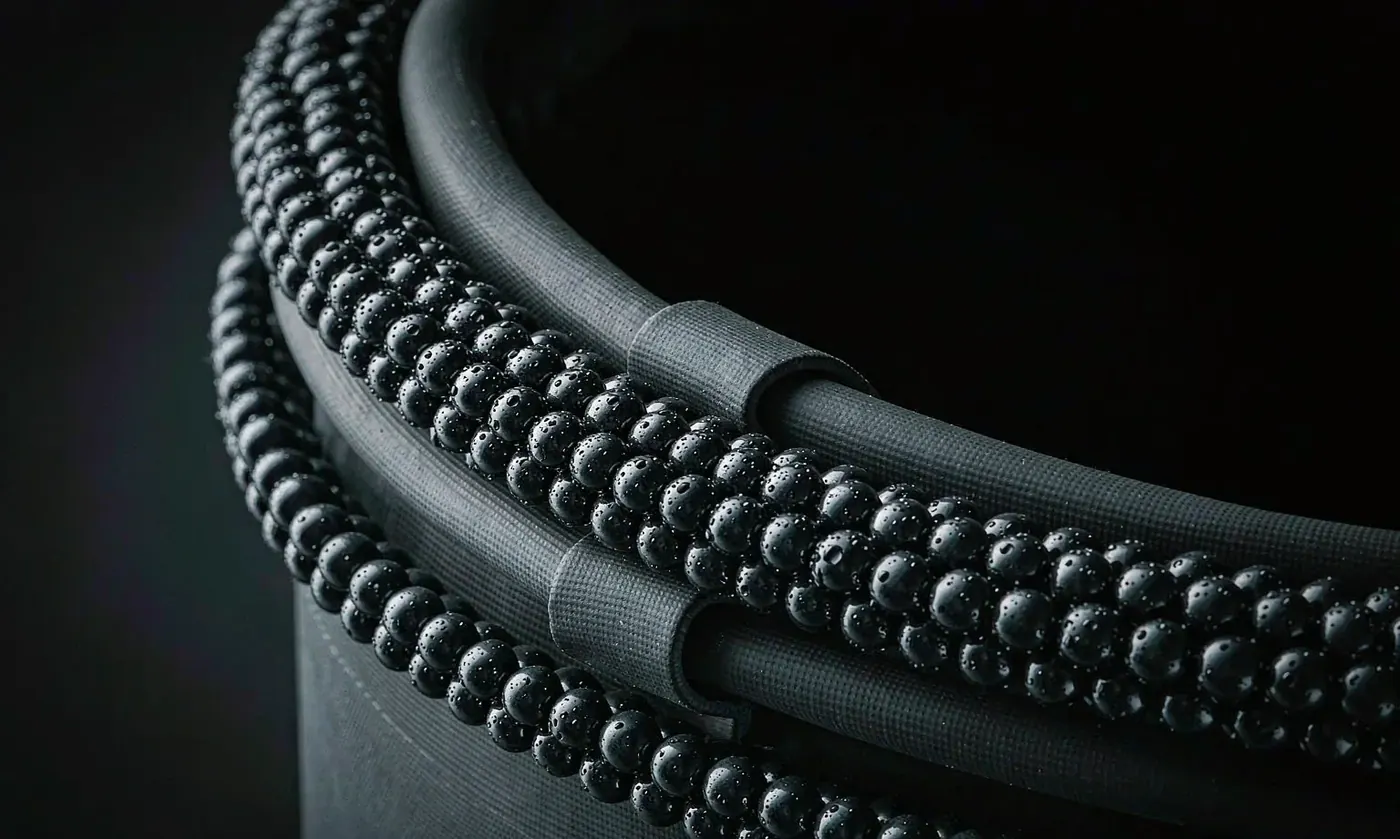
| Injection moulded EVA | 3-6 mm wall, 1.8-2.9 kg | Flexible to minus 30 degrees Celsius | Moulded base and full shell |
| Rotationally moulded PE | 3-5 mm wall, 2.4-3.6 kg | Good low temperature behaviour | Large boxes and crates |
| ABS sheet formed shell | 2-3 mm wall, 1.9-2.8 kg | Brittle below minus 10 degrees Celsius | Structured light cases |
| Polypropylene sheet | 2-4 mm wall, 1.6-2.4 kg | Poor impact when frozen | Budget cases, indoor use |
Injection moulded EVA is the best all-round choice for fishing specifically, because it stays flexible at low temperature and returns to shape after impact rather than cracking. It is also the most expensive wall material of the four, typically adding 3.20-6.80 USD per unit over a formed polypropylene shell, and that premium is worth paying anywhere the product may see freezing conditions.
The distinction between a moulded base and a full shell deserves a specific mention, because it is often the sensible answer to this entire comparison. A soft body with a moulded EVA base panel gives perhaps 70 percent of the practical benefits of a rigid design at 1.20-2.60 USD in added cost and 300-600 g in added weight, while keeping the carrying advantage of fabric everywhere above the floor.
Protecting Contents: Two Different Threats
Protection is where the comparison becomes genuinely interesting rather than a simple list of pros and cons, because hard and soft bodies defend against opposite threats. Understanding which threat applies determines the answer.
| Threat | Hard shell result | Soft body result | Better |
|---|---|---|---|
| Static crush under other gear | Resists to 1.2-2.5 kN | Deforms above 0.3 kN | Hard |
| Drop onto rocks from 1 m | Shell cracks, contents often safe | Shell safe, contents absorb shock | Depends on contents |
| Sharp hooks pressing outward | Punctures through thin walls | Fabric resists penetration better | Soft |
| Long-term stacking in storage | Unaffected | Creases and deforms permanently | Hard |
| Vibration against a boat deck | Rattles, transmits noise | Damps everything | Soft |
| Reel or camera under load | Excellent protection | Good only if packed tightly | Hard |
Note that the table splits roughly evenly, and that is why generic advice fails here. A photographer carrying a camera body and two lenses in a bag that will be stacked under other equipment wants rigidity without argument. An angler carrying soft bags of terminal tackle across a boulder field wants the opposite, and would rather the bag absorbed the impact than have it transmitted into trays that then crack.
Activity Decides Most of It
Rather than debating properties abstractly, mapping each format against how people actually fish produces clearer answers and makes better retail guidance.
| Activity | Better format | Reason |
|---|---|---|
| Offshore boat fishing | Hard shell | Stacked gear, constant spray, rigid contents |
| Surf fishing from beaches | Soft body | Long carry over soft ground matters more |
| Kayak fishing | Hard shell or crate | Bilge water, fixed storage position |
| Bank fishing with long walks | Soft body | Weight difference of 1.3-1.9 kg dominates |
| Fly travel with reels | Hard shell | Reel protection under airline loading |
| Ice fishing | Moulded EVA base or hard shell | Sets on ice and snow, stays clean |
| Mixed family use | Soft body | Compresses in the car, doubles as other luggage |
The kayak row carries a qualifier worth stating. A rigid body fits a kayak beautifully because it occupies a fixed footprint and resists bilge water, but it must be leashed like anything else, and no item of fishing equipment substitutes for an approved personal flotation device. Rigid bodies also float reasonably well when empty and sealed, which helps recovery after a capsize but should never be relied on to keep a person afloat.
Failure Modes and Repairability
Both formats fail, and their failures differ in a way that affects total cost of ownership more than purchase price does. This is the section that most buyers wish they had read before choosing.
| Failure | Hard shell | Soft body | Repair |
|---|---|---|---|
| Corner crack after a cold drop | Common below freezing | Not applicable | Hard is usually unrepairable |
| Lid warpage under heat | Possible above 60 degrees Celsius | No effect | Terminal for hard |
| Abrasion through the outer skin | Shows as scratches only | Progresses to holes | Soft needs a patch |
| Hinge or latch failure | Frequent after 300-500 cycles | Not applicable | Replaceable part |
| Seam or joint opening | At the joint between wall and base | Anywhere along a seam | Both repairable early |
| Typical service life at weekly use | Four to eight years | Three to five years | Favours hard |
The paradox worth noting is that hard shells last longer yet fail more suddenly. A soft body wears visibly for months before becoming unusable, giving warning and allowing a patch. A moulded shell looks nearly new until the day a corner separates, at which point the entire unit is scrap. Programmes should therefore carry a higher spare allowance for rigid designs even though they last longer on average.
Packaging and transit resilience referenced in this section sits within the standards series maintained by ISO, and requiring transit-tested packaging for rigid units is sensible practice because most corner cracks originate in distribution rather than in use.
Retail Display and Shelf Behaviour
How each format behaves on a shelf influences sell-through more than most product literature admits, and this is worth raising early because it is expensive to fix later. Rigid and soft bodies present differently, photograph differently, and tend to attract different kinds of returns.
| Retail factor | Hard shell | Soft body |
|---|---|---|
| Standing unaided on a shelf | Yes, always | Slumps unless stuffed or framed |
| Photographs clearly for listings | Very clear silhouette | Needs styling to avoid looking limp |
| Hangtag and fixture options | Limited, usually base only | Webbing loops and hangtags anywhere |
| Shoppers judging size from a photo | Accurate | Often looks smaller than it is |
| Return rate for shape complaints | Low | Moderate, mostly about expectations |
| Packaging volume per unit shipped | Full size, needs its own carton | Compresses or ships nested |
The credible lesson for anyone listing either format is to photograph a soft body packed rather than empty, because an unstuffed fabric bag photographs smaller and more shapeless than it performs. A simple polyfill insert costing around 0.35 USD per unit, sold with the bag and used for photography as well, solves this and doubles as packing material.
Noise, Condensation and Daily Irritations
Two complaints appear repeatedly in reviews and neither shows up in any technical comparison, yet both influence whether a customer buys the same format again. They are small, cheap to address, and worth specifying against.
- A rigid body transmits rattle: trays loose inside a hard shell amplify against the wall, whereas fabric damps the same movement almost completely.
- Internal lining of 2-3 mm foam on the shell walls removes most rattle for about 0.90-1.60 USD and is rarely fitted by default.
- A sealed rigid shell holds condensation after a temperature change, so anything wet stored inside stays wet for days rather than hours.
- Venting a rigid shell with two small mesh panels prevents most condensation without compromising spray resistance in any meaningful way.
- A soft body breathes slowly through its fabric and seams, which is why damp gear stored in it tends to dry rather than sour.
The condensation point has a practical consequence that catches buyers out. A rigid body used on a warm day and then left closed in a cold vehicle overnight collects condensation on its inner walls by morning, and anything stored inside absorbs it. Two mesh vents of around 80 square centimetres each, placed high on opposite walls, cost about 0.70 USD and remove nearly all of it.
Development Cost and Tooling
This is where the two parts of the business separate most sharply, because a rigid programme carries capital cost that a soft one simply does not have. The decision therefore depends heavily on committed volume.
| Item | Hard shell programme | Soft body programme |
|---|---|---|
| Tooling | 3,500-25,000 USD depending on process | Cutting patterns only |
| Tooling time | 15-40 days | None |
| Viable above roughly | 800-1,200 units per design | 500 units per design and colour |
| Design change cost | High, tooling must be altered | Low, pattern revision only |
| Sample build | 6-10 working days plus tooling | 6-10 working days |
| Bulk production | 35-50 days | 35-50 days from approved sample and deposit |
The viable row is worth honouring honestly. Below roughly 800 units per design, tooling amortisation adds 3-8 USD per unit and erases most of the benefit, so a rigid body only makes commercial sense where volumes are committed and the design is stable for several seasons. Buyers planning frequent seasonal artwork changes should stay with fabric for exactly this reason.
The Decision, Compressed
All of the above reduces to four questions that can be answered in a couple of minutes, and answering them honestly prevents most expensive mistakes.
| Answer this | Choose | Reason |
|---|---|---|
| Will it be stacked or kneeled on? | Hard shell | Resists 1.2-2.5 kN of crush |
| Does it carry reels or camera gear? | Hard shell | Rigid contents need rigid protection |
| Is it carried more than 500 m at a time? | Soft body | Save 1.3-1.9 kg of empty weight |
| Will the design stay unchanged for two seasons? | Hard shell | Tooling needs volume to amortise |
| Are you shipping intercontinentally? | Soft body | About 40 percent more units per container |
| Is a moulded base enough? | Soft body with EVA base | 70 percent of benefit at 1.20-2.60 USD |
| Will it be used on ice or below freezing? | Moulded EVA construction | Other rigid materials embrittle |
The sixth row deserves to be repeated because it resolves most real cases. Programmes frequently ask for a hard shell when what they need is a stable wet base and protection from the ground, and a soft body with a moulded EVA floor delivers that for a fraction of the cost and weight. Reserve full rigidity for situations involving stacking or crush loads, which is where it genuinely cannot be replaced.
How Either Programme Is Run
Process differences between the two are largely about tooling and inspection rather than anything philosophical, and both can be brought to market within the same overall calendar.
| Stage | Hard shell | Soft body |
|---|---|---|
| MOQ | 500 pcs per design and colour | 500 pcs per design and colour |
| Critical path item | Tooling, 15-40 days | Material sourcing, 3-6 days |
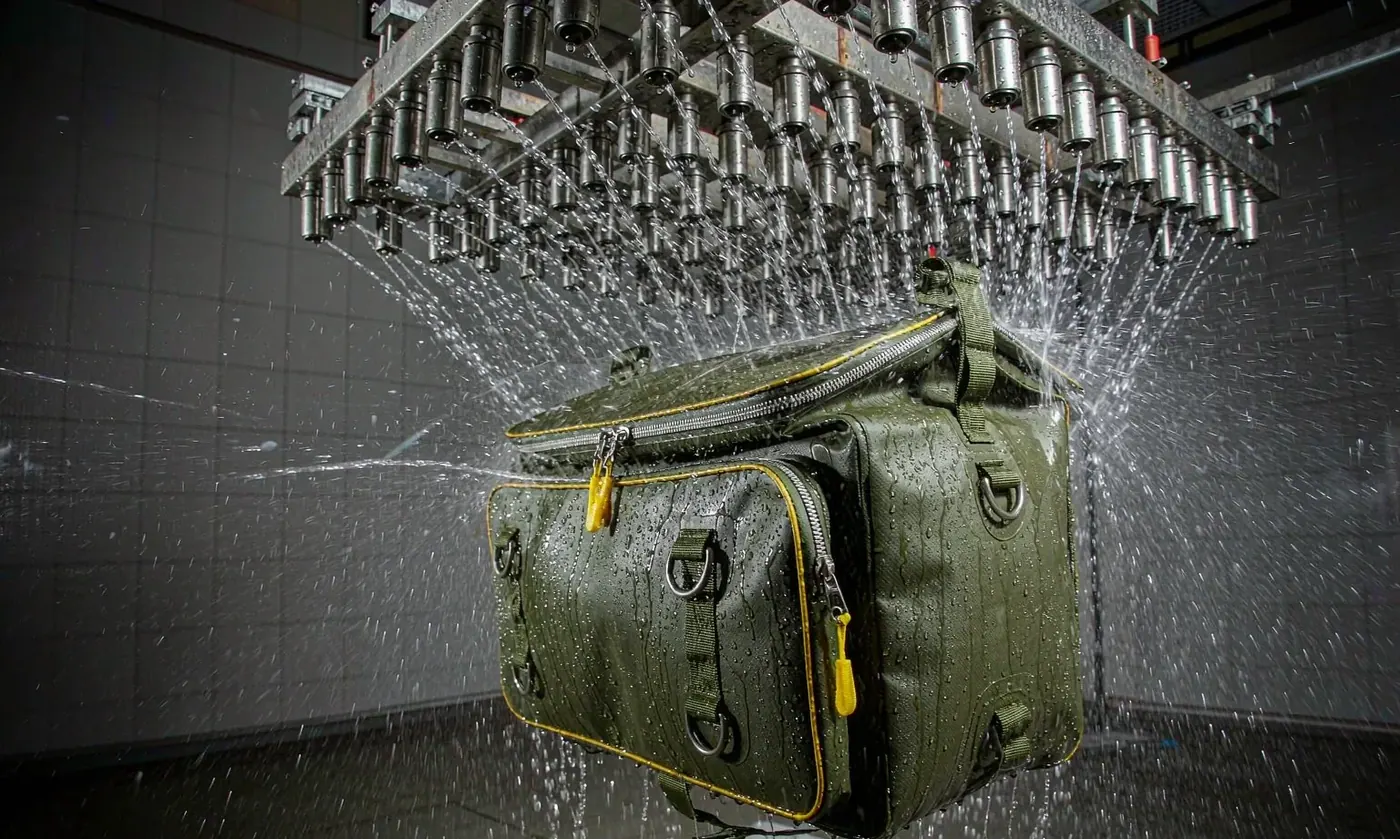
| Inspection protocol | AQL 2.5 plus drop and crush tests | AQL 2.5 plus seam and immersion tests |
| Spare parts provisioning | Latches and hinges recommended | Buckles and webbing only |
| Shipping configuration | Assembled, full volume | Flat packed or nested |
QUANZHOU JUNYUAN BAGS has developed waterproof bag programmes since 2014, with the founding team working in the trade since 2004. Monthly output of 200,000 units is verified by SGS, and BSCI and ISO 9001 systems structure the workflow. Materials are screened for REACH and California Prop 65, and every bulk order is inspected at AQL 2.5 before shipment.
A rigidity question can be emailed to service@junyuanbags.com with expected yearly volume, lowest service temperature, contents to be protected, and landed cost target. FOB Xiamen or DDP service to more than 100 countries follows an approved sample. Useful further reading includes the soft tackle backpack versus hard box comparison, the fishing bag materials overview, and the moulded EVA base guide.
People Also Ask
Is a hard shell fishing bag better than a soft one?
It depends on the dominant threat. Hard shells resist 1.2-2.5 kN of crush and stack three deep; soft bodies weigh 1.3-1.9 kg less and absorb impact instead of transmitting it.
How much more does a hard shell fishing bag weigh?
About 1.3-1.9 kg more for the same 30 litre capacity, comparing 2.4-3.8 kg against 1.1-1.9 kg empty. That difference is felt most on long carries to the water.
Do hard shell fishing bags crack in cold weather?
Formed ABS and polypropylene can below about minus 10 degrees Celsius. Injection moulded EVA stays flexible to minus 30 degrees Celsius and is the right choice for freezing conditions.
Is a moulded EVA base enough instead of a full shell?
Usually. It delivers roughly 70 percent of the practical benefit for 1.20-2.60 USD and 300-600 g, keeping fabric where it matters and structure where it counts.
How much does hard shell tooling cost?
Between 3,500 and 25,000 USD depending on process, taking 15-40 days. It amortises sensibly above roughly 800-1,200 units per design.
Which protects reels and camera gear better?
A rigid shell, provided the crush risk is real rather than theoretical. Soft bodies absorb drops well but deform above 0.3 kN when stacked or kneeled on.
Frequently Asked Questions
Q1. What is the difference between a hard shell and a soft fishing bag?
A hard shell uses injection moulded EVA, rotationally moulded polyethylene, or formed sheet to hold its shape under load, resisting 1.2-2.5 kN of crush. A soft body uses coated fabric and relies on its contents and structure for shape.
Q2. How much weight does a hard shell add?
Roughly 1.3-1.9 kg on a 30 litre body. Typical empty weights are 2.4-3.8 kg for a rigid unit against 1.1-1.9 kg for fabric.
Q3. Do hard shell bags crack?
They can, particularly formed ABS or polypropylene dropped below about minus 10 degrees Celsius. Injection moulded EVA resists impact far better and stays flexible to minus 30 degrees Celsius.
Q4. Which resists being stacked better?
The hard shell, which stacks three or four units deep and hardly notices. A soft body deforms above roughly 0.3 kN and permanently creases under long-term stacking.
Q5. Is a moulded EVA base a good compromise?
Yes, and usually the best answer. It provides about 70 percent of the practical benefit of rigidity for 1.20-2.60 USD and 300-600 g, keeping the weight advantage of fabric above the floor.
Q6. How much usable volume does each really give?
Hard bodies deliver 92-98 percent of their published volume in practice, while soft bodies deliver 75-85 percent once they slump around their contents.
Q7. Which is better for the boat?
A rigid body, because it sits square, resists bilge water, takes bolted attachments properly, and keeps its opening usable in constant spray.
Q8. Which is better for long walks to the water?
Fabric, decisively. The 1.3-1.9 kg difference on a 30 litre body is the largest single comfort factor on any carry beyond about 500 m.
Q9. How does shipping cost compare?
Significantly. A 40 foot container holds roughly 500-680 rigid units against 950-1,300 soft ones, because soft bodies compress 25-40 percent and nested cargo stacks far better.
Q10. What tooling is needed for a rigid body?
Between 3,500 and 25,000 USD depending on the process chosen, plus 15-40 days of tooling time before sampling can begin.
Q11. What is the MOQ and lead time?
MOQ is 500 pcs per design and colour. Samples take 6-10 working days, tooling adds 15-40 days for rigid designs, and bulk production runs 35-50 days from approved sample and deposit.