Surf packing is dominated by one number that freshwater anglers never think about: ten kilograms. Soft sand raises the energy cost of walking by roughly a factor of two compared with firm ground, so a twelve kilogram bag three kilometres down a beach is equivalent to carrying far more than its weight suggests, and every extra kilogram above ten costs real fishing time at the far end. Split the thirty-litre load into four zones, keep terminal tackle low and against the spine, put water and pliers within a five second reach, and seal every tray against the two hundred to four hundred grams of sand a session will otherwise deposit inside the bag. Do that and a dawn-to-midday session carries comfortably.
The Three Constraints Nobody Warns You About
Surf fishing looks like bank fishing with worse footing, and it is not. Distance is normally one to three kilometres of soft sand each way, which turns every packing decision into a weight one. There is nowhere to put the bag down that is not wet, sandy, or about to be wet. And the combination of salt spray, sand, and ultraviolet removes about half the service life of anything carried.
Those constraints interact badly with the way most people pack, which is to bring every lure owned because the drive was long. A useful test is to weigh the bag fully loaded before leaving the car and again on return; the difference is usually under four hundred grams, meaning ninety percent of the weight carried was never used. That figure alone changes most packing habits permanently.
| Constraint | Typical number | Packing consequence |
|---|---|---|
| Walking distance on sand | 1 to 3 km each way | Load ceiling around ten kilograms |
| Extra energy cost of soft sand | About two times firm ground | Every kilogram matters twice |
| Sand deposited per session | 200 to 400 g inside an unsealed bag | Sealed trays and mesh pockets |
| Safe distance from the wash | Ten metres minimum from the waterline | One spot to put everything down |
| Session length | Four to eight hours | Two to three litres of water per person |
The Weight Ceiling and Where It Comes From
Ten kilograms is not arbitrary. It is roughly the point above which a loaded pack on soft sand begins overload the ankle stabilisers, and the practical symptom is not back pain but a shortened stride and twisted ankles on the return leg when the angler is tired. Allowing for water at one kilogram per litre and tackle at about one and a half kilograms per tray gives a very tight budget, which is why surf packing is mostly about subtraction.
Build the list by weight and cut from the bottom. Two trays of tackle, a soft cooler insert with two litres of water, a small first aid and tool roll, one rod, one sand spike, and personal items already reach about nine kilograms. Adding a third tray, a second rod, and a kilogram of spare weights takes it to thirteen, which is the difference between arriving ready to fish and arriving needing twenty minutes to recover.
| Item | Weight | Essential | Typical excess |
|---|---|---|---|
| Two loaded tackle trays | 2.8 to 3.6 kg | Yes | Third and fourth tray, plus 1.8 kg |
| Water, two litres | 2.0 kg | Yes | Additional bottles, plus 1.0 kg |
| Soft cooler insert | 0.9 to 1.4 kg | Depends on session length | Dropping it saves the whole figure |
| Rod and reel carried assembled | 0.4 to 0.7 kg | Yes | Second pre-rigged rod, plus 0.5 kg |
| Sand spike or rod rest | 0.5 to 1.2 kg | Usually | Full tripod rest, plus 1.5 kg |
| Tools, pliers, knife | 0.5 to 0.8 kg | Yes | Duplicate tools, plus 0.4 kg |
| First aid, sunscreen, licence | 0.3 to 0.5 kg | Yes | Full pharmacy rarely needed |
Four Zones in Thirty Litres
Layout follows access frequency rather than item category. Zone one is anything needed while wading or casting: pliers, clippers, a spare leader, and water, all reachable without taking the bag off. Zone two is the current session tray, sitting closest to the opening. Zone three is backup tackle and heavier items, packed low and against the spine. Zone four is dry storage for anything that must not get wet, in a sealed liner.
The rule that keeps this stable is weight position rather than item type: lead and weights always go lowest and within about eighty millimetres of the spine, because that is the only place high-density content does not create a rotational pull. Anything accessed more than ten times per session goes in zone one regardless of what it is, including things that would normally live in a tackle tray.
| Zone | Contents | Access target | Position |
|---|---|---|---|
| One, immediate | Pliers, clippers, water, leader spool | Under 5 seconds, one hand | Side pockets and shoulder points |
| Two, session tray | 18 to 24 items for today pattern | Under 20 seconds | Closest slot to the opening |
| Three, reserve | Weights, spare spool, backup lures | Once or twice per trip | Lowest, against the spine |
| Four, dry | Phone, keys, licence, medication, spare layer | Rarely and urgently | Sealed liner inside the lid pocket |
When the Same Bag Goes Afloat Too
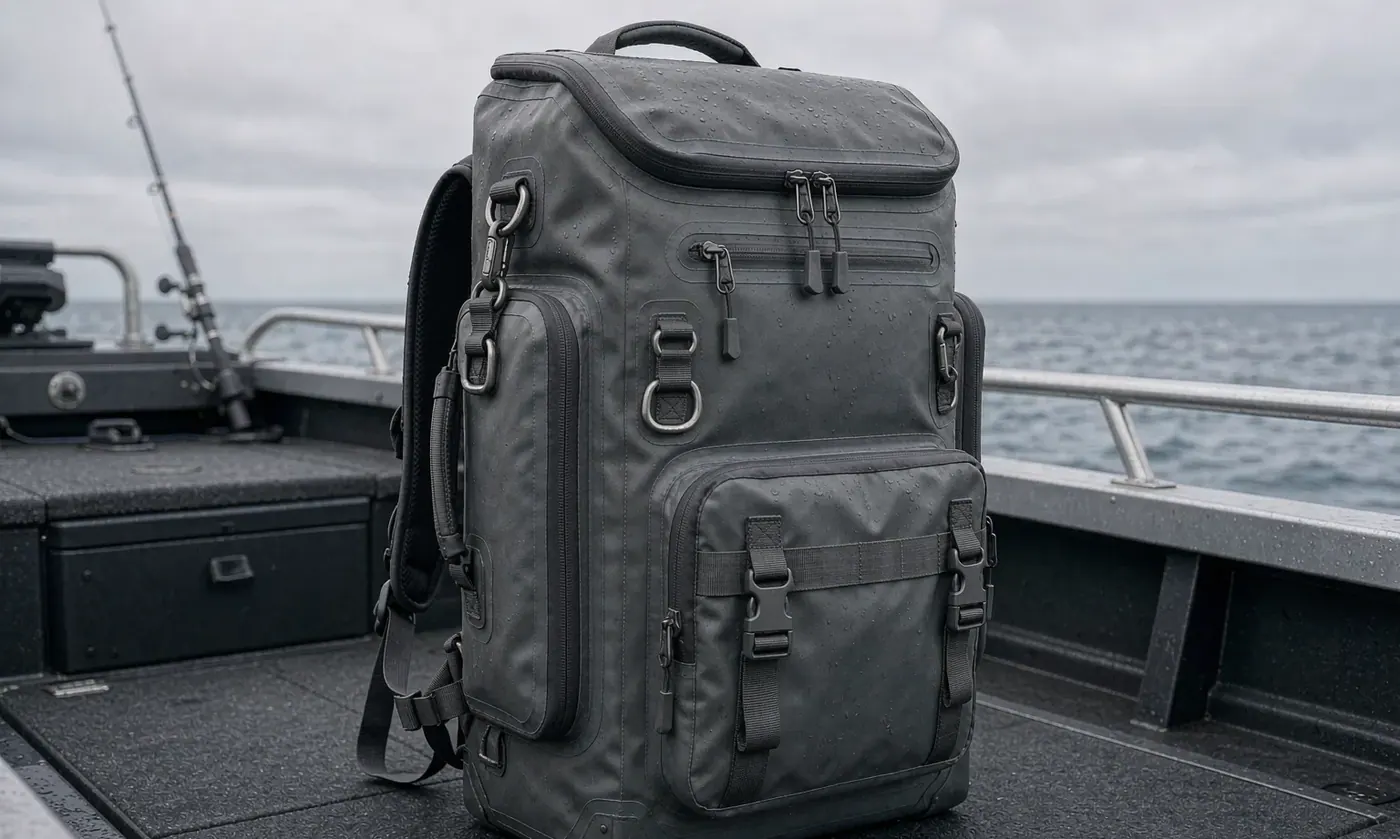
Plenty of surf anglers also fish from a boat or a jetty, and one bag frequently serves all three. The packing difference is mainly about where the bag sits: on a deck it stays put and can be opened repeatedly, whereas on a beach it must survive being set down in the wash zone and picked up coated in sand. Packing for dual use means choosing sealed rather than mesh pockets, since a mesh bottom pocket drains beautifully and admits sand identically well.
The compromise that works is internal rather than external. Keep the outer layout durable and sealed, then use removable internal organisers for scenario-specific items: a rig wallet in a liner for boat days, an extra water bladder for long walks. Swapping one organiser rather than repacking the whole bag keeps both configurations honest.
One Load or Several: Backpack, Sling, Cart
The choice between carrying modes is decided by distance and by how often hands are needed. A backpack handles the approach best and keeps both hands free for a rod and a spike. A sling pack has almost no capacity for water and is better as a secondary rig for short sessions close to the car. A wheeled cart looks obvious for sand and works only on firm, damp sand above the tide line, where a narrow wheel sinks immediately.
The hybrid that most experienced surf anglers end up with is a backpack for the approach and nothing else, with the heavy bulk transported once and left. Where the beach allows it, staging the load saves more energy than any equipment change: pack everything once, walk it out, and accept that the return walk happens after the fishing rather than before it. Options are compared in the rolling versus backpack comparison.
Rods, Spikes, and Other Long Things
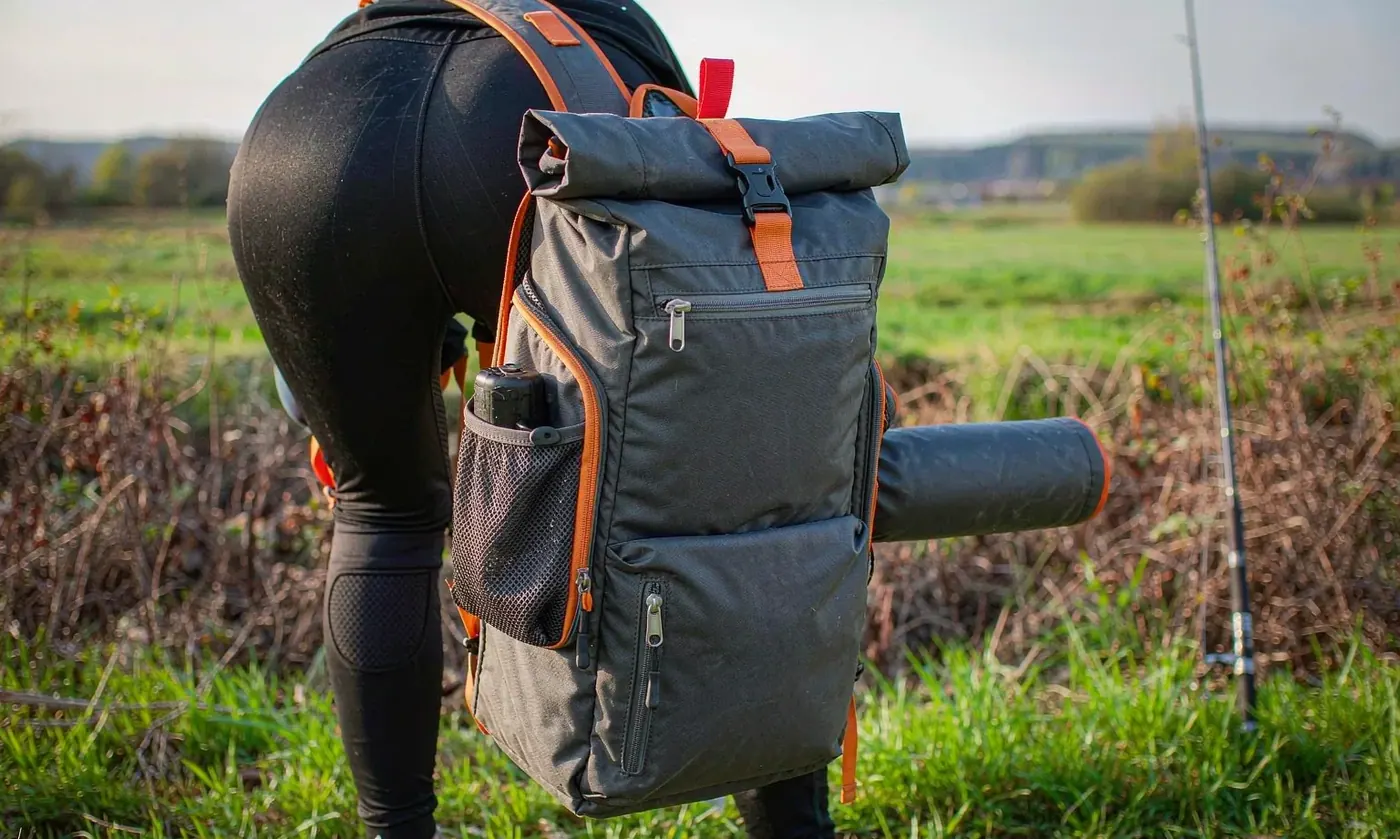
Long items are the reason surf packing differs most from any other kind. A surf rod runs 2.4 to 3.0 metres, which is beyond what any general fishing bag carries well, and the reel in particular must not bear load while being carried. Carry assembled rods either in the hand or in a holder that supports the blank at two points at least 300 millimetres apart, and never hang a rod by the reel alone.
Sand spikes deserve their own sleeve, preferably external and drained, because they return from every session wet and abrasive. Putting a spike inside the bag introduces grit directly into the tray area, which is where the most expensive items live. A simple open-bottom external sleeve with a six millimetre drain costs under two dollars and removes the problem. The specialist surf fishing bag range handles all of this natively for anyone not wanting to improvise.
Water, Sun, and Salt: The Human Load
Part of what makes surf fishing hard is that part of the load exists to keep the angler functional. Two litres minimum for a four-hour session, three for anything longer or hotter than thirty degrees, plus electrolytes if sweating heavily. That is two to three kilograms before any tackle is added, which is why water often gets under-packed and why sessions get cut short.
| Human factor | Target | Failure if ignored |
|---|---|---|
| Water volume | 2 L for four hours, 3 L in heat | Dehydration cuts reaction and balance |
| Electrolytes | One sachet per two litres above 28 degrees | Cramps on the return walk |
| Sun protection | Reapply every two hours | Reflected ultraviolet from sand doubles exposure |
| Foot protection | Reef shoes or boots you can swim in | Cuts and burns end the session |
| Spare dry layer | One lightweight top in a sealed liner | Wind chill after dark, even in summer |
Reflected ultraviolet off wet sand roughly doubles exposure compared with grass, and that is the detail most packing lists miss. Sunscreen of thirty or higher, a brim rather than a cap alone, and sunglasses with a wrap fit belong in zone one, alongside anything else the angler will want within five seconds of arriving.
Keeping Sand Out of Everything
Sand is the specific enemy, not water. Two hundred to four hundred grams of it enters an unsealed bag per session and it does three kinds of damage: it abrades coatings, it packs into closures until they jam, and it carries salt into every crevice where the two work together. Keeping it out is mostly about closure choice and about never putting the bag down open.
- Use tray boxes rather than soft pouches for lures; a 3600 size tray with a positive latch keeps all but a trace out.
- Close every zipper before setting the bag down, including empty pockets, since an open pocket collects sand in seconds.
- Choose laminated or mesh-free pocket bottoms for anything that will sit near the ground.
- Rinse the outside of the bag before opening it anywhere clean, since sand on the shell transfers instantly to hands and contents.
- Brush rather than wipe; wiping drives grit across the coating and abrades it.
- Empty the bag fully at home and vacuum pocket seams, where grit compacts into the stitching.
The disposal question matters too. Sand left in a bag goes into a car boot, then a garage, then a washing machine. A thirty second shake-out and brush down at the car, done every time, prevents roughly ninety percent of that migration.
The Twenty-Minute Pre-Launch Sequence
- Check the forecast and tide before packing anything; the plan decides the load, not the other way round.
- Pack zone three first, heaviest against the spine and low, because everything else is arranged around it.
- Add the session tray last so it sits at the opening.
- Fill water and place one bottle in a shoulder-accessible pocket, one deeper.
- Check every closure is fully closed, then weigh the bag. Above ten kilograms, remove something now rather than carry it.
- Fit rods and spike last, outside the bag, and leash anything whose loss ends the trip.
Doing this the evening before rather than at four in the morning is worth more than any gear upgrade. Everything about surf fishing improves when the departure happens calmly, and nothing improves when the decision about what to bring is made half asleep in the dark.
Walking With the Load
Technique converts. Shorten the stride on soft sand, keep the load high and close so the centre of mass stays over the feet, and use a rest break every eight hundred to one thousand metres even when feeling fine. Walking in the firm damp strip near the water reduces effort noticeably, provided the wash is respected and the route checked for soft patches.
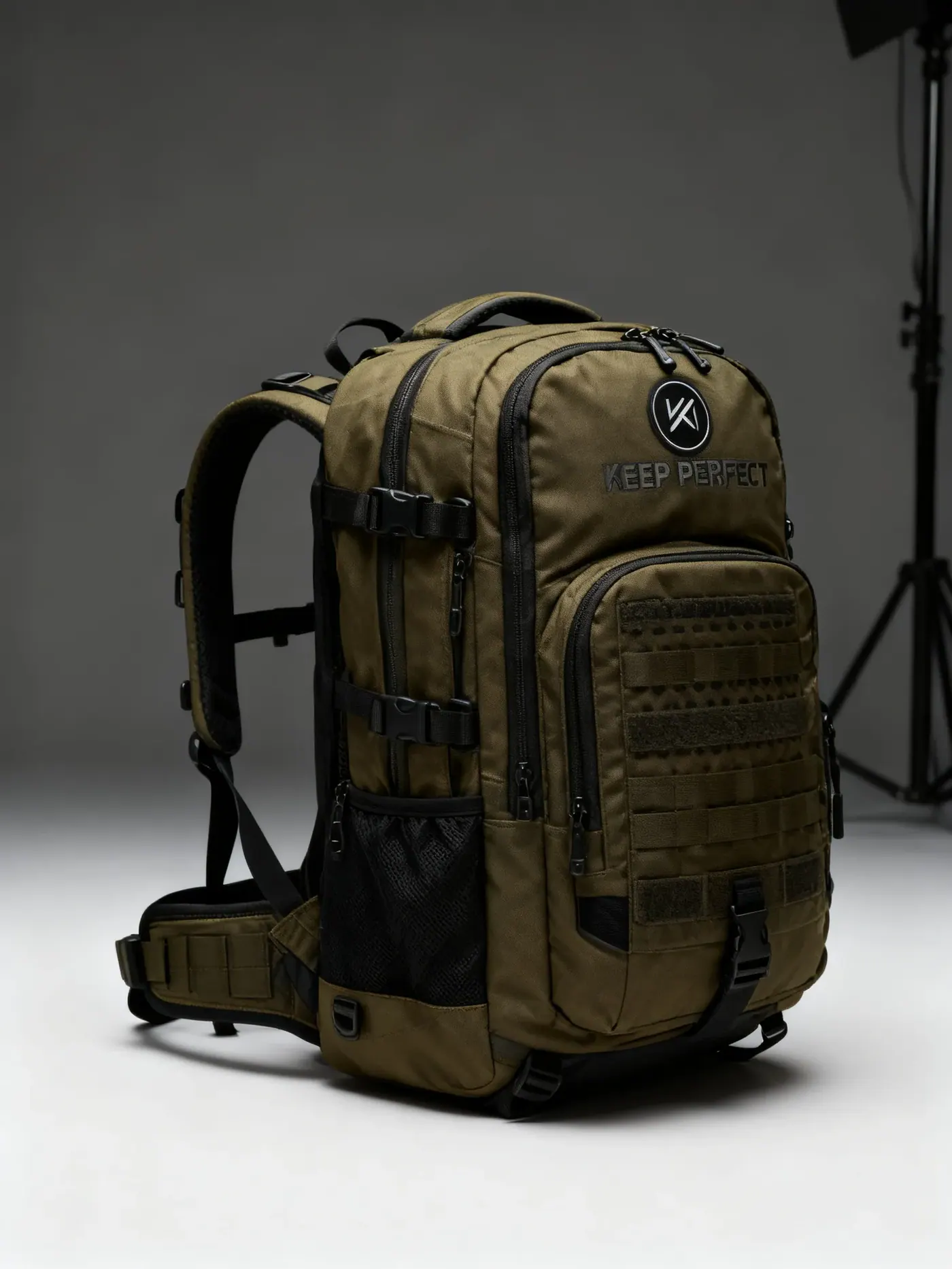
Surfcasting-specific packs should be adjusted differently from hiking packs for the same load. Setting straps so the bag sits about thirty millimetres higher gives better clearance over soft ground and better visibility of the ground underfoot, at the cost of slightly more shoulder load. For a mainly sand route, that trade is worth taking.
Reading Tide and Swell Into the Load
One hour with a tide table changes what has to be carried far more than any equipment decision. An incoming tide compresses the usable beach and forces a move partway through a session, while a falling tide opens ground and often concentrates fish in the gutters it leaves behind. Deciding where to fish, and therefore for how long, is what actually sets the water and food load.
| Condition | Plan | Load effect |
|---|---|---|
| Incoming tide, two hours before high | Short session near access, plan the move | Minimum water, no reserve needed |
| Falling tide through mid session | Long session, walking further as water drops | Extra water and sun protection |
| Large swell above two metres | Fish from the back of the beach | No wading gear, keep everything higher |
| Flat calm and clear water | Long session, may move far along the beach | Full water load, lighter clothing |
| Wind above thirty kilometres per hour | Sheltered spot, expect spray | Spare layer in a sealed liner |
After the Session: Before the Drive Home
The single highest-value habit in surf fishing is dealing with the bag in the car park rather than at home. Rinse the outside with fresh water while every closure is shut, brush off accessible sand, then open everything at home, tip out grit, and hang to dry with pockets open. Doing it immediately prevents most of the corrosion and nearly all of the mildew.
Keep the shell and the contents separate in this process. Rods, spikes, pliers, and reel get their own rinse; trays come out separately and dry open. Anything that went into the bag wet needs air on all faces within two hours or it will grow something by morning. Full cleaning detail is set out in the saltwater cleaning walkthrough.
Mistakes That Cost Session Time
- Carrying three or four trays instead of two, adding two kilograms that is never used.
- Putting water deep in the bag, which guarantees dehydration because stopping to unpack is inconvenient.
- Setting the bag down with pockets open inside the splash zone.
- Bringing duplicate tools because they were left in from last trip.
- Ignoring the tide plan and having to relocate the whole load mid-session.
- Packing the night before nothing; everything discovered missing at four in the morning.
Almost all of these are the same mistake expressed differently, which is packing for imagined scenarios instead of the planned one. Write the session down first, pack to it, and everything gets lighter and faster.
Choosing a Bag Built for This
A surf-specific bag differs from a general tackle pack in four specific ways worth paying for: sealed rather than mesh panels, external drained sleeves for long items, pockets reachable without removing the pack, and a welded rather than stitched base that survives being set down wet and sandy. All four cost a few dollars at specification and none can be added afterwards.
| Specification point | Target | Why it matters on sand |
|---|---|---|
| External drained sleeves | Two, open bottom | Carries rod butts and spikes without importing grit |
| Base construction | Welded or moulded | Set-down point is always wet and abrasive |
| Side access to water | Two side pockets, 1 L each | Hydration stops being inconvenient |
| Tray sealing | Positive latch boxes, not pouches | Keeps 200 to 400 g of sand out |
| Closure coverage | Flap over every external zipper | Sand packs into an uncovered coil in one session |
QUANZHOU JUNYUAN BAGS has supported waterproof bag programmes since 2014, with founders active in this sector since 2004. Capacity is 200,000 pieces monthly, confirmed by SGS, and day-to-day work runs to BSCI and ISO 9001 standard. Everything is checked against REACH and California Prop 65, and nothing ships without passing AQL 2.5. Abrasion resistance against silica-based contaminants can be required using methods published by ASTM International.
Surf, swell, and tide information that should drive any session plan is published by NOAA, and checking it before packing is the cheapest improvement available to any angler. For programme briefs, open with litres, external sleeve count, base method, side pocket volume, colours, and quantity. Quantity starts at 500 units for every design and colour variant; samples return in six to ten working days and bulk ships thirty-five to fifty days from approval and deposit. Choose FOB Xiamen terms or DDP delivery across more than one hundred countries. Send the brief to service@junyuanbags.com. Current surf-capable builds are compared in the surf fishing backpack reviews.
People Also Ask
How much should a surf fishing backpack weigh?
Around ten kilograms fully loaded. Soft sand roughly doubles the energy cost of walking, so every kilogram above ten arrives as a cost on the return leg.
How much water for a surf fishing session?
Two litres for four hours and three litres above thirty degrees, with one sachet of electrolytes per two litres. Water should sit where it can be reached without taking the bag off.
How do I keep sand out of a tackle bag?
Use positive-latch tray boxes, close every zipper before setting the bag down, brush rather than wipe the shell, and rinse the outside while closed before opening it anywhere clean.
Are wheeled carts better than backpacks on sand?
Only on firm damp sand near the tide line. Narrow wheels sink in dry soft sand, so a backpack handles the approach better in most conditions.
How far should I keep my gear from the water?
At least ten metres back from the waterline, allowing for a rising tide and for waves larger than the current set.
Why does reflected sun matter so much at the beach?
Wet sand roughly doubles ultraviolet exposure compared with grass. Use factor thirty or higher, a brim rather than a cap, and reapply every two hours.
Frequently Asked Questions
Q1. What bag size suits surf fishing?
About thirty litres for a four to eight hour session. That carries two trays, two litres of water, tools, and personal items while staying under the ten kilogram ceiling.
Q2. Should I carry my surf rod assembled?
Either assembled in a two-point holder or in a rigid tube. Never hang it by the reel; support the blank at points at least three hundred millimetres apart.
Q3. Where does terminal tackle go in a surf bag?
Lowest and closest to the spine. Lead is about eleven grams per cubic centimetre, and anywhere else it creates a rotational pull with every stride.
Q4. How many lures should I bring to the beach?
Eighteen to twenty-four items in one session tray. Most anglers carry enough for three trays and use under ten percent of it.
Q5. Can I use a general tackle backpack for surf?
Yes, with compromises. Add an external drained sleeve for the spike, keep trays sealed, and expect the base stitching to wear faster when set down wet and sandy.
Q6. What must stay dry in a surf bag?
Phone, keys, licence, medication, and one spare layer, all in a sealed liner. Everything else can survive a soaking, but none of those can.
Q7. How do I stop pocket zippers jamming with sand?
Close every zipper before setting the bag down, choose covered rather than exposed coils, and vacuum pocket seams at home where grit compacts into stitch lines.
Q8. Is it worth staging gear rather than carrying it?
Yes where the beach allows. One heavy carry out and a light return saves more energy than any equipment choice, provided it is safe to leave unattended.
Q9. What should go in easy-reach pockets?
Pliers, clippers, leader spool, sunscreen, and water. Anything accessed more than ten times per session belongs there regardless of what it is.
Q10. How much difference does soft sand make?
Roughly a factor of two in energy cost against firm ground, which is why ten kilograms is the realistic ceiling rather than the fifteen many carry hiking.
Q11. What is the most common surf packing mistake?
Packing for imagined scenarios. Three trays instead of two adds nearly two kilograms for gear used on maybe ten percent of sessions.
Q12. What specification matters most in a surf bag?
A welded or moulded base, since it is set down wet and sandy every session, plus external drained sleeves for rods and spikes.