A motorcycle tail bag carries better than a backpack for any load above roughly 5 kilograms or any ride longer than 90 minutes; a backpack wins for sub-5 kilogram urban hops where you walk away from the bike at both ends. A 25 to 40 litre tail bag mounts in 30 to 60 seconds, sits behind the spine, and removes 4 to 6 kilograms from the rider's shoulders at 100 km/h. A 20 to 30 litre rider backpack rated IPX6 to IPX7 weighs 0.9 to 1.4 kilograms empty, but it enlarges frontal area by 0.03 to 0.06 square metres, lifts the centre of mass, and places hard objects against the back during a slide. Programme entry is 500 pcs per design and colour, samples in 6 to 10 working days, bulk in 35 to 50 days.
The 5 Kilogram Threshold on a Moving Bike
Load behaves differently on a motorcycle than on foot. On a bike the rider is already balancing a 180 to 320 kilogram machine, and any mass carried high and behind the shoulders changes how easily that machine turns, stops, and holds a line in crosswind. A rider lean of 25 to 40 degrees is normal in town, and 45 degrees or more on mountain roads, so anything worn on the back swings outward with the torso on every direction change.
Field experience converges on a threshold. Loads under about 5 kilograms are tolerated for 30 to 45 minutes with no measurable change in shoulder fatigue or steering precision. Above 5 kilograms, and especially above 7 kilograms, riders report trapezius strain within an hour and a clear delay in countersteering response. That is the point at which the load should leave the body and move to the machine.
A tail bag changes the load path completely. Four straps of 20 to 25 millimetre webbing clamp the body to the pillion seat or rack, and each strap in a decent kit is rated near 20 to 25 kilograms breaking strength, so a 6 kilogram bag sits at roughly 10 percent of combined strap capacity. The mass now rides at seat height, close to the rear axle, which is where a motorcycle tolerates weight best. Most bike handbooks specify a rack or pillion limit of 5 to 10 kilograms, and that printed figure should govern the packing list.
| Factor | Rider backpack 20 to 30 L | Tail bag 25 to 40 L | Consequence |
|---|---|---|---|
| Load position | On the spine, above the hips | Behind the rider, at seat height | Centre of mass drops 150 to 250 mm |
| Comfortable load | 3 to 5 kg | 6 to 10 kg, rack limited | Tail bag doubles usable payload |
| Fatigue onset | 45 to 60 minutes above 5 kg | Not load related | Long rides favour the tail bag |
| Effect on steering | Slows countersteer, adds yaw inertia | Minimal below 10 kg | Backpack costs precision |
| Walk-away convenience | Carried with you in 2 seconds | Detach in 10 to 15 seconds | Backpack wins at the destination |
Drag, Buffeting and Fuel Burn at Road Speed
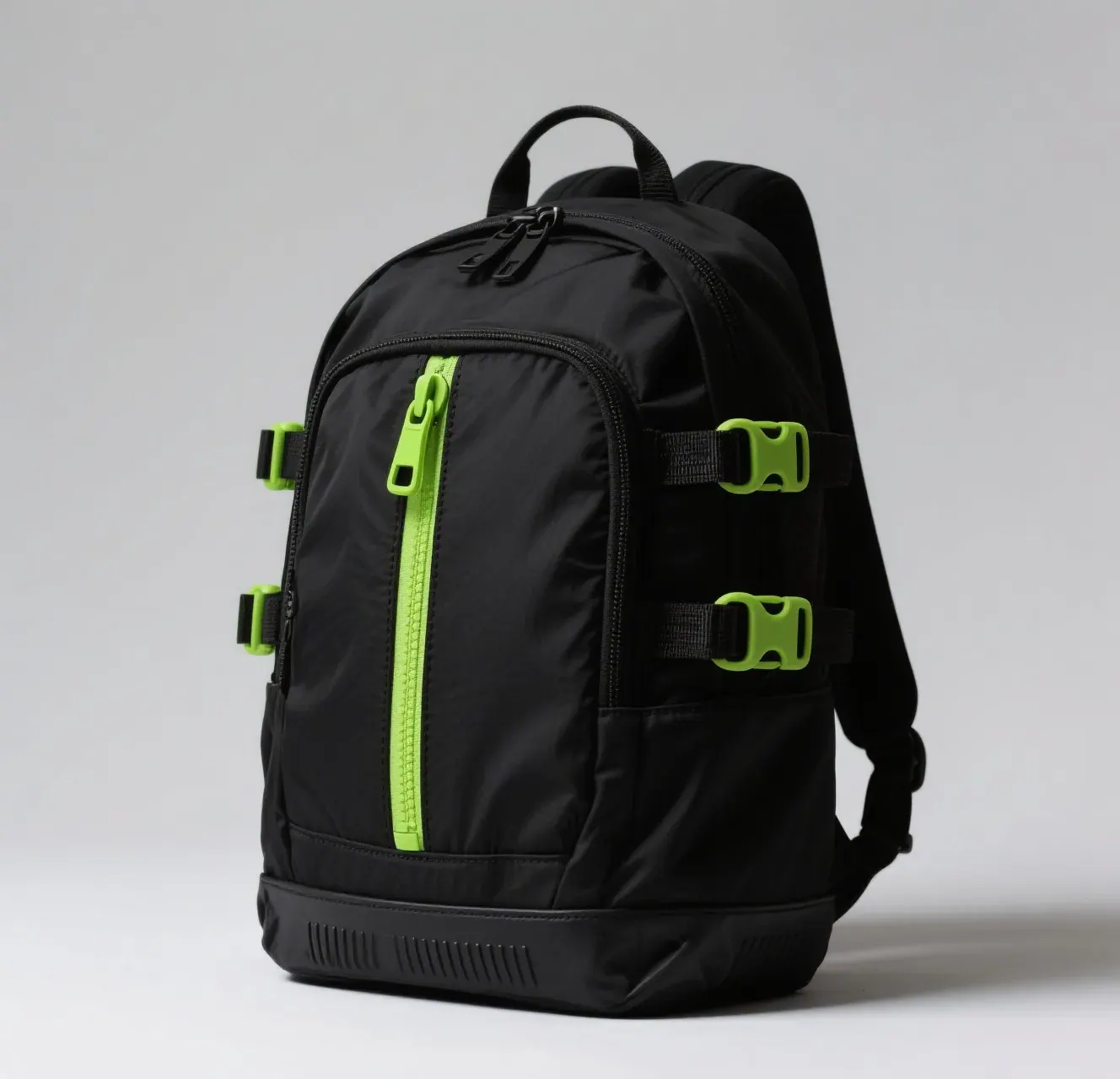
Aerodynamic drag rises with the square of speed. At 110 km/h the air is arriving at roughly 30.6 metres per second, and dynamic pressure works out near 570 pascals. A worn backpack adds 0.03 to 0.06 square metres of frontal area in clean air above the rider shoulders, which translates to roughly 8 to 18 newtons of extra drag at that speed. On a machine needing about 4 to 6 kilowatts to cruise, that is a measurable 2 to 4 percent fuel penalty over a full tank.
The bigger problem is not the steady drag but the unsteady part. A backpack sitting in the airflow above the shoulders generates vortex shedding at 8 to 20 hertz, which riders feel as helmet buffeting and a vague front end. A tail bag mounted low behind the seat stays largely inside the rider wake, where local velocity is 20 to 40 percent lower, so it contributes far less to both drag and turbulence.
| Speed | Added drag from a backpack | Extra fuel over 300 km | Buffeting risk |
|---|---|---|---|
| 50 km/h | 1.5 to 3 N | Under 0.1 L | Low |
| 80 km/h | 4 to 8 N | 0.1 to 0.2 L | Low to moderate |
| 110 km/h | 8 to 18 N | 0.2 to 0.4 L | Moderate |
| 140 km/h | 13 to 29 N | 0.4 to 0.7 L | High |
| With a 40 km/h crosswind | Adds 30 to 50 percent | Additional 0.2 L | High |
Crosswind is the case that separates the two formats. A gust arriving at 30 to 40 degrees off the nose pushes on any exposed area above the seat, and a backpack is the highest exposed area on the rider. Riders who tour windy coastal routes regularly report that simply moving 6 kilograms from the back to the tail removes most of the weaving they attributed to tyres or suspension.
Rain at Speed Is Not Rain at Standstill
Waterproof claims written for walking speeds do not transfer directly to motorcycling. At 110 km/h the rider is driving into rain droplets at 30 metres per second, and the stagnation pressure on a facing panel is several hundred pascals, which is enough to push water through a zipper that would shrug off a shower on foot. That is the physical reason riders who commute year round specify closures by tested code rather than by marketing adjectives.
The relevant code definitions come from IEC 60529: IPX5 uses a 6.3 millimetre nozzle at 12.5 litres per minute for at least 3 minutes from 3 metres, and IPX6 uses a 12.5 millimetre nozzle at 100 litres per minute under the same conditions. Neither is a submersion test, yet both are far more aggressive than the static spray many bags are sold on. A rider who spends 45 minutes on a motorway in heavy rain needs IPX6 as the floor, and a roll-top or welded body is the cheapest way to get there.
Geometry then decides the rest. A tail bag attacked from the front and top can be built with a welded shell plus a storm flap over the zipper, and because it sits in the wake it sees lower impact velocity. A backpack faces the full airstream on its front panel, so its closure and its fabric both work harder. Ratings and test reading are explained further in the IPX rating guide for waterproof backpacks.
| Riding condition | Effective exposure | Recommended rating | Preferred closure |
|---|---|---|---|
| Urban hop under 20 minutes | Moderate spray, low pressure | IPX4 | Covered zipper plus flap |
| Daily commute 30 to 60 minutes | Sustained 60 to 90 km/h rain | IPX5 to IPX6 | Roll top or welded zipper |
| Motorway touring in heavy rain | Jet level at 110 km/h plus | IPX6 minimum | Roll top with welded body |
| Off-road river crossings | Immersion risk | IPX7 to IPX8 | Roll top, welded seams |
| Winter riding near freezing | Icing plus spray | IPX6 with cold-flex fabric | Roll top, TPU film |
Mounting Systems, Security and Theft
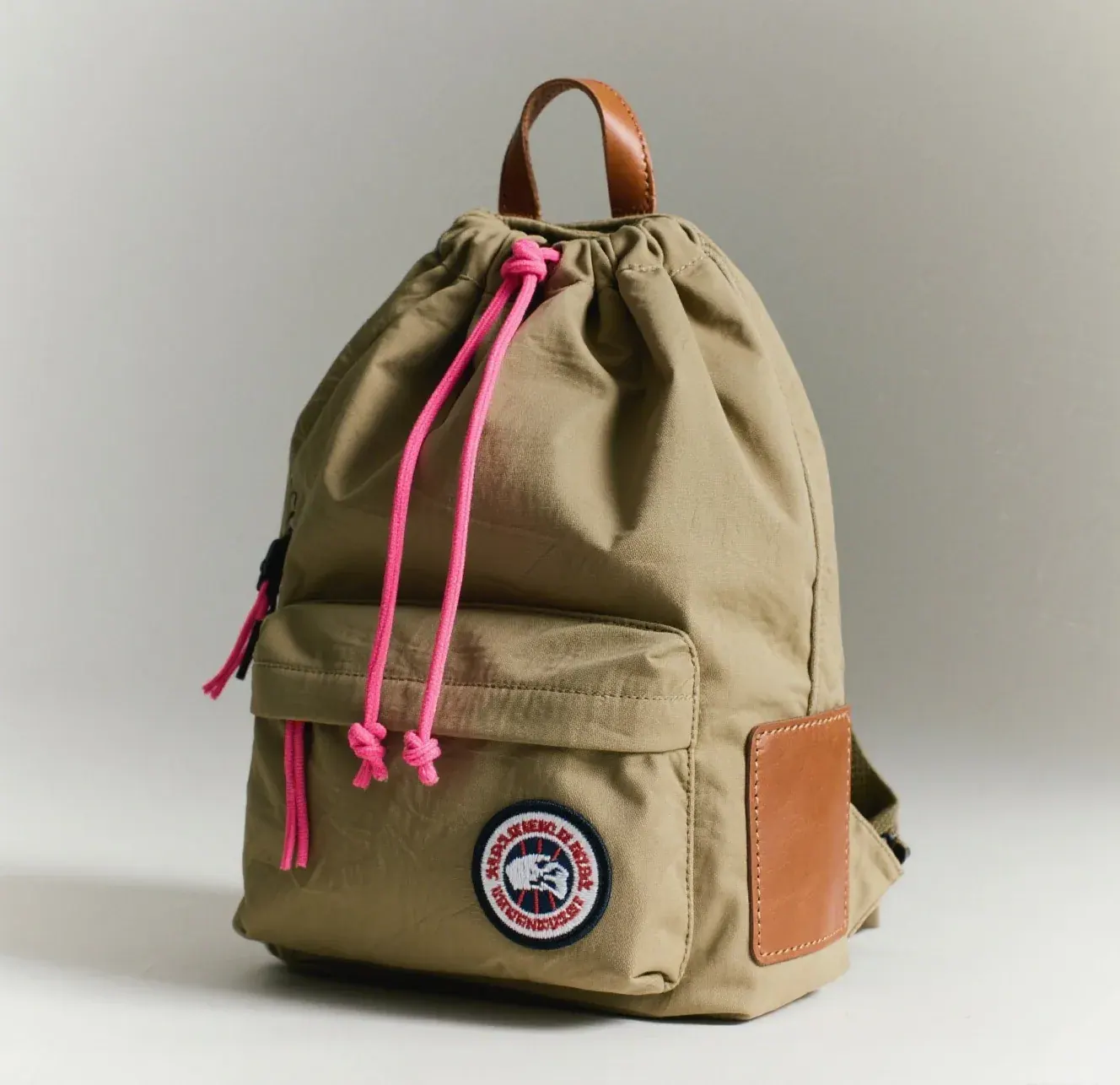
A tail bag is only as good as its attachment. The standard solution is four flat elastic straps of 20 to 25 millimetres with cam buckles, tensioned to roughly 8 to 12 kilograms each, plus two anti-slip pads of 1.5 to 3 millimetre rubber between bag and seat. Mounting takes 30 to 60 seconds once the layout is memorised, and removal takes 10 to 15 seconds, which is short enough that riders actually do it at every stop.
Theft then becomes the honest downside. A bag left strapped to a bike is vulnerable to a blade in under 10 seconds, so any tail bag intended for city use should offer a lock loop accepting a 4 to 6 millimetre shackle and a body fabric that resists slashing, typically 500D to 1000D with a 0.4 to 0.6 millimetre coating. A backpack has the opposite risk profile: it cannot be stolen from the bike because it is never left there, but it is easy to forget when the rider walks into a shop.
- Tension each strap to 8 to 12 kilograms; a bag that shifts 20 millimetres under hand pressure is too loose.
- Keep total tail load under the handbook limit, usually 5 to 10 kilograms, and never exceed it by stacking.
- Route straps away from the exhaust silencer, where surface temperatures exceed 200 degrees Celsius.
- Fit a 4 to 6 millimetre lockable loop for city parking, and log the bag serial in your phone.
- Check strap tension again after the first 30 kilometres, because new webbing settles by 3 to 5 percent.
What Riders Actually Carry: Volume by Ride Type
Choosing between the two formats is easier when the packing list is written in kilograms. A 15 inch laptop is 1.6 to 2.1 kilograms, a rain shell 0.5 to 0.8, a compact tool roll 1.0 to 1.5, a 1.5 litre water bladder 1.6 when filled, and a locked helmet adds 1.3 to 1.6. Four of those items already reach 5 kilograms, which is exactly the threshold where the backpack stops being comfortable.
Daily commuting therefore splits by whether a laptop travels. Laptop plus lunch plus shell sits at 3 to 4.5 kilograms and is legitimately backpack territory, especially on a 20 minute ride. Add tools, water, and a change of clothes and the total passes 6 kilograms, at which point a 30 litre tail bag is the comfortable answer. Touring riders usually run both: 35 to 45 litres on the tail plus a 12 to 18 litre backpack for the layer they shed at midday.
| Ride type | Typical load | Recommended volume | Recommended format | Why |
|---|---|---|---|---|
| City commute, no laptop | 1.5 to 3 kg | 12 to 18 L | Backpack | Walk away at both ends |
| City commute with laptop | 3 to 4.5 kg | 20 to 25 L | Backpack | Under the fatigue threshold |
| Commute plus tools and water | 5 to 7 kg | 28 to 35 L | Tail bag | Shoulders stay free |
| Weekend tour, two nights | 7 to 10 kg | 35 to 45 L | Tail bag plus small backpack | Rack limit reached |
| Long tour with camping | 12 to 18 kg | 45 to 60 L plus panniers | Tail bag plus side luggage | Above any single bag limit |
| Off-road day loop | 3 to 5 kg | 15 to 22 L | Backpack with chest strap | Body movement is part of riding |
Two ranges cover most of these cases. Riders who stay under the threshold should look at the waterproof motorcycle backpack range, while riders who cross it should size a tail bag from the same material library. Cyclists with mixed commutes often find the geometry of the waterproof cycling backpack range translates well, because both formats share the narrow-shoulder, high-visibility layout.
Crash Behaviour and Visibility
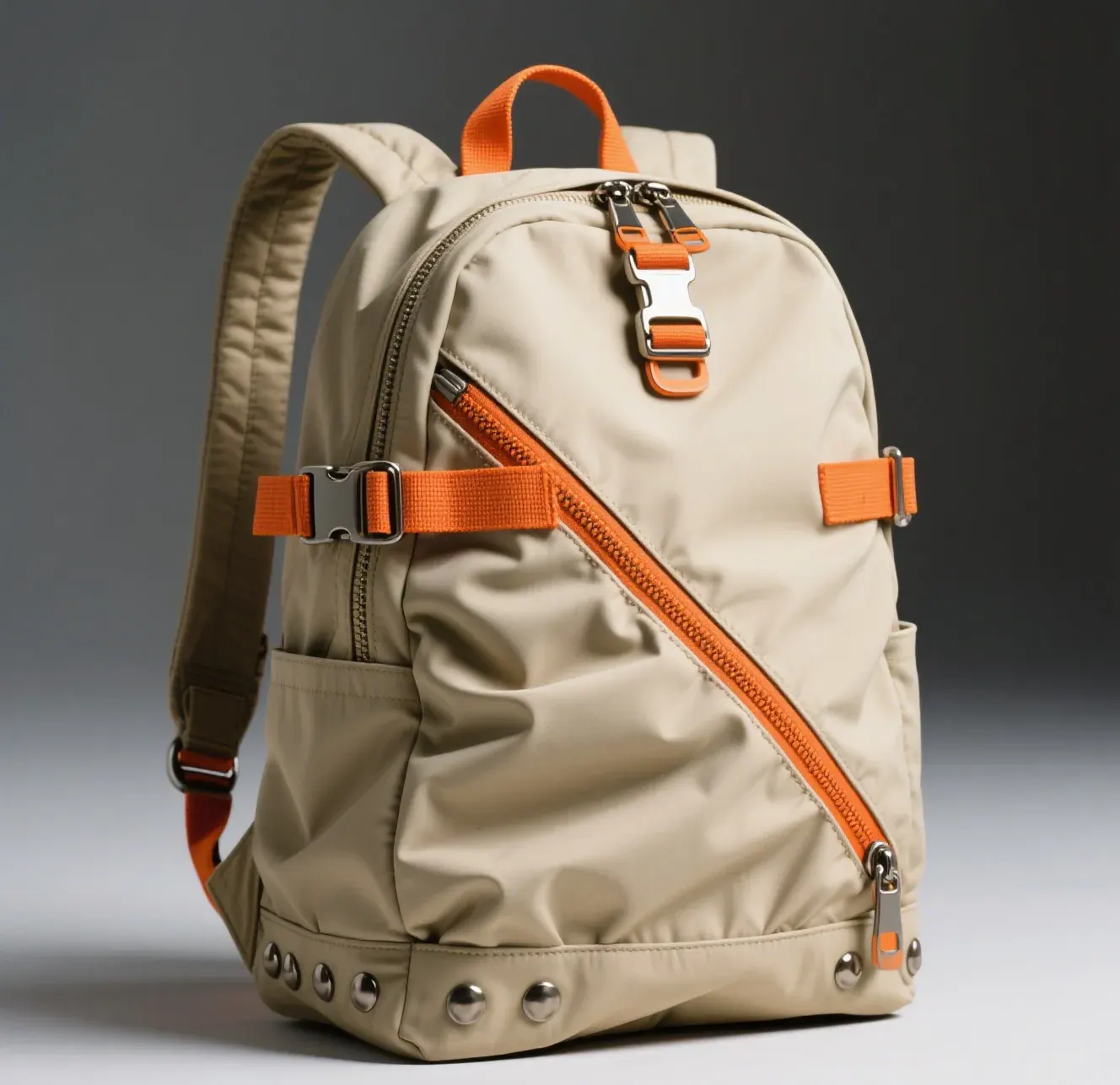
In a slide, contents matter more than the bag. A backpack places any hard object it holds directly between the rider and the ground, so water bottles, tool rolls, and laptop corners should never sit against the back panel. A tail bag keeps those items 300 to 600 millimetres behind the rider, which is one reason experienced tourers move tools and bottles to the machine first.
Visibility is the other safety variable. Reflective panels of 20 to 50 square centimetres on the rear and sides raise detection distance at night by a meaningful margin, and fluorescent panels add daytime conspicuity in rain and fog. Retroreflective performance is measured by coefficient of reflection, and specifying a minimum value rather than a colour is the difference between a real panel and a decorative strip.
Material behaviour in a crash also deserves a number. Shell fabric at 500D to 1000D with 0.4 to 0.6 millimetre coating resists abrasion far longer than light liners, and welded seams hold together where stitched seams tear open. Abrasion and tear resistance of coated textiles can be specified against published procedures from ASTM International, which give buyer and seller a shared method instead of an opinion.
Specification Checklist for Either Format
Both formats fail in predictable places, and most failures trace back to a specification that was never written down. Tail bags fail at strap anchor points, at the base panel that abrades against the seat, and at zippers contaminated with road grit. Backpacks fail at strap roots, at the roll-top fold line that flexes 2,000 to 4,000 times a season, and at the back panel where sweat and road salt accumulate.
A written checklist catches these before tooling. Base textile 500D to 1000D, coating mass above 180 grams per square metre, seam peel above 40 newtons per 25 millimetres, strap webbing rated four times the intended load, and a documented cycle target for the closure. Rainfall planning also benefits from real data: hourly rainfall climatology published by NOAA tells a buyer whether a target market sees 5 millimetres per hour or 50, and that difference should decide rating and price band.
| Spec item | Tail bag target | Rider backpack target | Verification |
|---|---|---|---|
| Base textile | 800D to 1000D | 500D to 800D | Denier and coating certificate |
| Seam peel strength | Above 40 N per 25 mm | Above 70 N per 25 mm | Lot sample pull test |
| Strap webbing rating | Four times working load | Three times working load | Breaking strength certificate |
| Closure cycle life | 10,000 cycles | 8,000 cycles | Cycled prototype |
| Rating target | IPX6 minimum | IPX6 minimum for commuting | Third-party report |
| Cold flexibility | Usable at minus 20 degrees Celsius | Usable at minus 20 degrees Celsius | Conditioned fold test |
Programme Numbers: MOQ, Samples, Delivery
Commercial terms do not differ between the two formats, because the material library and the sealing equipment are the same. Entry is 500 pcs per design and colour, prototype samples come back in 6 to 10 working days, and the production window runs 35 to 50 days after sample sign-off. Pricing bands then move with base denier, closure type, and whether a third-party rating report is required.
Two costs are routinely underestimated. First, rating reports: an IPX6 test on a finished article is inexpensive relative to a programme but must be booked before the production window, so it should appear on the critical path at sample stage. Second, colour matching across two product families: a tail bag and a backpack built from the same shell fabric should be dyed in the same lot, or the pair will visibly mismatch under showroom lighting.
QUANZHOU JUNYUAN BAGS develops both formats from one material library, starting at 500 pcs per design and colour with samples in 6 to 10 working days and bulk in 35 to 50 days. Materials may be screened against REACH and California Prop 65, release inspection can run at AQL 2.5, and delivery can be FOB Xiamen or DDP into more than 100 countries. Format comparison, mounting geometry, and closure selection are documented. Briefs may be sent to service@junyuanbags.com.
Verdict and Three Decision Rules
Rule one: if the load stays under 5 kilograms and the ride is under 45 minutes, take the backpack and enjoy walking away with everything. Rule two: if the load exceeds 5 kilograms or the ride exceeds 90 minutes, strap a tail bag and keep the spine clear. Rule three: if both conditions appear in the same week, buy the pair, because the combined cost is usually less than replacing one compromise product twice.
One home test settles most arguments. Load the backpack to the real commuting weight, walk 500 metres, then ride 20 minutes at 60 to 80 km/h and note shoulder tension at 5 minute intervals. Repeat with the same load in a tail bag. Most riders find the difference obvious within the first session, and the few who do not are usually carrying under 4 kilograms, where the argument is genuinely close.
Buyers assembling a full rider range should also read the comparative round-up of waterproof backpacks before locking volumes, because the 20 to 30 litre class is where most returns happen: riders buy too small in summer, then overload the bag in winter when a shell and gloves join the list. Sizing up by 5 litres at specification stage costs little and removes that seasonal failure mode.
Seen from the saddle, the question is not really which product is better. It is whether the load belongs on the rider or on the machine. Every kilogram moved from the shoulders to the seat buys comfort, stability, and fuel, and the only thing a backpack gives back is the ability to walk away without unstrapping anything.
People Also Ask
Is a tail bag safer than a backpack in a crash?
Generally yes for the spine, because a tail bag keeps hard objects 300 to 600 millimetres behind the rider instead of between the back and the road. Move tools, bottles, and laptops off the body first; a backpack is safer only when it holds soft items under about 5 kilograms.
How much weight can a motorcycle tail bag carry?
Respect the handbook limit, typically 5 to 10 kilograms on a pillion seat or rack, and keep total tail load below it. Four straps rated near 20 to 25 kilograms each give ample margin, but the rack itself, not the bag, is usually the limiting component.
Why does a backpack feel heavier when riding than when walking?
Because it sits above the hips on a moving platform. Every lean of 25 to 45 degrees swings the mass outward, and at 110 km/h higher frontal area adds 8 to 18 newtons of drag plus buffeting that the shoulders must stabilise.
What waterproof rating should a motorcycle bag have?
IPX5 for short urban hops and IPX6 as the floor for anything involving sustained motorway rain, since riding at 110 km/h drives water into closures at several hundred pascals. The jet definitions come from IEC 60529, and they should be applied to the finished, packed bag.
Can a tail bag be left on the bike in the city?
Only with a lockable loop accepting a 4 to 6 millimetre shackle and slash resistant 500D to 1000D fabric. Even then, a blade defeats most soft luggage in under 10 seconds, so remove valuables or take the bag with you.
Does a backpack really cost fuel?
Yes, modestly. At 110 km/h the extra 0.03 to 0.06 square metres of frontal area produces roughly 8 to 18 newtons of drag, which over a 300 kilometre day works out to about 0.2 to 0.4 litres, more with a crosswind.
Frequently Asked Questions
Q1. Which carries better for a daily city commute, a tail bag or a backpack?
A backpack, when the load is under 5 kilograms and the ride is under 45 minutes. You can walk away with everything in 2 seconds and never unstrap anything. Above those numbers the tail bag is better, because shoulder fatigue appears within an hour and slows countersteering.
Q2. What is the maximum load a rider should wear on their back?
About 5 kilograms for rides longer than 45 minutes, and up to 7 kilograms for short urban hops. Beyond that, trapezius strain and delayed steering response are widely reported, which is why touring riders move tools and water to the machine first.
Q3. How long does it take to mount and remove a tail bag?
Mounting takes 30 to 60 seconds once the strap layout is memorised, and removal takes 10 to 15 seconds. Use four straps of 20 to 25 millimetres tensioned to 8 to 12 kilograms each, and recheck tension after the first 30 kilometres as webbing settles.
Q4. Are tail bags waterproof enough for motorway rain?
They can be, provided the shell is welded and the closure is a roll top or a covered technical zipper tested to IPX6. Because the bag sits in the rider wake, local air velocity is 20 to 40 percent lower than at the rider chest, which helps the closure survive.
Q5. Why is IPX6 the recommended floor rather than IPX5?
Riding turns rain into a jet. At 110 km/h the dynamic pressure on a facing panel reaches several hundred pascals, far beyond a static shower. IEC 60529 defines IPX6 as 100 litres per minute through a 12.5 millimetre nozzle for at least 3 minutes, which is a far better proxy for motorway rain.
Q6. Do I need a rain cover over a waterproof tail bag?
Usually no, and a loose cover can flap and abrade the shell at speed. A cover is useful for a water resistant bag rated IPX4, or to keep road grime off a welded body so the closure stays clean and easy to operate.
Q7. Can a backpack damage my back in an accident?
It can contribute. Hard items such as bottles, tool rolls, and laptop corners sit between the rider and the ground. Pack soft items against the back panel, keep sharp objects in the outer compartment, and move anything rigid to the tail bag or panniers.
Q8. How do I stop a tail bag moving at speed?
Use four-point strapping, add 1.5 to 3 millimetre anti-slip pads between bag and seat, and tension to 8 to 12 kilograms per strap. A bag that shifts more than 20 millimetres under firm hand pressure is too loose and will polish the seat cover over a season.
Q9. What volume should a weekend touring rider choose?
35 to 45 litres on the tail plus a 12 to 18 litre backpack for the midday layer. That combination carries 7 to 10 kilograms while staying under the usual 5 to 10 kilogram rack limit, and it keeps the items you need at a fuel stop on your body rather than strapped down.
Q10. Does cold weather change which format is better?
It changes the bag, not the logic. Winter adds a shell, gloves, and often a thermal layer, pushing a 3 kilogram summer load past 5 kilograms, so riders who used a backpack in July often need a tail bag in January. Specify fabric that stays flexible at minus 20 degrees Celsius.
Q11. What are MOQ, sample and bulk lead times for either format?
Identical for both: 500 pcs per design and colour is the entry point, prototype samples are returned in 6 to 10 working days, and the production window is 35 to 50 days after sample sign-off. Book any third-party rating test at sample stage so it does not delay the bulk window.