A motorcycle touring waterproof backpack should hold 25 to 35 litres, keep its packed mass below 8 kg for all-day riding, use a welded 600D to 1000D TPU shell with an IPX6 three-turn roll closure, and remain stable in 130 km per hour airflow. Long tours punish different details than short commutes: six to ten hours of strap pressure, turbulent air behind a screen, rain striking seams at motorway speed, abrasive contact with a jacket and repeated exposure to fuel, insects and road film. Specify a body depth below 200 mm, four compression points, shoulder straps 60 to 75 mm wide, a sternum strap with 120 mm adjustment and a waist stabiliser that can be released with gloves. The backpack should carry documents, electronics and one dry layer; tools, water and dense camping equipment belong on the motorcycle whenever secure luggage is available.
Touring Exposure Is Measured in Hours and Air Speed
A touring bag may spend 600 to 900 km in the weather before it is opened. At 100 km per hour, raindrops hit the front and side panels with far more energy than they do on a walking pack, then turbulence changes direction behind the rider every second. Water is driven uphill into a flap, along the upper harness seam and around any compression anchor that pierces the body. A ten-minute shower is not the benchmark; two hours of rain followed by six hours of wet airflow is.
| Tour condition | Duration | Air speed | Protection target | Dominant stress |
|---|---|---|---|---|
| Weekend on secondary roads | 3 to 5 h/day | 60 to 90 km/h | IPX5 to IPX6 | Repeated light rain |
| Motorway transfer | 4 to 8 h/day | 100 to 130 km/h | IPX6 | Driven rain and turbulence |
| Adventure route | 5 to 9 h/day | 20 to 100 km/h | IPX6 plus abrasion | Dust, branches and vibration |
| Coastal tour | 4 to 7 h/day | 50 to 110 km/h | IPX6, corrosion screen | Salt aerosol and spray |
| Multi-week mixed tour | 6 to 10 h/day | Variable | IPX6 with inner dry zone | Cumulative wear and care |
IPX6 is the useful touring target because its controlled jet is 100 litres per minute, compared with 12.5 litres per minute at IPX5. Those laboratory conditions are defined by the IEC 60529 ingress protection reference. Road exposure is not identical to a nozzle test, so the test sample should be loaded, mounted at a 20-degree riding angle and presented at the front, shoulder roots and closure for separate runs.
Dust follows the water. Fine road dust settles into zip ends and textured fabric, where rain turns it into an abrasive paste. A roll-top has no teeth and is easier to rinse on tour. If fast access requires a zip, use one covered main zip, not three exposed openings, and keep all secondary pockets outside the critical dry zone. Every opening is a maintenance item across a 14-day itinerary.
Keep Body-Carried Mass Below 8 Kilograms
The defining touring decision is not litres but where the mass rides. A motorcycle can carry dense equipment without loading the rider's spine. The backpack should therefore hold the items that must leave the motorcycle at every stop: documents, phone, camera, medication, one insulating layer and perhaps a hydration reservoir. A 25 to 30 L body usually covers those needs at 5 to 7 kg. Filling a 40 L pack with tools and water creates a 10 to 14 kg load that becomes painful after two hours and increases fatigue during head checks.
| Item group | Volume | Mass | Best location | Reason |
|---|---|---|---|---|
| Documents, phone and power bank | 1 to 2 L | 0.8 to 1.5 kg | Backpack dry zone | Leaves the bike at every stop |
| Camera and small lens | 3 to 5 L | 1.2 to 2.5 kg | Padded central insert | Impact and theft control |
| Insulating and rain layers | 5 to 8 L | 0.8 to 1.5 kg | Main backpack body | Fast weather access |
| Water, 2 to 3 L | 2 to 3 L | 2 to 3 kg | Tank or tail bag | Dense mass should stay on bike |
| Tool roll and spares | 3 to 6 L | 3 to 7 kg | Low pannier | Too dense for shoulders |
| Camping sleep system | 12 to 20 L | 2 to 5 kg | Tail luggage | Bulky and rarely needed at stops |

Body depth controls aerodynamic leverage. Keep a touring pack under about 200 mm deep and compress partial loads at four points. A tall 30 L cylinder close to the spine is calmer than a rounded 30 L body standing 260 mm behind it. Put the camera or computer nearest the back, soft clothing outward and small loose objects inside zipped pouches. Nothing should shift more than 20 mm when the closed pack is shaken from each side.
For tour-focused patterns, start with the waterproof motorcycle backpack range. Travellers who also carry the same pack through airports and hotels can compare organisation in the waterproof travel backpack guide. The useful overlap is 28 to 32 L; above that point, motorcycle stability and airline dimensions pull the design in different directions.
Design the Harness for Eight-Hour Pressure
A harness that feels soft during a five-minute fitting can become the worst part of a tour. Eight hours of contact turns small pressure differences into numbness, while a jacket's armour changes the shape beneath the straps. The goal is not maximum padding; it is broad, stable load distribution. Shoulder straps of 60 to 75 mm with 10 to 14 mm resilient foam work over protective clothing, and the inner edge should curve away from the neck by 12 to 20 mm.
| Harness feature | Tour specification | Test condition | Failure signal |
|---|---|---|---|
| Shoulder width | 60 to 75 mm | 6 h with 7 kg | Numbness or red edge line |
| Foam depth | 10 to 14 mm closed cell | Compression after 50 h | Less than 60 percent recovery |
| Sternum range | At least 120 mm | Upright and tucked posture | Pulls straps into the neck |
| Waist stabiliser | 30 to 40 mm quick release | Ten mounted dismounts | Cannot release with gloves |
| Upper anchor | 45 to 55 degrees | 130 km/h airflow | Pack lifts from shoulders |
| Lower anchor | Below rib line | Ten head checks each side | Body rotates over 20 mm |
The waist element on a motorcycle pack is a stabiliser, not a hiking load-transfer belt. A 30 to 40 mm strap limits lateral motion without fighting a jacket or seat. It needs a buckle that opens with 3 to 5 mm gloves, and it must not trap the rider during a normal dismount. Test ten dismounts on both sides with the intended jacket, because a buckle that is accessible while standing may disappear behind body armour in riding posture.
Strap ends must be contained. Wind can make a 100 mm tail strike a jacket thousands of times per hour, fraying the end and distracting the rider. Limit exposed tails to 50 mm, use elastic keepers and route adjustment forward. The top handle should lie flat so it does not beat against the helmet or neck in turbulence. These are small details, but a multi-day review score is often determined by them rather than by the shell.
Prevent Lift, Buffeting and Side-to-Side Steering Input
A pack in fast airflow behaves like a small fairing. A rounded upper panel can create lift behind a windscreen, while a loose lower body swings during lane changes. At 120 km per hour, even a small shape change is felt through the shoulder straps. A tapered upper body, flat outer face and two compression zones keep the pressure centre close to the rider. Avoid rigid pockets that remain proud when empty.
| Aerodynamic detail | Target | Road test | Pass criterion |
|---|---|---|---|
| Packed depth | 160 to 200 mm | 90 to 130 km/h | No continuous rearward pull |
| Upper taper | 20 to 35 mm narrower at top | Behind screen and naked bike | No helmet contact in tuck |
| Lower compression | Two straps at lower third | Slalom at 50 km/h | Side movement under 20 mm |
| Top handle | Recessed or flat | Turbulent motorway run | No neck or helmet strike |
| Loose ends | Under 50 mm exposed | 30 min at 120 km/h | No flutter contact |
| Surface pockets | Flush when empty | Crosswind pass | No asymmetric pull |
Test behind at least two motorcycle profiles: one with a touring screen and one without. A tall screen can create a low-pressure pocket that lifts the top of the bag, while a naked bike creates direct pressure. Use the same 7 kg packed load, film marker points on the shoulders and measure movement after 30 minutes at 90, 110 and 130 km per hour where legally and safely available on a closed test route.
A helmet should not touch the pack during a normal shoulder check. With the rider seated, leave 60 to 90 mm between the lower helmet edge and the packed bag; tall collars and overloaded roll-tops often remove that space. If a 35 L body cannot maintain the clearance, reduce height or move the load to the motorcycle rather than curving the rider's neck forward.
Build a Dry Core for Documents and Electronics
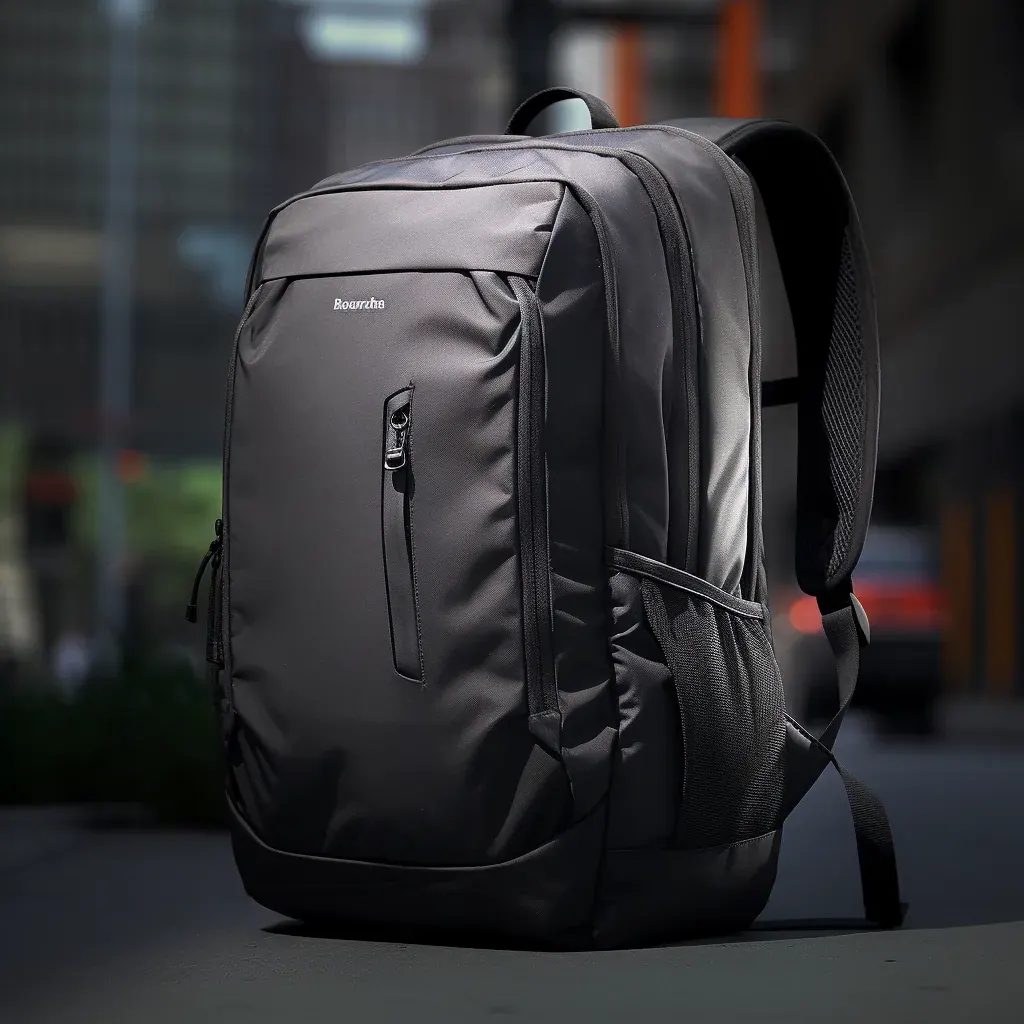
Touring creates two protection tiers. Passport, phone, medication, camera cards and charging electronics need a dry core with no external seam; spare gloves and clothing need the main waterproof body; snacks and a visor cloth only need a covered quick pocket. Building every compartment to IPX6 adds weight and difficult zips. Building one 5 to 8 L dry core inside an IPX6 body gives redundancy where a loss would end the trip.
| Zone | Protection | Typical contents | Access rate |
|---|---|---|---|
| Inner dry core | Welded liner, 5,000 mm head | Passport, medication, cards | 2 to 4 times/day |
| Padded sleeve | 10 mm foam, raised 30 mm | Tablet or compact laptop | 1 to 3 times/day |
| Main sealed body | IPX6 welded shell | Layers and dry gloves | 4 to 8 times/day |
| Covered quick pocket | IPX4 splash protection | Toll item, visor cloth, snack | 10 to 20 times/day |
| External wet sleeve | Drained and washable | Wet gloves or rain over-mitts | As weather changes |
The laptop question depends on the trip. A 13- or 14-inch device can ride in a sleeve measuring about 350 by 250 by 30 mm, raised 30 mm and positioned against a semi-rigid frame sheet. A 16-inch device raises packed mass and width enough to interfere with arm movement on some riders. Test the widest intended device and a protective case, then have the rider perform full left and right head checks.
A paper document wallet remains useful even when navigation is digital. It should hold A5 folded papers, lie flat and use a simple welded flap rather than another heavy zip. Store one emergency contact card and insurance copy there. Redundancy is the touring principle: an IPX6 shell is the first barrier, the dry core the second, and a small document wallet the third for items that cannot be replaced on the road.
Abrasion, Heat, Fuel and Road Contaminants
A motorcycle pack rarely touches the road in normal use, but it spends every hour rubbing a textile or leather jacket. Lower panels can also contact a passenger seat, top box or grab rail. Specify 600D TPU for a road-only bag and 840D to 1000D in contact zones for adventure travel, with at least 30,000 abrasion cycles on the lower back panel. The body should not contain exposed metal that can scratch paint or wear through clothing.
| Exposure | Screen | Acceptance | Design response |
|---|---|---|---|
| Jacket abrasion | 30,000 cycles on damp panel | No coating exposure | Smooth 600D or 840D contact face |
| Seat or rack rubbing | 50,000 local cycles | No yarn break | Replaceable 1000D lower patch |
| Fuel splash | 10 min contact, then rinse | No swelling or tack | TPU surface, no soft print |
| Insect residue | 24 h before cleaning | No permanent stain | Low-texture wipe-clean face |
| Engine-side heat | 1 h at 60 C | No distortion | Keep off exhaust and cylinder |
| UV on two-week tour | 40 h accelerated exposure | Grey scale 4 | Solution-coloured dark panels |
A backpack must never be placed against an exhaust, engine case or hot silencer. TPU can soften and deform as temperatures move beyond roughly 60 to 80 degrees Celsius, depending on the film, while exhaust surfaces can be several hundred degrees. If the bag is also used as tail luggage, define a mounting position with at least 100 mm clearance from hot components and a rigid heat shield between them.
Abrasion and tensile methods should be tied to named procedures maintained by ASTM. Specify the actual damp back panel and lower patch rather than a pristine shell coupon. A material may reach 50,000 cycles dry and fail below 30,000 when wet, warm and rubbing against textured armour. Tour conditions combine those variables.
Backpack, Tail Bag or Pannier: Make a Deliberate Choice
A backpack wins when valuables must stay with the rider, the motorcycle is rented, transfers are frequent or luggage racks are absent. A tail bag wins for 6 to 12 kg that can stay on the bike, while panniers win for 12 to 30 kg and multi-week camping volume. The strongest touring setup is often a 22 to 28 L body-carried bag plus secured motorcycle luggage, not one 40 L backpack forced to do both jobs.
| Use case | Backpack | Tail bag | Panniers | Best decision |
|---|---|---|---|---|
| Documents and electronics | Excellent | Moderate security | Slow access | Backpack |
| Tool roll, 4 to 7 kg | Poor for fatigue | Good if secured | Excellent, carried low | Pannier |
| One dry clothing set | Good | Excellent | Excellent | Tail bag |
| Two-person camping kit | Too bulky | Moderate | Excellent | Panniers |
| Rental motorcycle | No fittings needed | Straps required | Rarely available | Backpack |
| Walking around destination | Immediate carry | Awkward | Awkward | Backpack |
Do not wear a backpack and strap it to the motorcycle using its shoulder straps interchangeably without checking the anchors. Wind-driven flutter can abrade webbing against a rack in a few hundred kilometres. A dual-use bag needs four separate 25 mm lashing points outside the sealed wall, rated to at least 500 N each, plus shoulder straps that stow fully. If those points are absent, carry it or place it inside dedicated luggage.
The trade between body and motorcycle carriage is explored in the motorcycle tail bag versus backpack guide. For buyers comparing complete ranges rather than one format, the best waterproof backpacks overview shows where touring models sit against commuter, travel and marine options.
Validate the Bag After Vibration and High-Speed Wetting
Tour qualification should reproduce sequence, because a new bag can pass water and a vibrated bag can fail. Load the pack to 7 kg, vibrate it for 60 minutes with a 5 to 25 Hz sweep, run a high-airflow road session, perform ten 0.8 m drops and only then repeat the IPX6 jet. Inspect the upper harness weld, lower corners and collar fold with indicator paper placed at each location.
| Qualification stage | Condition | Pass line | Evidence retained |
|---|---|---|---|
| Vibration | 7 kg, 5 to 25 Hz, 60 min | No anchor movement over 3 mm | Before-and-after marker photos |
| Airflow stability | 90 to 130 km/h, 30 min | No lift or side shift over 20 mm | Rider video and notes |
| Loaded drop | 7 kg, 0.8 m, 10 cycles | No seam opening | Corner inspection |
| IPX6 jet | 100 L/min for 3 min | Indicator paper remains dry | Interior zone map |
| Closure endurance | 3,000 roll or zip cycles | Seal and pull remain usable | Force readings |
| Lashing pull if fitted | 500 N per point | No movement above 3 mm | Load record |
Tour planning should still respond to weather rather than treating an IP rating as permission to ignore it. Forecasts, rainfall and wind information from NOAA weather resources help riders decide when to reduce stages, add an inner dry pouch or avoid exposed routes. A waterproof bag protects belongings; it does not make low visibility, crosswind or standing water safe.
For B2B development, 500 pcs per design and colour is the standard floor, samples take 6 to 10 working days and bulk takes 35 to 50 days, with AQL 2.5 inspection. QUANZHOU JUNYUAN BAGS can retain the vibration, airflow and wet-test sequence. Approval should freeze packed depth, maximum rider load, closure geometry and whether external lashing points are included.
Tour Care at Fuel Stops and Overnight
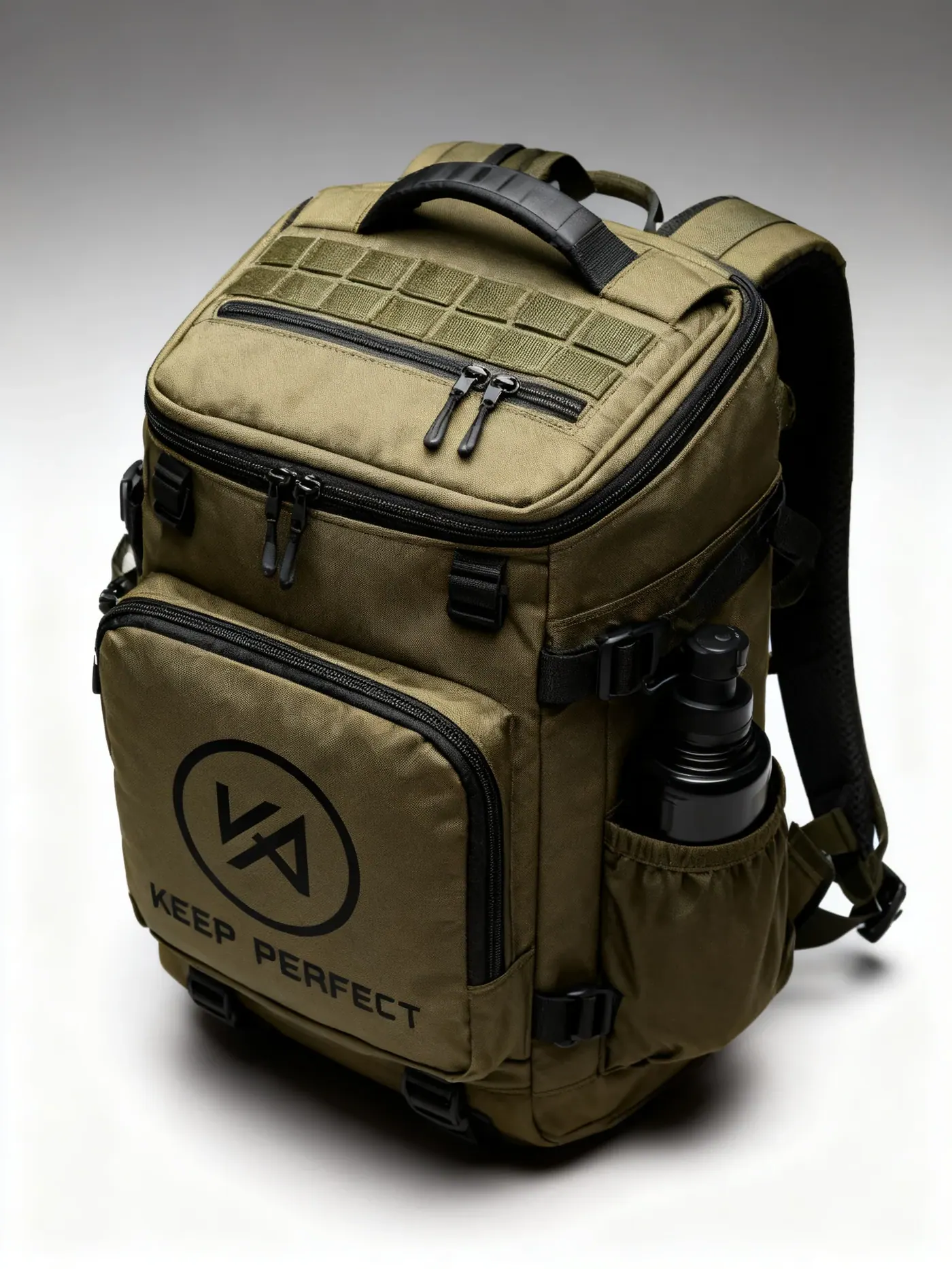
Tour care works best as two short routines. At a fuel stop, check that every webbing tail remains captured, brush insects from the closure and confirm the collar still has three tight turns. Overnight, remove the dry core, rinse salt or road film, wipe the collar and leave every opening clear for 8 to 12 hours. A pack closed while damp develops odour; one folded wet at the same line every night develops a permanent collar crease.
| Tour interval | Action | Time needed | Stop using when |
|---|---|---|---|
| Every fuel stop | Secure tails and inspect collar | 1 min | Strap cannot be contained |
| Every wet day | Fresh-water rinse and open dry | 10 min plus 8 h | Water reaches dry core |
| Every 500 km dusty | Brush closure and compression hardware | 5 min | Closure pull doubles |
| Weekly on tour | Flex harness roots and base corners | 5 min | Movement exceeds 5 mm |
| After salt exposure | Rinse all hardware immediately | 5 to 10 min | Corrosion pits appear |
| After the tour | Full clean and loaded water check | 30 min | Repeat leak or broad delamination |
Expected life depends on exposure more than calendar age. A road-touring pack used for 8,000 to 12,000 km a year can deliver three to five seasons; an adventure pack rubbing racks and branches may need a lower contact patch after two seasons while the body remains sound. Repair a local TPU puncture early, but retire a bag with cracked harness anchors, a closure that cannot complete three turns or repeated water in the document core.
People Also Ask
What size backpack is best for motorcycle touring?
Use 25 to 35 litres, with 28 to 32 L covering most document, electronics and clothing loads. Keep body-carried mass below 8 kg; tools, multiple litres of water and camping equipment should ride securely on the motorcycle.
Does highway speed make rain enter a backpack?
It increases pressure and changes the angle of impact, especially at the front panel, shoulder roots and collar. Choose an IPX6 welded body and test it loaded at a 20-degree riding angle after vibration and drop conditioning.
How do I stop a motorcycle backpack buffeting?
Keep packed depth between 160 and 200 mm, taper the upper body, compress at four points and contain every loose end below 50 mm. Test behind both a touring screen and an unfaired motorcycle because airflow differs.
Should motorcycle tools go in a backpack?
No when secure motorcycle luggage is available. A tool roll can weigh 3 to 7 kg, concentrating hard mass on the spine and increasing fatigue. Put it low in a pannier or secured tail bag and reserve the backpack for valuables.
Can a touring backpack also attach to a luggage rack?
Only if it has four separate lashing points outside the sealed wall, each rated around 500 N, and fully stowable shoulder straps. Do not use wearing straps against a rack; vibration can abrade them in a few hundred kilometres.
How often should a touring backpack be checked on the road?
Check strap tails and the roll collar at every fuel stop, rinse and dry after every wet day, brush the closure every 500 dusty kilometres, and inspect harness roots weekly. Run a loaded water check after the tour.
Frequently Asked Questions
Q1. What IPX rating is suitable for long motorcycle trips?
IPX6 is the useful target because it covers a 100 litre per minute jet and gives margin for motorway rain. IPX5 can suit shorter secondary-road trips, but all ratings should apply to the loaded finished bag and its closure.
Q2. Is a 40 litre backpack too large for motorcycle touring?
Usually yes for body carriage. A full 40 L bag often reaches 10 to 14 kg and stands too far behind the rider. Use 25 to 35 L below 8 kg and place dense or bulky equipment in secured motorcycle luggage.
Q3. How much can I carry on my back all day while riding?
Aim for 5 to 7 kg and treat 8 kg as a practical ceiling. Above that level, six to ten hours of shoulder pressure, braking movement and heat increase fatigue even when the harness is well padded.
Q4. What material is best for an adventure touring pack?
Use a 600D TPU-laminated body for road touring and 840D to 1000D reinforcement on contact zones for adventure routes. Require welded seams, at least 30,000 damp abrasion cycles and no exposed metal against paint or clothing.
Q5. Should a touring backpack have an internal dry pouch?
Yes for documents, medication, memory cards and charging equipment. A welded 5 to 8 L inner core provides a second barrier behind the IPX6 shell and is easier to remove at a hotel or border stop.
Q6. Can I carry a laptop on a motorcycle tour?
A 13- or 14-inch device is practical in a sleeve raised 30 mm with 10 mm foam and a semi-rigid frame sheet. Test full head checks with the widest intended device; a 16-inch computer may make the body too wide for smaller riders.
Q7. Will fuel damage a waterproof backpack?
Brief fuel splash should be rinsed within 10 minutes. TPU resists short contact better than many soft coatings, but no bag should be soaked in fuel or cleaned with chain degreaser and solvent. Retire a panel that becomes swollen or tacky.
Q8. How should straps fit over a motorcycle jacket?
Use 60 to 75 mm straps with 10 to 14 mm resilient foam and an inner edge curved away from the neck. The sternum strap needs at least 120 mm of vertical adjustment for upright and tucked postures.
Q9. Is a motorcycle backpack safer than a tail bag?
Neither is universally safer. A backpack keeps valuables with the rider and suits rentals, while a tail bag removes mass from the spine. For loads above 8 kg or items with hard edges, secured motorcycle luggage is the better choice.
Q10. How do I clean insects and road film from the shell?
Rinse loose grit first, soften insect residue with fresh water and use pH-neutral soap and a soft cloth. Avoid abrasive pads, fuel, degreaser and high heat. Open the collar and dry for 8 to 12 hours.
Q11. What are the MOQ and lead time for a touring pack programme?
The baseline is 500 pcs per design and colour, samples in 6 to 10 working days and bulk in 35 to 50 days. Allow the approval plan to include loaded vibration, high-airflow stability and a post-conditioning IPX6 test.