A charter operator on the United States Gulf coast was replacing saltwater totes twice a season because plated hardware seized after roughly 80 hours of salt exposure, and asked for a version that would last three seasons instead of one. The run that shipped was a 40 litre open top tote with 316 stainless fittings at every load point, marine-grade polymer everywhere else, drainage at four points, and a wipe-clean liner. Salt cabinet testing to a recognised spray method ran to 480 hours with no red rust on load-bearing parts, and the field result after one full charter season was a hardware-related failure rate of zero against 19 percent the previous year. This is how the specification was reached, what it cost, and what was deliberately not upgraded.
The Client and the Failure They Were Solving
The client runs six charter boats out of one marina, each carrying four to six anglers a day for roughly 220 operating days a year. Totes are used hard, left on deck in salt spray, rinsed inconsistently and stored damp. The previous product was a general-purpose soft tote bought on price, and it failed the same way every time: the zip seized first, then the buckles stiffened, then a strap anchor tore out.
The commercial problem was not the cost of the tote but the disruption. A tote failing mid-charter means gear on the deck, an annoyed party and a crew member spending ten minutes improvising. The client had never calculated the cost of that, so the first exercise was to do it: at 24 totes in service, a 19 percent hardware failure rate per season, and roughly 30 minutes of crew time per incident, the annual cost of cheap totes exceeded the cost of buying twice as many good ones.
| Failure mode, previous product | Incidence per season | When it appeared | Cost per incident |
|---|---|---|---|
| Zip seized or split | 11 of 24 units | 6 to 10 weeks | Crew time plus replacement |
| Buckle stiff or broken | 7 of 24 units | 8 to 14 weeks | Crew time |
| Strap anchor torn out | 4 of 24 units | 12 to 20 weeks | Replacement, unusable unit |
| Liner delamination | 3 of 24 units | 16 to 24 weeks | Replacement |
| Base worn through | 2 of 24 units | 20 weeks and beyond | Replacement |
Defining Corrosion Resistance in Numbers
Corrosion resistance is an adjective until it is attached to a test and a duration, and the first job was converting the complaint into a specification. Three numbers came out of that conversation: 480 hours of neutral salt spray exposure with no red rust on load-bearing components, 96 hours with no functional loss on any closure, and a strap anchor that still holds 25 kilograms after the same exposure. Those were written into the brief and quoted against.
| Component group | Requirement written | Test reference | Result |
|---|---|---|---|
| Load-bearing hardware | No red rust at 480 hours | Neutral salt spray method | Passed, no red rust |
| Closures and zips | Functional at 96 hours | Neutral salt spray method | Passed, stiffening at 240 hours |
| Strap anchors | 25 kg hold after exposure | Pull test after exposure | Passed at 27 kg |
| Shell and liner | No delamination at 480 hours | Visual and peel check | Passed |
| Thread | No degradation at 480 hours | Visual and pull check | Passed, bonded polyester |
The test methods matter as much as the durations. Neutral salt spray exposure is a recognised comparative method published by ASTM International, and quoting it by name means the result can be reproduced rather than argued. Colourfastness of the shell under sun and salt was checked against methods published by AATCC, which matters on a charter boat where a faded, chalky tote looks older than it is.
Tote Geometry: Open Top and Why It Wins in Salt
The format question came before the material question. A closed top-loader keeps water out but also keeps it in, and a tote that has been hosed down on deck will hold a litre of dirty water in its base if there is nowhere for it to go. An open top with a moulded base and drainage points solves the problem directly, and it suits the way a charter deck actually works, where gear is dropped in and pulled out rather than unpacked.
- Open top with a stiffened rim that holds its shape when empty, so the tote can be dropped into one-handed.
- Four drainage points of 8 millimetres at the base corners, positioned so two are always clear when the tote rests on a sloped deck.
- A base of 380 by 260 millimetres, wide enough that a loaded tote does not tip when a boat rolls.
- Internal height of 320 millimetres, which takes four stacked 3700 trays or a two kilogram bait block plus tools.
- Two external sleeve pockets for a knife and pliers, both drained, because a wet tool in a closed pocket rusts in a week.
One dimension was changed after the first sample. The rim was originally 300 millimetres above the base, which made the tote stable but awkward to reach into when it sat on the deck. Raising it to 320 millimetres and widening the base by 20 millimetres kept the stability and made the contents reachable without bending, which matters when the crew is handling fish at the same time.
Material Selection for a Saltwater Tote
The shell material choice was narrower than it looked, because salt exposure eliminates several otherwise good options. Coated polyester welds cleanly and resists chloride well, and it was chosen at 600 denier for abrasion against deck surfaces. Nylon was considered and rejected: it absorbs water, gains weight when wet and loses dimensional stability, which shows up as a tote that no longer stands square.
| Component | Specified | Rejected alternative | Reason |
|---|---|---|---|
| Shell | 600D PVC-coated polyester | Nylon | Absorbs water, loses shape |
| Liner | Welded film liner, wipe clean | Coated fabric liner | Delaminated at 16 weeks previously |
| Base | Moulded EVA, 7 mm, drained | Fabric base with feet | Wore through at 20 weeks |
| Thread | Bonded polyester | Standard polyester | Degrades under chloride exposure |
| Webbing | Solution-dyed polyester | Nylon webbing | Stiffens when salt-laden |
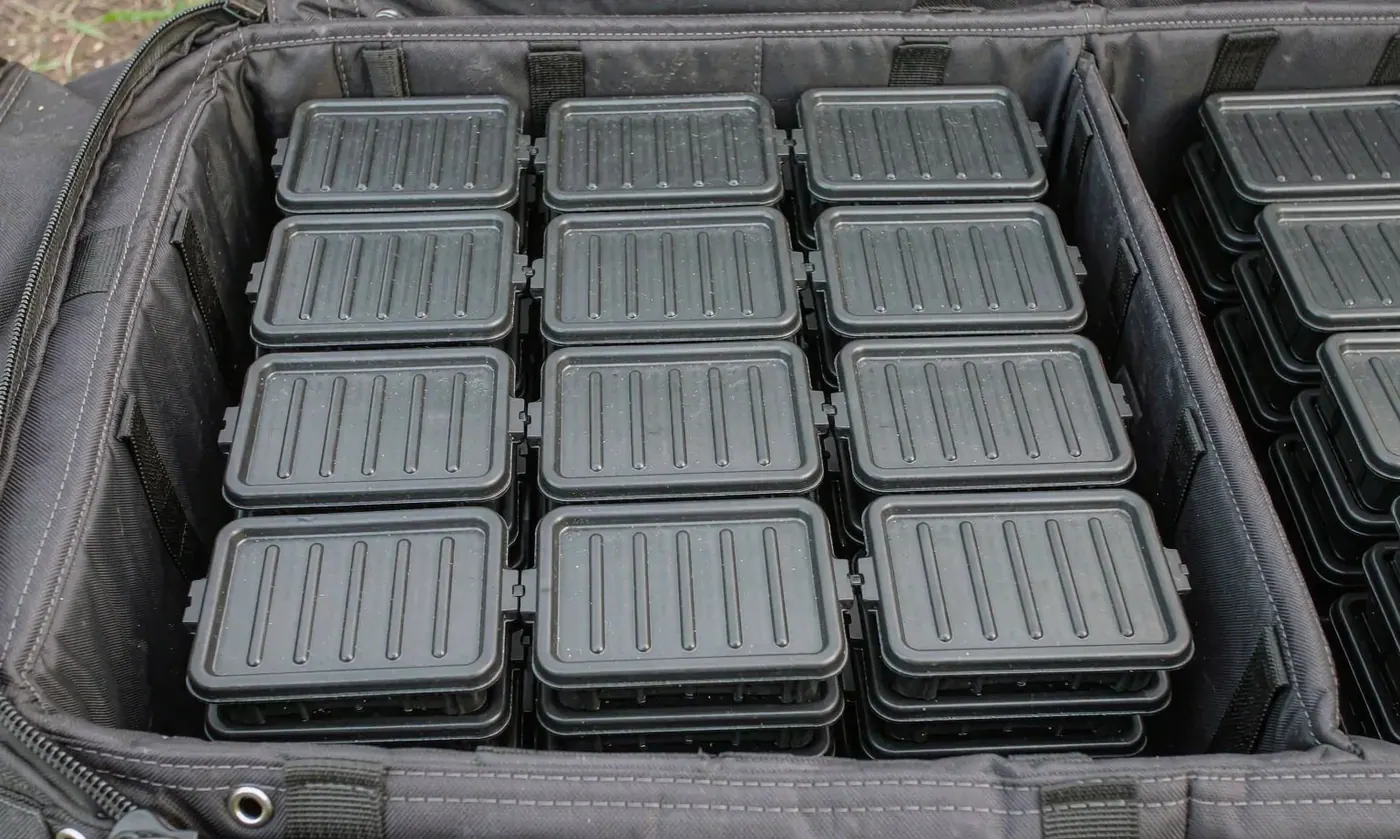
The liner deserves a note because it was the highest-value change in the whole build. The previous product failed by liner delamination at 16 to 24 weeks, which is a slow, unglamorous failure that makes a tote unpleasant to use long before it becomes unusable. A welded film liner of 0.3 millimetres costs about 4 percent more than a coated fabric liner and removes the failure mode entirely.
Hardware: Where 316 Is Worth It and Where It Is Not
The instinct on a corrosion-proof build is to upgrade every fitting, and that is usually the wrong call. The correct approach is to divide the hardware into load-bearing, closure and decorative groups and treat them differently. Load-bearing fittings, meaning strap anchors, D rings and handle attachments, went to 316 stainless because a failure there is structural and dangerous. Closure hardware, meaning the zip and the buckles, went to marine-grade polymer, which does not corrode at all and is lighter.
Decorative fittings and trim went to the standard grade, because nothing depends on them and the cost difference across 24 units would have been real money for no functional gain. The split as built was 8 components in 316 stainless, 6 in marine polymer and 11 in standard grade, which put the corrosion-resistant spend exactly where the failures had been occurring.
Sampling: What the Salt Cabinet Found
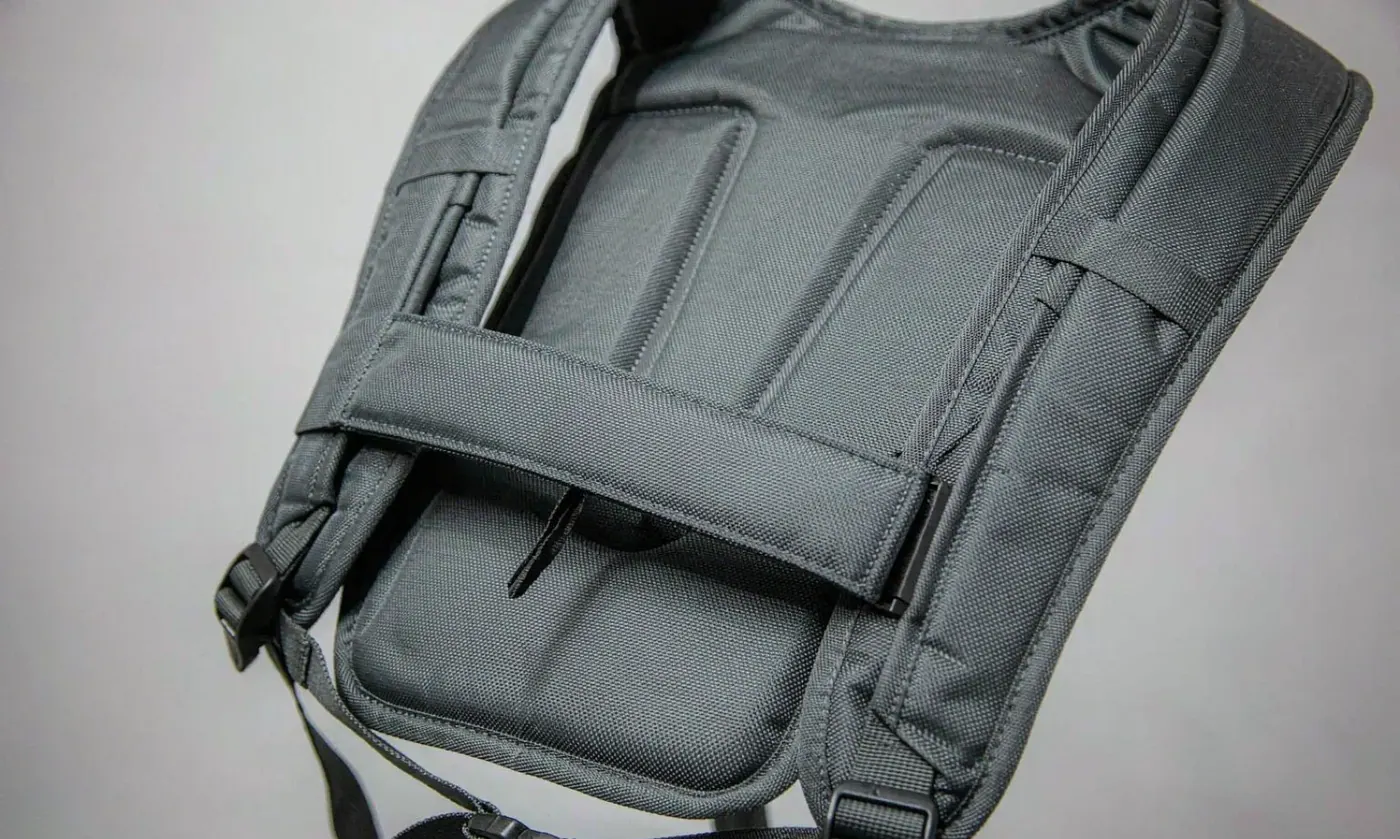
Two sample rounds were built. The first was dimensionally correct but used a plated zip chain, and the salt cabinet found it at 96 hours: the chain stiffened and the pull became hard to operate with wet hands. The second round substituted a polymer chain with a stainless pull, and the same test ran to 240 hours before any stiffening was measurable, which is inside the maintenance interval the crew actually works to.
| Sample round | Hardware configuration | First measurable change | Outcome |
|---|---|---|---|
| Round 1 | Plated zip chain, plated buckles | 96 hours, zip stiff | Rejected |
| Round 1 | Plated strap anchors | 180 hours, surface bloom | Rejected |
| Round 2 | Polymer zip chain, stainless pull | 240 hours, slight stiffening | Accepted |
| Round 2 | 316 stainless anchors | 480 hours, no red rust | Accepted |
| Round 2 | Marine polymer buckles | 480 hours, no change | Accepted |
The useful finding was not which components passed but the margin between them. A plated zip chain and a polymer chain differ by a factor of roughly two and a half in salt cabinet life, and the cost difference across the run was under 3 percent of unit cost. That is the clearest illustration available of why the specification stage, not the buying stage, is where corrosion is decided.
Inspection and the AQL 2.5 Result
The bulk run was inspected at AQL 2.5 under general inspection level two. For this lot size that gave a sample size of 32 units, with an acceptance number of 2 and a rejection number of 3 for minor defects. Two minors were recorded and the lot was accepted, with zero major and zero critical defects.
Both minors were the same issue: a 1 millimetre misalignment on the rim binding at the handle junction, cosmetic and within tolerance but visible on a product that sits on a deck where clients see it. The correction was a jig adjustment rather than a rework, and the following run showed none. Hardware verification was repeated on three units drawn from the finished lot, with a 25 kilogram strap pull test passed at 27, 26 and 27 kilograms.
| Check | Method | Result |
|---|---|---|
| Dimensional | Base, height, rim measured on 5 units | All within 2 mm of specification |
| Drainage | Four corners, 8 mm, flow tested | All cleared within 4 seconds |
| Strap pull | 25 kg after salt exposure, 3 units | 27, 26 and 27 kg, all passed |
| Zip cycle | 500 open and close cycles wet | No tooth damage, stiffening within tolerance |
| AQL 2.5 | 32 units, accept at 2 minors | 2 minors, 0 major, 0 critical |
Field Results After One Charter Season
The measure that mattered to the client was not the salt cabinet but the deck. After one full season of roughly 220 operating days, the hardware-related failure rate was zero, against 19 percent the previous year across the same fleet, the same crew and the same rinsing habits. Two units showed cosmetic chalking on the shell and one showed a scuffed base, and all three remained in service.
| Metric | Previous product | This run |
|---|---|---|
| Hardware failures per season | 19 percent of units | 0 percent |
| Zip failures per season | 11 of 24 units | 0 |
| Strap anchor failures | 4 of 24 units | 0 |
| Liner delamination | 3 of 24 units | 0 |
| Units still in service after 220 days | 5 of 24 | 24 of 24 |
| Replacement cost per season | Full fleet roughly 1.2 times | None |
One behavioural result was unexpected and worth recording. Because the tote drains and dries, the crew started rinsing it properly, where previously a tote that held water in its base was simply left. Good design changed the maintenance behaviour, and the maintenance behaviour is probably doing as much for the outcome as the 316 stainless. The client has since written the rinsing protocol into the crew handbook, which is the strongest signal available that the specification solved a real operational problem rather than a purchasing one.
Cost and What Was Deliberately Not Upgraded
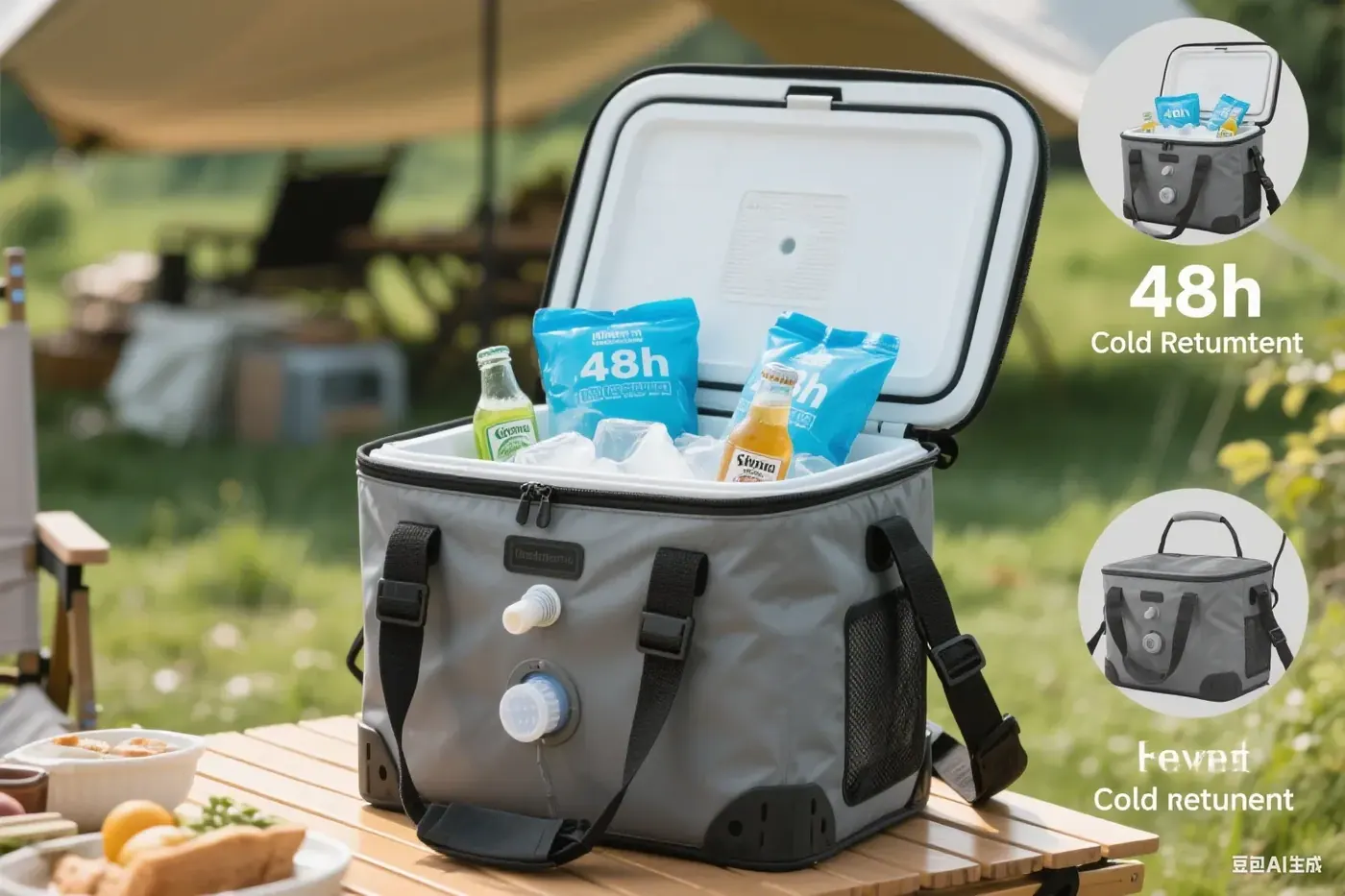
The corrosion-resistant build came in at roughly 22 percent above the unit cost of the product it replaced, and the client's own arithmetic said that was the right decision before the first unit shipped. What is more interesting is what was left alone. Trim hardware stayed at standard grade, the shell went to 600 denier rather than 1000, and no coating was added beyond what the weld required.
- Trim and decorative fittings stayed standard grade: nothing depends on them and the saving funded the zip upgrade.
- The shell stayed at 600 denier, because the failure was never abrasion of the shell; it was hardware and liner.
- No anti-microbial treatment was added, since the tote drains and dries and the problem it solves does not arise.
- No bespoke moulding was opened at this volume; a stock base moulding with drilled drainage met the requirement.
The general lesson is that a corrosion-proof specification is mostly a question of where to spend, not how much to spend. Twenty-two percent more, targeted at the four components that had actually been failing, produced a season with no failures at all.
Fitting the Charter Kit Inside the Tote
A charter tote carries a different load from an individual angler's bag, because it serves six people rather than one and it is restocked between trips rather than packed once. The client's standard load is four stacked 3700 trays of shared terminal tackle, two spools of leader, a tool roll of six items, a two kilogram bait block in the insulated compartment, and six bottles of water. That is 9 to 11 kilograms, which is why the base was widened and why the handles are rated well above the working load.
| Load element | Quantity | Weight | Position in the tote |
|---|---|---|---|
| Stacked 3700 trays | 4 | 2800 to 3600 g | Centre, stacked vertically |
| Leader spools | 2 | 200 to 300 g | External sleeve pocket |
| Tool roll | 6 items | 900 to 1300 g | External drained pocket |
| Bait block in insulated compartment | 1 | 2000 g | Sealed compartment, drained |
| Water for six | 6 bottles | 3100 to 3300 g | Base, low and central |
The stacking detail matters more than it appears. Four trays stacked vertically in a 320 millimetre internal height are stable only if the base is flat and the trays are all the same standard; mixing a deep 3700 with a shallow one leaves a gap that lets the stack rock, and a rocking stack abrades the liner at the contact corners. Standardising on one tray depth across the fleet cost the client nothing and removed the problem.
The Rinsing Protocol the Fleet Adopted
The specification was only half the result, and the client was clear about that in review. The other half was a rinsing protocol the crew could actually follow in five minutes at the end of a trip: hose the tote out at low pressure, tip it to clear all four drains, wipe the zip chain with a wet cloth, and stand it open upside down overnight. None of it is complicated and all of it was previously being skipped because the old tote could not be emptied quickly.
Two points in the protocol were worth specifying precisely. Pressure should be low, because a high-pressure jet drives chloride into welded seams rather than removing it. And the tote should be stored open rather than stacked, because stacked wet totes trap moisture at the rim where the handle anchors sit, which is exactly the load-bearing hardware the upgrade was protecting. Guidance on the wider maintenance routine sits in the seasonal maintenance walkthrough.
Programme Notes
QUANZHOU JUNYUAN BAGS has worked on waterproof bag programmes since 2014, with a founding team in this industry since 2004. Monthly output is 200,000 units, verified by SGS, under BSCI and ISO 9001 governance, with materials screened for REACH and California Prop 65 and every bulk order inspected at AQL 2.5. Quality system claims rest on standards published by the International Organization for Standardization, and salt exposure testing on the method referenced earlier.
A saltwater brief should open with the failure being solved and the exposure the product will actually see, because hours of salt exposure is a far more useful input than any adjective. Add format and dimensions, hardware split by function, drainage requirement, liner type, colourway and quantity. Five hundred pieces per design and colour is the opening order size. Sampling runs six to ten working days, bulk thirty-five to fifty days from approved sample and deposit, and shipping is FOB Xiamen or DDP to upwards of one hundred nations. Further detail on hardware selection is in the corrosion-proof hardware guide, on scheduling in the lead time walkthrough, and the category sits on the saltwater fishing bag page. Send briefs to service@junyuanbags.com.
People Also Ask
What hardware grade should a saltwater tote use?
316 stainless at load-bearing points such as strap anchors and handles, and marine-grade polymer for closures. Trim fittings do not need the upgrade.
How many hours of salt spray should marine hardware survive?
Four hundred and eighty hours with no red rust on load-bearing components is a reasonable target for charter use, quoted against a recognised spray method.
Does an open top tote work better in saltwater?
Yes. A closed top holds rinse water in the base; an open top with four drainage points of eight millimetres drains and dries between trips.
Why did the previous totes fail at six to ten weeks?
Plated zip chains stiffen at roughly eighty to ninety-six hours of salt exposure, which a charter season reaches in about six weeks.
Is 316 stainless worth twenty-two percent more?
On this evidence, yes. The hardware failure rate fell from nineteen percent per season to zero, and the fleet went from five of twenty-four units surviving to all twenty-four.
Should every fitting on a saltwater bag be upgraded?
No. Split hardware by function: structural fittings get 316, closures get marine polymer, trim stays standard. The saving funds the parts that matter.
Frequently Asked Questions
Q1. What was the failure the client needed solved?
Plated hardware seizing after roughly eighty hours of salt exposure, producing a nineteen percent hardware failure rate per charter season and repeated mid-trip disruption.
Q2. What hardware specification was used?
316 stainless at every load-bearing point, marine-grade polymer for closures, and standard grade for trim, which put the spend where the failures had been.
Q3. How was corrosion resistance tested?
Neutral salt spray exposure to a recognised method: four hundred and eighty hours with no red rust on load-bearing parts, plus a twenty-five kilogram strap pull after exposure.
Q4. Why was a polymer zip chain chosen over metal?
A plated chain stiffened measurably at ninety-six hours in the cabinet. The polymer chain reached two hundred and forty hours, which sits inside the crew's maintenance interval.
Q5. What dimensions did the finished tote have?
A base of three hundred and eighty by two hundred and sixty millimetres, internal height of three hundred and twenty millimetres, and four drainage points of eight millimetres.
Q6. What liner was specified and why?
A welded film liner of zero point three millimetres. The previous coated fabric liner delaminated at sixteen to twenty-four weeks, and the welded liner removes that failure mode.
Q7. What did inspection find at AQL 2.5?
Two minor defects in a sample of thirty-two units, both a one millimetre rim binding misalignment, with zero major and zero critical defects.
Q8. How did the totes perform after one season?
Zero hardware failures across two hundred and twenty operating days, with twenty-four of twenty-four units still in service against five of twenty-four the previous year.
Q9. Did the drainage design change crew behaviour?
Yes. Because the tote drains and dries, the crew started rinsing it properly, where a tote holding water in its base had simply been left.
Q10. What was deliberately not upgraded?
Trim hardware, shell denier and any anti-microbial treatment. The twenty-two percent cost increase was targeted at the four components that had actually failed.
Q11. What is the MOQ for a saltwater tote programme?
Five hundred pieces per design and colour, with six to ten working days for sampling and thirty-five to fifty days for bulk from approved sample and deposit.