Buy a travel rucksack when your load exceeds 10 kilograms or your trip passes two nights; buy a waterproof daypack when everything you own for the day fits under 25 litres and rain is likely before you reach shelter. A 55 to 70 litre rucksack weighs 1.8 to 2.6 kilograms empty and carries 12 to 18 kilograms with a hip belt transferring 70 to 80 percent of load to the pelvis. A 15 to 25 litre daypack weighs 0.5 to 1.0 kilogram and handles 3 to 6 kilograms comfortably. Fully welded daypacks commonly reach IPX6 to IPX7, while large travel bodies with 1,200 to 2,000 millimetre main zippers usually settle at IPX4 to IPX5 unless a technical closure is specified. Programme baselines start at 500 pcs per design and colour with samples in 6 to 10 working days.
Volume Class Decides Almost Everything
The two products are often treated as competing versions of the same idea, but they belong to different volume classes with different physics. A travel rucksack occupies 55 to 70 litres and exists to move a week or a season of possessions between fixed points. A waterproof daypack occupies 15 to 25 litres and exists to carry the six things you need between breakfast and dinner. That difference of roughly 40 litres changes harness engineering, centre of mass, and how the user moves through doors, turnstiles, and crowds.
Volume also changes how space behaves. A 60 litre body is about 700 by 380 by 300 millimetres, which will not pass most overhead bins sideways and certainly will not slip under a seat. A 22 litre daypack at 480 by 300 by 180 millimetres moves through the same spaces easily. Users who buy the larger bag for occasional short trips routinely report leaving it in storage and wishing they had bought the smaller one.
| Dimension | Travel rucksack 55 to 70 L | Waterproof daypack 15 to 25 L | What changes |
|---|---|---|---|
| Empty weight | 1.8 to 2.6 kg | 0.5 to 1.0 kg | Dead weight every kilometre |
| Planned load | 12 to 18 kg | 3 to 6 kg | Harness becomes mandatory |
| Typical body size | 700 by 380 by 300 mm | 480 by 300 by 180 mm | Crowd and door clearance |
| Cabin or checked | Usually checked above 45 L | Usually cabin ready | Baggage fees and waiting |
| Typical trip length | 3 nights to several months | Single day | Replenishment frequency |
Notice that neither row is universally better. The large body wins when resupply is rare and clothing must cover several climates; the small body wins when every hour outside counts and the user cannot afford to be slowed by a bulky rig. Most experienced travellers eventually own both and use the right one per day rather than compromising constantly.
Harness Physics and Comfort Thresholds
Load magnitude dictates harness design. Above about 10 kilograms a pack needs a padded hip belt and a stiffened frame sheet to transfer weight; below roughly 7 kilograms shoulders can manage comfortably with simple straps. In a well-fitted rucksack the hip belt carries 70 to 80 percent of total load, which is why distance travellers can walk 10 kilometres with 15 kilograms while looking almost relaxed.
Fit is measured, not guessed. Torso length from the seventh vertebra to the iliac crest commonly spans 400 to 550 millimetres and maps to small, medium, and large harness sizes. A mismatch of 50 millimetres can shift several kilograms onto the shoulders and produce neck pain within an hour. Most travellers never measure this and simply buy whatever is on the shelf, which explains a large share of negative comfort reviews.
Daypacks get away with far less engineering because the numbers are gentler. A 20 litre body carrying 5 kilograms sits around 8 percent of a 65 kilogram adult's body weight, well inside comfortable daily carry. Straps still need 8 to 12 millimetres of closed-cell foam and a sternum strap to stop lateral slip, but no structural frame is required, which is exactly why fabric-based waterproof construction gets higher ratings at this size.
Waterproof Reality Check Across Sizes
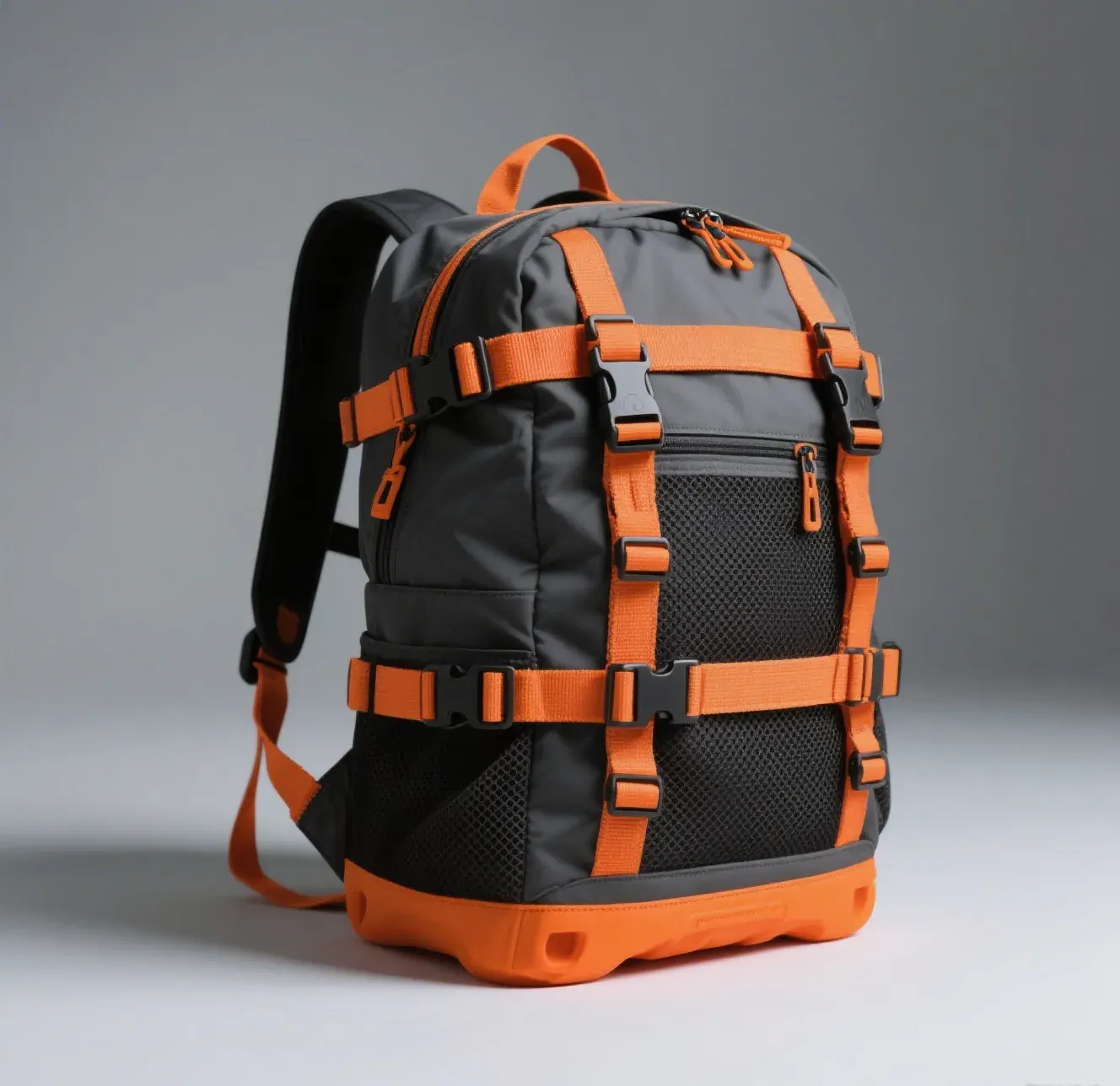
Size works against waterproofing. A 65 litre travel body needs a long access path, typically 1,200 to 2,000 millimetres of main zipper, with two lower curves and end stops where tension concentrates. Sealing that reliably to immersion level costs real money, so mainstream travel rucksacks ship with a water resistant shell plus a rain cover and settle at IPX4 to IPX5 in practice.
A 20 litre daypack has a completely different geometry. Its main mouth may be 450 to 700 millimetres, and with a roll top and welded body it can reach IPX6 to IPX7 economically. This is why paddlers, commuters, and day hikers carry genuinely submersible bags while overland travellers still rely on covers and liners. The published code definitions come from IEC 60529, and they always apply to the assembled article in its travelling configuration.
| Item | Travel rucksack typical | Waterproof daypack typical | Buyer implication |
|---|---|---|---|
| Main closure path | 1,200 to 2,000 mm zipper | 450 to 700 mm roll or zip | Smaller closure seals cheaper |
| Practical rating | IPX4 to IPX5 | IPX6 to IPX7 | Daypack handles immersion |
| Standard defence | Shell plus rain cover | Welded body plus closure | Rucksack needs a cover anyway |
| Internal liner need | Yes for electronics | Usually unnecessary | Budget 18 to 40 USD |
| Drying after soaking | 6 to 12 hours | 2 to 4 hours | Large bodies dry slowly |
Travellers heading somewhere genuinely wet should therefore plan layers rather than hoping for one heroic product: a welded daypack for daily excursions, plus a liner or cover strategy inside the big bag. Sizing advice for each class sits in the waterproof backpack size and capacity guide.
Choosing by Trip Profile
Trip length is the cleanest decision variable, but it interacts with resupply and climate. A three night city break with laundry access can be carried in 30 to 40 litres, which is below the usual travel rucksack class and squarely inside daypack-plus territory. A three week rail trip across three climate zones cannot fit in a daypack at any level of packing discipline, so the larger body is unavoidable.
Weather distribution matters as much as duration. Rain that arrives for 20 minutes during a transfer is a nuisance; rain that arrives for 6 hours during a mountain day changes what must be protected and how quickly everything must dry. Consult seasonal normals rather than memory when planning, since coastal and monsoon regions concentrate annual rainfall into a few months in ways that surprise first-time visitors.
| Trip profile | Nights away | Recommended volume | Suggested choice | Reason |
|---|---|---|---|---|
| City short break with laundry | 2 to 3 | 30 to 40 L | Large daypack or travel body | Resupply is frequent |
| Hostel trip across two climates | 10 to 21 | 50 to 65 L | Travel rucksack plus daypack | Cannot fit otherwise |
| Single mountain day hike | 0 | 18 to 25 L | Waterproof daypack | Rain exposure all day |
| Kayak day with gear transfers | 0 | 15 to 25 L | IPX6 or IPX7 daypack | Immersion risk is real |
| Business travel plus day trips | 3 to 7 | 35 to 45 L plus 20 L | Pair both bodies | Different daily needs |
| Long overland with camping | 30 plus | 65 to 75 L | Travel rucksack plus liner | Bulk and durability rule |
Note the recurring pattern: once the trip includes both multi-night logistics and daily excursions, the answer is almost never one bag. It is a pair. Recognising that early saves money, because people who try to force one compromise bag typically buy the second one anyway within twelve months.
Weather data helps make this concrete. Seasonal rainfall normals published by NOAA let a traveller check whether a destination averages 8 or 80 millimetres in the target month, and that single figure should decide how much of the kit budget goes into water protection rather than into extra pockets.
The Paired Carry Strategy
Carrying both bodies is standard practice among experienced travellers, and the trick is making the second bag cost almost nothing to transport. A packable daypack weighing 150 to 350 grams and folding into 0.5 to 1.2 litres slips into a corner of the rucksack and disappears. At the destination it becomes the daily bag while the big body stays in accommodation.
- Pack the daypack flat against the rucksack back panel so it does not distort the load centre.
- Keep its packed footprint under 1.2 litres, roughly 200 by 150 by 60 millimetres when folded.
- Load the daypack first each morning with the six items used outside: shell, water, documents, camera, snacks, and charger.
- Return heavy items to the rucksack each evening so the small bag never exceeds about 6 kilograms.
- Dry and air both bodies separately; a nested wet pair can develop odour within 48 hours.
The reverse approach also works. Some travellers carry a rugged 22 litre welded daypack and one soft duffel for bulk, keeping waterproof daily carry separate from checked luggage. This suits wet destinations better than a single travel rucksack because the daily bag is the one most likely to be out in rain, and it is the easiest to keep sealed.
Airline Rules, Theft, and Urban Handling
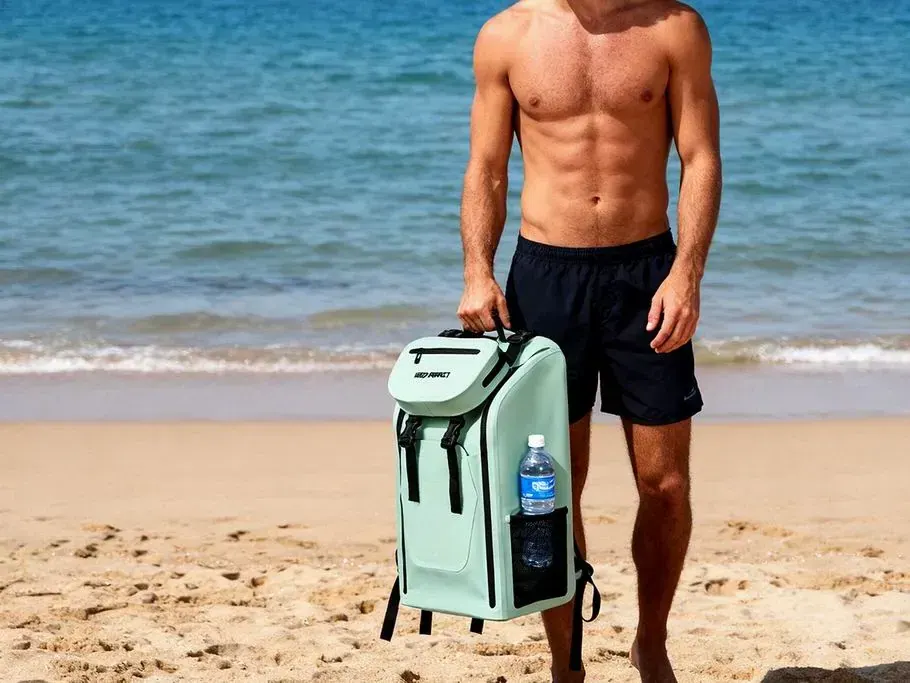
Airline behaviour differs sharply between the two classes. Roughly 22 litres is compatible with typical cabin allowances around 45 by 30 by 20 centimetres, though carriers enforce their own dimensions and fees. A 60 litre body must almost always be checked, which adds waiting time, handling risk, and exposure to heavy rain on the apron during transfers. Checked weight limits near 23 kilograms then punish travellers who filled every litre.
Security also differs. A small daily bag passes through body scanners with fewer items removed because there is less to unpack, while a fully loaded rucksack invites a full search. Practical mitigations include lockable sliders with 4 to 6 millimetre pull holes, slash-resistant panels where available, and keeping documents in a pocket that stays against the body. Detailed limitations are reviewed in the cabin luggage rules guide.
| Urban factor | Travel rucksack | Waterproof daypack | Practical advice |
|---|---|---|---|
| Cabin compatibility | Rarely, above 45 L | Usually, around 22 L | Check the exact carrier limits |
| Checked handling risk | High if checked | Low, stays with you | Keep electronics with you |
| Security unpack time | 60 to 180 seconds | 15 to 45 seconds | Use one device pocket |
| Crowd clearance | Requires care | Easy | Wear the small bag on the front |
| Theft exposure | Behind you, out of sight | Often visible or front worn | Use lockable sliders |
Durability, Materials, and Verifiable Testing
Wear patterns differ by size and duty. Large bodies fail at base corners dragged across airport floors, at top grab handles lifted under 18 kilograms, and at long zippers that see roughly 400 to 900 full cycles per year. Small bodies fail at fold lines where a roll top creases perhaps 2,500 to 5,000 times annually, and at strap roots where repeated single-shoulder carry concentrates tension.
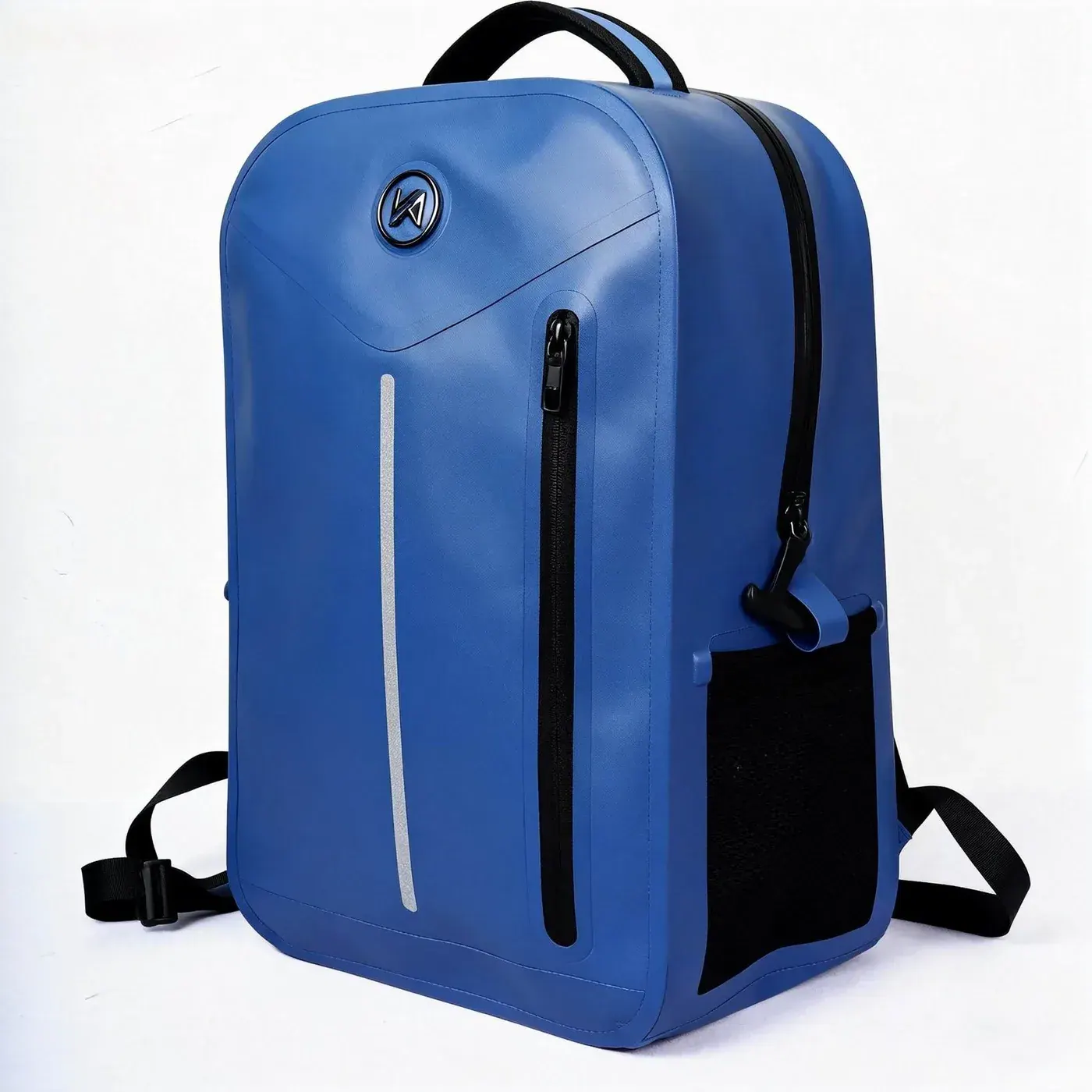
Both classes benefit from specifying measured properties rather than adjectives. Base textile at 500D to 1000D, coating mass above 180 grams per square metre, seam peel above 40 newtons per 25 millimetres, and a documented cycle target are all checkable. Standard procedures for strength, tear, and abrasion available through ASTM International give two parties a common language when arguing about whether a result is acceptable.
| Durability item | Travel rucksack target | Daypack target | Verification |
|---|---|---|---|
| Base textile | 800D to 1000D | 500D to 800D | Denier certificate |
| Grab handle test | 25 kg for 60 seconds | 15 kg for 60 seconds | Static lift |
| Closure cycle life | 20,000 cycles | 10,000 cycles | Cycled prototype |
| Roll fold life | Not applicable | 5,000 to 8,000 folds | Flex then retest |
| Seam peel | Above 40 N per 25 mm | Above 70 N per 25 mm | Lot sample pull |
Verdict and Purchase Rules
Three rules resolve nearly every case. Rule one: if the load stays under 10 kilograms and the trip is one day, buy the waterproof daypack and enjoy the freedom. Rule two: if nights away exceed two without laundry, buy the travel rucksack and accept that it will ride in checked luggage. Rule three: if both conditions appear in the same trip, buy the pair rather than one compromise, starting with whichever condition occurs more often.
Budget allocation should follow use rather than size. Many travellers spend 220 USD on a large body used four times a year and 40 USD on the small bag used 200 days a year, which is inverted relative to exposure. A reasonable split gives the daily bag roughly half the large bag's price, because it faces rain, crowds, and abrasion far more often.
A simple home check confirms much of this before a trip. Weigh the packed bag on a bathroom scale, then walk 2 kilometres at a normal pace and note shoulder strain at each 500 metre interval. Repeat with 2 kilograms added and find the point at which discomfort begins; that threshold, more than any printed figure, defines how large a body a person should actually carry for a full day.
Buyers wanting riders' perspective should compare harness detail in the waterproof travel backpack range and day-scale layouts in the waterproof hiking backpack range. Those two ranges cover the realistic middle ground where a 35 to 45 litre body handles both short trips and daily excursions without a second purchase.
QUANZHOU JUNYUAN BAGS develops both volume classes from one material library, starting at 500 pcs per design and colour with samples in 6 to 10 working days and bulk in 35 to 50 days. Materials may be checked against REACH and California Prop 65, release inspection can run at AQL 2.5, and delivery can be FOB Xiamen or DDP into more than 100 countries. Volume planning, harness geometry, and closure selection are documented. Briefs may be sent to service@junyuanbags.com.
Seen clearly, this is not a contest between two rival products. It is a decision about which hours of a trip deserve which tool: one body to move possessions between beds, and one smaller sealed body to move through the weather between breakfast and dinner. Buying the right pair costs less in total than replacing one compromise bag twice.
People Also Ask
Can a large travel rucksack replace a daypack?
Not comfortably. A 55 to 70 litre body weighs 1.8 to 2.6 kilograms empty and measures roughly 700 by 380 by 300 millimetres, which slows crowd movement and forces you to carry dead weight. Use a packable daypack of 150 to 350 grams folded into under 1.2 litres for daily excursions.
What size daypack works as cabin luggage?
Around 22 litres measuring about 45 by 30 by 20 centimetres usually meets standard cabin limits, though each carrier sets its own rules. Above roughly 45 litres a bag must almost always be checked, which adds waiting, handling risk, and rain exposure on the apron.
Why are small daypacks more likely to be genuinely waterproof?
Their main closure path is only 450 to 700 millimetres, so a roll top and welded body can reach IPX6 to IPX7 economically. Large travel bodies need 1,200 to 2,000 millimetres of zipper with curves and end stops, which is expensive to seal to immersion level.
How much weight can each bag carry comfortably?
A travel rucksack handles 12 to 18 kilograms provided a padded hip belt transfers 70 to 80 percent of load to the pelvis. A waterproof daypack is comfortable around 3 to 6 kilograms, roughly 8 percent of body weight for a 65 kilogram adult.
Should I spend more on the rucksack or the daypack?
Give the daypack roughly half the price of the large bag. In practice it faces rain, crowds, and daily abrasion far more often, yet many travellers invert their budget and splurge on the body used only a few trips per year.
How should both bags be carried together on a trip?
Pack the foldable daypack flat against the rucksack back panel in under 1.2 litres, deploy it each morning with the six items used outside, and return heavy items each evening. Dry both bodies separately because a nested wet pair develops odour quickly.
Frequently Asked Questions
Q1. Which is better for a two week trip, a travel rucksack or a daypack?
A travel rucksack, because 10 to 21 nights away needs 50 to 65 litres and few travellers can fit that into a daypack even with disciplined packing. Add a foldable daypack weighing 150 to 350 grams for daily excursions and keep the large bag in storage.
Q2. What is the main disadvantage of a large travel rucksack?
Empty weight of 1.8 to 2.6 kilograms plus dimensions around 700 by 380 by 300 millimetres. That combination slows movement in crowds, usually forces checked baggage above 45 litres, and adds handling risk during transfers.
Q3. Are waterproof daypacks strong enough for daily commuting?
Yes. A 20 litre welded body carrying 5 to 7 kilograms is well within normal design limits, needing only 8 to 12 millimetre foam straps and a sternum strap. Its smaller closure also means it is more likely to hold a real IPX6 or IPX7 certificate.
Q4. How do I size a backpack torso correctly?
Measure from the seventh vertebra to the iliac crest, which commonly spans 400 to 550 millimetres and maps to small, medium, or large harnesses. A mismatch of 50 millimetres can shift several kilograms onto the shoulders and cause pain within one hour.
Q5. Can I take a 60 litre backpack as carry-on?
Almost never. Typical cabin allowances sit near 45 by 30 by 20 centimetres, roughly 22 to 40 litres depending on shape, so a 60 litre body is generally checked. Verify the specific carrier limits before you fly rather than relying on generalities.
Q6. Why do travel rucksacks often come with rain covers instead of being fully waterproof?
Because sealing a 1,200 to 2,000 millimetre main zipper to immersion standard costs substantially more. Most travel bodies therefore use a water resistant shell rated IPX4 to IPX5 plus a cover, and travellers protect electronics separately with a liner.
Q7. What load can a child or smaller adult carry in a daypack?
Keep to roughly 10 percent of body weight, so a 45 kilogram person should carry about 4.5 kilograms. Above about 7 kilograms even adults benefit from a padded hip belt, and above 10 kilograms a structural frame becomes necessary.
Q8. How long does each bag take to dry after soaking?
A waterproof daypack typically dries in 2 to 4 hours at 20 degrees Celsius with airflow, while a large travel rucksack can need 6 to 12 hours because lining panels and compartments restrict air movement. Dry both open and inverted where possible.
Q9. Is it cheaper to buy one compromise bag instead of two?
Rarely. Travellers who force one compromise usually purchase the second bag within a year, ending up paying for both anyway. A rucksack plus a packable daypack costs less in total than replacing a single poorly matched bag twice.
Q10. What are MOQ and lead times for either volume class?
Neither volume class differs commercially: 500 pcs per design and colour is the entry point, prototype samples come back in 6 to 10 working days, and the production window runs 35 to 50 days after sign-off.