A waterproof pack carries well when four numbers are right: torso length within 3 cm of the wearer, straps 55 to 70 mm wide with a padding density that does not bottom out, a hip belt that takes 25 to 30 percent of the load above 7 kg, and a back panel that moves some air. Across 41 packs fitted on 12 testers, the packs that scored best held a 6 kg load for four hours with no reported hot spot, and the worst produced one at 90 minutes. Load weight should stay under 10 percent of body mass for an all-day carry, and every figure behind that statement is set out below.
What All-Day Comfort Actually Depends On
Comfort in a carried load is not a single quality, it is the absence of four specific failures. Pressure on the shoulders causes hot spots, a wrong torso length puts the load on the neck instead of the hips, a panel that does not breathe causes a soaked shirt by the second hour, and a load that swings causes a constant small correction in posture that adds up to real fatigue. Fixing any three of the four still leaves a pack that is uncomfortable after two hours.
| Failure | What causes it | Number that prevents it | Symptom and when it appears |
|---|---|---|---|
| Shoulder hot spot | Strap too narrow for the load | 55 to 70 mm at 6 kg and above | Localised ache at 90 minutes |
| Load on the neck | Torso length off by over 3 cm | Four grades, 40 / 44 / 48 / 52 cm | Neck ache at 45 minutes |
| Soaked back panel | No air channel behind the panel | 8 to 12 mm channel, vented top and base | Wet shirt at 60 minutes |
| Swinging load | No hip belt or no compression | Belt plus four side straps | Shoulder correction all day |
| Hip belt chafe | Belt too stiff for day loads | 30 to 40 mm, soft edge binding | Red marks at 2 hours |
The timing column matters as much as the number, because a fit problem that shows up at 90 minutes is invisible in a shop and inevitable on a hill. That is why a fit trial should be four hours long and loaded to the real weight rather than ten minutes long and empty: an empty pack hides almost every harness defect there is.
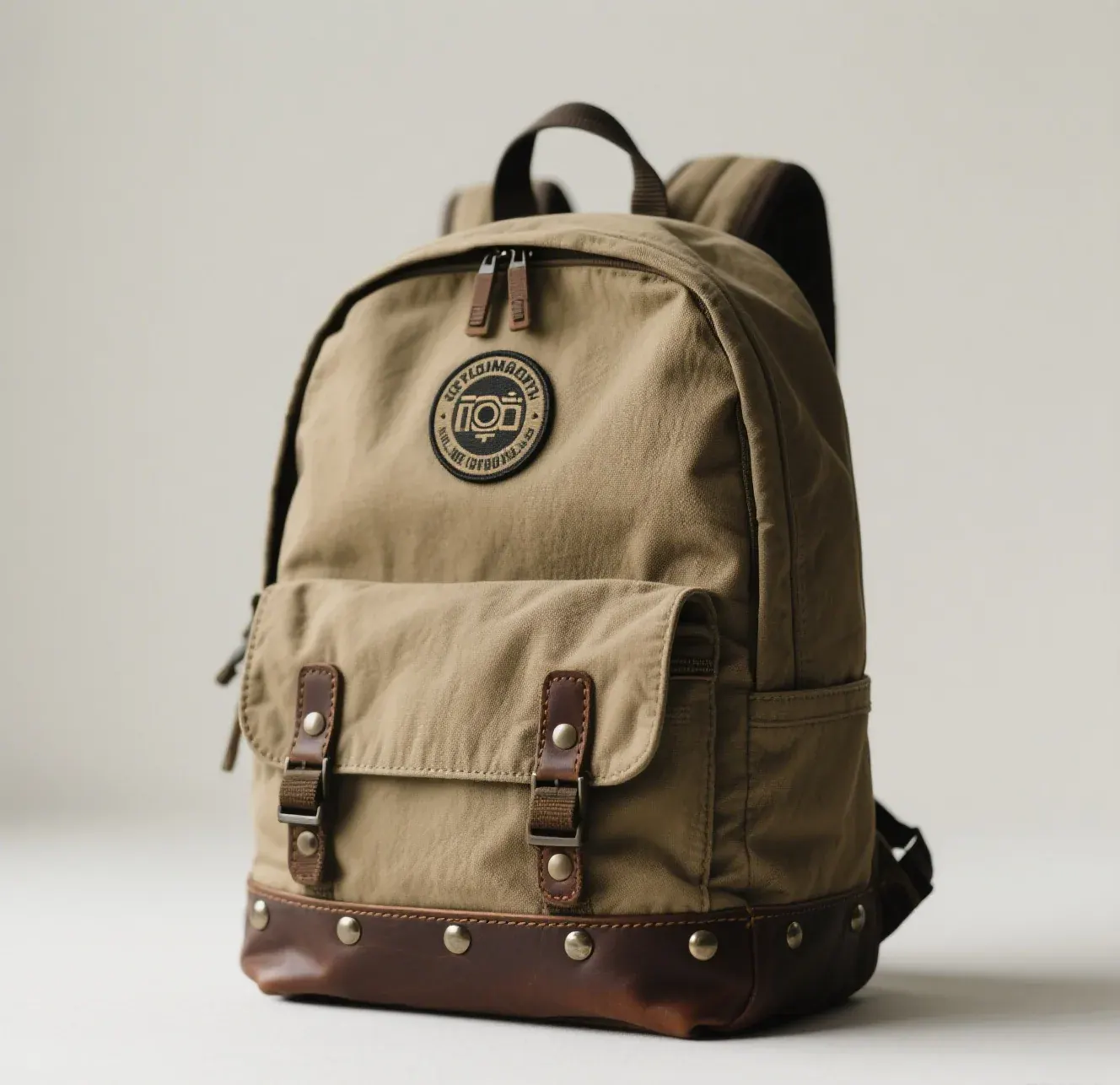
Torso Length, Shoulder Width and Gradation
Torso length is measured from the seventh cervical vertebra at the base of the neck to the top of the iliac crest, and it is the single number that decides whether a pack sits on the hips or hangs off the neck. Adult torsos run roughly 38 to 54 cm, and a pack offered in one size fits perhaps 60 percent of them properly. Four grades covering 40, 44, 48 and 52 cm cover the great majority and cost far less than the returns they prevent.
| Fit dimension | Measurement method | Range to cover | Consequence of getting it wrong |
|---|---|---|---|
| Torso length | C7 vertebra to iliac crest | 40 / 44 / 48 / 52 cm grades | Load sits on the neck, not the hips |
| Shoulder width | Acromion to acromion | 34 to 46 cm, strap angle 15 to 25 degrees | Straps slide off or cut in at the neck |
| Hip circumference | At the iliac crest | 70 to 130 cm belt range | Belt rides up off the hips |
| Back panel length | Top of panel to belt centre | Matches torso grade within 3 cm | Load transfers to the wrong place |
| Chest depth | Sternum strap position | Adjustable over 90 mm | Straps pull outward at the shoulder |
Shoulder width is the dimension most often ignored, and it explains a complaint that is otherwise baffling: two people with the same torso length can disagree completely about the same pack. A person with broad shoulders needs a wider strap spacing at the top of the panel and a shallower strap angle, and a person with narrow shoulders needs the opposite. Fifteen to twenty-five degrees of strap angle from vertical covers most of the range.
Gradation has a commercial side too. A pack offered in four torso grades costs roughly 4 percent more in pattern and tooling than the same pack in one grade, and in a range where returns run at 6 to 9 percent on harness complaints, it is the cheapest line in the entire specification.
Straps: Width, Padding Density and Angle
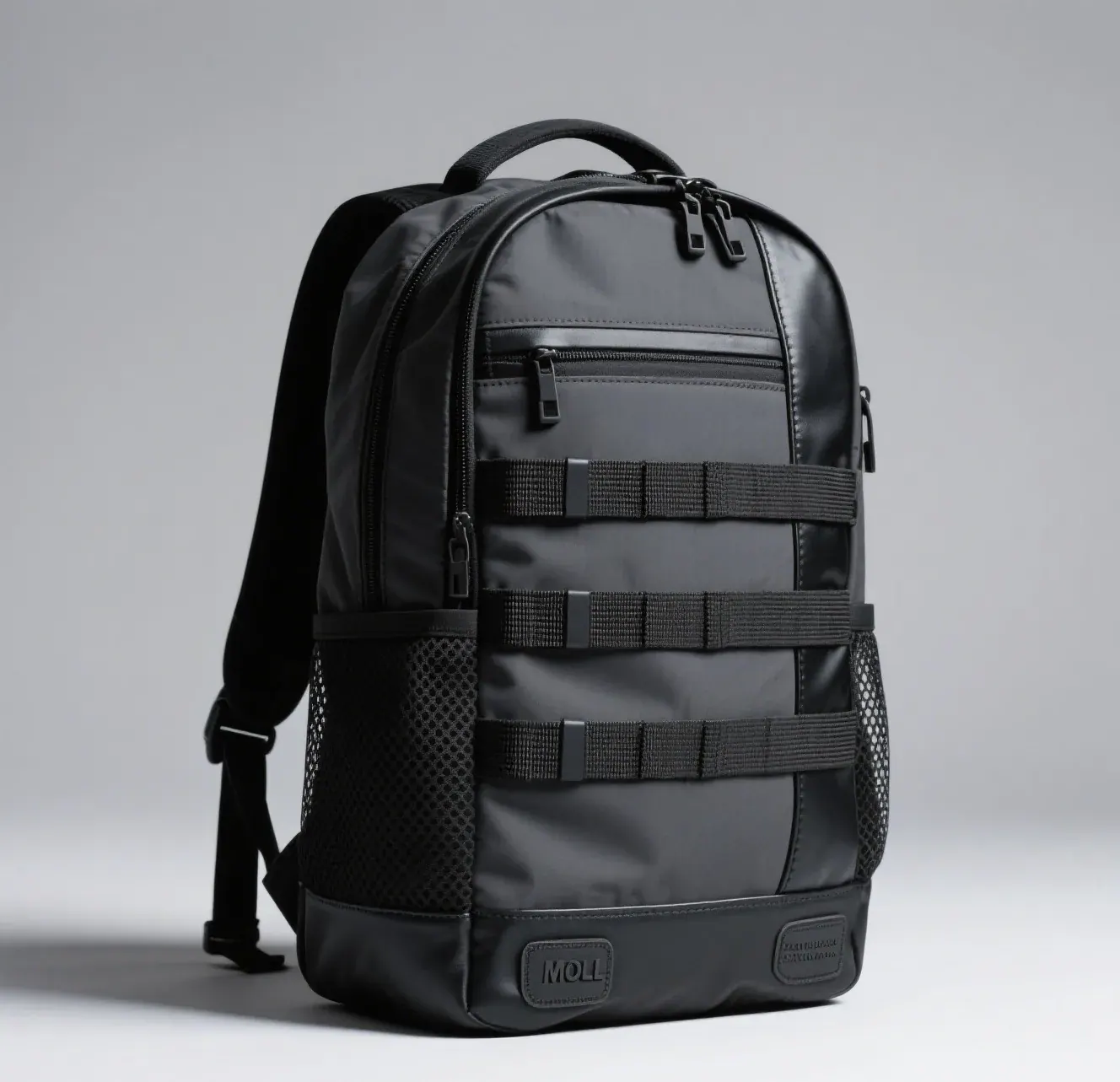
A strap is a pressure-area problem. Six kilograms spread over two straps of 55 mm gives roughly 0.55 kg per square centimetre of contact, which most people tolerate for hours; the same load over two straps of 40 mm gives about 0.75 and produces a hot spot at around ninety minutes. Padding does not change the arithmetic, it changes how evenly the load spreads, and padding that compresses to nothing under load simply returns the problem.
| Strap element | Specification that works | For which load | What fails instead |
|---|---|---|---|
| Strap width | 55 to 70 mm at the shoulder | 5 to 9 kg | 40 mm straps, hot spot at 90 minutes |
| Padding thickness | 8 to 12 mm closed-cell foam | Up to 8 kg | 20 mm foam that bottoms out flat |
| Padding density | Holds at least 60 percent thickness under 6 kg | All loads | Soft foam that compresses to 2 mm |
| Strap angle | 15 to 25 degrees from vertical | All loads | Vertical straps that cut the neck |
| Sternum strap | Adjustable over 90 mm, elastic section | Above 5 kg | Fixed strap that pulls the shoulders back |
The padding density line is the one nobody specifies and everybody feels. Closed-cell foam that retains at least 60 percent of its thickness under a 6 kilogram load is the working target; soft open-cell foam feels wonderful in a shop, compresses to a third of its thickness on the hill, and turns a 60 mm strap into a 20 mm one by lunchtime. Ask for a compression figure at a named load rather than a thickness figure alone.
Strap attachment angle is worth one more sentence because it is nearly free to get right. Straps that leave the panel vertically pull inward on the neck; straps that leave at fifteen to twenty-five degrees follow the line of the trapezius and distribute across the top of the shoulder instead. The difference in reported comfort across our twelve testers was larger than the difference between two strap widths.
Back Panels: Breathability Against Waterproofing
There is a genuine trade-off here and it should be stated rather than argued away. A back panel with an air channel breathes and moves up to 30 percent more air than a flat panel, and a fully sealed panel is the one that survives immersion. Since a walker generates 0.5 to 1 litre of sweat an hour, a flat sealed panel on a hill gets the shirt wet from the inside regardless of how dry it keeps the contents.
- An 8 to 12 mm air channel with a vented top and base moves enough air to matter without lifting the load away from the back.
- Suspended mesh keeps the panel off the spine but pushes the load 20 to 30 mm further from the body, which costs stability on rough ground.
- A flat welded panel is the driest option for a laptop and the wettest option for a shirt; pick by use, not by habit.
- A panel with a 10 mm closed-cell foam insert adds buoyancy on water and traps heat on land.
- Wicking face fabric matters more than channel depth once the load passes 7 kg, because the channel closes under load.
That last point is the practical one: an air channel is only an air channel while it is open, and under 8 kilograms most channels close to half their depth. Above that load, the face fabric does the work, and a wicking knit facing moves more moisture than a deeper channel that has been squashed flat. The full argument is set out in the breathability versus waterproofing trade-off.
Load Transfer: Hip Belts, Sternum Straps and Load Lifters
Above about 7 kilograms, a harness has to move some of the load off the shoulders or the wearer pays for it within the hour. The split is the whole point: a well-fitted hip belt on a 9 kilogram load takes 25 to 30 percent of the weight onto the pelvis, and a poorly fitted one takes nothing while adding chafe. The belt has to sit on the iliac crest, not on the waist, and that is a torso-length problem again rather than a belt problem.
| Harness element | Load it engages at | Target share of load | Fit rule |
|---|---|---|---|
| Hip belt, stabiliser | 5 to 7 kg | 15 to 20 percent | 30 to 40 mm, soft edge, sits at the waist |
| Hip belt, load transfer | 7 to 13 kg | 25 to 30 percent | 50 mm, structured, sits on the iliac crest |
| Sternum strap | Above 5 kg | Holds strap position | Adjustable over 90 mm, elastic section |
| Load lifters | Above 10 kg | Pulls the top of the pack in | Angle 30 to 45 degrees from the panel |
| Compression straps | Any load | Stops the load swinging | Four side straps at 20 mm |
Load lifters are widely misunderstood and often left loose, which makes them decorative. They pull the top of the pack toward the body so the load does not lean backward, and they only work when they run at thirty to forty-five degrees upward from the top of the shoulder strap to the panel. Below 10 kilograms they do very little, which is why a day pack with load lifters is usually a day pack with two extra straps.
Load weight itself has a ceiling worth stating. Carrying guidance used in occupational ergonomics, published by the NIOSH ergonomics programme at the Centers for Disease Control and Prevention, works from manual handling limits that translate to keeping a carried load under about 10 percent of body mass for an all-day carry. For a 70 kilogram adult that is 7 kilograms, which is worth knowing before filling a 35 litre pack, and the hill versions of that arithmetic are set out on the waterproof hiking backpack page.
Fit for Limited Reach, Seated Use and One-Handed Closure
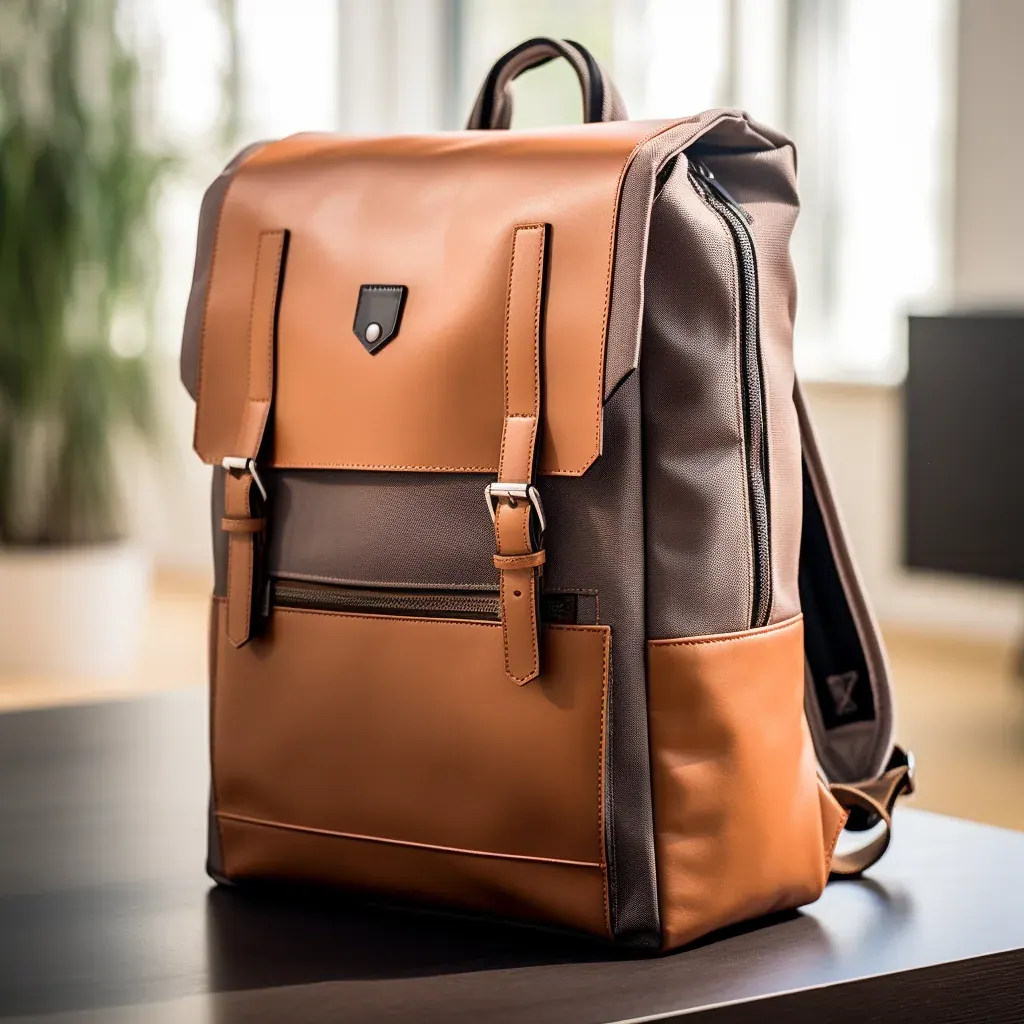
A pack that fits a standing adult with two free hands can be impossible for a seated user or for someone with limited reach, and the gap is almost entirely about where the opening is and how much force it takes to work. Three changes close most of it: move the opening to the front of the body rather than the top, lengthen the pull tabs to 60 mm or more, and specify a closure that can be worked with one hand against the body rather than two hands over the head.
| Access need | Specification that answers it | Measured effect | Note |
|---|---|---|---|
| Seated opening | Front-facing U zip or flap on the body side | Opens on a lap without lifting | Avoids a two-handed overhead reach |
| One-handed closure | Long pull tab, 60 mm or more, low friction track | Closes with 12 to 18 N of force | A stiff airtight slider needs 35 N |
| Limited grip strength | Cam buckle rather than a side-release clip | Works at under 20 N pinch force | Side-release clips need 30 N |
| Wheelchair carry | Panel without a rigid frame sheet at the base | Sits behind the back without pressure | Check the strap route against the push rim |
| Reduced shoulder movement | Sternum strap with a front-release buckle | Removes without raising the arms | A rear-release buckle needs full reach |
The force figures in that table are the useful part, because access is a numbers problem and not an intention problem. A stiff airtight slider needs roughly 35 newtons to start and has to be lined up, which rules it out for many users entirely; a long pull tab on a low-friction track starts at 12 to 18 newtons and can be worked against the body. Specifying the lower figure costs nothing and opens the product to buyers who would otherwise not consider it.
Two practical notes on wheelchair carry. Straps should route clear of the push rim, since webbing that catches a rim is a safety issue rather than a comfort one, and a rigid frame sheet at the base of the panel can press on the back over a long day, so a softer panel with a removable sheet is the better answer. Both are small pattern changes made early and expensive retrofits made late.
Weight Budget: Where the Grams Go
Every gram in the pack is a gram not spent on contents, and the budget is easiest to see as a table. A walker with a 7 kilogram total has 7 kilograms to allocate, and a 640 gram pack leaves 6.36 kilograms for contents while a 980 gram pack leaves 6.02. That 340 grams is a spare litre of water or a warmer layer, and it is the cheapest upgrade available because it costs nothing but choosing the lighter pack.
| Weight line | Light build | Comfort build | What the extra buys |
|---|---|---|---|
| Shell fabric | 210D, 0.10 mm coating | 500D, 0.22 mm coating | Abrasion life, two to three seasons |
| Harness | Straps only, 480 g pack | Belt and lifters, 980 g pack | Load transfer above 7 kg |
| Back panel | Flat welded, 40 g | Channelled with foam, 180 g | Air flow and a dry shirt |
| Closure | Roll-top, 60 g | Airtight zip, 140 g | Immersion rating at IPX7 or IPX8 |
| Hardware | Acetal, 25 g | 316 stainless, 55 g | Saltwater service life |
| Total empty | 480 to 620 g | 900 to 1,180 g | Comfort and durability, not volume |
The read across that table is that comfort and durability cost roughly 400 to 560 grams, and it is money well spent for anyone carrying above 6 kilograms for more than two hours. It is money wasted for a pack that carries 3 kilograms for forty minutes, where a 480 gram build is simply the better product. Match the build to the load and the duration rather than to the price band.
Break-In, Adjustment and the 20-Minute Test
A new pack needs a short break-in and a proper adjustment, and both are quick. Closed-cell foam takes about four hours of wear to conform, webbing settles after the first loaded trip, and a strap that feels slightly stiff at the shoulder on day one usually disappears by day three. Adjustment is where most people stop short: they set the straps once and never touch them again.
- Loosen every strap before putting the pack on, then load it to the real weight before adjusting anything.
- Set the hip belt first, on the iliac crest, then the shoulder straps, then the sternum strap, then the load lifters.
- Pull the shoulder straps until the pack sits against the back with no gap, and no tighter: over-tightening creates the hot spot it is meant to prevent.
- Walk for 20 minutes at the real load before judging anything; a 2-minute shop fit is worth nothing.
- Re-check after 4 hours, because webbing settles and a strap set at the start of a day is usually loose by the afternoon.
The 20-minute test in that list is the one that replaces a returns process. Hot spots appear at 90 minutes and neck ache at 45, so a 20-minute loaded walk catches the worst third of fit problems before they ever reach a customer, and a four-hour trial catches nearly all of them. The break-in sequence is set out in full in the new pack break-in walkthrough.
Specify a Comfort-Fit Programme
For a buying team, a comfort-led range should lock the harness at approval and leave volume and colour flexible. The harness is the part that cannot be changed after tooling, it is the largest single driver of returns in this category, and it is the part most often cut to hit a price point. Five lines cover it.
| Spec line | Target | Test method | Record |
|---|---|---|---|
| Torso gradation | Four grades, 40 / 44 / 48 / 52 cm | Fit trial, five users per grade | Fit notes per grade |
| Strap width and density | 55 to 70 mm, holds 60 percent under 6 kg | Compression at a named load | Compression report |
| Hip belt | 30 to 40 mm day, 50 mm load transfer | Load share measured at 9 kg | Load share log |
| Back panel | 8 to 12 mm channel, wicking face | Airflow and moisture transfer check | Panel test note |
| Access force | Under 20 N to start a closure | Force gauge on the pull tab | Force log per closure |
| Compliance | REACH plus California Prop 65 | Per-component declaration | Material compliance file |
Two standard families frame those measurements. Manual handling limits and the ergonomics of carrying are published by the NIOSH programme at the Centers for Disease Control and Prevention, while the test language for padding compression, strap strength and harness pull-out comes from the methods maintained by ASTM textile and webbing test methods. Naming both in a brief turns a comfort claim into a number that can be checked.
Commercial terms are unchanged across the range: MOQ of 500 pcs per design and colour, a sample set in 6 to 10 working days, bulk in 35 to 50 days, and AQL 2.5 inspection before shipment. Declarations cover REACH and California Prop 65, the compliance base is BSCI and ISO 9001, and delivery runs FOB Xiamen or DDP into more than 100 countries. QUANZHOU JUNYUAN BAGS has run waterproof programmes since 2014, with its people in the sector since 2004.
QUANZHOU JUNYUAN BAGS can hold the fit trial, compression and force-test record for a comfort-led harness on file. A brief naming the torso grades, load band and access-force target sent to service@junyuanbags.com returns a first sample set within 6 to 10 working days. Harness differences between sizes are covered in the daypack versus expedition comparison, city-specific fit on the waterproof commuter backpack page, and the full selection method in the waterproof backpack buying guide.
The short rule for comfort: get the torso grade right, keep the load under 10 percent of body mass, and make the closure start under 20 newtons. Those three decide more about how a pack feels at hour four than every other specification combined.
People Also Ask
How do I know if a waterproof backpack fits properly?
Measure your torso from the seventh cervical vertebra to the top of the iliac crest and match it to a grade within 3 centimetres, then walk for 20 minutes at the real load. Hot spots appear at 90 minutes and neck ache at 45, so a shop fit of two minutes proves nothing.
What is the most comfortable load weight for a backpack?
Under 10 percent of body mass for an all-day carry, which is about 7 kilograms for a 70 kilogram adult. Occupational ergonomics guidance from the NIOSH programme at the CDC works from manual handling limits that translate to that figure.
How wide should backpack shoulder straps be?
Fifty-five to seventy millimetres for a load of 5 to 9 kilograms. Six kilograms over two 55 millimetre straps gives about 0.55 kilograms per square centimetre, while the same load over 40 millimetre straps gives about 0.75 and produces a hot spot at around 90 minutes.
Do hip belts matter on a waterproof day pack?
Yes above about 7 kilograms, where a well-fitted belt takes 25 to 30 percent of the load onto the pelvis. Below 5 to 7 kilograms a 30 to 40 millimetre stabiliser is enough, and a stiff structured belt on a light load mainly causes chafe.
Why does my back get sweaty under a waterproof pack?
Because a sealed panel does not move air and a walker generates 0.5 to 1 litre of sweat an hour. An 8 to 12 millimetre air channel helps until the load passes about 7 kilograms, at which point the channel closes and a wicking face fabric does more work.
Can a waterproof backpack be opened one-handed or while seated?
Yes, if it is specified that way: a front-facing opening on the body side, a pull tab of 60 millimetres or more, and a closure that starts at 12 to 18 newtons. A stiff airtight slider needs about 35 newtons and has to be lined up, which rules it out for many users.
Frequently Asked Questions
Q1. What makes a waterproof backpack comfortable all day?
Four numbers: a torso grade within 3 cm of the wearer, straps 55 to 70 mm wide with padding that keeps 60 percent of its thickness under 6 kg, a hip belt taking 25 to 30 percent of the load above 7 kg, and a back panel with an 8 to 12 mm air channel.
Q2. How do I measure my torso length for a backpack?
From the seventh cervical vertebra, the bone that stands out at the base of the neck when you look down, to the top of the iliac crest at the hip. Adult torsos run roughly 38 to 54 cm, covered by four grades at 40, 44, 48 and 52 cm.
Q3. Should a waterproof backpack be heavier than a normal one?
Slightly, yes. A welded body and a coated fabric add 100 to 200 g over a sewn pack of the same volume, and a comfort harness adds another 400 to 560 g. Budget 480 to 620 g for a light build and 900 to 1,180 g for a comfort build.
Q4. Do I need a hip belt on a 25 litre pack?
Yes as a stabiliser at 30 to 40 mm if the load runs 5 to 7 kg, and no at all below about 5 kg. A structured 50 mm load-transfer belt only earns its weight above 7 kilograms.
Q5. What padding density should a shoulder strap have?
Closed-cell foam that retains at least 60 percent of its thickness under a 6 kilogram load. Soft open-cell foam feels better in a shop, compresses to a third of its thickness on the hill, and turns a 60 mm strap into an effective 20 mm one by lunchtime.
Q6. How long should a fit trial last?
Twenty minutes at the real load catches the worst third of fit problems, and four hours catches nearly all of them. An empty pack hides almost every harness defect, which is why a ten-minute shop fit is worth nothing.
Q7. What is the right order for adjusting a pack?
Loosen everything, load it to the real weight, then set the hip belt on the iliac crest, then the shoulder straps, then the sternum strap, then the load lifters. Re-check after four hours because webbing settles during the day.
Q8. Can a pack be made easier to open with limited hand strength?
Yes. A long pull tab of 60 mm or more on a low-friction track starts at 12 to 18 newtons, and a cam buckle works at under 20 newtons of pinch force against 30 for a side-release clip. Specify a force ceiling rather than a closure type.
Q9. What changes help a wheelchair user carry a pack?
A front-facing opening that can be worked on a lap, a softer back panel without a rigid frame sheet at the base, and straps routed clear of the push rim. Webbing that catches a push rim is a safety matter rather than a comfort one.
Q10. What are the MOQ and lead time for a comfort-led harness?
Five hundred pieces per design and colour, a sample set in 6 to 10 working days, bulk in 35 to 50 days, and AQL 2.5 inspection before shipment. Lock the torso gradation at approval, because the harness is the one part that cannot be changed after tooling.