A waterproof backpack for gym and swimming needs 20 to 26 litres split into two zones: a welded wet compartment of 4 to 8 litres at the base with a 6 to 8 millimetre drain grommet, and a dry zone above it for clothes, shoes and a laptop. The wet compartment is the part that decides whether the pack works, and three specifications matter: a welded rather than sewn liner, because a sewn liner leaks into the dry zone; a drain at the lowest point rather than a sealed base, because a sealed wet pocket becomes a standing-water problem; and a smooth film surface at 0.20 to 0.30 millimetres that can be wiped rather than laundered. Chlorine is the reason the separation matters: pool water at 1 to 3 parts per million of free chlorine degrades elastane in swimwear within 100 to 200 hours of exposure unless it is rinsed, and wet gear left in a closed pack above 60 percent relative humidity grows mould in 24 to 48 hours. This page sets out the sizing, the wet compartment specification, the chemistry and the care routine.
Why a Gym Bag Needs Two Zones, Not One
The case for separating wet from dry is not tidiness, it is chemistry. A swimsuit wrung out by hand still holds 100 to 200 millilitres of water, and that water carries free chlorine at 1 to 3 parts per million, salt in the case of a saltwater pool, and the organic load a body leaves behind in it. Sealed into a single compartment with dry clothes, shoes and a towel, it raises the internal humidity above 60 percent within an hour and the pack becomes an incubator rather than a bag.
| Item | Compartment | Water held after use | Consequence if mixed |
|---|---|---|---|
| Swimsuit, wrung out | Wet | 100 to 200 ml | Chlorine transfers to dry fabric |
| Swim towel, damp | Wet | 150 to 300 ml | Mould within 24 to 48 hours |
| Goggles and cap | Wet | 20 to 50 ml | Fog coating degrades |
| Training shoes | Dry | 30 to 80 ml | Odour, sole adhesive softens |
| Dry clothes and underwear | Dry | 0 | Unwearable once damp |
| Toiletries | Dry | 0 | Leakage contaminates everything |
| Laptop or tablet | Dry, sleeve | 0 | Not recoverable after immersion |
The separation also protects the pack itself. A liner that carries chlorinated water every day and is never dried properly will fail at the seams long before the shell does, and a welded wet compartment is both easier to empty and easier to wipe than a sewn and taped one. The construction difference is explained in more detail in the wet and dry separation guide, which compares welded liners, removable wet sacks and sealed base compartments.
One practical point decides the layout more than any other: the wet zone must sit at the bottom. Water moves downwards, and a wet compartment above a dry one leaks into it eventually regardless of how well it is sealed. Any design that puts the wet pocket in the lid or on the front panel is a design that will wet the dry zone, and it should be avoided however convenient the access looks.
Sizing a Gym and Swim Pack
Three configurations cover the range and the differences between them are larger than they look, because shoes and towels are bulky rather than heavy. A gym-only pack runs 12 to 16 litres, gym and swim together needs 20 to 26, and a swim-focused pack for someone carrying fins, a kickboard and two towels needs 24 to 30. Buying too small is the commoner mistake, because a pack that cannot be closed properly is a pack whose roll-top does not reach its rating.
| Configuration | Volume | Carries | Empty weight |
|---|---|---|---|
| Gym only | 12 to 16 L | Shoes, clothes, towel, bottle | 0.7 to 1.1 kg |
| Gym and swim | 20 to 26 L | Adds swimsuit, goggles, damp towel | 1.0 to 1.5 kg |
| Swim focused | 24 to 30 L | Adds fins, kickboard, second towel | 1.2 to 1.8 kg |
| Commute plus swim | 26 to 32 L | Adds a 15 inch laptop in a sleeve | 1.4 to 2.0 kg |
The item that surprises people in that table is shoes. A pair of trainers in size 42 to 45 occupies 3.0 to 5.0 litres and is the single bulkiest thing most people carry to a gym, which is why a 15 litre pack that looks generous on a website will not close once shoes and a towel are inside. The second is the towel: a bath sheet rolled rather than folded takes 1.5 to 2.5 litres, and a damp one takes more because it will not compress.
Anyone combining a swim with a working day should add a laptop in its own sleeve, and that configuration is worth thinking about carefully. A damp pack is a humid pack, and humidity plus electronics is a slow failure rather than a sudden one. The detail is set out in the laptop protection guide, and the commuting case is covered in the waterproof commuter backpack overview.
The Wet Compartment Specification
Six specifications separate a wet compartment that works from one that becomes the reason the pack is replaced. The first three are structural: welded rather than sewn, a drain at the lowest point, and a smooth film that can be wiped. The second three are dimensional: 4 to 8 litres of capacity, a mouth wide enough to get a hand into, and a closure that does not need two hands to operate while standing in a changing room.
| Specification | Working value | Below this | Why it matters |
|---|---|---|---|
| Liner construction | RF welded seam | Sewn and taped leaks in 1 to 2 seasons | Every needle hole is a path to the dry zone |
| Film thickness | 0.20 to 0.30 mm TPU | Under 0.15 mm punctures | Thin film tears at the fold line |
| Drain grommet | 6 to 8 mm at the lowest point | Sealed base holds 200 to 500 ml | Standing water grows mould in 24 hours |
| Capacity | 4 to 8 L | Under 3 L will not take shoes | Too small and wet gear moves to the dry zone |
| Mouth width | 250 to 350 mm | Under 200 mm is unusable | A hand with a wet suit has to go in |
| Closure | One-handed buckle or flap | Two-handed rolling | You have one free hand in a changing room |
The drain is the specification most often omitted and most regretted. A sealed wet pocket is fine for a single damp swimsuit and hopeless for a towel, because 150 to 300 millilitres of water sits in the bottom of it until the pack is emptied, and by then it has grown something. A 6 to 8 millimetre grommet drains 200 to 500 millilitres a minute and turns the compartment from a container into a sink, which is what it needs to be.
Capacity interacts with the drain in one way worth noting. A wet compartment of 4 litres drains in under a minute and one of 8 litres takes two to three, which is fine, but a compartment without a drain never drains at all and the water it holds is the same water that will be in it next week. If a pack has to choose between a drain and extra capacity, it should take the drain.
Chlorine, Salt and What They Do
Two chemistries attack swim kit and pack fabric, and they behave differently. Free chlorine in a pool is maintained at 1 to 3 parts per million with pH held between 7.2 and 7.8, and its main effect on textiles is to break down elastane, the fibre that gives swimwear its stretch. Salt behaves differently again: it is not aggressive to fabric but it is aggressive to metal, and it crystallises as the water evaporates, leaving abrasive deposits in zips and hardware.
| Agent | Typical concentration | What it damages | Countermeasure |
|---|---|---|---|
| Free chlorine | 1 to 3 ppm | Elastane loses 20 to 40 percent stretch in 100 to 200 hours | Rinse in fresh water within 1 to 2 hours |
| Combined chlorine | 0.2 to 0.5 ppm | Odour, eye and skin irritation | Rinse, and air the pack open |
| Pool salt, saltwater pools | 3,000 to 6,000 ppm | Hardware corrosion, abrasive crystals | Fresh water rinse on the hardware |
| Sea water | about 35,000 ppm | Corrosion, stiff fabric once dry | Rinse and flex the zips while wet |
| Sunscreen and body oils | Variable | Print and coating breakdown | Wash at 30 degrees monthly |
The numbers behind elastane degradation are worth taking seriously because they are short. Swimwear exposed to chlorinated water and left un-rinsed loses a meaningful share of its stretch within 100 to 200 hours of pool time, which for a swimmer in the water four hours a week is roughly six to twelve months. The same suit rinsed in fresh water within an hour of leaving the pool lasts comfortably longer, and the rinse costs nothing.
Pool hygiene is not only about the kit. Recreational water carries organisms that cause illness, and the guidance published by the CDC on healthy swimming is the reference for what a well-maintained pool should be doing to control it. For the pack itself, the practical consequence is the same as for the suit: rinse early, dry fast, and never store damp.
Odour and Mould: The 24-Hour Rule
Odour in a gym pack is not dirt, it is biology. Bacteria and mould multiply in warm, damp, dark, nutrient-rich conditions, and the inside of a closed pack containing damp fabric is exactly that. Above roughly 60 percent relative humidity and between 20 and 40 degrees Celsius, visible mould can appear within 24 to 48 hours, and the smell arrives before the growth is visible. The only reliable control is time and air, not fragrance and not antibacterial spray.
| Condition | Time to odour | Time to visible growth | Control |
|---|---|---|---|
| Closed pack, damp towel, 25 C | 8 to 12 hours | 24 to 48 hours | Empty and air within 2 hours |
| Closed pack, damp suit only | 12 to 24 hours | 48 to 96 hours | Empty within 4 hours |
| Open pack, moving air, 22 C | None | None | Dries in 6 to 12 hours |
| Wet compartment drained, open | None | None | Drain, then leave the flap open |
| Pack stored damp for a week | Immediate | Visible in 2 to 3 days | Full wash and disinfection |
The rule that follows from that table is simple and worth stating as one sentence: empty the wet compartment within two hours of leaving the pool, and leave it open until it is dry. Two hours is the window before odour begins, and it is generous. Everything else — deodorisers, sachets, sprays — is treating the symptom, and some of them make it worse by adding a nutrient film to the liner.
One exception deserves a note because it is genuinely useful: a small quantity of silica gel in the dry zone, 10 to 20 grams, does reduce humidity in a pack that has to be closed and carried for a working day. It does not fix a wet compartment that was never emptied, and it needs regenerating or replacing every two to three months, but it is cheap insurance for anyone who swims before work and cannot empty the pack at midday.
Drying, Washing and Care
Care for a waterproof gym pack is mostly drying, with washing as a monthly rather than a weekly task. The governing constraint is temperature: a TPU film distorts above roughly 60 degrees Celsius and a welded seam loses integrity well before the fabric looks damaged, which rules out tumble drying, radiators and hot car boots. Air at 20 to 25 degrees Celsius in moving air dries a pack in 6 to 12 hours and damages nothing.
| Task | How | Interval | Never |
|---|---|---|---|
| Empty the wet compartment | Drain, wipe, leave the flap open | Within 2 hours of use | Store it closed while damp |
| Rinse after chlorinated water | Fresh water on the liner and hardware | Every swim | Use hot water above 40 degrees |
| Machine wash the pack | 30 degrees, mild detergent, no spin above 600 | Every 20 to 30 uses | Fabric softener, bleach, tumble dry |
| Clean the liner | Wipe with a mild solution, rinse | Weekly | Solvents or abrasive pads |
| Re-proof the shell | Spray or wash-in, then low heat | Every 6 to 12 months | Apply to a dirty pack |
| Check the drain grommet | Clear debris, flex the seal | Monthly | Leave it blocked |
Fabric softener deserves its place in the never column because it is the single most damaging thing a well-meaning owner puts on technical fabric. It works by depositing a waxy film, and that film destroys the durable water repellent finish on the shell, reduces the breathability of any mesh panel and leaves a residue that holds odour. A pack washed in softener comes out softer and performs worse, and the fix is a further wash with a technical detergent followed by a re-proofing cycle.
Colourfastness is the other care question people ask, and it is measurable rather than a matter of opinion. Fastness to washing, to chlorinated water and to perspiration are the three that matter for swim kit, and the test methods and the grey scale used to score them are published by AATCC. A specification asking for grey scale 4 or better on all three will produce a pack that still looks presentable after a season of pool use.
Backpack, Duffel or Tote for the Pool
The last decision is the format, and it is more consequential for swim use than for any other activity because of how a changing room works. Three formats cover the market and each has a clear advantage. The right answer depends on how far the pack has to be carried and whether it will sit on a wet floor.
| Format | Advantage | Disadvantage | Best for |
|---|---|---|---|
| Waterproof backpack | Hands free, comfortable over 1 km | Slower to load at a locker | Cycling or walking to the pool |
| Waterproof duffel | Fast to pack, wide mouth | One shoulder only, tiring above 3 kg | Driving, short walks |
| Welded wet tote | Stands upright, wipes clean | No back support, open top | Poolside and family use |
| Sling or waist pack | Fastest access of all | Under 8 L, no shoe space | Swim only, no gym kit |
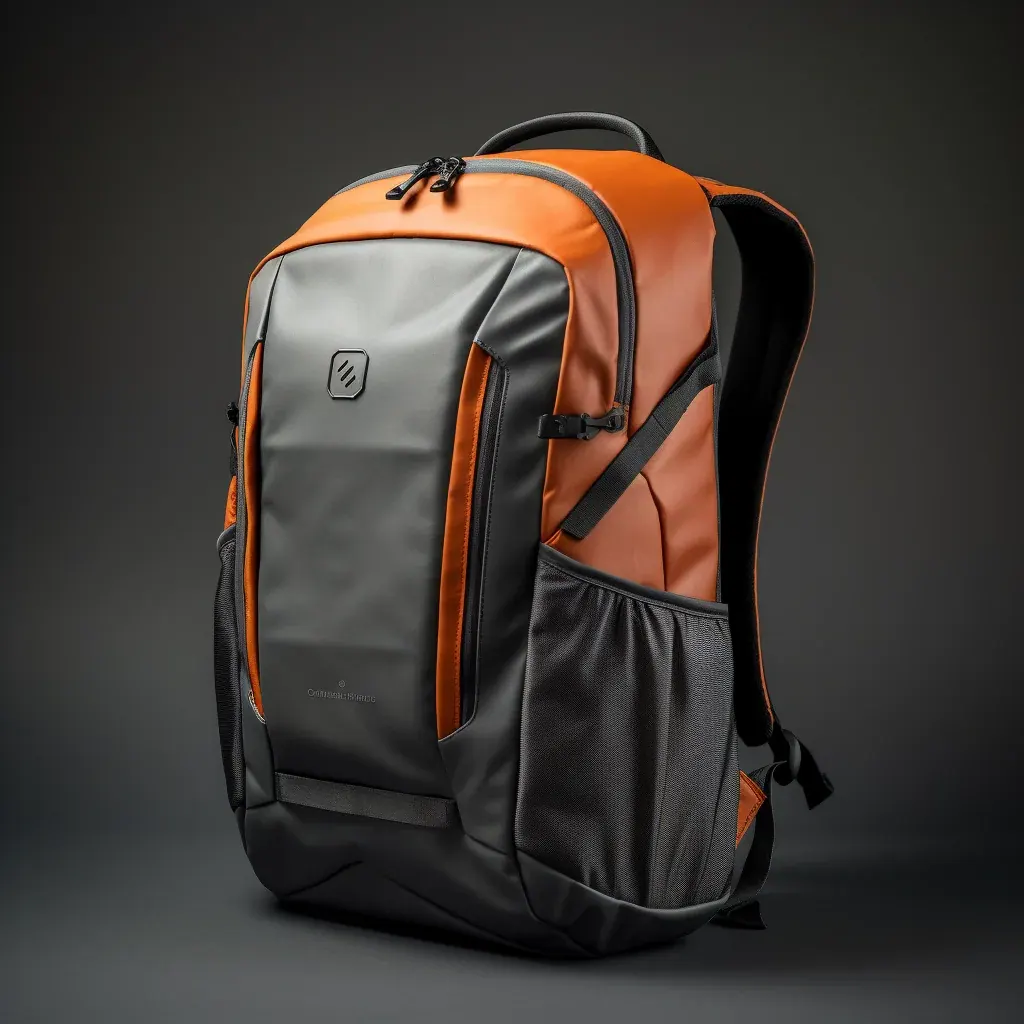
Two features settle the choice for most people. A pack that stands upright on a wet changing-room floor keeps its contents off that floor, which a soft duffel does not, and a pack that can be carried hands-free matters the moment the swim is combined with a cycle or a walk. For a pool reached by car with a family in tow, a welded tote is genuinely better; for a pool reached on foot, it is not.
Anyone swimming outdoors should also consider what happens if the pack ends up in the water, which is a real possibility on a pontoon, a boat or a lake shore. A sealed roll-top with trapped air will float with 5 to 10 litres of air inside, and a design intended to float is worth specifying for open-water swimming. That case is covered in the floating waterproof backpack guide.
A Buying Checklist
Six checks take about two minutes in a shop and will eliminate most of the packs that look right and perform badly. The first three are about the wet compartment, the fourth about the closure, and the last two about living with it afterwards. None of them requires equipment beyond a hand and a question.
- Is the wet compartment welded rather than sewn? Run a finger along the seam; a sewn liner will leak into the dry zone within one to two seasons.
- Is there a drain at the lowest point? A sealed base holds 200 to 500 millilitres and grows mould within 24 hours.
- Is the wet zone at the bottom of the pack? Water moves downwards, and a wet pocket in the lid will eventually wet everything below it.
- Can the collar or closure be operated with one hand? You will have one free hand in a changing room.
- Will the pack stand upright on a wet floor? A soft bag that falls over empties its contents onto the floor.
- Can the liner be wiped rather than laundered? A pack that needs a machine wash every week will not get one.
Two further questions are worth asking before buying and are about the pack's service life rather than its first week. Does the wet compartment have a replaceable or repairable liner, since it is the part that will wear first? And is the hardware saltwater-graded, since a pack used at a coastal pool or the sea will meet salt even if it never meets the ocean directly. Both are cheap to specify at the point of purchase and expensive to add later.
Aquagrip builds gym and swim configurations to those specifications: 500 pcs per design and colour, samples in 6 to 10 working days, bulk in 35 to 50 days, FOB Xiamen or DDP to more than 100 countries, with every bulk order inspected at AQL 2.5 before shipment. Programme records, liner specifications and the inspection archive are held. The closure options are described in the waterproof backpack overview, and the quality system behind the inspection standard is certified to the requirements published by ISO.
People Also Ask
What size waterproof backpack do I need for the gym and swimming?
20 to 26 litres. Trainers take 3.0 to 5.0 litres, a rolled towel 1.5 to 2.5, a damp swimsuit and goggles under 0.5, and toiletries 0.8 to 1.5, plus 4 to 8 litres for a separate welded wet compartment at the base.
Why does my gym bag smell even when it looks clean?
Bacteria and mould grow in warm, damp, dark conditions. Above 60 percent relative humidity at 20 to 40 degrees Celsius, odour starts within 8 to 12 hours of a damp towel being sealed in, and visible growth follows in 24 to 48.
Should a wet compartment have a drain hole?
Yes. A sealed base holds 200 to 500 millilitres of standing water, which grows mould within a day. A 6 to 8 millimetre grommet at the lowest point drains 200 to 500 millilitres a minute and turns the compartment into a sink.
How long does chlorine take to ruin a swimsuit left in a bag?
Roughly 100 to 200 hours of pool time if it is never rinsed, which is six to twelve months for someone swimming four hours a week. Rinsed in fresh water within an hour of leaving the pool, the same suit lasts considerably longer.
How do I dry a wet gym backpack properly?
Drain it, wipe the liner, then leave every compartment open in moving air at 20 to 25 degrees Celsius for 6 to 12 hours. Never use a tumble dryer, a radiator or a hot car boot, since a TPU film distorts above about 60 degrees.
Can I machine wash a waterproof gym backpack?
Yes, at 30 degrees with a mild detergent and no spin above 600, every 20 to 30 uses. Never use fabric softener, which deposits a film that destroys the water repellent finish, or bleach, which attacks the welded seams.
Frequently Asked Questions
Q1. What size waterproof backpack do I need for the gym?
12 to 16 litres for gym alone, 20 to 26 litres for gym and swimming together, and 26 to 32 litres if a 15 inch laptop travels as well. Trainers alone occupy 3.0 to 5.0 litres, which is why small packs will not close.
Q2. How big should the wet compartment be?
4 to 8 litres with a mouth of 250 to 350 millimetres. Under 3 litres will not take shoes or a rolled towel, and under 200 millimetres of mouth width you cannot get a hand in with a wet suit.
Q3. Is a waterproof backpack better than a gym duffel?
For walking or cycling to the pool, yes, because it is hands-free and stands upright on a wet floor. For driving and a short walk, a duffel is faster to pack. Above about 3 kilograms, a single-shoulder duffel becomes uncomfortable.
Q4. Does chlorine damage a waterproof backpack?
The pack survives it; the contents do not. Free chlorine at 1 to 3 parts per million degrades elastane, which loses 20 to 40 percent of its stretch after 100 to 200 hours of un-rinsed exposure. Rinse in fresh water within one to two hours.
Q5. How do I stop my gym bag smelling?
Empty the wet compartment within two hours of use and leave it open until dry. Odour begins at 8 to 12 hours and visible mould at 24 to 48 above 60 percent relative humidity; deodorisers treat the smell, not the cause.
Q6. Can I machine wash a waterproof backpack?
Yes at 30 degrees with mild detergent and a low spin, every 20 to 30 uses. Avoid fabric softener, which destroys the water repellent finish, and never tumble dry, since a TPU film distorts above about 60 degrees Celsius.
Q7. How long does a waterproof gym backpack take to dry?
6 to 12 hours open in moving air at 20 to 25 degrees Celsius. Closed, it does not dry at all, and the water it holds becomes the water that grows mould. A drained wet compartment with the flap open dries fastest.
Q8. Should I use silica gel in my gym bag?
10 to 20 grams in the dry zone is useful if the pack must stay closed for a working day, and it needs replacing every two to three months. It will not fix a wet compartment that was never emptied.
Q9. Will salt water from a saltwater pool rust the hardware?
It corrodes it. Saltwater pools run 3,000 to 6,000 parts per million and sea water about 35,000, and the salt crystallises in zips as it dries. Rinse the hardware with fresh water and flex the zips while still wet.
Q10. Can I put wet shoes in the wet compartment?
Yes, if it is 5 litres or more and has a drain. Training shoes hold 30 to 80 millilitres after use and are the bulkiest wet item most people carry, so a wet compartment under 4 litres will not take them.