Choose a waterproof backpack for 5–15 kg carried over 1 km or more, a waterproof duffel for 25–60 L loads moved mainly by vehicle or boat, and a waterproof sling for 3–12 L essentials that must be reached in 5–15 seconds. The best shape follows distance, load, opening frequency, and transport—not waterproof material alone. A backpack distributes weight across 2 shoulders, a duffel gives the widest opening, and a sling offers the fastest access but becomes uncomfortable when its one-shoulder load rises above roughly 4–5 kg.
The Shape Decision in One Table
Three waterproof forms can use the same coated textile and seam method yet behave very differently. Geometry decides how mass reaches the body, how wide the opening can be, and whether the carrier has both hands free. Start with the longest uninterrupted carry, heaviest expected load, largest rigid item, and number of access events per hour. Those 4 values usually identify the correct form before colour or pocket layout enters the discussion.
| Carry shape | Useful volume | Comfortable load | Best role |
|---|---|---|---|
| Backpack | 18–45 L | 5–15 kg with matched harness | Walking, cycling, mixed transit |
| Duffel | 25–60 L | 8–20 kg for short moves | Vehicle, boat, lodging transfer |
| Sling | 3–12 L | 1–4 kg | Fast-access daily essentials |
| Backpack plus sling | 25–40 L + 3–6 L | Split by duration | Transit plus on-body access |
| Convertible duffel pack | 30–50 L | 8–14 kg | Short walks and wide opening |
The verdict is conditional. For a 7 km rainy approach with 9 kg, backpack wins. For moving 45 L from a car to a boat in 200 m, duffel wins. For a 2-hour city walk carrying a phone, wallet, camera, and 0.5 L bottle at 2.5 kg, sling wins. Trying to make one shape lead every situation creates avoidable compromises.
The broader waterproof backpack category shows harness-led options, while the waterproof backpack versus dry duffel guide focuses on the first 2 forms in greater depth. This three-way comparison adds access and asymmetric carry through the sling.
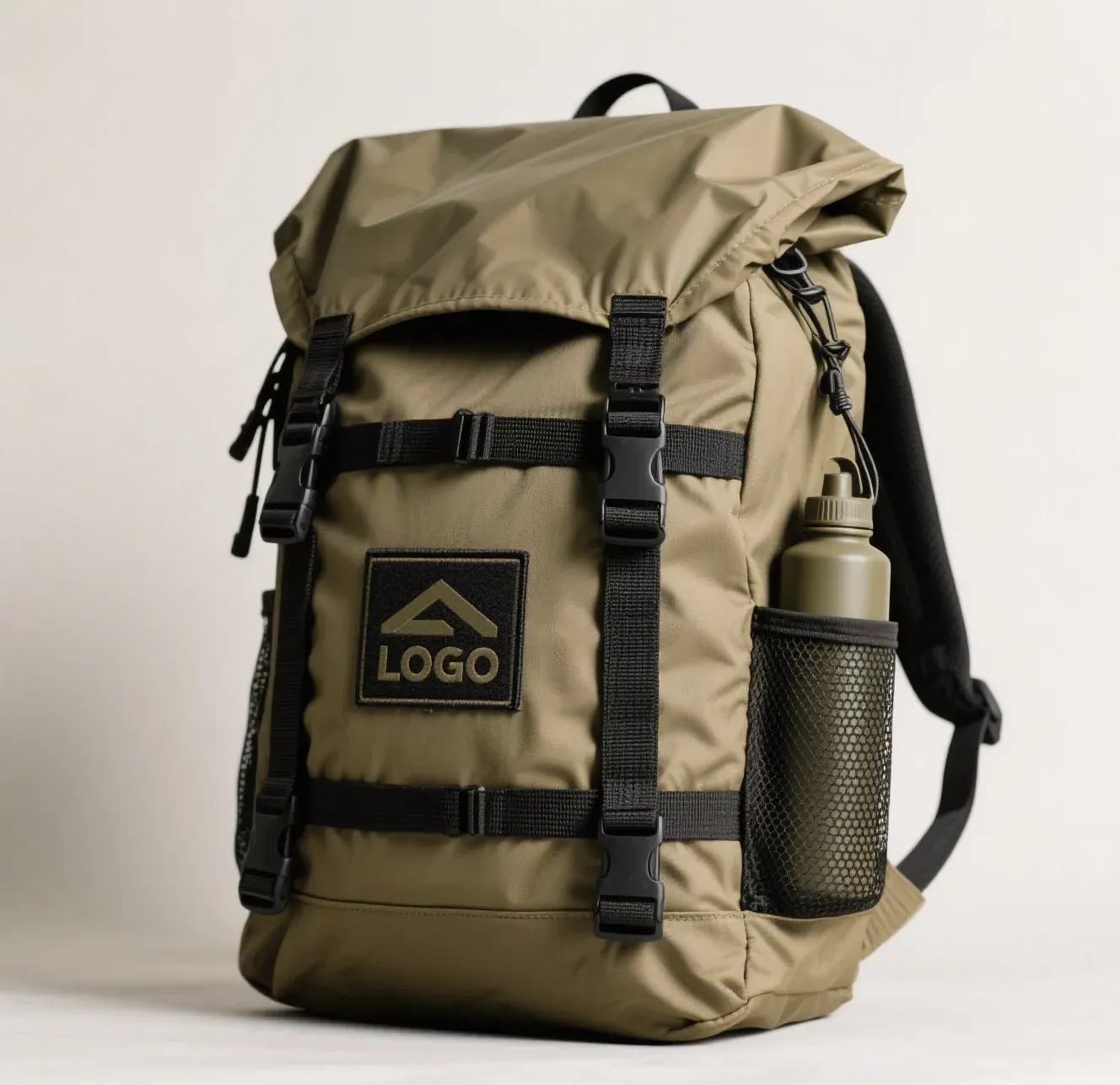
Backpack: Best for Distance and Hands-Free Stability
A backpack spreads load across 2 shoulder straps and, above about 7 kg, can transfer 20–30 percent to the pelvis through a fitted belt. It keeps both hands available for rails, trekking poles, bicycle control, or equipment. A 25–35 L body covers many mixed trips, while 35–45 L supports overnight loads. The price of this stability is access: the main opening often takes 20–45 seconds and may require removing the pack.
Fit matters more than nominal capacity. Match torso length within roughly 3 cm, use 55–70 mm shoulder straps for 5–10 kg, and keep dense items within 50 mm of the back. Four compression points should limit movement below 25–30 mm. A 30 L shell with a poor harness is worse at 8 kg than a well-fitted 25 L pack carrying a disciplined list.
Choose this shape for any sustained carry over 1 km, stairs, uneven ground, cycling, or a load above 5 kg. Avoid it when one rigid object needs a very broad opening every 10 minutes or when the bag mostly remains on a deck or vehicle. Backpack straps also create more exterior foam to absorb surface water and require a longer drying routine.
| Backpack factor | Target | Why | Test |
|---|---|---|---|
| Torso fit | Within about 3 cm | Positions belt and load | Loaded 90-minute walk |
| Strap width | 55–70 mm at 5–10 kg | Distributes shoulder pressure | Pressure score at 30 and 90 min |
| Load position | Dense mass within 50 mm of back | Limits leverage | Step and turn course |
| Movement | Under 25–30 mm | Stability | Video during stairs |
| Main access | 20–45 seconds | Practical use | Ten retrieval cycles |
Duffel: Best Opening and Vehicle-to-Destination Movement
A duffel offers a long U opening or a wide roll mouth, making shoes, wetsuits, work clothing, and grouped equipment easy to see. In 40–60 L sizes, it holds bulky gear without building a tall tower on the back. Carry handles let 2 people move a heavy bag, and tie-down points can secure it in appropriate transport contexts. Its main weakness is sustained one-side or hand carry.
A 12 kg duffel carried 500 m in one hand creates far more asymmetry than the same mass in a backpack. A detachable shoulder strap helps for short movement, but narrow pads and swinging bodies become tiring. Convertible shoulder straps improve the range, although they usually lack the torso shaping and belt transfer of a dedicated pack. Treat a 1 km walk as the point where a backpack deserves priority.
Duffels are excellent equipment containers. Use 4 internal modules rather than 12 loose items, put wet gear in a drainable end zone, and reinforce the lower 150 mm for repeated deck or vehicle contact. If the bag will be lifted at 20 kg, test both handles together above that working load and inspect their attachment to the shell after repeated cycles.
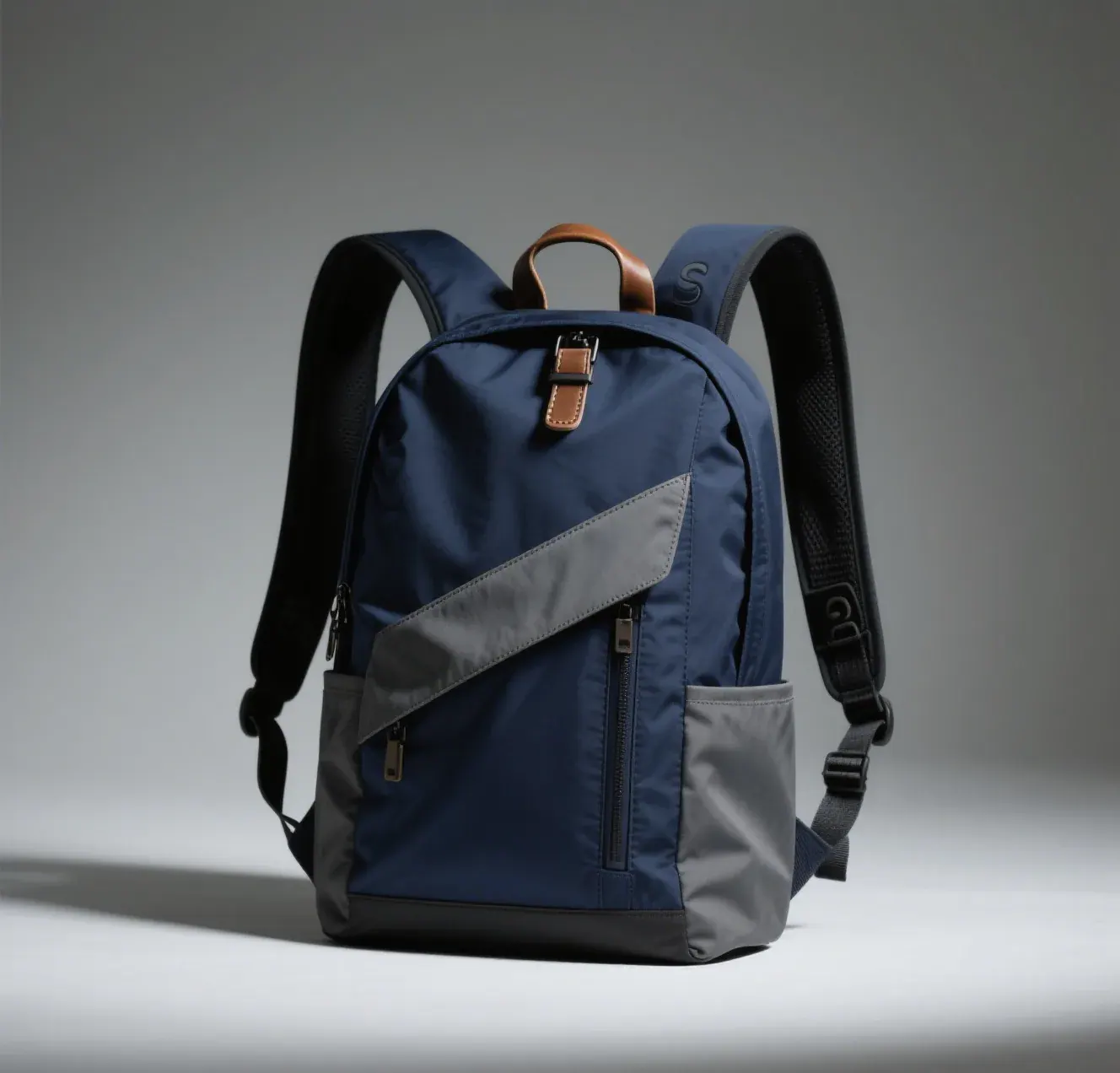
Sling: Fastest Access and the Lowest Load Ceiling
A sling moves from back to chest without removal, so a phone, ticket, compact camera, or fishing accessory can be reached in 5–15 seconds. Useful capacity is about 3–12 L, with the sweet spot near 5–8 L. Keep loaded mass around 1–4 kg. Above 4–5 kg, one shoulder carries too much continuous force and the diagonal strap can create neck pressure over a 2-hour day.
Position the widest strap section across the shoulder, not the neck, and use a secondary stabiliser for cycling or quick movement. The body should not swing more than 30 mm when walking stairs. A buckle accessible from the front supports emergency release, while a 50–70 mm pull works with gloves. Put dense items low against the torso and avoid a 1 L bottle at the far outer edge.
The waterproof sling versus backpack fit guide covers asymmetric pressure in detail. The sling is the correct answer when access count is high and mass is low. It is not a miniature backpack to be filled until every cubic centimetre is dense.
| Sling use | Capacity | Mass target | Access target |
|---|---|---|---|
| Phone, wallet, keys | 3–5 L | Under 1.5 kg | 5–10 seconds |
| City camera and bottle | 5–8 L | 1.5–3 kg | Under 15 seconds |
| Compact shore kit | 6–10 L | 2–4 kg | Under 15 seconds |
| Layer plus essentials | 8–12 L | 3–4 kg | Under 20 seconds |
| Above 5 kg | Not advised for long carry | Move to backpack | Access no longer offsets strain |
Test both shoulders if the strap is reversible, but do not assume users will alternate consistently. A reversible system must maintain closure orientation, buckle reach, and pocket access on either side. Record pressure at 30, 60, and 120 minutes with 4 kg; numbness, neck contact, or repeated adjustment is a shape mismatch.
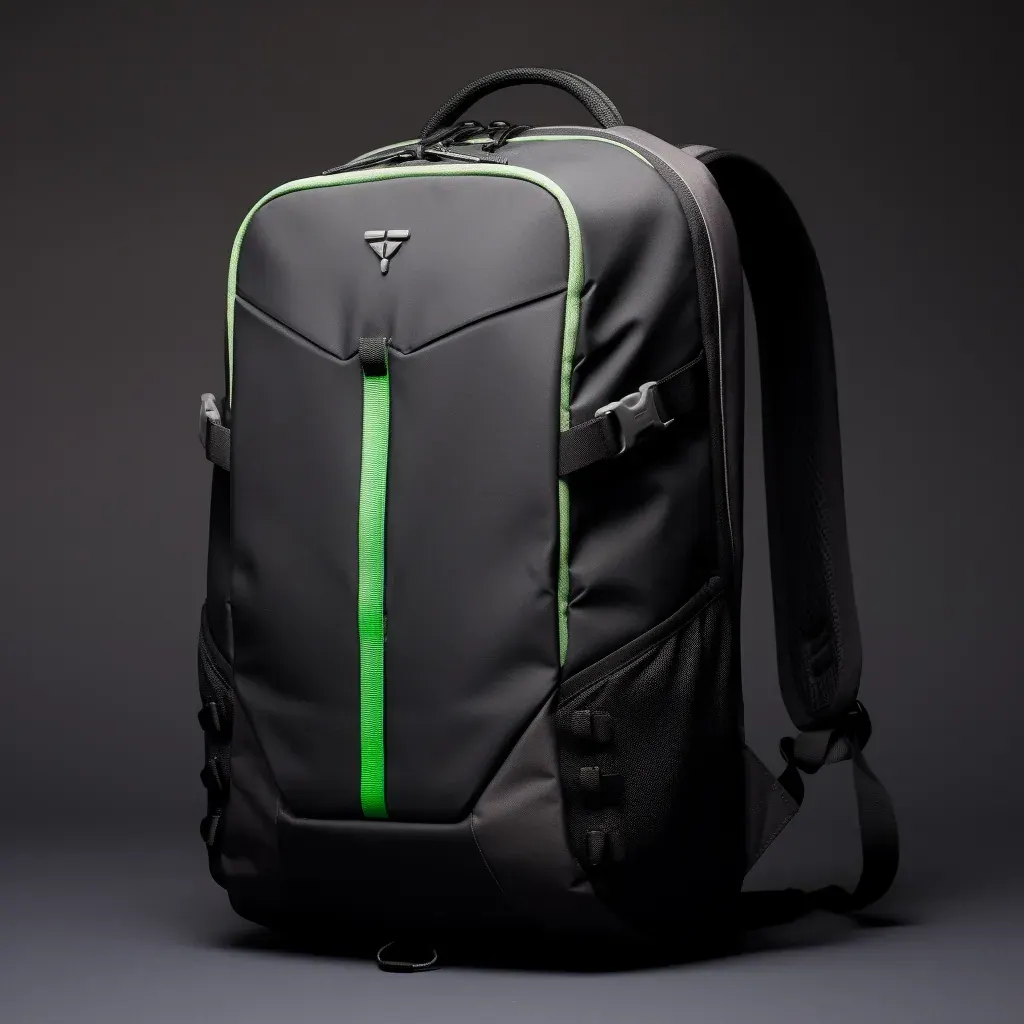
Waterproof Performance Is Independent of Shape
A backpack is not inherently more waterproof than a duffel, and a roll-top sling is not automatically less waterproof. Coated layers, joint construction, closure, corners, and penetrations decide the result. IPX terminology comes from the IEC ingress-protection framework. Ask for the complete-item exposure, loading, closure method, and pass line for each shape.
Geometry does alter weak points. Backpack shoulder anchors create repeated load near the body. A duffel's long zipper or roll mouth creates a large opening and stressed end corners. A sling's diagonal closure may sit upward during chest access and collect rain. Put tissue at shape-specific points during testing rather than using the same 3 locations for every format.
For driven rain, IPX5-to-IPX6-level targets suit many uses. Temporary immersion may justify a sealed roll-top or airtight closure, but the result must include valves and every external attachment. A separate rain cover can reduce surface wetting and mud; it cannot make an unsealed harness face or stitched opening submersible.
Relevant material, seam, and hardware methods can be selected from ASTM International. Run the physical load conditioning before the water check: 5,000 strap cycles or repeated handle lifts can reveal a leak path that a pristine sample conceals.
Access Versus Security
Opening speed forms a clear ladder. A front-rotated sling offers 5–15 seconds, a duffel opened on a stable surface 10–25 seconds, and a backpack main chamber 20–45 seconds. The fastest form also puts its opening closest to the user's hand in public space. Add deliberate zipper parking, body-side pocket orientation, and tactile closure confirmation rather than simply increasing opening force.
Security and waterproofing can conflict. Hidden closure ends and storm flaps slow unauthorised access but may collect water if poorly drained. A stiff airtight closure resists casual opening but can be difficult under cold or limited grip. Set force and time targets: under 20 N for a daily quick pocket, with the main sealed closure allowed a higher stated force where exposure demands it.
- Use a sling for items reached more than 6 times per hour and kept below 4 kg total.
- Use a duffel when the opening must expose a rigid 400–600 mm object on a stable surface.
- Use a backpack when access can wait 20–45 seconds but carry extends past 1 km.
- Provide one high-security inner pouch rather than making every pocket slow and complicated.
- Test access with wet gloves and the actual load, then confirm the closure returns to its protected state.
Three Real-World Carry Scenarios
Scenario 1 is a wet rail-and-walk commute: 7 kg, 3 km, computer, jacket, lunch, and bottle. The 22–28 L backpack wins because weight distribution and device protection dominate. A 7 kg sling is too heavy, while a duffel leaves one hand occupied through stairs and platforms. Add one 0.8 L quick pocket to reduce main-opening frequency.
Scenario 2 is a boat transfer with 45 L of clothing and equipment moved 150 m. The duffel wins because broad access, 2-person handles, and tie-down geometry matter more than a fitted back panel. Reinforce the lower 150 mm, specify non-corroding hardware, and keep personal flotation decisions separate. Where applicable, U.S. Coast Guard boating resources provide safety information.
Scenario 3 is a rainy city photo walk: 2.8 kg, 6 hours, 8–10 access events per hour. A 6–8 L sling wins if its padded cells fit the camera and it remains stable. If a second lens, computer, and 1 L bottle raise mass beyond 4–5 kg, move to a 20–24 L backpack and accept slower access. Shape changes when the load crosses the comfort ceiling.
Can a Convertible Design Replace All Three?
A convertible 35–45 L duffel with stowable shoulder straps covers vehicle movement and short walks, but its rectangular body, simple torso length, and limited belt rarely match a dedicated backpack over 5 km. A backpack with one removable sling provides better day access but adds 300–600 g and duplicate closures. Conversion has value only when both modes are genuinely used.
Test transition time and loose parts. Changing from duffel to backpack should take under 60 seconds, leave no strap tail over 100 mm, and require no detached piece that can be lost. Test the shoulder mode at 10 kg for 3 km, not with an empty sample. If comfort scores reach 4 on a 5-point scale by 60 minutes, call it a transport harness rather than an all-day one.
The cleanest mixed system is often a main backpack plus a 3–5 L removable access pouch used as a sling at destination. Keep combined mass under the harness target and verify that attaching the pouch does not puncture the wet boundary. This modular approach separates long carry from frequent access instead of forcing one strap layout to do both simultaneously.
A Seven-Day Carry Diary Beats a Five-Minute Opinion
Short showroom trials reward easy openings and hide pressure. Give each candidate shape a 7-day diary with the same core contents. Record morning mass, longest continuous carry, number of openings, access failures, wet exposure, and discomfort at 30, 60, and 120 minutes. A sling may dominate the first hour and lose by day 4 if its 4.5 kg load creates neck pressure; a backpack may feel slower yet remain neutral.
Use a crossover design where practical. The same tester carries the backpack on days 1–2, duffel on days 3–4, and sling on days 5–6, then repeats the leading format on day 7. Keep route segments comparable and do not change contents merely to help one shape. The diary should identify which object or access event caused the problem, not just assign a vague comfort score.
| Diary field | Backpack signal | Duffel signal | Sling signal |
|---|---|---|---|
| Continuous carry | Comfort after 60–120 min | Hand change before 15 min | Neck pressure after 30 min |
| Openings per hour | Frustration above 6 | Needs stable surface | Strength at 6–12 |
| Load drift | Body movement above 30 mm | Swing during stairs | Rotation away from torso |
| Wet event | Anchor and closure check | Long-opening corners | Upward edge during front access |
| Recovery next day | Shoulder hot spot | Grip or side fatigue | One-side soreness |
Convert diary results into boundaries. If the sling remains comfortable below 3.5 kg but fails at 4.5 kg, publish the lower use recommendation rather than averaging. If the duffel is fine for 200 m and poor at 800 m, treat it as a vehicle-transfer container. If the backpack's only weakness is 35-second access, add one small protected pocket instead of abandoning the best carry geometry.
Procurement Matrix and Final Decision
Write one row per use case: litres, maximum kg, longest carry, opening count, largest rigid item, water exposure, and transport mode. Score backpack, duffel, and sling from 1–5 without changing weights mid-comparison. Prototype only the top 2 formats, then run identical packing, access, load, and water checks. This prevents an aesthetic preference from becoming the selection method.
QUANZHOU JUNYUAN BAGS supports waterproof programmes with MOQ 500 pcs per design and colour, sample timing of 6–10 working days, and bulk timing of 35–50 days. AQL 2.5 inspection can include geometry, loaded dimensions, closure operation, seam appearance, strap or handle tests, and agreed water checks. BSCI and ISO 9001 systems support the workflow, with REACH and California Prop 65 screening.
A three-shape use matrix can be sent to service@junyuanbags.com. Include route distance, load, access frequency, largest object, and destination. FOB Xiamen or DDP delivery to more than 100 countries can follow after the correct format and sample evidence are fixed.
The final rule is memorable: backpack for distance, duffel for volume and broad opening, sling for speed and light essentials. Use 1 km, 5 kg, and 15 seconds as useful decision markers. When a route crosses those boundaries, choose the geometry that manages the dominant task rather than the one with the longest feature list.
People Also Ask
Which waterproof bag shape is best for a long walk?
A backpack is best for more than about 1 km or loads above 5 kg because 2 shoulder straps and a fitted belt can distribute 5–15 kg. Keep dense mass close to the back and match torso length.
Why is a duffel easier to pack than a backpack?
Its long U opening or wide mouth exposes a larger rectangular space, so boots, clothing modules, and rigid equipment can be placed without vertical stacking. That same broad body is less comfortable during long one-sided carry.
How much weight can a waterproof sling carry comfortably?
Keep a sling around 1–4 kg for extended use. Above 4–5 kg, asymmetric shoulder and neck pressure usually outweigh the 5–15 second access advantage, so a small backpack is preferable.
Can a convertible duffel replace a hiking backpack?
It can cover short 1–3 km transfers at moderate load, but a rectangular body and simple harness rarely match torso fit and load transfer over a full hiking day. Test 10 kg for 3 km before making the claim.
Does bag shape change its waterproof rating?
Shape does not set the rating, but it changes weak points: backpack anchors, duffel closure corners, and sling orientation need different tissue locations and loading before the same water exposure.
Is a backpack plus small sling a good travel system?
Yes when the backpack handles the 6–10 kg transit load and a removable 3–5 L sling handles high-frequency essentials at destination. Confirm attachment does not pierce the main wet boundary.
Frequently Asked Questions
Q1. Is a waterproof backpack better than a waterproof duffel?
It is better for walking over about 1 km and carrying 5–15 kg. A duffel is better for 25–60 L of bulky gear moved mainly by car, boat, or a short hand carry.
Q2. Is a sling better than a backpack for travel?
A sling is better for 3–8 L and 1–4 kg of items reached frequently. A backpack becomes better as distance, load, or computer size grows, even though main access takes longer.
Q3. What size waterproof duffel is most useful?
A 30–45 L duffel covers many weekend and equipment transfers, while 45–60 L suits bulky group or activity gear. Choose from the largest rigid object and transport route rather than litres alone.
Q4. Can I carry a waterproof duffel on my back?
Only if it has a designed harness and passes a loaded trial. Stowable straps suit short transfers, but they may lack torso sizing, belt transfer, and back shaping for an all-day 10 kg carry.
Q5. How fast is sling access?
A well-designed sling can rotate to the chest and open in 5–15 seconds. Test with wet gloves, keep the load under about 4 kg, and confirm the closure is restored before rotating it back.
Q6. Which shape is best for a laptop?
A 20–28 L backpack usually gives the best raised sleeve, close-to-back position, and balanced carry. Lift the device 50 mm above the base and keep bottles in an independent zone.
Q7. Which shape works best on a boat?
A 25–60 L duffel works for deck equipment and wide access, while a backpack suits hands-free shore approaches. Neither replaces approved flotation or safe on-water practice.
Q8. Should all three shapes use the same water test?
The exposure may be comparable, but loading and tissue locations should reflect geometry. Test backpack anchors, duffel closure ends, and the upward-facing edge of a sling during chest access.
Q9. How do I compare access and security?
Time 10 retrievals and restoration cycles. Use fast 5–15 second access for low-mass essentials, then place high-value items in a deliberate inner zone rather than slowing every opening.
Q10. What is the best mixed waterproof carry setup?
For many trips, use a 25–35 L backpack for transit and a removable 3–5 L sling for destination access. Avoid a second module if its added 300–600 g and closures have no clear use.
Q11. What are the MOQ and timing for a carry-format programme?
The baseline is 500 pcs per design and colour, 6–10 working days for samples, and 35–50 days for bulk. Compare top formats under identical load, access, and water conditions before approval.