A waterproof sling is correct for loads under 4 kilograms carried for under two hours, because it swings to the chest in three to five seconds and never has to be taken off. A waterproof backpack is correct from 5 kilograms upward or beyond 90 minutes, because a single strap puts 4 to 7 kilopascals on one trapezius muscle and produces measurable shoulder asymmetry within 30 to 45 minutes. Slings hold 6 to 14 litres and backpacks hold 18 to 30 litres, and both reach IPX6 to IPX7 with RF welded seams because the volume difference does not change the sealing method. Programme entry at QUANZHOU JUNYUAN BAGS is 500 pcs per design and colour, samples in 6 to 10 working days, bulk in 35 to 50 days.
The Load Ceiling: Where One Strap Stops Working
Every carry system has a load at which it stops being comfortable, and for a single strap that number is low. A sling strap of 38 to 50 millimetres width loads one trapezius with the entire weight of the bag plus a dynamic component from walking, which typically runs 1.3 to 1.6 times the static weight at a normal pace. A 3 kilogram bag therefore applies an effective 4 to 5 kilograms to one shoulder on every step, and that is roughly where the average user begins to shift the bag consciously.
A two strap harness splits the same load and, above 6 to 7 kilograms, transfers 70 to 80 percent of it to the pelvis through a hip belt. The shoulders then see only 20 to 30 percent of the total, so a 10 kilogram backpack loads each shoulder with about 1 to 1.5 kilograms. That is one third of what a 3 kilogram sling puts on a single shoulder, which is why the two formats are not really competing at the same loads.
Duration interacts with load in a way buyers often miss. A 3 kilogram sling is fine for 30 minutes and marginal at 90 minutes, while a 2 kilogram sling stays comfortable for two to three hours. A 8 kilogram backpack is comfortable for four to six hours. The practical rule is a load-duration product: keep kilograms multiplied by hours below about 6 for a sling and below about 40 for a backpack.
| Load and duration | Waterproof sling 6 to 14 L | Waterproof backpack 18 to 30 L |
|---|---|---|
| Comfortable static load | 2 to 4 kg | 6 to 12 kg |
| Dynamic load while walking | 1.3 to 1.6 times static, one shoulder | Split, 70 to 80 percent to hips above 6 kg |
| Comfortable duration | 30 to 120 minutes | 4 to 6 hours |
| Load-hours before discomfort | About 6 | About 40 |
| Strap width | 38 to 50 mm | 50 to 80 mm with sternum strap |
| Hip belt available | No, or a light stabilizer only | Yes above 6 kg, 80 to 120 mm |
Volume: What a Quick Trip Actually Requires
Quick trips have a surprisingly consistent packing list, and it is smaller than most people assume. A commuter or a short errand carries a phone, a wallet, keys, a 500 to 750 millilitre bottle, a light shell, and perhaps a tablet. That list occupies 4 to 8 litres and weighs 1.5 to 3 kilograms, which fits comfortably inside sling territory.
The list grows quickly with two additions. A 14 inch laptop with its sleeve adds 1.4 to 1.8 kilograms and needs a padded sleeve of 340 by 240 millimetres, which pushes the minimum viable body to 12 to 16 litres. A change of clothes or a packed lunch adds another 1 to 2 litres and 0.8 to 1.5 kilograms. Once both are present the total reaches 3.5 to 5 kilograms, which is at or past the sling ceiling on load even though the volume still fits.
This is the trap in the category: volume and load cross their limits at different points. A sling will physically hold 14 litres and 5 kilograms, and it will be unpleasant to carry within 20 minutes. Buyers specifying for an end user should size on the weight of the list, not the space it occupies, and should treat 4 kilograms as the hard line where the recommendation flips to two straps.
| Carried item | Volume used | Weight added | Running total |
|---|---|---|---|
| Phone, wallet, keys | 0.5 to 1 L | 0.4 to 0.6 kg | 0.5 kg |
| 500 to 750 ml bottle | 0.5 to 0.75 L | 0.5 to 0.75 kg | 1.2 kg |
| Light shell or packable jacket | 1 to 2 L | 0.3 to 0.5 kg | 1.7 kg |
| Tablet in a sleeve | 1.5 to 2.5 L | 0.7 to 1.0 kg | 2.6 kg |
| 14 inch laptop in a sleeve | 2.5 to 4 L | 1.4 to 1.8 kg | 4.2 kg |
| Lunch and a change of clothes | 2 to 3 L | 0.8 to 1.5 kg | 5.5 kg |
Access Speed Is the Sling Entire Reason to Exist
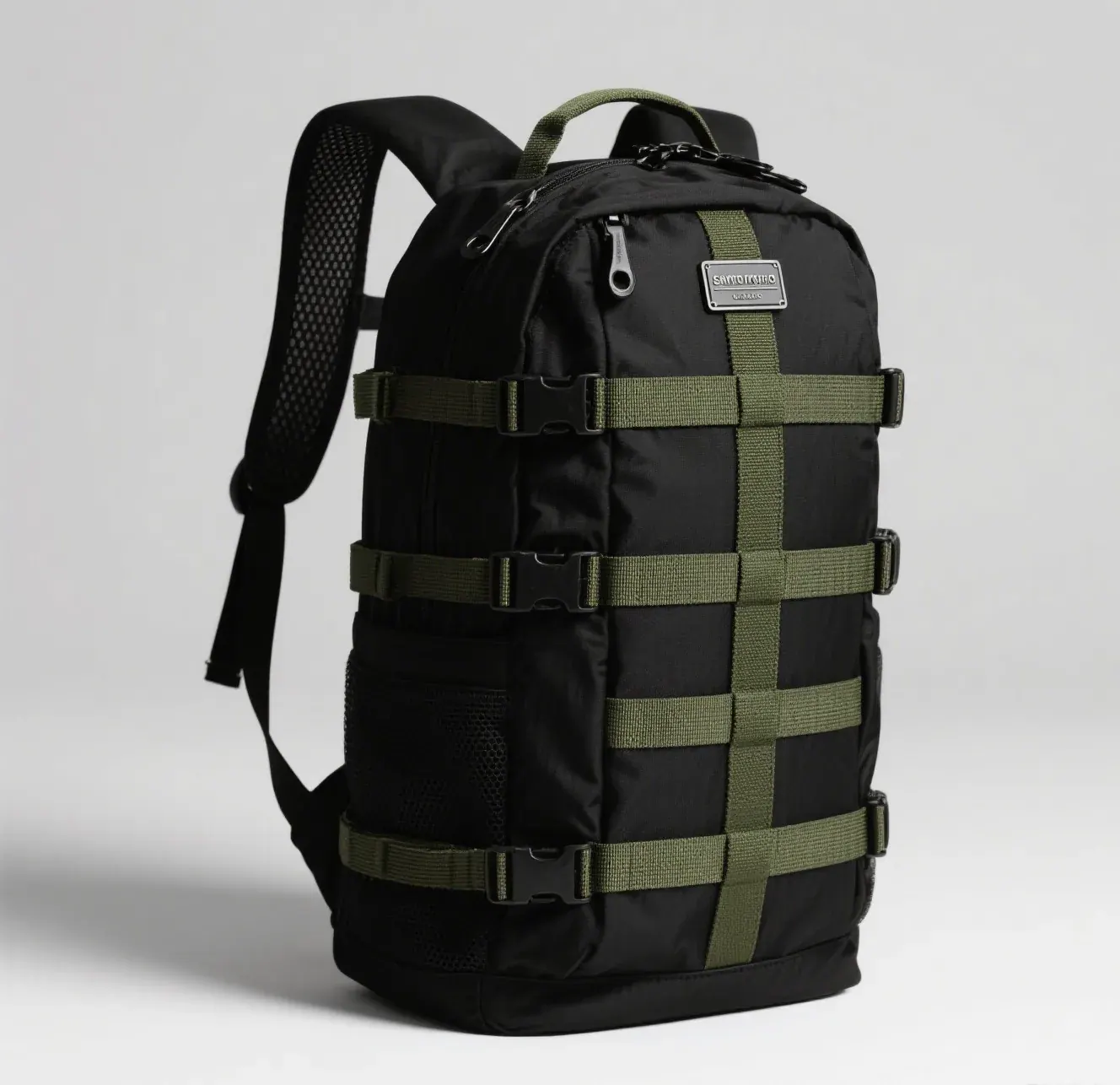
The sling answers a question the backpack cannot: how fast can the contents be reached without stopping. Rotating a sling from back to chest takes three to five seconds and one hand, and the wearer can keep walking while doing it. Removing a backpack, setting it down, opening it, and putting it back on takes 20 to 40 seconds and requires a surface that is dry enough to set a bag on, which in rain is a real constraint.
For a commute with a transit card, a phone, and a bottle, that difference is hit four to ten times per trip and amounts to three to six minutes a day. Over a working year of 220 days that is 11 to 22 hours. This is the argument that sells slings, and it is stronger than any comfort argument because it is measurable in the user own routine.
The sling also wins in crowded spaces. A body worn on the chest is inside the user own attention and inside their visual field, which reduces theft risk in a station or a market, and it reduces the swept width of the wearer from roughly 700 to 900 millimetres down to 500 to 600. Anyone who has tried to move through a rush hour crowd with a 30 litre pack understands the value of that immediately.
- Under three accesses per trip: either format works, choose on load rather than access.
- Four to ten accesses per trip: sling, because three to five seconds per access beats 20 to 40 seconds.
- Above ten accesses per trip: sling plus a waist pouch, or a backpack with a dedicated quick-access pocket.
- Crowded urban transit: sling, because it reduces swept width by roughly 200 to 300 millimetres.
- Wet conditions with nowhere to set a bag down: sling, because it never needs to be removed to be opened.
Stability, Swing and Moving Fast
A single diagonal strap is inherently less stable than two shoulder straps, and the instability increases with activity intensity. At a walking pace of 4 to 5 kilometres per hour a 3 kilogram sling shifts 20 to 40 millimetres per stride. At a jogging pace of 8 to 10 kilometres per hour the same bag shifts 60 to 120 millimetres, and at cycling speeds above 20 kilometres per hour the movement becomes a rotational swing that most riders find unacceptable within 5 to 10 minutes.
A stabilizer strap solves most of it. A secondary webbing strap of 15 to 25 millimetres running from the lower bag to the opposite side of the torso cuts lateral movement by 60 to 80 percent for a mass addition of 30 to 60 grams. Any sling intended for cycling, running, or boat decks should be specified with one, because without it the bag will migrate to the front of the body within a few minutes of hard activity.
Backpacks handle intensity better for structural reasons. Two straps plus a sternum strap set 20 to 40 millimetres below the collar bone constrain the body in both axes, and above 6 kilograms a hip belt removes most of the remaining motion. Residual bounce on a loaded pack at running pace is 10 to 25 millimetres, about one fifth of an unstabilized sling.
| Activity | Sling movement | Backpack movement | Better choice |
|---|---|---|---|
| Walking, 4 to 5 km per hour | 20 to 40 mm per stride | Under 10 mm | Either |
| Jogging, 8 to 10 km per hour | 60 to 120 mm | 10 to 25 mm | Backpack |
| Cycling above 20 km per hour | Rotational swing, unacceptable in 5 to 10 min | 10 to 20 mm with sternum strap | Backpack or stabilized sling |
| Standing in a queue or on transit | None, worn to the chest | None if worn, slow if removed | Sling |
| Boat deck or uneven ground | Swing adds to instability | Stable, both hands free | Backpack |
Pressure, Posture and the Asymmetry Cost
The physiological objection to a single strap is asymmetry. A 4 kilogram load on a 45 millimetre strap spreads over roughly 6 to 10 square centimetres of contact, producing 4 to 7 kilopascals of pressure, and the user compensates by elevating that shoulder and laterally flexing the spine. Measured shoulder height difference after 45 minutes of one-sided carry is commonly 8 to 15 millimetres, and it does not fully resolve for 10 to 30 minutes after the bag is removed.
Public health guidance on load carriage reflects this. Occupational and school load guidance published by the US Centers for Disease Control and Prevention consistently favours two-shoulder carry and recommends keeping carried weight to a modest fraction of body mass, a principle that transfers directly to everyday bags even though the source material concerns heavier loads.
None of this makes the sling wrong; it makes the sling conditional. Under 3 kilograms and under 60 minutes, the asymmetry is small and fully reversible. At 5 kilograms for two hours, it is not, and users who repeat that pattern daily should either alternate shoulders consciously every 15 to 20 minutes or move to a backpack. Retailers and brand owners should state that limit on the hangtag, because a shoulder complaint in month three is a product review problem rather than a user education problem.
| Exposure | Pressure on one shoulder | Shoulder height difference | Recovery time |
|---|---|---|---|
| 2 kg, 30 minutes | 2 to 3 kPa | 2 to 5 mm | Under 5 minutes |
| 3 kg, 60 minutes | 3 to 5 kPa | 5 to 10 mm | 5 to 15 minutes |
| 4 kg, 45 minutes | 4 to 7 kPa | 8 to 15 mm | 10 to 30 minutes |
| 5 kg, 120 minutes | 6 to 9 kPa | 15 to 25 mm | 30 to 90 minutes |
| 8 kg on two straps with hip belt | 1 to 1.5 kPa per side | Under 3 mm | Negligible |
Waterproof Construction in a Smaller Body
The smaller volume of a sling does not make waterproofness easier or harder in any structural sense, because the sealing method is identical: RF welded seams, a coated textile, and either a roll top or a waterproof zipper. What changes is the closure path, which shrinks to 250 to 450 millimetres on a sling versus 400 to 700 millimetres on a backpack, and a shorter path with the same corner radius is marginally easier to seal.
The real difference is what is inside. A sling carries a phone and a tablet far more often than a backpack does, and those are the items users cannot afford to lose. That argues for specifying the sling to the higher end of the rating scale, IPX6 to IPX7 rather than IPX4 to IPX5, and for adding an internal dry pouch of 2 to 4 litres for electronics even when the body itself is rated.
Zipper choice deserves specific attention at this size. A sling with a 250 to 350 millimetre waterproof zipper is the most convenient configuration in the category and the most likely to be opened and closed 20 to 40 times a day. A closure rated to 0.2 to 0.5 bar with a documented cycle life of 5,000 to 10,000 operations is the appropriate specification; anything below 3,000 cycles will not survive two seasons of commuter use.
| Construction element | Sling specification | Backpack specification | Note |
|---|---|---|---|
| Closure path | 250 to 450 mm | 400 to 700 mm | Shorter path seals slightly easier |
| Recommended rating | IPX6 to IPX7 | IPX6 to IPX7 | Match the rating to the contents |
| Zipper cycle life | 5,000 to 10,000 cycles | 5,000 to 10,000 cycles | Sling is opened more often |
| Internal dry pouch | 2 to 4 L for electronics | Optional, 4 to 8 L | Sling carries phones more often |
| Base textile | 400D to 600D is sufficient | 500D to 800D | Sling carries less weight |
| Seam peel target | Above 70 N per 25 mm | Above 70 N per 25 mm | Same method, smaller body |
Cycling and Commute Scenarios
Cycling is the hardest case for a sling and the clearest case for a backpack. A rider leans forward 20 to 40 degrees, which loads the upper back and rotates a diagonal strap off the shoulder within minutes. Add a 15 to 25 kilometre per hour pace on wet roads, where stopping to readjust means standing in traffic and rain, and the conclusion is straightforward: for cycling, specify two straps with a sternum strap and a hip belt above 6 kilograms.
The commute case depends on the mode chain. A walk-only commute of 10 to 25 minutes with four to ten accesses favours the sling; a multimodal commute with a cycling or a long walking leg favours the backpack. Many commuters carry a sling inside a backpack, using the small bag for the office and transit portion and the larger bag for the ride.
Visibility matters in both cases. A wet road at dusk is the highest risk condition in a commute, and a bag occupying 300 to 600 square centimetres of the back is a large available reflectivity area. Specifying 150 to 300 square centimetres of retroreflective panel plus a light clip costs 0.30 to 0.80 USD, the cheapest safety addition available on either format.
| Scenario | Format | Key specification |
|---|---|---|
| Walk commute, 10 to 25 minutes | Sling 8 to 12 L | IPX6, 3 kg maximum, stabilizer strap |
| Transit commute with frequent ticketing | Sling 6 to 10 L | Front swing access, 250 to 350 mm zipper |
| Cycle commute above 5 km | Backpack 18 to 25 L | Sternum strap, hip belt above 6 kg, reflectivity |
| Cycle commute with a 14 inch laptop | Backpack 20 to 26 L | Padded sleeve 340 by 240 mm, rain shedding panel |
| Mixed ride and long walk | Backpack plus packable sling | Sling folds to 1 to 2 L inside |
| Errand on foot, under 30 minutes | Sling 6 to 8 L | IPX6, under 2 kg |
Straps, Hardware and Wear Points
A sling concentrates the entire load into one strap assembly, so that assembly should be specified more generously than its size suggests. The strap itself should be 38 to 50 millimetres wide with 6 to 10 millimetres of foam, the adjustment hardware should be aluminium or acetal rather than unspecified moulded plastic, and the attachment to the body should be tested to 25 kilograms static for 60 seconds even though the bag will never carry that much in service.
Backpacks distribute load across more hardware and therefore fail at more places, but each failure is less catastrophic. Strap roots see 8 to 15 kilograms of repeated pull, the sternum strap sees 2 to 5 kilograms, and the grab handle sees a 15 to 30 kilogram lift when the pack is picked up loaded. On a sling the strap root sees 20 to 25 kilograms, because the full bag weight goes through one anchor.
Testing claims should be tied to a published method. Abrasion, tear and hardware procedures maintained by ASTM International give a shared reference for coated fabrics and webbing, and asking for the cycle count and method number converts a vague claim into a comparable figure. For sling webbing, 3,000 abrasion rubs and colour fastness to crocking above grade 4 are reasonable floors, because a strap rubs clothing on every wear.
| Component | Sling target | Backpack target | Test |
|---|---|---|---|
| Strap width and foam | 38 to 50 mm, 6 to 10 mm foam | 50 to 80 mm, 8 to 12 mm foam | Measured at the widest point |
| Strap root strength | 25 kg static for 60 s | 20 kg static for 60 s | Static pull on lot sample |
| Hardware material | Aluminium or acetal | Acetal or aluminium | Salt fog if coastal |
| Webbing abrasion | 3,000 rubs | 3,000 to 5,000 rubs | Abrasion cycle count |
| Crocking fastness | Grade 4 or better | Grade 4 or better | Colour transfer check |
| Grab handle | 15 kg for 60 s | 15 to 30 kg for 60 s | Static lift |
Verdict, Sizing Rules and Programme Numbers
Three rules settle the choice. Rule one: if the loaded weight is under 4 kilograms and the carry is under two hours, take the sling and specify IPX6 or better. Rule two: if the load is above 5 kilograms, the trip includes cycling above 20 kilometres per hour, or the carry exceeds 90 minutes, take a two strap body with a sternum strap. Rule three: if access happens more than ten times per trip, carry the sling inside the backpack and use whichever fits the moment.
Sizing should follow the load rather than the list volume. A 12 litre sling that physically holds a 14 inch laptop is still uncomfortable at 4.2 kilograms after 30 minutes, and the honest recommendation for that user is a 20 litre backpack with a padded sleeve. Saying so on the product page costs one sale and saves a return.
Both formats are developed from one material library at QUANZHOU JUNYUAN BAGS, starting at 500 pcs per design and colour with samples in 6 to 10 working days and bulk in 35 to 50 days. REACH and California Prop 65 screening is available on every material, AQL 2.5 is the standard release inspection level, and the quality system runs to ISO 9001, with delivery FOB Xiamen or DDP into more than 100 countries. Strap geometry, closure selection and hardware for one and two strap bodies are documented. Briefs may be sent to service@junyuanbags.com.
For the urban end of the decision, the waterproof commuter backpack range covers the two strap case with laptop sleeves and reflective panels, while the waterproof cycling backpack range addresses the stability and visibility requirements described above. A broader comparison across body styles, volumes and closures is maintained in the best waterproof backpacks roundup, and access-focused buyers should also read the front loader and top loader comparison.
Stated in one line: a sling is a fast-access tool for a light load and a short window, and a backpack is a carrying system for anything heavier or longer. The load in kilograms and the number of times the bag must be opened will pick the winner before any other consideration is weighed.
People Also Ask
How much weight can a single strap sling carry comfortably?
About 2 to 4 kilograms for 30 to 120 minutes. Above 4 kilograms the pressure on one trapezius reaches 4 to 7 kilopascals and measurable shoulder asymmetry appears within 30 to 45 minutes, so the recommendation moves to a two strap body.
Is a sling bad for your shoulders?
Not at light loads. Under 3 kilograms for under 60 minutes the asymmetry is small and reverses within minutes. At 5 kilograms for two hours the shoulder height difference reaches 15 to 25 millimetres and takes 30 to 90 minutes to resolve, which is the point to switch formats.
Can I cycle with a waterproof sling bag?
Not beyond a short errand. Above 20 kilometres per hour a sling develops a rotational swing most riders reject within 5 to 10 minutes, and a forward lean of 20 to 40 degrees rotates the strap off the shoulder. Use two straps with a sternum strap, or a sling with a stabilizer strap.
What size sling do I need for a tablet?
10 to 14 litres. A tablet in a sleeve occupies 1.5 to 2.5 litres and adds 0.7 to 1.0 kilogram, which leaves room for a bottle, a shell and small items while staying under the 3 to 4 kilogram comfort ceiling.
Are waterproof slings as waterproof as backpacks?
Yes, the sealing method is identical. RF welded seams with a 250 to 450 millimetre roll top or waterproof zipper reach IPX6 to IPX7 in a sling, and the shorter closure path is marginally easier to seal than a backpack opening of 400 to 700 millimetres.
Why does a sling swing when I walk fast?
One diagonal anchor cannot constrain motion in both axes. At a jog pace the bag shifts 60 to 120 millimetres per stride. A stabilizer strap of 15 to 25 millimetres running to the opposite side cuts that movement by 60 to 80 percent for 30 to 60 grams of added mass.
Frequently Asked Questions
Q1. What is the difference between a waterproof sling and a waterproof backpack?
Strap count and load path. A sling uses one 38 to 50 millimetre strap and puts the whole load on one shoulder, which is comfortable to about 4 kilograms for under two hours. A backpack uses two straps and, above 6 kilograms, a hip belt that moves 70 to 80 percent of the load to the hips.
Q2. When should I choose a sling over a backpack?
When the load is under 4 kilograms, the carry is under 90 minutes, and you need to reach the contents four or more times per trip. A sling swings to the chest in three to five seconds without being removed, saving three to six minutes per day on a commute.
Q3. Can a sling carry a 14 inch laptop?
Physically yes in a 12 to 16 litre body, but it is not recommended. A laptop adds 1.4 to 1.8 kilograms and brings the total to roughly 4.2 kilograms, which is at the sling ceiling. A 20 litre backpack with a padded 340 by 240 millimetre sleeve is the better call.
Q4. How long can I wear a sling before it becomes uncomfortable?
Roughly 60 to 90 minutes at 3 kilograms, and about 30 minutes at 5 kilograms. Alternating shoulders every 15 to 20 minutes extends the comfortable window by 40 to 60 percent for users who must carry one-sided.
Q5. Do I need a stabilizer strap on a sling?
Yes for any activity above a walking pace. A 15 to 25 millimetre strap to the opposite side of the torso cuts lateral movement by 60 to 80 percent and adds only 30 to 60 grams, which is the cheapest stability upgrade available in the format.
Q6. Are single strap bags safe for daily use?
Yes within the load limit. Public health load guidance favours two shoulder carry and modest loads as a fraction of body mass, and that principle applies here: keep a daily sling load under 3 kilograms and switch to two straps for anything heavier or longer.
Q7. What waterproof rating should a sling have?
IPX6 minimum, IPX7 preferred. A sling usually carries a phone or tablet, which are the least replaceable items in the load, so specify the higher code and add an internal dry pouch of 2 to 4 litres for electronics even when the body is rated.
Q8. How many times can a sling zipper be opened before it fails?
Specify 5,000 to 10,000 cycles. A commuter sling is opened 20 to 40 times per day, which is 5,000 to 10,000 operations per working year, so a closure rated below 3,000 cycles will not survive two seasons.
Q9. How much do two straps reduce shoulder pressure compared with one?
Substantially. A 4 kilogram sling applies 4 to 7 kilopascals to one shoulder, while an 8 kilogram backpack with a hip belt applies roughly 1 to 1.5 kilopascals per side because 70 to 80 percent of the load goes to the pelvis.
Q10. What are MOQ, sample and bulk lead times for slings and backpacks?
Identical: 500 pcs per design and colour, prototype samples in 6 to 10 working days, bulk in 35 to 50 days after sign-off. Book zipper cycle testing at prototype stage, because that result takes the longest of any test in the category.