Maintain a waterproof backpack with a 5-minute check after every wet trip, a full clean and closure service every 3 months, a controlled water screen every 6 months, and a load plus seam inspection once a year. Rinse salt or fine sand immediately, air dry open for 8–24 hours, and store loosely at roughly 15–25°C. Retire or downgrade the pack when coating separation spreads beyond 100 cm², 3 structural seams leak, or a load anchor grows more than 2 mm under test.
The Calendar at a Glance
Calendar care works because small defects are easier to interpret when a previous condition is recorded. A zipper that becomes 30 percent harder to pull over 3 months deserves cleaning or assessment before a trip; a seam lift that remains 8 mm for a year is different from one that reaches 25 mm in 2 weeks. Use the first weekend of each quarter and keep photographs from the same angle.
Frequency should rise with exposure. Weekly saltwater use needs fresh-water rinsing after every trip, not every 3 months. A stored emergency pack needs monthly accessibility and device checks even when the shell remains clean. The table is a baseline for regular rain and outdoor use; add event-driven checks after falls, fuel contact, extreme heat, deep mud, or an unusually heavy load.
| Interval | Time needed | Core action | Record |
|---|---|---|---|
| After each wet trip | 5–15 min plus drying | Rinse if needed, empty, dry open | Exposure and defect note |
| Monthly | 5 min | Closure, base, anchors, odour | One dated photograph |
| Every 3 months | 30–45 min | Full clean and detailed inspection | Measured defect map |
| Every 6 months | 45–60 min | Controlled water screen | Duration and tissue result |
| Annually | 60–90 min | Loaded carry and seam review | Keep, repair, downgrade, retire |
The full cleaning sequence is detailed in how to clean a waterproof backpack. The calendar adds timing and records so cleaning is neither forgotten nor performed aggressively every week. More detergent and scrubbing do not equal better care; remove the contamination that is present with the least force that works.
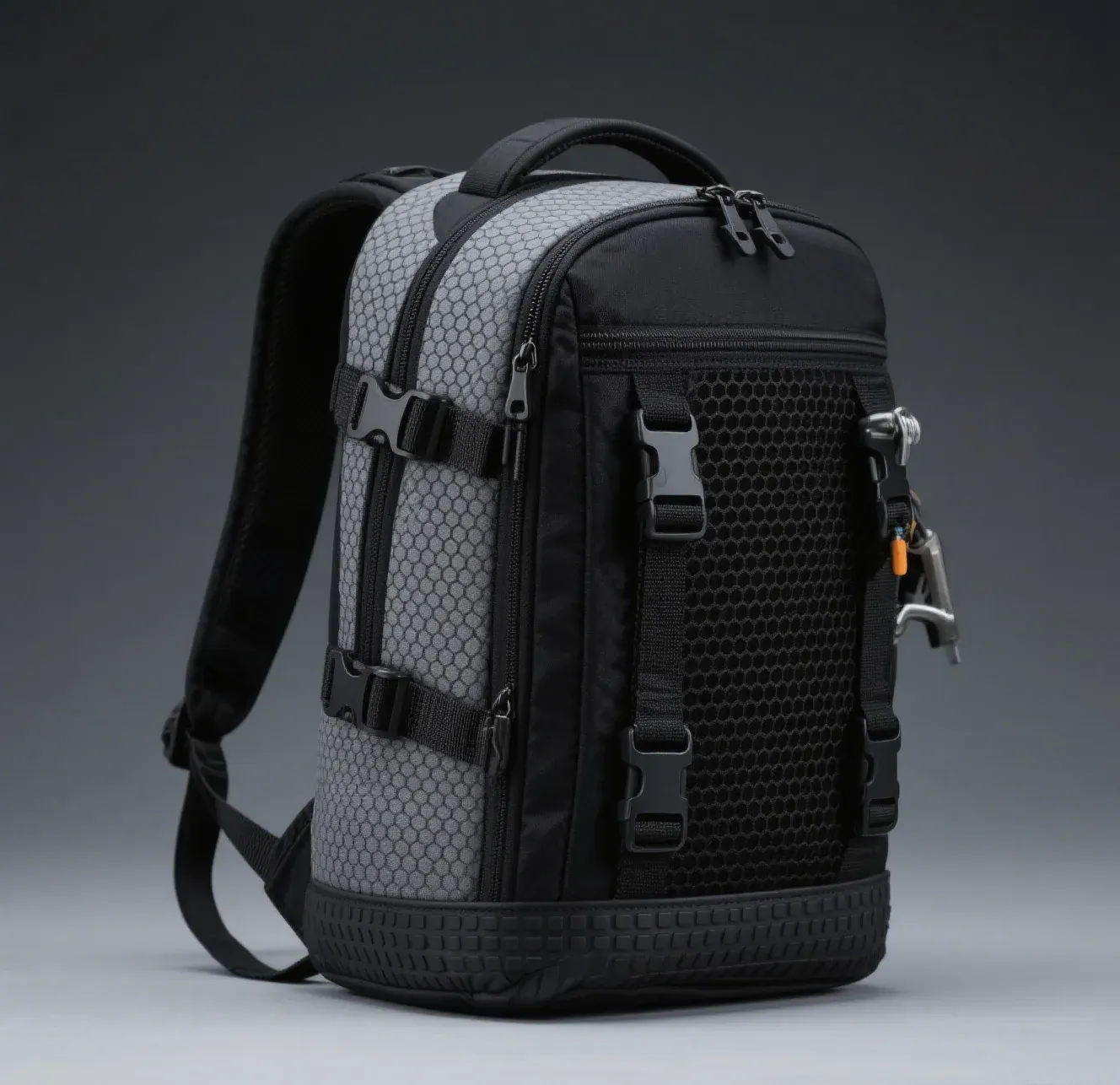
January and February: Cold-Flex and Winter Contamination
In January, inspect the pack after 2 hours at the coldest ordinary use temperature, or use a safe controlled condition around -10°C when appropriate to the material brief. Flex the roll-top and lower corners 50 times without forcing them. Look for whitening, cracking, stiff zipper tape, brittle pull tabs, and foam that does not rebound. Record closure force before and after warming to room temperature.
February is for road salt and fine grit. Rinse exposed fabric, buckles, and closure tracks with lukewarm fresh water after every contaminated trip. Soak a salty closure zone for 10–15 minutes if its instructions permit, brush along the track, operate it gently 5–10 times, and air dry for 8 hours. Never force a frozen or gritty slider with pliers.
| Winter item | January check | February action | Reject or investigate |
|---|---|---|---|
| Roll-top fold | 50 cold bends | Fresh-water wipe | Crack or persistent white line |
| Closure track | Compare starting force | 10–15 min rinse or soak | One tight zone remains |
| Buckles | Five cold operations | Rinse road salt | Crack or incomplete lock |
| Foam | Compression and rebound | Dry fully | Flat zone after 30 minutes |
| Reflective trim | 50 m visibility check | Wipe without abrasion | Peeling edge over 10 mm |
Cold-weather health depends on more than equipment condition. The CDC guidance on hypothermia explains the need to remain dry and recognise warning signs. Keep one dry insulating layer independently contained, and never let a maintenance pass create confidence that unsuitable weather is safe.
March and April: Spring Clean and Water Baseline
March is the first full clean. Empty 100 percent of pockets, vacuum or shake dry grit, rinse, spot-clean with mild soap, rinse twice, and dry open for 8–24 hours. Remove detachable foam or base sheets if the instructions allow. Weigh the dry pack to the nearest 5 g and compare with the previous dry record; unexplained mass can indicate retained moisture or trapped debris.
April establishes the first 6-month water baseline. Load the pack to its normal mass, close it through the recorded 3 turns or specified sequence, and place dry tissue at 6 points: both top corners, 2 seam junctions, the base, and behind one anchor. Apply a controlled exposure matching real rain, record direction and duration, then inspect immediately. A home spray is a screening check, not a formal IP certification.
Ingress terminology comes from the IEC IP rating framework. Keep the maintenance result in the language it supports: no detected wetting after the recorded 10-minute directional spray is accurate; still IPX6 after years of use is not established by an undocumented hose.
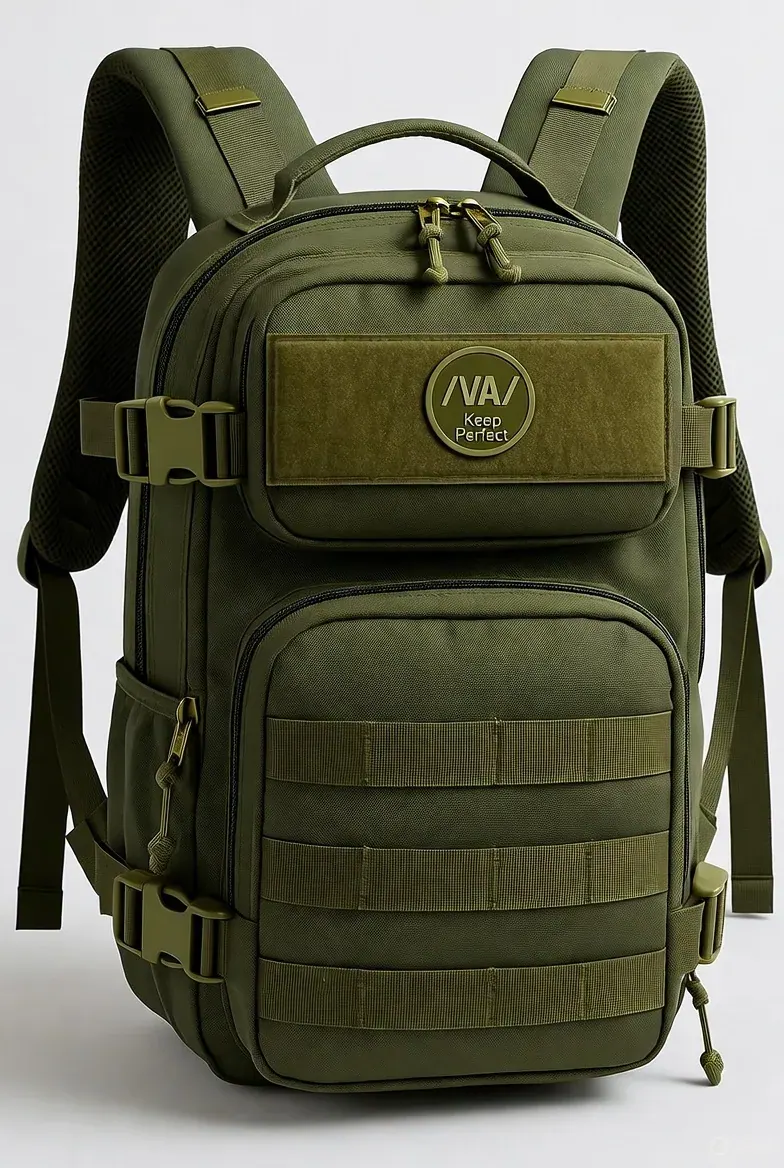
May and June: Harness, Hardware, and UV Review
May focuses on load. Inspect 4 shoulder anchors, belt attachment, sternum slider, compression webbing, and grab handle. Mark the edge of any suspicious separation, load the pack to 125 percent of ordinary working mass for 30 minutes in a safe static setup, and remeasure. Growth above 2 mm, shell whitening, broken yarn, or buckle deformation removes the pack from loaded service until assessed.
June focuses on sun exposure. Compare exterior colour with a protected area under a strap, but do not retire a pack for fading alone. Flex the most exposed panel 30 times and examine coating adhesion, stiffness, and surface tack. A faded stable panel may remain serviceable; persistent tackiness, moving bubbles, or cracks across several folds indicate material ageing. Keep the pack out of parked vehicles that can exceed 50°C.
| Midyear component | Measured check | Pass cue | Action if failed |
|---|---|---|---|
| Shoulder anchor | 125% load for 30 min | Growth no more than 2 mm | Stop loaded use |
| Grab handle | Repeated controlled lifts | No yarn or joint change | Repair assessment |
| Buckle | 100 open-close cycles | Positive lock each time | Replace compatible part |
| Sun-exposed panel | 30 flexes plus adhesion view | No moving bubble | Map area and monitor |
| Coating surface | 24 h dry ventilation | No persistent tack | Downgrade or retire |
Physical seam, webbing, abrasion, and flex approaches can be selected from ASTM International. For a personal calendar, consistency matters more than imitating a laboratory with unknown tools. Repeat the same controlled load, photographs, and measurements, and use qualified testing when a formal claim or large programme depends on the result.
July and August: Heat, Sweat, Sunscreen, and Sand
July combines high temperature and skin-contact contamination. Wipe shoulder straps and the back panel after sweaty use, then rinse mild soap completely. Sunscreen and insect-repellent residues can migrate into face materials or soften printed details, so clean them promptly with methods approved for the pack. Do not use strong solvent to chase a stain; test any product on a hidden 20 mm area first.
August is sand control. Empty every pocket outdoors, turn removable liners, use a soft dry brush first, then rinse. Sand trapped in closure tracks behaves like an abrasive during every cycle. Operate the cleaned closure 10 times without load and investigate a repeated tight point rather than adding excessive lubricant. Keep drainage holes of 8–12 mm clear with water and a soft brush, not sharp wire.
- Dry the open pack for 8–24 hours after cleaning; thick foam and folded bases need the longer end.
- Keep drying temperatures comfortably below about 40°C unless the care instructions say otherwise.
- Rinse salt immediately and remove dry sand before adding water so grit does not spread through every pocket.
- Separate wet towels or swim gear in a 2–5 L draining zone during use.
- Record any chemical contact, including fuel, strong cleaner, or leaking toiletry, with duration and area.
If a strong chemical contacts the shell, isolate the pack, follow the substance and material safety information, and seek qualified advice. A normal wash may remove surface residue without restoring a changed coating. Unknown contamination around a health or food zone is a reason to retire or strictly downgrade, not to conceal the odour with fragrance.
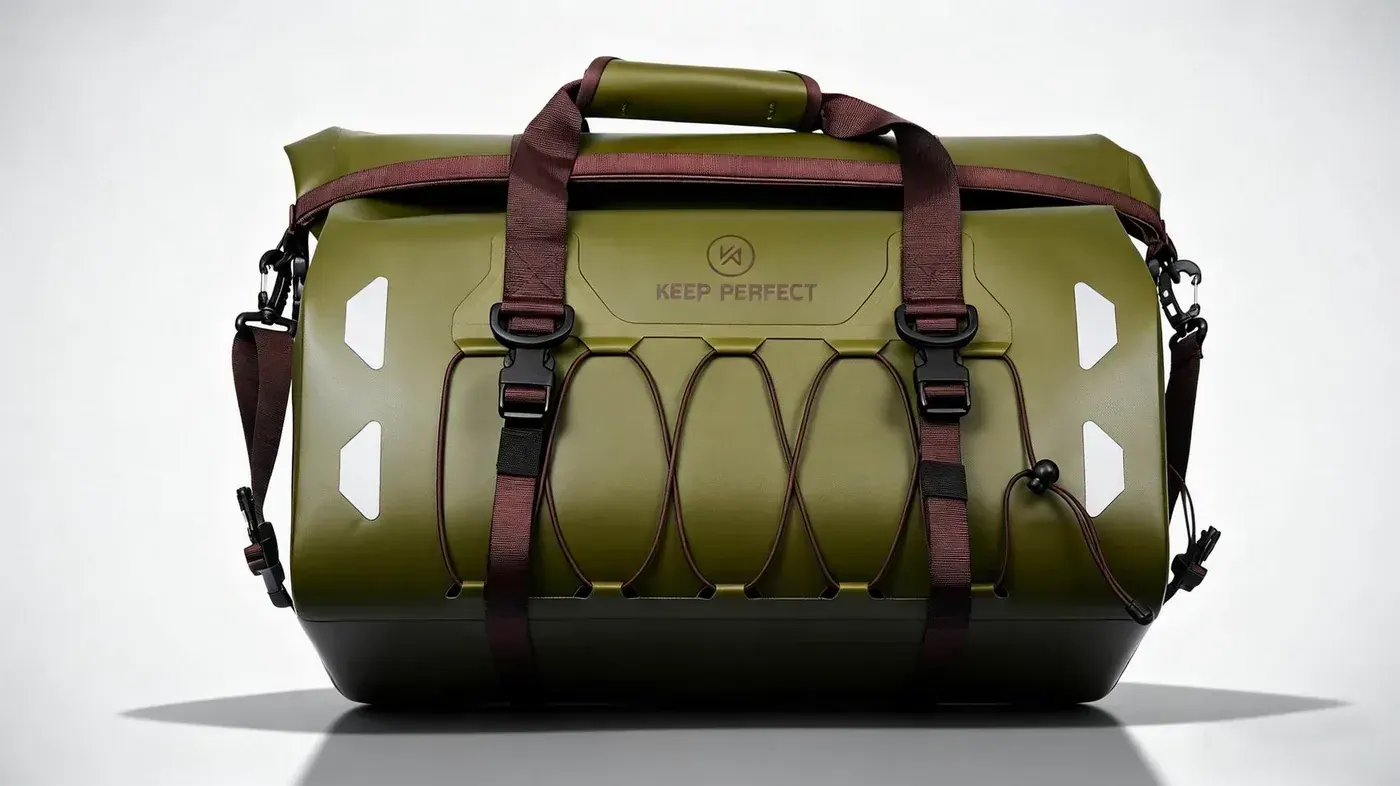
September and October: Second Water Screen and Repair Window
September repeats the April water screen under the same load, closure, duration, orientation, and tissue layout. Compare rather than merely pass or fail. One damp corner that gained 0.3 g against a stable blank suggests investigation even when no puddle appears. Clean and dry the pack before the check so dirt cannot either block a leak temporarily or carry external water inside during opening.
October is the repair window before winter. Patch one clean puncture under 15 mm with at least 25 mm rounded overlap, or assess one isolated seam lift under 80 mm when the surrounding layer remains stable. Follow the selected bond instructions, allow 24–48 hours of cure, flex 30 times, and repeat the recorded spray. Broad separation over 100 cm² or 3 leaking structural seams points toward replacement.
The TPU ageing guide helps distinguish a local abrasion from a panel system that is changing. The waterproof seam repair guide gives the local repair sequence. Do not cover a growing bubble merely to improve appearance; map its edge and inspect whether it expands after flexing.
Keep a repair card inside the pack with date, location, patch or bond system, cure time, post-repair load, and water result. Recheck after 5 trips and again at the next quarter. A stable repair earns confidence through unchanged measurements, not because it survived one dry day.
November and December: Storage or Annual Service Decision
In November, prepare for storage or winter use. Clean and dry fully, loosen compression straps, open pockets, and store loosely shaped at 15–25°C away from sunlight and heaters. Do not fold a stiff base through the same line, stack heavy boxes on the roll-top, or leave food inside. The full sequence appears in long-term waterproof pack storage.
December is the annual verdict. Review 12 months of photographs, defect measurements, water screens, use days, and repairs. Keep the pack at full claim when structure and repeated checks remain stable. Repair one local issue when surrounding material is sound. Downgrade it to rain-only or low-consequence contents when the water result changes. Retire it from protective service for spreading delamination, repeated structural leaks, torn anchors, or broken closure track.
A retired pack should be labelled with date, defect, and prohibited use so it does not return to service by accident. A stable downgraded shell may carry dry towels or garden items at a lower 3–5 kg load. Broad tackiness, unknown chemical contamination, or torn structural anchors calls for removal rather than creative reuse.
Adapt the Calendar to Use Intensity
Count wet days and salt days, not only months. A weekly paddler may accumulate 40 salt exposures before a casual commuter sees 10 rain events. Create an exposure multiplier: after each salt trip rinse immediately, after every 10 wet days inspect seams, and after every 25 loaded days check anchors. Keep the calendar dates as minimum checkpoints, then let use trigger earlier work.
Fleet programmes can tag each pack with a QR code or serial record containing assignment, month, water screens, repairs, and retirement status. Avoid collecting unnecessary personal data; the maintenance record needs product and service history, not private user details. A clear 4-state field—active, repair, downgraded, retired—prevents ambiguous availability.
For an annual 100-pack programme, inspect every piece visually, then use an agreed sample plan for deeper dimensional or water checks unless consequences require more. Any recurring defect across 3 or more packs should trigger a root-cause review. Replacing isolated buckles is maintenance; repeated cracking at the same geometry is a design issue.
Create a Defect Map That Shows Change
Use a simple outline drawing with 8 zones: closure, front, back, base, left seam, right seam, left harness, and right harness. Give each observation a code—A for abrasion, C for crack, D for layer separation, L for leak, and H for hardware. Add the measured length or area and a photograph number. The same code each month makes growth visible without relying on memory.
Measure defects in millimetres and square centimetres. A seam lift can be 12 mm long, an abrasion 30 × 20 mm, and a bubble 25 cm². Draw a small boundary mark beside the edge with a date where appropriate, never across the waterproof layer with an unsuitable marker. At the next review, unchanged dimensions support monitoring; rapid growth changes the decision even when the total remains modest.
| Map code | Observation | Measurement | Escalation cue |
|---|---|---|---|
| A | Abrasion | Length × width in mm | Reinforcement yarn becomes exposed |
| C | Crack or white stress line | Length and fold location | Growth after 30 flexes |
| D | Layer separation | Area in cm² | Moving bubbles approach 100 cm² total |
| L | Detected ingress | Tissue position and water gain | Three structural zones leak |
| H | Hardware or anchor change | Force, cycle, or growth in mm | Anchor moves over 2 mm |
Keep dry-weight, water-screen, and defect-map records together. A 40 g unexplained mass increase plus a new damp base indicator tells a stronger story than either result alone. Conversely, fading with stable dry weight, no new tissue gain, and unchanged flex behaviour supports continued service. Maintenance decisions should combine evidence rather than promoting one visual mark into a verdict.
When several packs show the same code in the same zone, stop treating them as isolated user events. Three base abrasions at an identical folded edge suggest geometry, handling, or storage that deserves a group review. Update the next care instruction or design brief, then monitor whether the frequency falls. The calendar becomes valuable at programme scale when it feeds prevention rather than simply recording damage.
Programme Support and the One-Page Record
QUANZHOU JUNYUAN BAGS supports waterproof programmes from MOQ 500 pcs per design and colour, with samples in 6–10 working days and bulk timing of 35–50 days. AQL 2.5 inspection can include seam appearance, closure function, anchor measurement, dimensions, and agreed water screening. Programmes work under BSCI and ISO 9001 systems, with REACH and California Prop 65 material controls.
A maintenance and retirement record can be aligned. Send working load, exposure frequency, cleaning environment, climate, and existing defect categories to service@junyuanbags.com. FOB Xiamen or DDP service to more than 100 countries can accompany a programme whose inspection criteria are fixed before bulk.
Set a 15-minute annual handover for any pack assigned to a new user. Review closure sequence, cleaning limits, previous repairs, current status, and the next calendar date. Have the user demonstrate one correct close and locate the defect map. Maintenance continuity fails when records remain with the old user while the physical pack moves; transferring both together preserves the evidence built over the year.
Keep the record to one page: identification, normal load, monthly photograph, quarterly clean, 6-month water result, annual load result, repairs, and current status. The best calendar is the one actually completed. Five minutes after rain and 4 planned reviews each year prevent more uncertainty than occasional aggressive cleaning.
People Also Ask
How often should I rinse a waterproof backpack?
Rinse after every saltwater or visible sand exposure and after heavily muddy trips. Ordinary rain may need only wiping and full drying, with a complete clean every 3 months as a practical baseline.
How often should I water-test an older pack?
Run a repeatable screen every 6 months and after any repair, hard fall, or suspicious seam change. Use the same load, closure, duration, orientation, and 6 tissue points so results can be compared.
What should I inspect on backpack shoulder anchors?
Look for broken yarn, shell whitening, separation, distorted webbing, and growth under a controlled load. Mark a reference edge and investigate any change above 2 mm after 30 minutes at 125 percent of normal mass.
How do I remove sand from a waterproof zipper?
Empty dry grit outdoors, brush along the track, rinse with fresh water, and operate the closure gently 10 times. Investigate one repeated tight point; do not force it with tools or flood it with unapproved lubricant.
Why weigh a backpack after cleaning?
A dry baseline to the nearest 5 g can reveal retained water or debris in foam, folds, and pockets. Compare only after equivalent drying, because a few trapped spoonfuls can distort the result.
How should a retired waterproof pack be marked?
Use a durable 60 × 100 mm inner label with retirement date, defect, and prohibited use. Remove or cover any outdated immersion claim so the shell cannot drift back into high-consequence service.
Frequently Asked Questions
Q1. How often should I clean a waterproof backpack?
Perform a full mild-soap clean about every 3 months under regular use, plus prompt rinsing after salt, sand, mud, or chemical contact. Excessive detergent and scrubbing can be as unhelpful as neglect.
Q2. How long should a waterproof pack dry?
Air dry it open for 8–24 hours away from heaters and strong sun. Thick harness foam, folded bases, and hidden pockets need the longer end; verify by touch and dry-weight comparison.
Q3. Can I dry a waterproof backpack on a radiator?
No. Concentrated heat can distort foam, stress coating adhesion, and create permanent folds. Dry at ordinary room conditions with airflow unless the care instructions for that exact pack state otherwise.
Q4. How often should closure tracks be serviced?
Inspect monthly, rinse after every salt or sand exposure, and operate gently after cleaning. Use only a closure-approved product when specified; ordinary oils can attract grit or affect surrounding materials.
Q5. When should I repair a small puncture?
Repair a clean hole under about 15 mm promptly while surrounding material remains stable. Use 25 mm or more of rounded overlap, cure for 24–48 hours as directed, flex 30 times, and spray-test.
Q6. When is delamination too large to repair?
Distributed separation above about 100 cm², moving bubbles across several folds, or persistent broad tackiness indicates a system-level issue. A local patch cannot restore adhesion throughout the panel.
Q7. How should a waterproof backpack be stored?
Store it clean, fully dry, loosely shaped, and with straps released at roughly 15–25°C. Keep it away from direct sunlight, heaters, heavy stacked objects, food, and a hot vehicle.
Q8. Does colour fading mean the pack leaks?
No. Fading can occur while coating remains sound. Judge water control through repeatable testing and inspect flex, bubbles, tackiness, seam condition, and closure rather than colour alone.
Q9. How often should fleet packs receive a load check?
At least annually and after an overload, hard snag, or anchor concern. A useful screen holds 125 percent of normal working mass for 30 minutes and compares marked attachment edges.
Q10. Can I use bleach on a waterproof pack?
Avoid bleach and strong solvent unless the exact care instruction explicitly allows them. Use fresh water, mild soap where needed, and a soft cloth or brush; test any cleaner on a hidden 20 mm area.
Q11. What is the best month for a full water test?
The month matters less than a consistent 6-month interval. April and September or October work well in a northern-season calendar because they bracket major wet and cold periods.
Q12. What are the MOQ and timing for a managed pack programme?
A practical baseline is 500 pcs per design and colour, samples in 6–10 working days, and bulk in 35–50 days. Define maintenance and retirement records before approving the first run.