A thermoplastic polyurethane coating on a waterproof backpack gives 4 to 8 years of useful service in recreational use and 2 to 4 years under heavy or marine duty, and the difference between the two is almost entirely storage and cleaning rather than build quality. Three mechanisms do the damage: hydrolysis, which attacks the ester soft segment whenever the coating sits above roughly 60 percent relative humidity at temperatures over 40 degrees; ultraviolet oxidation, which yellows and embrittles the surface; and plasticizer migration, which leaves the film stiff and prone to cracking at folds. Delamination, where the film separates from the fabric beneath it, is the end state of all three and is not repairable. Store at 15 to 25 degrees with relative humidity between 40 and 60 percent, dry for a full 24 hours before any storage, clean with pH neutral soap rather than solvent, and expect a 0.50 millimetre film to outlast a 0.30 millimetre one by roughly 60 percent in the same conditions. Programme entry for a thicker film is 500 pcs per design and colour, with prototypes in 6 to 10 working days and bulk in 35 to 50 days.
What Actually Ages Inside a TPU Coating
A waterproof shell is a laminate: a woven base fabric carrying the load, and a polymer film carrying the water resistance. The two age independently and fail together. The fabric loses perhaps 10 to 15 percent of its tensile strength over a decade of moderate use, which almost never matters. The film loses flexibility and adhesion, and that is what ends the life of the pack. Understanding which layer you are looking at prevents both premature retirement and false confidence.
Thermoplastic polyurethane is a block copolymer with hard segments providing strength and soft segments providing elasticity. The soft segment is the vulnerable part. In polyester based grades, water molecules attack the ester linkage and cut the chain, shortening it and reducing elasticity; in polyether based grades that attack is far slower, which is why marine and cold climate specifications increasingly call for polyether chemistry at a cost premium of roughly 15 to 25 percent. Knowing which chemistry you bought is the single most useful fact about a pack's expected service life.
| Layer | Function | Aging rate | Failure consequence |
|---|---|---|---|
| Woven base fabric | Carries tensile and tear load | 10 to 15 percent loss per decade | Rarely the limiting factor |
| Adhesive tie layer | Bonds film to fabric | Degrades with heat and moisture | Delamination, unrepairable |
| TPU film, polyester soft segment | Water resistance and flexibility | Hydrolysis above 60 percent humidity at 40 degrees | Stiffening then cracking |
| TPU film, polyether soft segment | Same, with better hydrolysis resistance | Slower, roughly 2 to 3 times the service life | Preferred for marine duty |
| Surface finish or DWR | Sheds water, reduces wetting | Abrades and washes off in months | Restorable by re-treatment |
Plasticizer migration is the mechanism most people mistake for drying out. Small molecules added to keep the film supple are not chemically bonded, so they migrate slowly to the surface and evaporate. As they leave, the film stiffens, and a stiff film cracks at the folds where a supple one would simply flex. This is why a pack that has spent three summers in a hot car boot develops cracks along the collar fold while an identical pack stored in a hallway does not.
The Four Accelerants: Heat, UV, Moisture and Compression
Aging is not uniform, and four conditions accelerate it sharply. None of them is exotic, and three of the four are entirely under the owner's control. What makes them dangerous is that each one operates slowly enough to be invisible for months and then produces a failure that looks sudden.
| Accelerant | Threshold where damage accelerates | Typical exposure | Effect on service life |
|---|---|---|---|
| Heat | Above 40 degrees sustained | Car boots in summer reach 60 to 70 degrees | Roughly halves film life above 50 degrees |
| Ultraviolet exposure | Cumulative, no safe threshold | Deck stowage, line drying in sun | Chalking in 60 to 90 days of regular sun |
| Moisture in storage | Above 60 percent relative humidity | Garages, sheds, boat lockers | Hydrolysis and mould together |
| Compression in storage | Folded or packed tight for months | Packed away between seasons | Permanent creases that crack later |
| Salt residue | Any residue left unrinsed | Marine use without rinsing | Abrades the film and holds moisture |
Heat and moisture together are far worse than either alone, because hydrolysis rate roughly doubles for every 10 degrees of temperature rise once humidity is above the threshold. A pack stored in a sealed bag in a cool cupboard ages slowly; the same pack stored damp in a hot boot can lose most of its remaining flexibility in a single season. Accelerated aging is studied under controlled conditions using methods published by ASTM, whose exposure standards are the basis for comparing two films rather than guessing.
Ultraviolet exposure deserves a separate note because it is the one accelerant that acts on the surface rather than through the bulk. Sunlight breaks bonds at the outermost microns of the film, producing a chalky layer that then abrades away and exposes fresh material to the same process. It is a wearing away rather than a sudden break, and it is why shade drying and covered storage add years. Daily ultraviolet index values, which make the exposure easy to plan around, are published by EPA.
Reading the Early Warning Signs
Aging announces itself in a predictable order, and each stage is cheaper to respond to than the next. The first sign is surface: the finish stops shedding water and the shell wets out rather than beading. The second is tactile: the film feels stiff rather than supple when cold, and it holds a crease when folded. The third is visual: fine crazing appears along fold lines, and the surface takes on a chalky or dull appearance. The fourth is structural: cracks through the film, then separation from the fabric beneath.
| Stage | What you observe | Water resistance at this stage | Recommended action |
|---|---|---|---|
| One, finish loss | Shell wets out, no longer beads | Fully intact, film still sealed | Clean and re-treat the surface |
| Two, stiffening | Film holds a crease, feels boardy when cold | Intact but vulnerable at folds | Improve storage, stop folding tightly |
| Three, crazing | Fine surface network along folds | Reduced, may weep at fold lines | Reduce load, plan replacement |
| Four, cracking | Visible cracks through the film | Compromised, will leak under head | Retire from wet duty, dry use only |
| Five, delamination | Film lifts from the fabric in sheets | Gone, and not repairable | Retire the pack |
Check the collar fold first every time, because it is the highest strain area on the entire pack. It is folded four times on every single outing, it is compressed by the buckle, and it is usually the first place to craze. Unroll it fully, hold it up to a bright light, and flex it: a healthy film shows no lines at all, and a film with 200 or more fold cycles behind it will show a faint pattern that is normal wear rather than failure.
Delamination: The Failure Nobody Sees Coming
Delamination is the end state and the one that cannot be fixed. The adhesive tie layer between film and fabric breaks down under heat and moisture, and the film separates in sheets, sometimes with a faint crackling sound when the pack is flexed. It usually begins at an edge or a corner, where moisture wicks in along the cut edge of the laminate, and by the time it is visible across a palm sized area the bond has failed across a much larger region.
Two habits delay it more than anything else. First, never store a pack compressed or tightly folded, because a permanent crease concentrates strain at exactly the point where the tie layer is weakest. Second, dry the pack completely before storage, since moisture that reaches the cut edge wicks inward along the fabric and attacks the bond from the inside, where no surface treatment can reach it. Storage method is set out in full in the long term storage guide.
Where delamination has started at an edge only, a sealed edge treatment can slow it by 6 to 12 months, but it does not restore the bond. Treat that as buying time to order a replacement rather than as a repair, and retire the pack from any duty where it matters. The economics of that decision are set out in the repair versus replace guide, and the difference between coating chemistries is covered in the TPU versus PVC comparison.
Storage Conditions That Add Years
Storage is the highest leverage intervention available and it costs nothing. Three numbers govern it: temperature between 15 and 25 degrees, relative humidity between 40 and 60 percent, and zero compression. A pack meeting all three will commonly outlast the same pack stored in a garage by two to three years, and the gap widens with every season. A cheap hygrometer readable to 5 percent costs very little and settles arguments about whether a cupboard is actually dry.
| Storage location | Typical temperature range | Typical humidity | Expected effect on film life |
|---|---|---|---|
| Interior cupboard, heated home | 15 to 25 degrees | 40 to 55 percent | Baseline, full expected service life |
| Under stairs or hallway | 12 to 22 degrees | 45 to 60 percent | Equivalent to baseline |
| Garage or outbuilding | 0 to 35 degrees seasonal | 60 to 85 percent | Hydrolysis risk, roughly half life |
| Car boot in summer | 40 to 70 degrees peak | Variable, often high | Severe, plasticizer loss in one season |
| Boat locker or damp shed | 5 to 30 degrees | 70 to 95 percent | Worst case, mould and hydrolysis together |
| Loft or attic space | Minus 5 to 45 degrees | 40 to 70 percent | Heat swings and cold cracking |
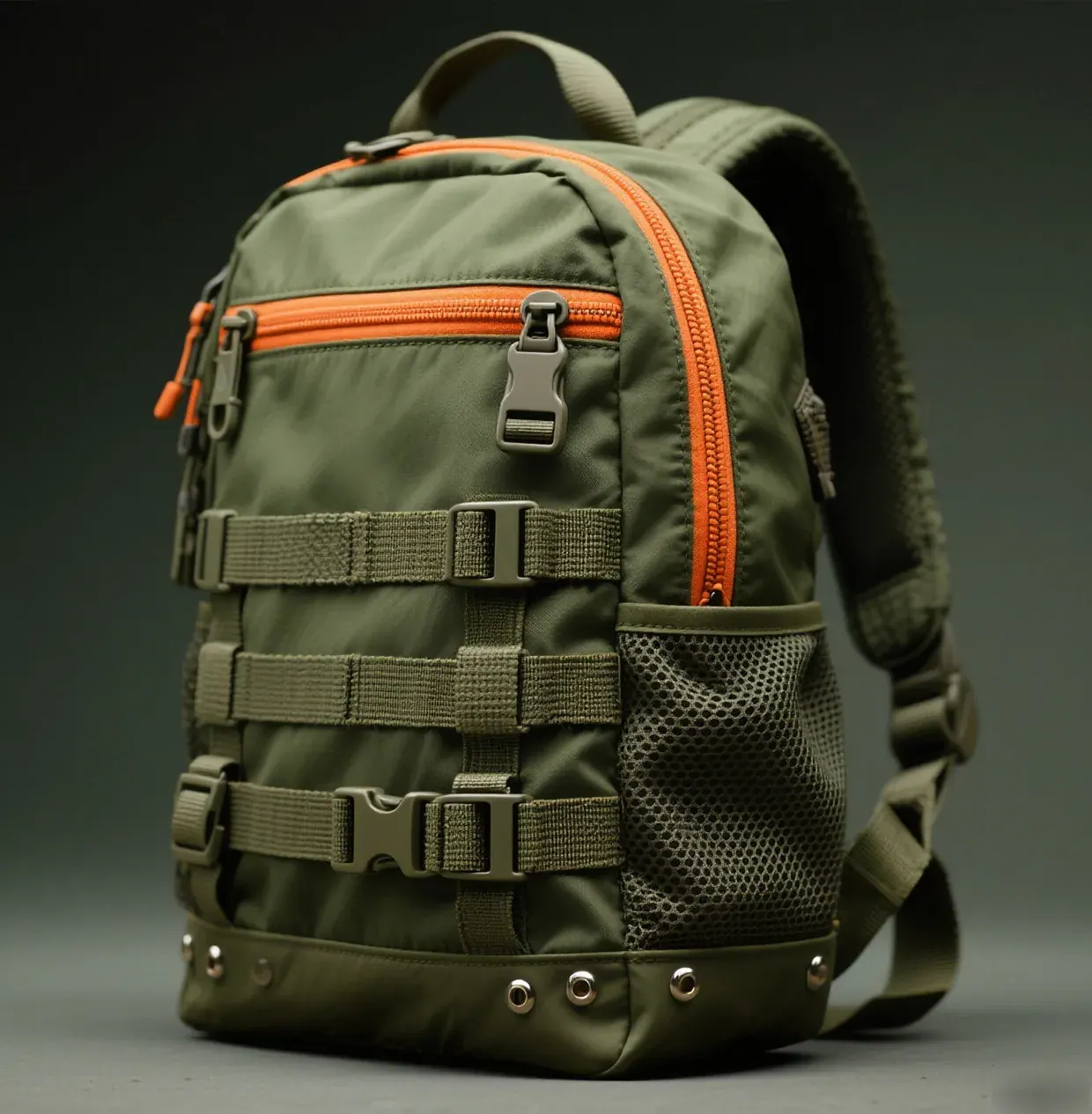
Hang rather than fold, and hang by the haul loop or by both shoulder straps rather than by one, so the load spreads through the anchorages. Stuff the body loosely with acid free paper or a soft cloth to keep it open and let air move, and leave every closure open: a zipper left closed for months traps moisture in the track and a collar left rolled holds humidity inside the fold. Check once a season and re-dry if the shell feels cool or clammy to the touch.
Mould is the companion risk in damp storage and it appears within 7 to 14 days on a pack put away damp. It is surface growth rather than structural damage, and it lifts with a pH neutral cleaner, but it leaves staining and it indicates that the storage conditions were already damaging the film. Treat visible mould as a storage failure rather than a cleaning problem, and fix the humidity before cleaning the pack.
Cleaning Without Stripping the Surface
Most coating damage blamed on age is actually cleaning damage. Solvents, detergents with builders, and stiff brushes all remove the surface finish and abrade the outermost microns of the film, which is precisely the layer that ultraviolet exposure has already weakened. A cleaning routine that takes 10 minutes and uses pH neutral soap will leave a pack better protected than one cleaned aggressively every month.
- Rinse in fresh water first and let it loosen dirt for 5 to 10 minutes before touching the surface at all.
- Use pH neutral soap at roughly 1 percent in lukewarm water, applied with a soft cloth rather than a brush.
- Work along the weld lines rather than across them, so the cloth does not lift a seam edge.
- Rinse thoroughly, because residual soap film attracts dirt and holds moisture against the coating.
- Dry in shade with the collar open and the body inverted for a full 24 hours, never in direct sun.
- Re-treat the surface only once the shell stops beading, and never on a shell that is already crazed.
Two substances deserve an absolute ban. Solvent based cleaners dissolve the surface of the film and accelerate cracking, and they do it invisibly, so the damage shows up months later as crazing along a fold. Abrasive pads remove material outright. Neither is ever necessary: a soft cloth and pH neutral soap remove everything a pack will realistically encounter. Full cleaning procedure is set out in the cleaning guide, and restoring a worn finish is covered in the re-waterproofing guide.
Ultraviolet exposure during drying is worth planning around. Line drying in direct summer sun for a full day delivers a meaningful dose to a weakened surface, and shade drying costs nothing but a few extra hours. Turn the pack once during drying so trapped moisture does not sit in the collar fold, and confirm the inside of the fold is dry to the touch before it goes into storage.
Cold, Heat and the Flexibility Window
Every coating has a temperature range over which it stays supple, and outside that range it behaves like a different material. Most general duty films stay flexible down to about minus 20 degrees and up to about 70 degrees, with the practical comfort window considerably narrower. A pack that is fine at 10 degrees can crack at a fold at minus 25, which is why winter users are advised to unroll the collar indoors rather than outside in the cold.
| Temperature | Film behaviour | Practical advice | Risk level |
|---|---|---|---|
| Above 70 degrees | Softening, plasticizer loss accelerates | Never store in direct sun or a hot boot | High |
| 40 to 70 degrees | Accelerated hydrolysis if humid | Avoid sustained exposure | Moderate to high |
| 15 to 25 degrees | Optimal, baseline aging | Ideal storage and use range | None |
| 0 to 15 degrees | Slightly stiffer, still supple | Normal use, no special care | None |
| Minus 20 to 0 degrees | Stiff, folds under strain | Unroll the collar before it gets cold | Low to moderate |
| Below minus 20 degrees | Brittle at fold lines | Consider a cold rated specification | Moderate to high |
Cold flexibility is a specification item rather than a hope, and it is the main reason to choose polyether chemistry or a cold rated grade for winter programmes. Handling a frozen collar is the classic failure: the film is below its flexibility window, the user forces four turns, and a crack forms that only becomes visible when the pack warms up. Winter behaviour is covered in the cold weather flexibility guide, and winter hiking use in the winter hiking notes.
A Service Life Calendar
Service life is extended by routine rather than by intervention. The calendar below fits around four checks a year and takes under an hour in total, and it converts aging from a surprise into a schedule. Record the date and any observation, because a written history makes warranty claims straightforward and makes the retirement decision obvious rather than emotional.
- Each January: full inspection out of storage. Flex the collar under a bright light, check all weld lines with a thumbnail, and record any crazing.
- Each April: clean with pH neutral soap, air dry for 24 hours in shade, and re-treat the surface if the shell no longer beads.
- Each July: mid season check on hardware and strap roots. Pull each strap firmly and look for any opening at the anchorage.
- Each October: dry completely, confirm the storage location reads between 40 and 60 percent humidity, and hang uncompressed for winter.
- Every two years: weigh the decision. A pack at stage three with more than four seasons behind it is a candidate for replacement.
- After any marine trip: rinse for 60 to 90 seconds in fresh water including buckles and tracks, then dry before storage.
Keep a simple record: date, what you observed, and what you did. Two lines per check is enough, and after four seasons the pattern tells you more than any single inspection. A pack that has moved from stage one to stage three in 18 months is telling you something about its storage rather than about its build, and the record makes that visible. A year round version of this schedule is published in the maintenance calendar.
When to Repair and When to Retire
The retirement decision should be made on water resistance and on consequence, not on appearance. A pack can look tired and still be perfectly sealed; another can look almost new and fail under a shower. Test rather than judge, using the ten minute immersion check, and decide by how much water entered and where you can tolerate the risk of a wet load.
| Condition | Measured performance | Verdict | Reasoning |
|---|---|---|---|
| Finish loss only | Dry after 10 minutes at 30 cm | Keep in full service | Film is intact, surface is not |
| Stiffening, no crazing | Dry, but holds a crease | Keep, improve storage | Flexibility can partly recover |
| Crazing at folds | Up to 5 millilitres after 10 minutes | Keep for dry duty, retire from wet | Will worsen under head pressure |
| Cracks through the film | More than 5 millilitres | Retire from wet duty | Not reliably repairable |
| Delamination in sheets | Fails immediately | Retire the pack | Bond failure cannot be restored |
Where a pack is retired rather than scrapped, downgrade it rather than discard it. A body that no longer seals is still a competent gym bag, a gear organiser or a liner inside a sound pack, and that second life is worth more than the sentiment attached to keeping it in wet service. Mark it clearly so nobody borrows it for a trip on the assumption that it is still waterproof.
Specifying Longevity Into Bulk Orders
Service life is a purchasing decision long before it is a maintenance one. Four specification choices determine how a fleet of packs ages, and all four have a measurable cost that is almost always lower than the cost of early replacement across a rental or guide fleet. State each one with a number in the purchase order, because a qualitative request for durability is not something anyone can verify.
| Specification choice | Standard setting | Longevity setting | Typical cost effect |
|---|---|---|---|
| Coating thickness | 0.30 to 0.35 millimetres | 0.50 to 0.60 millimetres | Plus 6 to 12 percent material cost |
| Soft segment chemistry | Polyester based TPU | Polyether based TPU | Plus 15 to 25 percent on the film |
| UV stabiliser package | Standard pigment | UV stabilised, mid tone colour | Plus 2 to 4 percent |
| Edge sealing | Cut edge as welded | Sealed and bound edges | Plus 1 to 3 USD per unit |
| Hydrolysis resistant adhesive | Standard tie layer | Hydrolysis resistant grade | Plus 3 to 6 percent |
| Documented weathering test | None requested | ISO weathering exposure cited | Test fee only, 80 to 300 USD |
Weathering and light exposure testing gives the only comparable numbers between two films, and the exposure standards used for accelerated comparison are published by ISO. Ask for the standard number, the exposure duration and the measured change rather than a statement that a fabric is UV resistant, and re-test after any change of film source because grades with the same trade name differ between mills. Programme entry is 500 pcs per design and colour, with prototypes in 6 to 10 working days and bulk production in 35 to 50 days.
QUANZHOU JUNYUAN BAGS has specified waterproof laminates since 2014, with the founding team in the industry since 2004, monthly output of 200,000 units verified by SGS and certification to BSCI and ISO 9001. Programme entry is 500 pcs per design and colour, prototypes in 6 to 10 working days, bulk in 35 to 50 days, FOB Xiamen or DDP into more than 100 countries. Materials are screened against REACH and California Prop 65, coating thickness is stated in millimetres on every specification, and every lot is inspected at AQL 2.5 before release. Film grades, weathering references and care documentation are published. Enquiries go to service@junyuanbags.com.
People Also Ask
How long does a TPU waterproof backpack last?
Four to eight years in recreational use and two to four years under heavy or marine duty. Storage governs the difference: 15 to 25 degrees at 40 to 60 percent humidity, hung uncompressed, gives the full expected life.
What causes TPU coating to delaminate?
Breakdown of the adhesive tie layer under sustained heat and moisture, usually starting at a cut edge where water wicks inward. It is the end state of hydrolysis and is not repairable, so treat visible separation as retirement.
Can I repair a cracked TPU coating?
Not durably. A crack through the film means the coating around it has already lost flexibility, and patches fail at the edge within weeks. Sealed edge treatment can buy 6 to 12 months when separation has only started at an edge.
Is it bad to store a backpack in a hot car boot?
Yes. Boot temperatures reach 60 to 70 degrees in summer, which roughly halves film life above 50 degrees and drives plasticizer loss in a single season. Store at 15 to 25 degrees with humidity between 40 and 60 percent instead.
What humidity damages a waterproof coating?
Above 60 percent relative humidity sustained, especially with temperatures over 40 degrees, when hydrolysis attacks the ester soft segment. A hygrometer readable to 5 percent settles whether a cupboard is genuinely dry.
Does TPU get brittle in cold weather?
It stiffens below 0 degrees and can crack at folds below about minus 20. Unroll the collar indoors before it gets cold, and specify a cold rated or polyether grade for winter programmes.
Frequently Asked Questions
Q1. How long does a TPU coated backpack last?
Four to eight years of useful service in recreational use, and two to four years under heavy or marine duty. The spread is driven by storage and cleaning rather than by build quality, and a 0.50 millimetre film outlasts a 0.30 millimetre film by roughly 60 percent in identical conditions.
Q2. What is TPU delamination?
Separation of the polymer film from the woven fabric beneath it, caused by breakdown of the adhesive tie layer under heat and moisture. It usually starts at a cut edge or corner, appears as sheets lifting from the surface, and cannot be repaired.
Q3. Can a delaminated backpack be repaired?
No. Once the bond has failed the film cannot be re-adhered, and patches fail at their edge within weeks. An edge treatment can slow the spread by 6 to 12 months, but that is buying time to order a replacement rather than a repair.
Q4. What temperature damages a waterproof coating?
Sustained exposure above 40 degrees accelerates aging, and above 50 degrees it roughly halves film life. Car boots reach 60 to 70 degrees in summer, which is the single most damaging common storage location for a coated shell.
Q5. What humidity is safe for storing a waterproof backpack?
Between 40 and 60 percent relative humidity. Above 60 percent, hydrolysis begins to attack the soft segment of the coating, and the rate roughly doubles for every 10 degrees of temperature rise once that threshold is crossed.
Q6. Should I hang or fold a backpack in storage?
Hang it, by the haul loop or by both shoulder straps so the load spreads through the anchorages. Folding creates a permanent crease that concentrates strain exactly where the film is weakest, and cracks form there later.
Q7. How do I clean a TPU coated backpack safely?
Rinse first and let dirt loosen for 5 to 10 minutes, then use pH neutral soap at about 1 percent in lukewarm water with a soft cloth, working along weld lines rather than across them. Rinse thoroughly, dry in shade for 24 hours with the collar open.
Q8. What cleaners damage a waterproof coating?
Solvent based cleaners, which dissolve the film surface and cause crazing months later, and abrasive pads, which remove material outright. Detergents with builders strip the finish too. A soft cloth and pH neutral soap handle everything a pack will realistically meet.
Q9. Does sunlight really shorten a backpack's life?
Yes. Ultraviolet exposure breaks bonds at the outermost microns of the film, producing a chalky layer that abrades away and exposes fresh material. Regular sun exposure shows chalking in 60 to 90 days, so dry and store in shade.
Q10. Is polyether TPU worth the extra cost?
For marine, cold or high humidity programmes, yes. Polyether soft segments resist hydrolysis roughly two to three times better than polyester ones, at a film cost premium of about 15 to 25 percent, which is usually recovered in service life.
Q11. When should I retire a waterproof backpack?
Retire from wet duty once cracks pass through the film or once immersion admits more than 5 millilitres in 10 minutes at 30 centimetres. Delamination is immediate retirement. A pack that no longer seals still works well as a gym bag or organiser.