Kayak tackle storage is a fit problem before it is a capacity problem. Measure three things first: the tank well opening, typically 400-500 mm wide, the round hatch diameter, commonly 200 mm or 260 mm, and the rod holder positions behind the seat. A crate bag should match the crate footprint within 10-15 mm, carry two to four upright trays, and drain in under 60 seconds. Tie the assembly down at two independent points, never to the paddler. Programme baseline is MOQ 500 pcs per design and colour, samples in 6-10 working days, and bulk in 35-50 days.
Two Storage Systems, One Craft
A fishing kayak carries gear in two places: the rear tank well, which is open and exposed, and the internal hull, reached through a hatch. The tank well takes a crate or a soft bag that can get wet; the hull takes items that must stay dry and that fit through the hatch opening. Understanding which items belong in which space solves most kayak storage complaints before any product is chosen.
The crate system dominates because it is modular. A moulded crate with rod holders sits in the tank well, a fitted bag drops inside it, and the whole assembly lifts out in one motion at the end of the session. That single-motion removal is the reason the system persists: everything comes off the craft at once, goes home, and is repacked at a bench rather than on a beach.
| System | Location | Gets wet | Best contents |
|---|---|---|---|
| Crate and crate bag | Rear tank well | Yes, routinely | Trays, tools, pliers, spare rigs |
| Soft tank well bag | Rear tank well | Yes | Light bulky items, rain shell |
| Hatch bag or dry bag | Internal hull | No, if sealed | Electronics, documents, spare clothing |
| Deck bag | Front deck or rails | Yes | Items needed within 10 seconds |
The kayak crate versus tackle backpack comparison works through the choice for anglers who launch from a beach and walk. In short: a crate wins when the craft carries the gear, and a backpack wins when the angler carries the gear.
Measure the Craft Before Choosing a Bag
Three measurements decide everything. The tank well opening is usually 400-500 mm wide and 350-600 mm deep, and a crate that fits the well lengthwise cannot then be rotated. The round hatch is commonly 200 mm or 260 mm in diameter, and no rigid item wider than that will enter the hull. Rod holder spacing behind the seat sets how tall a crate can be before it blocks a rod butt.
| Measurement | Typical range | What it controls | Tolerance |
|---|---|---|---|
| Tank well width | 400-500 mm | Crate footprint | Crate within 10-15 mm |
| Tank well depth | 350-600 mm | Crate length and bag height | Leave 30 mm for bungee |
| Hatch diameter | 200 or 260 mm | What enters the hull | Rigid item under 190 or 250 mm |
| Rod holder spacing | 180-300 mm | Crate height and rod clearance | 50 mm above rod butts |
| Rail geometry | Track or round rail | Deck bag mounting | Match the mount type |
Measure the loaded crate too, not just the empty one. A crate with four trays and tools can gain 40-60 mm in height because the lid no longer seats fully, and that extra height is often enough to foul a rod butt or block a paddle stroke. Build the full load before committing to a bag size or a crate height.
Document the measurements on a card kept with the craft. Kayak anglers frequently own more than one craft or change a crate, and a record of tank well width, hatch diameter, and rod holder spacing saves a return on every subsequent purchase. Take a photograph of the loaded assembly in place as well, because a written dimension rarely captures a rail position or a rod butt clearance that turns out to matter.
One further measurement is commonly missed: the height from the tank well floor to the top of the seated paddler shoulder line. Anything stored taller than that blocks the rear view and, more importantly, can strike the paddler during a self-rescue. Keep the loaded crate below that line wherever possible, and treat any item that exceeds it as a deck or hull item instead.
Crate Bag Design: Fit, Lid, and Rod Holders
A crate bag is a liner that turns an open crate into an organised drawer. It should match the crate interior within 10-15 mm so it cannot shift, and it should hold two to four trays upright with 15-20 mm of clearance above each for lifting. Trays upright rather than stacked flat is the defining feature, because the angler reaches over the side of a kayak and cannot unpack from the top.
The lid matters more than it appears. A padded lid doubles as a cutting or rigging surface and keeps rain out of the trays while paddling, but it must open without lifting the whole bag out of the crate. Specify a lid that hinges at the rear and stays open on its own, and check that it can be operated while seated and leaning slightly, which is the real posture on a kayak.
| Element | Specification | Why | Check |
|---|---|---|---|
| Interior match | Within 10-15 mm of crate | Prevents shifting | Shake test loaded |
| Tray orientation | Upright, 15-20 mm clearance | Reach from the side | Lift each tray one-handed |
| Lid | Rear hinge, stays open | Rigging surface and rain cover | Open while seated |
| Rod holders | 2 to 4 tubes, angled | Rods clear of paddle stroke | Full paddle rotation test |
| Drainage | 2 to 4 grommets at base | Clears water in 60 seconds | Timed drain test |
Rod holder angle is the detail most often wrong. Vertical tubes keep rods clear of the paddler but make rods hard to reach while seated; angled tubes at 30-45 degrees make rods accessible but can bring a butt into the paddle arc. Test a full paddle rotation with rods fitted before approving a layout, because a fouled stroke is a genuine control problem, not an inconvenience. Also check reach from a seated position with the crate behind the seat: if a rod cannot be grasped without twisting the torso more than about 45 degrees, the holder is effectively unusable while fishing.
Getting Gear From Vehicle to Craft
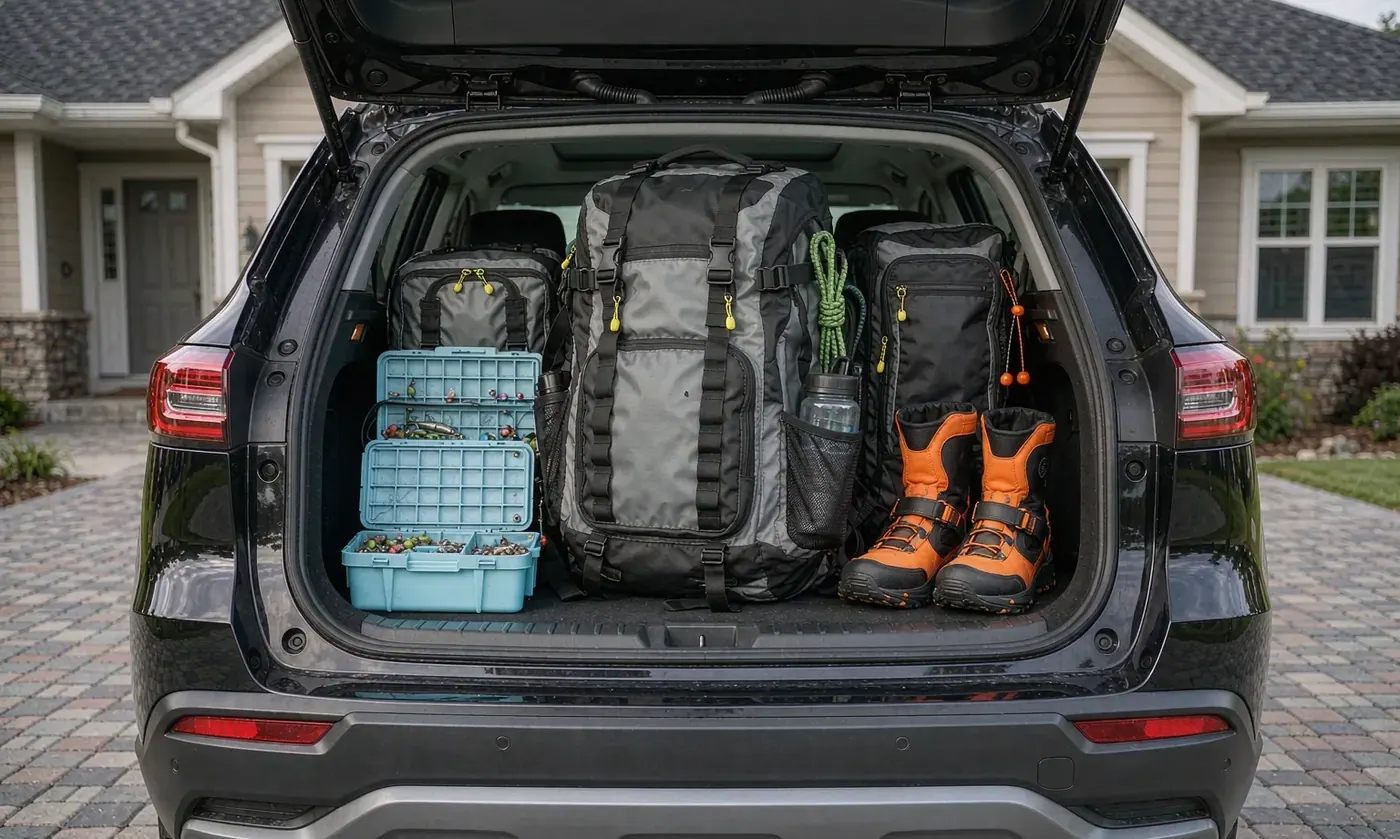
The forgotten part of kayak storage is the 20-80 m between the vehicle and the water. A crate and bag that lift out as one unit solve it, provided the combined weight is manageable. A loaded crate with four trays and tools commonly reaches 9-14 kg, which is a two-hand carry and awkward over soft sand or a rocky launch.
Two design responses help. First, split the load: carry the crate empty and the bag loaded, or use a bag with a removable tray insert so the weight can be divided. Second, add a shoulder strap or a carry handle that sits at the balance point rather than at one end, because an unbalanced 10 kg carry twists the wrist and is the usual cause of a dropped crate on a launch ramp.
What Belongs in a Dry Bag Instead
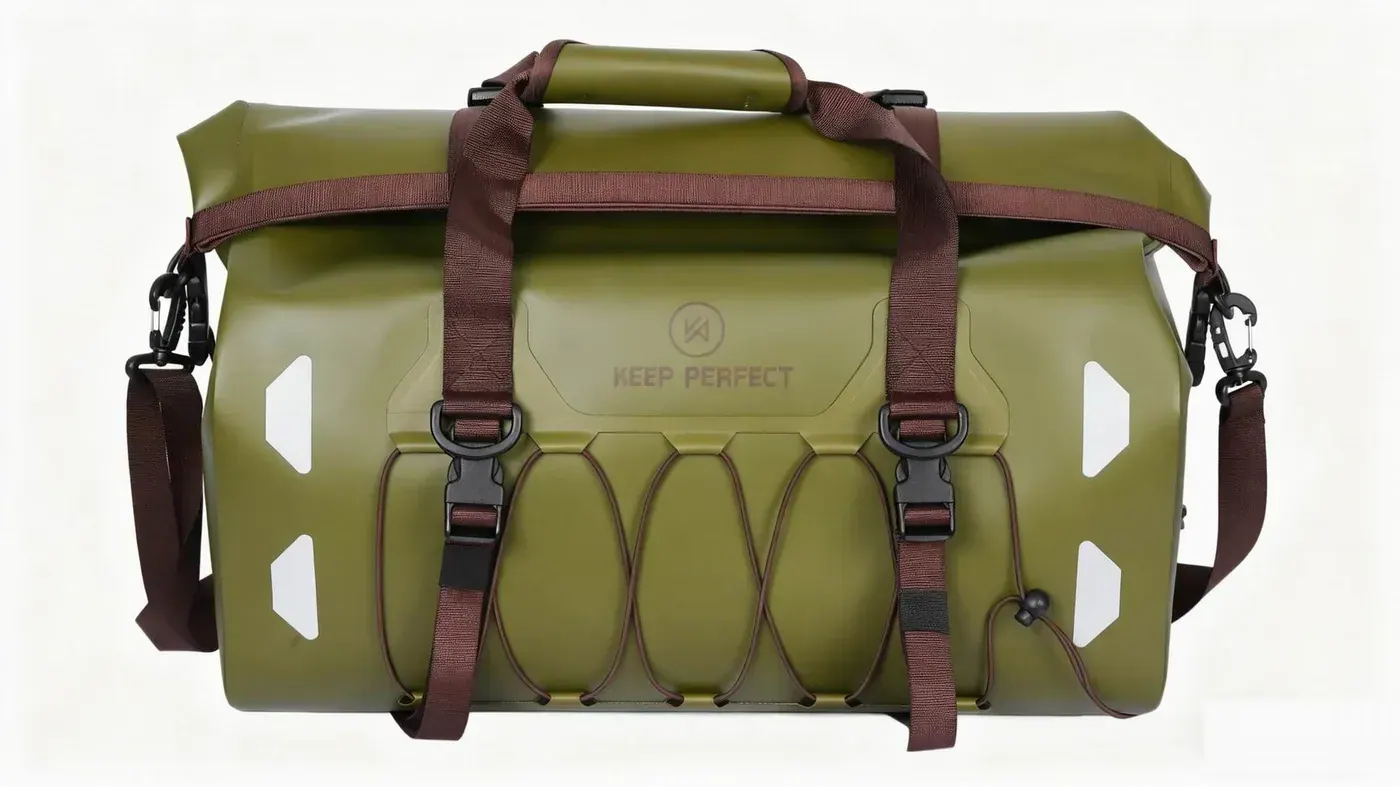
Anything that fails permanently after immersion belongs inside the hull or in a sealed dry bag, not in the crate. That list is short and worth stating explicitly: phone, keys, licence, a spare warm layer, and a first aid item. Everything else in a kayak fishing kit survives getting wet and dries at home.
A 5-10 L dry bag sized to pass the hatch is the usual answer. It should be bright coloured so it can be found in a dark hull, have a purge valve so it can be compressed, and be secured at one point so it does not migrate inside the hull during a capsize. A loose dry bag in a hull is surprisingly hard to retrieve, and retrieving it is not worth a risk in moving water.
Tie-Down, Retention, and Capsize Behaviour
Secure the crate assembly at two independent points so it cannot leave the craft during an unexpected tip. Use short captured webbing or a bungee with a retained hook, and route it so no loop can encircle a wrist, ankle, or the paddler torso. Equipment retention is the goal; a tether to the person is not, and it creates an entanglement risk in the exact situation where escape matters most.
- Use two independent tie-down points, not one long line.
- Keep routing short and captured so no loop can reach a limb.
- Check that the assembly can still be released with cold, wet hands.
- Test directional loading, not only straight downward pressure.
- Re-check tension after the first 30 minutes, because webbing relaxes when wet.
Personal safety on a kayak is a separate subject from gear storage, and it should be treated that way. Where applicable, U.S. Coast Guard boating safety resources provide authoritative guidance on flotation, signalling, and cold water risk. A well-tied crate does not make a craft safer, and no storage decision should be used to justify skipping a properly worn personal flotation device or a communication plan.
Catch, Cooler, and Drain Management
A cooler compartment on a kayak is usually a soft insert of 6-12 L rather than a hard box, because it has to fit the crate footprint and stay low. Insulation of 6-10 mm with a welded liner and a drain is the baseline, and the drain must be routable over the side of the craft rather than into the hull. Water pumped or drained into a hull is a stability and a cleanup problem at the same time.
Catch storage raises hygiene and, in many jurisdictions, rules on how fish must be kept and transported. Follow local regulations on retention, tagging, and transport rather than treating a bag as a compliant container. Rinse any catch compartment thoroughly after every session and dry it completely, because residue in a warm closed compartment is the fastest route to an odour that never leaves.
Waterproof Level and Testing for Kayak Storage
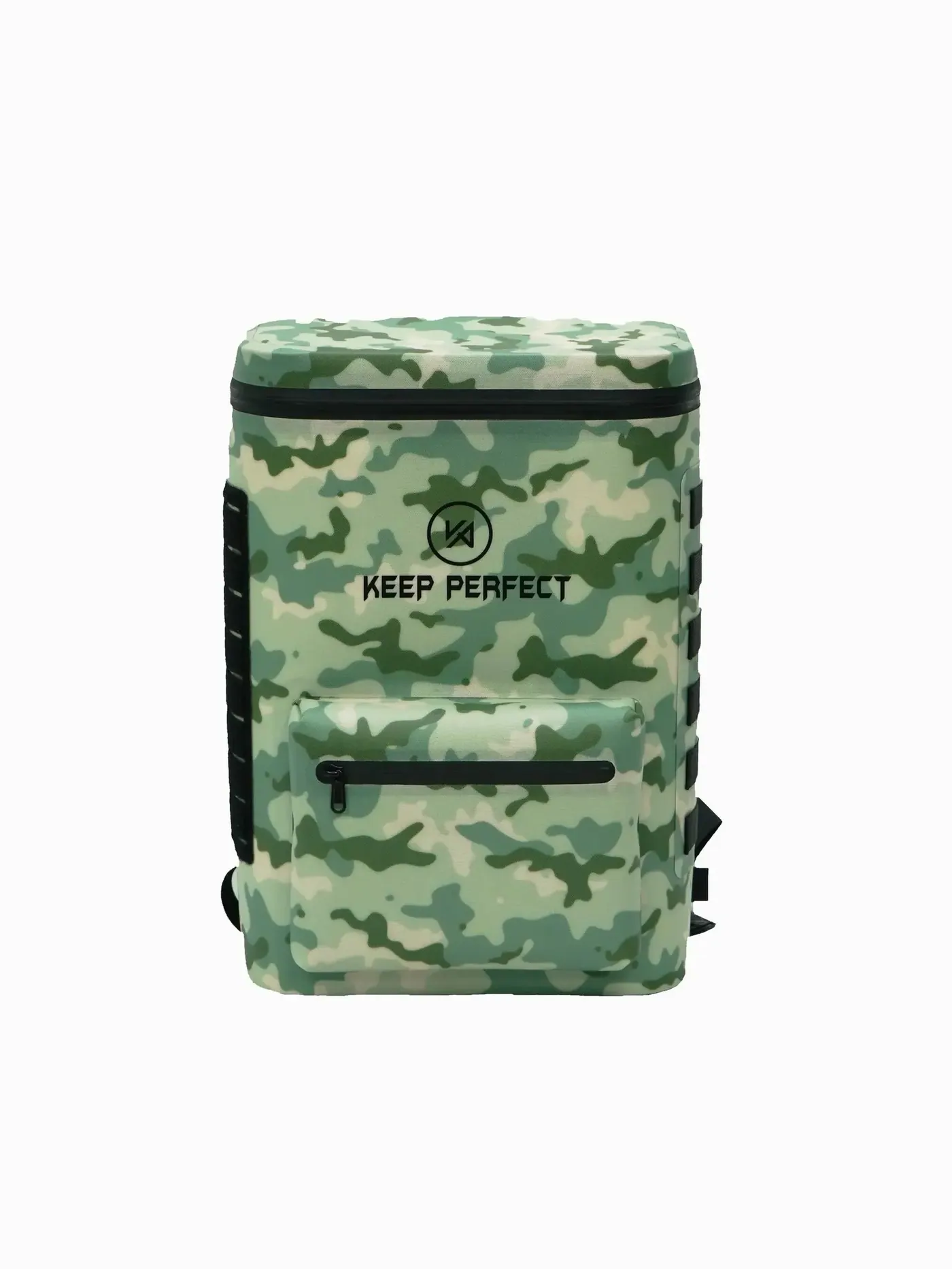
Crate bags get wet by design, so most are specified without a formal rating and rely on drainage instead. Where a rating is needed, it applies to the dry bag and the hatch bag rather than to the crate liner. Ingress codes are defined by the IEC ingress protection framework: a hatch bag should reach IPX6 or better, and a dry bag intended for immersion should state IPX7 with a depth and duration.
| Item | Realistic level | Test | Note |
|---|---|---|---|
| Crate liner | No rating, drain-based | Drain in under 60 seconds | Trays should still have lids |
| Soft tank well bag | IPX4 to IPX5 | 30 min spray | Open top, drains |
| Hatch bag | IPX6 | 60 min spray, loaded | Must pass the hatch diameter |
| Dry bag | IPX7 with stated depth | Immersion screen | Bright colour and purge valve |
Weather, wind, and water state should be reviewed before every launch, and NOAA marine weather resources support that review in the United States. Set written limits for wind and water conditions appropriate to the craft and skill, and turn back early enough to keep a margin. Storage decisions never change those limits.
Carrying, Handles, and Off-Water Handling
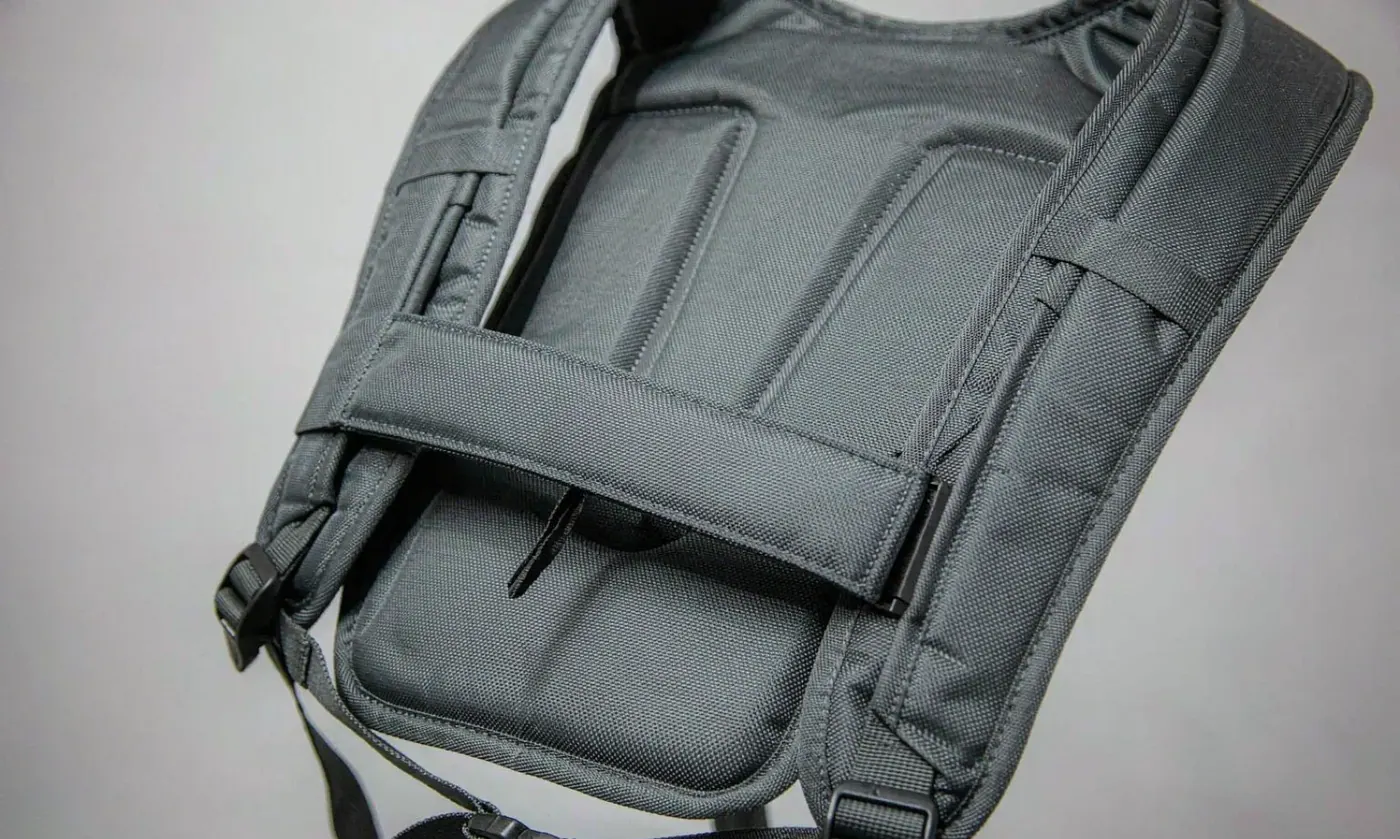
Handle placement decides whether a crate bag survives its first season. A single handle at the balance point beats two handles at the ends, because a loaded crate carried by two end handles flexes and racks the trays inside. Where two handles are used, they should meet at the top so the load hangs square, and the webbing should be anchored into reinforcement that reaches the base rather than into the rim.
| Handling feature | Specification | Failure mode | Test |
|---|---|---|---|
| Main handle | At the balance point, 25-38 mm webbing | Load racks, trays bind | Carry 20 m loaded |
| Shoulder strap | Detachable, two-point anchor | Snags on deck hardware | Remove and refit 10 times |
| Side grab loops | Low, reinforced | Rim tears under load | Lift test to 14 kg |
| Drain grab | Doubles as a pour point | Water spills into the hull | Timed drain over the side |
A drain that doubles as a pour point is a small design touch with real value. Being able to tip a crate bag and empty it in one motion, away from the hull, is faster at the end of a session than any pump or sponge, and it removes most of the standing water that causes odour between trips.
Care, Rinse, and Off-Season Storage
Rinse the crate bag, the crate, and all hardware with fresh water after every session, including the drain grommets and the rod holder tubes. Salt and sand concentrate in exactly those places and are the reason a bag fails long before the fabric wears. Dry open for 8-24 hours, inverted where possible, and remove trays so they dry separately.
- Rinse with fresh water after every session, including drain grommets and rod tubes.
- Empty the bag completely and dry inverted for 8-24 hours.
- Check tie-down webbing for wear and relaxation monthly.
- Use mild pH-neutral soap only; never solvents, never machine washing.
- Store dry and out of direct sun at 15-25 degrees.
Off-season, remove the crate from the craft entirely. A crate left in a tank well through winter collects water, leaves, and ultraviolet exposure for months, and the tie-down points are often the first thing to fail as a result. Store the assembly indoors, and re-check all webbing and hooks before the first trip of the new season.
Programme Brief and Acceptance Criteria
Write one document covering crate footprint and tolerance, tray orientation and clearance, lid type, rod holder count and angle, handle and strap anchoring, drain specification and rate, protection level with the test condition for dry and hatch bags, hardware grade, and compliance. Add acceptance criteria for dimensions, seam appearance, coating thickness, drain rate, and colour fastness.
| Programme item | Baseline | Note |
|---|---|---|
| MOQ | 500 pcs per design and colour | Colour split negotiable above baseline |
| Sampling | 6-10 working days | Add 3-5 days for a rod holder change |
| Bulk | 35-50 days | From approved sample and deposit |
| Inspection | AQL 2.5 | Include crate fit, tray clearance, drain rate |
| Compliance | REACH and California Prop 65 | Screen coatings, films, inks, hardware |
QUANZHOU JUNYUAN BAGS has developed waterproof bag programmes since 2014, with the founding team active in the industry since 2004. Monthly output of 200,000 units is verified by SGS, and BSCI and ISO 9001 systems structure the workflow. Materials are screened for REACH and California Prop 65, and every bulk order is inspected at AQL 2.5 before shipment.
A kayak storage brief can be emailed to service@junyuanbags.com; include tank well and hatch dimensions, crate footprint, rod holder count, and quantity. FOB Xiamen or DDP service to more than 100 countries follows an approved sample and a complete test record. The waterproof fishing tackle bag overview places kayak storage alongside the other formats, and the best kayak tackle bag comparison covers finished designs.
People Also Ask
What size crate fits a fishing kayak tank well?
Measure the well first; most are 400-500 mm wide and 350-600 mm deep. Choose a crate that matches the footprint within 10-15 mm and leave about 30 mm of space for bungee routing.
Should kayak tackle trays stand up or lie flat?
Upright, with 15-20 mm of clearance above each tray. The angler reaches over the side of a kayak and cannot unpack a flat stack from the top.
How do I stop my crate leaving the kayak in a capsize?
Tie it down at two independent points with short captured webbing, and route it so no loop can reach a limb. Never tether the crate to the paddler.
What should go in a dry bag rather than a crate?
Anything that fails permanently after immersion: phone, keys, licence, a spare warm layer, and a first aid item. Choose 5-10 L, bright coloured, with a purge valve.
How heavy is a loaded kayak crate?
Commonly 9-14 kg with four trays and tools. That is a two-hand carry, so consider splitting the load or a bag with a removable tray insert.
Do I need a waterproof rating on a crate bag?
Usually not; crate liners rely on drainage. Ratings apply to the hatch bag at IPX6 or better and to a dry bag at IPX7 with a stated depth and duration.
Frequently Asked Questions
Q1. What measurements do I need before buying kayak tackle storage?
Tank well width and depth, hatch diameter, rod holder spacing, and rail type. Those four control crate footprint, hull access, crate height, and deck mounting.
Q2. What is a typical kayak hatch diameter?
Two hundred millimetres or 260 millimetres on most fishing kayaks. No rigid item wider than about 190 or 250 mm respectively will pass through.
Q3. How many trays fit in a kayak crate bag?
Two to four standing upright with 15-20 mm of clearance above each. Upright orientation matters because the angler reaches from the side, not from the top.
Q4. Should a crate bag have a lid?
Yes. A rear-hinged lid that stays open acts as a rigging surface and keeps rain off the trays, and it should be operable while seated.
Q5. What angle should crate rod holders be?
Thirty to 45 degrees makes rods reachable while seated, but check a full paddle rotation with rods fitted. A fouled stroke is a control problem, not an inconvenience.
Q6. How do I secure a crate to a kayak?
Use two independent tie-down points with short captured webbing or a retained bungee hook. Route it so no loop can encircle a wrist, ankle, or torso.
Q7. Can I tether the crate to myself?
No. A tether to the paddler creates an entanglement risk in exactly the situation where escape matters most. Retain the gear to the craft instead.
Q8. How should a crate bag drain?
Through two to four grommets at the base, clearing in under 60 seconds, and ideally routable over the side of the craft rather than into the hull.
Q9. What size dry bag suits a kayak?
Five to 10 L, sized to pass the hatch, in a bright colour with a purge valve. Secure it at one point so it cannot migrate inside the hull.
Q10. Do I need a cooler compartment on a kayak?
Often yes, as a soft insert of 6-12 L that fits the crate footprint. It needs a welded liner and a drain routable over the side, plus local rules on catch transport.
Q11. How heavy is a loaded kayak crate and can I carry it alone?
Typically 9-14 kg, which is a two-hand carry. Split the load or use a removable tray insert where the launch involves soft sand or rock.
Q12. How should a crate bag be cleaned and stored?
Rinse with fresh water after every session including grommets and rod tubes, dry inverted for 8-24 hours with trays removed, and store indoors out of sun.
Q13. Should the crate stay on the kayak in winter?
No. Remove it, because months of water, debris, and ultraviolet exposure will degrade the tie-down points first. Re-check webbing before the new season.
Q14. What is the MOQ and lead time for a kayak storage programme?
MOQ is 500 pcs per design and colour, samples take 6-10 working days, and bulk runs 35-50 days from approved sample and deposit.