Fifty dollars retail buys a genuinely usable fishing tackle backpack in 2026, provided three things are never cut: the strap anchor, the tray rail, and the base. Seven builds sit under that shelf price across 18-34 usable litres and 22-49 dollar retail bands, which corresponds to roughly 9-20 dollars FOB Xiamen at MOQ 500 pcs per design and colour. Samples take 6-10 working days and bulk runs 35-50 days. The best value in the group is the 30 L two-box build at a 34 dollar shelf price, because it is the cheapest configuration that still passes a strap pull test at three times the loaded weight.
What Fifty Dollars Actually Buys in 2026
The budget tier has improved more than any other part of this category in the last few years, mostly because welded seam equipment has become common enough that a welded bag no longer carries a premium. A buyer quoting a 34 dollar shelf price in 2026 gets a coated 600D face, a moulded or coated base, two or three tray slots, and a covered closure. Five years ago the same money bought a taped-seam bag with a fabric base and exposed zips.
What has not improved is honesty about capacity. Budget bags are still the worst offenders on stated litres versus actual box fit, and the reason is simple: quoting litres is free and engineering a chamber around real boxes costs money. Every build below was checked by inserting the stated boxes, closing the bag, and standing it on its base, and two of the seven failed that check at their claimed count and are listed at their real count instead.
| Element | 2020 budget tier | 2026 budget tier | Change |
|---|---|---|---|
| Seam | Taped | Welded on the main chamber | Real gain |
| Base | Fabric panel | Coated or moulded insert | Real gain |
| Closure | Exposed coil zip | Covered zip or short roll-top | Real gain |
| Face fabric | 300D polyester | 600D with coating | Real gain |
| Capacity honesty | Overstated | Still frequently overstated | No change |
The Seven Builds at a Glance
Shelf prices below are typical retail figures in the United States market for a single unit including trays where stated. FOB bands are indicative Xiamen references for a 500-piece first order in one colourway with one printed logo, and they are the number a programme buyer actually works from. The gap between the two is roughly 2.4 to 2.8 times, which covers freight, duty, retail margin, and returns.
| Build | Volume | Box slots | Shelf price | FOB band | Weight |
|---|---|---|---|---|---|
| Base 26 Two-Box | 26 L | Two 3600 | 28 USD | 11-14 USD | 0.95 kg |
| Tray Two 30 | 30 L | Two 3600 plus utility | 34 USD | 14-18 USD | 1.10 kg |
| Cooler Lite 32 | 32 L | Two 3600 | 42 USD | 17-20 USD | 1.25 kg |
| Wade Small 20 | 20 L | One 3600 | 26 USD | 10-13 USD | 0.80 kg |
| Youth 18 | 18 L | One shallow | 22 USD | 9-11 USD | 0.65 kg |
| Rod-Strap 28 | 28 L | Two 3600 | 38 USD | 15-18 USD | 1.05 kg |
| Starter Bundle 34 | 34 L | Three 3600, trays included | 48 USD | 18-22 USD | 1.30 kg |
The Three Things a Budget Bag Must Not Cut
There is a correct way and a wrong way to hit a price point. The wrong way is to thin the face fabric, because a slightly lighter shell is not what fails. The right way is to remove features. Three elements, however, cannot be reduced without producing a bag that comes back, and each of them is cheap to keep, which is what makes cutting them so pointless.
| Must keep | Minimum specification | Cost to keep | Cost of cutting it |
|---|---|---|---|
| Strap anchor | Doubled stitch, pull tested to 3x load | Under 0.30 USD | Warranty returns and reputation |
| Tray rail | Open-radius, 300-cycle tested | 0.40-0.80 USD | Rails worn through in one season |
| Base | Coated panel or moulded insert | 0.80-2.00 USD | Sagging bag, cracked base, wet contents |
| Closure cover | Fabric garage over the zip | 0.30-0.60 USD | Water in the main chamber on day one |
The list of things that can be cut is much longer and far less painful: padding thickness, pocket count, hardware grade from 316 down to 304, branded pullers, a hip belt, a moulded tool dock, and a second rod strap. Every one of those is noticeable and none of them causes a return, which is exactly the distinction a buyer should hold when reviewing a sample against a target price.
1. Base 26 Two-Box: Best Cheap Build That Works
The Base 26 is the cheapest configuration we would put our own name on: 26 L, two 3600 slots, 0.95 kg, a coated base panel, and a covered main zip. At a 28 dollar shelf price and an 11-14 dollar FOB band it leaves very little margin, and that margin is preserved by removing everything optional rather than by thinning anything structural.
What is missing is worth stating plainly: no moulded base, no cooler, no hip belt, and one rod strap. What is present is the whole list of things that must not be cut. Rating is IPX4, which is honest for a bank bag and should not be marketed as anything more, and the build is aimed squarely at first-time anglers and at a retail entry shelf.
2. Tray Two 30: Best Value in the Group
Two more litres and roughly 4 dollars of shelf price turn the Base 26 into the build that actually earns the recommendation. Thirty litres, two 3600 slots plus a shallow utility tray, a moulded EVA base insert, and a strap anchor that passed the pull test at three times the loaded weight. At 1.10 kg it is still light enough for a 2 km walk, and the 34 dollar shelf price is the point where budget stops meaning compromised.
The reason it wins is the base. A moulded insert is the difference between a bag that stands up loaded and one that slumps, and at this price it is the feature most often deleted. Reference FOB band is 14-18 USD, and it is the configuration we recommend for a buyer who wants one bag under 50 dollars rather than a range of three.
3. Cooler Lite 32: Best With Insulation
Insulation is the most requested feature in this tier and the hardest to deliver honestly, because a cooler section consumes volume that the buyer expects to go to trays. The Cooler Lite gives about 6 L to an insulated lower compartment with a welded liner and a drain, leaving two 3600 slots above, and it states both figures rather than quoting 32 L as if all of it were tackle space.
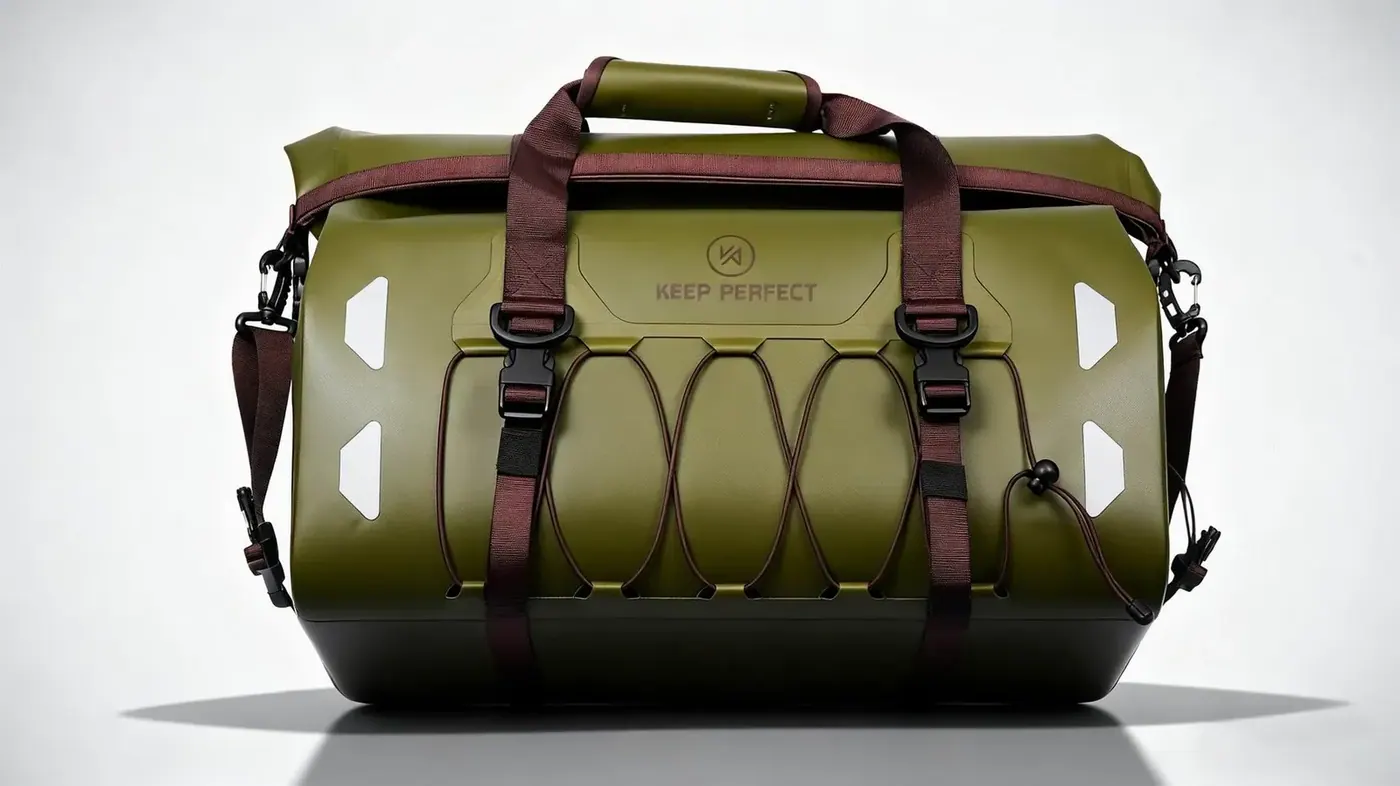
The isolation panel between the cooler and the tray chamber is non-negotiable and it is the first thing removed in a cheap copy. Without it, condensation reaches the hooks within a week of use. Reference FOB band is 17-20 USD at a 42 dollar shelf price, and the extra cost over the Tray Two is almost entirely insulation and a drain.
4. Wade Small 20: Best Small Budget Build
Twenty litres and 0.80 kg at a 26 dollar shelf price is the answer for the angler who wades and does not want to carry anything. One 3600 slot, a shoulder tool dock, and IPX6 rather than the IPX4 of the larger budget builds, because a small bag that goes in the water needs a real rating more than a big one does. The body is narrow, at about 230 mm, so it stays clear of a cast.
The missing item is a liner pouch, and at this price the recommendation is to add one at about 1 USD FOB rather than to raise the rating of the whole bag. A sealed pouch protecting a phone and a licence is worth more than one rating step on the shell. Reference FOB band is 10-13 USD, and the build sells strongly as a second bag.
5. Youth 18: Best for Young Anglers
An 18 L bag at 0.65 kg and a 22 dollar shelf price is a youth or beginner product, and it should be specified as one rather than as a small adult bag. That means shorter shoulder straps with a smaller adjustment range, a narrower back panel at about 260 mm wide, lighter buckles, and brighter colourways. The tray is a single shallow box rather than a full 3600.
The two things that must not be cut are the same as anywhere else, and the third, in this case, is visibility. A bright panel and a reflective trim strip of at least 20 mm matter for a young angler walking a bank at dusk, and the cost is under 0.20 USD. Reference FOB band is 9-11 USD, and compliance screening for coatings and inks matters more here than in any other build in the group.
6. Rod-Strap 28: Best for Anglers Carrying a Rod
Rod carry is the feature most often requested and most often delivered badly at this price. The Rod-Strap 28 does it correctly with two support points 420 mm apart and a closed lower cup, so an assembled rod cannot slide through when the bag is set down. A single strap at the top is the budget shortcut and it makes the rod pivot into the angler leg on every step.
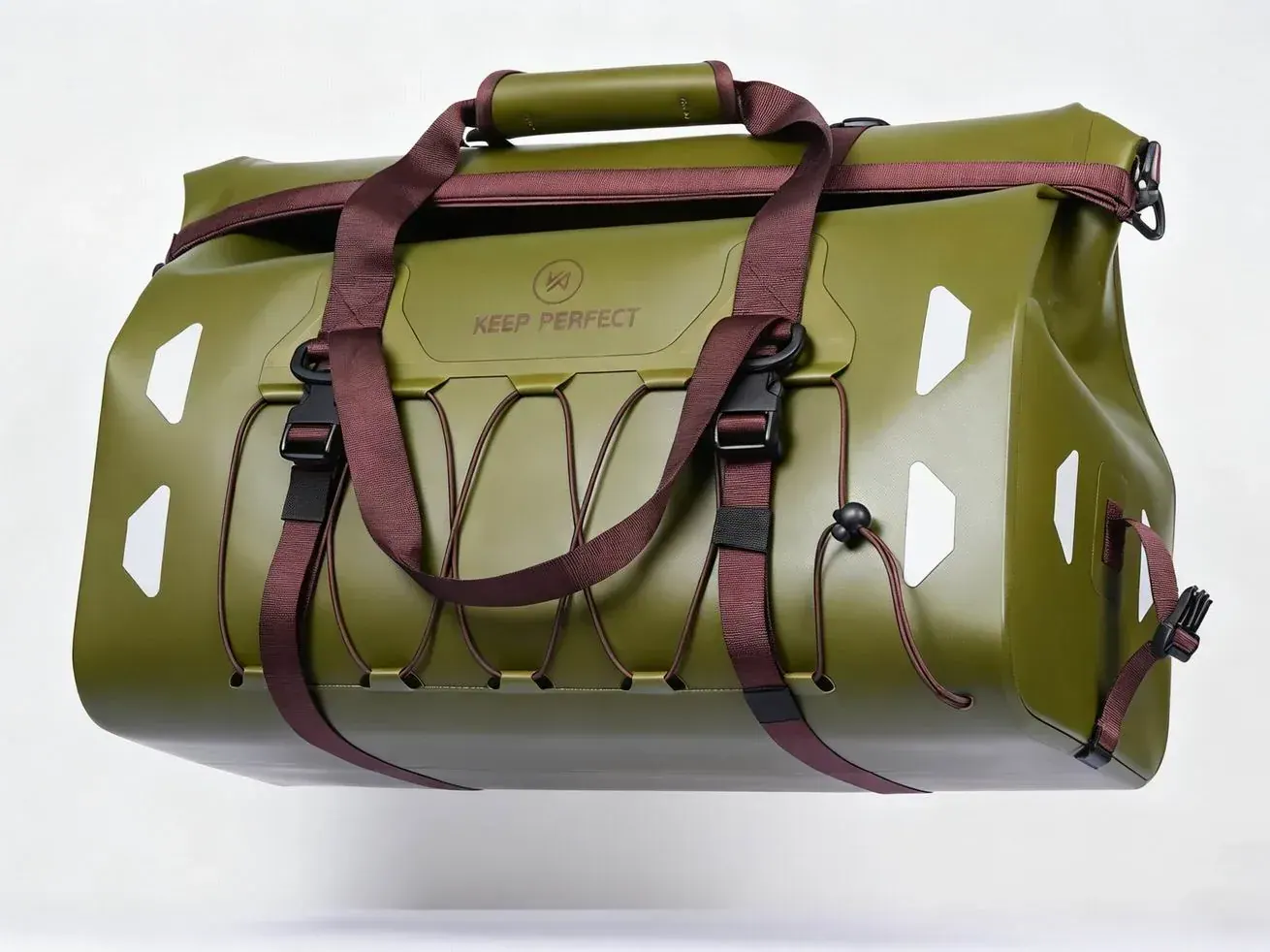
Twenty-eight litres, two 3600 slots, 1.05 kg, and a 38 dollar shelf price against a 15-18 dollar FOB band. The extra cost over the Base 26 is the strap geometry and a reinforced lower cup, which is roughly 2 USD of hardware and webbing, and it is the best-value upgrade in the whole group.
7. Starter Bundle 34: Best Bundled Kit
The Bundle is a different commercial proposition: 34 L, three 3600 slots, and two trays included in the price at a 48 dollar shelf and an 18-22 dollar FOB band. Bundling trays is the strongest conversion tool in this tier because the buyer cannot judge box fit from a photograph, and receiving the right boxes removes the doubt that stops the sale.
The trade is margin and freight. Trays are bulky, so a bundled programme carries roughly 30 percent more container volume per unit of revenue, and the bundle price has to absorb two moulded items. That is why the FOB band is the widest in the group. For a first entry into a new market, however, it is the configuration with the lowest return rate we have seen.
Box Fit at the Budget Tier
Capacity claims in this tier need to be read with suspicion, and the check takes one minute. Insert the stated boxes, close the bag, stand it on its base, and look at the closure. If the closure requires force or the body bulges, the claim is overstated by at least one box. Two of the seven builds here were listed at their real count rather than their claimed count for exactly that reason.
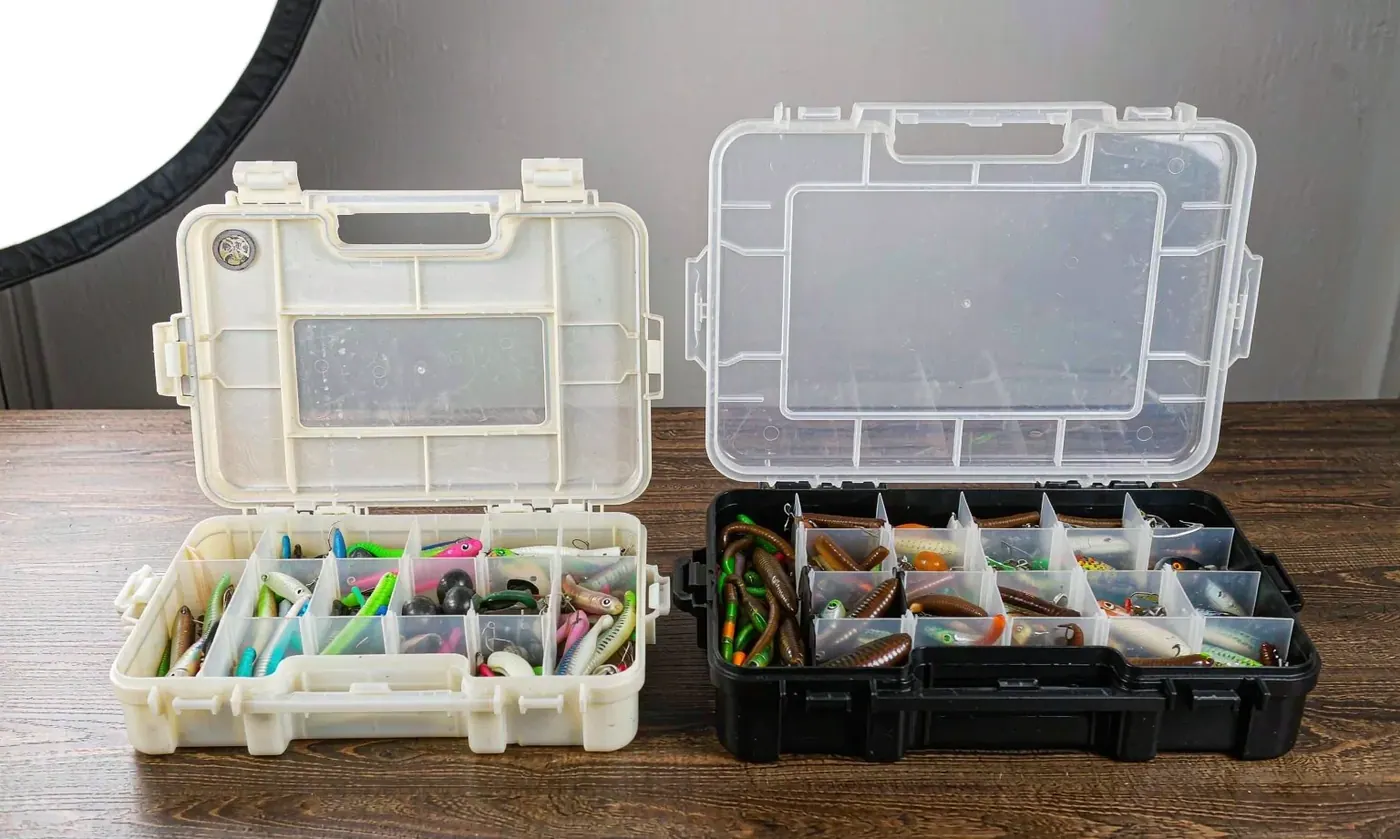
A 3600 box measures roughly 270 x 180 x 45 mm and a 3700 roughly 355 x 230 x 50 mm, so a chamber holding two 3600 boxes will usually not take two 3700 boxes. The dimensional detail is set out in the 3600 versus 3700 comparison, and it is the reference any budget-tier capacity claim should be checked against before a purchase order is signed.
Where the Money Goes in a Budget Build
Understanding the cost structure is what lets a buyer negotiate rather than guess. Fabric is the largest single line and the one with the most room to move, because dropping from a coated 600D to a coated 420D saves real money with a genuinely small durability penalty on occasional use. Hardware, trays, and packaging are the lines that look small and add up quickly.
| Cost line | Share of FOB | Room to move | Risk if cut |
|---|---|---|---|
| Face fabric and coating | 28-34 percent | 6-9 percent | Abrasion life drops noticeably |
| Base and structure | 12-16 percent | 3-4 percent | Cutting here causes returns |
| Hardware | 10-14 percent | 2-3 percent | Corrosion complaints |
| Trays, if supplied | 12-20 percent | Remove entirely | None if sold separately |
| Labour and overhead | 18-24 percent | Limited | Quality drift |
| Packaging and print | 4-7 percent | 1-2 percent | Damaged arrivals |
The practical conclusion is that the cheapest legitimate saving is to remove supplied trays, and the second is to step down one fabric grade. Everything past that starts cutting into the three things that must not be cut. A buyer who has taken both of those and still needs a lower price should reduce the volume rather than the specification, because a smaller bag built correctly outsells a bigger bag built badly.
What Budget Bags Realistically Give Up
Buyers should set expectations honestly at the point of sale, because the returns in this tier come almost entirely from mismatched expectation rather than from defects. A 30-dollar bag will not survive charter duty, will not stay dry in a dunk, and will not carry four boxes. It will last three to five seasons of weekend freshwater fishing, which is a perfectly good product.
The three limits worth printing on the hangtag are load, rating, and duty cycle. Load under 8 kg. Rating IPX4 or IPX5, meaning weather resistant rather than waterproof. Duty cycle of weekend freshwater use, with a fresh water rinse and a full dry after every session. A buyer who communicates those three things will see a return rate around two percent; one who does not will see five times that.
Testing expectations also belong in the brief. Abrasion resistance and strap strength can be required to stated values using published methods from ASTM International, and any water claim should carry its condition, since ingress codes are defined by the IEC ingress protection framework. A budget bag rated IPX4 with a stated condition is more honest and more defensible than one described as waterproof with nothing behind it.
Programme, Pricing, and Compliance
Budget programmes work best at higher quantities and fewer variants, because the margin per unit is thin and every additional colourway or tooling item eats into it. The recommendation for a first order is one build, one colourway, no supplied trays, and a single print position, which keeps both the unit price and the lead time at their best. Volume and simplification are the two levers that matter at this tier.
| Programme item | Baseline | Note |
|---|---|---|
| MOQ | 500 pcs per design and colour | 1,000 pieces improves the band by 4-7 percent |
| Sampling | 6-10 working days | Add 3-5 days for a moulded base |
| Bulk | 35-50 days | From approved sample and deposit |
| Inspection | AQL 2.5 | Include box fit, strap pull, base check, closure cover |
| Compliance | REACH and California Prop 65 | Screen coatings, inks, hardware, and any supplied tray |
QUANZHOU JUNYUAN BAGS has developed waterproof bag programmes since 2014, with the founding team active in the industry since 2004. Monthly output of 200,000 units is verified by SGS, and BSCI and ISO 9001 systems structure the workflow. Materials are screened for REACH and California Prop 65, and every bulk order is inspected at AQL 2.5 before shipment.
A budget-tier brief can be emailed to service@junyuanbags.com; include target shelf price, litres, box count, market, and quantity. FOB Xiamen or DDP service to more than 100 countries follows an approved sample and a complete test record. Higher-specification alternatives are covered in the full tackle backpack comparison and the under 100 dollar round-up, and selection logic is set out in the tackle backpack selection guide.
People Also Ask
Is a tackle backpack under 50 dollars worth buying?
Yes for weekend freshwater use. It will last three to five seasons, carry two boxes, and resist weather. It will not survive charter duty or a dunk.
Which parts should a cheap fishing bag keep?
The strap anchor, the tray rail, the base, and the closure cover. Together they cost under 4 USD to keep and account for most returns when removed.
How many boxes fit in a budget tackle backpack?
Two 3600 boxes in a 26-30 L build and three in a 34 L build. Always test by inserting the boxes, closing the bag, and standing it on its base.
What FOB price corresponds to a 34 dollar retail bag?
Roughly 14-18 USD FOB Xiamen at 500 pieces. Retail shelf prices in this category run about 2.4 to 2.8 times the FOB figure.
Are trays included at the entry price point?
Usually not, which is the cheapest legitimate saving. Bundling two trays adds 3-6 USD to FOB but lowers the return rate on a first market entry.
What rating should I expect under 50 dollars?
IPX4 or IPX5, meaning weather resistant rather than waterproof. Any claim should carry its test condition, and marketing it as submersible will generate returns.
Frequently Asked Questions
Q1. What is the best tackle backpack under 50 dollars?
A 30 L two-box build with a moulded base insert and a strap anchor tested to three times the loaded weight, at about a 34 dollar shelf price.
Q2. Is a cheap tackle backpack worth buying?
Yes for weekend freshwater fishing, where it will last three to five seasons. It is not suitable for charter duty, saltwater, or repeated immersion.
Q3. What is the cheapest useful tackle backpack size?
About 26 L with two 3600 slots and a coated base panel. Below roughly 20 L the bag stops carrying a useful tray load.
Q4. What should never be cut to hit a low price?
The strap anchor, the tray rail, the base, and the closure cover. Each costs little to keep and causes the majority of returns when removed.
Q5. How many tackle boxes fit in a budget backpack?
Two 3600 boxes in a 26-30 L build, three in a 34 L build. Verify by inserting the boxes and closing the bag on its base.
Q6. Do budget fishing backpacks come with trays?
Usually not, and removing supplied trays is the cheapest legitimate saving in the tier. Bundling them costs 3-6 USD more and reduces returns.
Q7. What waterproof rating can I expect under 50 dollars?
IPX4 or IPX5, which means weather resistant. Any water claim should state its test condition, and a budget bag should never be marketed as submersible.
Q8. How long does a budget tackle backpack last?
Three to five seasons of weekend freshwater use with a rinse and full dry after each session. Saltwater or daily use cuts that to one season.
Q9. Is an insulated section worth paying for at this price?
Only for full-day sessions. It costs 3-6 USD more at FOB and takes about 6 L of volume, but it must be isolated from the tray chamber.
Q10. What rod carry works on a budget backpack?
Two support points at least 420 mm apart with a closed lower cup. A single top strap lets the rod pivot into the leg on every step.
Q11. What is the FOB price for a 34 dollar retail bag?
About 14-18 USD FOB Xiamen at 500 pieces. Retail shelf prices in this tier run roughly 2.4 to 2.8 times the FOB figure.
Q12. What is the MOQ and lead time for a budget programme?
MOQ is 500 pcs per design and colour, samples take 6-10 working days, and bulk runs 35-50 days from approved sample and deposit.