A fishing backpack with tackle boxes included is the right buy when the trays and the shell were designed together, and the wrong buy when four loose boxes are dropped into a chamber that was never sized for them. Four 3600 trays need a 32-36 L main chamber with vertical rails; two 3700 trays need 26-30 L. Eight bundled builds were compared for 2026 across 18-46 litres, two to six included trays, 0.85-2.10 kg shell weight, and 16-48 USD FOB Xiamen bands at MOQ 500 pcs per design and colour. Samples take 6-10 working days and bulk runs 35-50 days. The pick is the 34 L four-3600 build at 1.35 kg.
What Included Means on a Box Bundle
Included is not a regulated word, and it covers two very different products. One is a shell engineered around a tray count, with rails cut to a stated standard and a chamber depth measured against tray height. The other is a generic bag shipped with four loose boxes, which looks identical on a listing and behaves nothing like it on the water.
The difference shows in three numbers: rail pitch, chamber depth, and tray tolerance. Pitch must exceed tray height by 3-5 mm or a tray binds under load. Chamber depth must exceed tray length by at least 10 mm so the tray seats rather than wedging against a seam. Moulded trays vary by about plus or minus 0.8 mm, so a shell cut to nominal size with no allowance jams on the tallest tray in the batch.
| Tray standard | Inside size | Depth | Typical load |
|---|---|---|---|
| 3500 utility | 305 x 185 mm | 45 mm | 12-16 crankbaits or 30 soft baits |
| 3600 standard | 350 x 225 mm | 40 mm | 18-24 crankbaits or 45 soft baits |
| 3600 deep | 350 x 225 mm | 52 mm | Bulkier swimbaits up to 180 mm |
| 3700 deep | 355 x 230 mm | 55 mm | 22-30 crankbaits or 70 soft baits |
The Eight Builds at a Glance
Included trays are counted as moulded boxes shipped inside the bag, not as soft pouches or dividers. Orientation is the column that decides daily satisfaction: vertical rails let a tray come out with the pack still on, while horizontal sleeves need the pack set down. Packed weight is shell plus included trays plus a realistic 2.5 kg of terminal tackle, because quoted shell weight is typically 1.0-1.4 kg below what an angler actually carries. Tray arithmetic is set out in the 3600 box capacity guide, and the two standards are compared dimension by dimension in the 3600 versus 3700 tray comparison.
| Build | Volume | Trays included | Orientation and access | FOB band |
|---|---|---|---|---|
| Four-3600 Classic | 34 L | 4 x 3600 | Vertical rails, front drop-down | 27-34 USD |
| Six-3700 Deep | 42 L | 6 x 3700 | Vertical rails, front and side | 36-45 USD |
| Two-3700 Compact | 26 L | 2 x 3700 | Horizontal sleeve, top load | 22-28 USD |
| Hybrid Four Plus Two | 36 L | 4 x 3600 plus 2 x 3500 | Vertical rails, mixed pitch | 30-38 USD |
| Submersible Four-3600 | 32 L | 4 x 3600 | Vertical rails, welded liner | 34-42 USD |
| Kayak Three-3600 | 28 L | 3 x 3600 | Vertical rails, low profile | 26-33 USD |
| Starter Two-3600 | 18 L | 2 x 3600 | Horizontal sleeve, top load | 16-21 USD |
| Guide Six-3600 | 46 L | 6 x 3600 plus 2 binder sleeves | Vertical rails, full front | 40-48 USD |
How Many Trays Really Fit Inside
Stated tray count and realistic tray count diverge by about one box, because a chamber that physically accepts four trays leaves no room for the pliers, the leader spools, and the water bottle that every angler carries anyway. The honest way to brief a build is to state trays held with the rest of the kit aboard, and that figure is usually one below the figure printed on the hangtag. A 34 L shell rated at four 3600 trays carries three trays plus tools, or four trays and nothing else.
Depth is the second correction. A 3700 tray is 55 mm deep against 40 mm for a 3600, so six 3700 trays occupy roughly the rail space of eight 3600 trays, and switching a build from 3600 to 3700 without changing the shell costs about 20 percent of tray count. The last variable is the void above the trays: 25-35 mm of headroom is needed for a tray to clear the rail on the way out.
| Build | Trays with tools aboard | Tray-only maximum | Headroom above rail | Realistic packed weight |
|---|---|---|---|---|
| Four-3600 Classic | 3 | 4 | 30 mm | 5.6 kg |
| Six-3700 Deep | 5 | 6 | 32 mm | 7.4 kg |
| Two-3700 Compact | 2 | 2 | 28 mm | 4.3 kg |
| Hybrid Four Plus Two | 4 plus 2 utility | 5 plus 2 | 30 mm | 6.0 kg |
| Submersible Four-3600 | 3 | 4 | 26 mm | 5.8 kg |
| Kayak Three-3600 | 3 | 3 | 25 mm | 4.9 kg |
| Starter Two-3600 | 2 | 2 | 24 mm | 3.4 kg |
| Guide Six-3600 | 5 | 6 | 35 mm | 8.2 kg |
Reaching a Box While Wearing the Pack
Access while worn is the difference between a bundle that gets used and one that sits in the truck. A front drop-down door with vertical rails puts every tray within reach, and a lure change takes about 12 seconds without setting the bag down. A horizontal top-load sleeve requires the pack to come off, which takes 20-30 seconds and is impossible on a wet bank or a rocking deck.
Anglers who want both hands free move the two most-used trays to the front of the body, which is why chest formats stay popular on fast-moving water; see the fishing chest pack range and the tray format overview. The trade is capacity: a chest rig carries one or two trays where a backpack carries four to six.
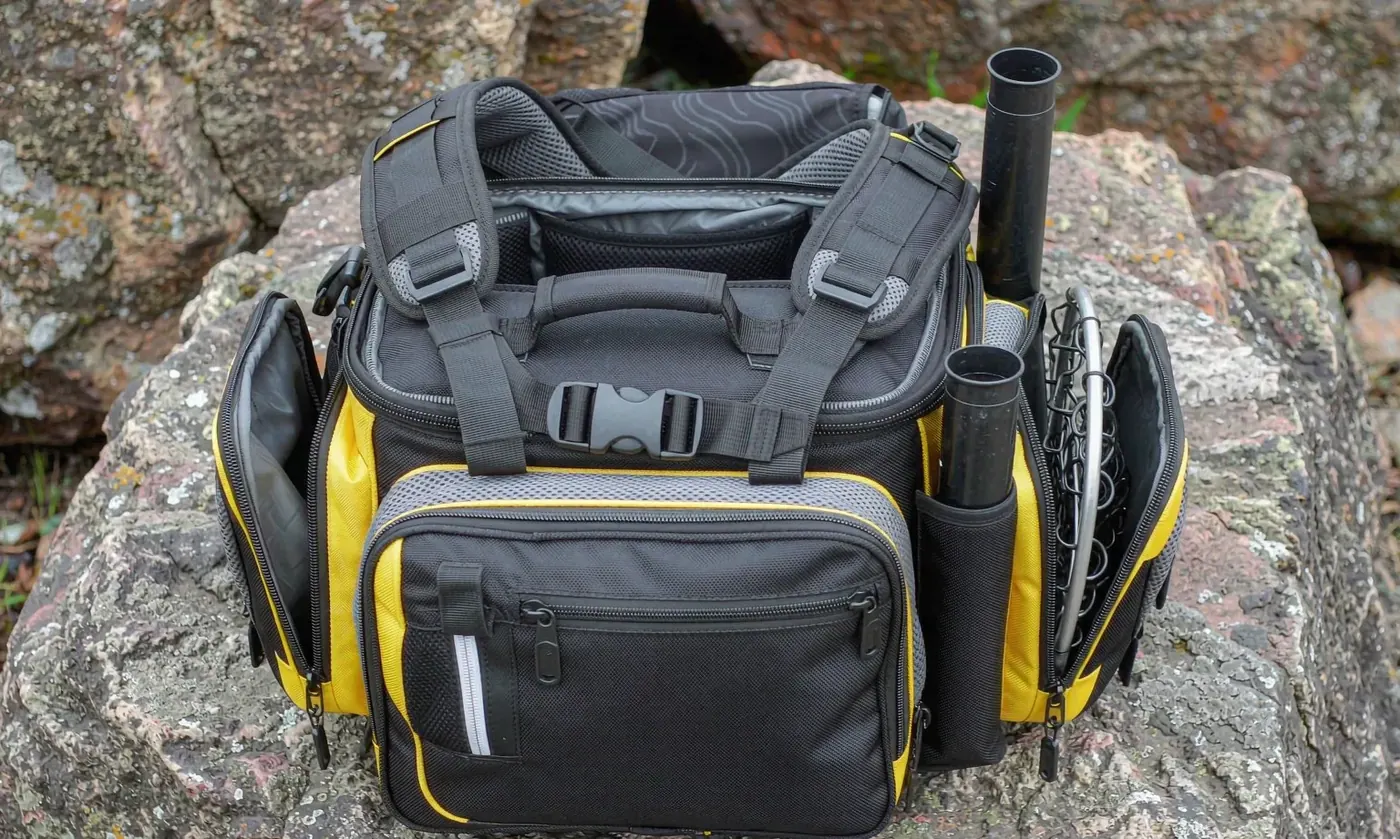
Retention is the failure that follows good access. A tray that slides out easily also slides out when the bag is inverted, so look for a positive stop at the base of each rail plus a keeper strap across the door, and test by holding the loaded pack upside down for ten seconds.
1. Four-3600 Classic: Best Overall
Thirty-four litres, four moulded 3600 trays on vertical rails behind a front drop-down door, 1.35 kg shell, and 30 mm of rail headroom. It carries three trays plus tools at a realistic 5.6 kg packed weight, and a tray change takes about 12 seconds with the pack worn. The FOB band is 27-34 USD at MOQ 500.
It leads because the two numbers that matter are both right: rail pitch is set 4 mm above nominal tray height, and chamber depth clears tray length by 12 mm. Those two allowances are why its trays do not jam under load. The included boxes are moulded in translucent polypropylene with 18-24 crankbait cells, which matters because anglers buy on what they can see through the lid.
2. Six-3700 Deep: Best for Tournament Anglers
Forty-two litres carrying six 3700 trays on rails at the front and both sides, at 1.85 kg and a packed weight near 7.4 kg. It is a tournament configuration: an angler changing method every 20 minutes wants six boxes open and labelled. The FOB band is 36-45 USD, the highest in this group before the guide build.
The specification that makes six deep trays usable is the hip belt. At 7.4 kg, a shell without load transfer puts roughly 6.5 kg on the shoulders and the angler feels it within 40 minutes. A padded belt transferring 60-70 percent of the load to the hips is the difference between a bag that works for a day and one that works for an hour, and it adds about 2 USD to the build.
3. Two-3700 Compact: Best for Bank Fishing
Twenty-six litres, two 3700 trays in a horizontal top-load sleeve, 1.05 kg, and a packed weight of about 4.3 kg. It suits an angler walking 3-5 km of bank who fishes two methods and does not want to carry more. The FOB band is 22-28 USD.
Horizontal loading is correct here rather than a compromise, because a top-load sleeve lets a 3700 tray lie flat and stay open on the ground while the angler re-rigs. The cost is that the pack must come off, which is acceptable for bank fishing and not for wading. This build pairs a moulded base with drainage so it can be set down in wet grass without soaking the trays.
4. Hybrid Four Plus Two: Best for Mixed Kit
Thirty-six litres with mixed rail pitch: four 3600 trays below and two 3500 utility trays above, at 1.45 kg and a packed weight near 6.0 kg. The mixed pitch is the point, because terminal tackle, leader spools, and tools do not belong in a crankbait tray and always end up loose in a single-pitch bag. The FOB band is 30-38 USD.
The upper utility trays sit at 45 mm depth and are used for pliers, split-ring tools, a spare reel, and a first-aid kit. That separation stops the most common small failure in bundled sets: sharp tools puncturing a soft-plastic bag and coating everything in softener. Mixed-pitch shells cost about 1.50 USD more to cut and save the customer a returns conversation.
5. Submersible Four-3600: Best for Wet Boats
Thirty-two litres with four 3600 trays inside a radio-frequency welded liner, rated IPX7 for 30 minutes at 1 m, at 1.55 kg and a 34-42 USD band. It is the build for open boats, kayaks that capsize, and any situation where the bag is more likely to go overboard than to get rained on. Packed weight is about 5.8 kg.
The liner is the cost driver and the reason the price sits 7-8 USD above the equivalent non-submersible shell. Ingress codes are defined by the IEC ingress protection framework, and a claim without a duration and a depth is not a claim. Trays inside a welded liner also need venting, because a sealed chamber holding wet trays grows odour within about three sessions; a drain grommet at the base solves it for about 0.40 USD.
6. Kayak Three-3600: Best for Kayak Anglers
Twenty-eight litres, three 3600 trays, and a deliberately low profile at 420 mm tall so the bag clears a kayak seat back and does not catch a paddle stroke. Weight is 1.20 kg, packed weight about 4.9 kg, and the FOB band is 26-33 USD. It is the only build here with a leash point at each corner.
Height is the number that matters on a kayak and the number most often missed. A bag taller than 450 mm hits the seat back on every stroke and forces the angler to sit forward. Leash points matter for the same reason as buoyancy: everything on a kayak eventually goes in the water, and a leashed bag comes back. A foam panel adding float for 4-5 kg of tackle costs about 1.20 USD.
7. Starter Two-3600: Best Value
Eighteen litres, two 3600 trays in a horizontal sleeve, 0.85 kg, and a packed weight of about 3.4 kg, at 16-21 USD. It is the entry bundle for a first tackle bag, a junior angler, or a retailer promotion, and the honest summary is that it holds two boxes properly rather than four badly.
What is absent is rail pitch tolerance, a moulded base, and any water protection beyond a showerproof shell. Each saving is defensible at this price. The one item that must not be cut is tray quality: a tray whose lid latch cracks in cold weather costs more in returns than the whole bag, and latches should be cycled 500 times at 0 degrees as an approval test.
8. Guide Six-3600: Best for Guide Duty
Forty-six litres, six 3600 trays on full-front rails plus two binder sleeves for soft-bait packets, at 2.10 kg and a packed weight near 8.2 kg. It is built for a guide carrying kit for clients as well as personal gear across 120-plus sessions a season, and it lands at 40-48 USD.
The duty-cycle detail is rail material. Nylon rails wear at the tray contact point and a guide sliding trays in and out 40 times a day will groove them within a season. This build uses a moulded polymer rail insert at about 3 USD per side, which lasts the life of the bag. Shoulder strap attachment is bar-tacked and load-tested rather than stitched once.
Keeping Bait, Food, and Wet Gear Away From Trays
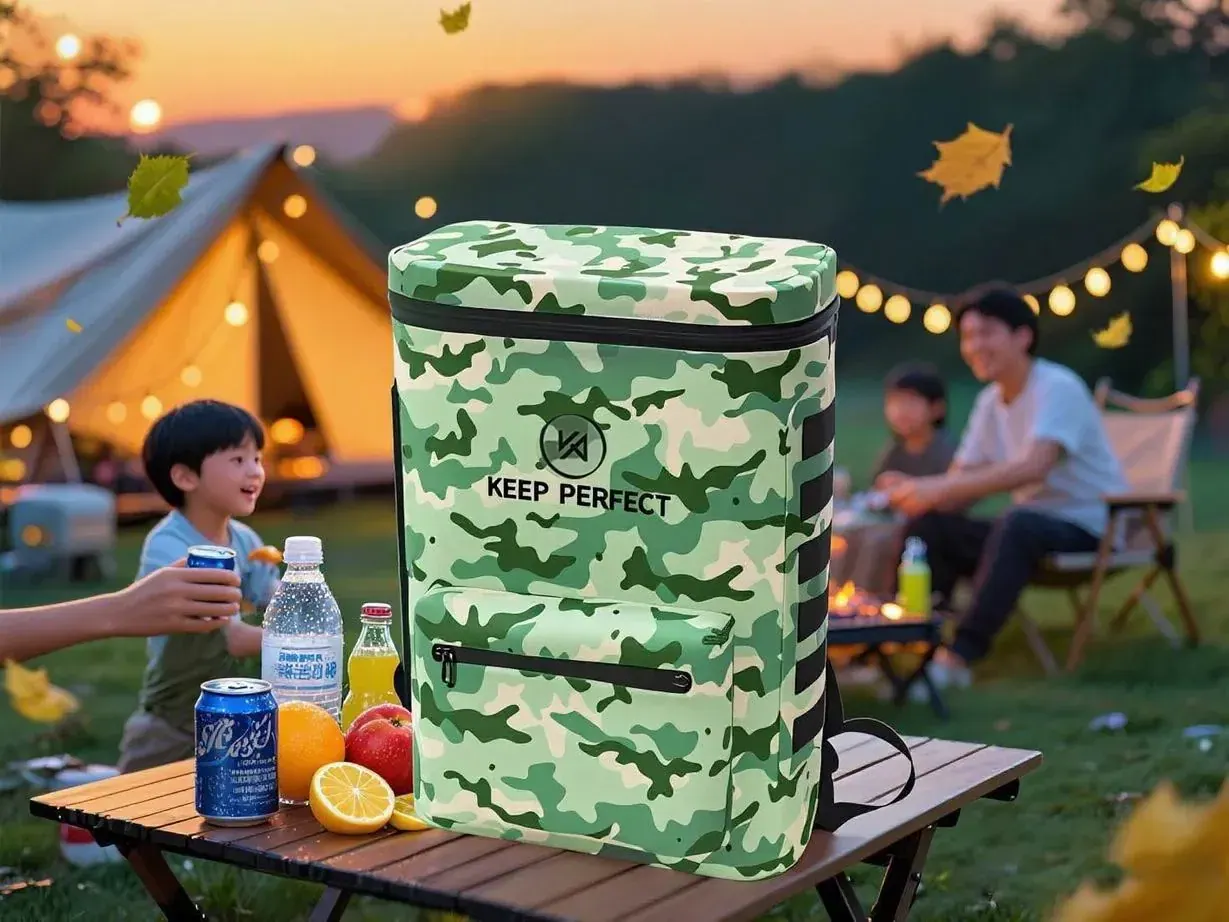
A bundled set fails socially before it fails mechanically: bait, food, and a wet rain shell end up in the same chamber as the trays, and within two sessions the trays smell and the soft plastics are contaminated. The fix is a separated insulated compartment with its own liner, and it is the single most valued feature in post-season dealer feedback.
| Item | Where it belongs | Why separate | Cost to add |
|---|---|---|---|
| Live or cut bait | Sealed insulated pocket | Bait juice contaminates soft plastics | 3.50-5.00 USD |
| Food and drink | Insulated pocket, own liner | Cross-contamination and odour | Same pocket, divided |
| Wet rain shell | External drained sleeve | Traps water against trays | 1.80-2.60 USD |
| Pliers and tools | Utility tray or shoulder dock | Punctures soft bait packets | 0.90-1.40 USD |
| Phone and licence | Sealed liner inside the lid | One dunk and it is over | 1.00-2.00 USD |
Insulation adds 3.50-5.00 USD and about 300 g, which is why value bundles skip it. A separate insulated bag carried alongside works too, and it can be cleaned properly, whereas a liner welded inside a tackle bag cannot once bait juice gets under the weld.
Boat Decks and Open Storage
On a boat the backpack often stays in the truck and the trays move to an open tote, because a deck hatch and a casting deck reward open access over carry comfort. That shift changes what the bundle should include: the trays should be liftable out of the shell as a block, and the shell should accept them back without re-threading each one.
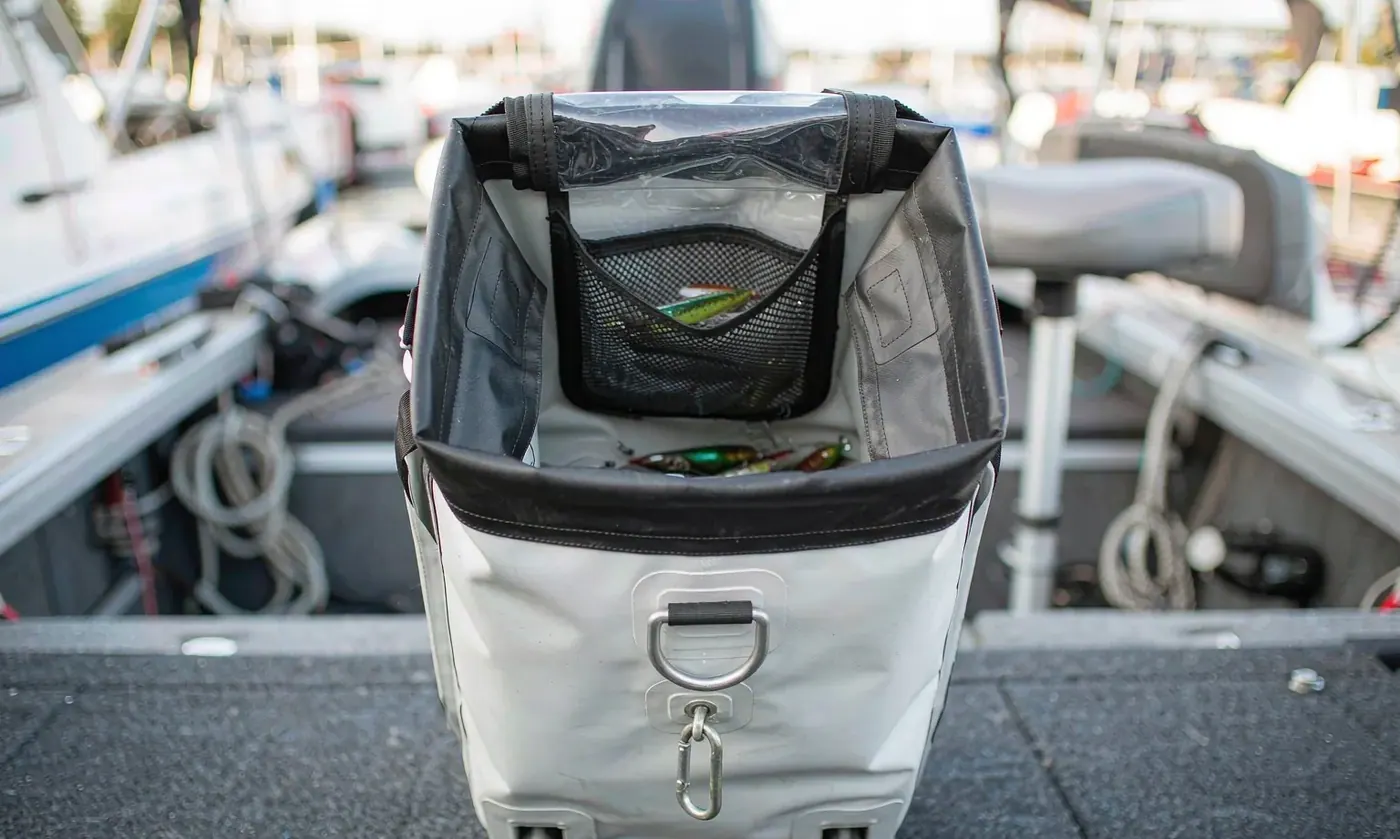
The practical test is a 60-second transfer: time how long four loaded trays take to move from backpack to tote and back. Over two minutes means each tray has to be threaded individually and the angler will stop using the backpack. A moulded handle at the front of each tray cuts the transfer time by about a third.
Testing a Bundled Box Set Before Signing Off
Six checks catch almost every bundled-set failure, and all six can be run on an approval sample in under an hour. Require the results in writing with the sample number, because a verbal assurance about tray fit is worth nothing when 500 units arrive with a 2 mm discrepancy across the batch.
| Check | Method | Pass condition | Catches |
|---|---|---|---|
| Tray fit under load | Load to 6 kg, slide every tray | No bind, no rattle | Zero-tolerance rail pitch |
| Inversion test | Hold loaded pack upside down 10 s | No tray moves | Missing positive stop |
| Drop test | Drop loaded pack 0.5 m onto deck | No latch or rail crack | Brittle tray polymer in cold |
| Cold latch cycle | Cycle latches 500 times at 0 C | No crack, no deformation | Cold-brittle latch material |
| Transfer time | Move four trays out and back | Under 60 seconds | Rails that need threading |
| Odour check | Store wet trays 72 hours sealed | No persistent odour | Unvented liner |
Materials and coatings belong in the same document. Abrasion resistance and strap strength can be specified against published methods from ASTM International, and any claim about a durable water repellent finish being free of per- and polyfluoroalkyl substances should be evidenced rather than asserted, since the chemistry is described by the United States EPA PFAS programme. A tray set that passes every mechanical check on a bag that fails a chemical screen is still a bag that cannot be sold.
What a Bundled Box Set Costs to Assemble
The economics of bundling are simple and they explain why cheap bundles are bad: four moulded 3600 trays cost 4.20-6.80 USD at volume, rails and a drop-down door cost 2.50-4.00 USD, and a moulded base costs 1.20-2.40 USD. A credible four-tray bundle therefore cannot land below about 24 USD FOB, and anything quoted well under that is delivering thin trays, no rails, or both.
| Element | Bundled cost | Bought separately | Note |
|---|---|---|---|
| Four 3600 trays | 4.20-6.80 USD | 7.00-11.00 USD retail | Volume tooling amortised |
| Rails and door | 2.50-4.00 USD | Not available separately | Cut and sewn into the shell |
| Moulded base | 1.20-2.40 USD | Not available separately | Keeps trays off wet ground |
| Insulated pocket | 3.50-5.00 USD | 12-18 USD retail | Optional above 30 USD FOB |
| Retail saving to buyer | 30-40 percent | Baseline | The argument for bundling |
The saving is conditional: a bundle only pays when the customer would have bought those exact trays anyway. An angler fishing soft plastics needs two deep 3700 boxes and gets no value from four shallow 3600 trays.
Programme, Pricing, and Compliance
A bundled brief should open with the tray standard and the tray count, because those two decide the shell geometry and the tooling. Specify rail pitch allowance and chamber depth next, then the tray polymer and latch material, and only then the fabric. The most expensive change after sampling is a re-cut door, so settle the tray geometry before the sample is cut.
| Programme item | Baseline | Note |
|---|---|---|
| MOQ | 500 pcs per design and colour | Tray colour can be split above the baseline |
| Sampling | 6-10 working days | Add 4-6 days if trays need a new mould |
| Bulk | 35-50 days | From approved sample and deposit |
| Inspection | AQL 2.5 | Include tray fit, inversion, latch cycle, drop test |
| Compliance | REACH and California Prop 65 | Screen tray polymer, coatings, inks, hardware |
QUANZHOU JUNYUAN BAGS has developed waterproof bag programmes since 2014, with the founding team active in the industry since 2004. Monthly output of 200,000 units is verified by SGS, and BSCI and ISO 9001 systems structure the workflow. Materials are screened for REACH and California Prop 65, and every bulk order is inspected at AQL 2.5 before shipment.
A bundled tray programme can be emailed to service@junyuanbags.com; include tray standard, tray count, litres, fabric, market, and quantity. FOB Xiamen or DDP service to more than 100 countries follows an approved sample and a complete test record. The wider category sits in the fishing tackle backpack overview, and tray layout advice is in the tray organisation guide.
People Also Ask
How many tackle boxes should a fishing backpack hold?
Four 3600 trays for general use and six 3700 trays for tournament work. The realistic figure with tools aboard is usually one tray below the printed count.
What is the difference between a 3600 and a 3700 tray?
A 3600 tray measures about 350 x 225 mm at 40 mm deep, and a 3700 is 355 x 230 mm at 55 mm deep. The deeper tray holds more lures but occupies roughly 1.4 times the rail space.
Why do trays jam in a tackle backpack?
Rail pitch was cut to nominal tray height with no allowance. Trays vary by about plus or minus 0.8 mm, so rails need 3-5 mm of clearance over the tallest tray.
Do bundled trays cost less than buying them separately?
Yes, by roughly 30-40 percent at retail, because four moulded trays cost 4.20-6.80 USD at volume against 7.00-11.00 USD bought separately. The saving only applies if the tray type is the one the angler wanted.
Can a tackle backpack be used on a kayak?
Yes, if it is under about 450 mm tall so it clears the seat back, and if it has leash points. Low-profile builds around 420 mm tall with corner leash points are the right choice.
How do I stop bait and food ruining tackle trays?
Use a separate sealed insulated pocket with its own liner, or carry an insulated bag alongside. Bait juice contaminates soft plastics and the odour does not come out of a welded liner.
Frequently Asked Questions
Q1. What is the best fishing backpack with tackle boxes included?
A 34 L build with four moulded 3600 trays on vertical rails behind a front drop-down door, 1.35 kg shell, 30 mm of rail headroom, and a 27-34 USD FOB band at MOQ 500.
Q2. How many 3600 trays fit in a fishing backpack?
Four in a 32-36 L shell with vertical rails, and three once tools and a water bottle are aboard. A 26-28 L shell holds two or three, and an 18 L shell holds two.
Q3. Is a 3700 tray better than a 3600 tray?
A 3700 tray is 15 mm deeper and holds roughly 30 percent more, but it occupies about 1.4 times the rail space. Switching a build from 3600 to 3700 without changing the shell costs about 20 percent of tray count.
Q4. Why do my tackle trays rattle in the backpack?
The rails have no positive stop or the pitch is too generous. A keeper strap across the door plus a moulded stop at the base of each rail removes the rattle without making trays hard to draw.
Q5. What size backpack do I need for four tackle boxes?
About 32-36 L with vertical rails and 30 mm of headroom above the rail. Chamber depth must clear tray length by at least 10 mm or the tray wedges against the seam.
Q6. Should trays load vertically or horizontally?
Vertical rails allow a tray change in about 12 seconds with the pack still worn, and horizontal sleeves need the pack set down. Vertical is better for wading, horizontal for bank fishing where the pack is on the ground anyway.
Q7. How much does a bundled tray set add to the cost of a bag?
Four moulded 3600 trays add 4.20-6.80 USD at volume, rails and a drop-down door add 2.50-4.00 USD, and a moulded base adds 1.20-2.40 USD. A credible four-tray bundle cannot land below about 24 USD FOB.
Q8. Can trays be moved from the backpack to a boat tote easily?
Yes, if the rails allow a block lift. Time the transfer of four loaded trays: under 60 seconds means the geometry is right, and over two minutes means each tray has to be threaded individually.
Q9. What fails first on a cheap bundled tackle set?
Lid latches and rails. Latches crack in cold weather and nylon rails groove within one season of daily use, so require a 500-cycle latch test at 0 degrees and a moulded rail insert for guide duty.
Q10. Do I need an insulated pocket in a tackle backpack?
It is worth 3.50-5.00 USD and about 300 g. Without it, bait and food end up in the tray chamber, and the resulting odour and contamination are the most common complaints after a season.
Q11. What waterproof rating should a bundled fishing backpack have?
IPX5 for rain and spray, and IPX7 for 30 minutes at 1 m if the bag is likely to go overboard. Any rating claim must carry a duration and a depth to mean anything.
Q12. What is the MOQ and lead time for a bundled tackle backpack programme?
MOQ is 500 pcs per design and colour, samples take 6-10 working days plus 4-6 days if trays need a new mould, and bulk runs 35-50 days from approved sample and deposit.