A large fishing tackle backpack above 40 litres only works if the suspension is specified with it: at 12-20 kg loaded, a hip belt carrying 70-80 percent of the load and a frame sheet stiff enough to stop the pack folding are more important than the litre figure. Eight big builds were assessed for 2026 across 40-62 L, six to eight 3600 or 3700 trays, 1.85-2.90 kg empty, and 32-56 USD FOB Xiamen bands at MOQ 500 pcs per design and colour. Sampling runs 6-10 working days and bulk 35-50 days. The pick is the 46 L all-round build at 1.95 kg.
Above 40 Litres the Suspension Becomes the Product
Below about 30 litres a fishing backpack is a container with straps. Above 40 litres it is a load-carriage problem, because the kit that fills it weighs 12-20 kg and no shoulder can carry that for a working day. The specification that decides success is the hip belt: a padded belt with a stiff internal stiffener transfers 70-80 percent of the load to the pelvis, and a webbing belt transfers about 25 percent.
The second specification is the frame sheet. A large soft pack without one folds around the load and puts the centre of gravity behind the shoulders, which feels like the pack is pulling the angler backward on every step. A 2-3 mm polyethylene sheet with a moulded lumbar pad costs about 2.60 USD and changes the same pack from tiring to comfortable. Load lifters are the third element, and they only work at an angle of 30-45 degrees above the shoulder line.
| Loaded weight | Belt type | Frame | Comfortable carry distance | Expected issue if under-specified |
|---|---|---|---|---|
| 8-12 kg | Padded, 70-90 mm | 1.5 mm sheet | 3-5 km | Shoulder fatigue after 2 km |
| 12-16 kg | Padded with stiffener | 2 mm sheet plus lumbar | 2-4 km | Lower back ache within an hour |
| 16-20 kg | Padded, moulded | 3 mm sheet, alloy stay | 1-3 km | Pack pulls backward on slopes |
| Above 20 kg | Not a backpack | Not applicable | Under 1 km | Injury risk; move to a rolling format |
What 40 to 62 Litres Actually Holds
Big bags are bought on tray count and used on total kit, and the gap between the two is what disappoints buyers. A 46 L shell rated at six 3600 trays will hold six trays and almost nothing else, because six trays occupy about 19 L and the remaining volume is consumed by the suspension, the base, and the pockets. Stating trays held with clothing and food aboard is the honest figure, and it is typically one to two trays below the headline.
Volume also has a shape problem that litre figures hide. A tall narrow 42 L pack fits a boat hatch of 380 mm and a kayak tankwell; a wide 52 L pack does not, even though both hold the same trays. Buyers should be given height and width alongside litres, because a pack that cannot pass through a hatch gets left on the dock.
| Volume | Trays with food and clothing | Tray-only maximum | Typical shape | Session it suits |
|---|---|---|---|---|
| 40-42 L | 5-6 x 3600 | 6 x 3600 | Tall, 380-420 mm wide | Long day, boat or bank |
| 44-48 L | 6 x 3600 | 7 x 3600 | Tall, 420-450 mm wide | Full day plus spare clothing |
| 50-54 L | 6 x 3700 | 7 x 3700 | Wide, 450-500 mm wide | Tournament, four methods |
| 58-62 L | 8 x 3600 plus clothing | 8 x 3600 plus 2 | Wide and tall | Multi-day or guide duty |
The litre guidance behind these figures is set out in the fishing backpack litres guide, and the tournament-oriented end of the category is covered in the bass fishing backpack ranking. Both matter here because the most common buying error in this class is oversizing by 10 litres and then carrying the spare volume as weight.
The Eight Builds at a Glance
All eight carry at least six trays and all eight have a padded belt with a stiffener, because a large pack without one does not belong in a range. Empty weight is listed separately from loaded weight, which assumes six full trays, 2 L of water, tools, and a shell. The wider large-format category sits in the fishing tackle backpack overview.
| Build | Volume | Empty / loaded | Trays | Belt and frame | FOB band |
|---|---|---|---|---|---|
| All-Round 46 | 46 L | 1.95 / 14.2 kg | 6 x 3600 | 90 mm belt, 2 mm sheet | 34-42 USD |
| Tournament 52 | 52 L | 2.40 / 17.6 kg | 6 x 3700 | 100 mm belt, 3 mm sheet | 40-49 USD |
| Slim Tall 42 | 42 L | 1.85 / 13.4 kg | 6 x 3600 | 85 mm belt, 2 mm sheet | 32-40 USD |
| Expedition 58 | 58 L | 2.75 / 19.8 kg | 8 x 3600 plus clothing | 105 mm belt, alloy stay | 44-54 USD |
| Submersible 44 | 44 L | 2.20 / 15.0 kg | 6 x 3600 | 90 mm belt, 2.5 mm sheet | 42-52 USD |
| Kayak Tankwell 48 | 48 L | 2.05 / 14.8 kg | 6 x 3600 | 80 mm belt, low frame | 36-45 USD |
| Guide 40 | 40 L | 2.30 / 13.9 kg | 6 x 3600 | 95 mm belt, 2 mm sheet | 38-47 USD |
| Boat Convertible 62 | 62 L | 2.90 / 21.0 kg | 8 x 3700 | 105 mm belt, 3 mm sheet | 46-56 USD |
External Carry and the Bump-Out Problem
Every item hung on the outside of a large pack costs more than it appears to. A rod holder, a tool dock, and a net sleeve add weight that sits 150-250 mm behind the spine, and because leverage multiplies the effect, 2 kg carried there feels like 3 kg carried inside. The practical limit is about 3 kg of external kit on a 46 L pack before the angler starts leaning forward to compensate.
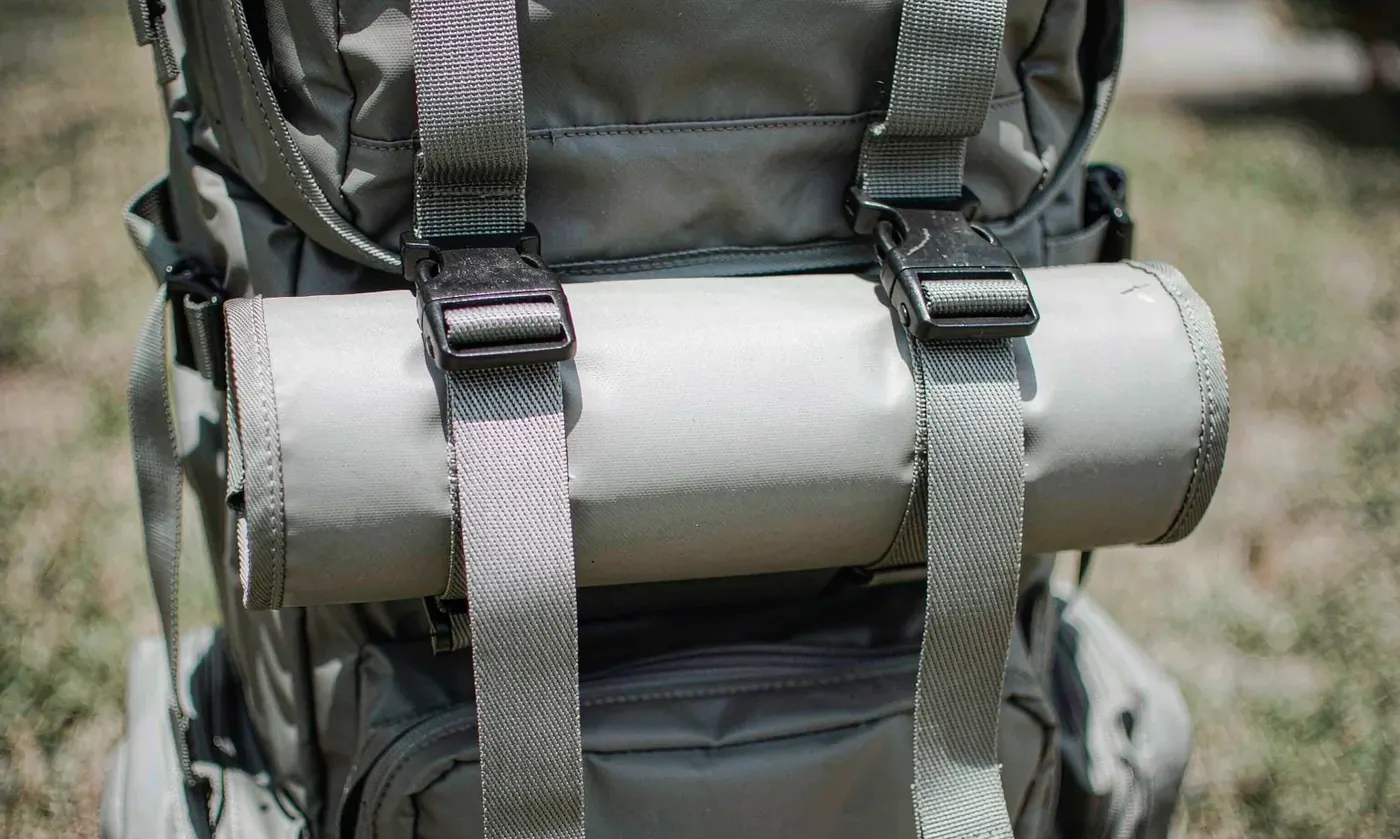
Attachment strength is the second issue and it is the one that fails in the field. A rod holder stitched into face fabric pulls out at about 12 kg of shock load, which a wet deck delivers easily. The fix is a reinforced patch spreading the load over at least 4,000 square millimetres plus bar-tacked webbing, which costs about 1.40 USD per fitting. Attachment methods are compared in the rod holder attachment guide.
1. All-Round 46: Best Overall
Forty-six litres, six 3600 trays, 1.95 kg empty and about 14.2 kg loaded, with a 90 mm padded belt on a 2 mm frame sheet and load lifters at 35 degrees. It carries a full day kit for two methods with food and a shell aboard. The FOB band is 34-42 USD.
It leads because the suspension matches the load rather than exceeding it. A 90 mm belt and a 2 mm sheet are correct for 14 kg, and going larger would only add 400 g of weight the angler carries for nothing. The trays ride in the middle of the chamber, which keeps the centre of gravity close to the spine on a sloping bank.
2. Tournament 52: Best for Tournament Anglers
Fifty-two litres holding six deep 3700 trays, 2.40 kg empty and 17.6 kg loaded, on a 100 mm belt and a 3 mm sheet with a moulded lumbar pad. It is the configuration for an angler running four methods across a competition day. The FOB band is 40-49 USD.
At 17.6 kg this is the heaviest build most anglers should carry on the back, and the specification reflects that: the belt has a stiffener that stops it rolling under load, and the shoulder yoke is cut to wrap rather than to lie flat. The honest advice to buyers is that this pack should be carried from vehicle to water and not walked 3 km, and it should be sold with that statement.
3. Slim Tall 42: Best for Boat Hatches
Forty-two litres held in a tall narrow body at 380 mm wide, so it passes through a standard boat hatch and drops into a kayak tankwell. Six 3600 trays, 1.85 kg empty, 13.4 kg loaded, on an 85 mm belt and a 2 mm sheet. The FOB band is 32-40 USD.
The narrow body is the entire argument, and it has one consequence buyers should understand: a tall pack with the load high needs the load lifters set correctly or it sways. Lifters at 35-45 degrees above the shoulder pull the top of the pack toward the body and stop the sway for the cost of two webbing anchors. Width, not litres, is the dimension to brief first on a boat bag.
4. Expedition 58: Best for Multi-Day Use
Fifty-eight litres with eight 3600 trays plus a separate clothing chamber, 2.75 kg empty and about 19.8 kg loaded, on a 105 mm belt with an alloy stay. It suits a guide or a travelling angler covering several days from one base. The FOB band is 44-54 USD.
The separated clothing chamber is what makes the size usable, because clothing and tackle in one chamber means unpacking trays to find a jacket. Separation costs about 3.20 USD in fabric and labour. The alloy stay is the other essential: at nearly 20 kg a polymer sheet flexes visibly and the pack begins to bounce on each step.
5. Submersible 44: Best for Offshore and Wet Decks
Forty-four litres inside a welded liner rated IPX7 for 30 minutes at 1 m, six 3600 trays, 2.20 kg empty and 15.0 kg loaded, on a 90 mm belt and a 2.5 mm sheet. It is the build for offshore work, open boats, and any session where spray is constant. The FOB band is 42-52 USD.
Two details decide whether a submersible large pack survives a season. The liner needs a drain path, because eight wet trays in a sealed chamber will sour within two trips. And the belt foam needs closed-cell construction, since open-cell foam under a welded liner holds water against the body and the pack stays wet long after the session ends. Ingress codes are defined by the IEC ingress protection framework.
6. Kayak Tankwell 48: Best for Kayak Anglers
Forty-eight litres at a deliberately low 400 mm height so it drops into a tankwell and clears a seat back, six 3600 trays, 2.05 kg empty and 14.8 kg loaded, with an 80 mm belt and corner leash points. The FOB band is 36-45 USD.
A shorter belt is correct here because a long belt interferes with a kayak seat, and the load is carried for short distances anyway. The two kayak essentials are leash points at all four corners and buoyancy: a pack of 14.8 kg will sink, and a closed-cell panel adding float for 6-8 kg costs about 1.80 USD and turns a loss into a recovery.
7. Guide 40: Best for Guide Duty
Forty litres, six 3600 trays, 2.30 kg empty and 13.9 kg loaded, built for daily commercial use across 120-plus sessions a season on a 95 mm belt and a 2 mm sheet. The FOB band is 38-47 USD, which reflects serviceability rather than capacity.
Serviceability is what earns the price: the belt and shoulder harness are bolted rather than stitched so they can be replaced in about 15 minutes, and the tray rails use moulded inserts that do not groove. A guide pack that fails in week six costs a season of work, and replaceable harness parts are worth more than 8 litres of extra volume.
8. Boat Convertible 62: Best for Boat Anglers
Sixty-two litres, eight 3700 trays, 2.90 kg empty and about 21 kg loaded, with a removable harness so the body can be used as a boat bag once aboard. The FOB band is 46-56 USD, the top of this group.
The removable harness is the point and the caution. It converts a carry problem into a stowage solution, which is right for a boat angler who walks 200 m and then does not touch the bag again. But 21 kg on the back is beyond what a backpack should carry, and the guidance to buyers must state that this build is for short carries only.
Protecting What Must Stay Dry Inside a Big Bag
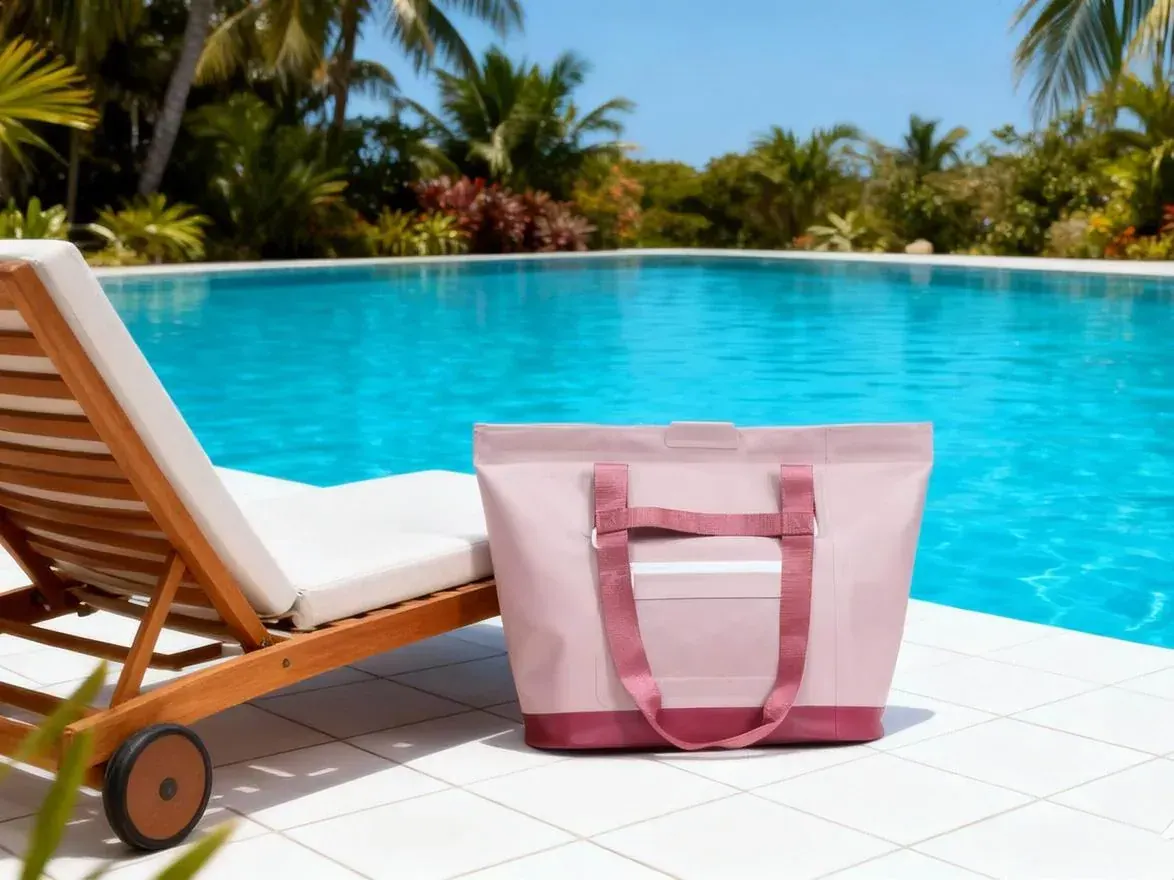
A large pack has more room for water to travel and more seams for it to enter, and the items that suffer are not the lures. A phone, a licence, and a set of keys in a 46 L chamber end up wherever gravity puts them, which is usually at the bottom next to a wet tray. The efficient answer is a sealed liner rather than a wet pocket.
| Item | Risk in a large chamber | Protection | Cost |
|---|---|---|---|
| Phone and keys | Ends up at the bottom beside wet trays | Sealed liner pouch | 1.00-2.00 USD |
| Fishing licence | Paper wets through | Liner plus a rigid sleeve | 1.60-2.40 USD |
| Spare clothing | Takes water from a wet tray | Separate dry chamber | 3.00-4.50 USD |
| Electronics | Condensation inside a welded shell | Vented liner, silica sachet | 1.20-1.80 USD |
| Soft plastics | Cross-contamination from bait | Sealed insulated pocket | 3.50-5.00 USD |
Food, Bait, and Cold Storage on a Long Day
A large pack is often the only bag on a boat, which means it gets asked to carry lunch and bait as well as tackle. That is a reasonable request and a predictable failure: bait juice and condensation migrate, and within three sessions the trays carry an odour that no amount of drying removes.
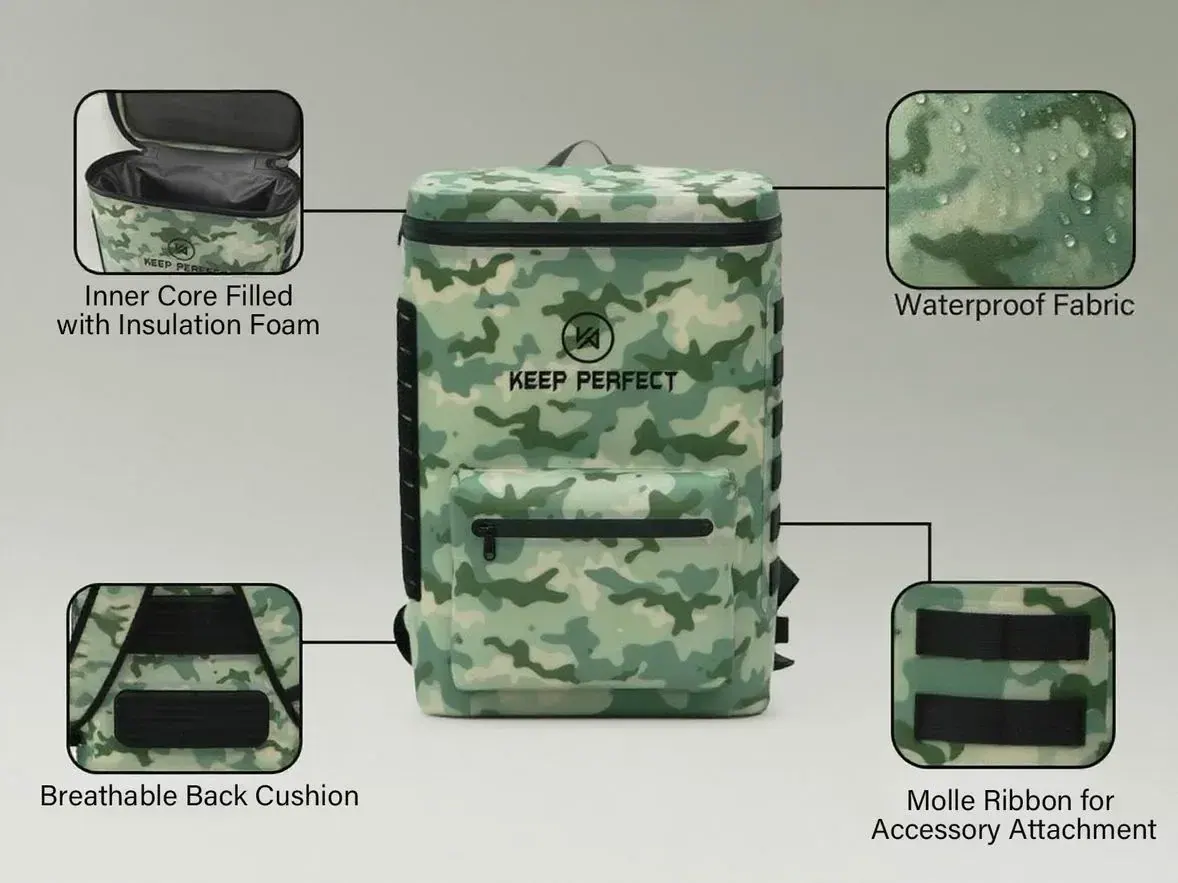
The specification is a welded insulated compartment with its own drain and a divider between bait and food, at 3.50-5.00 USD and about 320 g. Where that is too costly, an external insulated bag carried alongside is the better answer, because a liner welded inside a tackle chamber cannot be cleaned once bait juice gets under the weld.
Checks Before Approving a Large Sample
Large-format failures are mostly structural rather than cosmetic, so the approval protocol should be weighted toward load. Six checks cover the field, and the first two are the ones that catch the expensive mistakes before 500 units are cut.
| Check | Method | Pass condition | Catches |
|---|---|---|---|
| Loaded carry | Load to stated weight, walk 2 km | No back ache, no sway | Under-specified belt or frame |
| Belt transfer | Weigh shoulder load on a scale | Shoulders carry under 30 percent | Belt without a stiffener |
| Attachment pull | Pull each external fitting to 12 kg | No stitch pull-out | Fittings sewn to face fabric |
| Hatch test | Pass the loaded pack through a 380 mm hatch | Passes without force | Wide body sold as a boat bag |
| Tray count check | Load stated trays plus food | All fit as claimed | Headline count with no room for kit |
| Base test | Set on a wet deck for 30 minutes | Trays stay dry | Fabric base instead of moulded |
Strength and abrasion requirements should be written against published methods from ASTM International, and quality-system evidence referenced to the ISO 9001 family rather than asserted in prose. A pack that passes every mechanical check but cannot produce a documented inspection record will fail a retail buyer review regardless of how it performs on the water.
Programme, Pricing, and Compliance
A large-pack brief should open with loaded weight rather than litres, because the suspension follows from the load and the litres follow from the trays. Specify belt width and stiffener, frame thickness, and load-lifter angle next, then tray count, then shape. Settling the suspension first avoids the most expensive revision, which is a re-cut harness after sampling.
| Programme item | Baseline | Note |
|---|---|---|
| MOQ | 500 pcs per design and colour | Harness sizes can be split above the baseline |
| Sampling | 6-10 working days | Add 5-7 days for a moulded lumbar pad |
| Bulk | 35-50 days | From approved sample and deposit |
| Inspection | AQL 2.5 | Include loaded carry, attachment pull, hatch test, base test |
| Compliance | REACH and California Prop 65 | Screen coatings, films, inks, hardware, foam |
QUANZHOU JUNYUAN BAGS has developed waterproof bag programmes since 2014, with the founding team active since 2004. Monthly output of 200,000 units is verified by SGS, and BSCI and ISO 9001 systems structure the workflow. Materials are screened for REACH and California Prop 65, and every bulk order is inspected at AQL 2.5 before shipment.
A large-format brief can be emailed to service@junyuanbags.com with litres, tray count, loaded weight target, shape limits, and quantity. FOB Xiamen or DDP service to more than 100 countries follows an approved sample and a complete test record.
People Also Ask
How heavy is a loaded large tackle backpack?
Between 12 and 20 kg with six full trays, 2 L of water, tools, and a shell. Below 12 kg a large pack is usually half empty, and above 20 kg it should not be carried on the back at all.
What hip belt does a 40 litre fishing backpack need?
A padded belt of 85-100 mm with an internal stiffener, transferring 70-80 percent of the load to the hips. A webbing belt transfers only about 25 percent and leaves the shoulders carrying 12 kg.
Does a large tackle backpack need a frame sheet?
Yes. Without a 2-3 mm sheet the pack folds around the load and the centre of gravity moves behind the shoulders, which reads as the pack pulling the angler backward.
Why does my big fishing pack sway when I walk?
Load lifters are missing or set too low. They only work at 30-45 degrees above the shoulder line, where they pull the top of the pack toward the body.
Will a 50 litre tackle backpack fit through a boat hatch?
Often not. A standard hatch is about 380 mm wide, so a tall narrow 42 L body fits where a wide 52 L body does not. Brief width before litres on a boat bag.
How much weight can be hung on the outside of a pack?
About 3 kg. External kit sits 150-250 mm behind the spine, so leverage makes 2 kg outside feel like 3 kg inside, and fittings need reinforced patches to survive 12 kg of shock load.
Frequently Asked Questions
Q1. What is the best large fishing tackle backpack?
A 46 L build at 1.95 kg carrying six 3600 trays, with a 90 mm padded belt on a 2 mm frame sheet, load lifters at 35 degrees, and a 34-42 USD FOB band.
Q2. What size counts as a large tackle backpack?
Forty litres and above. Below 30 L is a day pack, 30-40 L is a general pack, and 40-62 L is the large class where suspension specification becomes the deciding factor.
Q3. How many trays does a 46 litre tackle backpack hold?
Six 3600 trays, or about five trays once food, clothing, and tools are aboard. Six trays occupy roughly 19 L on their own.
Q4. How much weight can a fishing backpack carry comfortably?
About 16 kg for a fit angler over 2-3 km with a proper belt and frame. Above 20 kg the load should move to a rolling format rather than a backpack.
Q5. What hip belt width is right for a large tackle pack?
85-100 mm for 12-16 kg and 105 mm above that. The belt also needs an internal stiffener, because a soft belt rolls under load and stops transferring weight to the hips.
Q6. Why does my large fishing pack pull me backward?
The frame sheet is missing or too thin, so the pack folds and the centre of gravity sits behind the shoulders. A 2-3 mm sheet with a lumbar pad fixes it for about 2.60 USD.
Q7. Is a submersible large tackle backpack worth it?
Yes for offshore and open boats where spray is constant. Budget 42-52 USD FOB and require a drain path, because eight wet trays in a sealed chamber sour within two trips.
Q8. What shape suits a boat or kayak?
Tall and narrow. A body around 380 mm wide passes a standard hatch and drops into a kayak tankwell, while a wide 450-500 mm body stays on the dock.
Q9. Should a large tackle backpack have a removable harness?
For boat anglers yes, because it converts a carry problem into a stowage solution. The caution is that a 21 kg body should only be carried for short distances.
Q10. How do I keep a phone and licence dry in a big pack?
Use a sealed liner pouch rather than a wet pocket. In a 46 L chamber loose items end up at the bottom beside wet trays, and a liner costs 1.00-2.00 USD.
Q11. Where should bait and food go in a tackle backpack?
In a welded insulated compartment with its own drain and a divider, or in a separate insulated bag. Bait juice under a weld cannot be cleaned, so a shared chamber fails within about three sessions.
Q12. What is the MOQ and lead time for a large tackle backpack programme?
MOQ is 500 pcs per design and colour, samples take 6-10 working days plus 5-7 days for a moulded lumbar pad, and bulk runs 35-50 days from approved sample and deposit.