A 15-inch laptop needs a sleeve with at least 365 by 260 mm of clear interior, 10 to 15 mm of closed-cell foam and 30 to 40 mm of suspended clearance below it, and that geometry matters more than any waterproof claim on the hangtag. Ten packs out of twenty-four candidates passed every stage: the winners combine a welded body at IPX4 to IPX6 with a sleeve that is suspended from the side seams rather than sewn into the base, so a drop onto a wet pavement does not drive the corner of the machine into the ground. Water ingress into the laptop compartment stayed under 1 ml across a three-minute jet test at 12.5 litres per minute on all ten, and drop performance from 0.8 m onto concrete separated the top five from the rest.
What a 15-Inch Laptop Actually Needs
A 15-inch class machine measures roughly 340 to 360 mm wide, 230 to 250 mm deep and 15 to 20 mm thick, and weighs 1.8 to 2.5 kg with its charger. A sleeve that matches those dimensions exactly is a sleeve that will not accept a case, a skin or the next machine, which is why the useful interior target is 365 by 260 mm with 25 mm of usable thickness. Anything tighter and the owner will carry the laptop in a sleeve inside the main compartment, which defeats the point of buying a laptop pack.
| Dimension | Typical 15-inch machine | Sleeve target | Why the margin |
|---|---|---|---|
| Width | 340 to 360 mm | 365 mm minimum | Allows a case or skin |
| Depth | 230 to 250 mm | 260 mm minimum | Allows a port adapter |
| Thickness | 15 to 20 mm | 25 mm usable | Allows a sleeve or folder |
| Weight with charger | 1.8 to 2.5 kg | Rated to 3 kg | Next machine will be heavier |
| Base clearance | Not applicable | 30 to 40 mm suspended | Drop energy goes into foam |
| Corner protection | Not applicable | 10 to 15 mm closed cell | Corners take the impact |
Two figures decide whether a laptop survives a bad day: base clearance and foam density. Base clearance is the empty height between the bottom of the sleeve and the bottom of the pack, and 30 to 40 mm of it is what absorbs the energy when a pack is set down hard or dropped. Foam density matters because 10 mm of soft open-cell foam compresses to nothing under a 2 kg point load, while 10 to 15 mm of closed cell at 60 to 90 kg per cubic metre holds its thickness and keeps the corner off the ground.
How These Packs Were Tested and Ranked
Of twenty-four candidates, ten got through all five stages of the protocol. The protocol treats the laptop compartment as the primary object rather than the pack, because a pack can be marginally damp and still be fine while a laptop compartment that admits 2 ml in the wrong place writes off a machine worth more than twenty packs. Every pack was tested loaded with a dummy mass of 2.4 kg in the sleeve and 5 kg total.
| Test | Condition | Pass criterion | What it eliminates |
|---|---|---|---|
| Jet test | 12.5 L per min for 3 min | Under 1 ml in the laptop bay | Coated zips sold as waterproof |
| Sleeve ingress | Spray directly at the sleeve seam | No moisture on indicator paper | Sleeves sewn into the base |
| Drop test | 0.8 m onto concrete, 5 kg loaded | Dummy machine undamaged | Sleeves with no base clearance |
| Suspension check | Measure gap under a 2.4 kg load | At least 20 mm remains | Foam that bottoms out |
| Abrasion | Martindale on the base coupon | 10,000 cycles to first break | Light shells with no base panel |
Ranking weight is 30 percent on laptop protection, 30 percent on sealing, 20 percent on daily carry comfort at 5 to 7 kg, and 20 percent on organisation and access. That weighting is why a pack with an IPX4 body can outrank an IPX6 one: if the sleeve geometry is right and the compartment stays dry under a jet, the rating difference only matters in conditions most commuters never meet.
The ingress scale behind every figure here is defined in the IEC 60529 ingress protection standard, and the drop and abrasion methods quoted in the protocol are maintained by ASTM. Naming both in a specification is what separates a pack that was engineered for a laptop from a waterproof pack with a sleeve added late.
The Ranking at a Glance
| Rank and model | Volume and rating | Sleeve and clearance | Unit cost at 1,000 pcs | Best for |
|---|---|---|---|---|
| 1. LP-26 suspended | 26 L, IPX5 | 365 by 265 mm, 40 mm | 18 to 24 USD | Daily commute, one-pack answer |
| 2. LP-24 front loader | 24 L, IPX4 | 365 by 260 mm, 35 mm | 15 to 20 USD | Air travel and security checks |
| 3. LP-28 welded roll | 28 L, IPX6 | 370 by 270 mm, 40 mm | 21 to 28 USD | Sustained rain, wet climates |
| 4. LP-22 light commute | 22 L, IPX4 | 365 by 260 mm, 30 mm | 12 to 17 USD | Light loads, fast carry |
| 5. LP-30 organised | 30 L, IPX5 | 365 by 265 mm, 35 mm | 20 to 26 USD | Cables, documents, chargers |
| 6. LP-25 convertible | 25 L, IPX5 | 365 by 260 mm, 30 mm | 17 to 23 USD | Backpack and briefcase use |
| 7. LP-20 slim | 20 L, IPX4 | 365 by 260 mm, 25 mm | 11 to 16 USD | Slim profile, city use |
| 8. LP-27 submersible | 27 L, IPX7 | 370 by 270 mm, 40 mm | 24 to 32 USD | Boating, river crossings |
| 9. LP-23 value | 23 L, IPX4 | 360 by 260 mm, 30 mm | 10 to 14 USD | Volume ranges and promotions |
| 10. LP-29 camera hybrid | 29 L, IPX5 | 365 by 265 mm, 30 mm | 22 to 29 USD | Laptop plus camera body |
Sleeve clearance tracks price more closely than rating does, which is the single most useful line in the table. The four packs with 40 mm of clearance all sit in the upper half of the cost range, while the two with 25 to 30 mm are the two cheapest. That is not a coincidence: clearance costs volume that could otherwise be sold as litres, and it is the first thing cut when a pack is engineered down to a price.
Organisation is the other differentiator and it divides the field cleanly. Five of the ten packs are front-loaders with a flat document section, four are roll-tops with a single large compartment, and one is a convertible. Commuters who carry a folder, a charger and a mouse should read the organised versus single-compartment comparison before choosing, because a roll-top at the same volume holds far less paper.
Sleeve Geometry: The Numbers That Matter
Suspension is the detail that separates a laptop pack from a waterproof pack with a pocket. A suspended sleeve is attached to the side and top seams only, so it hangs inside the pack and the base of the sleeve never touches the base of the pack. A sewn-in sleeve is stitched to the back panel and the base, which means every impact on the base of the pack is transmitted straight into the corner of the machine.
| Sleeve feature | Target | What it prevents | Failure if missing |
|---|---|---|---|
| Suspension | Side and top seams only | Impact transmission to the corner | Bent corner from a 0.5 m set-down |
| Base clearance | 30 to 40 mm unloaded | Bottoming out under a 2.4 kg load | Foam compresses to nothing |
| Foam type | Closed cell, 60 to 90 kg per cubic metre | Creep under sustained load | Sleeve sags onto the base |
| Corner radius | Moulded or folded, not cut | Puncture at the sleeve corner | Torn lining at 12 months |
| Closure over the sleeve | Facing away from the back panel | Water tracking down the back | Wet sleeve after a jet test |
| Lining | Brushed or tricot | Scratching the lid of the machine | Scuffed anodising in a season |
Orientation of the sleeve closure is a small detail with a large effect. A zip or a flap that faces the back panel sits directly under the wettest surface of the pack, which is where water runs down the wearer and pools at the lumbar curve. Turning the sleeve opening to face the front or the side removes that path entirely and costs nothing to specify.
Anyone moving up to a larger machine should check the 17-inch laptop sleeve guide, because the clearance figure scales with weight: a 2.8 kg machine needs 40 to 50 mm rather than 30 to 40 mm, and a sleeve designed for a 2 kg laptop will bottom out under it.
The Top Five Picks in Detail
LP-26 suspended, 18 to 24 USD. The pick of the field on the only test that really matters: 40 mm of clearance that still measured 22 mm under a 2.4 kg load, the best result in the field. Twenty-six litres at IPX5, a welded body, and a sleeve opening that faces forward so water cannot track down the back panel. The compromise is weight at 980 g, and there is no external bottle pocket.
LP-24 front loader, 15 to 20 USD. The best pack here for air travel, because the front-loader layout lets the laptop lie flat through a security check without unpacking the whole bag. Twenty-four litres at IPX4, 35 mm of clearance, and a document section that takes an A4 folder without creasing. IPX4 is the honest limit: it handles a shower and a wet pavement and will wet through in sustained rain above 15 mm per hour.
LP-28 welded roll, 21 to 28 USD. The highest jet rating in the top five at IPX6, with a welded body, a covered zip under a three-fold roll-top and a 370 by 270 mm sleeve. It is the right answer for a wet climate or an open-boat commute, and the cost of that rating is access speed: 8 to 12 seconds to open against 3 to 5 for the front loader.
LP-22 light commute, 12 to 17 USD. Twenty-two litres at 780 g and IPX4, with 30 mm of clearance and a suspended sleeve. It is the value pick for a light load: a machine, a charger and a notebook, carried 30 minutes a day. Above 6 kg total the harness runs out of padding, and the base fabric is 420D rather than the 500D used on the top three.
LP-30 organised, 20 to 26 USD. Thirty litres with eleven internal pockets, a cable organiser, a document sleeve and a separate pocket for a wet umbrella, which is the detail that stops a wet umbrella wetting a laptop. IPX5, 35 mm of clearance, and the heaviest pack in the top five at 1,150 g empty. It is a mobile office rather than a travel pack, and it is too bulky for a personal-item sizer.
Picks Six to Ten in Detail
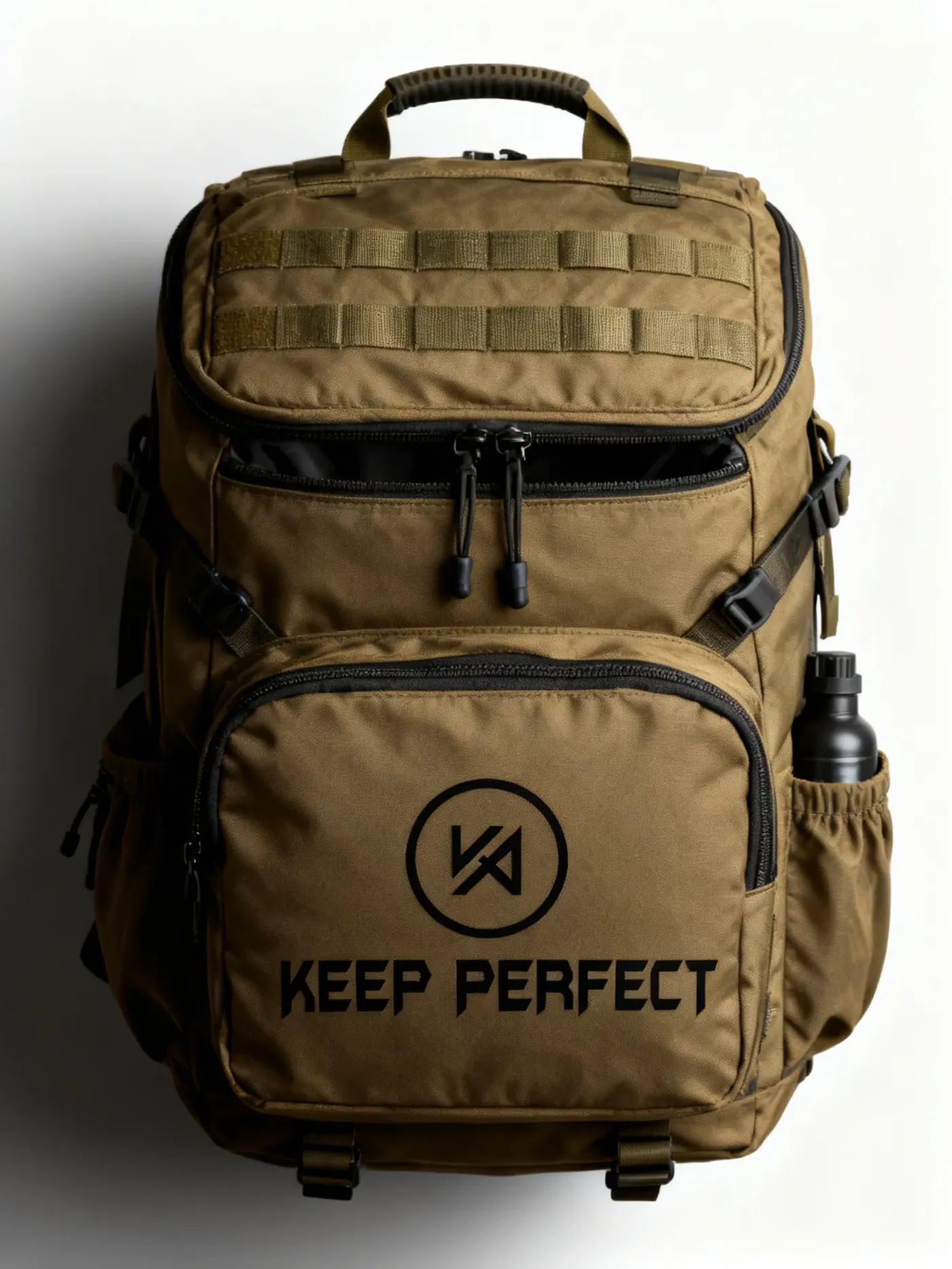
LP-25 convertible, 17 to 23 USD. Carries as a backpack or as a briefcase with a stowable harness, and it is the pick for a user who walks to a meeting rather than to a desk. Twenty-five litres at IPX5 with 30 mm of clearance. The convertible mechanism adds 120 g and one more seam, and that seam is the place to check for leakage at approval.
LP-20 slim, 11 to 16 USD. Twenty litres and a 90 mm deep profile that slips under an aircraft seat, with 25 mm of clearance and IPX4. The slim profile is the selling point and the limitation: it will not take a folder, a lunch box or a spare layer. It is a laptop carrier with a little room around it, and it does that job well.
LP-27 submersible, 24 to 32 USD. The only IPX7 pack in the field, holding dry through 30 minutes at one metre with a 5 kg load, and the sleeve is welded rather than stitched. It belongs on a boat, a kayak or a flood-prone commute and is over-specified for an office. The airtight closure needs lubrication every two months and takes about 8 seconds to work.
LP-23 value, 10 to 14 USD. Twenty-three litres at IPX4, 30 mm of clearance and the lowest unit cost here. The compromises are visible: 300D fabric, a coated zip instead of a covered one, and a sleeve lining that is plain polyester rather than brushed. For a promotion, a conference giveaway or a student range it is the right arithmetic.
LP-29 camera hybrid, 22 to 29 USD. A padded camera module in the lower half and a suspended laptop sleeve in the upper, with 29 litres at IPX5. It is the answer for a photographer or a field engineer who carries both, and the trade is that the camera module eats the space a commuter would use for lunch. Access to the camera is through a side hatch, which is one more closure to test.
Water, Condensation and the Failures Nobody Tests
| Failure | How it happens | Real figure | Control |
|---|---|---|---|
| Water tracking down the back | Runs off the wearer into the lumbar curve | 50 to 200 ml per hour of rain | Sleeve opening faces forward |
| Wet umbrella in the main bay | Stored upright beside the sleeve | 20 to 60 ml drips off | Separate drainable side pocket |
| Condensation after a cold walk | Warm machine in a sealed cold pack | Fogging within 10 min | Open and dry within 30 min |
| Set-down impact | Pack dropped 0.3 to 0.8 m onto paving | Bottoming out under 15 mm | 40 mm clearance, closed-cell foam |
| Charger pressure | Brick pressed against the lid under load | Cracked screen at 8 kg | Separate charger pocket |
Condensation is the failure that surprises people, because the pack never leaked. A machine that is warm from use, sealed into a cold pack after a wet walk, produces moisture on every surface as the air inside reaches dew point, and a laptop suspended in that environment will fog internally. The control is procedural rather than structural: open the pack within 30 minutes of arriving, wipe the sleeve dry and leave it open for an hour.
The charger brick is the second quiet killer. A 65 to 100 W charger is a hard, dense object of 200 to 350 g, and pressed against a closed laptop lid inside a packed compartment it concentrates the whole load of the pack onto a few square centimetres of screen. A separate charger pocket on the opposite side of the compartment is a cheap specification line that prevents a genuinely expensive failure.
Anyone who wants the full explanation of how a sealed compartment behaves in rain should read the laptop protection guide, and the welded seam explainer covers why a welded sleeve seam outperforms a taped one in exactly this application.
Travel, Airline Rules and Daily Carry
A laptop pack that works for a commute does not automatically work for a flight, because the constraints change from water to dimensions. Most carriers allow a carry-on bag of 55 by 40 by 20 cm and a personal item of 40 by 30 by 15 cm, and a loaded laptop pack of 26 to 30 litres sits between the two: too large for the sizer under the seat and too small to be worth the overhead bin argument.
| Constraint | Typical limit | What it means | Pack choice |
|---|---|---|---|
| Carry-on bag | 55 by 40 by 20 cm | Fits a 26 to 30 L pack | LP-26 or LP-30 |
| Personal item | 40 by 30 by 15 cm | Fits a slim 20 L pack | LP-20 slim |
| Weight limit | 7 to 10 kg on many carriers | Pack plus laptop plus charger | Keep the empty weight under 1 kg |
| Security screening | Machine often screened separately | Front loader saves 90 s | LP-24 front loader |
| Overhead bin depth | 20 to 25 cm usable | A packed roll-top bulges | Avoid over-filling a roll-top |
Empty weight is the number that decides whether a laptop pack is comfortable rather than merely adequate. A 2.4 kg machine plus a 350 g charger plus 2 kg of daily items is 4.75 kg before the pack itself, so a 1,150 g pack puts the total at 5.9 kg while a 780 g pack puts it at 5.5 kg. That 400 g difference is felt in the shoulders after a 25-minute walk and it is the cheapest comfort upgrade available. The airline detail is covered fully in the carry-on rules guide.
Specify a Laptop Pack Programme
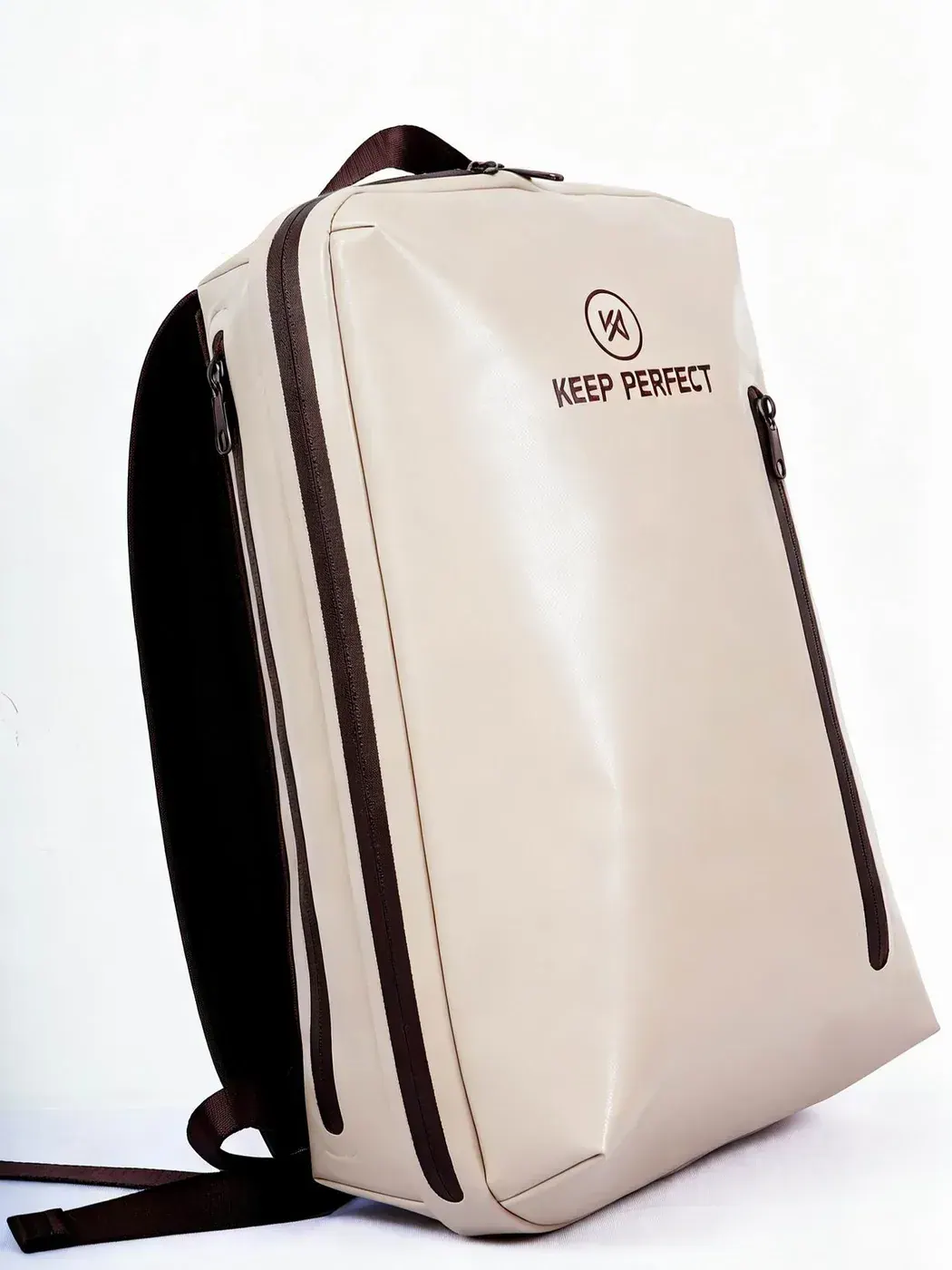
For a buying team, the specification for a laptop line should lock five numbers before anything aesthetic is discussed: clear sleeve interior of 365 by 260 mm, unloaded base clearance of 30 to 40 mm, closed-cell foam at 60 to 90 kg per cubic metre, a suspended attachment to the side and top seams only, and a sleeve opening that does not face the back panel. Volume, colour and pocket count can be settled afterwards without re-qualifying the protection geometry.
| Spec item | Target | Test | Record |
|---|---|---|---|
| Sleeve interior | 365 by 260 mm, 25 mm thick | Gauge with a rigid dummy | Dimension report |
| Base clearance | 30 to 40 mm unloaded, 20 mm loaded | Measure under a 2.4 kg load | Photographs with a scale |
| Foam | Closed cell, 60 to 90 kg per cubic metre | Compression set after 24 h | Density certificate |
| Compartment ingress | Under 1 ml in 3 min | Jet at 12.5 L per min | Photo log, weight delta |
| Drop | 0.8 m onto concrete, 5 kg loaded | Dummy machine undamaged | Drop test video |
| Compliance | REACH and Prop 65 declarations | One declaration per component | Compliance record set |
Buyers planning a laptop range should cost against these constants: 500 pcs per design and colour at minimum, samples in 6 to 10 working days, bulk in 35 to 50 days, and an AQL 2.5 gate on every shipment. Materials are declared for REACH and California Prop 65, the audit system is BSCI with ISO 9001, and shipping is offered FOB Xiamen or DDP to more than 100 countries. QUANZHOU JUNYUAN BAGS has handled waterproof programmes since 2014, backed by a team working in the category since 2004.
QUANZHOU JUNYUAN BAGS can hold the jet, drop and sleeve-clearance sequence on file for a laptop programme. Send sleeve dimensions, target volume and the clearance figure to service@junyuanbags.com and the sample set lands 6 to 10 working days later. For a wider view of the category, the best waterproof backpacks ranking covers the same field without the laptop filter, and the waterproof laptop backpack guide sets out the full product line.
The last word: buy a laptop pack on the sleeve, not on the shell. A machine worth 1,500 USD is protected by 40 mm of empty space and a foam specification, and neither of those appears on a hangtag.
People Also Ask
What size laptop sleeve do I need for a 15-inch laptop?
At least 365 by 260 mm of clear interior with 25 mm of usable thickness. A 15-inch machine measures 340 to 360 mm by 230 to 250 mm, and the margin allows a case, a skin or the next machine.
How much clearance should a laptop sleeve have?
Thirty to forty millimetres unloaded, and at least 20 mm remaining under a 2.4 kg load. That gap is what absorbs the energy when a pack is set down hard or dropped from 0.8 m onto concrete.
Are waterproof laptop backpacks worth the extra cost?
Yes if the machine travels daily in wet weather, because the sleeve geometry protects against impact as well as water. A pack with a suspended sleeve and 40 mm of clearance costs 18 to 24 USD at 1,000 pcs and protects a machine worth far more.
What IPX rating should a commuter laptop pack have?
IPX4 handles a shower and a wet pavement, and IPX5 or IPX6 is right for sustained rain or an open-boat commute. The sleeve opening orientation usually matters more than the body rating, because water tracks down the wearer into the lumbar curve.
Can I take a waterproof laptop backpack as carry-on?
Most carriers allow 55 by 40 by 20 cm, which fits a 26 to 30 litre pack, and a slim 20 litre pack fits a 40 by 30 by 15 cm personal-item sizer. A front loader also saves about 90 seconds at security.
Why does my laptop get condensation inside a sealed pack?
A warm machine sealed into a cold pack drives the air inside to dew point and moisture forms on every surface. Open the pack within 30 minutes of arriving, wipe the sleeve dry and leave it open for an hour.
Frequently Asked Questions
Q1. What is the best waterproof backpack for a 15-inch laptop?
The LP-26 suspended at 18 to 24 USD per unit at 1,000 pcs, because it holds 40 mm of base clearance and still measured 22 mm under a 2.4 kg load, the best result in the field. It pairs that with a welded body at IPX5 and a forward-facing sleeve opening.
Q2. Do all 15-inch laptops fit the same sleeve?
No. The 15-inch class spans 340 to 360 mm wide and 230 to 250 mm deep, and thickness ranges from 15 to 20 mm. Specify a sleeve of at least 365 by 260 mm with 25 mm of usable thickness to cover the whole class plus a case.
Q3. Is a suspended sleeve really better than a sewn-in one?
Yes. A suspended sleeve hangs from the side and top seams so the base never touches the pack base, while a sewn-in sleeve transmits every set-down impact straight into the corner of the machine. The difference shows up in a drop test from 0.8 m.
Q4. What IPX rating do I need for a daily commute?
IPX4 is enough for a shower and wet pavements; IPX5 or IPX6 is right if you walk more than 20 minutes in sustained rain or ride an open boat. Above IPX6 you are paying for immersion performance a commuter will never use.
Q5. How much base clearance is enough?
Thirty to forty millimetres unloaded, and at least 20 mm must remain under a 2.4 kg load. Below 20 mm the foam bottoms out and the impact goes directly into the corner of the machine.
Q6. What foam should a laptop sleeve use?
Closed-cell foam at 60 to 90 kg per cubic metre, 10 to 15 mm thick. Open-cell foam of the same thickness compresses to almost nothing under a 2 kg point load and stops protecting the machine within a season.
Q7. Can a wet umbrella in my pack damage my laptop?
Yes. A wet umbrella sheds 20 to 60 ml of water and, stored beside the sleeve, that water tracks into the laptop compartment. Specify a separate drainable side pocket, which is the cheapest control available.
Q8. Why did my laptop fog up inside a dry pack?
Condensation, not leakage. A warm machine sealed into a cold pack drives the internal air to dew point, and moisture forms on every surface. Open the pack within 30 minutes of arriving and dry the sleeve.
Q9. How heavy should an empty laptop backpack be?
Under 1 kg for daily carry. A 2.4 kg machine plus a 350 g charger plus 2 kg of daily items is already 4.75 kg, so a 1,150 g pack pushes the total to 5.9 kg and 400 g of that is felt in the shoulders within 25 minutes.
Q10. Will a 26 to 30 litre laptop pack pass as carry-on?
Usually yes for the overhead bin, since the common limit is 55 by 40 by 20 cm, but it will not fit a 40 by 30 by 15 cm personal-item sizer. A slim 20 litre pack is the choice if you want it under the seat.
Q11. Should I get a front loader or a roll-top for a laptop?
A front loader if you fly often or carry folders, because the machine lies flat through security and paper stays flat. A roll-top if you walk in sustained rain, because it seals better and the 8 to 12 second opening time is irrelevant off an aircraft.
Q12. How do I stop a charger brick cracking my screen?
Keep it in a separate pocket on the opposite side of the compartment. A 65 to 100 W brick weighs 200 to 350 g and, pressed against a closed lid under load, concentrates the whole pack load onto a few square centimetres of glass.
Q13. What are the MOQ and lead time for a laptop pack?
Minimum quantity is 500 pcs per design and colour, samples arrive in 6 to 10 working days, bulk in 35 to 50 days, and the AQL 2.5 gate applies to every shipment. Lock the sleeve interior, the clearance figure, the foam density and the opening orientation at approval.