Deck storage on a bay or centre console boat comes down to three requirements that rarely appear on the label: everything must drain, nothing may mark the gelcoat, and whatever sits on deck has to stay put at planing speed. Practical specifications begin with a footprint under roughly 300 by 400 millimetres so lockers and gunwale spaces accept the bag, feet raised 8 to 12 millimetres so nothing sits in bilge water, and closure plus base chosen for salt rather than for looks. Anything loose above about 25 knots becomes a projectile.
What Deck Storage Has to Survive
Boats are harder on bags than anglers expect, because nothing about a deck is gentle. Non-skid behaves like abrasive paper against anything dragged across it; salt spray arrives at every seam for hours on end; ultraviolet exposure is relentless with nothing to shade it; and everything periodically gets washed down with the hose. Individually none of those is severe. Together they shorten service life substantially unless the bag was chosen for them.
| Exposure | Typical intensity | Effect over one season |
|---|---|---|
| Non-skid abrasion | Every time something slides | Worn coatings at every contact point |
| Salt spray at planing speed | Several hours per trip | Pitted hardware, salt film on all closures |
| Ultraviolet on open decks | Full sun, no shade | Fading plus stiffening of coated fabric |
| Deck washdown | Weekly or more | Water through every seam that is not sealed |
| Standing bilge water | 10 to 30 millimetres common | Wicking into any fabric that touches it |
Anyone moving from bank fishing to a boat will notice the pattern quickly: nothing wears out from use, everything wears out from exposure and from being dragged across non-skid.
Four Ways Bags Damage Boats
The relationship is not one way, and damage to the boat usually costs more than damage to the bag. Four mechanisms cause nearly all of it, and all four are preventable through specification rather than care.
| Damage | Cause | Prevention | Typical consequence |
|---|---|---|---|
| Black scuff marks on gelcoat | Dark rubber feet or trim under load | Non-marking compound feet | Hours of compounding, or a repair |
| Rust staining below hardware | Plated fittings corroding above the drain path | Stainless hardware | Stains that need specialist treatment |
| Torn upholstery from hooks | Tackle left loose in open trays | Closed storage plus trays | Upholstery repair, not cleaning |
| Trapped water against the deck | Sealed base holding washdown water | Raised feet plus drainage | Damp, odour, and surface staining |
Non-marking feet are the cheapest significant upgrade available and often the difference between a boat owner recommending a bag and quietly replacing it. Verifying that a contact surface is genuinely non-marking takes a minute with a light-coloured surface and twenty minutes of pressure.
Sizing Storage to the Boat
Available storage scales with hull length, but not linearly, and most people overestimate what fits. Fishing-focused bays boats devote much of their space to casting decks and livewells, leaving modest lockers; larger centre consoles have more room but usually more people aboard competing for it.
| Boat length | Typical locker space | Recommended gear volume | Practical setup |
|---|---|---|---|
| Under 17 feet | One small locker, under-gunwale rods | 30 to 50 litres total | One tote plus one soft bag |
| 18 to 21 feet | Two lockers plus console space | 60 to 90 litres | Two totes plus a duffel |
| 22 to 26 feet | Several lockers, leaning post space | 100 to 150 litres | Two totes, duffel, backpack |
| Over 27 feet | Generous dedicated space | 180 litres and above | Full system with assigned locations |
Measure before buying anything, particularly under gunwales where clearance commonly runs 300 to 400 millimetres and where a bag a centimetre too tall simply will not sit square. That single measurement determines most choices on smaller boats.
Matching Bag Type to Job
Four formats serve a boat well, each with a different role. What separates them is access and how they behave when the boat moves, rather than how much they hold.
| Format | Volume | Role on a boat | Limitation |
|---|---|---|---|
| Open-top tote | 15 to 40 litres | Working tackle within reach | Open to spray and rain |
| Soft duffel | 40 to 90 litres | Bulky gear, ropes, wet weather kit | Poor organisation for trays |
| Backpack | 20 to 35 litres | Carrying from vehicle to boat | Usually stowed once aboard |
| Insulated carry unit | 15 to 30 litres | Catch, bait and food | Needs its own drainage |
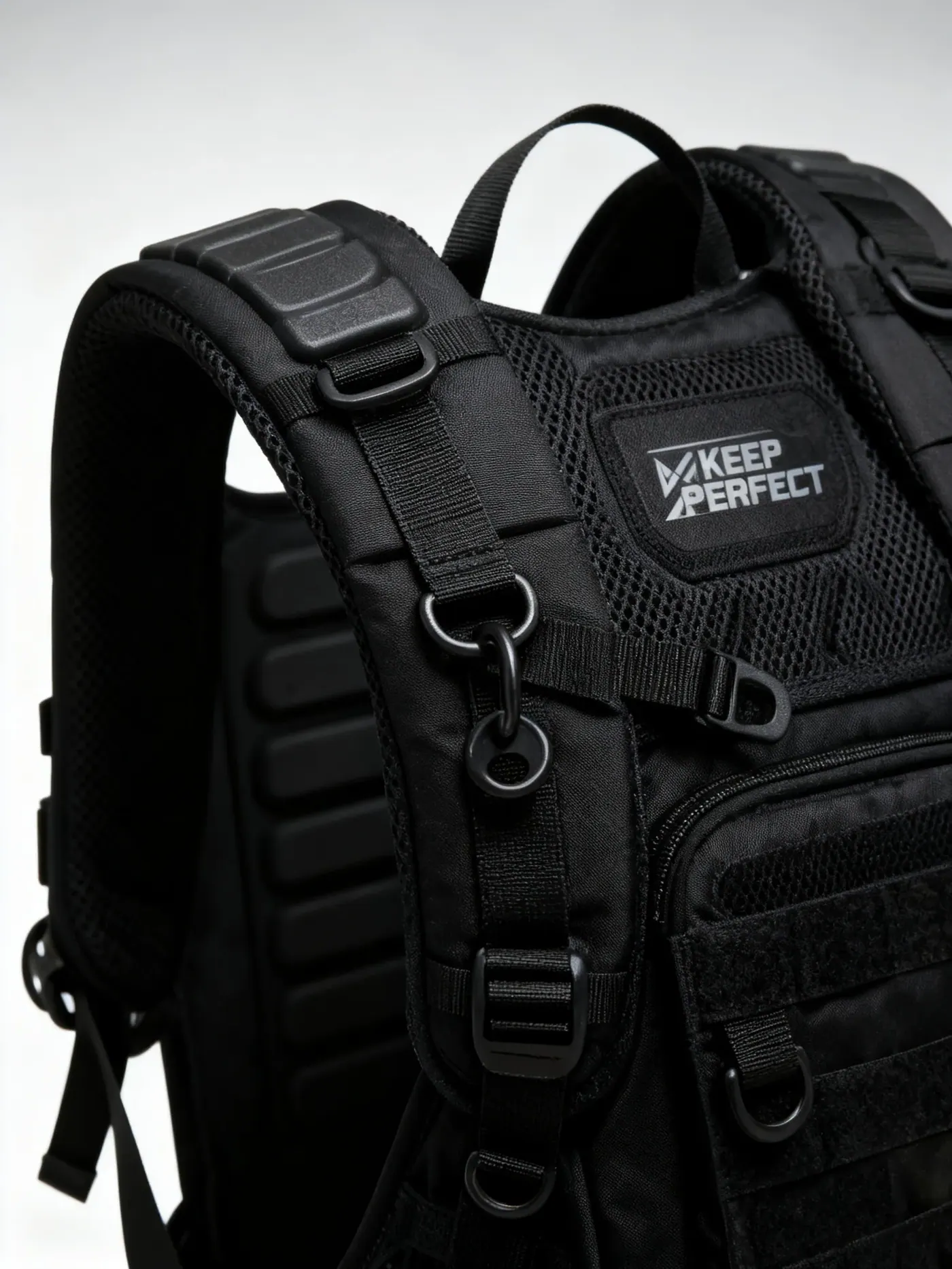
Where only two can be justified, choose an open-top tote for working tackle and a soft duffel for everything else. That pairing covers most days on a bay boat without leaving redundant equipment aboard.
Dry Deck Principles
Keeping gear dry on a wet deck is mostly about keeping it off the deck and giving water somewhere to go. Five measures cover it, and all but one are free at the design stage rather than bought afterwards.
- Raise every bag on feet of 8 to 12 millimetres so bilge water cannot reach the base panel.
- Provide drainage of 8 to 10 millimetres at each corner so washdown water leaves immediately.
- Specify non-marking contact surfaces, which prevents the commonest complaint boat owners have.
- Close with a roll-top or coated closure rather than an open storm flap.
- Add at least two tie-down points so anything can be secured before running at speed.
| Measure | Figure | Why that figure |
|---|---|---|
| Feet height | 8 to 12 millimetres | Clears typical bilge film without making the bag tippy |
| Drain openings | Four, 8 to 10 millimetres | Empties a washdown in seconds rather than minutes |
| Tie point strength | About 50 kilograms each | Survives shock loading in a following sea |
| Base clearance above stored contents | 15 to 25 millimetres | Keeps trays above whatever collects below |
Where Everything Goes
Assigning a fixed home to every item prevents the deck chaos that develops by lunchtime on most boats. The assignment below reflects how a typical centre console actually gets used, and works best when everyone aboard knows it.
| Item | Location | Requirement |
|---|---|---|
| Working lures and leaders | Open tote within reach of the casting deck | Must be open-topped and secured |
| Spare trays and restock | Locker under the console | Dry, but not needed hourly |
| Catch and bait | Insulated unit with its own drain | Separate from everything else |
| Wet weather kit | Soft duffel in the bow locker | Coarse separation only needed |
| Tools and knives | Fixed sheath or rail pouch | Out of any water path |
| Electronics and documents | Sealed pouch in the console | Never on deck unsecured |
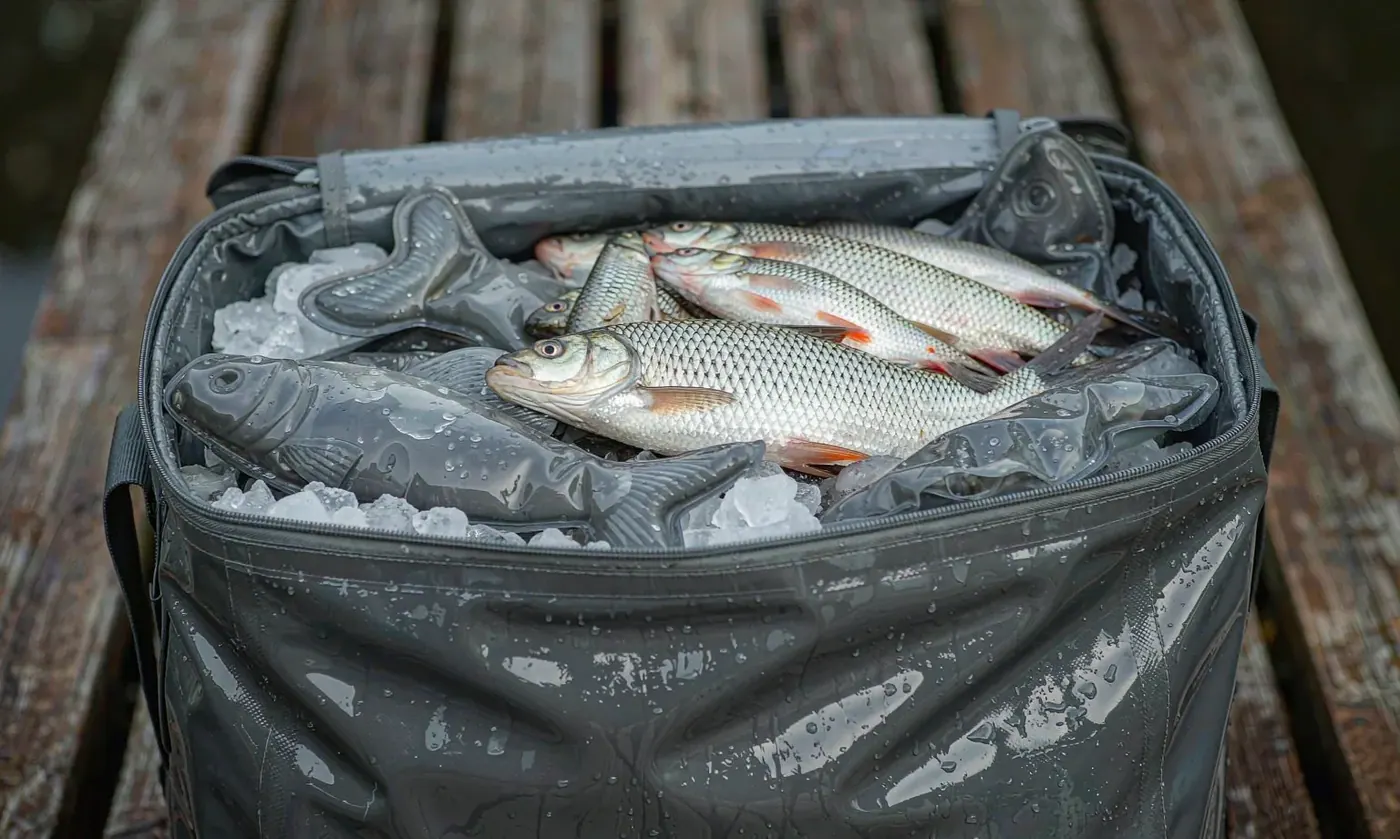
Two rules underpin the whole arrangement: nothing sits where it can slide, and nothing essential lives somewhere that requires leaving the helm to reach.
Cleaning and Care
Care routines for boat bags are short but must be regular, because salt concentration is continuous rather than occasional. Ten minutes at the end of each trip prevents virtually every long-term problem in this category.
- Rinse the whole bag with fresh water immediately after washing down the boat, not days later.
- Pay particular attention to closures and feet, where salt concentrate dries hardest.
- Empty and invert so nothing sits in the base, then dry open in moving air rather than full sun.
- Check hardware monthly for early pitting, treating the first sign rather than waiting for staining.
- Store lightly loaded, off the ground, in a dry locker rather than aboard permanently.
Harsh degreasers are worth avoiding: most damage the very coatings that keep water out. Where something stronger is genuinely required, check the product against safer chemical listings maintained by the US Environmental Protection Agency, since anything that strips a coating creates a leak that no amount of care will reverse.
Offshore and Rough Conditions
Everything changes when conditions deteriorate, and the rule becomes simple: if it can move, secure it. Above roughly 25 knots most loose articles start sliding, and each impact transfers into hull surfaces, upholstery and occasionally people. A few minutes securing before departure saves a great deal of damage later.
| Condition | What changes | Response |
|---|---|---|
| Above 25 knots running | Loose items slide on every wave | Tie down everything before departure |
| Following sea | Loads shift fore and aft repeatedly | Use two opposing tie points |
| Heavy spray | Salt concentration rises sharply | Close every bag, cover anything absorbent |
| Rain squall | Decks take inches of water quickly | Ensure drainage paths are clear |
| Rougher than forecast | Judgement degrades faster than gear does | Head in rather than push on |
Forecasts matter more than appearance at the ramp, and published offshore data from NOAA should drive how much equipment comes aboard and how firmly it is secured.
Buying Checklist
Six checks before purchase settle almost every decision, and none requires anything beyond a tape measure and a few minutes of attention.
- Measure the intended space, especially under gunwales where clearance is commonly 300 to 400 millimetres.
- Check the feet for height and ask whether the contact material is non-marking.
- Confirm drainage exists and count the openings rather than assuming there is one.
- Look for stainless rather than plated hardware, which is the difference between seasons of service.
- Ensure there are tie points, since nothing stays put on its own at speed.
- Weigh it empty; everything carried aboard is carried from the vehicle as well.
Boats punish the missing details rather than the missing capacity, which is why the checklist above focuses on feet, drainage and hardware rather than on litres.
One further test is worth applying before anything goes aboard permanently: watch where water actually runs during a washdown. Most people are surprised to discover that their preferred storage spot sits directly in the main drainage path, and moving a bag thirty centimetres to one side often does more for dryness than any product upgrade.
Loading Order at the Ramp
Most boat storage problems begin at the ramp rather than on the water, because that is where everything is loaded quickly and without much thought. Loading in a fixed order takes two minutes longer and prevents almost everything that goes wrong later.
- Load heavy lockers first, before the casting deck gets covered in boxes and rods.
- Stow anything needed underway within reach of the helm rather than in inaccessible lockers.
- Secure the working tote only once its contents are confirmed, since restrapping costs time later.
- Leave one clear walkway on either side, which matters far more in rough water than the extra gear does.
- Check every tie point before casting off, rather than discovering a slack strap on the first wave.
Crew who load in the same order every time also unload faster and lose less. It is one of those small disciplines that pays back over a whole season rather than immediately.
Between Trips: Aboard or Ashore
Whether gear stays aboard between trips decides more about its lifespan than any product choice. Lockers aboard are damp, warm and salty; a garage ashore is dry and cool. The choice has to weigh theft risk and convenience, but the storage answer is usually to remove tackle and leave only boat-specific equipment on board.
| Item | Where it should live | Reason |
|---|---|---|
| Tackle trays and lures | Ashore, dry and stacked | Salt air rusts hooks within weeks |
| Electronics and documents | Always ashore | Heat, humidity and theft risk |
| Lines, leaders and rope | Ashore unless used weekly | Absorbs locker humidity |
| Safety equipment | Always aboard, checked monthly | Must be there when needed |
| Washdown kit and mooring lines | Can stay aboard | Boat specific and tolerant of damp |
Where anything must stay aboard, add a moisture absorber to the locker and open it whenever conditions allow. Trapped humidity does more damage than salt spray ever manages in the same period.
Fishing With Crew and Family
Boats attract more people than bank sessions do, and that changes storage requirements substantially. More people means more personal items competing for the same lockers, more items left in walkways, and a higher chance somebody hooks something they should not have.
| Consideration | Requirement | Simple fix |
|---|---|---|
| Several people's gear | Clearly assigned colour-coded bags | A different colour per person |
| Children aboard | All hooks inside closed trays | One locked box for sharp items |
| Limited locker space | Soft bags that compress when empty | Avoid rigid cases for bulk items |
| Wet and dry clothing | Separate waterproof compartment | One lined duffel reserved for wet kit |
Assigning a colour to each person resolves more arguments than any amount of discussion, and it also makes it obvious at the ramp when somebody's bag has been left behind.
Lifecycle and Replacement Costs
Understanding how long things last makes budgeting straightforward and removes the surprise replacements that annoy owners most. In continuous boat use, most items follow fairly predictable service lives, and replacing on a schedule beats waiting for failure.
| Item | Typical service life afloat | Replace when |
|---|---|---|
| Soft duffel and tote bodies | Three to five seasons | Coatings crack or closures stiffen |
| Stainless hardware | Five years or more with rinsing | First sign of pitting |
| Non-marking feet | Two to four seasons | Worn flat or hardening |
| Drain grommets | Two to three seasons | Cracked or permanently blocked |
| Insulated liners | Two to four seasons | Odour retained despite cleaning |
Set against those numbers, spending slightly more at purchase nearly always pays back. A bag lasting five seasons rather than three costs less per year despite the higher initial figure, and it also avoids the mid-season failure that always happens at the worst possible moment.
Managing Water Around Storage
Every boat generates water in predictable ways, and knowing where it goes is most of keeping gear dry. Livewell overflow, washdown spray, condensation inside lockers and, on smaller boats, a little bilge water all end up somewhere, usually wherever the nearest bag happens to be sitting.
| Water source | Typical volume | Where it ends up |
|---|---|---|
| Livewell overflow | A litre or two per hour | Running along the deck to the lowest point |
| Washdown hose overspray | Several litres per session | Across everything nearby |
| Locker condensation | Damp rather than pooled | Inside anything closed and stored |
| Bilge film after a wash | 10 to 30 millimetres | Under any bag with a flat base |
| Rain in an open boat | Several centimetres in squalls | Everywhere, then slowly out of the scuppers |
Once those routes are understood, positioning follows naturally. Nothing sensitive goes near the livewell drain path, nothing flat-bottomed goes where bilge collects, and anything stored in a locker gets opened regularly rather than sealed for months.
Tackle Storage: Bags Versus Lockers
There is a standing argument about whether tackle belongs in portable bags or directly in boat lockers. Both work, and both fail, for more or less the same reason: organisation rather than location decides whether the system survives contact with real fishing.
| Approach | Advantage | Disadvantage | Best when |
|---|---|---|---|
| Trays in portable bags | Everything moves at once, easy to restock | Something to trip over on deck | Two boats or shared charter use |
| Trays stored in lockers directly | Clear decks, nothing to secure | Wet access, limited sorting space | Dedicated boat used weekly |
| Hybrid: working bag plus locker stock | Best of both worlds | Requires discipline to maintain | Most serious private boats |
| Everything loose in one bag | Simple | Chaos by lunchtime | Never genuinely best |
The hybrid approach wins in practice for most private owners: a small working bag on deck holding the day's selection, with restock in a locker below. Nothing loitering on deck, and nothing to reorganise before every trip.
Whichever is chosen, remember that lockers are damp places. Anything stored there needs containers with seals that actually close, and every hook point should sit inside a tray rather than exposed to whatever else is in the locker.
Programme Notes
QUANZHOU JUNYUAN BAGS has developed waterproof bag work since 2014 behind a founding group whose experience of the trade began in 2004. Monthly output reaches 200,000 units under SGS verification, with BSCI and ISO 9001 governance, REACH and California Prop 65 screening on every material, and inspection at AQL 2.5 before release. Boat storage is designed around drainage, non-marking contact and stainless hardware, because those decide whether owners keep using a bag rather than how it photographs.
Send footprint limits, whether under-gunwale clearance applies, target volume, drainage and foot requirements, tie point count, closure type, colours, and quantity. Five hundred pieces per design and colour opens development; sampling takes six to ten working days and bulk thirty-five to fifty days from approved sample and deposit, shipped FOB Xiamen or DDP to upward of one hundred destinations. Drawings go to service@junyuanbags.com. Open-top models are shown on the fishing tackle tote page, bulky gear options appear in the duffel roundup, and heavier offshore builds are reviewed among the offshore tackle bags.
People Also Ask
What makes a good tackle bag for a boat?
Drainage at every corner, feet raised clear of bilge water, non-marking contact surfaces, stainless hardware and enough tie points to secure it at speed.
Should boat bags be fully sealed?
No. Everything gets washed down eventually, so drainage matters far more than a perfect seal on a deck that is periodically hosed.
Will bag feet mark gelcoat?
Dark rubber feet can leave black scuff marks under load. Specify non-marking compound feet, and test on a light surface before trusting them.
How much gear should I carry on a bay boat?
Around 60 to 90 litres of total storage for an 18 to 21 foot boat, typically two totes plus a duffel, with a fixed location for every item.
Why do bags fail faster on boats?
Salt spray, ultraviolet and non-skid abrasion all act continuously. None is severe alone, but together they shorten service life substantially.
How should everything be secured when running?
Use two opposing tie points per bag and secure before departure. Above about 25 knots anything loose slides on most waves.
Frequently Asked Questions
Q1. What size bag fits under a gunwale?
Clearance commonly runs 300 to 400 millimetres, so measure the exact space before buying. Anything taller will not sit square and will eventually end up in the walkway.
Q2. How do I stop a bag damaging gelcoat?
Specify non-marking feet, keep hooks inside closed trays, and avoid leaving a wet base sitting in one spot for days at a time.
Q3. Is drainage better than sealing on a boat?
Yes. Washdowns and spray get inside regardless, and a drained bag empties in seconds while a sealed one holds water until tipped.
Q4. What hardware should I insist on?
Stainless rather than plated components. Plated fittings pit within about a season and stain whatever they are mounted above.
Q5. How often should boat bags be rinsed?
After every trip, ideally right after washing down the boat. Salt dries into a film that abrades coatings every time the bag flexes.
Q6. Which bags suit a bay boat best?
An open-top tote for working tackle plus a soft duffel for bulky gear covers most days, with an insulated unit for bait and catch.
Q7. Do I need to secure bags at speed?
Yes. Anything loose slides above roughly 25 knots, and each slide risks damage to the boat as well as to the equipment.
Q8. What should never live on deck?
Electronics, documents and anything requiring dryness. Those belong in a sealed pouch inside the console rather than on deck.
Q9. Which cleaners harm bags most?
Strong solvents and degreasers, which strip the coatings that provide water resistance. Choose mild products and check them against safer chemical listings.
Q10. How much total storage does a small boat need?
Around 30 to 50 litres for anything under 17 feet, rising to 60 to 90 litres for an 18 to 21 foot boat.
Q11. What figures should I send when specifying boat storage?
Footprint limits, gunwale clearance, target volume, drainage and foot height, tie point count and rating, closure type, colours, and order quantity.