A fishing sling pack is chosen correctly by fixing four things before anything else: which shoulder it rides on, how many litres the session needs, whether the strap geometry keeps it from sliding, and what tray it must accept. Most anglers prefer carrying on the shoulder opposite the casting arm, roughly seven in ten by common fitting surveys, and strap tan angle across the back should fall between 45 and 60 degrees or the body slides with every step. Volume runs 6-14 litres, strap pad contact should exceed 180 square centimetres once load passes 3 kg, and one 3700 size tray or two 3600 size trays is the practical ceiling. Get those four right and everything else is preference.
Step One: Decide Which Shoulder
This sounds trivial and it is the most common reason a sling gets returned, so it belongs first. Most anglers carry on the shoulder opposite their casting arm, leaving the rod hand free to swing the pack round without crossing the body, and the wrong assumption here cannot be corrected by adjustment.
| Factor | On the casting-arm shoulder | On the opposite shoulder |
|---|---|---|
| Reaching the body to rotate | Crosses the casting arm | Natural, one motion |
| Interference with the cast | Possible on short casts | None |
| Share in fitting surveys | About 30 percent | About 70 percent |
| Availability in standard ranges | Common | Limited unless reversible |
| Both required, rental or lodge | Reversible strap set, 3.50-7.00 USD | Same reversible design |
Reducing that table to one line: reaching across your own casting arm to grab the pack is the awkward case, so carrying on the opposite shoulder feels natural for most people.
Reversibility is usually achieved with a symmetrical strap anchor set and a body designed to work either way up, which costs around 3.50-7.00 USD more than a fixed configuration. It also adds two adjustment points, so reversible units need slightly more robust webbing and should be specified with a higher minimum strap pull.
Step Two: Match the Strap to the Load
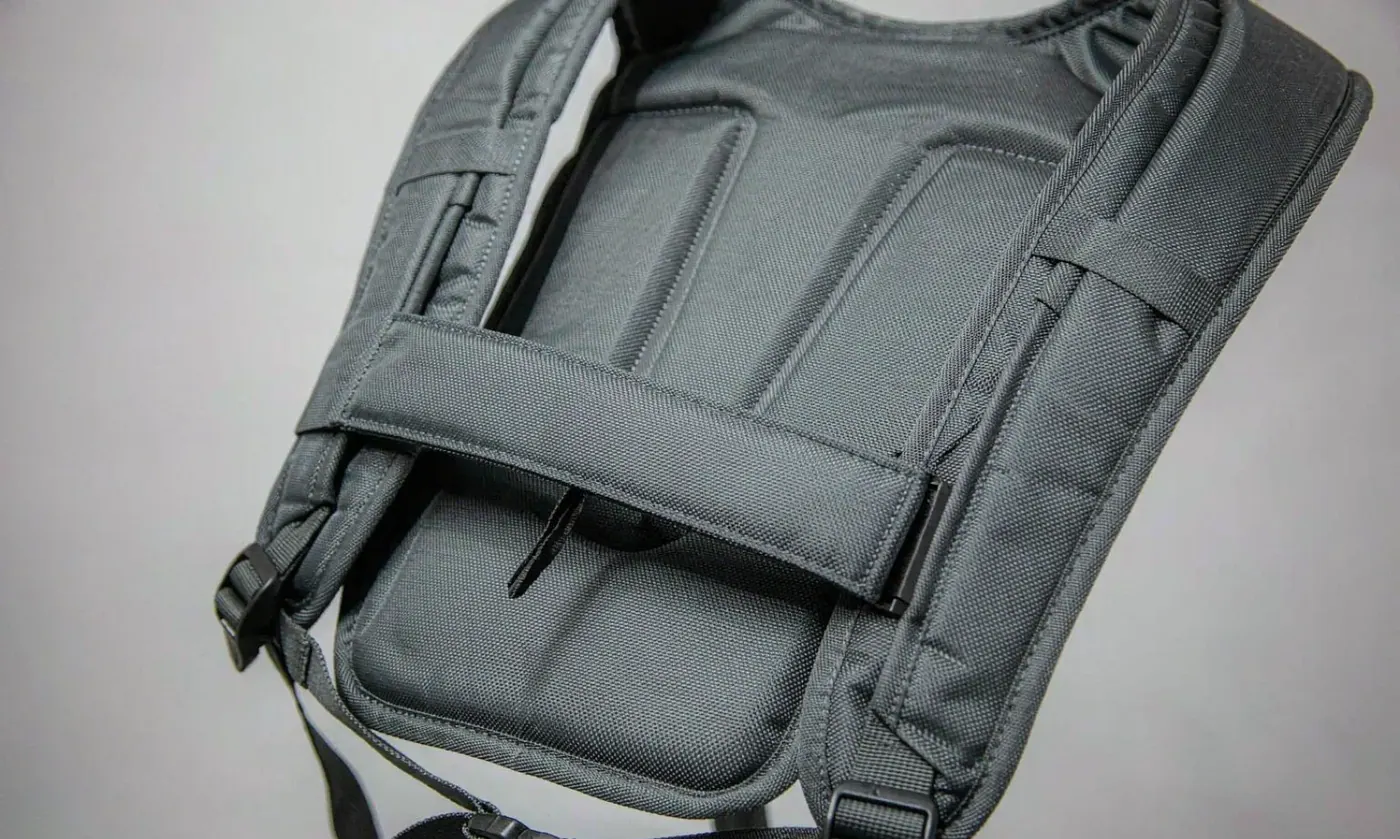
Sling comfort is governed by contact area and strap angle rather than by padding thickness alone, and both can be specified numerically. This is the difference between a pack that is tolerable for two hours and one that is wearable for a full day.
| Loaded weight | Pad width | Contact area | Result |
|---|---|---|---|
| Below 2 kg | 50-65 mm | 120-180 square cm | Any reasonable strap works |
| 2-3 kg | 65-75 mm | 180-240 square cm | Comfortable for three to four hours |
| 3-4 kg | 75-90 mm | 240-320 square cm | Needs a stabiliser strap as well |
| 4-5 kg | 90 mm plus stabiliser | 320 square cm and above | Approaching sling practical limits |
| Above 5 kg | Not suitable | Not applicable | Move to a backpack instead |
The corresponding strap angle matters as much as width and is far more often wrong. Measured from horizontal across the back, anything below about 30 degrees lets the body slide toward the elbow with every step, while anything above 70 degrees pulls against the neck. The comfortable band is 45-60 degrees, achieved mainly by where the upper anchor sits rather than by how tight the strap is adjusted.
Webbing width, strap pull strength, and cycle durability should all be stated numerically against methods maintained by ASTM International. A strap that passes a pull test but is only 40 mm wide remains uncomfortable, so always specify the width alongside any strength figure rather than accepting one in place of the other.
Step Three: Get the Volume Right
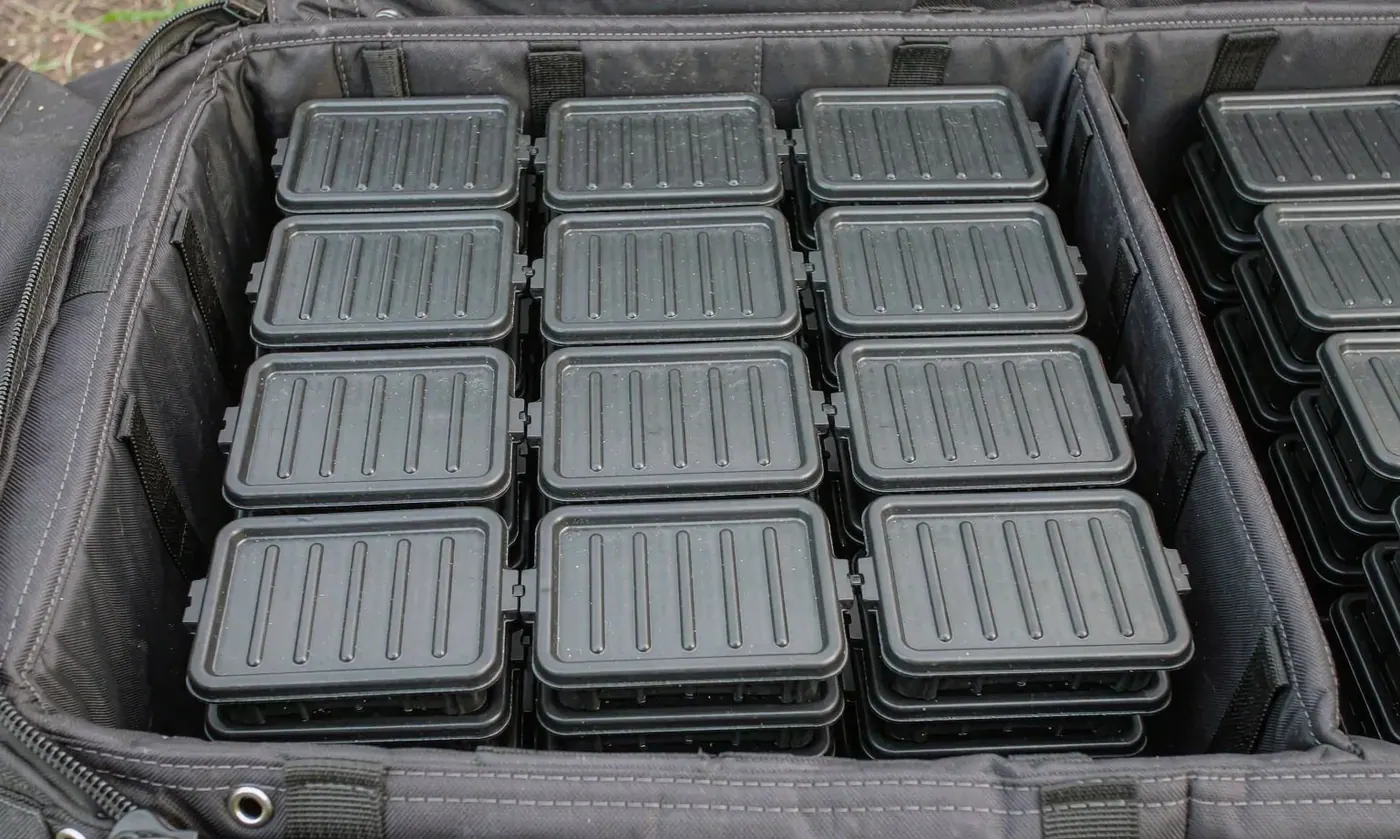
Sling volumes cluster tightly between 6 and 14 litres, and within that narrow band the difference between models is mostly about organisation rather than space. Choosing by session length avoids paying for capacity that only encourages carrying too much.
| Session | Volume | What realistically fits | Loaded weight |
|---|---|---|---|
| Short session, two or three hours | 6-9 L | One 3600 tray, tippet, tools | 1.8-2.6 kg |
| Half day with several changes of method | 9-12 L | Two 3600 trays or one 3700 | 2.6-3.6 kg |
| Full day walking between pools | 10-14 L | One 3700 plus a light layer | 3.2-4.4 kg |
| Guide use carrying client tackle | 12-14 L | Two 3700 with careful packing | 4.0-4.8 kg |
| Travel or airline use | 10-12 L | One 3700 plus documents and gear | 3.0-4.0 kg |
Anything above 4.5 kg loaded is past the sensible range for one shoulder regardless of how good the strap is, because the load then sits far enough from the spine to produce real neck strain. Above that figure the honest recommendation is a small backpack rather than a larger sling, even though a larger sling is what the customer originally asked for.
Step Four: Check Rotation Before Anything Else
Rotation is the defining behaviour of a sling and the thing most likely to annoy users, so testing it properly on a sample matters more than reading a specification sheet.
- A loaded sling should rotate from back to front in two to four seconds using one hand, without catching on the opposite arm or the rod.
- The body should stop cleanly at the front rather than swinging past centre, which usually means the strap anchor on the lower corner is misplaced by 20-30 mm.
- With the strap adjusted to its body-worn length, loaded rotation should require no more than about 15-25 N of hand force.
- A stabiliser strap limits unwanted swing during casting to roughly 20 degrees and should be specified on any model above 8 litres.
- Rotation cycles should be tested to at least 500 cycles before shipping, since anchor points work loose rather than failing suddenly.
Anchor placement deserves a paragraph because it is the root cause behind nearly every rotation complaint. The lower anchor should sit roughly 60-90 mm above the base corner and about 30-40 mm inboard, which sets a clean pivot. Placing it at the very corner produces a pendulum that swings past centre and never settles, which users describe as the pack fighting them all day. Reinforcing each anchor with a bar-tack box of at least 25 x 25 mm costs almost nothing and is the difference between a design that survives hundreds of rotations and one whose anchors gradually tear out.
Step Five: Water Performance
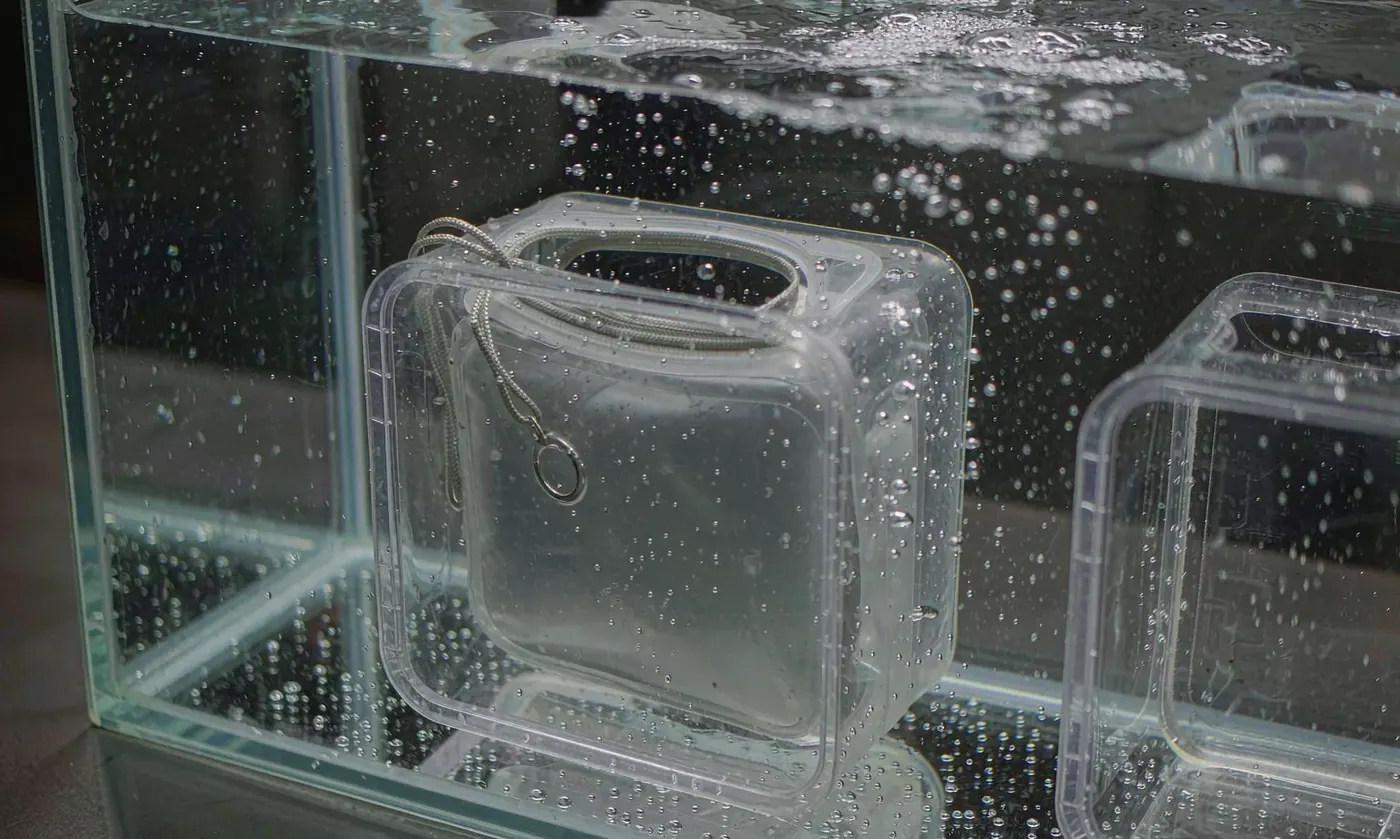
A sling is exposed differently from a backpack: it sits against clothing, swings through spray, and can be submerged entirely when an angler wades deep or slips. Three elements decide whether contents stay dry and they are worth checking individually.
| Element | Spray only | Regular immersion | Note |
|---|---|---|---|
| Seam construction | Taped is adequate | Specify welded | Taped joints test at 200-800 mm |
| Main closure | Covered zip with a flap | Roll top or coated zip | Roll top more forgiving |
| Fabric rating | Above 1,500 mm | Above 5,000 mm | Ask for the method used |
| Internal wet pocket | Optional | Very useful | Keeps soaked items separate |
| Drainage | Not essential | Two grommets | Offset them from every seam |
A wet pocket is underrated on slings specifically, because wet flies, a soaked glove, or a damp net mitt all end up somewhere and there is nowhere sensible to put them. A lined internal pocket accessible from the outside, costing about 1.10-2.20 USD, keeps soaked items away from trays and stops the whole interior becoming damp. A covered main zip with a storm flap adds roughly 1.40-2.80 USD and prevents most remaining water ingress complaints, which together make them the two cheapest reliability improvements available on any sling.
Colour transfer from dyed fabric onto light clothing is a real risk for anything worn against the body for hours, and crocking and perspiration fastness methods are documented by AATCC. Specifying a minimum fastness rating rather than relying on appearance prevents complaints that otherwise arrive weeks after purchase.
Step Six: Organisation and Attachments
The best slings are distinguished less by capacity than by having the right number of pockets in the right places, since everything above about ten litres becomes unmanageable without structure.
| Feature | Useful minimum | Why |
|---|---|---|
| Internal slip pockets | Three or four | Separate tippet, leaders, tools |
| External plier holster | One, spring-loaded | Most reached-for tool on the water |
| Net D-ring at the rear | One, load-rated | Keeps hands free while landing fish |
| Bottle sleeve accepting 750 ml | Useful above 10 L | Avoids carrying water elsewhere |
| Daisy chain loops | Two minimum | Attach whatever the session needs |
There is a limit worth naming: pockets beyond about seven on a sling start stealing space from trays and make everything harder to find. The common failure is a model designed for camera carry with a dozen small pockets that cannot hold a 3700 tray at all, and being clear about tray capacity first avoids buying into that category by accident.
Attachment strength deserves one numeric note, because it is rarely specified and frequently overstressed. Every external loop should survive a 150 N pull without tearing away from the body, which is comfortably achievable with bar-tack reinforcement but relies on the loop being anchored to a load-bearing panel rather than to a cosmetic layer. Specifying that figure and testing it on receipt catches a fault that otherwise shows up as a lost net on the first day.
Hardware and Coastal Use
Any sling destined for coastal water needs the hardware treatment described elsewhere, and because the strap adjuster is usually the highest-stressed fitting, it deserves particular attention.
- Specify marine-grade polymer for every buckle and adjuster, costing about 1.30-2.60 USD above zinc-plated steel and immune to chloride.
- Where a metal fitting is unavoidable, use 316 stainless, which reaches 500-1,200 hours before first corrosion against 200-500 for the 304 grade.
- Zips should use a resin coil with a marine slider, adding roughly 0.90-2.20 USD and preventing the most common single component failure.
- Rinse the whole bag in fresh water within two hours, cycling every zip six times while wet, which takes about three minutes.
- Inspect the strap adjuster every season, since it carries the highest cyclic load and is the hardest fitting to replace.
Two further details complete the coastal specification. First, drainage: any sling used from a boat or while wading deep will take water inside at some point, so two grommets in the lowest panel, offset at least 25 mm from every seam, are worth the small cost and prevent standing water from leaving abrasive residue in the base. Second, colour: mid-tone shells reflect 30-40 percent more solar load than very dark ones, which measurably slows coating ageing on open decks in tropical conditions at no cost at all.
Fit Around Layers and Body Shape
Sling packs are less forgiving of body difference than backpacks because there is no hip belt and far less adjustment range, so fit deserves specific attention before committing to a design or a size run.
| Fit factor | Requirement | Why it matters |
|---|---|---|
| Strap length adjustment range | At least 250 mm total | Covers a fleece and a winter shell |
| Anchor spacing on the body | 300-420 mm apart | Sets strap angle into the 45-60 degree band |
| Body height against the back | Below the shoulder blade line | Higher placement pulls on the neck |
| Ability to shift the pad position | Sliding pad for 120 mm | Lets users tune the contact point |
| Torso length coverage | Two sizes covering 90 percent | A single size excludes many buyers |
Buyers serving a general retail audience should plan for two sizes rather than one, because a single adjustable strap cannot cover the full range comfortably and returns for poor fit cost several times more than a second size costs to tool. Where only one size is viable, choose the specification that fits the middle 70 percent of users and state the fit range numerically rather than describing it as universal.
Mistakes That Show Up After Purchase
Four errors account for most disappointment with sling packs, and none of them are about product defects. Each is cheap to avoid with a few minutes of thought before ordering.
- Buying on volume alone and discovering the chosen tray will not fit through the opening, which is why tray compatibility should be checked before capacity.
- Choosing a design meant for camera carry, featuring many small pockets and no tray rails, then expecting it to serve as a tackle system.
- Ignoring shoulder side entirely and finding that every rotation crosses the casting arm, which no amount of adjustment resolves.
- Carrying more than 4.5 kg because the bag technically holds it, which produces neck pain within two hours rather than a failure anyone diagnoses.
The remedy for most of these is to decide the heaviest realistic load first and work backwards. Once that number is known, the volume, the strap width, and whether a sling is appropriate at all follow directly, and the decision stops being a matter of taste. Sling packs are excellent within their range and poor outside it, so knowing the boundary is the whole task.
Cost, MOQ, and Terms
Sling programmes are straightforward to develop and price predictably once specifications are fixed. The bands below assume MOQ 500 pcs per design and colour, which is the standard entry point.
| Configuration | FOB Xiamen | Notes |
|---|---|---|
| Simple sling, 6-9 L, standard hardware | 18-26 USD | Freshwater and promotional use |
| Mid sling, 9-12 L, welded seams | 24-34 USD | Most common specification |
| Premium sling, 12-14 L, reversible strap | 28-42 USD | Includes the reversibility premium |
| Coastal specification upgrade | Add 2.60-6.20 USD | Polymer or 316 hardware and marine zip |
| Sampling | 6-10 working days | Bulk then runs 35-50 days |
QUANZHOU JUNYUAN BAGS has developed waterproof bag programmes since 2014, with the founding team working in the trade since 2004. Monthly output of 200,000 units is verified by SGS, and BSCI and ISO 9001 systems structure the workflow. Materials are screened for REACH and California Prop 65, every bulk order is inspected at AQL 2.5 before shipment, and samples are produced in 6-10 working days.
The Short Version
Everything above compresses into eight questions that take about two minutes to answer and resolve nearly every purchasing decision in this category. The eighth is included because it is the one most often overlooked on the sales floor.
| Question | Answer that suits most people | Reason |
|---|---|---|
| Which shoulder? | Opposite the casting arm | Reaching across is awkward otherwise |
| How many litres? | 9-12 for most sessions | Below that too little, above too heavy |
| strap width at 3 kg? | 75-90 mm | Contact above 240 square cm |
| Stabiliser needed? | Yes above 8 L | Limits swing to about 20 degrees |
| Taped or welded seams? | Welded if immersion is possible | Taped handles only spray |
| What tray must fit? | One 3700 or two 3600 | That sets real usable volume |
| Load above 4.5 kg? | Choose a backpack instead | One shoulder cannot take it comfortably |
A sling brief can be emailed to service@junyuanbags.com with shoulder preference, session length, target tray count, water type, and yearly quantity. FOB Xiamen or DDP service to more than 100 countries follows an approved sample. Helpful comparisons include the fishing sling pack range, the backpack versus sling analysis, and the best fishing sling packs roundup.
People Also Ask
What matters most when buying a fishing sling pack?
Decide the shoulder first, then volume at 6-14 litres, strap width above 75 mm once load passes 3 kg, and tray capacity. Check rotation on a loaded sample before anything else.
Which shoulder should I wear a fishing sling on?
The shoulder opposite your casting arm, which suits roughly seven anglers in ten. Reversible strap sets costing 3.50-7.00 USD more cover both options for rental fleets.
What size sling pack do I need?
6-9 litres for short sessions, 9-12 for most half and full days, and 12-14 only for guide use where two 3700 trays must be carried.
Do sling packs need a stabiliser strap?
Yes above about 8 litres. It holds swing during casting to roughly 20 degrees and moves 30-40 percent of the load away from the primary shoulder.
Can you put a 3700 tray in a sling pack?
Yes, most bodies from 10 litres upward accept one 3700 size tray, or two 3600 size trays where the tray rails are correctly spaced at 40-55 mm.
When should I choose a backpack instead of a sling?
Above roughly 4.5 kg loaded. One shoulder cannot carry that comfortably for long, and neck strain begins appearing from about 3 kg after four hours without a stabiliser, which is why the strap angle and a stabiliser together decide where the limit sits.
Frequently Asked Questions
Q1. How do I choose a fishing sling pack?
Work through shoulder side, volume, strap geometry, and tray capacity in that order. Everything else, including pockets and attachments, follows from those four decisions.
Q2. Which shoulder should a sling pack go on?
The shoulder opposite your casting arm, because reaching across your casting arm to rotate the pack is awkward. Reversible designs cover both cases for about 3.50-7.00 USD more.
Q3. What size sling pack is best for fishing?
Six to nine litres for short sessions, nine to twelve for most anglers, and twelve to fourteen only for guide work or where two trays are essential.
Q4. How do I stop a sling pack from sliding?
Adjust the strap so it crosses the back at 45-60 degrees, which mainly depends on where the upper anchor sits. A stabiliser strap to the opposite hip stops remaining movement.
Q5. How wide should a sling strap be?
At least 75 mm once loaded weight reaches 3 kg, giving contact area above 240 square centimetres, and 90 mm above 4 kg with a stabiliser as well.
Q6. Can a fishing sling hold a tackle tray?
Most bodies from 10 litres upward accept one 3700 size tray, and bodies from 9 litres usually manage two 3600 size trays if the rails are spaced at 40-55 mm.
Q7. Are sling packs waterproof?
Some are. Look for welded seams rather than taped ones, fabric above 5,000 mm hydrostatic head, and a roll top or coated zip, then verify by immersion rather than spray.
Q8. Do I need a stabiliser strap?
On any model above eight litres, yes. It holds unwanted swing to about 20 degrees and takes 30-40 percent of the load off the primary shoulder during casting and walking.
Q9. How much weight can a sling pack carry?
Comfortably up to about 3 kg for most people and realistically up to 4.5 kg with a stabiliser. Beyond that, a small backpack is the correct recommendation.
Q10. What hardware suits a coastal sling pack?
Marine-grade polymer buckles and adjusters, or 316 stainless where metal is required, plus a resin coil zip with a marine slider costing about 0.90-2.20 USD extra.
Q11. What is the MOQ and lead time?
MOQ is 500 pcs per design and colour. Samples take 6-10 working days and bulk production runs 35-50 days from approved sample and deposit.
Q12. How much should a fishing sling pack cost?
FOB Xiamen runs 18-26 USD for a simple 6-9 litre body, 24-34 USD for the common 9-12 litre welded specification, and 28-42 USD for a reversible premium design.