A practical waterproof emergency go bag uses a 28–40 L pack, holds a complete 72-hour personal kit at roughly 8–12 kg, and keeps documents, medication, dry layers, light, water treatment, and communication in labelled modules. Target an IPX6-level finished body for heavy rain, lift sensitive contents at least 75 mm above the base, and ensure the pack can be picked up and exited with in under 60 seconds. Review consumables every 3 months and complete a loaded 5 km carry test twice a year.
Define the Emergency Plan Before Filling the Pack
A go-bag supports a written plan; it does not replace one. Identify who carries it, likely destinations, walking distance, climate, medical needs, pets or dependants, and the longest expected gap before resupply. A 5 km urban exit with a known indoor destination needs different contents from a 24 km rural route. Set one pack owner and one quarterly review date so responsibility is not shared into invisibility.
Use 72 hours as a planning frame, then adapt to local public guidance and personal needs. Water is the largest mass: 3 L weighs about 3 kg and may not cover 3 days, so carry a manageable initial amount plus an appropriate treatment and resupply plan where official advice supports it. Medication, food, documents, and communication need user-specific decisions, expiry checks, and professional guidance where applicable.
| Planning input | Number to write | Pack consequence | Review trigger |
|---|---|---|---|
| Exit distance | 5, 10, or 20+ km | Harness and footwear priority | Route or destination changes |
| Duration | 24, 48, or 72 h | Food, medication, and layer count | Official advice changes |
| Initial water | 1–3 L per carrier | Adds 1–3 kg | Season or route changes |
| People supported | Named individuals | Documents and health modules | Household change |
| Climate range | Expected °C and rain | Insulation and dry reserve | Seasonal review |
Current preparedness recommendations should come from the relevant local authorities. Resources from the CDC on emergency kits help structure health-related readiness, while local emergency services may give route-specific instructions. Record the source and review date instead of copying an old checklist indefinitely.
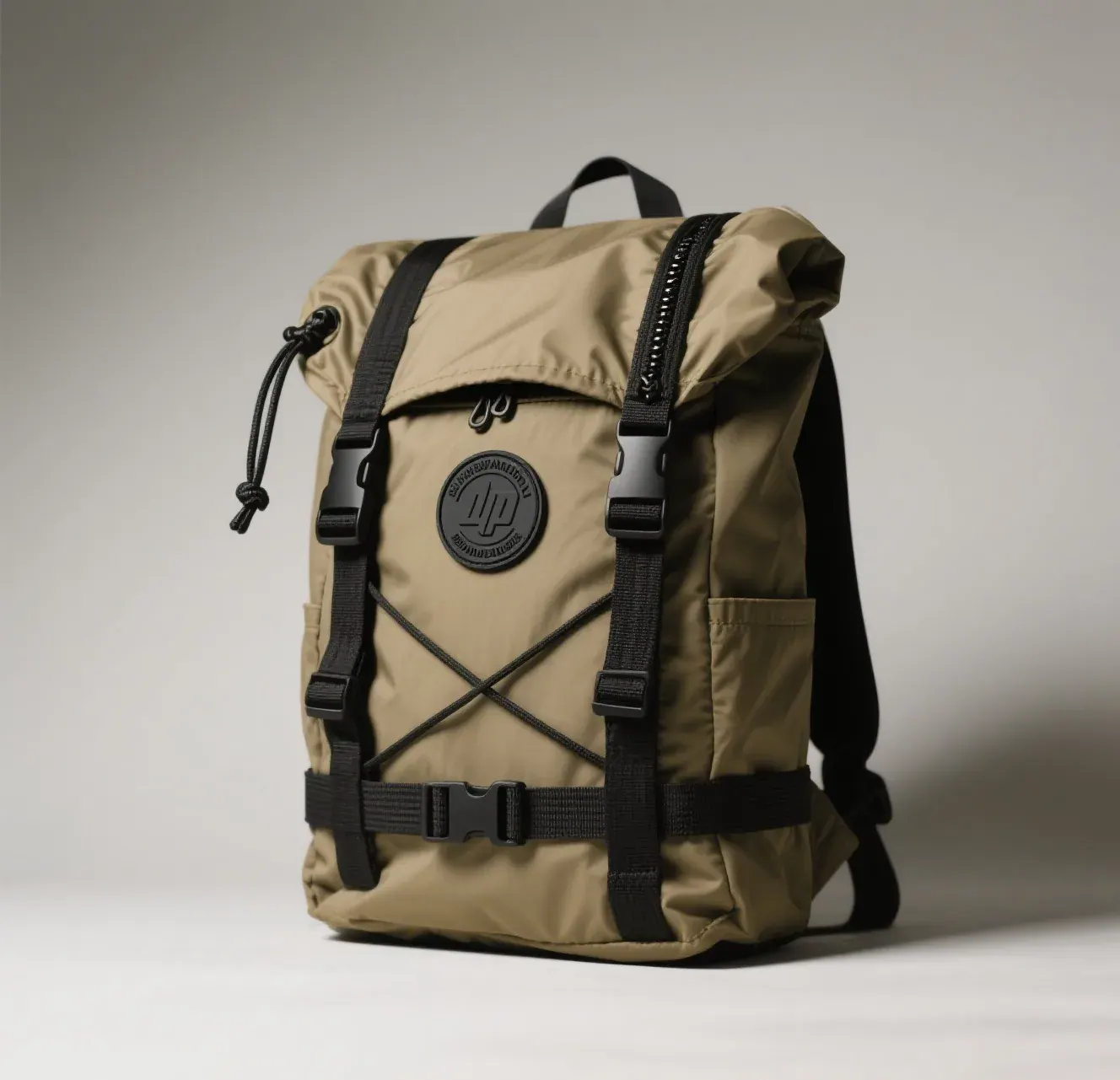
Choose 28–40 Litres by Person, Climate, and Route
A 28–32 L body can support one adult on a compact warm-weather plan with an indoor destination. A 32–36 L body accommodates additional insulation, personal health items, or a longer walk. A 36–40 L pack is reasonable for colder conditions or shared support, but total mass can exceed 12 kg quickly. Capacity should never be used as permission to carry objects that have no plan role.
Build a volume grid before choosing. Documents and communication may take 2–3 L, first aid and personal health 2–4 L, dry clothing 6–10 L, food 5–8 L, light and tools 3–5 L, and water containers 3–6 L. Reserve 15 percent for imperfect packing and route updates. A 34 L measured list therefore needs close to 40 L, not a nominal 34 L shell filled to its closure.
| User profile | Capacity range | Mass ceiling | Key adjustment |
|---|---|---|---|
| One adult, warm urban | 28–32 L | 8–10 kg | Compact layers, known destination |
| One adult, mixed climate | 32–36 L | 9–11 kg | Dry insulation and larger health module |
| Cold-weather personal | 36–40 L | 10–12 kg | Bulky layer and glove access |
| Caregiver role | 36–40 L | User-specific | Duplicate documents and assisted access |
| Child carrier | Age-appropriate small load | Professionally and locally guided | Identification and comfort over capacity |
The waterproof backpack range provides baseline shell and closure options, while the chosen capacity must be tested on the actual carrier. Avoid assigning a 12 kg pack simply because it fits. A smaller carrier may need a 4–6 kg personal bag while shared supplies move another way in the written plan.
Use Modules So the Pack Works in the Dark
Divide contents into 6 modules with distinct colour and texture: health, documents, water, food, warmth, and light/tools. Each module should have one opening and a printed inventory. Put the first 3 needs—light, communication, and essential personal health items—where they can be reached in 20 seconds. Keep the full paper list in a clear inner sleeve and a dated digital copy in an appropriate secure location.
Use large plain labels readable at arm's length. Red may identify health, blue water, yellow light, white documents, green food, and grey warmth, but add words or tactile tabs so colour is not the only cue. Ten blind retrieval trials with household members will reveal whether the system is understandable. If one module is chosen incorrectly more than once, change its position or texture.
- Place the light in an external protected pocket with a pull at least 50 mm long.
- Lift documents, medication, and communication at least 75 mm above the pack base.
- Keep water and any liquid toiletries in independent leak-contained zones.
- Use one complete dry clothing module rather than several loose garments.
- Attach no critical item solely to an exposed loop that can snag or tear away.
A well-organised 32 L body can outperform a disordered 40 L one. The best waterproof backpack overview helps compare access and harness styles, but emergency approval should use the 60-second exit and 20-second retrieval tests. Appearance and pocket count do not prove either outcome.
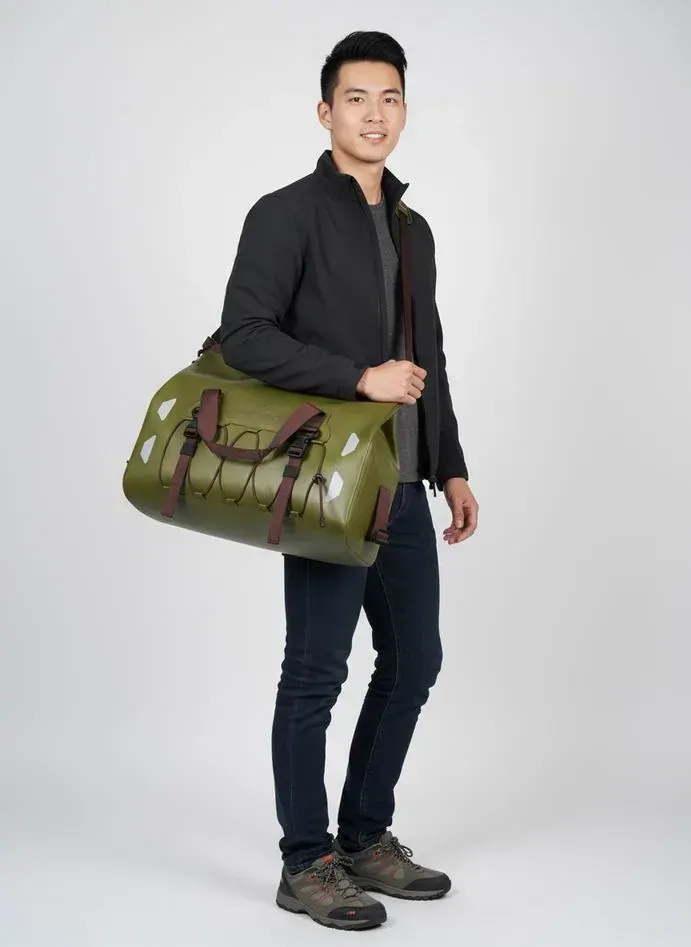
Water Protection and Redundancy
The main shell should resist the weather expected during evacuation. An IPX6-level target provides a meaningful basis for heavy driven rain, while a temporary-immersion design may be justified in flood-prone or marine routes only under official plans and with stated evidence. The IEC ingress-protection information defines the test vocabulary; the complete loaded pack remains the relevant article.
Use a 3-turn roll-top or another closure approved for the exposure, and keep 75–100 mm clear above the load. Put documents, essential personal health items, and one dry layer in independent inner pouches. Redundancy belongs around high-consequence contents, not every object. A spoon does not need 2 barriers; identity records and critical dry insulation may.
| Content | Primary position | Secondary protection | Inspection interval |
|---|---|---|---|
| Documents | Upper protected zone | Sealed 0.5–1 L pouch | Every 3 months |
| Essential health items | One-hand access zone | Labelled independent pouch | By expiry and quarterly |
| Dry base layer | Centre, above water | 4–6 L roll pouch | Twice yearly |
| Light and radio | Upper quick pocket | Battery contacts protected | Monthly operation check |
| Food | Middle module | Odour and leak containment | By expiry and quarterly |
Do not confuse waterproof storage with flood safety. Follow evacuation orders and local official direction; never enter moving water because equipment appears sealed. The pack's role is to keep essentials together during a safe planned movement, not to make hazardous travel acceptable.
Harness, Visibility, and the Five-Kilometre Test
An emergency load often becomes heavier than expected because water and tools are dense. For 8–12 kg, use 55–75 mm shoulder straps, torso sizing within about 3 cm, a structured belt capable of transferring 20–30 percent of load, and 4 compression points. Keep the densest 4–6 kg close to the back and between hip and shoulder-blade height. A hanging load consumes energy and affects balance on stairs.
Twice a year, walk 5 km with the complete current pack and the clothing likely to be worn. Include 100 steps, one 20-minute seated period, and 10 access drills. Record total time, any shoulder hot spot, pack movement, water use, and missing item. A plan that cannot be carried by its assigned person must be revised by reducing mass, redistributing support, or changing the route.
Use at least 150–250 cm² of reflective material divided across the rear and strap faces if road visibility is relevant. Check from 50 m under headlamps with the pack loaded. Bright colour supports daytime recognition; reflective trim supports low-light recognition. Neither replaces route awareness, lighting, or local instruction.
Quarterly Calendar for Water, Food, Batteries, and Documents
Choose fixed dates such as the first weekend of January, April, July, and October. Empty the pack completely, match every item to the inventory, review official advice, rotate dated supplies, operate lights and radio, inspect battery contacts, update copies, and repack by module. Weigh the finished pack to 0.1 kg and record the result. A 1 kg increase without a clear reason is a prompt to edit.
Monthly, perform a 5-minute quick check: confirm the bag is present, accessible, dry, closed, and not blocked by storage. Operate the main light and check communication-device power according to its instructions. Twice yearly, complete the loaded walk and water screen. Annually, review route, contacts, destinations, medical needs, and whether the assigned carrier has changed.
Battery and household hazardous-material guidance should be checked through relevant EPA information on used batteries. Protect terminals, follow device instructions, and use appropriate local collection routes for depleted or damaged cells. The backpack is storage and transport organisation, not a disposal container.
Print the next review date on a 60 × 100 mm card visible immediately after opening. Record who completed the check and which items changed. The discipline of 4 dated reviews per year matters more than a perfect list built once and forgotten for 3 years.
Water and Food: Plan Mass, Rotation, and Resupply
Water planning is local and personal. Carrying 9 L for 3 days would add 9 kg before any other equipment, which is impractical for many users. Begin with an amount the assigned person can carry—often 1–3 L—plus containers and an appropriate treatment or resupply plan consistent with authoritative local advice. Never rely on unknown water simply because a filter is present; understand the device's limits and replacement schedule.
Choose foods that match dietary needs, can be eaten with little preparation, and tolerate the expected temperature range. Record total daily energy based on individual advice and activity rather than one universal number. Rotate items before their stated date and inspect packaging for swelling, puncture, or leakage. A compact menu that household members will actually eat is better than unfamiliar emergency food left untouched.
Separate food from toiletries, fuel-related items, and wet gear. Use one wipe-clean module and check it for crumbs that can attract pests. At the quarterly review, consume and replace near-date items through normal household use where suitable, which reduces waste and keeps the pack familiar. Record allergies and essential dietary notes with the health module.
Scenario Drill and Communication
Run a calm household drill twice a year. Set a start signal, pick up the closed bag, put on shoes and outer layers, retrieve keys and communication, and reach the planned meeting point or a safe simulation point. Target 60 seconds to leave the starting area once the decision is made, without running. Record blocked exits, missing contacts, confusion over who carries which item, and whether pets or assistance needs alter timing.
Weather monitoring belongs in the plan. Where relevant, use NOAA weather resources alongside local warnings. Keep a written contact card because networks and device power can fail. Establish an out-of-area contact and 2 meeting points where official guidance supports that plan. The bag should make communication reachable, not become the only copy of the plan.
Never stage a drill in a way that interferes with emergency services, traffic, or other people. Simulate rather than entering hazardous conditions. The useful outcome is a list of small corrections: move shoes, change a pocket pull, reduce 0.8 kg, update one number, or make the pack reachable from a second safe exit.
Accessibility, Shared Understanding, and Backup Ownership
The primary carrier may be injured, absent, wearing gloves, or operating in low light. At least 2 household members should know the module map, review dates, and meeting plan. Use pulls 50–70 mm long, avoid 2 identical pockets for different critical items, and keep the heaviest routine-retrieval module below shoulder height. A closed bag that only one person understands is a fragile system.
Run an uncoached test with 5 tasks: find identification, light, communication, first aid, and the dry layer. Each alternate user should complete the first 4 within 20 seconds each and the layer within 45 seconds. Record mistakes rather than giving hints. A wrong pocket indicates that labelling, texture, or placement needs change. Repeat after 30 days to test memory rather than immediate learning.
| Accessibility task | Time target | Design aid | Pass line |
|---|---|---|---|
| Identify the bag | Under 10 seconds | Fixed location and visible label | Two users locate it |
| Find light | Under 20 seconds | Long tactile pull | Works with gloves |
| Find communication | Under 20 seconds | Upper protected pocket | No unrelated item removed |
| Find first aid | Under 20 seconds | Word plus tactile symbol | Correct on first choice |
| Find dry layer | Under 45 seconds | Distinct 4–6 L module | Main closure restored correctly |
Consider limited reach and seated use when relevant. A front-facing opening can be easier than a tall top opening, a cam buckle may require less pinch force than a small side-release clip, and a softer removable back sheet may improve seated comfort. Test the real user and avoid assuming that one accessible feature serves every person. The waterproof backpack accessibility and fit guide provides a fuller measurement process.
Assign a backup owner on the inventory card. That person does not duplicate every item; they know the location, can carry or redistribute the load, and can complete the quarterly review. During the 5 km drill, let both primary and backup carriers try the current pack. If one cannot manage 8–12 kg, define in advance which 2–4 kg module moves and to whom.
Procurement and Acceptance for Organised Programmes
A go-bag brief should state 28–40 L usable capacity, 8–12 kg design load, IPX6-level rain target, 6 labelled modules, 20-second priority access, 60-second pickup routine, torso range, reflective area, and a 5 km test. Add loaded external dimensions, closure clearance, pocket map, and a quarterly inventory card. Avoid claims that promise survival or replace official planning.
QUANZHOU JUNYUAN BAGS supports waterproof programmes with MOQ 500 pcs per design and colour, a 6–10-working-day sample window, and 35–50 days for bulk after approval. AQL 2.5 inspection can cover dimensions, load points, closure, module count, labels, reflective placement, and the agreed water screen. Systems include BSCI and ISO 9001, with REACH and California Prop 65 material checks.
Organisations can review a module map or email it to service@junyuanbags.com. State user group, destination climate, walking distance, priority items, and local guidance source. FOB Xiamen and DDP service to more than 100 countries can be planned after samples pass the loaded carry and access drills.
The best emergency backpack is not the largest or most tactical-looking. It is the one an assigned person can lift, understand in the dark, carry 5 km, review every quarter, and close correctly in heavy rain. Make every module answer the written plan, and remove everything that does not.
People Also Ask
How many litres should one person's emergency backpack hold?
Twenty-eight to 36 L fits many personal 72-hour plans, while 36–40 L helps with cold insulation or caregiver items. Keep 15 percent reserve and ensure the assigned person can carry the complete 8–12 kg load.
How often should a go-bag be checked?
Do a 5-minute presence and device check monthly, a complete inventory and rotation every 3 months, a loaded 5 km walk twice yearly, and a full route and contact review annually.
Where should emergency documents go in a waterproof pack?
Place copies in a sealed 0.5–1 L pouch in the upper protected zone, at least 75 mm above the base. Keep an appropriate secure copy elsewhere so the backpack is not the only record.
How quickly should emergency items be accessible?
Light, communication, essential personal health items, and identification should be reachable within 20 seconds. The complete closed bag should be accessible and ready to leave with in under about 60 seconds.
Why use modules in an emergency backpack?
Six labelled modules reduce search time, isolate leaks, and make quarterly inspection faster. Words, colours, and tactile pulls let different household members identify health, documents, water, food, warmth, and tools.
How do I know if my emergency pack is too heavy?
If the assigned person cannot walk 5 km and 100 steps without a severe pressure point, unsafe fatigue, or loss of balance, revise the mass, route, or distribution. Capacity is not permission to exceed carry ability.
Frequently Asked Questions
Q1. What size waterproof backpack makes the best go-bag?
A 28–32 L pack suits a compact warm urban plan, 32–36 L handles mixed conditions, and 36–40 L supports bulky cold or caregiver needs. Select by measured contents and carrier ability.
Q2. Should a go-bag be fully waterproof?
A strong rain boundary is highly useful, with an IPX6-level finished-pack target for heavy weather. High-consequence documents, health items, and one dry layer should still use independent inner pouches.
Q3. How heavy should a 72-hour emergency pack be?
Eight to 12 kg is a practical planning range for many adults, but personal capacity varies. Water adds 1 kg per litre, so test the assigned person over 5 km and reduce or redistribute when needed.
Q4. How much water belongs in a go-bag?
Carry an amount the person can safely manage, often 1–3 L, plus an appropriate resupply and treatment plan consistent with local authoritative guidance. Do not assume one universal volume works for every climate or user.
Q5. What goes in the first-access pocket?
A light, communication device, identification, essential personal health items, and a signalling item where appropriate. Every household user should retrieve them within 20 seconds without unloading clothing.
Q6. Should emergency food be packed loose?
No. Use one labelled wipe-clean module matched to personal dietary needs, inspect packaging quarterly, rotate by stated dates, and keep it separate from toiletries, wet equipment, and batteries.
Q7. Can one emergency backpack serve a whole family?
It may hold shared items, but the plan should assign loads by person, ability, age, and assistance needs. Avoid creating one 20 kg pack that nobody can carry if the designated person is unavailable.
Q8. How should batteries be stored in a go-bag?
Follow device instructions, protect exposed terminals, keep damaged cells out, and operate devices monthly. Review local collection guidance for depleted batteries rather than leaving old cells in the pack.
Q9. What waterproof closure works for a go-bag?
A 3-turn roll-top is simple and dependable for strong rain when 75–100 mm remains clear. Other closures can work when the complete loaded pack has relevant evidence and opens under the 20-second access goal.
Q10. How do I practise using an emergency backpack?
Twice a year, run a calm 60-second pickup drill and a 5 km loaded walk with 100 steps and 10 access tasks. Simulate safely and never enter hazardous conditions merely to test equipment.
Q11. What are the MOQ and timing for an organised go-bag programme?
The baseline is 500 pcs per design and colour, samples in 6–10 working days, and bulk in 35–50 days. Approve module labels, access time, load fit, and water screen before the main run.