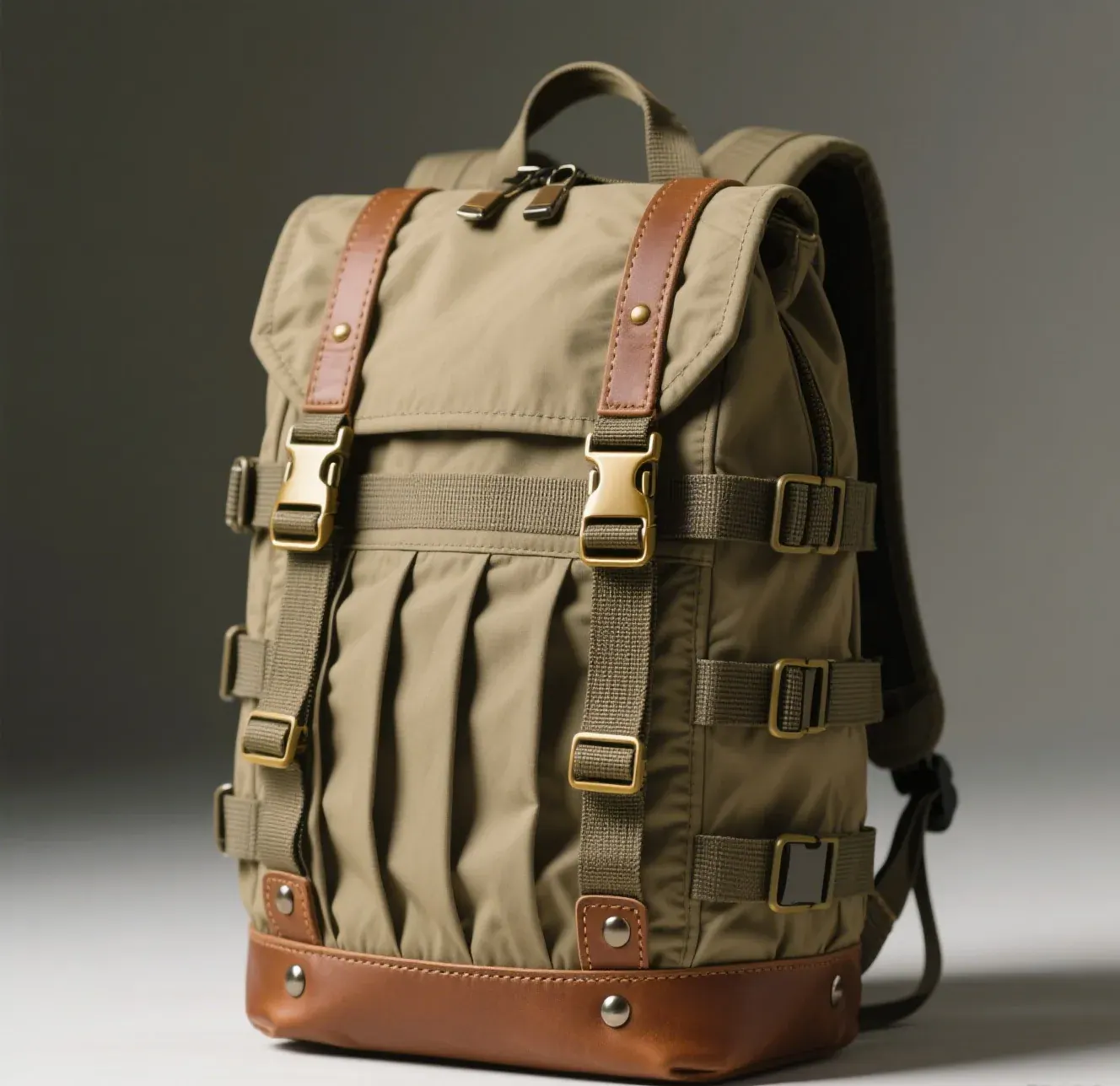
A waterproof golf walking backpack should hold 18–24 L, weigh about 550–800 g empty, and resist at least an IPX5-to-IPX6 level of rain while keeping valuables, a layer, and food separated from wet towels. For a 4-hour course walk, use 55–70 mm shoulder straps, keep the loaded mass under 6 kg, and provide one-handed access to a 1 L bottle and 0.8 L valuables pocket. Buying programmes commonly start at MOQ 500 pcs per design and colour, with samples in 6–10 working days and bulk in 35–50 days.
What a Walking Golfer Actually Carries in Four Wet Hours
A course day pack is not a golf club bag in miniature. It carries the items that must stay dry or remain immediately accessible while the clubs travel separately: rain jacket, spare socks, cap, phone, wallet, keys, medication, two snacks, 1 L of water, rangefinder, 3 balls, gloves, and a wet towel. That list usually occupies 14–18 L, and a 20 percent reserve brings the sensible body size to 18–24 L.
The complete load should stay below about 6 kg because the player may walk 8–12 km and still needs free shoulder movement for 70–100 swings. Put water low and close to the back, the folded jacket above it, and rigid valuables in a pocket that does not touch the spine. A pack that is too tall can contact the back of a hat during setup; keep the loaded height around 420–480 mm for most adults.
| Item group | Volume allowance | Typical mass | Best location |
|---|---|---|---|
| Rain layer and spare socks | 5–7 L | 0.5–0.9 kg | Upper main chamber |
| Water and food | 3–5 L | 1.3–2.0 kg | Low, close to back |
| Rangefinder and phone | 0.8–1.2 L | 0.3–0.6 kg | Padded quick pocket |
| Gloves, balls, cap | 2–3 L | 0.4–0.8 kg | Front organiser |
| Wet towel and shoe cover | 2–4 L | 0.3–0.7 kg | External drain zone |
Do a real packing check rather than multiplying catalogue dimensions. Load every item, close the roll-top with 3 turns, and walk 20 minutes. If the top cannot roll fully, move to 24 L; if the pack is half empty and collapses around the bottle, choose 18 L. Broader everyday options appear on the waterproof commuter backpack page, but a course pack should prioritise rotation and glove-friendly access over a rectangular laptop layout.
Rain Protection Without Carrying Unnecessary Weight
Course rain is commonly a mix of vertical rainfall, wind-driven droplets, wet grass contact, and splash from paths. A welded or well-sealed body with a 3-turn roll-top offers a more dependable main chamber than multiple exposed zippers. An IPX5-level target suits ordinary sustained rain; IPX6 gives additional margin for wind and sideways exposure. IPX7 is rarely necessary unless the same pack will be used near open water, and the heavier airtight closure can slow access.
Ingress terms are defined through the IEC IP rating guidance. A coated fabric result alone does not establish a whole-pack rating: seams, closure, attachment points, and pocket construction must be considered together. For a golf programme, test the finished pack loaded with 4 kg, because an empty shell may fold differently and expose closure corners that disappear in a display test.
| Course condition | Protection target | Closure choice | Trade-off |
|---|---|---|---|
| Intermittent shower, under 30 min | Water-resistant pocketing | Covered zip | Fastest one-hand access |
| Steady rain, 1–2 h | IPX5-level finished body | 3-turn roll-top | Moderate access speed |
| Wind-driven rain, 2–4 h | IPX6-level finished body | Roll-top plus protected pocket | Higher sealing margin |
| Wet ground set-down | Reinforced lower 120 mm | No base opening | Adds 40–80 g |
| Temporary immersion | IPX7-specific design | Airtight closure | More force and cost |
Keep the protection claim aligned with use. A quick pocket may be rain resistant while the main chamber meets a stronger target, provided the difference is plainly stated. Put the phone in a secondary pouch during heavy rain and reserve the fastest pocket for balls or a towel. The ideal pack prevents a USD 500 rangefinder from getting wet without making every snack require 2 hands and 45 seconds.
Harness Geometry That Leaves the Swing Free
Golf exposes a harness problem that ordinary commuting does not: the upper body rotates repeatedly. Shoulder straps that are too wide at the neck or too rigid across the chest can restrict the backswing. Use curved straps 55–70 mm wide, set their upper spacing to clear the neck, and keep the sternum strap adjustable over at least 80 mm. For loads below 6 kg, a narrow 25–35 mm stabilising belt is optional; a heavy structured hip belt is usually unnecessary.
Test rotation with 3 clubs and the normal loaded pack. Make 20 slow swings, then walk 2 km, then repeat. The pack should move less than 30 mm sideways, the strap edge should remain at least 20 mm from the neck, and no buckle should sit under the arm. Tightening the sternum strap until the shoulders pull inward is not stability; it is a fit error that becomes obvious by the ninth hole.
- Target 550–800 g empty so the pack consumes less than 15 percent of a 6 kg load budget.
- Use 55–70 mm curved shoulder straps with no hard edge within 20 mm of the neck.
- Keep pack width below roughly 300 mm so elbows clear it through a full swing.
- Add 2 low compression straps to stop a half-empty 22 L body from shifting.
- Use a sternum slider with at least 80 mm of vertical adjustment for layered rainwear.
Weight matters over 8–12 km. The lightweight waterproof daypack guide shows what can be removed below 500 g, but golf usually benefits from an extra 100–250 g for a stable back panel, protected valuables pocket, and better strap foam. The lightest pack is not the best if a 1 L bottle pulls it to one side for 4 hours.
Pocket Access: Build Around the Thirty-Second Stop
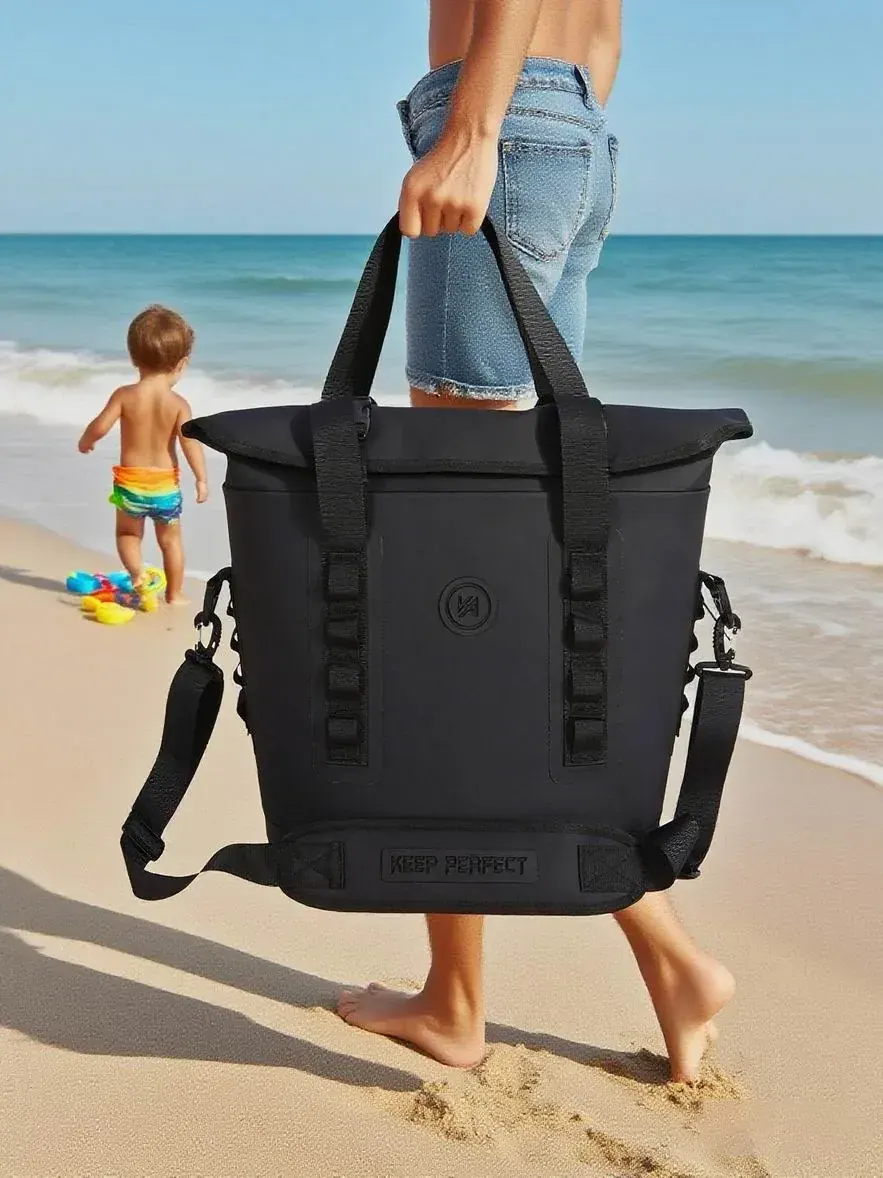
Slow play is a design constraint. A player should reach a glove, ball, towel, bottle, and rangefinder in 30 seconds without unpacking the dry layer. Put the bottle in a side pocket that retains a 70–85 mm diameter container, place the rangefinder in a 0.8–1.0 L padded pocket above the splash zone, and give the wet towel an external loop or drain pocket. The roll-top then opens only for clothing, food, or a larger weather change.
One-handed access must still retain contents. Test the bottle pocket by walking 500 m at a brisk pace, climbing 30 steps, and bending to tee a ball 20 times. The bottle must not rise more than 20 mm. Test the valuables pocket with gloves and cold hands: its pull should be 45–60 mm long, the opening at least 140 mm wide, and the item should come out without moving the shoulder strap.
| Access item | Target opening | Reach time | Retention check |
|---|---|---|---|
| 1 L bottle | 70–85 mm diameter pocket | Under 10 seconds | 500 m walk, no rise over 20 mm |
| Rangefinder | At least 140 mm wide | Under 15 seconds | Padded, above lower 120 mm |
| Wet towel | External loop or drain zone | Under 10 seconds | Cannot contact phone pocket |
| Spare glove | Flat 180 × 120 mm sleeve | Under 20 seconds | Opens with rain gloves |
| Rain jacket | Main chamber, full-width top | Under 30 seconds | 3-turn closure restores easily |
Colour coding can reduce search time without adding parts: blue pull for water, yellow for valuables, and grey for the wet zone. Keep pulls visually distinct at 2 m and tactilely different when covered in rain. Avoid 6 small pockets that each hold almost the same object; a 3-zone system is faster to learn and easier to inspect.
Wet-and-Dry Separation Through the Back Nine
By the ninth hole, the towel is wet, one glove may be soaked, and a jacket may be damp on the outside. A waterproof main body protects dry items only if wet pieces do not re-enter it. Use an external mesh or coated drain pocket of 2–4 L with two openings at least 8 mm across. Put the damp glove there, not beside the phone. If the rain jacket must return to the main opening, give it a separate 5 L roll pouch.
Moisture generated inside also matters. A sealed chamber traps the water carried on clothing and the water vapour released by warm food or towels. Open the pack for 5 minutes at the clubhouse, remove the insert or base board, and air it for 8 hours after a wet round. Do not store a tightly rolled pack in a vehicle where temperatures may exceed 50°C; repeated heat and moisture shorten coating life.
A dark lining makes a black glove almost invisible. A light grey or pale blue interior improves contrast without showing every small mark, and a 180–220 mm opening gives enough light for quick checks. Keep any stitched organiser above the lower 120 mm splash zone, and seal its attachment if it penetrates the main chamber. The cleanest wet boundary uses external webbing rather than new holes in the shell.
Visibility, Weather Decisions, and Course Safety
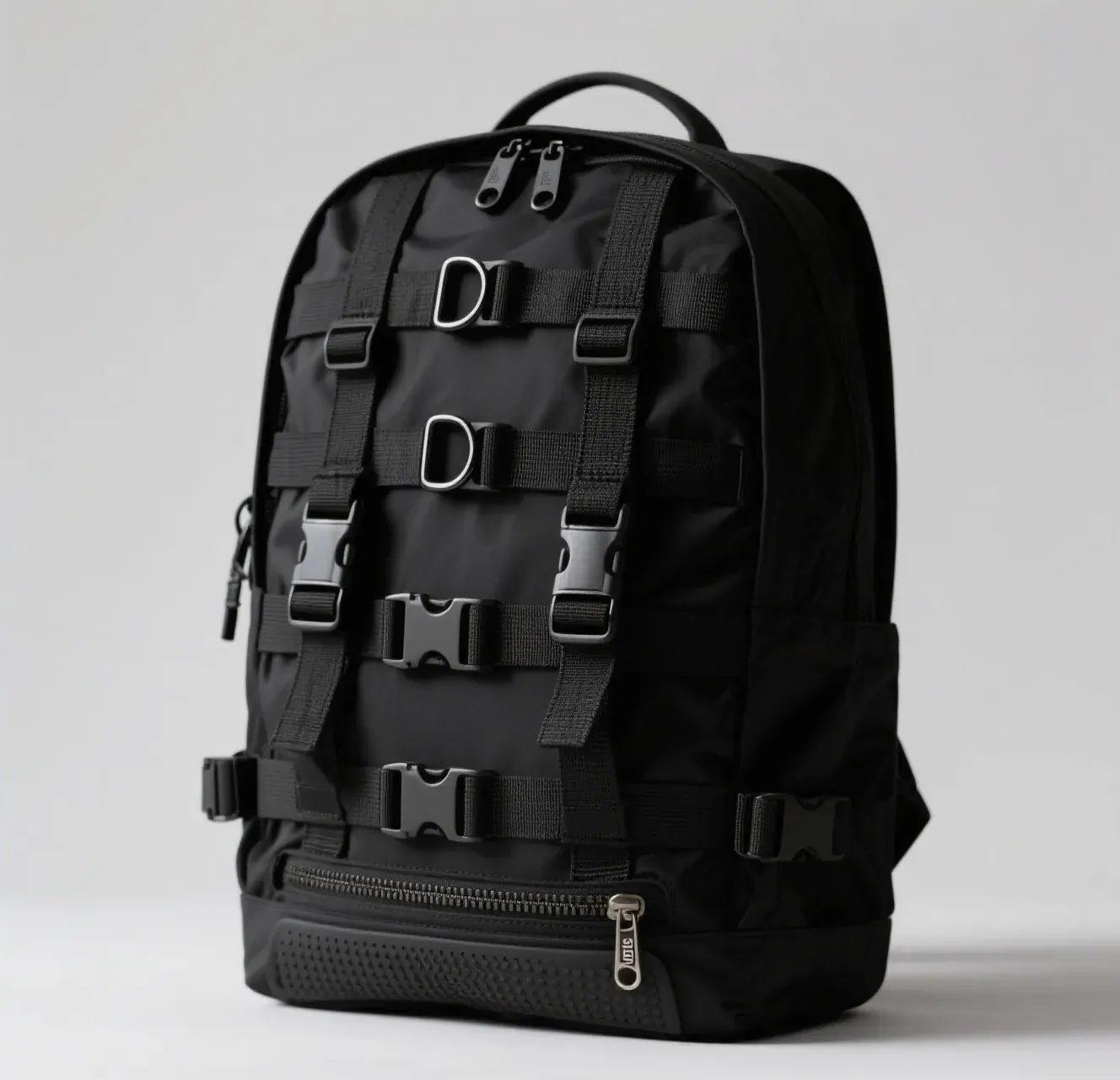
Rain often arrives with low light, vehicle movement, and reduced contrast. Use 100–200 cm² of reflective material on the rear and both strap faces, positioned where a hood does not cover it. A bright shell colour may improve recognition, but it is not a substitute for reflective detail under headlamps. Check the loaded pack from 50 m in rain, because a folded jacket or towel can hide a strip that was visible on an empty sample.
A waterproof pack is not permission to remain outside during lightning or severe weather. Operators and players should follow local course instructions and current forecasts; in the United States, NOAA weather information provides authoritative weather resources. Pack design should support a quick exit: keys and phone accessible in 15 seconds, both hands free, and no loose towel capable of catching a cart or branch.
In cool wet conditions, prolonged exposure can reduce body temperature even above freezing. The CDC guidance on hypothermia explains warning signs and prevention. Carry one dry insulating layer in a sealed 5 L pouch, not merely another thin shirt. For a 4-hour walk at 5–10°C, that single dry layer is more valuable than 2 extra accessory pockets.
Run a Full-Round Approval Instead of a Showroom Check
A golf pack should be approved over the same cycle that reveals its weaknesses. Load 4.5 kg, including a full 1 L bottle, and begin with 20 practice swings. Walk 3 km, open the bottle pocket 6 times, reach the rangefinder 9 times, and remove the rain layer once. Add 30 steps and 10 bends to tee height. Repeat the swing check, then continue until total walking reaches at least 8 km or 4 hours.
Score comfort at 30, 120, and 240 minutes on a 1–5 scale for neck pressure, shoulder pressure, back heat, and side movement. Any score of 4 or 5 requires a measured correction rather than softer wording. Move the strap top by 10 mm, reduce bottle offset by 20 mm, or change foam density, then repeat the same route. A different route and load cannot verify whether the change worked.
| Round checkpoint | Action | Pass line | What it reveals |
|---|---|---|---|
| Start | 20 swings with 4.5 kg | No neck contact or buckle rub | Harness geometry |
| 3 km | 6 bottle reaches | Under 10 seconds each | Pocket access and retention |
| Front nine | 9 rangefinder reaches | Under 15 seconds each | Glove-friendly opening |
| 30 steps | Climb and descend | Movement under 30 mm | Compression and balance |
| 8 km or 4 h | Repeat 20 swings | Comfort score no worse than 3 | Fatigue and foam stability |
Use dry tissue in the main chamber during a wet approval round, with pieces under the closure, at 2 lower corners, and behind the organiser. Weighing each piece before and after to 0.1 g can separate a real small ingress from a wet hand touching the lining. Photograph the closure immediately after every access event so the review can distinguish a product issue from an incomplete roll.
Benchmark the final sample against two different body styles from the best waterproof backpack overview, but keep the golf-specific verdict independent. A larger hiking body may carry more and still lose because it restricts rotation; a tiny running vest may move well and still fail to separate a wet towel. The chosen 18–24 L pack must win on the complete course routine.
Turn the Course Routine into a Purchasing Brief
A measurable brief begins with a 22 L nominal body, 4 kg test load, 3-turn roll-top, 1 L bottle fit, and 30-second access routine. Add a 2 km walk, 20 practice swings, 30 stair steps, and the agreed rain test. Acceptance lines should include no strap contact within 20 mm of the neck, lateral movement under 30 mm, no wet tissue in the main chamber, and no bottle rise above 20 mm.
QUANZHOU JUNYUAN BAGS supports programmes at MOQ 500 pcs per design and colour, with samples in 6–10 working days and bulk in 35–50 days. AQL 2.5 inspection can cover capacity, finished weight, closure turns, strap spacing, pocket dimensions, and water checks. Work follows BSCI and ISO 9001 systems, includes REACH and California Prop 65 material screening, and ships FOB Xiamen or DDP to more than 100 countries.
A course-load grid can be reviewed. Send the target 18–24 L size, bottle diameter, rangefinder dimensions, loaded mass, and access sequence to service@junyuanbags.com. A useful first sample should be walked for one complete wet round, not approved after a tabletop inspection.
Before final release, repeat the pocket routine with cold wet hands and a waterproof glove. Ten volunteers should each find the bottle, rangefinder, spare glove, keys, and jacket without coaching; at least 9 should complete every item within its stated 10–30 second window. If they choose the wrong pocket, the problem is information design rather than user error. Adjust pull colour, pocket height, or tactile shape and run the same blinded sequence again.
The short answer is that a golf walking pack succeeds by disappearing from the swing while remaining fast at every stop. Hold the body below 800 g, the load below 6 kg, and the width near 300 mm; provide one dry chamber and one draining zone; then prove access in 30 seconds and comfort over 8–12 km.
People Also Ask
What capacity is best for a rainy golf walking backpack?
Eighteen to 24 L works for a 4-hour course walk with a rain layer, spare socks, 1 L of water, food, rangefinder, phone, gloves, balls, and a wet-towel zone. Choose 24 L only if 18 L cannot close with 3 full roll turns.
How light should a golf day pack be?
About 550–800 g empty is a practical range. Below 500 g, support and pocket protection may become sparse; above 800 g, the bag uses too much of a sensible 6 kg all-day load budget.
Will backpack straps interfere with a golf swing?
They should not if curved straps are 55–70 mm wide, clear the neck by at least 20 mm, and the body stays below roughly 300 mm wide. Confirm with 20 loaded practice swings before a 2 km test walk.
Where should a wet golf towel go in rain?
Use an external loop or a 2–4 L draining pocket with two openings of 8–12 mm. Keeping the towel outside prevents it from raising humidity around a phone, rangefinder, spare glove, and dry layer.
Does a golf backpack need an IPX7 rating?
Usually no. IPX5-to-IPX6-level protection is more relevant for steady or wind-driven rain. IPX7 adds value only where temporary immersion is plausible and normally brings a heavier closure with higher opening force.
How long should I test a golf backpack for comfort?
Walk at least 2 km and make 20 practice swings at the real 4–6 kg load. A full 4-hour course trial is better because strap pressure, bottle imbalance, and access frustration often appear after the first hour.
Frequently Asked Questions
Q1. Can I carry a waterproof backpack while playing golf?
Yes, when it is narrow, light, and stable enough not to restrict rotation. Keep width near 300 mm, empty mass at 550–800 g, loaded mass under 6 kg, and shoulder edges at least 20 mm from the neck.
Q2. What should I pack for a rainy golf walk?
Pack a waterproof jacket, spare socks, cap, dry glove, 1 L of water, food, phone, keys, medication, rangefinder, balls, and a separate place for a wet towel. The full set normally needs 18–24 L.
Q3. Is a roll-top better than zippers for course rain?
A 3-turn roll-top gives a simple dependable main chamber for sustained rain. Use one protected quick pocket for the rangefinder or balls so routine access does not require opening the dry clothing zone.
Q4. How do I keep my rangefinder dry?
Place it in a padded 0.8–1.0 L pocket above the lower 120 mm splash zone, with an opening at least 140 mm wide. During heavy rain, add a small sealed inner pouch rather than relying on quick access alone.
Q5. Should a golf walking backpack have a hip belt?
A narrow 25–35 mm stabilising belt can help on hills, but a structured belt is normally unnecessary below 6 kg. Side compression and correct shoulder spacing often control movement with less interference.
Q6. How do I stop a water bottle falling out?
Match the pocket to a 70–85 mm bottle, add upper elastic retention, then walk 500 m, climb 30 steps, and bend 20 times. The bottle should not rise more than 20 mm during that check.
Q7. What colour lining is easiest to use in low light?
Light grey or pale blue creates contrast with dark gloves, keys, and electronics without showing every small mark. Pair it with an opening around 180–220 mm wide so natural light reaches the organiser.
Q8. How should I dry the backpack after a wet round?
Empty every pocket, remove the base board if possible, rinse mud from the shell, and air the open pack for about 8 hours away from direct heat. Never leave it tightly rolled in a hot vehicle.
Q9. Can the same pack work for commuting?
Yes, although a golf layout values shoulder rotation and wet-towel separation more than a laptop sleeve. A removable 15-inch computer insert can make a 20–22 L body useful on weekdays without compromising the course layout.
Q10. What are the MOQ and timing for a golf walking pack?
The normal baseline is 500 pcs per design and colour, samples in 6–10 working days, and bulk in 35–50 days. Approve it through a loaded 2 km walk and 20-swing check, not an empty visual review.