A fishing backpack with a rain cover is the right buy when the water comes from above and the wrong buy when it comes from below: a well-built cover lifts an IPX1-2 shell to an IPX3-4 package for 90-180 g of fabric, and it does nothing at all when the pack is set down in 200 mm of standing water or dropped over the gunwale. Seven 2026 builds were assessed on deployment time of 8-20 seconds, cover fabric hydrostatic head of 1,500-5,000 mm, usable volume of 25-45 litres, and empty weight of 910 g to 1.78 kg. The recommendation is the 35-litre ridge build that deploys in 9 seconds on a 210D PU 3,000 mm cover at a 30-36 USD FOB Xiamen band. MOQ is 500 pcs per design and colour, samples take 6-10 working days, and bulk runs 35-50 days.
What a Rain Cover Actually Buys You
A cover buys water protection from the sky and nothing else. That distinction matters more than any marketing copy about storm-proof shells, because the two failure modes an angler meets are rain falling on the pack and water rising around it, and a cover addresses only the first. Setting a covered pack down in a puddle still floods it through the base seam, and leaning it against a wet gunwale still wets through the back panel.
| Exposure | Shell alone | Cover deployed | Welded IPX6 shell |
|---|---|---|---|
| Light drizzle, 1 h | Damp outer, dry inside | Dry | Dry |
| Sustained rain, 4 h | Wet through at the seams | Dry up to about 4 h | Dry |
| Set down in 200 mm of water | Flooded through the base | Flooded through the base | Dry for about 30 min |
| Dropped over the side | Total loss of contents | Total loss unless the pack floats | Recoverable if it floats |
| Salt spray on a boat | Damp, hardware at risk | Dry shell, hardware still exposed | Dry shell, hardware still exposed |
The honest reading of that table is that a cover is a mid-tier answer at a low-tier price. A 1,500-5,000 mm cover adds roughly 2.80-6.50 USD to the build cost of a sewn 210D shell, while moving to RF-welded construction and a genuine IPX6 rating typically adds 9-14 USD. Retail buyers working to a shelf price under 60 USD will find the covered pack is the only way to advertise water resistance honestly, and that is exactly the segment where this list sits.
The Two Numbers That Decide Everything
Deployment time and hydrostatic head decide whether a cover gets used at all. The first is behavioural: a cover that takes longer than about 20 seconds to fit does not get fitted, because rain usually starts while hands are busy with a rod, and by the time the angler stops, the pack is already wet. The second is physical: below about 1,500 mm of hydrostatic head the cover wets through under the pressure of a pack strap pressing it against the contents.
| Element | Target number | Below target | Why it fails |
|---|---|---|---|
| Deployment time | Under 15 s, ideally 8-12 s | Over 25 s | Anglers stop using it in the first month |
| Cover fabric head | PU coated, 3,000 mm or more | Under 1,500 mm | Wets through where straps press |
| Cover denier | 190T to 210D ripstop | Below 190T | Tears on the first branch |
| Attachment | Tethered plus elastic hem | Loose in a pocket | Lost within one season at 12-18 percent |
| Drainage | Two eyelets of 8 mm | Sealed hem | Cover becomes a water bag at the base |
| Coverage | Over the whole harness face | Front panel only | Straps soak and drip into the pack |
Tethering is the cheapest quality signal on the list. A cover that lives loose in a pocket is separated from the pack within a season at a rate most brands quietly accept, and a 0.35 USD elastic tether with a small clip removes the problem. Drainage eyelets are the second detail that separates a considered build from a cost-cut one: a sealed cover hem collects paddle drip and rain running down the back panel, and a full water bag at the base does more harm than the rain it stopped.
Carry Comfort With and Without the Cover
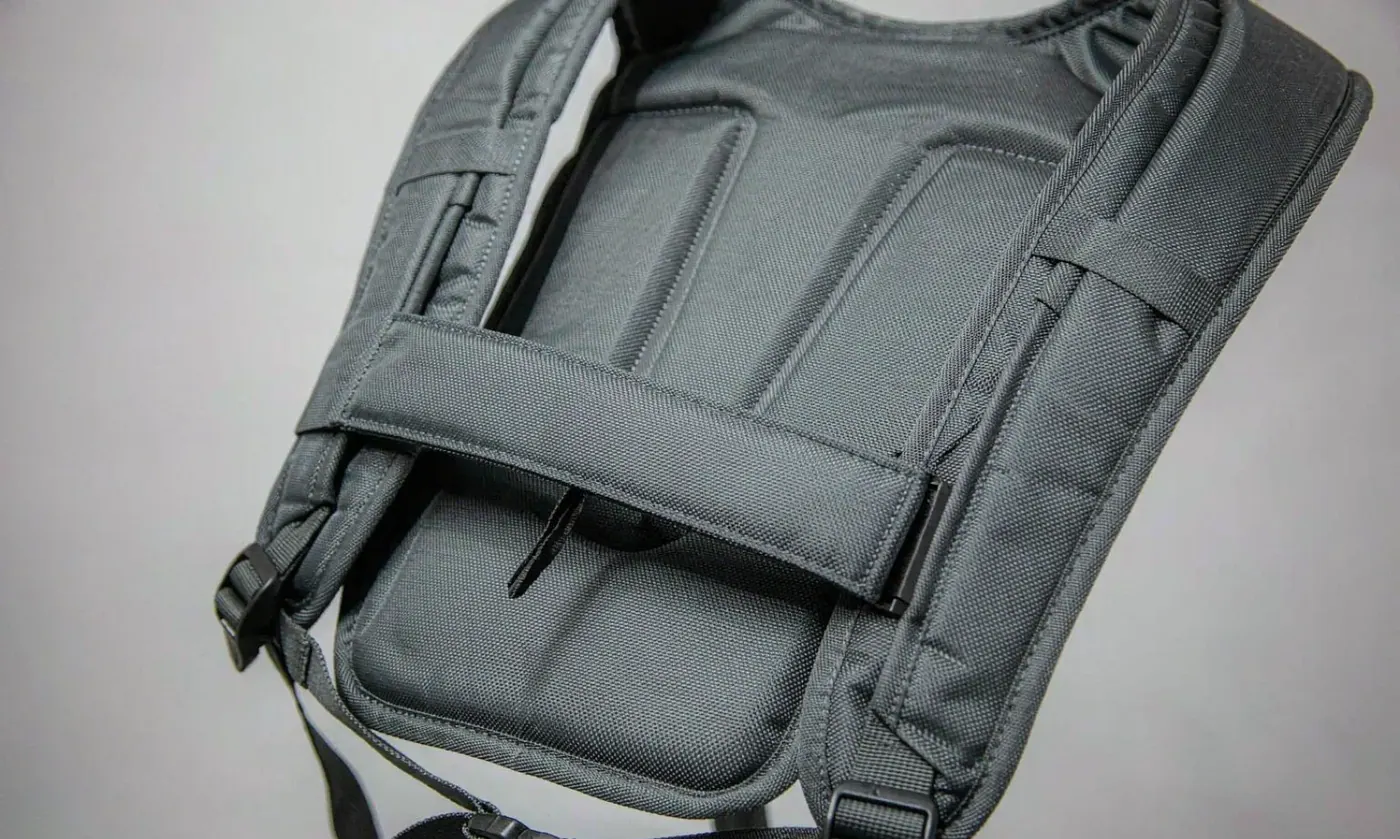
A cover changes the silhouette of a pack and it changes where water sits. Pack builders who test comfort without the cover fitted routinely ship a product that feels different once it is used as intended, because the cover pulls the load slightly away from the back and shifts the centre of mass rearward by 15-25 mm. Harness geometry should therefore be specified and tested with the cover on.
The strap itself deserves attention in wet conditions. Closed-cell foam padding absorbs under 2 percent water by volume, while open-cell padding can take up more than 20 percent and a soaked strap adds 100-200 g where it is least wanted. A hunting-grade waterproof hunting backpack uses the same hydrophobic foam logic, and it is worth asking for it in a fishing build because both sit on the shoulder through long wet sessions.
The Seven Builds at a Glance
Volume is usable internal capacity with trays fitted rather than the theoretical litre figure. Deployment time is measured with the pack on the back and hands cold, which is the realistic condition. Head is the hydrostatic head of the cover fabric in millimetres. Weight is empty with the cover stowed. The difference between these bands and a fully welded alternative is unpacked in the waterproof versus water resistant comparison.
| Build | Volume | Cover head | Deploy time | Weight | FOB band |
|---|---|---|---|---|---|
| Ridge 35 | 35 L | PU 3,000 mm | 9 s | 1.28 kg | 30-36 USD |
| Bankrunner 28 | 28 L | PU 2,000 mm | 12 s | 0.91 kg | 22-27 USD |
| KayakLink 40 | 40 L | PU 4,000 mm plus welded floor | 11 s | 1.55 kg | 34-42 USD |
| TrayStack 38 | 38 L | PU 3,000 mm | 10 s | 1.42 kg | 26-33 USD |
| SaltSafe 42 | 42 L | PU 5,000 mm | 14 s | 1.68 kg | 38-48 USD |
| Wader 30 | 30 L | PU 2,500 mm | 8 s | 1.05 kg | 28-34 USD |
| TrailPack 45 | 45 L | PU 4,000 mm, two stage | 16 s | 1.78 kg | 36-44 USD |
1. Ridge 35: Best Overall
Thirty-five litres on a 210D ripstop shell with a PU 3,000 mm cover that deploys from a lid pocket in 9 seconds, holding three deep 3700 trays plus a rain jacket, and weighing 1.28 kg empty. The FOB band is 30-36 USD and it is the configuration most buyers should sample first.
It leads because both decisive numbers are right: 9-second deployment keeps the cover in use rather than abandoned in a pocket, and 3,000 mm of head survives four hours of steady rain including the pressure zones under the straps. The tether is sewn into the cover rather than clipped, which removes the most common loss point, and two 8 mm eyelets at the hem let water leave instead of pooling at the base.
2. Bankrunner 28: Best Light Day Build
Twenty-eight litres at 910 g with a PU 2,000 mm cover deploying in 12 seconds, holding two 3600 trays and a light shell layer, at a 22-27 USD band. It suits the angler who walks a bank or a canal for three or four hours and wants no more than that.
The compromise is stated plainly at point of sale: 2,000 mm of head holds about two hours of steady rain before the pressure zones under the straps begin to show dampness. That is acceptable for a day session where the forecast is checked, and it is not acceptable for an angler who fishes whatever the sky does. Buyers serving that customer should stock the next build up rather than absorb the return.
3. KayakLink 40: Best for Boats and Small Hulls
Forty litres combining a PU 4,000 mm cover with an RF-welded floor rated IPX6 in the lower 120 mm, deploying in 11 seconds, at 1.55 kg and a 34-42 USD band. The hybrid floor is the point of this build and it addresses the failure mode every cover fails: water in the bottom of a kayak.
A hybrid costs about 5.50 USD more than a sewn floor and it converts the worst common event from a total loss into a damp inconvenience. Setting the pack down in 80 mm of bilge water is routine rather than exceptional on a sit-on-top, and a sewn base wets through in roughly four minutes in those conditions. Pairing the hybrid floor with a cover above gives protection across both exposure directions for roughly two-thirds the cost of a fully welded shell.
4. TrayStack 38: Best for Tray Organisation
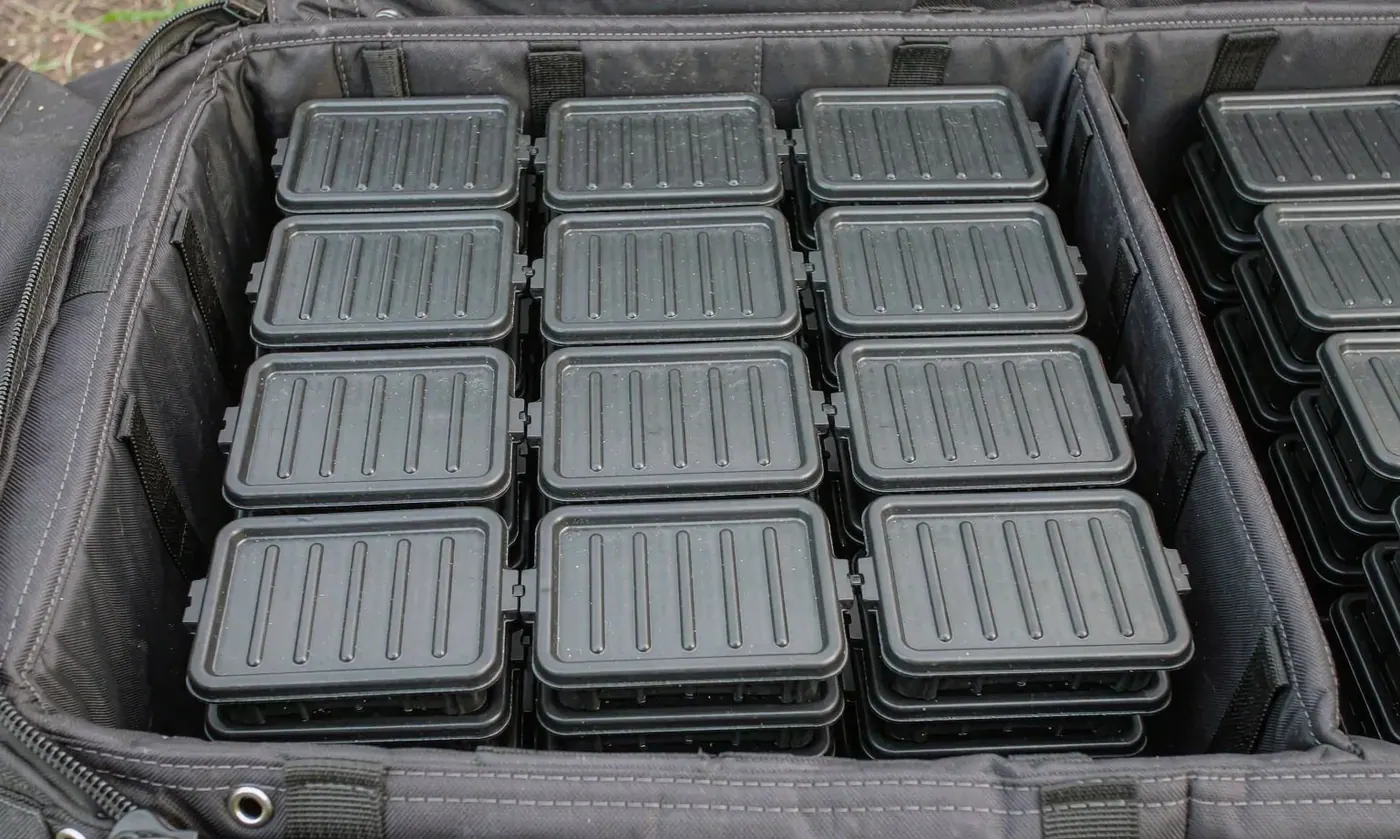
Thirty-eight litres with a moulded internal sleeve accepting four deep 3700 trays upright, a PU 3,000 mm cover deploying in 10 seconds from its own lid pocket, at 1.42 kg and 26-33 USD. The sleeve is what makes the cover useful, because an organised loadout is worth protecting and a jumble is not.
Two details lift this build above the category average. The cover stows in a dedicated lid pocket rather than the main compartment, which means it is accessible without unloading trays, and the sleeve has a 12 mm drainage channel at each corner so water that enters past a tray does not sit against the shell floor. Buyers comparing tray counts across the range should note that four deep trays is roughly 1.9 kg of tackle before the pack itself is considered.
5. SaltSafe 42: Best for Saltwater
Forty-two litres on a PU 5,000 mm cover with a corrosion-managed hardware set: 316 stainless springs, acetal buckles rather than zinc alloy, and a coated reverse-coil zip with a storm flap. Deployment is 14 seconds, weight is 1.68 kg, and the band is 38-48 USD.
Saltwater is where shell covers earn their premium, because the problem is not only the rain but the persistent wet that follows every session. A zinc buckle shows white corrosion after roughly 20 salt exposures and seizes by about 40, which turns a working pack into a bin within one season for a guide operating 120 days a year. Specifying acetal and 316 hardware adds about 2.20 USD and roughly triples hardware life in daily charter service.
6. Wader 30: Best for Wading and Walking
Thirty litres with a convertible strap that moves from a single-sling carry to a two-shoulder carry, a PU 2,500 mm cover deploying in 8 seconds, at 1.05 kg and 28-34 USD. It is the answer for the angler in chest waders who is moving constantly and wants the pack swung round rather than taken off.
Eight seconds is the fastest deployment on this list and it comes from design rather than luck: the cover is pulled from a hip-level pocket by the same hand that swings the pack, so there is no requirement to remove it. The trade-off is honest, because a convertible carry spreads load less effectively than a fixed harness and anything above roughly 6 kg gets uncomfortable after two hours. Anglers carrying more tackle than that belong in the tackle backpack range instead.
7. TrailPack 45: Best for Hike-In Water
Forty-five litres with a load-lifter harness taking up to 14 kg, a two-stage cover with a PU 4,000 mm outer and a secondary PU 2,000 mm flap over the harness face, deploying in 16 seconds, at 1.78 kg and 36-44 USD. It suits an angler who walks 5 km or more to a beat and then fishes all day in weather.
Sixteen seconds is at the upper limit of acceptable and it is the price of covering the harness face rather than the front panel only. That extra panel is the right choice at this volume, because a soaked harness drips directly down the back and into the pack through the top opening, which is precisely how a well-covered pack still ends up wet inside. The load lifters matter more than they appear to: at 12 kg, a harness with lifters reduces perceived shoulder load noticeably over a 5 km walk.
Testing Standards Behind Those Numbers
Ingress claims should be traceable rather than asserted. Degrees of protection against water are defined in the IEC 60529 enclosure code published by the International Electrotechnical Commission, and a cover-equipped pack that is honestly rated IPX3 or IPX4 can be defended to a retail buyer, whereas the phrase waterproof cannot. Fabric wetting and repellency behave differently again and are measured by spray test methods maintained by AATCC.
Abrasion of the shell and seam strength fall under methods published by ASTM International, and a cover spec should cite them explicitly because a cover that abrades through at the strap contact point fails silently. Requests should name the test, the cycle count, and the acceptance number rather than asking for a durable cover.
| Check | Method | Pass condition | Catches |
|---|---|---|---|
| Cover head | Hydrostatic head to a cited method, 5 samples | At or above 3,000 mm after 3 washes at 40 C | Coating that degrades in the first wash cycle |
| Deployment | Ten cycles, hands cold and wet | Under 15 s on the tenth | Elastic that relaxes after use |
| Tether pull | Pull to 8 kg, ten times | No stitch movement | Tether sewn into a single panel layer |
| Water bag test | Run 4 L of water down the back panel | Less than 15 mL retained after 5 min | Sealed hem with no drainage |
| Hardware salt cycle | 24 h salt mist, then rinse, repeat 10 times | No seizure, no red rust | zinc alloy hardware sold as stainless |
How the Cover Changes Packing
A covered pack is packed differently because the opening sequence changes. Anything needed in the first five minutes of rain should be reachable without unsealing the cover, which argues for a lid pocket, two side pockets, and a hip-belt pocket rather than a single cavernous main compartment.
- Keep one small dry pouch inside the main body holding the phone, licence, and keys, because the cover protects them only until the pack is opened in rain.
- Put spare clothing at the bottom in a secondary dry bag rated IPX6 rather than trusting the cover at the base where water pools.
- Store the rain jacket in the lid pocket, not the main compartment, so it can be reached inside the 15-second window before hands are wet.
- Leave 30-40 mm of headroom at the top when packing, because a cover pressed tight over a full pack puts the shell fabric in tension and pulls water through at the pressure points.
- Check the hem is pulled below the base of the pack rather than resting on it, because a hem that sits proud funnels water underneath and defeats the entire exercise.
The last of those habits is worth stating at the point of sale, because it is the single most common reason a genuinely good cover appears to fail. A hem that stops 20 mm short of the base directs rain under the cover and against the shell, and the angler concludes the cover leaked when it did nothing of the sort.
Approval Protocol Before Signing Off a Sample
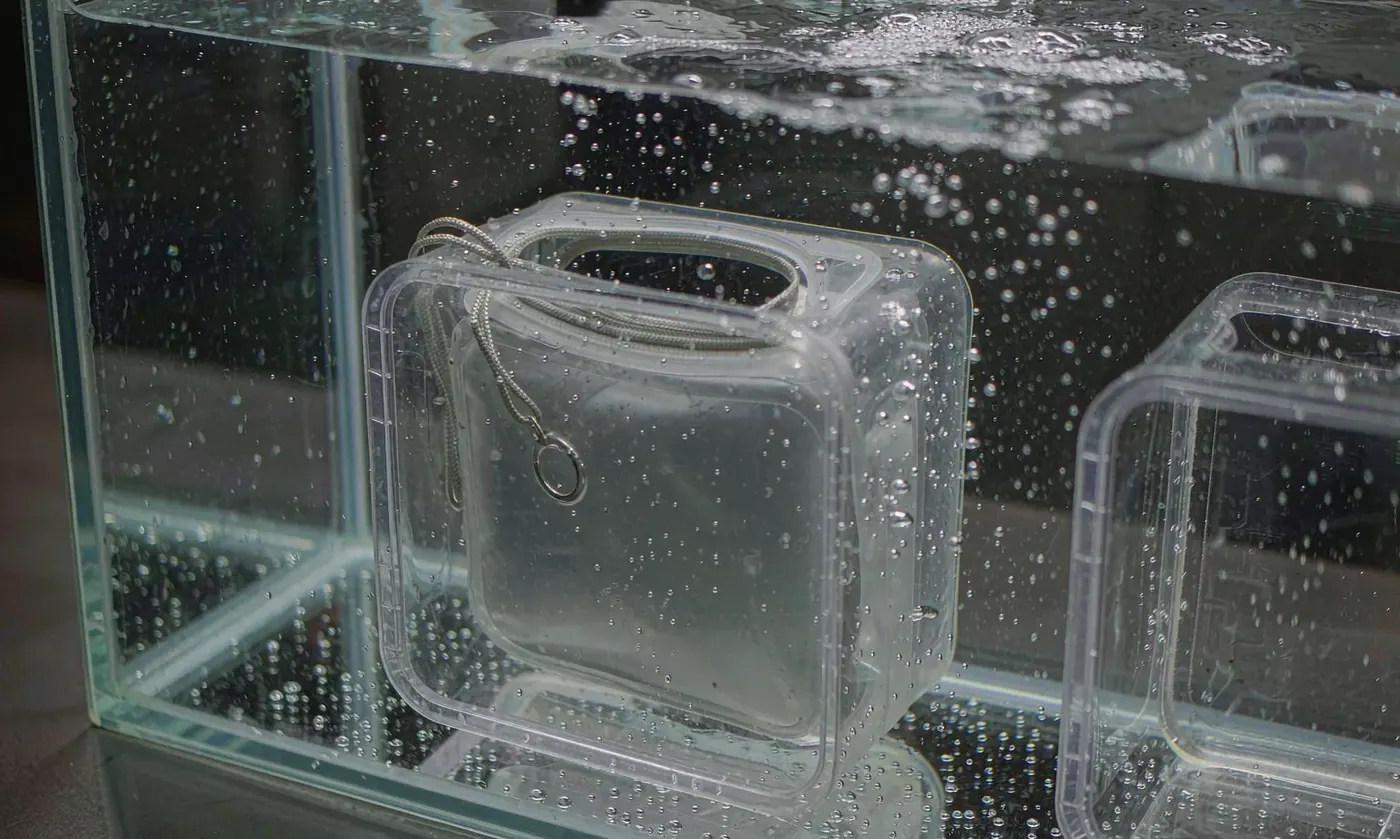
Sample approval for a covered pack should include one deliberate immersion even though the cover is not intended for it, because it establishes where the honest boundary lies and it tells the brand what claims the packaging can carry. A 30-minute test at 150 mm depth with the pack unloaded is enough to show whether the base seam holds, and it prevents the far more expensive mistake of approving a pack whose label later has to be withdrawn.
The remaining checks are quick and worth doing on the first two samples from any new programme rather than waiting for pre-shipment inspection.
Programme, Pricing, and Compliance
A rain-cover programme starts at MOQ 500 pcs per design and colour, which is the baseline across the range and is negotiable on colour split above 2,000 units. Sampling takes 6-10 working days from confirmed artwork, and colourways added later in the same tool add about 4 days rather than restarting the clock.
| Programme item | Baseline | Note |
|---|---|---|
| MOQ | 500 pcs per design and colour | Colour split negotiable above 2,000 pcs |
| Sampling | 6-10 working days | Add 4 days per extra colourway in the same tool |
| Bulk | 35-50 days | From approved sample and deposit |
| Inspection | AQL 2.5 | Include head test, deployment, tether pull, hardware salt |
| Compliance | REACH and California Prop 65 | Screen shell, coating, cover film, inks, hardware |
QUANZHOU JUNYUAN BAGS has run waterproof bag programmes since 2014, with the founding team working in the trade since 2004. Monthly output of 200,000 units is verified by SGS, and BSCI and ISO 9001 systems structure the workflow. Materials are screened for REACH and California Prop 65, and every bulk order is inspected at AQL 2.5 before shipment.
A cover programme brief can be emailed to service@junyuanbags.com with volume, cover head, deployment target, hardware level, and quantity. FOB Xiamen or DDP service to more than 100 countries follows an approved sample and a complete test record. Buyers who want the welded alternative rather than a cover should start from the fully waterproof fishing backpack ranking.
People Also Ask
Does a rain cover actually keep a fishing backpack dry?
It keeps it dry from rain falling on it for roughly 2-4 hours depending on cover head, and it does nothing against water rising from below. Packages honestly rated IPX3 or IPX4 in steady rain are typical.
How much hydrostatic head should a backpack rain cover have?
3,000 mm or more for all-day fishing. Below 1,500 mm the cover wets through at the strap pressure points in about two hours of steady rain.
How fast should a rain cover deploy?
Under 15 seconds, and ideally 8-12 seconds. Beyond about 25 seconds anglers stop fitting it at all because hands are busy with a rod when rain starts.
Why do rain covers get lost?
An untethered cover stowed loose in a main compartment is separated from the pack within one season at a rate around 12-18 percent. A 0.35 USD elastic tether fixes it.
Can I put a covered backpack down in shallow water?
No. A sewn base floods regardless of the cover, typically within four minutes in 80 mm of bilge water. Only a welded lower shell rated IPX6 survives that exposure.
Is a rain cover better than buying a welded waterproof pack?
Up to about 60 USD retail, yes, because a cover adds 2.80-6.50 USD to the build while genuine welded IPX6 construction adds 9-14 USD. Above that price the welded option is the better product.
Frequently Asked Questions
Q1. What is the best fishing backpack with a rain cover?
A 35 litre build on 210D ripstop with a PU 3,000 mm cover deploying in 9 seconds, three 3700 trays, tethered cover with drainage eyelets, at 1.28 kg empty and a 30-36 USD FOB band.
Q2. What hydrostatic head do I need in a cover?
Aim for 3,000 mm or above. That holds roughly four hours of steady rain including the high-pressure zones where straps press the cover against the contents.
Q3. How long should it take to fit a rain cover?
Under 15 seconds with cold, wet hands. Anything past 25 seconds does not get used, which is the most common reason anglers report a cover failing.
Q4. Do rain covers work in a kayak?
Against spray and rain, yes. Against the water that collects in the hull, no. A hybrid build with a welded floor in the lower 120 mm handles both and costs about 5.50 USD more.
Q5. Should the cover be tethered to the pack?
Yes. An untethered cover is lost within a season at roughly 12-18 percent, and a sewn-in elastic tether with a clip costs about 0.35 USD to specify.
Q6. Why does my pack get wet inside even with the cover on?
Three usual causes: the elastic hem sits short of the base and funnels water underneath, the harness face is uncovered so straps soak and drip in through the top, or the cover was fitted after the contents were already wet.
Q7. Do I need drainage in a rain cover?
Yes, two eyelets of about 8 mm at the hem. A sealed hem turns the cover into a water bag at the base and does more harm than the rain it stopped.
Q8. What hardware survives saltwater use?
316 stainless springs and acetal buckles rather than zinc alloy. Zinc shows white corrosion after about 20 salt exposures and seizes by 40, which is one season for a full-time guide.
Q9. How many trays fit in a covered tackle backpack?
Three to four deep 3700 trays in a 35-38 litre build. Four trays weigh about 1.9 kg before the pack itself, which is why larger builds need a load-lifter harness.
Q10. Can a covered pack be rated IPX?
Yes, honestly at IPX3 or IPX4 when the cover is deployed, following the enclosure code in IEC 60529. The claim should state that the rating applies with the cover fitted.
Q11. What is the MOQ and lead time for a rain cover programme?
MOQ is 500 pcs per design and colour, samples take 6-10 working days plus about 4 days per extra colourway, and bulk runs 35-50 days from approved sample and deposit.