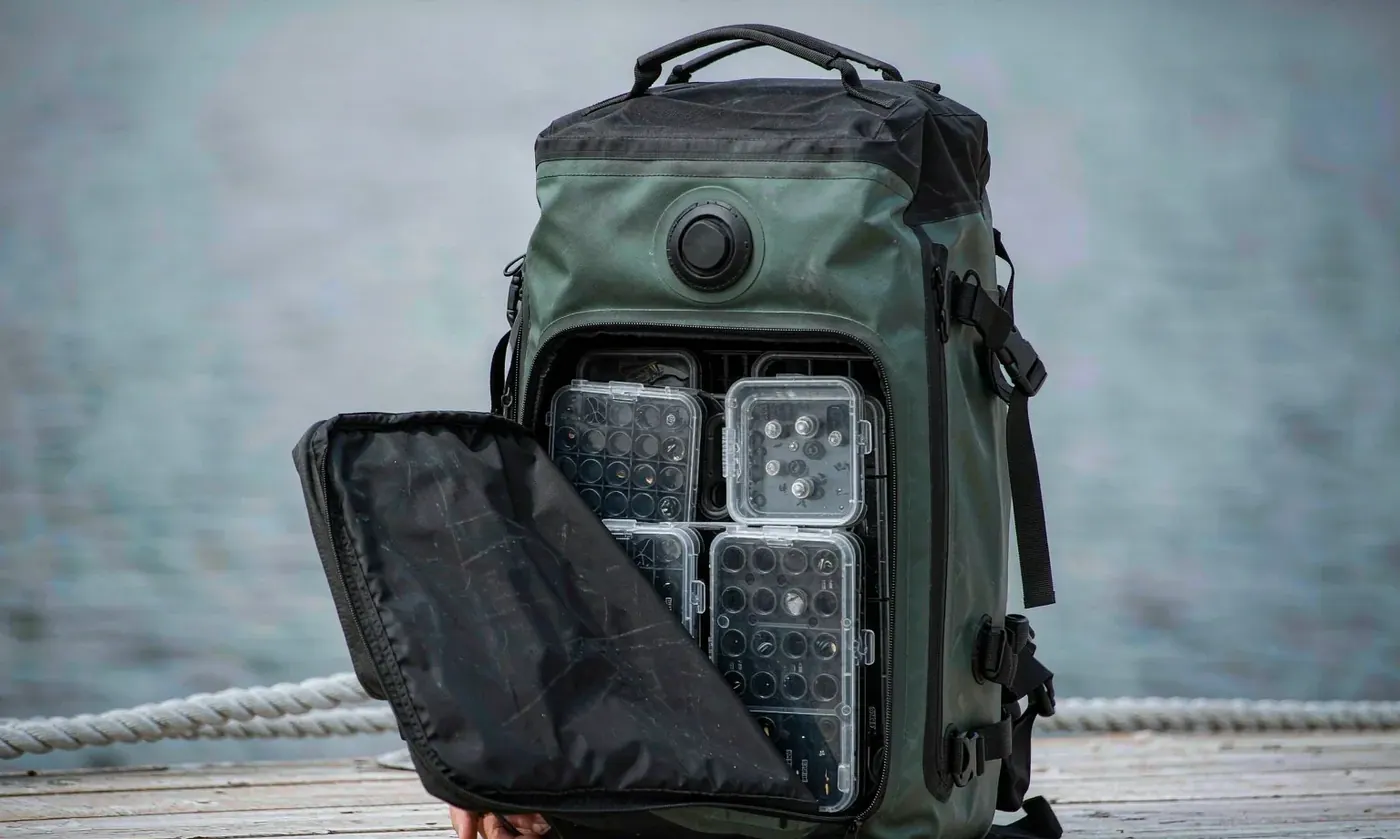
A tray-first bass fishing bag is the faster way to carry bass tackle: four to six 3700-size trays held vertically in a soft bag put any lure in hand in under fifteen seconds, where the same kit in a stack of hard boxes needs thirty to forty seconds and a flat surface to open on. The specification that works is a 35 to 45 litre bag with a moulded base, tray slots of at least 360 millimetres clear internal width, and an IPX6 rating so deck wash and spray stay outside. Loaded for a club tournament the bag weighs 6 to 8 kilograms, which is still comfortable over the three hundred metre carry from parking to ramp. Programme buyers should plan on 500 pieces per design and colour, six to ten working days for a sample, and thirty-five to fifty days for the bulk run.
What a Bass Angler Really Carries
Bass tackle is heavier and more varied than most anglers expect once it is weighed rather than guessed at. A tournament-ready kit runs to 40 to 80 hardbaits, 20 to 30 packs of soft plastics, six to ten types of terminal tackle, four or five spools of line, and a tool roll that includes pliers, a scale, a hook sharpener and a release tool. Weighed on a scale, that comes to between 5.5 and 9 kilograms before water, food or rain gear is added.
The weight matters because it decides the bag, not the other way round. A 25 litre bag will physically accept four 3700 trays, but it will be at 90 percent of its volume with no room for a jacket, and the seams and zips will be worked at their limit for the whole season. Sizing from the load outward, rather than from the bag inward, is the single change that stops people buying twice.
| Item group | Typical count | Weight range | Where it should live |
|---|---|---|---|
| Hardbaits, crankbaits and jigs | 40 to 80 pieces | 900 to 1400 g | Two to three 3700 trays |
| Soft plastics in original packs | 20 to 30 packs | 700 to 1000 g | One deep 3700 tray or a wide pocket |
| Terminal tackle, hooks and weights | 6 to 10 types | 400 to 700 g | One 3600 tray with adjustable dividers |
| Line spools and leader material | 3 to 5 spools | 300 to 450 g | Top pocket, away from hooks |
| Pliers, scale, hook file | 4 to 6 tools | 600 to 900 g | External sheath pockets or a tool holster |
| Electronics, phone, licence | 2 to 4 items | 200 to 350 g | Lined dry pocket highest in the bag |
Tray Geometry: 3600 and 3700 in Millimetres
Two tray sizes dominate bass fishing and the difference between them is worth understanding before a bag is chosen. A standard 3600 tray measures roughly 279 by 183 by 44 millimetres; a standard 3700 tray measures roughly 356 by 229 by 51 millimetres. That is 27 percent more plan area and about 60 percent more internal volume for a tray only 77 millimetres longer, which is why experienced bass anglers standardise on 3700 for hardbaits and keep 3600 for terminal tackle.
The bag has to match the tray in two dimensions, not one. Clear internal width must exceed 356 millimetres for a 3700 to slide in without forcing, and the slot height must exceed 51 millimetres plus the lip, so a working slot is 60 millimetres of clear opening. Bags advertised as holding four trays frequently hold four 3600 trays only; the honest check is to measure the slot, not the marketing count.
| Tray size | Outer dimensions | Usable depth | Hardbaits per tray | Best role in a bass bag |
|---|---|---|---|---|
| 3600 standard | 279 x 183 x 44 mm | 38 mm | 12 to 18 | Terminal tackle, hooks, weights |
| 3600 deep | 279 x 183 x 70 mm | 64 mm | 10 to 14 plus packs | Soft plastics in original packaging |
| 3700 standard | 356 x 229 x 51 mm | 45 mm | 20 to 28 | Crankbaits, jerkbaits, topwater |
| 3700 deep | 356 x 229 x 85 mm | 78 mm | 18 to 24 plus bulk | Swimbaits and large glide baits |
| 3700 shallow | 356 x 229 x 32 mm | 26 mm | 14 to 20 | Spinnerbaits and buzzbaits laid flat |
Why Tray-First Beats Pocket-First
A pocket-first bag looks organised on a shop floor and fails on the water, because pockets hide contents behind zips and flaps and force the angler to remember where things were put. A tray-first bag makes the contents visible the instant the front panel opens, and visibility is what compresses decision time when a fish is feeding and the bite window is ninety seconds long.
- Trays come out of the bag and go on the deck, so the angler works from an open tray rather than reaching into a dark cavity.
- A tray can be swapped entirely between sessions: one tray for pre-spawn, one for summer deep water, one for fall topwater.
- Water that gets into a tray stays in the tray, so a wet tray protects the rest of the bag instead of wetting everything.
- Hooks stay in compartments rather than loose, which removes the most common source of punctured fingers and cut bags.
- Inventory is visible at a glance in the boat, so restocking before a tournament takes two minutes instead of twenty.
There is one honest trade-off. A tray-first bag is heavier empty than a pocket-first bag by roughly 400 to 700 grams because of the stiffened tray cavity and the moulded base, and it is less compressible when the angler wants to travel light. For anyone fishing a handful of times a year with six lures, that trade is not worth making; for anyone running a tournament calendar, it is not a trade at all.
Tournament Timing: The Sixty-Second Changeover
Tournament bass fishing is a sequence of decisions made under a clock, and the bag either supports that clock or fights it. A changeover means going from one presentation to another: swapping a deep-diving crankbait for a jig, retying, and being back in the water. Everything the bag does should be judged against the sixty seconds that changeover is allowed to take.
| Step in the changeover | Tray-first bag | Hard box stack | Pocket-first bag |
|---|---|---|---|
| Locate the next lure | 4 to 8 seconds, visible in open tray | 10 to 15 seconds, lids latched | 15 to 30 seconds, unzip and search |
| Remove and unhook the old lure | 5 to 8 seconds | 5 to 8 seconds | 8 to 12 seconds |
| Rig and trim the new lure | 10 to 15 seconds | 10 to 15 seconds | 12 to 20 seconds |
| Stow the spent tackle | 3 to 5 seconds, drop in tray | 8 to 12 seconds, latch the lid | 10 to 15 seconds, repack pocket |
| Total elapsed time | 22 to 36 seconds | 33 to 50 seconds | 45 to 77 seconds |
Across a five-hour tournament with twenty changeovers, the difference between a tray-first bag and a pocket-first bag is between eight and thirteen minutes of fishing time, which at a club level is often one extra fish. That is the practical argument, and it is measurable rather than a matter of taste. Anyone who wants the wider selection picture can compare current bass designs in the best bass fishing backpack round-up.
Boat, Bank and Kayak: Three Different Bass Setups
Bass is fished from at least three platforms and each one pulls the specification in a different direction. From a bass boat the bag lives on the deck and is opened constantly, so front access, a stiff base that does not collapse when set down in a wet footwell, and a light-coloured interior that makes dark lures findable are the priorities. Volume can run to 45 litres because the bag does not have to be carried far.
Bank fishing inverts that. The same kit has to be carried one to three kilometres, often over rough ground, so volume drops to 30 to 35 litres, the harness matters more than the tray count, and a hip belt that transfers 30 percent of the load off the shoulders is worth more than a fifth tray slot. Kayak bass fishing is a third case again: the bag has to fit a tankwell or a crate footprint, which usually caps length at about 400 millimetres and makes a low, wide shape better than a tall, narrow one.
Waterproof Ratings That Actually Matter on a Bass Boat
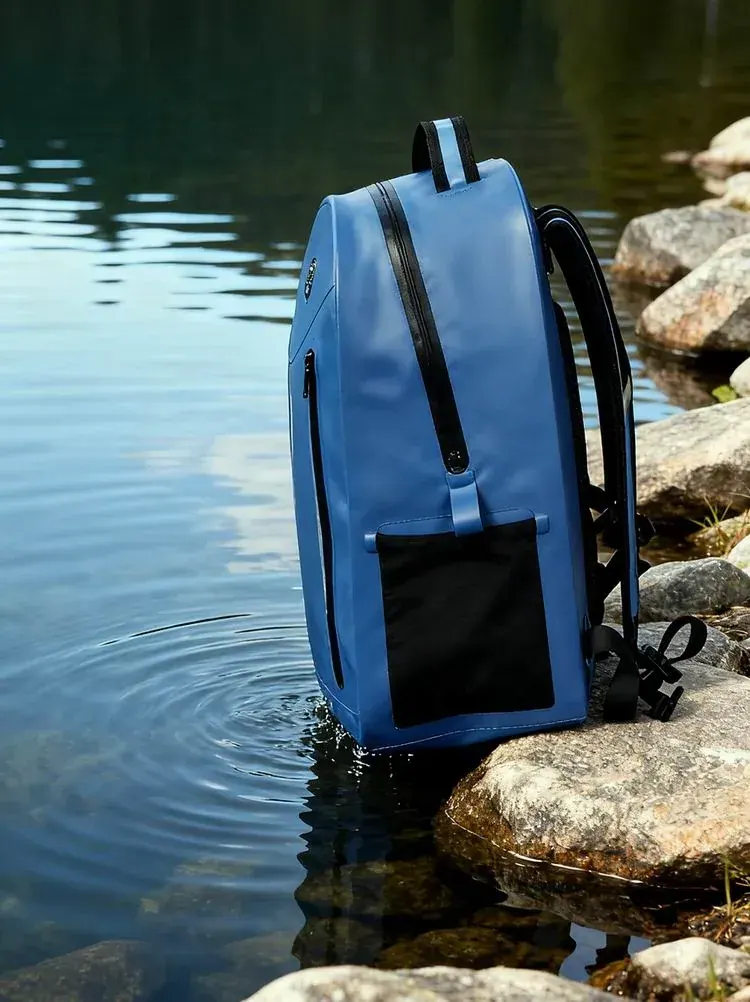
Bass bags do not need to survive immersion, but they do need to survive a deck wash, an afternoon of spray and a sudden squall, which puts the useful target at IPX5 to IPX6 rather than the IPX7 or IPX8 that submersible dry bags carry. IPX6 under IEC 60529 means the enclosure resists powerful water jets from any direction for at least three minutes at a flow of one hundred litres per minute, which is a realistic analogue of a hose-down rather than a laboratory abstraction.
The rating is only as good as the closure. A roll-top mouth or a coated water-resistant zip is what delivers it, and a storm flap over a conventional coil zip adds real protection but does not make the bag jet-resistant. Ratings are explained in plain terms in the IPX rating guide, and the gap between a genuinely waterproof shell and a shower-resistant one is set out in the waterproof versus water-resistant comparison. Test conditions for the code itself are published by the International Electrotechnical Commission.
Soft Plastics, Scent and Stain Control
Soft plastics are the awkward part of bass carry. They leak plasticiser, they stain fabric permanently, and the scent products applied to them migrate into anything they touch. A bag that carries twenty packs of soft plastics needs a dedicated compartment with a welded or film liner rather than a coated nylon pocket, because plasticiser softens some coatings over a season and leaves a tacky patch that then collects dirt.
Two habits cost nothing and prevent most of the damage. Keep soft plastics in their original resealable packs inside a single deep tray, and keep that tray low in the bag so any leak runs into the tray rather than down into the base. Second, wipe the tray lip with a damp cloth at the end of the day; the staining that looks permanent is usually a film of plasticiser sitting on the surface and it lifts if it is dealt with inside twenty-four hours.
Pliers, Tools and Line Within Reach
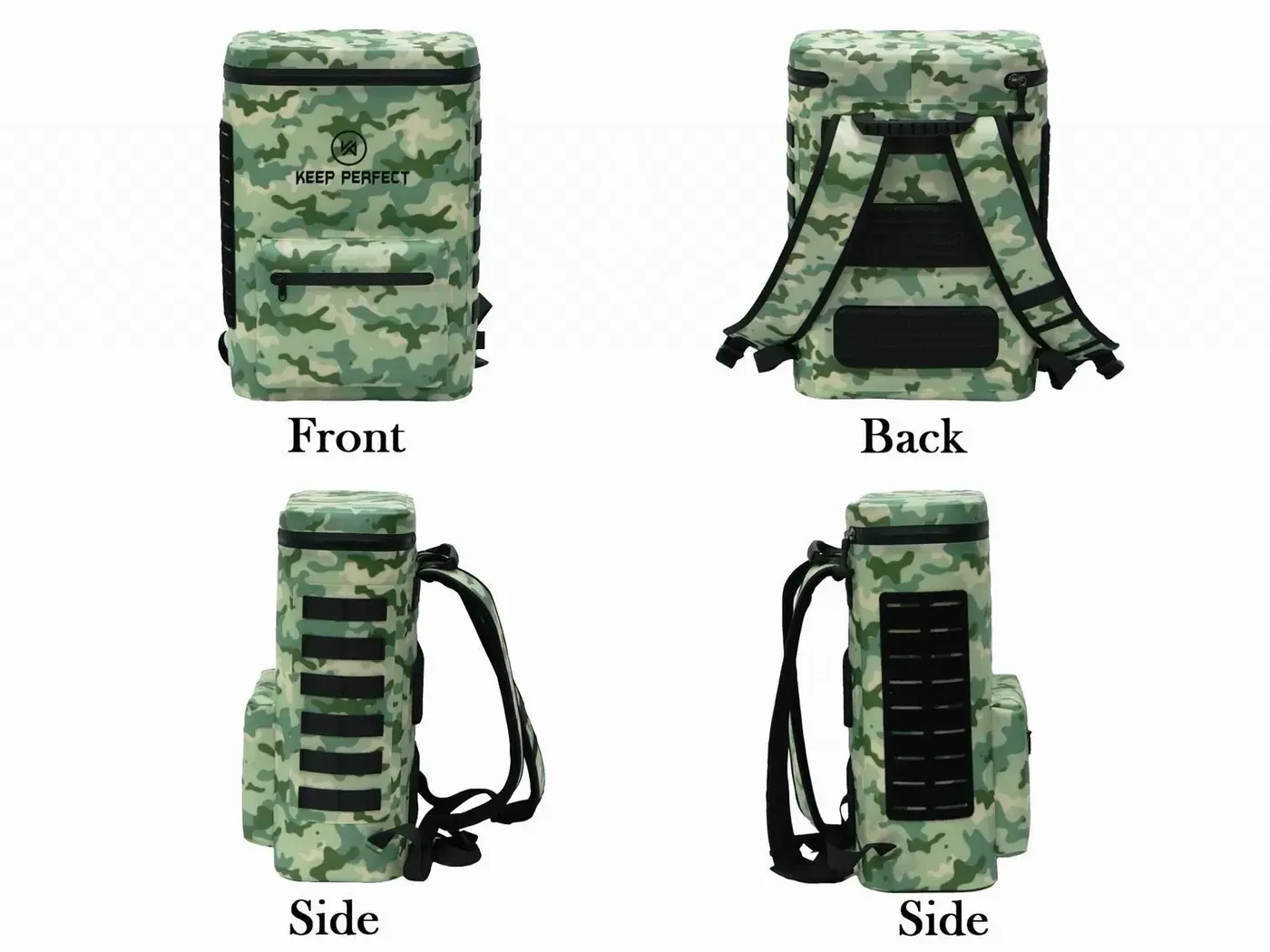
The tools used most often should not be in the bag at all. Pliers come out twenty to forty times a day, and every one of those is a zip cycle if they live inside, which is where most bag zips fail. An external sheath or a holster on the shoulder strap puts them at hand, keeps them drained, and removes a wet, rusting tool from the interior altogether.
- Pliers and a hook cutter on an external sheath, tethered with a short coiled leash so a dropped tool does not go overboard.
- Hook file and split-ring pliers in a flat external pocket no deeper than 120 millimetres, so they stand up rather than lie down.
- Line spools in the top pocket, since line and hooks in the same compartment tangle and the result is wasted fluorocarbon.
- A digital scale in a padded sleeve, because a crushed display is the most common warranty claim on tournament kit.
- Spare hooks and weights in a small 3500-size box rather than loose, which keeps the tray count for lures intact.
Weight, Balance and the Walk to the Ramp
At 6 to 8 kilograms a bass bag is at the point where harness design starts to matter more than capacity. The rule of thumb used by load carriage researchers is that a pack carried for more than twenty minutes should not exceed roughly 20 percent of body mass, which puts an 8 kilogram bag at the limit for a 40 kilogram angler and comfortable for one at 80 kilograms.
| Loaded weight | Share of body mass at 70 kg | Comfortable carry distance | What to change |
|---|---|---|---|
| 4 kg, light session kit | 6 percent | Five kilometres or more | Nothing, any harness works |
| 6 kg, club day | 9 percent | Two to three kilometres | Add a hip belt |
| 8 kg, tournament kit | 11 percent | 800 metres to one kilometre | Hip belt plus sternum strap |
| 10 kg, full kit plus rain gear | 14 percent | Under 500 metres | Split into two bags or use a cart |
| 12 kg, oversized 55 litre bag | 17 percent | Car park to boat only | Reduce to two trays for walking days |
Balance does more for comfort than padding. Keeping the two heaviest trays low and close to the back panel moves the centre of mass roughly 60 millimetres toward the spine, and that is worth more than any shoulder strap upgrade. Packing order inside the tray cavity, and the reason it matters, is covered step by step in the tackle backpack packing walkthrough.
Seasonal Load Adjustments by Water Temperature
Bass location changes with water temperature and the bag should change with it. Carrying the full 8 kilogram kit in mid-summer is wasted effort, because the fish are deep, the presentation count is small, and three trays will cover the day. Carrying a summer kit in March means arriving without the jerkbait that is working.
| Water temperature | Patterns in play | Trays to carry | Estimated kit weight |
|---|---|---|---|
| Below 10 degrees | Slow presentations, jigs, blade baits | 3 trays, deep water selection | 5.0 to 6.0 kg |
| 10 to 16 degrees | Pre-spawn, jerkbaits and lipless cranks | 5 trays, widest selection of the year | 7.0 to 8.0 kg |
| 16 to 24 degrees | Post-spawn, topwater and soft plastics | 4 trays | 6.0 to 7.0 kg |
| Above 24 degrees | Deep structure, big worms and jigs | 3 trays plus extra water | 5.5 to 6.5 kg |
End of Day: Rinse, Dry and Rest
Bass bags fail from neglect rather than use. The three end-of-day steps that add seasons of life take twelve minutes: empty the trays and shake out the cavity, rinse the shell with fresh water at low pressure to remove surface salt or lake algae, and dry the bag open and upside down in moving air. Drying matters more than cleaning, because almost every mould and odour problem starts with a bag closed wet in a garage.
Two things should never happen to a bass bag. It should not go into a washing machine, because agitation destroys welded seams and the spinner action tears coated fabric at the corners. It should not be dried on a radiator or in direct sun for hours, because sustained surface temperatures above 60 degrees accelerate coating hydrolysis. Full cleaning steps are in the fishing backpack cleaning guide, and drying technique in the drying a wet fishing bag walkthrough.
Specification Notes for Programme Buyers
QUANZHOU JUNYUAN BAGS has concentrated on waterproof bag work since 2014, with a founding team in this industry since 2004. Output runs at 200,000 units a month verified by SGS, under BSCI and ISO 9001 governance, with incoming materials screened for REACH and California Prop 65 and outbound orders inspected at AQL 2.5. For a bass-specific programme, the brief should open with tray size and tray count, because those two numbers set the internal cavity dimensions and therefore the entire pattern.
Add the shell material and coating thickness, the closure type, the base construction, hardware grade, colourway, and the quantity. Hardware and webbing strength claims are worth tying to published test methods from ASTM International, and any environmental or chemical claim to published requirements from the United States Environmental Protection Agency, rather than leaving them as loose assertions. Five hundred pieces per design and colour is the opening order size. Sampling takes six to ten working days, bulk takes thirty-five to fifty days from approved sample and deposit, and shipment runs FOB Xiamen or DDP to upwards of one hundred nations. Briefs can be sent to service@junyuanbags.com.
People Also Ask
How many 3700 trays fit in a bass fishing bag?
Most dedicated bass bags hold four to six. A bag advertised as a four-tray model usually means four 3600 trays unless the clear internal width exceeds 356 millimetres.
What size bag do I need for bass fishing?
Thirty-five to forty-five litres for boat-based bass fishing and thirty to thirty-five litres for bank fishing, where the kit has to be walked one to three kilometres.
Are hard tackle boxes better than a soft tackle bag for bass?
For changeover speed, a soft tray bag wins: twenty-two to thirty-six seconds against thirty-three to fifty seconds from a latched hard box stack.
How heavy is a loaded bass tournament bag?
Between six and eight kilograms for a full club kit, and up to ten kilograms once rain gear and water are added.
Should soft plastics be carried loose in a bag?
No. Keep them in their original packs inside one deep tray placed low in the bag, so any plasticiser leak stays contained.
What waterproof rating should a bass fishing bag have?
IPX5 to IPX6 is the useful band. That covers deck wash and spray without paying for the IPX7 or IPX8 immersion rating a dry bag needs.
Frequently Asked Questions
Q1. What makes a bag a bass fishing bag rather than a general tackle bag?
Tray geometry first: clear slots wide enough for 3700 trays at 356 millimetres, four to six of them, plus external tool access and a moulded base that survives a wet footwell.
Q2. How many trays should a beginner bass angler start with?
Three. One 3700 for hardbaits, one 3700 deep for soft plastics, and one 3600 with dividers for hooks and weights, which covers most of the year at about 5.5 kilograms.
Q3. Do 3700 trays fit in a 3600 bag?
No. A 3700 tray is 77 millimetres longer and 46 millimetres wider than a 3600, so a slot sized for 3600 will not accept it without forcing the seam.
Q4. What is the best tray layout for a bass tournament bag?
Hardbaits by depth rating across the top two trays, soft plastics in a deep tray below, and terminal tackle in a 3600 nearest the opening, because hooks are needed most often.
Q5. Is a moulded base worth the extra weight on a bass bag?
Yes. It keeps the tray cavity square when the bag is set down in standing water, drains cleanly, and adds roughly 400 grams in exchange for several extra seasons of life.
Q6. Can a bass fishing bag be taken on a plane?
A 35 to 40 litre soft bag fits most cabin allowances as a personal item only if it is under the airline limit, typically 40 x 30 x 20 centimetres when compressed, which a tray bag is not. Check the bag empty.
Q7. How do I stop hooks rusting inside the bag?
Dry the tray before closing the bag, keep hooks in a vented compartment rather than a sealed one, and put a 10 gram silica sachet in the terminal tackle tray at the start of each month.
Q8. Should pliers be stored inside or outside a bass bag?
Outside, on a tethered sheath. Pliers come out twenty to forty times a day and each trip is a zip cycle, which is the usual cause of zip failure on a bass bag.
Q9. What colour interior is best for a bass tackle bag?
A light grey or tan interior. Dark lures are hard to find against a black lining in low light, and the difference in search time over a season is substantial.
Q10. How often should a bass bag be cleaned?
Rinse after every session in salt or brackish water, dry open every time, and do a full clean with a mild solution four times a year or after any spill of scent or soft plasticiser.
Q11. Can a tray-first bag also carry a rain jacket?
Yes if the bag is 40 litres or more and the tray cavity does not occupy the full depth. A separate roll-top dry bag strapped to the top is the cleaner answer for a 35 litre bag.
Q12. What is the MOQ for a bass-specific tackle bag programme?
Five hundred pieces per design and colour, with sampling at six to ten working days and bulk at thirty-five to fifty days from approved sample and deposit.