A carp bag is a bait bag before it is a tackle bag, and that single fact changes the specification. A forty-eight hour session carries 8 to 15 kilograms of boilies and particles, a rig wallet, six to ten leads, a weigh sling, an unhooking mat and a landing net, which puts the realistic total at 18 to 25 kilograms before shelter and bed. No backpack should carry that, so the working answer is a barrow-friendly holdall of 60 to 90 litres with a wet compartment for bait and a dry compartment for rigs and electronics, plus a small sling or shoulder bag for the mobile angler who stalks rather than sits. Programme buyers should plan on 500 pieces per design and colour, six to ten working days for samples, and thirty-five to fifty days for bulk.
How Much a Carp Session Actually Weighs
Carp anglers underestimate their load more consistently than any other group, largely because bait is bought in kilograms and remembered in handfuls. A standard forty-eight hour session uses 8 to 12 kilograms of boilies plus 3 to 5 kilograms of prepared particle, and that is before water for mixing, a bucket, a catapult or throwing stick, and the spod or spomb rod with its own reel. Weighed honestly, the bait and bait-tools group alone comes to 12 to 18 kilograms.
The consequence is that carp carry is a logistics problem rather than a backpack problem. Anything over 15 kilograms should be on wheels, in a barrow or in a vehicle, and the bag should be shaped to sit in a barrow frame rather than shaped to sit on a back. A 90 litre holdall that fits a barrow tray does more for a carp angler than a technically superior 40 litre backpack.
| Item group | Typical quantity | Weight range | Carry method |
|---|---|---|---|
| Boilies, shelf life and frozen | 8 to 12 kg | 8000 to 12000 g | Bait bucket or holdall wet compartment |
| Prepared particle, hemp and maize | 3 to 5 kg | 3000 to 5000 g | Sealed buckets, never loose in fabric |
| Leads, six to ten sizes | 8 to 12 pieces | 800 to 1500 g | Divided lead pouch |
| Rig wallet and terminal tackle | 30 to 60 rigs | 400 to 700 g | Hard rig wallet in a dry pocket |
| Weigh sling, mat and net | 3 items | 2500 to 4000 g | External straps or barrow |
| Spod rod, reel and marker float | 2 to 3 items | 1200 to 1800 g | Rod holdall or barrow sleeve |
A useful rule follows from the numbers: if the total is above 15 kilograms, plan for wheels; between 8 and 15 kilograms, a holdall with a good shoulder strap is workable for short distances; below 8 kilograms, a large backpack or a stalking sling is genuinely comfortable. Carp anglers who try to carry the first case on their back are the ones who end up with back problems and shortened sessions.
Bait Carry: Boilies, Particles and Shelf Life
Bait has a shelf life and a smell, and both should drive the design of the compartment that holds it. Shelf-life boilies are stable for six to twelve months unopened but begin to spoil within two to three weeks once the bag is opened and left in a warm vehicle, so the compartment should be ventilated rather than sealed and easy to wipe. Frozen boilies are a different case: they must never go into a bag that has been used for anything else, because thawing bait soaks fabric with liquid that then ferments.
Prepared particle is the worst cargo a fabric bag can carry. Hemp and maize sit in liquid, the liquid leaks through stitched seams within hours, and the residue supports mould growth in any warm, dark cavity. The only sensible approach is sealed buckets for particle and a dedicated, wipe-clean lined compartment for everything else, with the two never sharing space.
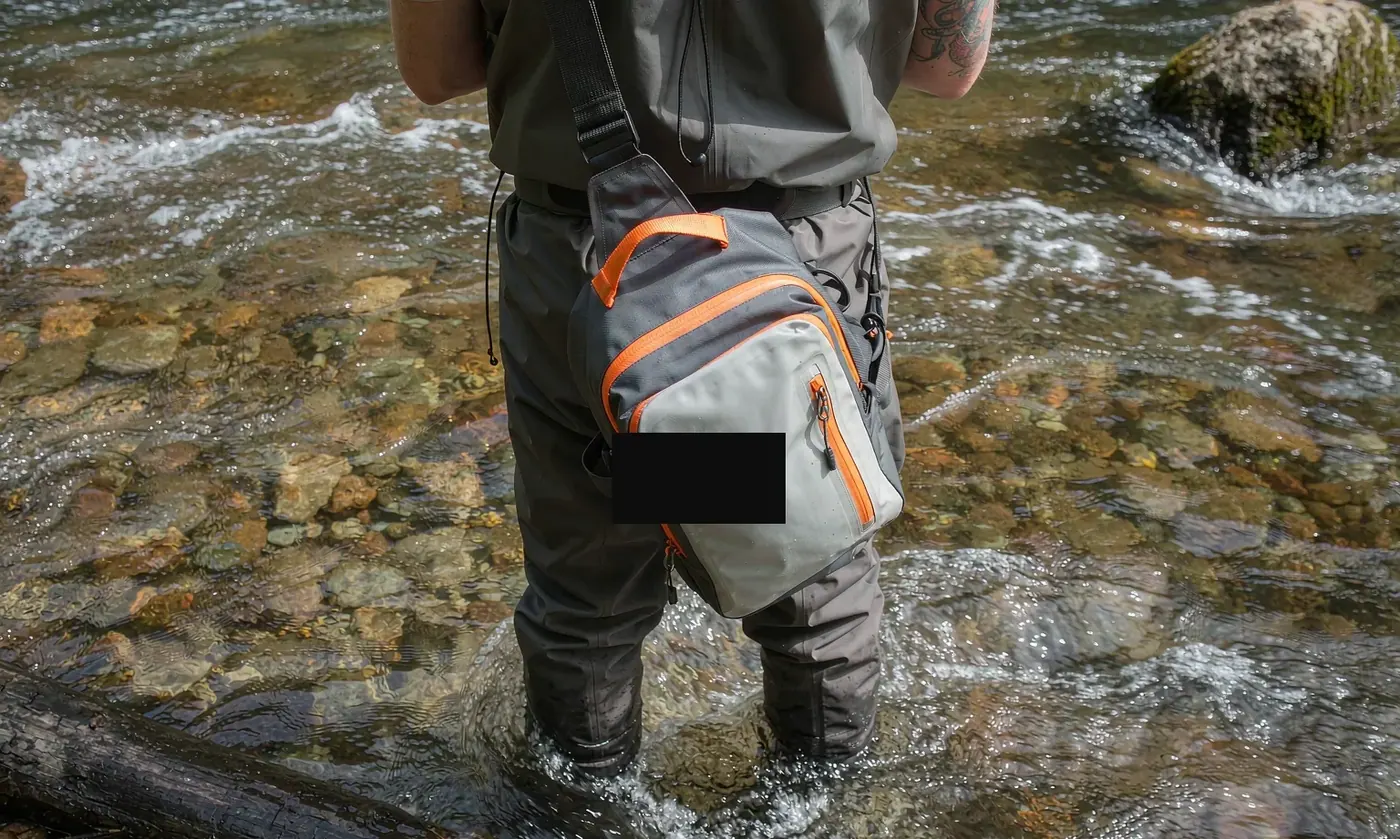
- Keep bait in sealed buckets or liners inside the bag, never loose against the shell fabric.
- Ventilate the bait compartment when the session ends; a closed wet compartment grows mould in about five days.
- Separate frozen boilies from everything else, because thaw liquid permanently contaminates fabric.
- Carry at most three days of bait for a forty-eight hour session; the rest is dead weight and spoilage risk.
- Label the bait compartment by bait type if two mixes are used, since carp can be selective and mixing them wastes both.
Rig Wallets, Leads and Terminal Tackle
Carp terminal tackle is precision kit and it does not survive being loose. A rig wallet holding 30 to 60 tied rigs on pins or in sleeves keeps hook lengths straight, and straight means the rig fishes as designed rather than with a curve that changes how it turns in the mouth. Leads are the weight problem: ten leads at 100 to 150 grams each add 1 to 1.5 kilograms, and loose leads in a fabric pocket abrade the lining and each other.
Two organisers earn their space. A lead pouch with individual sleeves stops the abrasion and lets the angler find a 3 ounce lead without emptying the bag, and a small compartment for shrink tube, rig rings, swivels and bait stops prevents the mid-session search that costs twenty minutes at dusk. Everything in this group belongs in the dry compartment, because rust on a swivel is a failed rig.
| Storage item | Holds | Weight when full | Why it earns its place |
|---|---|---|---|
| Hard rig wallet | 30 to 60 rigs on pins | 350 to 600 g | Keeps hook lengths straight and tangle-free |
| Lead pouch with sleeves | 8 to 12 leads | 1100 to 1600 g | Stops lead-on-lead abrasion and lining damage |
| Small parts case | Shrink tube, rings, stops | 150 to 250 g | Ends the dusk search for a 3 mm ring |
| Baiting needle wallet | 3 to 5 needles | 80 to 120 g | Needles are sharp and dangerous loose |
| Hook box by size | 4 to 6 sizes | 120 to 200 g | Carp hooks are sized 2 to 8 and must stay sorted |
Weigh Sling, Mat and Landing Net: The Awkward Three
Fish care equipment is bulky, wet and heavy, and it is the reason carp bags are shaped the way they are. A weigh sling and an unhooking mat together weigh 2.5 to 4 kilograms wet, and a wet mat inside a closed bag will produce mould within a week. These three items should always travel on the outside of the bag or on the barrow, never inside a main compartment.
The practical arrangement is a set of external compression straps across the base or the lid of the holdall, with the mat rolled and strapped there and the net head carried in a separate sleeve. That keeps wet gear out of the dry compartment entirely and means the mat can be deployed in under thirty seconds, which matters when a fish is already on the bank.
| Carry position | Deploy time | Risk | Best for |
|---|---|---|---|
| External straps on the lid | 20 to 30 seconds | Mat can catch on branches | Barrow sessions |
| Base straps under the bag | 40 to 60 seconds | Straps can be hard to reach | Vehicle-based sessions |
| Separate mat sleeve | 15 to 25 seconds | One more item to carry | Stalking and mobile carp |
| Inside a wet compartment | 60 to 90 seconds | Mould within a week if left closed | Emergency only, never routine |
Session Length: Day Ticket Versus Forty-Eight Hours
Carp fishing splits cleanly into short sessions and long ones, and the load difference is close to a factor of three. A six hour day session needs 2 to 3 kilograms of bait, one rod setup, a mat and a net, and fits comfortably in a 35 to 45 litre backpack at 9 to 12 kilograms. A forty-eight hour session needs shelter, a bedchair, cooking kit and three times the bait, and moves into holdall and barrow territory at 25 to 40 kilograms.
| Session type | Bait carried | Total load | Bag volume | Carry |
|---|---|---|---|---|
| Short morning or evening | 1 to 2 kg | 6 to 9 kg | 25 to 35 litres | Backpack or large sling |
| Full day session | 2 to 4 kg | 9 to 13 kg | 35 to 50 litres | Backpack or holdall |
| Overnight | 5 to 8 kg | 16 to 22 kg | 60 to 75 litres | Holdall plus barrow |
| Forty-eight hours | 10 to 15 kg | 25 to 40 kg | 80 to 100 litres | Barrow, never on the back |
Carp anglers who fish both should own two bags rather than compromise on one. The day-session bag can be a proper backpack with a good harness, because 10 kilograms is a legitimate backpack load. The session bag should be a holdall with a wipe-clean base and no pretence of being carried far. Trying to make one bag do both produces a bag that is too heavy for the short session and too small for the long one, which is the most common buying mistake in the discipline.
Rod Transport to and From the Swim
Carp rods are long, stiff and expensive, and they are the item most often damaged in transit rather than in use. A three and a half pound test curve rod is typically 3.6 metres long in two sections of about 1.85 metres each, and a made-up rod with a big pit reel fitted weighs 700 to 900 grams. Three of those made up cannot be carried safely in one hand alongside a loaded holdall, which is why a rod holdall with separate sleeves is standard rather than optional.
The holdall should be carried independently of the bag, not strapped to it, because the two have different shapes and strapping them together puts a bending load on the rod blanks. Where a barrow is used, rod sleeves on the barrow frame are better still. The one exception is the single-rod stalking setup, where a rod can be carried made up and the bag can carry a short butt rest and a sling; that works because there is no second rod to knock against.
Reel protection is the detail usually missed. A big pit reel sticking out of a half-zipped holdall catches on vegetation, gate catches and car boots, and a bent spool lip ruins the line on it. Sleeves should close fully over the reel, and the bag should never be set down on the side where the reels sit.
Waterproofing for Bivvy Life
A carp bag lives outdoors for a day or more at a time, often in rain, and it sits on wet ground behind a bivvy rather than on a dry deck. That makes base construction more important than shell rating. A welded or moulded base of at least 5 millimetres keeps ground water out for hours, where a fabric base wicks within thirty minutes of standing in a puddle.
The shell rating that makes sense here is IPX5, which covers sustained rain from any direction, rather than the IPX7 immersion rating a dry bag carries. Carp bags are not meant to be submerged; they are meant to sit in weather. Ratings are decoded in the IPX rating guide, and the differences between waterproof levels used across the category are set out in the levels of waterproof fishing bags article. The enclosure test method itself is published by the International Electrotechnical Commission.
Stalking Carp: When Smaller Is Better
Not all carp fishing is a siege. Stalking carp with a single rod, a small bag of boilies and a net is a completely different discipline and it rewards the opposite specification: quiet, light, and small enough to move through margin vegetation without snagging. A 20 to 25 litre sling or shoulder bag with one rig wallet, 1 to 2 kilograms of bait, a mat slung externally and a camera is the entire kit, at 5 to 7 kilograms.
Noise is the detail stalkers notice and gear reviews ignore. Buckles that click, zips that rattle and hard shells that knock against a rod butt all spook fish in shallow margins. A soft-shell bag with covered buckles and fabric zip garages is worth more to a stalker than any amount of extra capacity.
The stalking kit also has to work while standing in shallow water or on a steep, muddy margin, which rules out anything that has to be set down to be opened. A shoulder bag that swings to the front, or a sling with a stabiliser strap, keeps both hands available for the rod and the net. Capacity above 25 litres is actively counterproductive here, because it encourages carrying the four extra kilograms that turn a mobile session into a slow one.
Bait Hygiene and Cross-Contamination
Two rules cover most bait hygiene. Never put bait that has been on the ground back in the bag, and never let particle liquid touch rig or electronics compartments. The first is a spoilage issue, because ground contact introduces bacteria that cut shelf life from months to days. The second is a corrosion and mould issue that quietly ruins rigs.
Chemical hygiene is worth a mention too. Some bait additives and preservatives are regulated substances in the European Union, and any claim about the chemical safety of bag materials should be checked against published requirements from the European Chemicals Agency rather than asserted in a listing. Materials screened for REACH and California Prop 65 remove that argument at the sourcing stage.
Packing Sequence: Arrival to First Cast
Carp sessions are won or lost in the first ninety minutes, and packing order decides how much of that window is spent looking for things. The bag should be packed backwards from the sequence of use: bait accessible first, then leads and rigs, then fish care gear, then everything else. Electronics, keys and phone go in the highest, driest pocket, because they will be needed after dark.
- Bait and buckets at the top or in the most accessible opening, since baiting up starts immediately.
- Rig wallet and lead pouch next, because the first rods go out within twenty minutes.
- Mat and net externally, so they are deployed before a fish is on the bank, not after.
- Spod and marker gear low and central, because it is used after the initial baiting.
- Electronics, phone and headtorch in one dedicated pocket that is always in the same place.
Cleaning After a Carp Session
Carp bags get dirtier than any other fishing bag and the cleaning routine should reflect that. Empty everything the same day, brush out dry bait dust before it absorbs moisture, then wipe the bait compartment with a dilute mild solution and rinse with fresh water. Particle residue left for a week becomes a black mould patch that no amount of scrubbing removes.
Drying is the part that gets skipped. A carp bag should be stood open, upside down, in moving air for at least twenty-four hours after a wet session, and stored with the bait compartment open rather than zipped. Detailed drying method is in the drying a wet fishing bag guide, and full seasonal storage in the off-season storage walkthrough.
Specification Notes for Programme Buyers
QUANZHOU JUNYUAN BAGS has delivered waterproof bag programmes since 2014, with a founding team in this industry since 2004. Output stands at 200,000 units a month verified by SGS, under BSCI and ISO 9001 governance, with materials screened for REACH and California Prop 65 and every bulk order inspected at AQL 2.5. A carp brief should open with the intended session length and bait weight, because those decide whether the product is a backpack or a barrow holdall before a single pocket is drawn.
Then specify the wet compartment liner, the base construction and thickness, closure type, external strap layout for mats and nets, hardware grade, colourway and quantity. Fabric abrasion and seam strength claims are better tied to published test methods from ASTM International than stated as loose figures. Five hundred pieces per design and colour is the opening order size. Sampling takes six to ten working days, bulk thirty-five to fifty days from approved sample and deposit, and shipment is FOB Xiamen or DDP to upwards of one hundred nations. Briefs go to service@junyuanbags.com.
People Also Ask
How much bait does a carp session need?
Two to four kilograms for a full day, five to eight kilograms overnight, and ten to fifteen kilograms for a forty-eight hour session including particle.
Should carp bait be carried inside the bag?
Only in sealed buckets or liners. Prepared particle liquid leaks through stitched seams within hours and the residue grows mould in any closed compartment.
What size bag do I need for carp fishing?
Twenty-five to fifty litres for day sessions at nine to thirteen kilograms, and sixty to one hundred litres for overnight or forty-eight hour sessions moved by barrow.
Can a backpack carry a full carp session kit?
Only for short sessions. Above fifteen kilograms the load should be on wheels, because a loaded session kit puts real strain on the back over rough ground.
Where should an unhooking mat be carried?
On external straps or in a separate sleeve. A wet mat inside a closed compartment produces mould within about a week.
What waterproof rating should a carp bag have?
IPX5, plus a welded or moulded base of at least five millimetres. Carp bags sit in weather and on wet ground rather than being submerged.
Frequently Asked Questions
Q1. What is different about a carp fishing bag?
Bait comes first. The compartment layout is driven by kilograms of boilies and particle rather than by lure or tray count, and wet and dry storage have to be genuinely separated.
Q2. How heavy is a full carp session kit?
Between twenty-five and forty kilograms for a forty-eight hour session with shelter and bedchair, and nine to thirteen kilograms for a full day session.
Q3. Should I use a backpack or a holdall for carp?
A backpack for day sessions up to about thirteen kilograms, and a holdall plus barrow for anything overnight. The shape should match the barrow tray.
Q4. How do I stop boilies spoiling in the bag?
Ventilate the compartment after every session, keep bait sealed, and never return bait that has touched the ground to the bag.
Q5. Can particle and boilies share a compartment?
No. Particle sits in liquid that leaks through seams and contaminates dry bait, rig compartments and electronics pockets.
Q6. What is a rig wallet and do I need one?
A hard wallet holding thirty to sixty tied rigs on pins. It keeps hook lengths straight, which is the difference between a rig that turns correctly and one that does not.
Q7. How many leads should a carp bag carry?
Eight to twelve, in a sleeved pouch. Loose leads abrade the lining and each other, and finding one by feel in the dark wastes minutes.
Q8. Is a waterproof base worth specifying?
Yes. A welded or moulded base of five millimetres or more keeps ground water out for hours where a fabric base wicks through in about thirty minutes.
Q9. What is the best bag for stalking carp?
A quiet twenty to twenty-five litre shoulder or sling bag with covered buckles, holding one rig wallet, one to two kilograms of bait and a slung mat.
Q10. How do I clean particle residue from a bag?
Brush out dry residue first, wipe with a dilute mild solution, rinse with fresh water, then dry open for twenty-four hours. Scrubbing wet residue sets the stain.
Q11. What is the MOQ for a carp-specific carry programme?
Five hundred pieces per design and colour, with six to ten working days for sampling and thirty-five to fifty days for bulk from approved sample and deposit.