A waterproof backpack for a multi-day trek needs 45 to 55 litres for three to five days, 55 to 65 litres for five to seven, and a harness rated for a loaded weight of 12 to 18 kilograms rather than the 8 to 10 a daypack is built around. Three decisions dominate and they are not the ones buyers expect: whether the waterproof layer is the shell, a liner or a rain cover; whether the wet tent fly gets its own 8 to 12 litre bay; and whether the suspension can hold 70 to 80 percent of the load on the hips for six to nine hours a day. Fully welded shells are the strongest answer and cost 27 to 38 USD per unit at 1,000 pcs, a welded shell plus a 40 to 60 gram liner costs less and loses access speed, and a rain cover is the weakest option because it leaves the back panel and shoulder straps wet and adds 150 to 250 grams for nothing. This page sets the volume arithmetic, the waterproof strategy comparison, the suspension specification, the resupply plan and the load-testing protocol.
The Volume Arithmetic of a Multi-Day Load
Multi-day volume is driven by consumables and by the sleep system, and both are bigger than first-time buyers expect. Food runs 0.6 to 0.9 kilograms a day at 3,000 to 4,000 kilocalories, water is 2 to 5 litres depending on terrain, and a three-season sleep system occupies 8 to 12 litres packed. The pack has to close around all of it on day one, which is the day it is fullest, and a pack that only closes on the last day is the wrong size.
| Trip length | Volume | Base weight | Consumables | Loaded weight |
|---|---|---|---|---|
| 2 to 3 days | 40 to 50 L | 5 to 6 kg | 2 to 4 kg | 9 to 12 kg |
| 3 to 5 days | 45 to 55 L | 5 to 7 kg | 3 to 6 kg | 12 to 15 kg |
| 5 to 7 days | 55 to 65 L | 6 to 8 kg | 5 to 9 kg | 14 to 18 kg |
| 7 to 10 days | 65 to 75 L | 6 to 9 kg | 8 to 13 kg | 16 to 20 kg |
| 10 days plus resupply | 55 to 65 L | 6 to 8 kg | 3 to 6 kg between stops | 13 to 17 kg |
Two items decide the volume more than any other and both are bulky rather than heavy. A sleeping bag rated to 0 degrees Celsius comfort packs to 5 to 8 litres in a compression sack of 60 to 90 grams and to 12 litres loose, so the compression sack is worth carrying. A two-person tent weighs 1.5 to 2.5 kilograms and packs to 8 to 12 litres, and splitting it between two people is the single most effective way to keep both packs under 55 litres.
The case for a smaller pack is stronger than most buyers think, provided the resupply plan supports it. A 55 litre pack with a resupply every two or three days carries 3 to 6 kilograms of consumables at a time instead of 8 to 13, and the difference of 5 kilograms over eight hours a day is the difference between finishing comfortably and finishing hurt. The volume-versus-resupply trade is set out in the size and capacity guide, and the daypack-versus-expedition split in the daypack versus expedition comparison.
Shell, Liner or Rain Cover: The Waterproof Decision
Three strategies keep a multi-day load dry and they differ in weight, cost and what happens in a sustained storm. A welded shell makes the pack itself the waterproof layer; a welded or coated shell with an internal liner makes a separate bag the waterproof layer; and a rain cover makes an accessory the waterproof layer. They are not equivalent, and the difference shows up on day three of continuous rain rather than in a shop.
| Strategy | Weight added | Unit cost impact | Weak point | Best for |
|---|---|---|---|---|
| Fully welded shell | 0 g, it is the pack | Plus 8 to 14 USD | Access is slower through a roll mouth | Wet climates, guided programmes |
| Shell plus pack liner | 40 to 60 g | Plus 1 to 2 USD | 5 to 10 s lost on every opening | Mixed climates, budget ranges |
| Shell plus dry-bag modules | 80 to 150 g | Plus 3 to 6 USD | Organisation is by bag, not pocket | Expeditions, water crossings |
| Rain cover | 150 to 250 g | Plus 2 to 4 USD | Back panel and straps stay wet | Occasional rain only |
| Water resistant shell only | 0 g | Baseline | Wets through in 2 to 4 hours | Dry seasons, ultralight users |
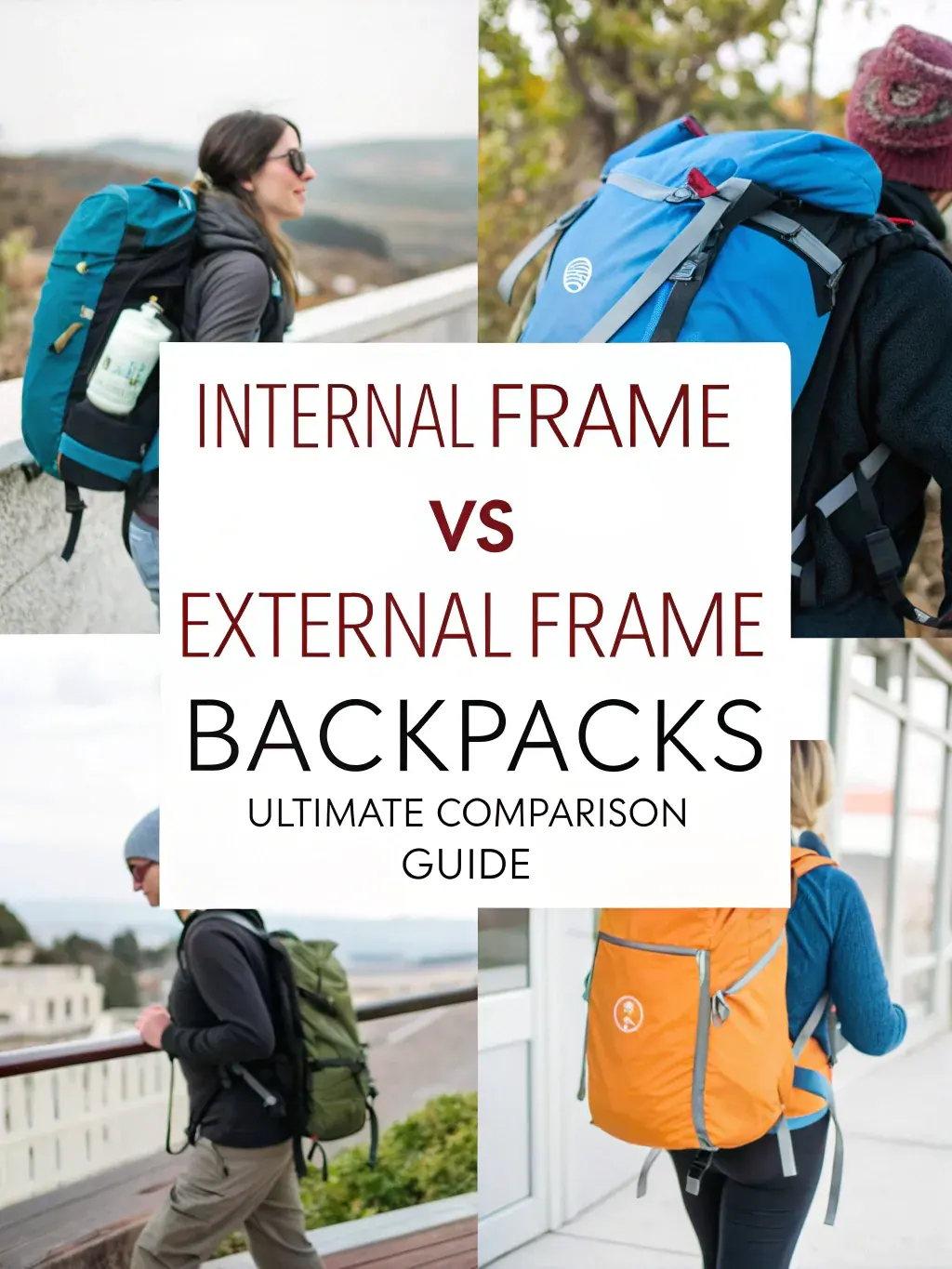
The rain cover deserves a specific criticism because it is the most commonly bought and the least effective of the four. A cover protects the front and the sides of the pack and nothing else: the back panel, the shoulder straps and the hip belt are outside it, and they are the parts in contact with the wearer, so a hiker in a four-hour storm ends up with dry contents and a soaking harness. It also flaps at speed and is lost at a rate that any rental operator will confirm. At 150 to 250 grams it costs more than a liner and performs worse.
The welded-shell case gets stronger the longer the trip, because a multi-day pack is opened fewer times per kilometre than a daypack but spends far longer in the rain. A 45 to 65 litre welded body at IPX5 or IPX6 costs 27 to 38 USD per unit at 1,000 pcs against 19 to 26 for a water resistant equivalent, and the 8 to 12 USD step buys a pack that is still dry inside on day five. The rating claims are the ones defined in the IEC 60529 ingress protection standard.
The Wet Gear Bay: Tent, Fly and Boots
A wet tent fly is the item that defeats most multi-day packing systems, because it is large, heavy with water and needed every single evening. A fly for a two-person tent holds 300 to 600 grams of water when it is packed wet, which is 0.3 to 0.6 litres of liquid that has to go somewhere, and the only two acceptable places are outside the pack or in a dedicated welded bay.
| Item | Water held when wet | Where it goes | Pack requirement |
|---|---|---|---|
| Tent fly | 300 to 600 g | External bay or under a lid strap | 8 to 12 L bay, welded liner |
| Tent body and poles | 100 to 250 g | Lower external pocket | Moulded or 840D base panel |
| Wet boots or gaiters | 150 to 400 g | Base compartment, drained | 6 to 8 mm drain grommet |
| Wet rain jacket | 100 to 200 g | Lid pocket, breathable side out | Ventilated lid pocket |
| Cooking pot and stove | 0 to 50 g | Side pocket, away from the sleeping bag | Separate from food and sleep kit |
The specification that works is an external bay of 8 to 12 litres with a welded liner and a drain at the lowest point, positioned at the base rather than the lid. Water moves downwards, so a wet bay above the dry compartment leaks into it eventually no matter how well it is sealed, and a wet bay without a drain holds 300 to 600 grams of standing water for the whole trip. The drain is a 6 to 8 millimetre grommet and it turns the bay from a container into a sink.
Odour and mould follow the same physics as they do in any closed wet space: above about 60 percent relative humidity at 20 to 30 degrees Celsius, damp gear sealed in a pack grows visible mould within 24 to 48 hours. On a five-day trip that means the wet bay has to be emptied and opened every evening, which is also the moment the tent is pitched. Trip planning should assume the wet gear comes out daily, and the packing method is covered in the roll-top packing guide.
Suspension: What 12 to 18 Kilograms Demands
The harness is where a multi-day pack earns or loses its price, and the specification is different in kind from a daypack rather than in degree. Load transfer is the whole point: 70 to 80 percent of the weight should sit on the hips through a padded belt, and the rest on the shoulders through straps that are shaped rather than straight. Get that wrong and the pack is carried on the shoulders for eight hours, which produces numb hands and a sore neck by day two.
| Component | Multi-day specification | Daypack equivalent | Why |
|---|---|---|---|
| Hip belt | 55 to 75 mm padded, 12 to 18 mm foam | 25 to 45 mm webbing | Carries 70 to 80 percent of the load |
| Shoulder straps | S shaped, 60 to 75 mm, 12 to 15 mm foam | 45 to 55 mm straight | Follows the shoulder rather than cutting it |
| Frame | 2.5 to 3.5 mm sheet or alloy stays | 1.5 to 2.0 mm sheet | Transfers load without a 400 g penalty |
| Load lifters | 20 to 25 mm webbing at 30 to 45 degrees | Often absent | Pulls the load onto the hips |
| Torso adjustment | 40 to 55 cm range, 3 to 4 sizes | One size | A 5 cm error moves the belt off the hips |
| Sternum strap | Adjustable 150 to 250 mm | Fixed | Holds the straps at the collar bone |
Sizing is the failure that no specification can fix afterwards, because torso length rather than height or volume is what decides whether the belt lands on the hips. Measure from the seventh vertebra to the top of the hip bones: 40 to 45 centimetres is a small, 45 to 50 a medium, 50 to 55 a large, and a pack whose adjustable range does not cover the measured torso will put its belt on the waist or the ribs. A range that spans three sizes with 40 to 55 centimetres of adjustment covers about 85 percent of adult buyers.
Load testing should be part of qualification and it takes an afternoon rather than a laboratory. Load to 16 kilograms, walk 20 kilometres on mixed terrain with three testers of different torso lengths, and record strap slip, belt creep, hot spots and any seam creak. A pack that is comfortable empty and uncomfortable loaded has a frame or a belt geometry problem that no amount of padding will fix, and it will show up in returns within one season. Fabric and seam strength methods are maintained by ASTM, and the abrasion acceptance line for a base panel in this class is 30,000 Martindale cycles.
Fabric and Seam Behaviour Under Load
A loaded multi-day pack puts stress on the shell in a way an empty one never does, and the two failure modes are seam peel at the base corners and abrasion at the lower back where the pack rubs against itself with every step. Both are worse at volume, because a 60 litre pack has roughly 1.4 square metres of shell against 0.75 for a 20 litre daypack, and every metre is a place for a weld to be under-powered.
| Component | Multi-day specification | Why at this volume |
|---|---|---|
| Main shell | 420D to 500D at 0.35 to 0.45 mm TPU | 1.4 m2 of shell needs a coating that will not thin |
| Base panel | 840D to 1000D, or moulded | The pack is put down 20 to 40 times a day |
| Lower back panel | 500D with a snow-shedding finish | Rubs against the hip belt with every step |
| Seam | Welded, peel at 90 percent of fabric | Under-power welds lift under 16 kg first |
| Weld width | 20 to 25 mm on load-bearing seams | 18 mm is enough on a daypack, not here |
| Compression straps | Four at 20 to 25 mm | A half-full 60 L pack must be pulled tight |
Compression is underrated and it matters more at 60 litres than at any other size, because a pack that is half full on day four still has to carry like a full one. Four compression straps of 20 to 25 millimetres on each side pull the load towards the back panel, stop the contents slumping into the base, and keep the centre of gravity where the frame expects it. A single strap across the middle does none of that and is usually the sign of a pack that was designed for a photograph.
Resupply, Water and Weather Planning
Water is the heaviest consumable and the one that can be planned around, so the resupply plan drives the volume decision rather than following it. A hiker needs 2 to 4 litres a day in temperate conditions and 4 to 6 in heat, and at 1 kilogram per litre that is 2 to 6 kilograms carried or not carried depending on where the next source is. The working rule is to carry enough for the distance to the next reliable source plus a margin of 1 litre, and to know that distance before starting.
| Terrain | Typical carry | Source spacing | Pack implication |
|---|---|---|---|
| Temperate hills, streams | 1.0 to 2.0 L | Every 5 to 10 km | Two side pockets of 1 L |
| Alpine, snowmelt | 1.5 to 2.5 L | Every 10 to 15 km | Insulated sleeve for a filter |
| Arid or karst | 4.0 to 6.0 L | Every 25 to 40 km | Internal bladder plus bottles |
| Long dry stage | 5.0 to 8.0 L | 40 km or more | Volume band up by 5 to 8 L |
| Guided with vehicle support | 1.0 L | Daily | Volume band down by 5 L |
Weather planning is the other half of the volume decision, because a trip that turns wet adds weight and volume in ways that are easy to underestimate. A wet tent carries 300 to 600 grams of extra water, wet boots 150 to 400, and a wet rain shell 100 to 200, so a sustained wet spell adds 1 to 2 kilograms and pushes damp gear into the pack every evening. Forecasts and the rainfall and temperature products behind them are published by NOAA, and a three-day outlook is the right horizon for deciding whether the wet bay is used daily or occasionally.
Electronics, Documents and the Dry Zone
A multi-day pack carries more that must stay dry than a daypack does: a phone used for navigation, a power bank, a headlamp, permits, a passport on international trails, and often a camera. All of it should live in one dry zone with a single opening, and the zone should be inside the liner rather than in an outer pocket, because an outer pocket is the first thing to wet out in sustained rain.
- One dry zone with a single opening: a suspended sleeve of 280 by 200 millimetres for a tablet or a map case, plus a small zip pocket for permits and cash.
- A power bank of 10,000 to 20,000 milliampere-hours carried inside the liner, because a wet outer pocket and electronics do not mix.
- A headlamp of 300 to 600 lumens with spare cells in the same dry zone, checked before every trip rather than on the first evening.
- Documents in a welded document wallet of 40 to 80 grams, not in a plastic bag that tears on day three.
- A camera or phone in a padded insert, because a multi-day pack is put down hard at least once a day.
The laptop-sleeve question comes up on treks that start and end in a city, and it is worth answering directly: a suspended sleeve with a welded liner and 20 millimetres of clearance under it keeps a 14 or 15 inch device safe, and the construction is the same one described in the laptop protection guide. For a pure wilderness trip the sleeve is dead weight of 60 to 120 grams and should be deleted from the specification.
Testing, Care and the End of a Trip
Qualification for a multi-day pack is heavier than for a daypack because the load is, and the three tests that matter all involve weight. Run them on pre-production samples at the intended loaded weight rather than empty, which is the mistake that lets a weak frame through.
- Loaded jet test: fill to 16 kg, close the collar, and run the 12.5 litre per minute jet for three minutes. A pack that seals empty can weep loaded, because the collar geometry changes.
- Seam peel under load: pull a welded coupon at 90 percent of fabric tensile strength, and repeat after a 16 kg load walk of 20 km.
- Abrasion on the base: Martindale to 30,000 cycles on the base panel coupon, which is the line for a pack put down 20 to 40 times a day.
- Harness creep: 16 kg for two hours on a treadmill or a steep hill, measuring whether the belt slips more than 20 mm.
- Wet-bay drain test: 500 ml into the bay, measure the drain time, and confirm no water reaches the main compartment.
Care at the end of a trip is the same routine as for any welded pack, only more thorough. Empty everything, drain and wipe the wet bay, brush grit out of the base, and dry open and inverted at 20 to 25 degrees Celsius for 12 to 24 hours. Never tumble dry or use a radiator, because a TPU film distorts above about 60 degrees Celsius. The full routine is in the cleaning guide, and storage in the storage guide.
A Specification Checklist for Multi-Day Programmes
Seven checks qualify a multi-day pack, and five of them require the pack to be loaded before they mean anything. The first two are about volume and waterproof strategy, the next three about the harness, and the last two about the details that generate returns.
- Is the volume right for the longest stage rather than the average one? A pack that only closes on the last day is the wrong size.
- Is the waterproof layer the shell, and is it welded at 20 to 25 mm on load-bearing seams? A rain cover leaves the harness wet and is lost in wind.
- Is there an external wet bay of 8 to 12 litres at the base with a welded liner and a 6 to 8 mm drain?
- Is the hip belt 55 to 75 mm padded with 12 to 18 mm foam, and does the torso adjustment of 40 to 55 cm cover the target market?
- Is there a frame of 2.5 to 3.5 mm or alloy stays, with load lifters at 30 to 45 degrees?
- Are there four compression straps of 20 to 25 mm so a half-full pack still carries correctly on day four?
- Is the base panel 840D to 1000D, and does it reach 30,000 Martindale cycles?
Aquagrip builds multi-day configurations to that specification: welded shells at 420D to 500D with 840D or moulded bases, wet bays with drains, harnesses rated to 18 kilograms, 500 pcs per design and colour, samples in 6 to 10 working days, bulk in 35 to 50 days, FOB Xiamen or DDP to more than 100 countries, inspected at AQL 2.5 before shipment. Programme records and the load-test archive are held. The shell and closure families behind every configuration are described in the waterproof hiking backpack overview, and the terrain-specific variants are covered in the rainforest travel guide.
People Also Ask
What size backpack do I need for a 5 day hike?
55 to 65 litres for five to seven days, with a base weight of 6 to 8 kg plus 5 to 9 kg of food and water, giving a loaded 14 to 18 kg. With a resupply every two or three days, 45 to 55 litres is enough and saves about 5 kg of carried weight.
Is a rain cover good enough for a multi-day trek?
No. A cover protects the front and sides but leaves the back panel, shoulder straps and hip belt wet, and it adds 150 to 250 grams. A welded shell or a 40 to 60 gram liner performs better for less weight.
Should a trekking pack have a separate wet compartment?
Yes, 8 to 12 litres at the base with a welded liner and a 6 to 8 mm drain. A wet tent fly holds 300 to 600 grams of water, and a bay without a drain holds that water for the whole trip.
How much weight should be on the hips?
70 to 80 percent, through a padded hip belt of 55 to 75 mm with 12 to 18 mm foam. If the belt is not landing on the hips, the torso adjustment of 40 to 55 cm is wrong for the wearer rather than the pack being faulty.
How much water should I carry on a multi-day hike?
Enough for the distance to the next reliable source plus one litre of margin: 1 to 2 litres where streams are every 5 to 10 km, and 4 to 6 litres in arid terrain where sources are 25 to 40 km apart.
Do I need a pack liner in a waterproof trekking pack?
It is still worth 40 to 60 grams. A liner isolates damp gear and turns the pack into two zones, at the cost of five to ten seconds on every opening.
Frequently Asked Questions
Q1. What volume do I need for a multi-day hike?
40 to 50 litres for two to three days, 45 to 55 litres for three to five, and 55 to 65 litres for five to seven. Loaded weight lands at 9 to 12 kg, 12 to 15 kg and 14 to 18 kg respectively.
Q2. Is 55 litres enough for a week?
Yes with a resupply every two or three days. Without resupply, a seven-day trip needs 65 to 75 litres because food runs 0.6 to 0.9 kg a day and consumables reach 8 to 13 kg.
Q3. What is better, a waterproof shell or a rain cover?
A waterproof shell. A cover leaves the harness wet, flaps in wind and gets lost, and at 150 to 250 grams it weighs more than a 40 to 60 gram liner that actually works. Welded shells add 8 to 14 USD per unit at 1,000 pcs.
Q4. How heavy is too heavy for a multi-day pack?
Above about 20 percent of body weight. A 70 kg hiker should stay near 14 kg loaded and treat 18 kg as the ceiling; above that, move consumables to a resupply plan or split the tent between two people.
Q5. How do I size the torso on a trekking pack?
Measure from the seventh vertebra to the top of the hip bones: 40 to 45 cm is small, 45 to 50 medium, 50 to 55 large. A pack with 40 to 55 cm of adjustment covers about 85 percent of adult buyers.
Q6. Where should a wet tent go?
In an external bay of 8 to 12 litres at the base with a welded liner and a drain, never in the main compartment and never above a dry one. A wet two-person fly holds 300 to 600 grams of water.
Q7. How often should I resupply on a long trek?
Every two to three days where the terrain allows, which keeps consumables at 3 to 6 kg rather than 8 to 13. That is roughly a resupply every 40 to 70 km at a typical daily distance of 15 to 25 km.
Q8. What fabric denier is right for a trekking pack?
420D to 500D at 0.35 to 0.45 mm TPU for the shell, with 840D to 1000D or a moulded base. A 60 litre pack has about 1.4 square metres of shell, so a thinner coating will not survive the abrasion of a five-day trip.
Q9. Can a welded seam hold under a heavy load?
Yes, if it is welded to 20 to 25 mm and peels at 90 percent of fabric tensile strength. Seam lift at the base corners is the failure mode under 16 kg, and it is why the weld width spec is larger than on a daypack.
Q10. How do I test a trekking pack before buying in bulk?
Load to 16 kg, walk 20 km with three testers of different torso lengths, then re-run the jet test. Record strap slip, belt creep over 20 mm and any seam creak.
Q11. What is the MOQ and lead time for a trekking pack programme?
500 pcs per design and colour, samples in 6 to 10 working days and bulk in 35 to 50 days. A moulded base and a wet bay with a drain add four to six working days to sampling, and load testing should be booked before the bulk run.