A waterproof backpack for construction work should be bought as 30 to 40 litres of 1000D or 1680D polyester carrying a 0.40 to 0.55 mm TPU coating, welded rather than stitched seams, a hydrostatic head of at least 5,000 mm, a covered zip with a dust garage and a moulded base of 1.2 to 1.6 mm, and it should be expected to last 12 to 24 months on an active site rather than the three to five years the same materials give in leisure use. A jobsite attacks a pack on five axes at once: abrasion against concrete, puncture from rebar, grit in the closure, alkaline cement dust at pH 12 to 13, and a daily tool load of 8 to 14 kg. Waterproofing is the easiest of those five to solve and the least likely to be the reason a pack is retired. This page sets the shell, closure, layout, acceptance tests and maintenance routine for a pack carried onto a site five or six days a week.
Why a Jobsite Destroys Packs Faster Than a Trail
A trail wears a pack at the base and the shoulder straps. A site wears it everywhere at once, and the five attack modes compound: grit that gets into a zip also abrades the tape, a coating scuffed by concrete also stops shedding dust, and a base seam lifted by point loading also stops being waterproof. The practical consequence is that the failure distribution on site looks nothing like the failure distribution in leisure returns, where zip weeping and seam lift dominate. On site, abrasion and puncture account for roughly 40 percent of retired packs, closure contamination for 25 percent, hardware and strap failure for 20 percent, and coating or print breakdown for the remaining 15.
| Site hazard | What it attacks | Measurable specification | Typical failure point |
|---|---|---|---|
| Abrasion, concrete and scaffold | Base panel and lower back | Martindale 30,000 to 50,000 cycles to first break | Coating worn through at 6 to 9 months |
| Puncture, rebar ends and blades | Base and front panel | 1680D shell with a 1.2 to 1.6 mm moulded base | A 500D base holed in one strike |
| Grit and cutting dust | Zip teeth and roll collar | Covered zip with a dust garage | Coated zip jams after 200 to 400 cycles |
| Cement dust at pH 12 to 13 | Coating and printed panels | Alkaline resistant topcoat, grey scale 4 after wash | Chalking and print loss at 3 to 6 months |
| Point load, 10 to 14 kg of tools | Base seam and corners | Welded seam peel at 90 percent of fabric strength | Seam lift at the base corners |
| Diesel and form oil | TPU film | No swelling after 24 hours immersion | Film turns tacky and picks up dirt |
| Impact, dropped from a vehicle | Hardware and buckles | Acetal hardware rated 300 to 500 N | Cracked buckles and bent sliders |
The second reason site life is short is that a jobsite pack is put down rather than set down: dropped onto gravel, stood in grout water, dragged by one strap off a pick-up. Each action loads the pack in a direction it was never tested in, and what gives first is the base seam or a buckle rather than the fabric. Adding 200 g to the base and 4 USD to the bill of materials buys back a season of service.
Fabric and Coating: What Survives Abrasion
Two variables decide abrasion life, and buyers overweight the first. Denier describes yarn thickness; coating thickness describes how much sacrificial film sits above the yarn. On a site the coating is consumed first, so a 500D shell at 0.45 mm outlasts a 1000D shell at 0.25 mm in the scuff zones. The baseline for general trades is 1000D at 0.40 mm; heavy civil and demolition should move to 1680D at 0.50 mm with a moulded base.
| Shell option | Denier and coating | Abrasion to first break | Empty weight | Unit cost at 1,000 pcs | Right for |
|---|---|---|---|---|---|
| 500D polyester, TPU | 500D, 0.30 mm | 15,000 to 25,000 cycles | 900 to 1,100 g | 14 to 19 USD | Indoor fit-out, light duty |
| 840D ripstop, TPU | 840D, 0.35 mm | 25,000 to 35,000 cycles | 1,100 to 1,400 g | 17 to 23 USD | Inspection and service calls |
| 1000D polyester, TPU | 1000D, 0.40 mm | 30,000 to 40,000 cycles | 1,300 to 1,600 g | 19 to 26 USD | General trades, the default |
| 1680D ballistic, TPU | 1680D, 0.50 mm | 45,000 to 60,000 cycles | 1,600 to 2,100 g | 26 to 35 USD | Heavy civil and demolition |
| 1000D with moulded base | 1000D, 0.40 mm plus 1.4 mm base | 40,000 cycles, base puncture 180 N | 1,700 to 2,200 g | 29 to 38 USD | Rebar, formwork, rough terrain |
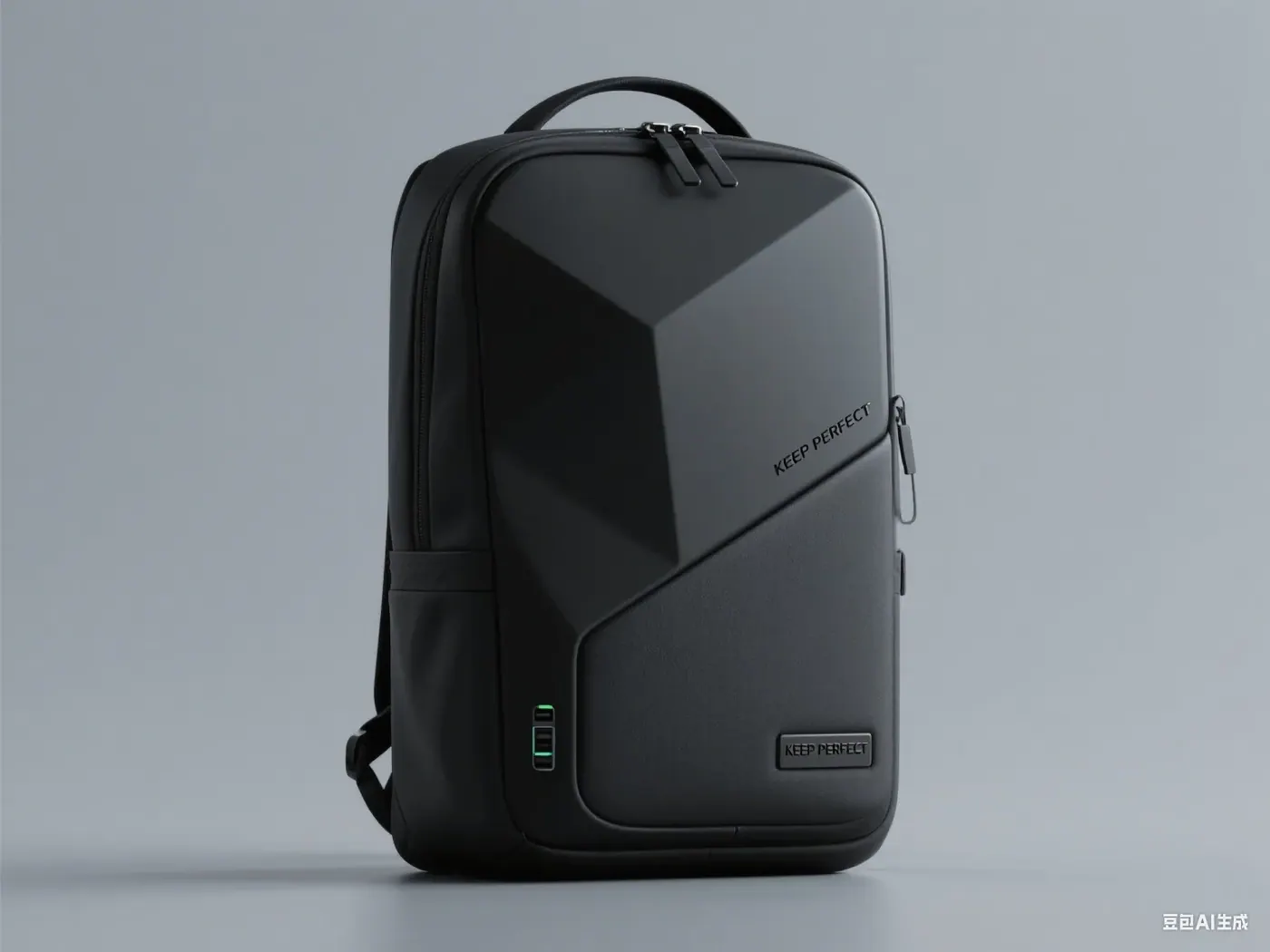
Coating chemistry is the third variable, and it is where PVC and TPU part company. PVC is cheaper and welds easily, but a PVC-coated pack carried below about minus 10 degrees Celsius cracks at the folds and the collar. TPU stays flexible well below freezing, resists diesel and form oil, and costs 2 to 4 USD more per unit at 1,000 pcs. For any market with a real winter, TPU is not an upgrade, it is the qualification. The full comparison is in the TPU versus PVC shell guide.
Hydrostatic head describes resistance to water pressure and should be read alongside abrasion. A pack kneeling on a wet slab, or sitting in a puddle with 10 kg of tools pressing down, generates real pressure at the base seam: 5,000 mm handles it, 3,000 mm does not. The measurement in service terms is explained in the hydrostatic head guide, and the weave options behind the denier figures in the ripstop fabric overview.
Volume, Load and the Tool Layout
Volume on a site is driven by tool bulk rather than clothing, and the answer for most trades sits between 30 and 40 litres. Below 28 L a pack will not close once a tool roll and a bottle are inside, and a pack that cannot be closed is one whose roll mouth does not reach its rating. Above 42 L it is awkward in a plant cab and on scaffolding. Loaded weight runs 8 to 14 kg, and that number decides whether the hip belt is a strap or a padded belt.
| Trade | Typical carry | Volume | Loaded weight | Layout requirement |
|---|---|---|---|---|
| Electrician | Hand tools, tester, cable, connectors | 30 to 35 L | 9 to 12 kg | 6 to 8 elastic loops, two zip pockets |
| Plumber | Wrench set, fittings, torch, flux | 32 to 38 L | 11 to 14 kg | Welded base pocket for wet fittings |
| Carpenter and formwork | Hammer, blades, nails, square | 28 to 34 L | 8 to 11 kg | Sleeve for a 500 to 600 mm level |
| HVAC and service | Gauges, hoses, refrigerant, seals | 34 to 40 L | 10 to 13 kg | Ventilated pocket for gassed-off parts |
| Supervisor and inspector | Tablet, drawings, camera, PPE | 26 to 32 L | 6 to 9 kg | Flat document bay of 330 mm plus a sleeve |
| General labourer | PPE, water, lunch, rain shell | 30 to 36 L | 7 to 10 kg | Hi-vis panel plus two 1 L bottle pockets |
Organisation is where the trade difference shows up and it is worth specifying. An electrician wants small items upright, which means elastic loops of 20 to 30 mm spaced at 35 to 45 mm rather than one open pocket. A plumber wants a welded pocket at the base for anything out of a wet pipe run, because it will drip and a stitched pocket will weep into the main cavity. A supervisor wants a flat 330 mm bay that takes a tablet without bending it.
Above 8 kg the harness matters more than any shell specification. A padded hip belt of 45 to 55 mm transfers 70 to 80 percent of the load off the shoulders, straps should run 50 to 60 mm with 8 to 12 mm foam, and load lifters pulling at 30 to 45 degrees stop the pack swinging on a ladder. Those three items add 250 to 350 g and 3 to 5 USD.
Closure and Zip: Dust Is the Real Enemy
The closure decision on a site is inverted relative to a hiking pack, because dust is a harder contaminant than water. Water drains and can be wiped; cement and cutting dust packs into zip teeth and turns a coated zip into a grinding paste. A roll mouth has no teeth to contaminate, which is why it is the right default for site work even though it costs four to eight seconds of access. Where a zip is wanted, it must be a covered coil zip with a garage at both ends.
| Closure | Dust tolerance | Water rating | Access time | Service interval |
|---|---|---|---|---|
| Roll mouth, three turns on a stiffener | Excellent | IPX6 | 6 to 10 s | None |
| Roll mouth, two turns | Good | IPX5 | 5 to 8 s | None |
| Covered coil zip with garage | Good | IPX5 | 2 to 3 s | Clean every 100 to 150 cycles |
| Exposed coated zip | Poor | IPX4 to IPX5 | 1 to 2 s | Clean every 50 to 80 cycles |
| Flap with two buckles | Moderate | IPX4 | 3 to 5 s | Buckle check monthly |
| Airtight zip | Poor in dust | IPX8 | 2 to 4 s | Rinse and lubricate every 300 to 800 cycles |
An exposed coated zip on a cutting or grinding task needs cleaning every 50 to 80 cycles, which at fifteen openings a day is three to five working days, and nobody does it. The same zip behind a storm garage reaches 100 to 150 cycles and is achievable. An airtight zip reaches IPX8 and is superb on a boat, but on a site it is a maintenance liability costing 18 to 26 USD per unit for a rating nobody needs.
The stiffener in a roll mouth is most often value-engineered away and most often missed. A collar without one can be rolled but not rolled tightly, and a loose two-turn roll weeps where a tight three-turn roll on a 1.6 mm HDPE stiffener passes. It weighs 30 to 60 g and costs under 1 USD. Closure families are compared in the waterproof zipper types guide and the TIZIP versus roll-top comparison.
Visibility, Dust and Chemical Exposure
Visibility is a specification on a site, not a colour preference. Plant moves in low light and at dawn, and a dark pack worn by a worker bent over a duct is invisible from a cab. A pack for road, rail or airside work should be specified to class 2 areas: at least 0.50 square metres of fluorescent material and 0.13 square metres of retroreflective band, distributed so the wearer reads from any side. The requirement is published by ISO as ISO 20471, and the photometric performance of the banding is what a laboratory measures.
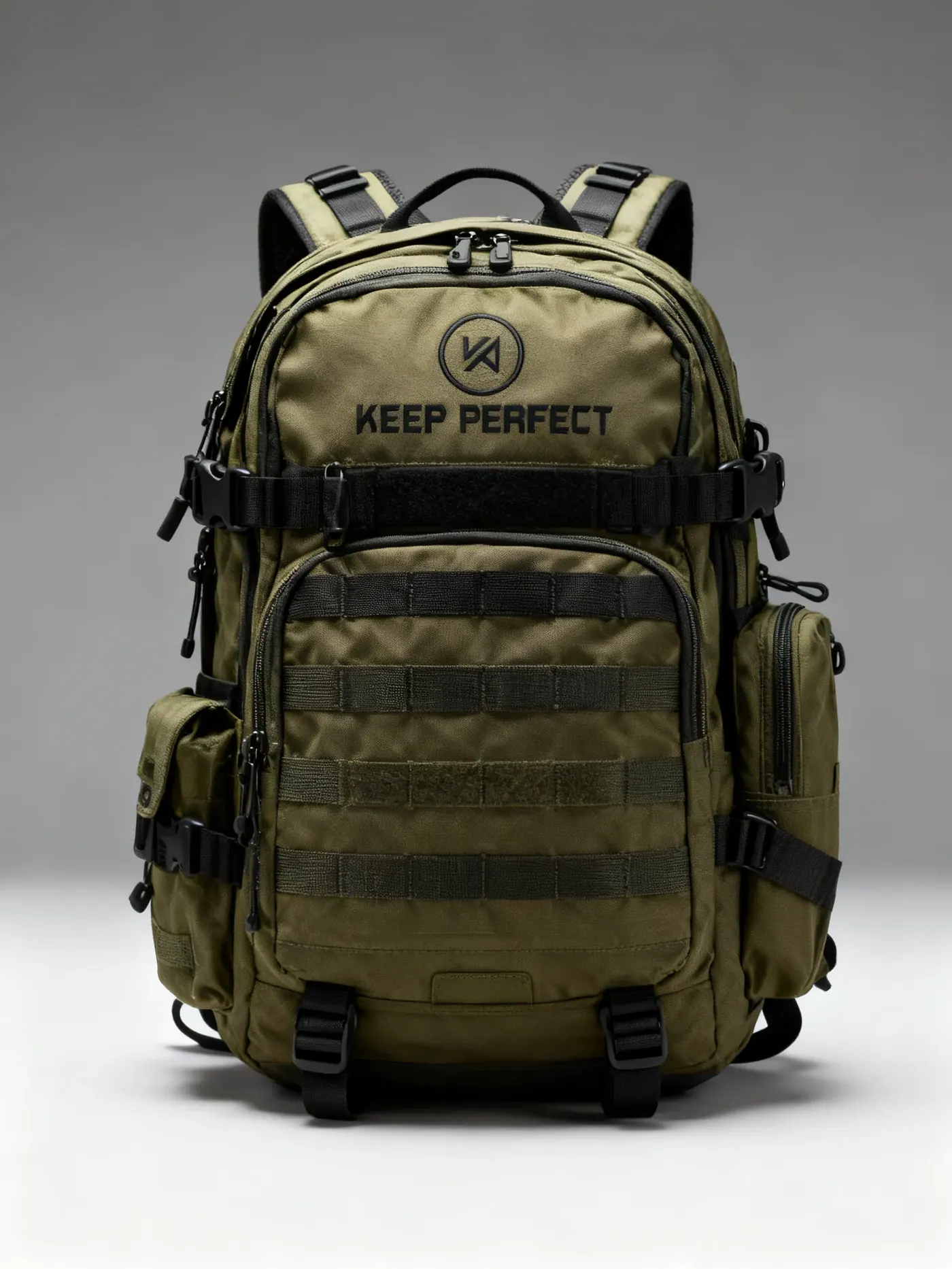
| Exposure | Requirement or limit | Method | Mitigation |
|---|---|---|---|
| Low light and plant traffic | 0.50 m2 fluorescent, 0.13 m2 retroreflective | ISO 20471 class 2 areas | Panels front, lid and both straps |
| Cement and mortar dust | Alkaline resistant topcoat | Colour fastness, grey scale 4 after wash | Fresh water rinse within 24 hours |
| Cutting and grinding dust | Sealed seams, wipe-clean shell | Visual after 500 dust cycles | Brush off dry before wetting |
| Diesel and form oil | No film swelling after 24 hours | Immersion screen on a coated coupon | TPU rather than PVC on plant work |
| Solvent based cleaners | No tackiness or print lift | Wipe test, 20 cycles | Mild pH-neutral detergent only |
| Ultraviolet on open decking | Grey scale 4 to light | ISO 105 B02, 20 hours | Pigmented rather than printed panels |
Cement is the chemical that surprises people: not aggressive like a solvent, but everywhere. Wet cement sits at pH 12 to 13, and left on a coating for a week it chalks the surface and makes the shell hold dirt rather than shed it. The control is cheap — fresh water within 24 hours and pH-neutral soap monthly. Colour matters too: a fluorescent shell with a dark base hides site dirt. Placement detail is in the backpack colour and visibility guide.
Structure, Base and Drop Performance
The base is the highest-value place to spend money on a jobsite pack, and it is where a specification copied from a leisure product fails first. A flat 840D base is holed by a rebar end, a masonry nail or a blade offcut, and a hole in the base is not repairable. A moulded base of 1.2 to 1.6 mm, turned up 40 to 60 mm at the sides so the seam sits above the contact zone, resists that puncture and keeps the welded seam out of the water pooling under a pack on a wet slab.
| Component | Jobsite specification | Leisure equivalent | Why the difference |
|---|---|---|---|
| Base panel | 1680D plus 1.2 to 1.6 mm moulded, turned up 50 mm | 840D flat panel | Rebar, gravel and blade puncture |
| Lower side panels | 1000D at 0.40 mm | 500D at 0.30 mm | The pack is put down on its side constantly |
| Frame sheet | 2.0 to 2.5 mm HDPE, removable | 1.0 to 1.5 mm | Load transfer with 10 to 14 kg of tools |
| Shoulder strap | 50 to 60 mm, 8 to 12 mm closed cell | 40 to 50 mm, 5 to 8 mm | Contact pressure at 12 kg over eight hours |
| Hip belt | 45 mm padded, 700 to 900 mm webbing | 25 mm webbing only | 70 to 80 percent of load off the shoulders |
| Buckles and hardware | Acetal, 300 to 500 N | Metal or unspecified | Corrosion, deformation, and no sharp edges |
| Top lift handle | 25 mm webbing bar-tacked, 60 kg | Single layer webbing | The pack gets thrown, not placed |
A drop test is the cheapest way to separate a jobsite pack from a recoloured leisure pack and takes ten minutes: load to 12 kg, drop from 1.0 metre onto concrete on each of its six faces, then re-run the jet test. A pack that passes before the drop and fails after it has a seam or a base that will not survive a season, and the failure appears at the base corners first. Corner reinforcement is the cheap fix — a 30 by 30 mm 1680D patch welded over each base corner adds 15 to 40 g and roughly 1 USD, and it addresses the point where most site returns start.
Testing and Acceptance Before a Bulk Order
Five tests will qualify a jobsite pack, and the waterproof test is the one everybody asks for and the one least likely to fail; abrasion, drop and dust are what separate products. Run them on pre-production samples, and run abrasion on a coupon from the base panel rather than the front, because that is where the wear happens.
- Jet test to IPX5 or IPX6: 12.5 litres per minute for three minutes, then 100 litres per minute, no moisture on indicator paper. The scale and conditions are defined in the IEC 60529 ingress protection standard; IPX5 is the sensible floor.
- Abrasion: Martindale to first break on a base coupon, 30,000 cycles for general trades and 45,000 for heavy civil. The methods are maintained by ASTM.
- Seam peel: require at least 90 percent of fabric tensile strength, so the seam fails after the cloth, not before it.
- Loaded drop: 12 kg, 1.0 metre, six faces onto concrete, then re-run the jet test.
- Dust cycling: 500 open and close cycles with a masonry dust load, then a jet test and a zip pull test.
Commercial terms interact with the technical ones: a moulded base with turned-up side walls adds four to six working days to sampling, and a hi-vis banding programme needs its photometric certificate before the bulk runs. Standard terms are 500 pcs per design and colour, samples in 6 to 10 working days, bulk in 35 to 50 days, FOB Xiamen or DDP to more than 100 countries, inspected at AQL 2.5. The cost step between light and heavy specifications is set out in the budget versus premium comparison.
Care and Service Life on Site
Care on a site is mostly about order of operations: dust off dry, then rinse. Hosing a pack coated in cement dust turns it into a slurry that works into the zip and the seam, and it is the commonest way a good pack is wrecked by a careful owner. The rest is short enough to print on a hangtag: brush off the dry dust, rinse with low-pressure fresh water for 30 to 60 seconds, clear the drain grommet, open every compartment and dry for 8 to 12 hours.
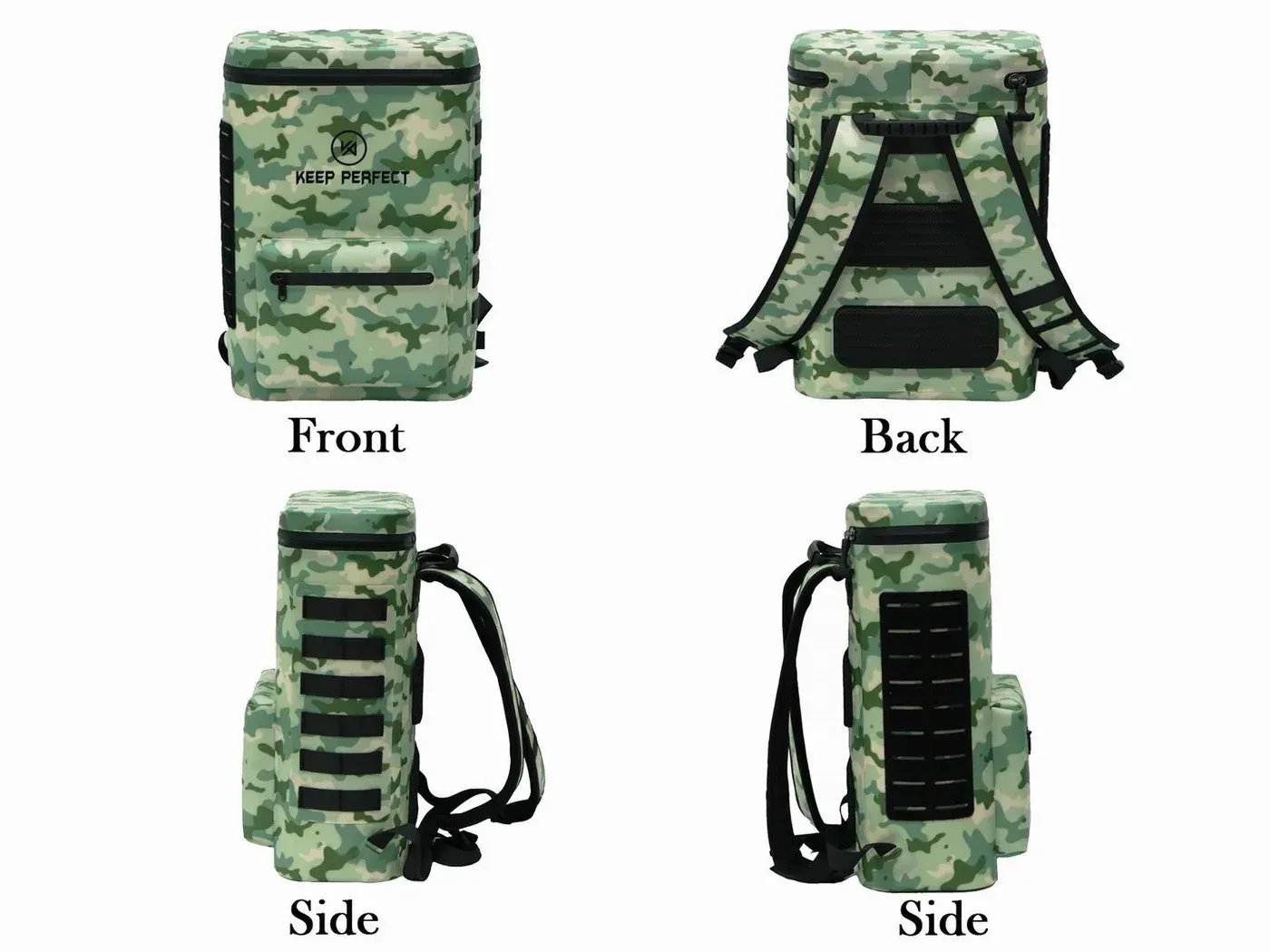
| Task | How | Interval | Never |
|---|---|---|---|
| Remove dry dust | Brush or low-pressure air before wetting | Daily | Hose first, which makes slurry |
| Rinse the shell | Fresh water, 30 to 60 s, low pressure | Weekly or after concrete | Solvent thinners or brake cleaner |
| Clear the drain grommet | Open the 8 to 10 mm grommet, flush | Weekly | Leave it blocked with grout |
| Service the zip | Soft brush and fresh water, no lubricant | Every 100 to 150 cycles | Oil or grease, which holds grit |
| Neutralise cement | Fresh water with pH-neutral soap | Within 24 hours of contact | Bleach or caustic cleaner |
| Dry | Open, invert, 20 to 25 degrees, moving air | 8 to 12 hours | Radiator, hot cab or tumble dryer |
| Retirement check | Seam lift over 10 mm, chalking, cracked buckle | Monthly | Keep using a lifted base seam |
Service life should be set honestly at the point of sale, because a jobsite pack is a consumable in a way a travel pack is not. Twelve to twenty-four months of five-day-a-week use is a good result, delivered most reliably by a moulded base and a dust-managed closure. Programmes that buy on price alone see first returns at month six to nine, concentrated at the base corners and the zip. Repairability matters too: a welded TPU shell can be patched for another season, while a delaminated PVC coating cannot, as set out in the seam repair guide.
A Specification Checklist for Buyers
Seven checks take five minutes with a sample in hand and eliminate most packs that photograph well and fail on site.
- Is the base moulded, 1.2 to 1.6 mm, turned up at least 40 mm at the sides? A flat fabric base is punctured by rebar.
- Is the shell 1000D at 0.40 mm or better, and TPU rather than PVC? PVC cracks below about minus 10 degrees Celsius.
- Do welded seams peel at 90 percent of fabric strength, and are the base corners reinforced?
- Is the closure a roll mouth or a covered zip with a garage? An exposed zip needs cleaning every 50 to 80 cycles in dust.
- Are buckles acetal at 300 to 500 N with no metal contact points? Metal deforms and corrodes.
- Is there a padded hip belt of 45 mm or more? Above 8 kg a webbing strap puts the load on the shoulders.
- Are hi-vis panels fluorescent and banded to 0.50 and 0.13 square metres?
Aquagrip builds jobsite configurations to that specification: 1000D and 1680D TPU shells, moulded bases, welded seams inspected at AQL 2.5, 500 pcs per design and colour, samples in 6 to 10 working days, bulk in 35 to 50 days, FOB Xiamen or DDP to more than 100 countries. Programme records and the inspection archive are held. The shell and closure families behind every configuration are described in the waterproof backpack specification guide, and the same harness geometry runs across the rain commute range.
People Also Ask
What denier should a construction work backpack be?
1000D polyester with a 0.40 mm TPU coating for general trades, and 1680D ballistic at 0.50 mm with a 1.2 to 1.6 mm moulded base for heavy civil and demolition. Coating thickness matters more than denier in the scuff zones.
How many litres does a tool backpack need?
30 to 40 litres for most trades. Below 28 L the pack will not close once a tool roll and a water bottle are inside, and above 42 L it becomes awkward in a plant cab, on scaffolding and in a ceiling void. Loaded weight lands at 8 to 14 kg.
Why do zips fail so fast on a construction site?
Because cement and cutting dust packs into the teeth and works into the tape. An exposed coated zip needs cleaning every 50 to 80 cycles in cutting dust; the same zip behind a dust garage reaches 100 to 150 cycles.
Is a roll-top better than a zip for site work?
Yes in most cases. A roll mouth has no teeth to contaminate, reaches IPX6 with three turns on a stiffener, and needs no servicing. The trade is access time: 6 to 10 seconds against 2 to 3 seconds for a covered zip.
How long should a jobsite backpack last?
12 to 24 months of five-day-a-week site use is a good result, against three to five years for the same materials in leisure use. A moulded base and a dust-managed closure are what deliver it.
Can cement dust damage a waterproof backpack?
Yes, it chalks the coating and dulls the print. Wet cement is alkaline at pH 12 to 13, and left on the shell for a week it makes the surface hold dirt. Rinse with fresh water and pH-neutral soap within 24 hours of contact.
Frequently Asked Questions
Q1. What makes a backpack suitable for construction work?
A 1000D or 1680D TPU-coated shell, welded seams, a moulded base of 1.2 to 1.6 mm turned up at the sides, a dust-managed closure, acetal hardware and a padded hip belt. Waterproofing is the easiest of the five site attack modes to solve and the least likely to be why a pack is retired.
Q2. What IPX rating does a jobsite backpack need?
IPX5 is the floor and IPX6 the target. IPX5 covers a 12.5 litre per minute jet for three minutes, IPX6 covers 100 litres per minute. IPX7 and IPX8 buy immersion protection a site pack never needs.
Q3. Should a site pack use a roll-top or a zip?
A roll-top, unless fast access is the priority. A roll mouth has no teeth for dust to contaminate and needs no servicing. Where a zip is wanted, specify a covered coil zip with a garage at both ends, and budget for cleaning every 100 to 150 cycles.
Q4. How much weight can a jobsite backpack carry?
8 to 14 kg in normal trade use, and the harness should be specified for the top of that range. A padded hip belt of 45 to 55 mm moves 70 to 80 percent of the load off the shoulders.
Q5. Does a moulded base really matter?
Yes. A flat 840D base is holed by a rebar end, a masonry nail or a blade offcut, and a hole in the base is not practically repairable. A moulded base of 1.2 to 1.6 mm turned up 40 to 60 mm also keeps the welded seam above the water that pools under a pack on a wet slab.
Q6. Is TPU better than PVC for a work backpack?
Yes for any market with a real winter. PVC is cheaper and welds easily but stiffens and cracks at the folds below about minus 10 degrees Celsius. TPU stays flexible well below freezing, resists diesel and form oil, and costs 2 to 4 USD more per unit at 1,000 pcs.
Q7. Do I need high-visibility panels on a site backpack?
For road, rail, airside or plant-adjacent work, yes. Specify to ISO 20471 class 2 areas: at least 0.50 square metres of fluorescent background and at least 0.13 square metres of retroreflective banding, distributed so the wearer reads from any direction.
Q8. What is the MOQ and lead time for a jobsite backpack programme?
500 pcs per design and colour, samples in 6 to 10 working days, bulk in 35 to 50 days. A moulded base adds four to six working days to sampling, and hi-vis banding needs its photometric certificate before the bulk runs.
Q9. How do I clean cement dust off a waterproof backpack?
Brush the dry dust off first, then rinse with low-pressure fresh water for 30 to 60 seconds. Never hose a dust-coated pack first: the dust becomes a slurry that works into the zip. Finish with pH-neutral soap and dry open for 8 to 12 hours.
Q10. Can a welded seam on a work backpack be repaired?
Yes, if the shell is TPU. A welded patch or a solvent-free TPU repair tape holds for another season. A delaminated PVC coating cannot be repaired at all, which makes TPU the specification that also keeps a repair path open.