Match litres to trip length first and to gear second: 20 litres covers a day out, 30 litres covers a two to three day trip with a compact sleep kit, and 40 to 50 litres covers four to seven days with one resupply stop. The quickest method is a three line formula: eight litres per day of travel, plus an activity modifier of 4 to 8 litres for bulky or wet gear, plus 2 to 4 litres when a rain shell, gloves and spare socks ride inside the main body. A three day coastal walk with a synthetic sleep system and a shell works out at 24 plus 6 plus 4, which is 34 litres, so a 35 litre body is the correct call rather than a 30 litre that bulges at the seam or a 45 litre that lets the load slop. Roll top designs absorb roughly 5 to 8 litres of error in either direction, which is why they survive a miscalculation better than a zippered body cut to a fixed volume. Load mass is the second check: keep a packed pack between 15 and 25 percent of body weight, so a 68 kilogram walker should finish between 10 and 17 kilograms including water. Programme entry for a sized range is 500 pcs per design and colour, prototypes in 6 to 10 working days, bulk in 35 to 50 days, FOB Xiamen.
The Three Line Litre Formula
Capacity arguments usually fail because both sides are describing gear rather than time. Days are the only input that everyone at the table already agrees on, so start there and treat gear bulk as an adjustment rather than the base. Eight litres per day is the working figure for a temperate trip with a modern synthetic sleep system and a one person shelter; it rises to 10 or 11 litres per day in cold conditions where insulation volume dominates, and falls to 6 litres per day for hut to hut travel where food and shelter are provided.
Write the three lines down before shopping rather than after. Line one is days multiplied by the per day figure. Line two is the activity modifier, which covers anything with a poor packing density: a synthetic bag rather than down, a foam pad rather than inflatable, waders, a camera body with two lenses, or a climbing rack. Line three is the weather modifier, which is not about rain itself but about the volume of wet weather clothing and the dry bag habit that comes with it.
| Formula line | What it covers | Typical litres | Worked three day example |
|---|---|---|---|
| Line one, days | Shelter, sleep system, clothing, food, water carried | 8 litres per day, 6 to 11 by season | 3 days at 8 litres = 24 litres |
| Line two, activity | Bulky or low density gear that will not compress | 4 to 8 litres once | Synthetic bag and foam pad = 6 litres |
| Line three, weather | Shell, gloves, hat, spare socks, dry storage for wet kit | 2 to 4 litres once | Shell and spare base layer = 4 litres |
| Running total | Target volume before rounding | Sum of the three lines | 34 litres, so buy 35 litres |
| Tolerance allowance | Roll top collar folded four turns | Plus 5 to 8 litres of headroom | Usable range 34 to 42 litres |
| Reality check | Packed mass as share of body weight | 15 to 25 percent | 10 to 17 kilograms at 68 kilograms |
Round up to the nearest available size, never down. A pack that is 4 litres short forces gear into external straps, and externally strapped gear is precisely the gear that gets wet, snagged and lost. A pack that is 6 litres too big costs nothing except a slightly longer compression pull, and modern compression systems recover that difference in about ten seconds at the trailhead.
Volume Bands and What Each One Actually Holds
Volume bands are more useful than individual litre numbers because bodies within a band share a back system, a strap geometry and a price tier. The bands below describe the waterproof bodies most commonly ordered for programmes in this category, with the trip length each one serves and the mass range it is designed to carry comfortably. Treat the load column as the governing limit rather than the litre figure, because suspension is rated by mass and the litres only describe how much space that mass occupies.
| Volume band | Typical dimensions, cm | Empty weight | Designed load | Best trip length |
|---|---|---|---|---|
| 15 to 20 litres | 42 x 26 x 18 | 480 to 720 grams | 3 to 7 kilograms | Day hike, commute, city |
| 22 to 28 litres | 48 x 30 x 20 | 700 to 950 grams | 6 to 10 kilograms | Long day, hut overnight |
| 30 to 38 litres | 54 x 32 x 24 | 900 to 1,250 grams | 9 to 14 kilograms | Two to three days |
| 40 to 50 litres | 62 x 34 x 28 | 1,200 to 1,700 grams | 12 to 18 kilograms | Four to six days |
| 55 to 70 litres | 72 x 38 x 32 | 1,600 to 2,300 grams | 16 to 25 kilograms | Seven days or winter trips |
| 70 litres and above | 80 x 42 x 34 | 2,100 to 2,900 grams | 20 to 30 kilograms | Expedition, paddle camping |
Two observations surprise most buyers. First, empty weight does not scale linearly with volume: a 40 litre body weighs roughly 1.6 times a 20 litre body, not twice, because the back panel and harness are shared across sizes. Second, the designed load figure matters more than the litre figure when the load is dense, so a 30 litre pack holding 12 kilograms of camera bodies and water will feel worse than a 40 litre pack holding the same 12 kilograms of clothing.
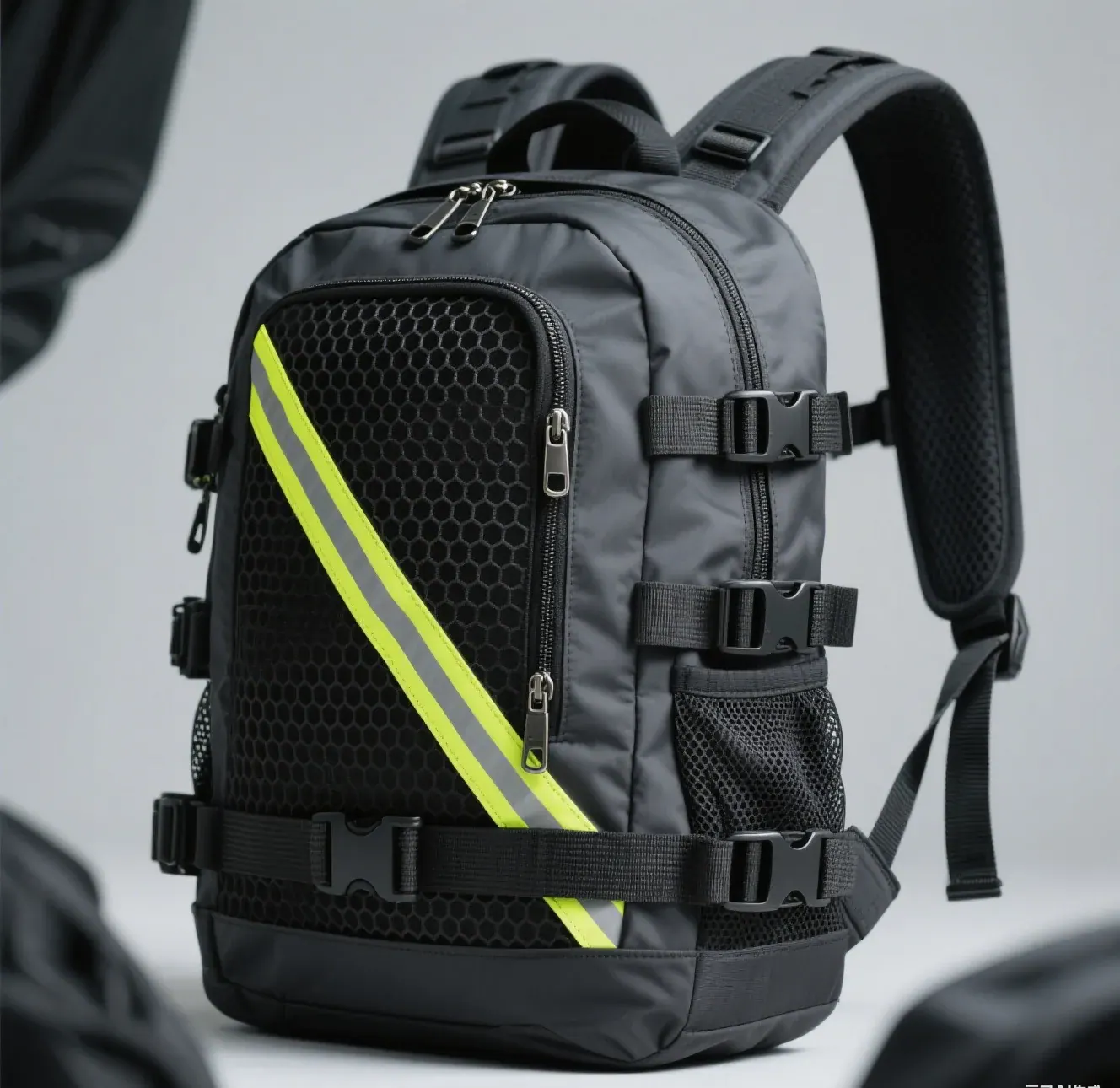
Where a trip sits between two bands, choose the smaller one if the gear compresses and the larger one if it does not. Down and soft clothing compress by 30 to 40 percent under compression straps; synthetic bags, foam pads, hard cases and camera inserts compress by almost nothing, and forcing them into a small body transfers the strain to the seam rather than to the contents.
Why the Number on the Hangtag Is Not the Number You Get
Volume is measured by at least three different conventions and they do not agree. Fill the main body with 20 millimetre plastic spheres and read one figure; fill it with water and read a smaller one, because spheres leave air gaps; count the collar unrolled and read a larger one than any buyer will ever use. Differences of 10 to 18 percent between methods are normal on the same physical pack, which means a 30 litre tag can describe anything from 27 to 35 litres of genuinely usable space.
| Measurement convention | Result on one 30 litre body | Why it differs | How to use it |
|---|---|---|---|
| Water displacement | 27.2 litres | No air gaps, tightest reading | Quote this for conservative planning |
| 20 millimetre spheres | 30.4 litres | Sphere packing leaves voids | The common retail figure |
| Spheres with collar unrolled | 35.8 litres | Counts space nobody uses | Ignore for gear planning |
| External pockets included | 33.0 litres | Adds volume outside the lining | Separate wet and dry storage |
| Nominal figure from the range drawing | 30.0 litres | Rounded for the range | Use only for range comparison |
The practical consequence is that you should compare two packs measured the same way, not two numbers printed on two tags from two brands. Ask which convention was used before you compare, and if the answer is unclear, plan for the water displacement figure, which is the tightest and therefore the safest. On roll top bodies the collar is the largest single source of confusion: folding four turns consumes roughly 12 to 15 centimetres of collar height, and that folded section contributes almost nothing usable while still being counted in some methods.
Waterproof construction costs usable space in a way ordinary packs do not. A welded seam turns inward rather than outward, a roll top collar consumes 12 to 15 centimetres of height, and a TPU laminate at 0.35 millimetres is stiffer than a woven face, so corners pack less efficiently. Budget 8 to 12 percent more nominal volume for a waterproof body than you would for a conventional one carrying identical gear.
Weight: The Check Most Buyers Skip
Volume decides whether gear fits; mass decides whether the trip is enjoyable. The comfortable ceiling for most fit walkers is 25 percent of body weight, with the sweet spot between 15 and 20 percent for trips longer than three days. Above that figure, per day distance typically falls by 15 to 25 percent and reported knee and hip complaints rise sharply, which is a training and load problem rather than a pack problem but is still caused by buying too much volume and then filling it.
| Body weight | 15 percent load | 20 percent load | 25 percent ceiling | Practical comment |
|---|---|---|---|---|
| 55 kilograms | 8.3 kilograms | 11.0 kilograms | 13.8 kilograms | Stay near 20 litres |
| 68 kilograms | 10.2 kilograms | 13.6 kilograms | 17.0 kilograms | 30 to 35 litres suits |
| 80 kilograms | 12.0 kilograms | 16.0 kilograms | 20.0 kilograms | 35 to 45 litres suits |
| 95 kilograms | 14.3 kilograms | 19.0 kilograms | 23.8 kilograms | 45 to 55 litres suits |
| Below 50 kilograms | 7.5 kilograms | 10.0 kilograms | 12.5 kilograms | Prefer 20 to 28 litres |
Water is the fastest way to breach that budget and the easiest to correct: 2 litres carried unnecessarily is 2 kilograms, roughly 12 percent of the ceiling for a 68 kilogram walker. Check the water plan against the route before blaming the pack. Empty weight matters at the small end too, where two 20 litre bodies can differ by 240 grams, or 3 to 4 percent of the load ceiling for a light walker. Ask whether the saving came from thinner laminate or lighter hardware, and see the coating thickness explainer.
Twenty Litres: Day Trips, Commutes and City Use
Twenty litres is the most under-rated band in the category and the one that gets replaced most often, because buyers assume it is too small and then discover that a day rarely needs more. A 20 litre body holds a shell, 1.5 litres of water, lunch, a small first aid kit, a 15 inch laptop in a sleeve and a spare layer, and it still fits under an aircraft seat at 42 x 26 x 18 centimetres. Empty weight in the 480 to 720 gram range means the pack itself is rarely the reason a day feels long.
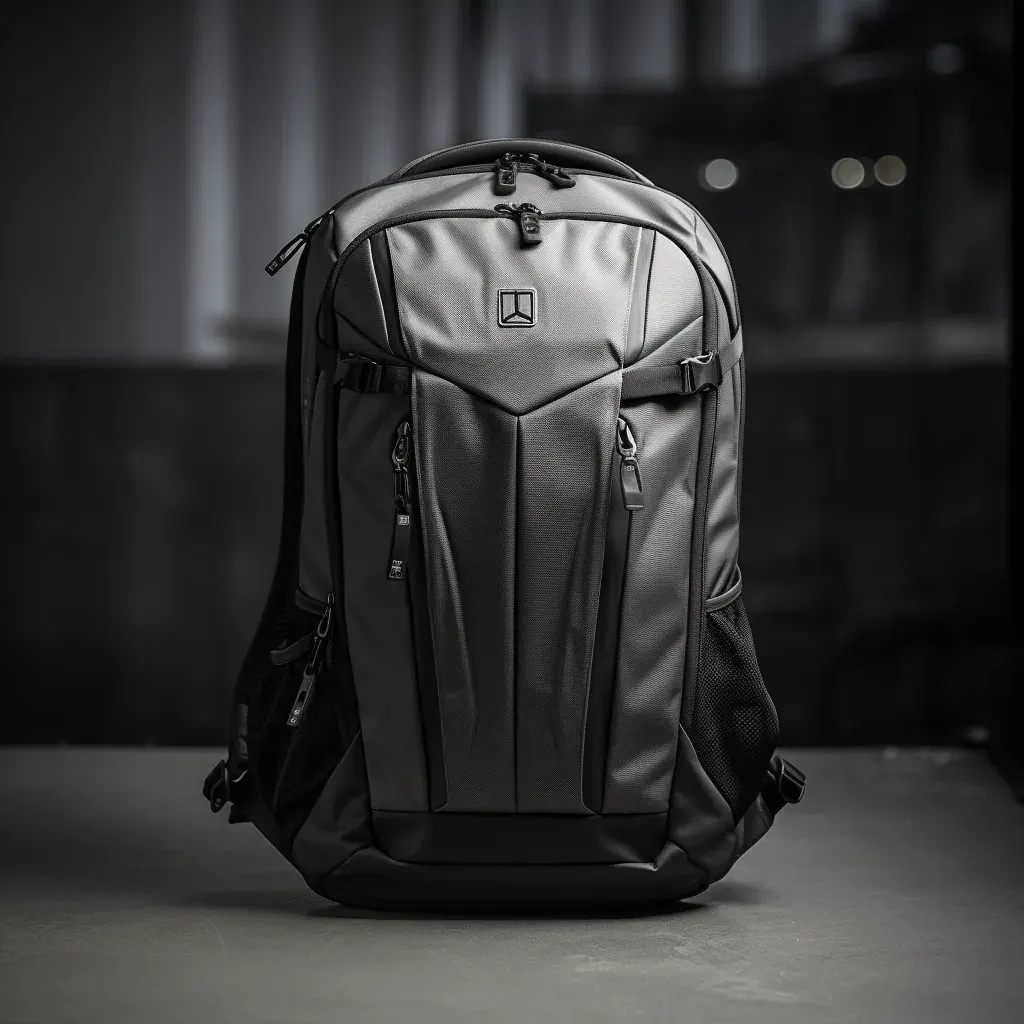
The case for staying small is behavioural: a 20 litre body cannot be overfilled, so the load stays under 7 kilograms by construction. For commuting the governing number is the internal sleeve dimension, not litres, and a 15 inch laptop in a rugged sleeve can need 5 to 10 millimetres more than a bare measurement suggests. Where a trip needs both electronics and wet kit, a separated lower compartment of 4 to 6 litres is worth more than extra litres. The trade-offs are set out in the wet dry separation guide, and commuting sizing sits in the rain commute notes.
Thirty to Forty Litres: Weekends and Short Multi-Day Trips
This is the band where the three line formula lands most often and where waterproof construction earns its cost. Two days of temperate travel needs roughly 22 litres by the formula, three days needs 30 litres, and four days with one resupply needs about 38 litres, so a 35 litre body covers most of that span with the collar as the adjustment. Empty weights run 900 to 1,250 grams and designed loads 9 to 14 kilograms, which is the range most weekend walkers actually achieve once food and water are counted.
- Two days, hut or hostel overnight: 22 to 26 litres, load 6 to 9 kilograms, no cooking system carried.
- Two days, tent and cooking: 28 to 32 litres, load 9 to 12 kilograms, fuel and stove add 1.2 kilograms.
- Three days, temperate, one resupply: 32 to 36 litres, load 11 to 14 kilograms, the default weekend size.
- Four days with a compact sleep kit: 36 to 40 litres, load 12 to 15 kilograms, collar folded three turns.
- Three days in persistent rain: add 3 to 4 litres for the shell, gloves and a dry storage cavity for wet kit.
Choose 35 litres over 30 when the trip includes any forecast rain, because the extra band is cheaper than the alternative failure mode. Choose 30 over 35 only when the load is dense and compressible and the route involves scrambling or dense vegetation, where a slimmer silhouette at 24 centimetres depth rather than 28 catches noticeably less on rock and branch. Route conditions and forecast both belong in the decision, and forecast rainfall history for a region is published by NOAA, whose climate records are the fastest way to see whether a month is genuinely wet or merely reputed to be.
Fifty Litres and Above: Expedition and Paddle Camping
Above 50 litres the limiting factor stops being volume and becomes the back system. A 65 litre body holding 20 kilograms needs a framed panel, a hip belt transferring 70 to 80 percent of the mass to the pelvis, and a torso adjustment range of at least 10 centimetres to fit a team of users. Buying on litres alone at this size is the most common error, because the same nominal volume exists in both framed and unframed bodies.
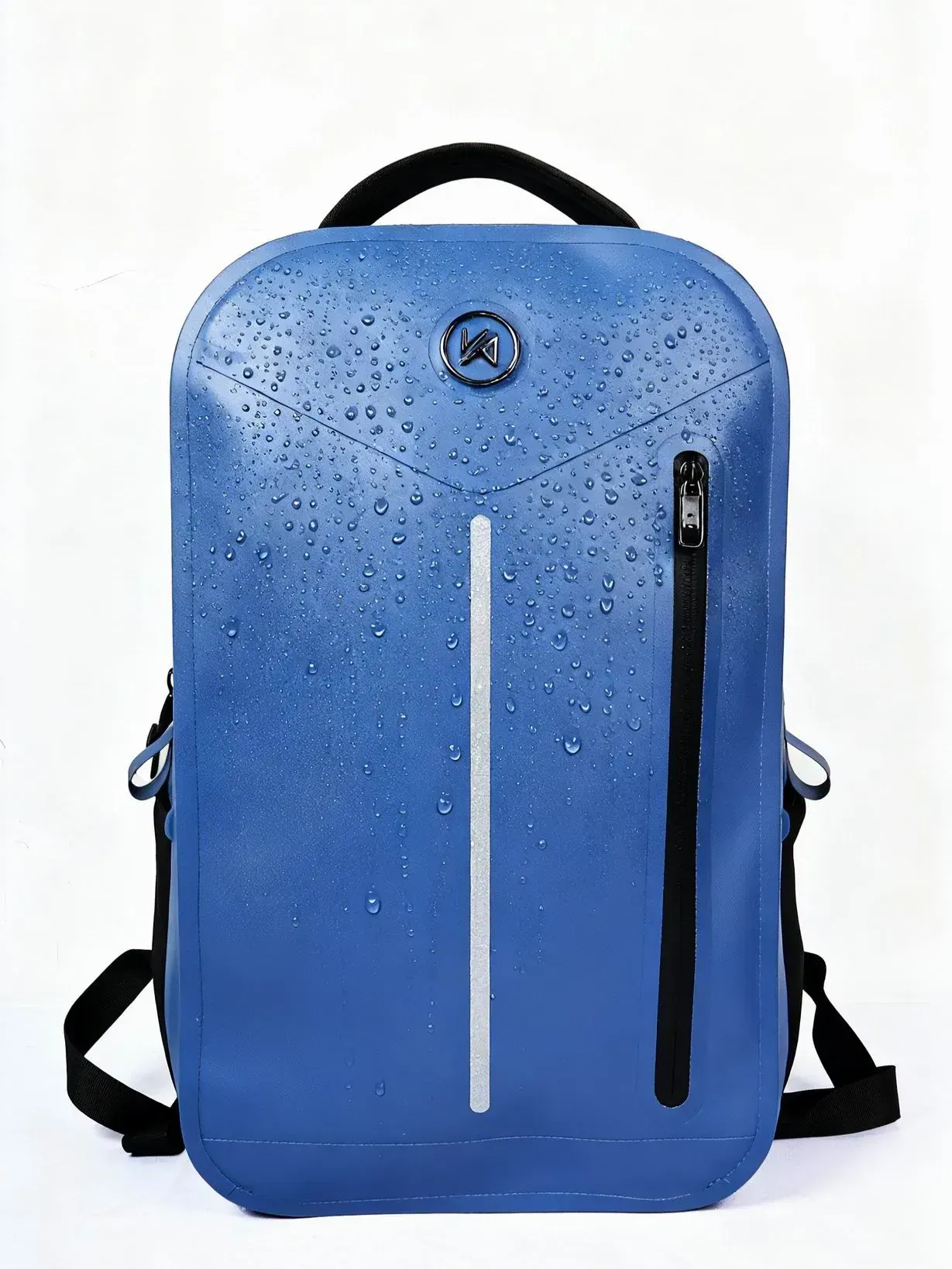
Paddle camping changes the calculation again because the pack spends hours lying in bilge water or strapped to a deck, and the hatch opening rather than the hull volume sets the limit: a 60 litre pack will not pass through a 44 centimetre hatch even when it fits the hull easily. Where the hatch is small, split the load across two 30 litre bodies. Guidance on hatch geometry is published in the kayak hatch sizing notes.
Ingress performance matters more as volume grows, because a large body has more seam length and more closure length to fail. The rating codes and their test definitions are published by IEC, and a meaningful specification names the code, the method and the sample condition together rather than using the unqualified word waterproof. Large bodies destined for deck storage are usually specified at the higher immersion codes, discussed in the submersible construction explainer.
Volume Choices for Bulk Programmes
Volume is the single biggest driver of unit cost in a waterproof range, ahead of colour count and branding method, because material yield scales with surface area while labour scales with seam length. A 20 litre body and a 45 litre body built from the same laminate can differ by 45 to 70 percent in unit cost, which is why a range plan usually spans three sizes rather than five in the first season. Programme entry is 500 pcs per design and colour, with prototypes in 6 to 10 working days and bulk in 35 to 50 days.
| Programme decision | Effect on unit cost | Effect on schedule | Recommended setting |
|---|---|---|---|
| Add a fourth size to the range | Plus 4 to 9 percent in overhead recovery | Plus 8 to 12 working days | Two or three sizes first season |
| Share a back system across sizes | Minus 6 to 12 percent on tooling | Minus 5 to 8 working days | Share across 30 and 40 litre bodies |
| Increase coating thickness by 0.1 mm | Plus 3 to 6 percent material cost | None if grade is stocked | 0.35 mm for general duty |
| Specify a roll top over a waterproof zip | Minus 3 to 6 USD per unit | Minus 4 to 6 working days | Roll top for value tiers |
| Add an internal laptop sleeve | Plus 1.5 to 3 USD per unit | Plus 2 to 3 working days | Only on sizes under 30 litres |
| Second colour in the same size | Plus 3 to 5 percent per extra colour | Plus 4 to 7 working days | Two colours maximum at launch |
Ablation testing on the fabric specified for a large panel is worth booking before tooling, because abrasion resistance and hydrostatic performance both degrade with use and a large body flexes more per litre than a small one. Test methods for coated fabrics are published by ASTM, and citing the method number in the specification makes the requirement enforceable rather than rhetorical. Range planning and size selection by activity are covered in the types by activity guide, and the full range sits in the waterproof travel backpack overview.
Seven Volume Mistakes Worth Avoiding
Most sizing complaints trace back to one of seven predictable errors, and at least four of them are correctable without buying anything at all.
- Sizing for gear rather than for days, which produces a pack that is right once a year and wrong the other eleven months.
- Comparing litre figures measured by different conventions, which can disguise a 15 percent real difference.
- Ignoring empty weight at the small end, where a 240 gram difference is 3 to 4 percent of the load ceiling.
- Buying above 50 litres on litres alone, where the harness and hip belt govern comfort instead.
- Assuming a roll top collar adds usable space, when four turns of folding consume 12 to 15 centimetres of height.
- Forgetting that waterproof construction costs 8 to 12 percent of usable internal space compared with a conventional body.
- Planning volume without planning water, when 2 litres carried unnecessarily is 2 kilograms of needless load.
One more is specific to wet climates and worth stating separately: a pack that is exactly the right size dry is often a litre or two short in persistent rain, because wet kit cannot be compressed and should not share a cavity with dry kit. Adding 3 to 4 litres of planned volume for wet weather is cheaper than carrying a wet sleeping bag for three days. The wider comparison between day and expedition sizing is set out in the daypack versus expedition comparison, and the dimension tables for each band are published in the waterproof backpack size and capacity guide.
Sizing a Range and What to Ask Next
A sensible first season range covers three volumes rather than five: 20 to 22 litres for day and commute, 30 to 35 litres for weekend and short multi-day, and 45 to 50 litres for expedition and paddle camping. Those three cover roughly 85 percent of demand, share a back system across the middle and upper sizes, and leave the collar geometry as the adjustment that absorbs the remaining error.
QUANZHOU JUNYUAN BAGS has built waterproof capacity ranges since 2014, with the founding team in the industry since 2004, monthly output of 200,000 units verified by SGS and certification to BSCI and ISO 9001. Programme entry is 500 pcs per design and colour, prototypes in 6 to 10 working days, bulk production in 35 to 50 days, FOB Xiamen or DDP into more than 100 countries. Materials are screened against REACH and California Prop 65, and every order is inspected at AQL 2.5 before release. Dimension sheets, volume measurement conventions and range planning templates are published. Sizing briefs go to service@junyuanbags.com.
People Also Ask
What size waterproof backpack do I need for a weekend?
Two to three days of temperate travel works out at 24 to 32 litres using eight litres per day plus a 4 to 8 litre activity modifier. A 30 to 35 litre body covers the span, with the roll top collar absorbing 5 to 8 litres of error either way.
Is a 30 litre waterproof backpack enough for three days?
Yes for a compact sleep system, and marginal for a synthetic bag with a foam pad. Run the three line formula: 24 litres for three days, plus 6 for bulky gear, plus 4 for wet weather clothing, which lands at 34 litres and argues for a 35 litre body.
How much weight should a waterproof backpack carry?
Between 15 and 25 percent of body weight, with the comfortable long distance range at 15 to 20 percent. A 68 kilogram walker should finish between 10 and 17 kilograms including water, and a 20 litre body under 720 grams keeps the pack itself out of that budget.
Why does my 30 litre pack hold less than my friend's 30 litre pack?
Volume is measured by different conventions. Water displacement gives the tightest figure, 20 millimetre spheres give a figure about 10 to 12 percent higher, and counting the collar unrolled adds another 5 litres that nobody can actually use.
Should I size up for rainy weather?
Add 3 to 4 litres for persistent rain. A shell, gloves, hat and spare base layer occupy real space, and wet kit cannot be compressed or shared with dry kit, so a pack that is exactly right dry usually runs short in a wet week.
Does a roll top collar add usable capacity?
It adds tolerance rather than capacity. Folding four turns consumes 12 to 15 centimetres of collar height that contributes almost nothing usable, but unrolled it gives 5 to 8 litres of headroom for the occasional bulky load.
Frequently Asked Questions
Q1. How do I calculate the right backpack volume for a trip?
Multiply trip days by eight litres for temperate conditions, or 6 litres for hut to hut and 10 to 11 litres for cold weather. Add 4 to 8 litres once for bulky gear such as a synthetic bag or camera kit, then add 2 to 4 litres for wet weather clothing. Round the result up to the nearest available size.
Q2. Is 20 litres too small for a day hike?
No. A 20 litre body holds a shell, 1.5 litres of water, lunch, a first aid kit, a spare layer and a 15 inch laptop, and it keeps the load under 7 kilograms by construction. It also fits under an aircraft seat at roughly 42 by 26 by 18 centimetres.
Q3. What volume do I need for a five day trip?
About 40 litres by the formula: 40 litres of base at eight litres per day, plus 4 to 6 litres for the sleep system, plus 3 to 4 litres for wet weather clothing. With one resupply stop on day three, 35 to 38 litres is usually sufficient.
Q4. How does waterproof construction change the volume I need?
Budget 8 to 12 percent more nominal volume than you would for a conventional pack carrying the same gear. Welded seams turn inward, a roll top collar consumes height, and a 0.35 millimetre laminate is stiffer than a woven face, so corners pack less efficiently.
Q5. What is the difference between 30 and 40 litre waterproof backpacks?
Roughly 4 centimetres of height, 4 centimetres of depth, 300 to 450 grams of empty weight and 3 to 4 kilograms of designed load. Choose 40 litres when the load is bulky rather than dense, and 30 litres for scrambling routes where a 24 centimetre depth catches less on rock.
Q6. Do bigger waterproof backpacks leak more?
They have more seam and closure length, so statistically there is more to fail, but a well specified 50 litre body with welded seams is not inherently more vulnerable than a small one. Name the rating code and the test method in the specification rather than relying on the word waterproof.
Q7. How do I measure the real volume of a backpack?
Fill the main body with 20 millimetre plastic spheres and count how many litres of spheres it takes, or use water displacement for the tightest figure. Expect 27 litres from water and 30 litres from spheres on the same nominal 30 litre body, and always compare two packs measured the same way.
Q8. Does empty weight matter when choosing a size?
Yes, particularly under 30 litres. Two 20 litre bodies can differ by 240 grams, which is 3 to 4 percent of the load ceiling for a light walker. Ask whether the saving came from thinner laminate or lighter hardware before treating a low figure as an advantage.
Q9. What volume fits under an airline seat?
Around 20 litres at 42 by 26 by 18 centimetres sits under most seats, while 30 to 40 litre bodies generally have to go in the overhead bin. Cabin allowances vary by carrier, so check the specific limit for your route before treating any figure as universal.
Q10. How many sizes should a first season range include?
Three: 20 to 22 litres for day and commute, 30 to 35 litres for weekend and short multi-day, and 45 to 50 litres for expedition and paddle camping. Those cover roughly 85 percent of demand and can share a back system across the middle and upper sizes.
Q11. Why does my pack feel heavy when the volume is right?
Because mass rather than volume governs comfort. Check the packed weight against 15 to 25 percent of body weight, then check the water plan, since carrying 2 litres unnecessarily adds 2 kilograms. If the total is within budget, the issue is harness fit rather than capacity.