A waterproof laptop backpack protects a device through three independent layers: a shell rated IPX5 or better under IEC 60529, a suspended sleeve with 10-12 mm closed-cell foam and a floor raised 25-40 mm off the base panel, and a welded inner pouch for the device itself. Sleeve sizing is arithmetic, not guesswork: a typical 15.6 in laptop measures about 361 x 245 x 20 mm and needs an internal sleeve of roughly 375 x 260 mm, while a 17.3 in machine at about 413 x 284 x 27 mm needs about 428 x 300 mm with 8-12 mm of clearance on each axis. Commute programmes run 20-26 L at 900 g to 1.2 kg empty, travel and field programmes 28-35 L, and unit cost moves about 3.50-6.00 USD between a basic sleeve and a suspended, seam-sealed bay. Programmes open at 500 pcs per design and colourway, samples take 6-10 working days, and bulk ships in 35-50 days.
Three Independent Layers Between Rain and a Device
Device claims arrive from one of three causes, and each has a different fix. The first is external water entering through the shell or closure, which is what an IPX rating addresses. The second is water that enters legitimately and then reaches the device: a wet umbrella, a wet rain shell or a sweating bottle packed alongside the laptop, which is what a suspended sleeve and a wet compartment address. The third is condensation inside a sealed body, which no amount of shell rating prevents and which surprises buyers most often because the pack never leaked.
| Defence layer | What it stops | Measured specification | Added cost per unit |
|---|---|---|---|
| Shell and closure | Rain, spray, wheel splash from passing traffic | IPX5 or better, welded or roll-top body | Baseline |
| Suspended sleeve | Water pooled in the bottom of the pack | 10-12 mm foam, floor raised 25-40 mm | 1.20-2.40 USD |
| Welded inner pouch | A wet item sharing the compartment | Welded seams, roll-top or zip seal | 1.50-3.00 USD |
| Wet compartment | Umbrella and rain shell next to electronics | Separate lined pocket with drain grommet | 0.80-1.60 USD |
| Back panel airflow | Sweat soaking through to the sleeve | 3D mesh with 6-10 mm air channels | 0.60-1.20 USD |
The cheapest way to fail is to buy the first layer and assume it covers the other two. A pack rated IPX6 with a laptop sleeve sitting flat on the base panel will still destroy a device in the case that actually happens in an office commute: an umbrella packed wet, the pack standing upright for 40 minutes on a train, and 200-400 ml of water running down to the lowest point of the body, exactly where the sleeve floor sits. Raising the sleeve floor 25-40 mm costs about 0.40 USD in foam and pattern work and removes that failure entirely.
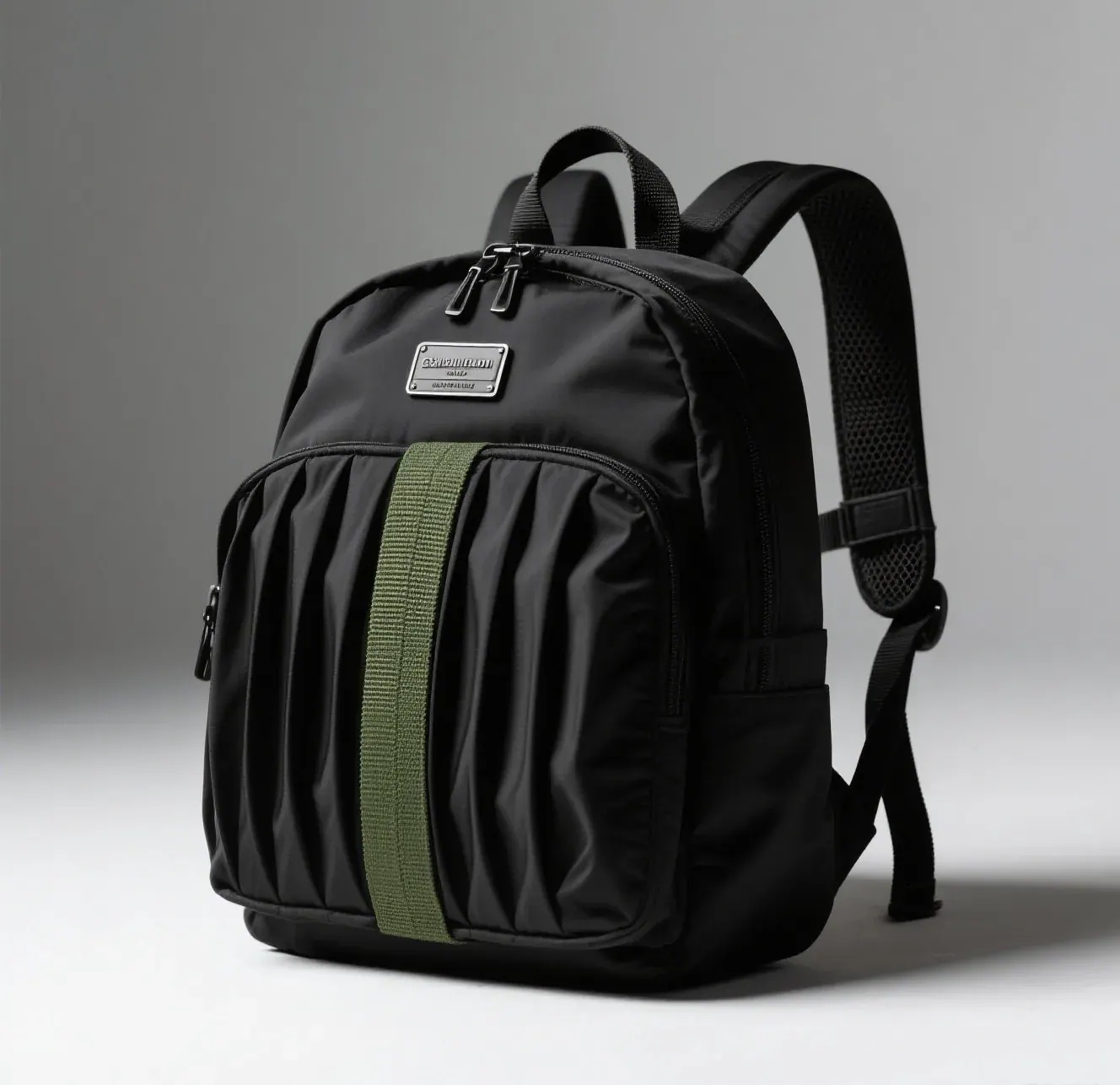
Sleeve Sizing: The Numbers for 13, 14, 15.6 and 17 Inch Devices
Sleeve dimensions should be derived from the device, not copied from a competitor sample. Measure the closed machine across width, depth and thickness, add 8-12 mm of clearance on width and depth so the device slides without forcing the seam, and add 6-10 mm on thickness so a charger brick or a folio case does not strain the sleeve mouth. Published screen sizes are diagonal and say nothing about footprint: two 15.6 in machines can differ by 25 mm in width depending on bezel design.
| Device class | Typical device dimensions | Required sleeve internal | Recommended pack volume | Target empty weight |
|---|---|---|---|---|
| 13 in ultrabook | 305 x 212 x 15 mm | 320 x 228 mm | 18-22 L | 780-950 g |
| 14 in business laptop | 320 x 220 x 17 mm | 335 x 236 mm | 20-24 L | 850-1,050 g |
| 15.6 in standard laptop | 361 x 245 x 20 mm | 375 x 260 mm | 22-28 L | 950-1,250 g |
| 16 in workstation class | 356 x 248 x 17 mm | 370 x 263 mm | 24-30 L | 1,050-1,350 g |
| 17.3 in desktop replacement | 413 x 284 x 27 mm | 428 x 300 mm | 28-35 L | 1,250-1,650 g |
| Tablet plus keyboard folio | 280 x 215 x 8 mm | 295 x 230 mm | 18-24 L | 780-980 g |
Two rules keep a sleeve usable across a device refresh cycle. First, size to the largest machine in the target fleet plus 5 mm, because a sleeve that is tight on the current model becomes unworkable when the next one ships 4 mm wider. Second, state the internal dimension in the tech pack rather than the nominal screen size, since a sleeve listed only as 15.6 in tells a pattern maker nothing and is the most common source of first-article rejects on laptop programmes. Detailed guidance for the largest sizes sits in our notes on 17 inch laptop sleeves and in the 15 inch laptop backpack shortlist.
What Rating a Device-Carrying Pack Actually Needs
The rating scale to write into a specification is the IPX code from the IEC 60529 ingress protection standard, because it ties a number to a nozzle, flow rate and duration instead of to an adjective. For an urban commute IPX5 is the sensible floor: a 6.3 mm nozzle at 12.5 L per minute for three minutes, which is heavier than any realistic rain and comparable to wheel splash from traffic. IPX6 suits riders and coastal commuters, IPX7 suits anyone who carries the pack on a boat or through a flood, and IPX8 is only justified where the pack itself is submerged deliberately.
| Rating | Condition | Realistic commute exposure | Device risk if exceeded |
|---|---|---|---|
| IPX4 | Splashing from any direction, 10 min | Light rain, 200 m between shelter | Water reaches the zip line in about 20 min |
| IPX5 | 6.3 mm nozzle, 12.5 L/min, 3 min | Steady rain, bus and kerb splash | Low, provided the sleeve is suspended |
| IPX6 | 12.5 mm nozzle, 100 L/min, 3 min | Storm ride, coastal front, hose-down | Low, and the zip line holds up |
| IPX7 | 30 min sealed at 1 m | Flash flood, dropped in a harbour | Very low if the body is welded |
| IPX8 | Continuous immersion beyond 1 m | Deliberate submersion, camera work | Very low, at 2.4-2.8 times closure cost |
Access style interacts with rating in a way buyers rarely model. A front-loader with a coated zip gives the fastest airport and desk access and reaches IPX5-IPX6, but the zip line is the leak path and it must sit under a storm flap with a gutter of at least 20 mm. A top-loader with a roll-top mouth reaches the same rating with no zip in the weather line at all, at the cost of 8-12 seconds of extra access time. The decision usually turns on whether the pack will be opened at a security tray, which is covered in more depth in front-loader versus top-loader designs and in our pillar guide to waterproof backpack construction.
Sleeve Engineering: Foam, Suspension and Seam Placement
A laptop bay is a protective package and should be specified like one. Four parameters decide whether a device survives a drop onto a station platform: foam thickness, foam density, how far the sleeve floor sits above the pack floor, and where the sleeve seams run. Get any one of them wrong and the other three do not save the device.
| Parameter | Commute grade | Travel and field grade | Why it matters |
|---|---|---|---|
| Foam thickness | 8 mm closed-cell EVA | 10-12 mm closed-cell EVA | Thin foam bottoms out and transmits the impact |
| Foam density | 55-70 kg per cubic metre | 70-90 kg per cubic metre | Low density compresses permanently after one drop |
| Floor suspension | 25 mm above the pack floor | 35-40 mm above the pack floor | Keeps the device clear of pooled water |
| Sleeve seam placement | Side seams, away from corners | Welded or bound, no seam at the base | A base seam is where water and impact meet |
| Liner fabric | Brushed tricot, 180-220 gsm | Brushed tricot plus 0.10 mm film | Reduces abrasion on the device casing |
| Closure at the mouth | Elastic binding, 20 mm | Roll or flap with a 30 mm overlap | Stops the device sliding out when bent forward |
Verification is straightforward and worth specifying by name: drop the loaded pack from 1 m onto concrete on six faces using a 2 kg dummy in the sleeve, then inspect the dummy and the sleeve seams. A properly specified bay shows no deformation on the dummy and no seam split; a marginal one shows a compressed corner or a split base seam on the second or third drop. We run that test at first article and once per production year, because foam density is the parameter that quietly changes when a material lot is substituted to hold a price.
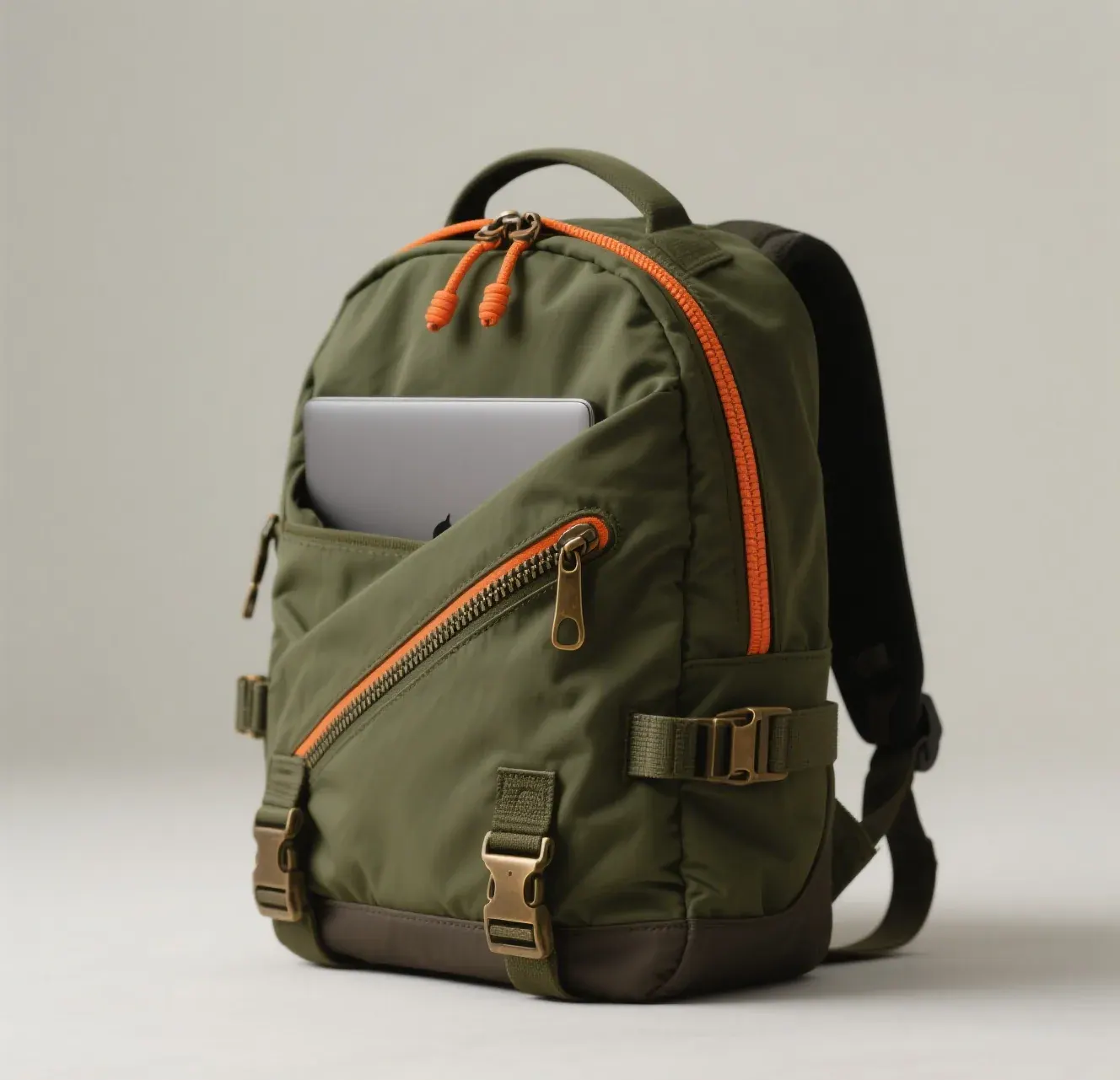
Condensation and the Wet Umbrella Problem
The failure that surprises buyers is internal moisture in a pack that never leaked. A wet umbrella or a damp rain shell sealed inside a waterproof body raises internal relative humidity above 90 percent within 20-40 minutes, and most electronics are specified for operation at 20-80 percent relative humidity non-condensing. Nothing is wrong with the shell; the pack is doing exactly what it was designed to do, which is keep everything inside it, including the water.
| Moisture source | Typical volume | Time to a humidity problem | Mitigation |
|---|---|---|---|
| Folding umbrella packed wet | 40-80 ml | 20-40 min | Separate lined wet pocket with a drain grommet |
| Rain shell or softshell jacket | 120-300 ml | 30-60 min | Wet compartment or an external strap system |
| Condensing drinks bottle | 10-30 ml | 1-3 h | Sealed bottle pocket outside the main body |
| Sweat through the back panel | 20-60 ml per hour of wear | 1-2 h | 3D mesh panel with 6-10 mm air channels |
| Damp documents and gym kit | 50-150 ml | 1-2 h | Front wet compartment, never the main body |
Three cheap design choices solve it. A wet compartment lined with welded TPU and drained through a 6 mm grommet costs 0.80-1.60 USD per unit and takes the umbrella and the jacket out of the main body entirely. A back panel with 6-10 mm air channels keeps a sweaty back from soaking through to the sleeve on a summer commute. And a 10-20 g silica sachet in the accessory pocket, replaced monthly, absorbs the residual moisture that a sealed body will otherwise hold for days. Organisation patterns that place a wet zone correctly are compared in wet and dry separation designs, and the device-level detail is covered in how a waterproof backpack keeps a laptop dry.
Commute, Travel and Field Work: Three Different Specifications
One pack cannot serve all three well, because the thing being optimised changes. A commuter pack is opened at a desk and a security tray, so access speed and a flat profile matter. A travel pack is carried for hours and loaded with a charger brick, a wash kit and a document folder, so harness comfort and compartment layout matter. A field pack for survey, drone or photography work carries a device plus instruments, so impact protection and lash points matter. The matrix below is the shortlist we issue before sampling.
| Use case | Volume | Minimum rating | Sleeve specification | Decisive extras |
|---|---|---|---|---|
| Urban commute, 15.6 in | 20-26 L | IPX5 | 10 mm foam, floor raised 25 mm | Lay-flat laptop bay, key clip, reflective hits |
| Business travel, 15.6 or 16 in | 28-35 L | IPX5 | 12 mm foam, floor raised 35 mm | Carry-on dimensions, document sleeve, trolley strap |
| Field survey, 17.3 in | 30-35 L | IPX6 | 12 mm foam, welded bay, corner blocks | Lash points, hi-vis panel, glove-friendly pulls |
| Drone and instrument carry | 30-40 L | IPX6 | Padded insert instead of a sleeve | Compression, moulded base, drain grommets |
| Motorcycle commute | 22-30 L | IPX6 | 10 mm foam, harness stabilisers | Helmet carry system, retroreflective panel |
| Coastal or boat commute | 25-32 L | IPX7 | 12 mm foam plus welded inner pouch | Buoyancy panel, lash points, salt-safe hardware |
Volume interacts with airline rules for the travel case: most carriers allow a cabin bag around 55 x 40 x 20 cm, and a 30 L pack built to that envelope passes without a gate check while a 35 L pack at 56 cm tall risks one on regional jets. State the external dimensions in the tech pack alongside the litre figure, and check the sleeve against the device one more time at that size, because shrinking a pack to meet a carry-on gauge is the most common reason a sleeve ends up 10 mm short. The airline dimension detail is covered in carry-on rules for waterproof backpacks, and use-case comparisons sit in the best waterproof backpacks by use case guide.
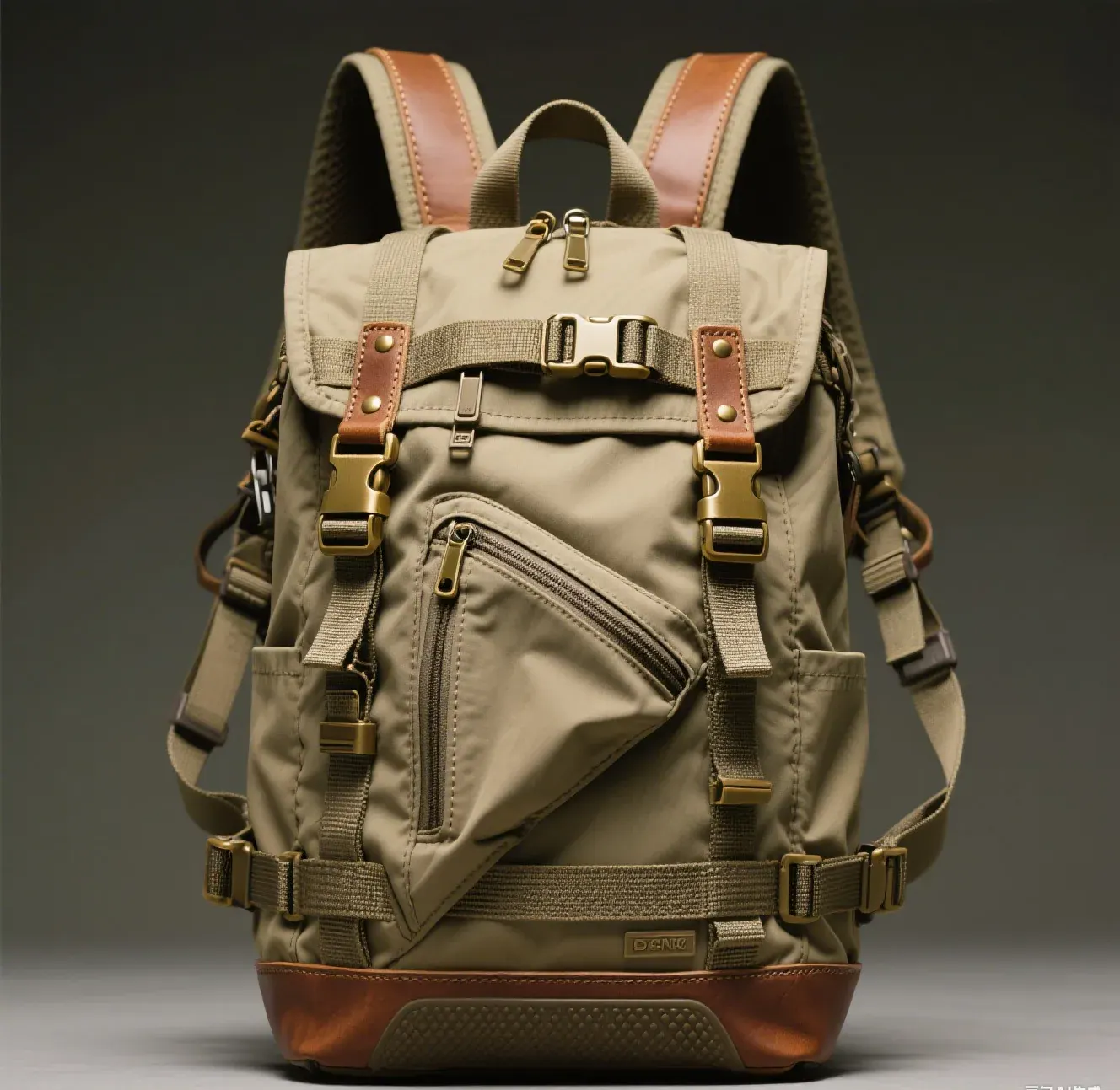
Organisation: Chargers, Documents and the Daily Kit
A device-carrying pack is judged on layout more than on fabric. The same 25 L shell feels generous with four well-placed pockets and cramped with ten badly placed ones, and the pattern cost difference between a good layout and a poor one is under 1 USD. Specify pocket count, position and internal dimensions rather than leaving it to a sample round, because layout is the single most expensive thing to change after tooling.
| Compartment | Internal target | Contents | Construction note |
|---|---|---|---|
| Laptop bay | 375 x 260 mm for 15.6 in | Device, slim folio | Suspended, foam both faces, no base seam |
| Document sleeve | A4, 320 x 240 mm flat | Folder, passport, boarding pass | Welded edge, magnetic or hook-and-loop closure |
| Tech pouch | 220 x 140 x 60 mm | Charger brick, cables, SSD | Elastic loops, 4-6 positions |
| Wet compartment | 300 x 200 mm lined | Umbrella, damp shell | Welded liner, 6 mm drain grommet |
| Quick-access top pocket | 180 x 120 mm | Phone, pass, keys | Fleece-lined, key clip on 80 mm webbing |
| Bottle pocket | 70 mm diameter | 500-750 ml bottle | External, drained, outside the main body |
Two details separate a pack that survives daily use from one that annoys its owner. Cable management should be elastic loops rather than mesh pockets, because cables tangle in mesh and stay sorted in loops, and the loop count should match the kit: four to six for a typical commuter with a phone, laptop, earbuds and a power bank. And the key clip should be on 80-100 mm of webbing so the keys reach the lock without the pack coming off the shoulder, which is a 0.15 USD decision that owners notice every single day. Layout philosophies are compared in organised versus single-compartment packs.
Testing a Device-Carrying Pack Before Bulk Release
The protocol below runs in two to three working days per style and covers the three failure modes separately, because a pack can pass a spray test and still destroy a laptop through a base seam or a condensing interior. Sampling follows AQL 2.5 so that a 500 pc order draws a meaningful sample instead of two token pieces, and the same schedule is repeated once per production year.
| Test | Method | Pass criterion | Frequency |
|---|---|---|---|
| Shell spray | IPX5 nozzle, 12.5 L/min, 3 min | No moisture on indicator paper | Three per colourway |
| Sleeve drop | 1 m onto concrete, six faces, 2 kg dummy | No dummy deformation, no seam split | Three per style |
| Sleeve immersion | Base panel in 30 mm of water for 30 min | Device dummy stays dry | Two per style |
| Zip cycling | 500 open-close cycles then spray | No moisture at the zip line | Per zip lot |
| Abrasion on liner | Martindale, ISO 12947-2, 20,000 cycles | No pilling that transfers to devices | Per fabric lot |
| Chemical screening | REACH SVHC and Prop 65 list check | Non-detect on declared substances | Per material lot |
One addition pays for itself on device programmes: a retained sample kept under ambient conditions with the original foam lot. When a field claim arrives eight months later, comparing the returned pack against a control makes it obvious whether the foam compressed, the film hydrolysed or the device was simply overloaded. Material declarations for the film, coating, foam and hardware should be attached to the same report, screened against REACH and California Prop 65, with PFAS-free durable water repellent confirmed where the market requires it; the regulatory background is summarised in the EPA PFAS programme pages.
Ordering a Laptop Backpack Programme
Programme cost for device-carrying packs is driven by the sleeve specification more than by the shell, and the sleeve is also where most of the perceived quality lives. A buyer who spends 2.40 USD on a suspended, seam-sealed bay with 12 mm foam gets a pack that reviews well and returns rarely; one who spends that money on an extra external pocket gets a pack that looks busier and protects nothing.
| Sleeve specification | Added cost per unit | Protection level | Recommended for |
|---|---|---|---|
| Sleeve direct on the base panel | 0.00 USD baseline | Spray only, no impact or pooling protection | Budget programmes under 18 USD retail |
| 8 mm foam, floor raised 25 mm | 1.20-1.80 USD | Daily commute, kerb splash, light rain | Volume commute and education tenders |
| 10-12 mm foam, raised 35 mm, corner blocks | 2.00-2.80 USD | Travel, daily handling, 1 m drop | Business travel and premium commute |
| Welded bay plus inner pouch | 3.50-6.00 USD | Immersion-capable protection for the device | Coastal, marine and field programmes |
| Order band | Unit price index | Sample lead time | Bulk lead time | Notes |
|---|---|---|---|---|
| 500-999 pcs | 1.00 | 6-10 working days | 35-40 days | One colourway, stock shell and foam grade |
| 1,000-2,999 pcs | 0.93 | 6-10 working days | 38-45 days | Two colourways, printed logo, branded pullers |
| 3,000-9,999 pcs | 0.86 | 7-10 working days | 40-50 days | Pantone-matched webbing, own foam tooling |
| 10,000 pcs and above | 0.79 | 8-10 working days | 45-50 days | Dedicated material run, printed liner, own carton |
Standard packing is one piece per polybag and 10-20 pieces per export carton, with cartons around 60 x 40 x 35 cm and gross weight under 15 kg. A 20 ft container takes roughly 1,500-1,800 pieces of 25 L laptop packs, since foam panels and sleeve construction limit how flat the body compresses. FOB Xiamen keeps freight in the buyer control and DDP is available into more than 100 countries; every bulk order is inspected at AQL 2.5 before release. Process and capacity documentation for the wider range, including fishing and EVA lines, is published.
- The opening quantity is 500 pcs per design and colourway; colourways can be consolidated from 3,000 pcs.
- Samples are production-tooled in 6-10 working days and bulk ships in 35-50 days from FOB Xiamen.
- State sleeve internal dimensions in millimetres in the tech pack, not the nominal screen size, to avoid first-article rejects.
- Send target quantity, device dimensions, volume and rating to service@junyuanbags.com for a priced specification.
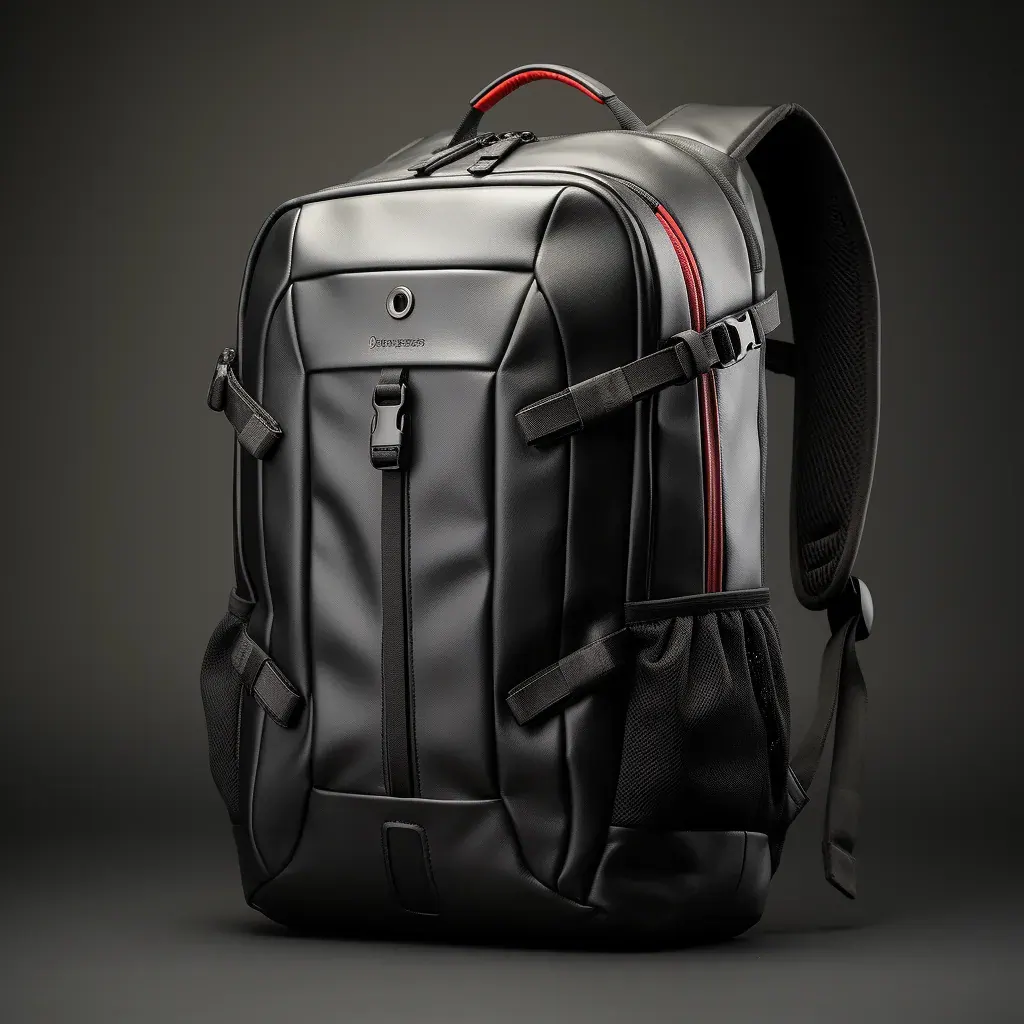
Five Mistakes That Put Devices at Risk
The patterns below account for most of the rework and most of the warranty claims on laptop programmes. Each one is cheap to avoid at the tech pack stage and expensive to fix after tooling, which is why we raise them at quotation rather than at sample approval.
| Mistake | What happens | Correct specification |
|---|---|---|
| Sleeve floor flat on the pack base | Pooled water wets the device from below | Raise the floor 25-40 mm with closed-cell foam |
| Sleeve sized by screen diagonal | New device models do not fit, first-article rejects | State internal width and depth in millimetres |
| Wet umbrella in the main compartment | Internal humidity above 90 percent in 20-40 min | Separate welded wet pocket with a drain grommet |
| Low-density foam to save 0.60 USD | Foam bottoms out permanently after one drop | 70-90 kg per cubic metre closed-cell EVA |
| Coated zip with no storm flap | Water tracks down the zip line to the sleeve | 20 mm gutter flap over the zip or a roll-top mouth |
Buyers who resolve these five lines before sampling usually approve a first article in one round and save 10-15 working days on a programme already running 35-50 days. Those who discover them at the sample stage spend two extra rounds on sleeve geometry and layout, and the delay lands in the selling season. Related specification reading sits in our guides to waterproof commuter backpacks, waterproof travel backpacks and field-use patterns such as waterproof backpacks for drone field work.
People Also Ask
What size sleeve do I need for a 15.6 inch laptop?
Measure the closed machine, which is typically about 361 x 245 x 20 mm, and add 8-12 mm of clearance on width and depth plus 6-10 mm on thickness. That gives an internal sleeve around 375 x 260 mm. Published screen sizes are diagonal and say nothing about footprint, so two 15.6 in machines can differ by 25 mm in width depending on bezel design.
Will a waterproof backpack protect a laptop in heavy rain?
Yes if the shell is rated IPX5 or better and the sleeve floor is suspended. IPX5 certifies survival of a 6.3 mm nozzle at 12.5 L per minute for three minutes, which is heavier than realistic rain, but a sleeve sitting flat on the base panel will still be wetted by water that collects inside. Raise the floor 25-40 mm and the combination holds up in a storm.
Why is my laptop damp inside a backpack that never leaked?
Condensation, usually from a wet umbrella or rain shell sealed inside the body. Internal relative humidity passes 90 percent within 20-40 minutes, and most electronics are specified for 20-80 percent non-condensing operation. Use a separate welded wet compartment with a drain grommet, air the pack out daily and keep a 10-20 g silica sachet in the accessory pocket.
Is a 17 inch laptop backpack allowed as airline carry-on?
Usually yes, because the limit is on bag dimensions rather than device size: most carriers allow a cabin bag around 55 x 40 x 20 cm. A 30 L pack built to that envelope passes; a 35 L pack at 56 cm tall risks a gate check on regional jets. State external dimensions in the tech pack and re-check the sleeve after shrinking the body to fit the gauge.
How much foam does a laptop sleeve need?
Ten to twelve millimetres of closed-cell EVA at 70-90 kg per cubic metre for travel and field use, or 8 mm at 55-70 kg for a light commute. Verify with a 1 m drop onto concrete on six faces using a 2 kg dummy: a good bay shows no deformation and no seam split, while thin or low-density foam bottoms out permanently after a single drop.
Can I charge a laptop while it is inside a waterproof backpack?
Yes, if the pack has a cable pass-through port and the device stays in the sleeve. Specify a 25-30 mm grommet with a weather flap so the port does not become a leak path, and keep the device in a welded inner pouch if the pack will be carried in heavy rain with the cable connected. Charging inside a sealed body also adds heat, so avoid doing it in direct sun.
Frequently Asked Questions
Q1. What IPX rating should a waterproof laptop backpack have?
IPX5 is the sensible floor for a commute: a 6.3 mm nozzle at 12.5 L per minute for three minutes under IEC 60529, which exceeds any realistic rain. Move to IPX6 for motorcycle or coastal use where a 100 L per minute jet is possible, and to IPX7 only if the pack genuinely goes afloat or through flood water. IPX8 is rarely justified for device carry.
Q2. Do I need a separate rain cover as well as a waterproof shell?
No, and a cover can make things worse. A pack rated IPX5 with a welded or roll-top body performs better than a rated shell plus a cover, because covers flap, fill with water at the top and hide reflective panels. Spend the money on a suspended sleeve and a storm flap over the zip instead, which address the paths water actually takes.
Q3. What internal sleeve size fits a 17.3 inch laptop?
About 428 x 300 mm internal for a typical 17.3 in machine measuring 413 x 284 x 27 mm, allowing 8-12 mm of clearance on each axis. Size to the largest machine in the fleet plus 5 mm, and specify the internal dimension in millimetres rather than the nominal screen size, since bezel design changes the footprint by 20-30 mm between models.
Q4. How much does a suspended laptop sleeve add to the unit cost?
Between 1.20 and 2.80 USD depending on foam thickness: 8 mm at 55-70 kg per cubic metre with a floor raised 25 mm costs 1.20-1.80 USD, and 10-12 mm at 70-90 kg with a 35 mm rise and corner blocks costs 2.00-2.80 USD. A fully welded bay plus an inner pouch reaches 3.50-6.00 USD and is reserved for marine and field programmes.
Q5. Can a waterproof laptop backpack survive being dropped?
A well-specified one can. Ten to twelve millimetres of closed-cell EVA at 70-90 kg per cubic metre, a floor raised 35-40 mm and no seam across the base panel will protect a 2 kg device through a 1 m drop onto concrete on six faces. Verify at first article with a dummy load, because foam density is the parameter that changes when a material lot is substituted.
Q6. Where should the laptop sleeve sit in the pack?
Against the back panel, with the floor suspended 25-40 mm above the base of the body and no seam running across the bottom of the sleeve. A sleeve at the front of the pack flexes with the load and presses against the back; a sleeve on the base sits in any water that collects. Suspension at the back panel is the position that survives both impact and pooling.
Q7. How do I stop a wet umbrella from damaging my laptop?
Give it a separate welded wet compartment with a 6 mm drain grommet. A folding umbrella carries 40-80 ml of water and raises internal humidity above 90 percent within 20-40 minutes, which is outside the 20-80 percent non-condensing range most electronics are built for. The compartment costs 0.80-1.60 USD per unit and removes the most common non-leak device claim.
Q8. Will a waterproof laptop backpack fit under an airline seat?
A 20-26 L pack built to about 45 x 30 x 20 cm will; a 30-35 L travel pack generally fits the overhead bin but not under-seat space. Under-seat dimensions vary by aircraft, with regional jets around 40 x 30 x 15 cm, so state the external dimensions in the tech pack and check the sleeve still clears the device at that size.
Q9. Can the laptop bay be made removable?
Yes, and it is worth 0.90-1.60 USD for field programmes where the same body carries a camera insert, an instrument case or a drone. Use a hook-and-loop or buckle attachment with four anchor points and a welded liner, so the bay can be pulled out for cleaning without leaving a leak path into the main body.
Q10. Does a waterproof shell make the pack hot to carry?
A sealed shell reduces airflow, which is why the back panel is where the compromise is managed. A 3D mesh panel with 6-10 mm air channels and a suspended load keeps most of the back clear of the body, and sweat of 20-60 ml per hour of wear stays on the panel rather than reaching the sleeve. Fully sealed bodies with flat panels are noticeably warmer in summer.
Q11. What volume suits a daily commute with a 15.6 inch laptop?
Plan 20-26 L: enough for the device, a charger brick, a notebook, a light layer and a 500 ml bottle, small enough to stay comfortable at 6-8 kg and to fit a carry-on gauge. Under 18 L the sleeve crowds the harness, and above 30 L the pack stops feeling like a commute bag and starts being carried half empty.
Q12. Are waterproof zips reliable on a daily-use laptop pack?
Coated reverse-coil zips are, reaching IPX5-IPX6 and surviving 500 open-close cycles in test, provided they sit under a storm flap with a gutter of at least 20 mm. Airtight zips reach IPX7-IPX8 but need clean teeth and lubrication every 20-30 sessions, which rarely happens on a daily commute. Roll-top mouths have no teeth at all and are the lowest-maintenance option.
Q13. What is the MOQ for a waterproof laptop backpack programme?
The opening quantity is 500 pcs per design and colourway, with colourways consolidated from 3,000 pcs. The unit price index moves from 1.00 at 500-999 pcs to 0.93 at 1,000-2,999, 0.86 at 3,000-9,999 and 0.79 at 10,000 and above. Sharing one sleeve tooling across two volumes is the quickest saving on a laptop range.
Q14. How long do sampling and bulk production take?
Samples take 6-10 working days once materials are confirmed, and they are built on production tooling so foam density and weld settings match the bulk run. Bulk takes 35-50 days depending on quantity, with 2-3 days for the AQL 2.5 inspection before release. Sea freight from Xiamen adds 25-40 days, or 5-8 days by air for urgent replenishment.