A waterproof dry backpack is defined by two measurable properties that ordinary waterproof packs do not have: it holds air and it survives immersion. Airtight means the sealed body loses under 10 percent of a 2-3 kPa charge over three minutes; submersible means an IPX7 or IPX8 result under IEC 60529, which is 30 minutes dry at 1 m or continuous immersion beyond 1 m. Getting both requires an RF-welded body with no stitch path, an airtight closure in the TIZIP class or a three-turn roll-top, and a screw-down purge valve rather than a push button. Typical specifications are 20-35 L for camera and electronics protection, 40-70 L for rafting and paddle camping, empty weights of 1.0-1.9 kg, and unit costs roughly 1.6-2.6 times a spray-resistant pack. Programmes open at 500 pcs per design and colourway, samples take 6-10 working days, and bulk ships in 35-50 days.
Dry, Airtight and Submersible Are Three Different Claims
The words are used interchangeably in retail copy and mean distinctly different things in a test report. Water-resistant describes a coated shell that sheds rain for perhaps 10-20 minutes. Waterproof describes a measured jet result, IPX5 or IPX6, where the pack resists a nozzle at a defined flow rate. Airtight describes the ability to hold a small pressure, which is what lets the body trap air and float. Submersible describes immersion, IPX7 or IPX8, and it is the only claim that covers a swamped boat or a river crossing. A pack can qualify for any one of these without qualifying for the next.
| Claim | What it means in test terms | Typical measurement | Where the claim stops |
|---|---|---|---|
| Water-resistant | Sheds light rain, wets out eventually | Spray booth, 10-20 min | Stops at drizzle and short showers |
| Waterproof, spray grade | Survives a defined jet | IPX5 at 12.5 L/min, IPX6 at 100 L/min | No protection if immersed |
| Airtight | Holds a small internal pressure | Air decay under 10 percent at 2-3 kPa over 3 min | Says nothing about depth |
| Submersible, IPX7 | Sealed at 1 m for 30 minutes | Immersion tank, indicator paper inside | Only to 1 m and only 30 min |
| Submersible, IPX8 | Continuous immersion beyond 1 m | Depth and duration set by the maker | Conditions vary, always read the report |
The practical consequence for a buyer is that the word dry on a hangtag is worth nothing without the two numbers behind it: a pressure figure for airtight and a depth-time figure for submersible. Both appear on a credible first-article report, both are cheap to verify in under a day, and both are the difference between a pack that protects 3,000 USD of camera gear through a capsize and one that does not.
Closures That Can Hold Air
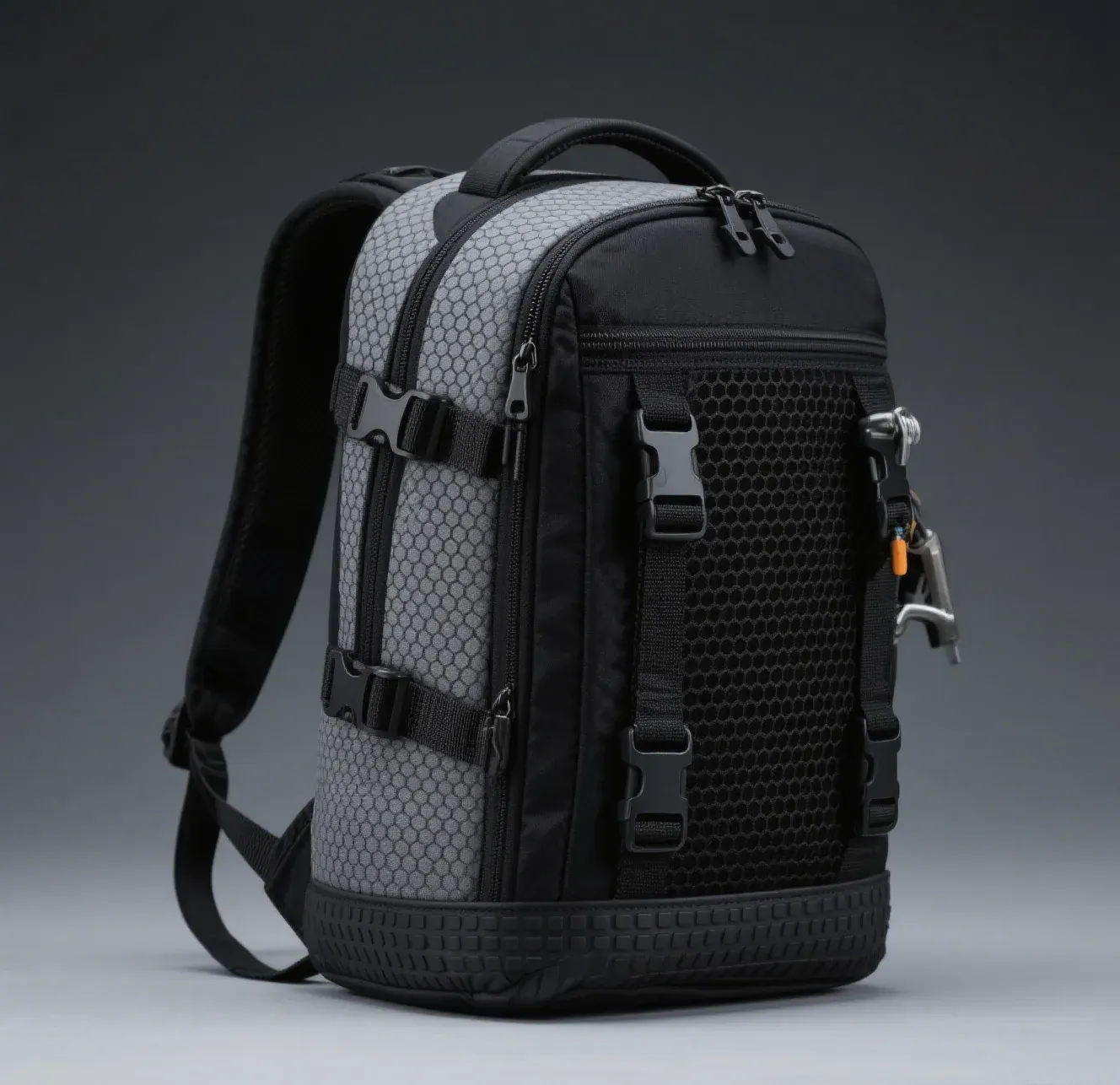
Air leaks long before water does, because a gap that passes air at 2 kPa will pass water only under a meaningful head. That is why the closure decides the airtight verdict and the shell rarely does. Three closure families are realistic for a dry backpack, and each sits at a different point on the cost, weight and service triangle.
| Closure family | Air retention at 2-3 kPa | Realistic rating | Unit cost index | Service requirement |
|---|---|---|---|---|
| Roll-top, three turns with side buckles | 85-95 percent over 3 min | IPX6-IPX7 | 1.0 | User must fold three turns, 60-80 mm |
| Roll-top with top compression strap | 95-98 percent over 3 min | IPX7 | 1.1 | Same folding discipline, better load on the fold |
| Airtight zip in the TIZIP class | 98-99 percent over 3 min | IPX7-IPX8 | 2.4-2.8 | Clean teeth, lubricate every 20-30 sessions |
| Coated reverse-coil zip | 60-75 percent over 3 min | IPX5-IPX6 | 1.3 | Fine for spray, useless for airtight |
| Welded body, no opening, valve only | 97-99 percent over 3 min | IPX7 | 1.5 | Everything in through the mouth, then roll |
Airtight zips are the only closure that gives fast access and IPX8 in the same product, and they are priced accordingly: on a 30 L body they add 150-250 g and roughly 18 USD against a roll-top at 1,000 pcs. They also demand discipline. Grit in the teeth is the leading cause of failure, and a zip that has been closed dry with sand on the tape will weep at 0.5 m even when it looks perfect on the bench. Programmes shipping airtight zips should budget for a lubrication card in the pack and a spare lube sachet in the carton.
Roll-top remains the value answer and, counter-intuitively, the more reliable one in rental fleets. It has no teeth to foul, it tolerates a rolled fold over a slightly muddy mouth better than a zip does, and it fails visibly rather than silently: a badly folded roll-top wets out immediately and gets reported, whereas a gritted airtight zip passes a quick look and fails in water. The trade-offs are worked through in TIZIP versus roll-top closures and in the guide to waterproof zipper types.
Welded Bodies: Why Seams Decide Whether Airtight Is Achievable
A sewn seam cannot be airtight. Each needle hole is a 0.3-0.5 mm capillary, and a metre of stitch line contains 300-500 of them, so no amount of seam tape turns a sewn construction into a sealed one for pressure purposes. Tape closes the holes to liquid water for a while, typically two to four years before the adhesive hydrolyses, but it does nothing for air. Every genuinely airtight backpack body is welded, and the parameters of that weld are the single most controlled variable in the build.
| Seam construction | Air tightness | Peel strength versus fabric | Realistic rating | Typical use |
|---|---|---|---|---|
| RF welded, 27.12 MHz, 20-25 mm overlap | Airtight | 90-110 percent | IPX7-IPX8 | Submersible dry backpacks, rafting bodies |
| Hot-air welded, 400-500 degrees C | Airtight when parameters are dialled in | 80-95 percent | IPX7 | Lightweight dry sacks and liners |
| HF welded PVC tarpaulin, 0.52 mm | Airtight | 95-105 percent | IPX7 | Heavy marine bodies, tenders |
| Stitched and taped | Not airtight | 60-75 percent | IPX4-IPX5 | Spray-resistant hiking and travel packs |
| Stitched and bound only | Not airtight | 50-65 percent | IPX3-IPX4 | Liners and internal organisation |
Two process numbers belong in the tech pack: weld time and electrode pressure, recorded per panel and logged per production week. A drift of 0.3 seconds in weld time on a 0.40 mm TPU film is enough to move a seam from 100 percent to 70 percent of fabric strength while still looking perfect, which is why peel coupons are pulled weekly rather than only at first article. The mechanism and the acceptance values are set out in our notes on RF welded seams explained, and the fabric-level comparison between bonded and stitched constructions appears in welded versus glued seams.
Material choice follows the welding method. Thermoplastic polyurethane films weld cleanly and stay flexible to about -30 degrees Celsius, which is why TPU-laminated polyester at 500D or 840D is the default shell for submersible packs. PVC tarpaulin welds beautifully and costs less but stiffens below -10 degrees Celsius and plasticises faster under tropical UV, so it suits warm-water marine programmes rather than alpine river work. Film thickness of 0.35-0.45 mm per face is the working range: below 0.30 mm the weld window narrows sharply and below 0.25 mm it becomes impractical on a production floor. Film and coating strength is verified on the coated fabric itself rather than on the base textile, using the ASTM D751 coated fabric test methods, and the finish chemistry is screened against restricted-substance lists because PFAS-free durable water repellent is now a tender requirement in most EU markets; the regulatory background is summarised in the EPA PFAS programme pages.
Valves: Compression, Float and the Most Common Leak Path
A valve exists to let air out so a packed body can be compressed before it goes into a hull or under a bungee. It is also the most frequently mis-specified component on a dry backpack, because the same opening that lets air out on purpose lets air out by accident.Valve selection should be made together with the float requirement rather than separately from it.
| Valve type | Air retention when closed | User error risk | Recommended for |
|---|---|---|---|
| Screw-down cap with captive seal | 98-99 percent | Low, the cap is visibly open or closed | Any pack sold as airtight or buoyant |
| Push-button one-way valve | 90-96 percent | High, snags open on webbing and straps | Compression sacks, not float packs |
| Twist-lock airstrip valve | 96-98 percent | Medium, needs a quarter turn to lock | Rafting bodies where compression matters |
| No valve at all | 97-99 percent from the roll alone | None | Camera and electronics protection |
Where a dry pack is expected to float, valve choice is a safety decision rather than a convenience one. A push-button valve snagged open by a strap in a kayak bleeds the air out of a 30 L body in 40-90 seconds, taking a 21 kgf float reserve to zero while the pack looks perfectly closed from the boat. Screw-down caps with a captive seal cost 0.25-0.50 USD more and remove that failure mode entirely. The full comparison, including how to use a valve to compress a load correctly, is covered in the airstrip valve explainer.
Immersion Ratings: What IPX7 and IPX8 Really Cover
Immersion ratings are precise about depth and duration and silent about almost everything else. The scale is the IPX code in the IEC 60529 ingress protection standard: IPX7 is 30 minutes at 1 m, IPX8 is continuous immersion beyond 1 m under conditions the maker declares. What neither code covers is current, flexing under load, temperature shock, or the pressure change of a dive, so a pack rated IPX8 for a static tank test is not thereby rated for scuba support in open water.
| Condition | Covered by IPX7 or IPX8 | Realistic exposure on a trip | What to specify instead |
|---|---|---|---|
| Static immersion at 1 m | Yes, 30 min | Capsize, swamped canoe | IPX7 is sufficient |
| Immersion at 1.5-3 m | IPX8 only, with declared duration | Towing behind a boat, canyon swims | IPX8 plus a named depth and time |
| Moving water and current | No | River crossing, rapids | Welded body plus a lash point and leash |
| Pressure change | No | Dive support, freediving weight belt | Hard case rated for depth |
| Flex under load while wet | No | Pack worn swimming with 12 kg | Peel coupons and a loaded flex test |
| Temperature shock | No | Cold river after a hot car | TPU film rated to -30 degrees C |
Test conditions deserve the same scrutiny as the rating. Water temperature changes the result: a pack sealed at 20 degrees Celsius and immersed in water at 5 degrees Celsius sees the internal air contract by roughly 5 percent, which pulls a partial vacuum and can draw moisture past a marginal closure. Serious programmes therefore test at the low end of the intended range, and they state the temperature in the report. Buyers comparing rating claims across sellers should read the depth, duration and temperature lines before comparing the number.
What a Submersible Pack Is Actually Bought to Protect
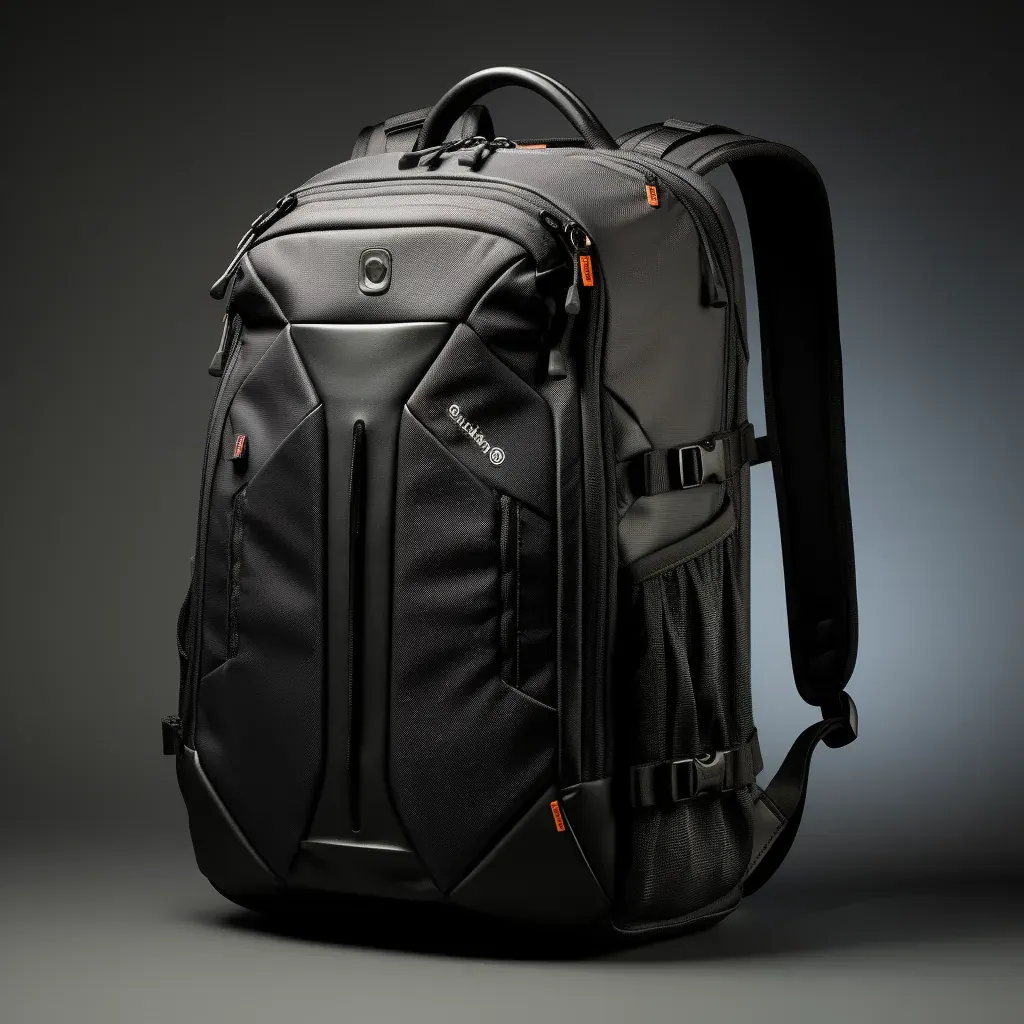
Submersible construction is purchased for contents, not for comfort. The value of the pack is the replacement cost of what sits inside it, and in field claims that value clusters tightly: cameras, lenses, phones, tablets, passports, satellite messengers and spare batteries. A 1,200 USD laptop and a 900 USD tablet justify a closure that costs 18 USD more; a spare fleece does not. Stating the protected payload in the brief is the fastest way to reach a sensible specification.
| Payload | Replacement cost | Protection required | Recommended stowage |
|---|---|---|---|
| Laptop 15-17 in | 900-2,400 USD | Welded body plus suspended padded sleeve | Sleeve with 10-12 mm foam, floor raised 25-40 mm |
| Mirrorless camera with two lenses | 1,200-3,000 USD | Welded body plus padded insert | Insert cube wrapped in a dry layer |
| Phone and passport | 600-1,300 USD | Inner welded pouch | Back panel document sleeve, above the waterline |
| Satellite messenger and VHF | 300-700 USD | Sealed top pocket | Top lid pocket, clipped to a lanyard |
| Sleeping bag for paddle camping | 150-400 USD | Compression inside a welded body | Bottom of the body, compressed with the valve |
| Clothing and food | 80-250 USD | Roll-top body, spray grade is enough | Main compartment, no special requirement |
The two-layer rule applies with force here: a welded inner pouch inside a welded outer body. It costs 1.50-3.00 USD per unit on a 1,000 pc programme and covers the realistic failure, which is not the shell leaking but a wet item sharing space with a device, or a closure that was not quite rolled far enough on a tired afternoon. For camera programmes we also recommend a hard insert cube, because lenses concentrate load onto one point of a soft body and a 3 kg camera block flexing against a weld line is the most common mechanical cause of seam failure in the field.
Packing, Closing and Verifying a Dry Pack
Airtight performance is a user action as much as a product property, and the instruction card that ships with the pack is a specification item. Four steps cover it, and skipping any one of them costs roughly one IPX level: clean the mouth, roll three full turns with a 60-80 mm fold, clip the side buckles before the top strap, and close the valve. In fleet trials, adding a printed card lifted correct closure rates from about 55 percent to over 90 percent, which is a larger reliability gain than most hardware changes.
- Wipe the mouth and the fold area clean before rolling; one grain of sand across the fold creates a capillary channel.
Verification is quick and should be part of every pre-season routine: seal the empty pack with the mouth under water in a bath or a clean tank, press gently, and look for a steady stream of bubbles. A few bubbles escaping in the first seconds are normal as trapped air is displaced; a continuous stream from one point marks a leak. The full routine, including a shower test and a paper-indicator check, is described in how to proof a new pack before a trip and in the at-home test guide.
How Airtight Builds Age: Hydrolysis, Zip Wear and Storage
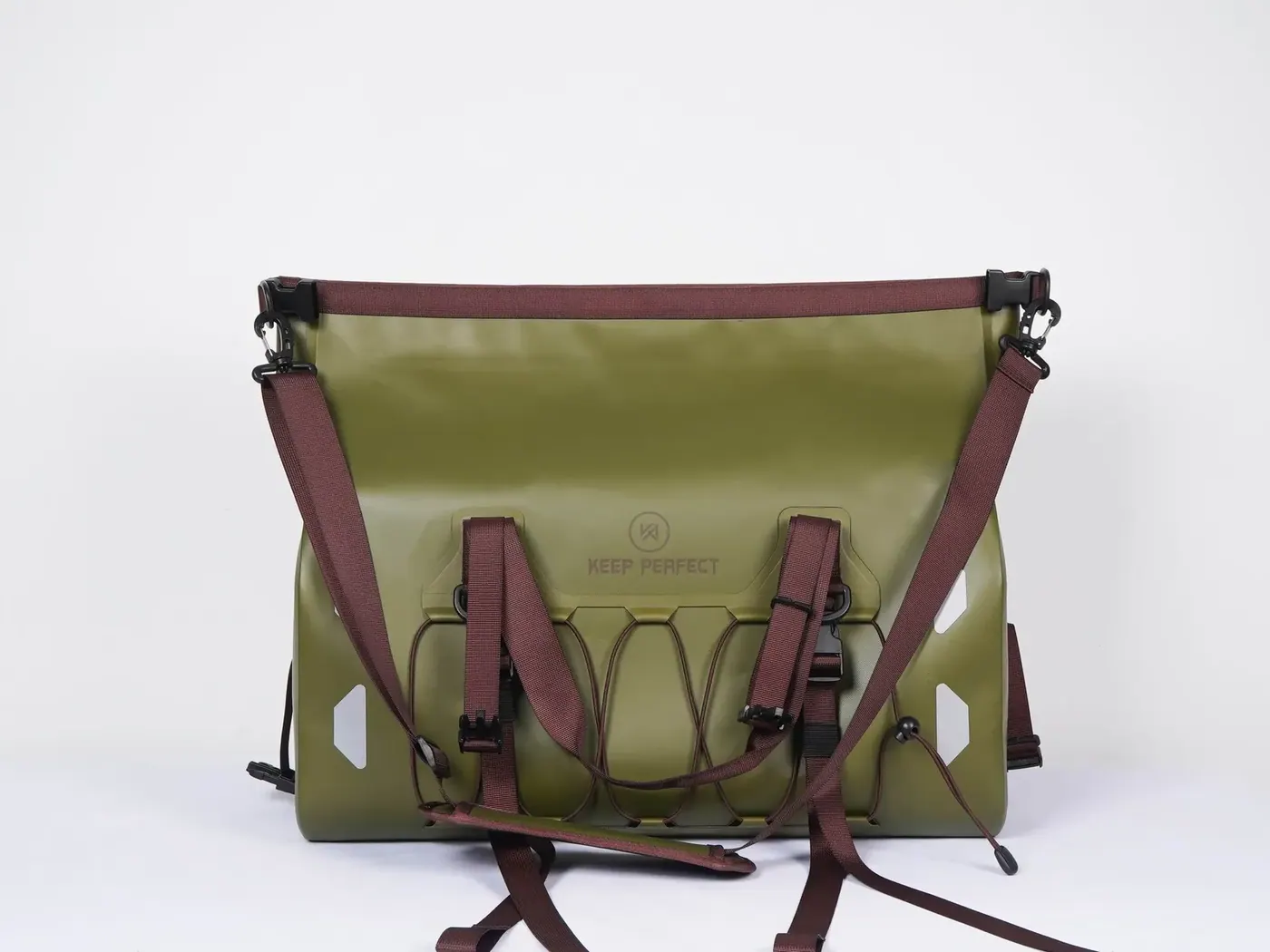
Airtight construction has a defined service life and it is longer than most buyers expect when the pack is stored correctly, and shorter than they expect when it is not. The two degradation mechanisms are hydrolysis of the ester-based film and mechanical wear at the closure, and both are accelerated by the same thing: storing the pack wet and sealed. A pack put away damp in a hot car will show film chalking inside two seasons; the same pack dried open in the shade lasts six to eight.
| Failure mode | Typical onset | Warning sign | Preventive action |
|---|---|---|---|
| Film hydrolysis | 4-6 seasons if stored wet | Chalky surface, milky film at fold lines | Dry open 12-24 h, store unrolled in shade |
| Zip wear and grit | 200-500 cycles without care | Stiff pull, visible tooth wear | Rinse fresh, lubricate every 20-30 sessions |
| Valve seal compression set | 3-5 years | Cap spins freely, slow air loss | Replace the seal, 0.30-0.60 USD part |
| Weld creep under load | 2-4 years on overloaded packs | Whitening along a weld line | Keep load under 60 percent of litre figure |
| Foam water uptake | 1-2 seasons with open-cell foam | Pack sits lower in water each trip | Closed-cell foam, under 2 percent absorption |
| UV chalking of exposed trim | 1-2 tropical seasons | Faded webbing, powdery film | Solution-dyed webbing, covered foam |
Storage is the cheapest intervention available and it costs nothing to specify. Keep the pack dry, unrolled, out of direct sun, and with the valve open so any residual moisture can escape; that single habit is worth more than any care product. Cleaning is fresh water and pH-neutral soap only, since solvents strip plasticiser from films and detergents leave a residue that attracts grit into the zip tape. The full schedule appears in the cleaning guide and in the notes on film ageing.
Airtight Acceptance Testing Before Bulk Release
The protocol below runs in one to two working days per style and is the same schedule applied to bulk release, with sampling under AQL 2.5 so a 500 pc order draws a meaningful sample rather than two token pieces. It is deliberately weighted toward air rather than water, because air finds leaks that water at shallow depth will not, and because a pack that holds air at 2-3 kPa will hold out water at 1 m.
| Test | Method | Pass criterion | Frequency |
|---|---|---|---|
| Air decay | Charge sealed body to 2-3 kPa, hold 3 min | Under 10 percent loss | Three per colourway, first article |
| Immersion | 30 min at 1 m, indicator paper inside | No moisture on the paper | Three per colourway |
| Bubble leak locate | Submerge sealed body, press gently | No continuous bubble stream | Every first article |
| Zip cycling | 500 cycles, grit exposure, then air decay | Under 10 percent loss after cycling | Per zip lot |
| Seam peel | Tensile pull on welded coupon | At least 90 percent of fabric strength | Per production week |
| Valve function | Compress through the valve, then air decay | Under 10 percent loss with cap closed | Per valve lot |
| Loaded flex | 12 kg load, 1,000 flex cycles wet | No weld whitening or split | Per style, twice a year |
Two rules make the difference between a protocol that protects the buyer and one that generates paperwork. Insist that the tested sample is production-tooled rather than hand-welded in development, because weld parameters are exactly what drifts when a style moves to the floor. And keep one retained sample per colourway stored dry and dark, so that when a claim arrives eight months later the comparison takes minutes instead of becoming an argument. Material declarations for the film, coating and hardware should be attached to the same report, screened against REACH and California Prop 65.
Ordering an Airtight Programme: Cost, MOQ and Timing
Airtight construction costs more and the premium is concentrated in three places: the closure, the welding operation and the testing regime. Understanding where the money goes lets a buyer spend it where it matters and save it where it does not, which usually means paying for the weld and the closure and economising on organisation and trim.
| Cost driver | Share of added cost | Save by | Never save by |
|---|---|---|---|
| Airtight closure | 45-60 percent of the premium | Using roll-top instead of a zip on 30 L and below | Choosing an unbranded zip with no cycle data |
| Weld tooling and cycle time | 20-30 percent | One body shape across two volumes | Reducing weld overlap below 20 mm |
| Testing and inspection | 10-15 percent | Testing per colourway, not per carton | Skipping the air decay test |
| Shell material | 10-20 percent | 500D instead of 840D on light-use volumes | Dropping film thickness below 0.30 mm |
| Trim and organisation | 5-10 percent | Sharing webbing and buckles across styles | Removing the grab loop or lash points |
| Order band | Unit price index | Sample lead time | Bulk lead time | Notes |
|---|---|---|---|---|
| 500-999 pcs | 1.00 | 6-10 working days | 35-40 days | One colourway, stock film and webbing |
| 1,000-2,999 pcs | 0.93 | 6-10 working days | 38-45 days | Two colourways, printed logo, branded pullers |
| 3,000-9,999 pcs | 0.86 | 7-10 working days | 40-50 days | Pantone-matched webbing, own weld tooling |
| 10,000 pcs and above | 0.79 | 8-10 working days | 45-50 days | Dedicated material run, printed liner, own carton |
Standard packing is one piece per polybag and 10-20 pieces per export carton, with cartons around 60 x 40 x 35 cm and gross weight under 15 kg. A 20 ft container takes roughly 1,300-1,500 pieces of 30 L welded dry packs, less than a soft pack because welded bodies do not compress flat. FOB Xiamen keeps freight in the buyer control, DDP is available into more than 100 countries, and every bulk order is inspected at AQL 2.5 before release. Process and capacity documentation for the wider range, including fishing and EVA lines, is published.
- The opening quantity is 500 pcs per design and colourway; colourways can be consolidated from 3,000 pcs.
- Samples are production-tooled in 6-10 working days and bulk ships in 35-50 days from FOB Xiamen.
- Ask for the air decay and immersion reports on the first article, with depth, duration and water temperature stated.
- Send target quantity, litre volume, closure preference and intended payload to service@junyuanbags.com for a priced specification.
Dry Backpack or Dry Sack: Picking the Right Format
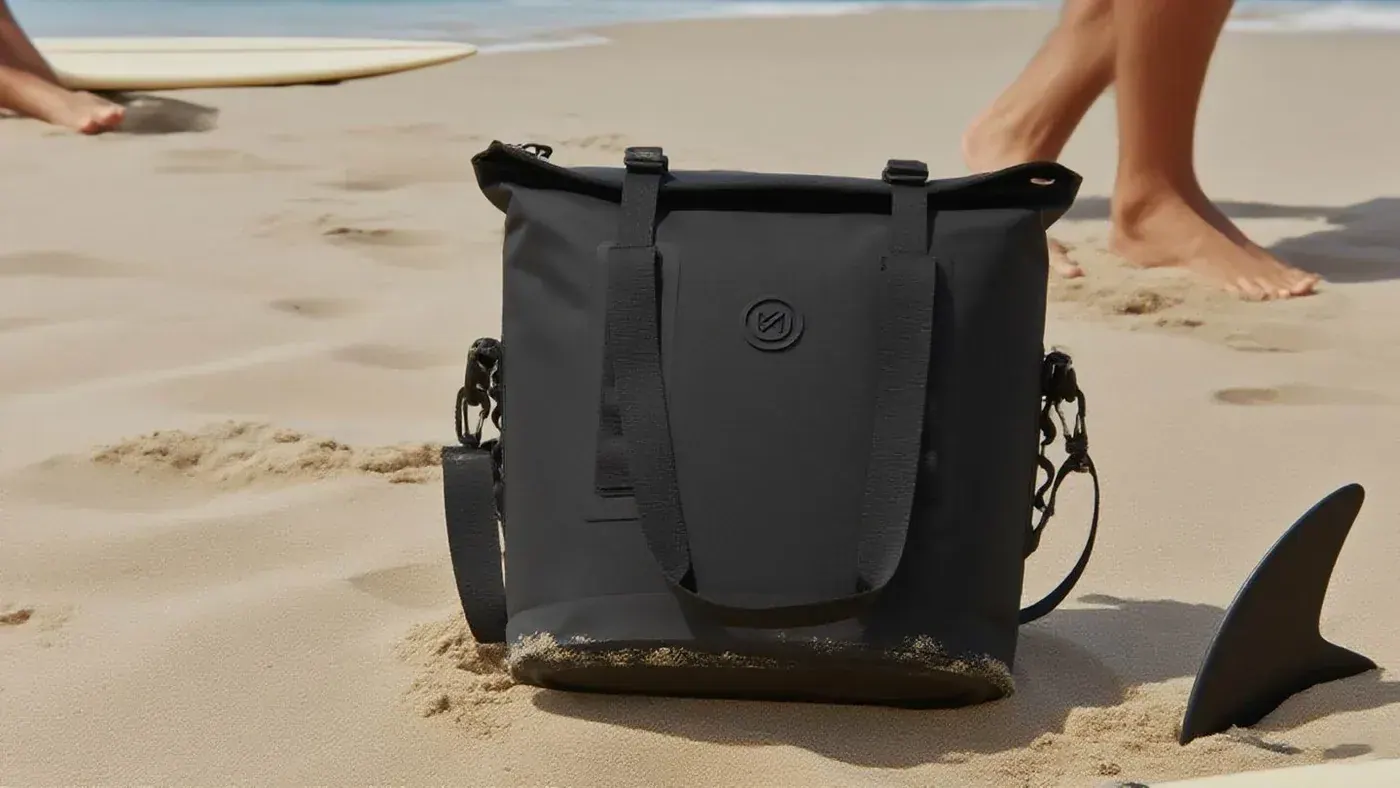
The last decision is format rather than construction. A dry backpack carries the load, which costs weight and money and buys comfort and organisation. A dry sack is cheaper per litre, lighter and easier to lash, and it does the sealing job just as well. Most expeditions and most fleets end up with both, and the split is predictable once the use case is written down.
| Decision factor | Choose a dry backpack | Choose a dry sack |
|---|---|---|
| Carry distance | More than 200 m on foot | Boat to camp, or straight into a hull |
| Load | 8-16 kg with dense items | Up to 8 kg of soft items |
| Budget per litre | 2.50-6.00 USD per litre | 0.90-2.20 USD per litre |
| Organisation needs | Electronics sleeve, pockets, document sleeve | One compartment, rolled and stowed |
| Buoyancy requirement | Foam panels possible in the lid and sides | Air only, no permanent float |
| Fleet handling | Carried by guests, needs harness fit | Lashed by crew, no fitting required |
For programmes that need both, the efficient route is one welded body shape produced in two configurations, backpack and sack, sharing film, welding setup and colourway. That halves the development cost of the second format and keeps the material minimums consolidated, which is worth 0.30-0.60 USD per unit at 1,000 pcs. Buyers comparing formats in more depth should read waterproof backpack versus dry bag, and those working on paddle or raft programmes will find the use-case detail in waterproof backpacks for rafting and in our pillar page for waterproof backpacks for boating.
People Also Ask
What is the difference between a waterproof backpack and a waterproof dry backpack?
A waterproof backpack resists jets and rain, typically IPX5 or IPX6, while a dry backpack is built to hold air and survive immersion at IPX7 or IPX8. In construction terms the dry pack has a welded body with no stitch path and an airtight or roll-top closure, whereas the spray-grade pack may be stitched and taped. The dry pack costs roughly 1.6-2.6 times more and is bought for the value of the contents inside.
Can an airtight backpack be taken underwater while swimming?
Yes if it is rated IPX7 or IPX8 and used within the stated depth and time, typically 1 m for 30 minutes or 1.5-3 m for 30-60 minutes. The rating does not cover current, flexing under load, or pressure change, so a pack is fine for a river crossing or a short tow and not rated as dive equipment. Rinse and dry it open afterwards to keep the film from hydrolysing.
Why does my dry backpack lose air overnight?
Almost always a closure or valve issue rather than a shell issue. A roll folded twice instead of three times, a push-button purge valve snagged open by webbing, or grit across the fold will each bleed a 2-3 kPa charge in 40-120 minutes. Check the valve cap first, then re-roll with three turns and a 60-80 mm fold, and run a bubble test in a bath to locate any persistent leak point.
How many turns should a roll-top dry backpack be folded?
Three full turns with a fold depth of 60-80 mm before the side buckles are clipped, then the top compression strap. Two turns typically costs about one IPX level and four turns adds nothing except bulk. Fleet trials show printed instruction cards lift correct closure rates from roughly 55 percent to over 90 percent, which is a bigger reliability gain than most hardware changes.
Are airtight zips reliable enough for rental and charter fleets?
They are reliable with maintenance and unreliable without it. An airtight zip holds 98-99 percent of a 2-3 kPa charge when the teeth are clean and lubricated, but grit is the leading failure cause and untrained users rarely lubricate. For fleets, a roll-top body with a welded shell is usually the better choice; keep airtight zips for camera, dive-support and premium programmes.
Does an IPX8 rating cover diving with the pack?
No. IPX8 certifies continuous immersion beyond 1 m under conditions the maker declares, usually static tank testing, and says nothing about pressure change, current or decompression use. A pack rated IPX8 protects gear in transit and while floating, but diving equipment belongs in a hard case rated for depth. Always read the depth, duration and temperature lines on the report.
Frequently Asked Questions
Q1. What does airtight mean on a waterproof dry backpack?
It means the sealed body holds a small pressure: charge it to 2-3 kPa and it loses under 10 percent over three minutes. Airtight matters because air leaks before water does, so a body that holds air will hold out water at 1 m, and because trapped air is what makes the pack float. No sewn construction is airtight, since a metre of stitch line carries 300-500 needle holes.
Q2. What IPX rating should a submersible backpack have?
IPX7 for anything that may be dunked: 30 minutes sealed at 1 m under IEC 60529, which covers a capsize, a swamped canoe and a river crossing. Specify IPX8 only where the pack is deliberately taken deeper, and always with the declared depth and duration written into the report rather than the rating alone.
Q3. Are roll-top dry backpacks really submersible?
Yes, up to IPX7, provided the user folds three full turns with a 60-80 mm fold and clips the side buckles before the top strap. The limitation is human rather than mechanical: one lazy turn costs about one IPX level. A welded body with a roll-top mouth is the most reliable submersible format for rental fleets because there are no teeth to foul and failure is visible immediately.
Q4. How much more does an airtight zip cost than a roll-top?
On a 30 L body an airtight zip adds 150-250 g and roughly 18 USD per unit against a roll-top at 1,000 pcs, taking the closure cost index from 1.0 to about 2.4-2.8. It also needs lubrication every 20-30 sessions and clean, grit-free teeth. For most programmes that money is better spent on a heavier film, better hardware and a printed closure instruction card.
Q5. Can a waterproof dry backpack protect a laptop through a capsize?
Yes, if the body is welded and the sleeve is suspended. Specify a padded sleeve with 10-12 mm foam and a floor raised 25-40 mm off the base panel, then put the device in a welded inner pouch as a second layer. That combination survives the 30 minutes at 1 m that IPX7 certifies, and it costs 1.50-3.00 USD per unit extra for the pouch.
Q6. Why do welded seams matter more than fabric denier?
Because the seam is where airtight construction succeeds or fails. A stitched seam carries 300-500 needle holes per metre, each 0.3-0.5 mm across, and tape closes them to liquid water for two to four years but never to air. An RF-welded seam at 20-25 mm overlap fuses film face to face and reaches 90-110 percent of base fabric strength, which is what makes IPX7 and IPX8 achievable.
Q7. What should a purge valve do on a dry backpack?
Let air out so a packed body can be compressed before it goes into a hull or under a deck bungee, then seal completely. Specify a screw-down cap with a captive seal, which retains 98-99 percent of a charge, rather than a push-button valve, which retains 90-96 percent and can be snagged open by webbing. A valve left open turns a 21 kgf float reserve into zero in under two minutes.
Q8. How do I test whether a dry backpack is genuinely airtight?
Charge the sealed body to 2-3 kPa and accept no more than 10 percent loss over three minutes, then submerge it and press gently to look for a continuous bubble stream. Follow with a 30 minute immersion at 1 m using indicator paper inside. Run the air test before the water test, because air finds leaks that shallow water will not.
Q9. How long does an airtight waterproof backpack last?
Six to eight seasons of regular use when it is dried open, stored out of direct sun and kept away from solvents. Stored wet and sealed, the ester-based film starts chalking within two seasons as hydrolysis sets in. Zip wear appears at 200-500 cycles without care, and valve seals compress after three to five years and need a 0.30-0.60 USD replacement part.
Q10. Does cold water affect a submersible rating?
Yes, through air contraction. A pack sealed at 20 degrees Celsius and immersed at 5 degrees Celsius sees internal air contract by about 5 percent, creating a partial vacuum that can draw moisture past a marginal closure. Serious programmes test at the low end of the intended temperature range and state the water temperature in the report, alongside depth and duration.
Q11. Can a dry backpack be used as a float aid?
It floats while sealed, because a 30 L body displaces about 30 kgf of water, but it is not a float aid and must never be labelled as one. The reserve disappears once air escapes, and personal flotation is regulated separately. If float matters after a flood, specify 3-6 kgf of closed-cell foam in the lid and upper side panels, which keeps the pack on the surface when the body is swamped.
Q12. What volume suits rafting and paddle camping?
Plan 40-70 L for rafting and paddle camping: 10-18 kg of group gear, a sleeping system and dry clothing for three to five days. Choose a welded body with compression straps, a valve for compression and haul loops at both ends. For a day on the water 20-35 L is enough, and for camera and electronics protection 20-30 L with a padded insert is the practical size.
Q13. What is the MOQ for an airtight dry backpack programme?
The opening quantity is 500 pcs per design and colourway, with colourways consolidated from 3,000 pcs. The unit price index falls from 1.00 at 500-999 pcs to 0.93 at 1,000-2,999, 0.86 at 3,000-9,999 and 0.79 at 10,000 and above. Sharing one welded body shape between a backpack and a sack version typically saves 0.30-0.60 USD per unit.
Q14. How long do sampling and bulk production take for airtight builds?
Samples take 6-10 working days once materials are confirmed and are built on production tooling so weld parameters match the bulk run. Bulk takes 35-50 days, with 1-2 days for the air decay and immersion protocol and 2-3 days for the AQL 2.5 inspection before release. Sea freight from Xiamen adds 25-40 days, or 5-8 days by air.